Normal Missing Letters Worksheets for Ages 6-8
5 filtered results
-
From - To
Our "Normal Missing Letters Worksheets for Ages 6-8" are designed to challenge children's alphabet skills while having fun! Perfect for young learners, these printable worksheets help kids practice identifying and writing missing letters to complete each sequence. Tailored to engage children in grades 1 to 3, these activities foster literacy development and boost confidence in letter recognition. With colorful illustrations and themes that captivate young minds, our worksheets transform learning into an exciting adventure. Let your child enhance their alphabet knowledge and enjoy hours of educational fun with our expertly crafted missing letters worksheets!
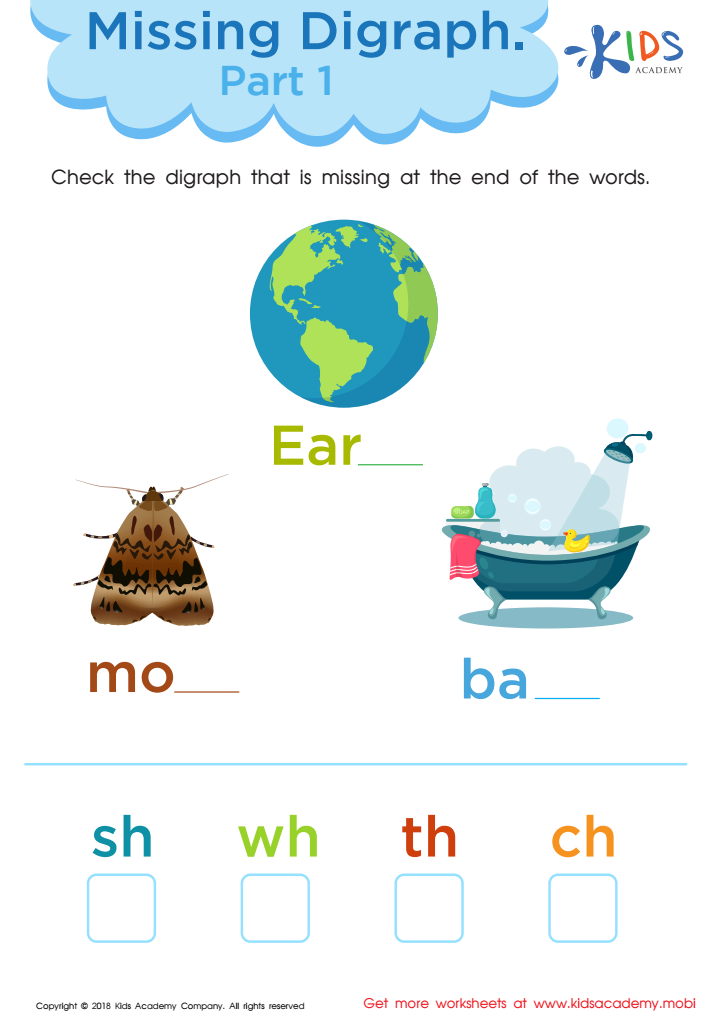
Missing Digraph: Part 1 Worksheet
 Assign to My Students
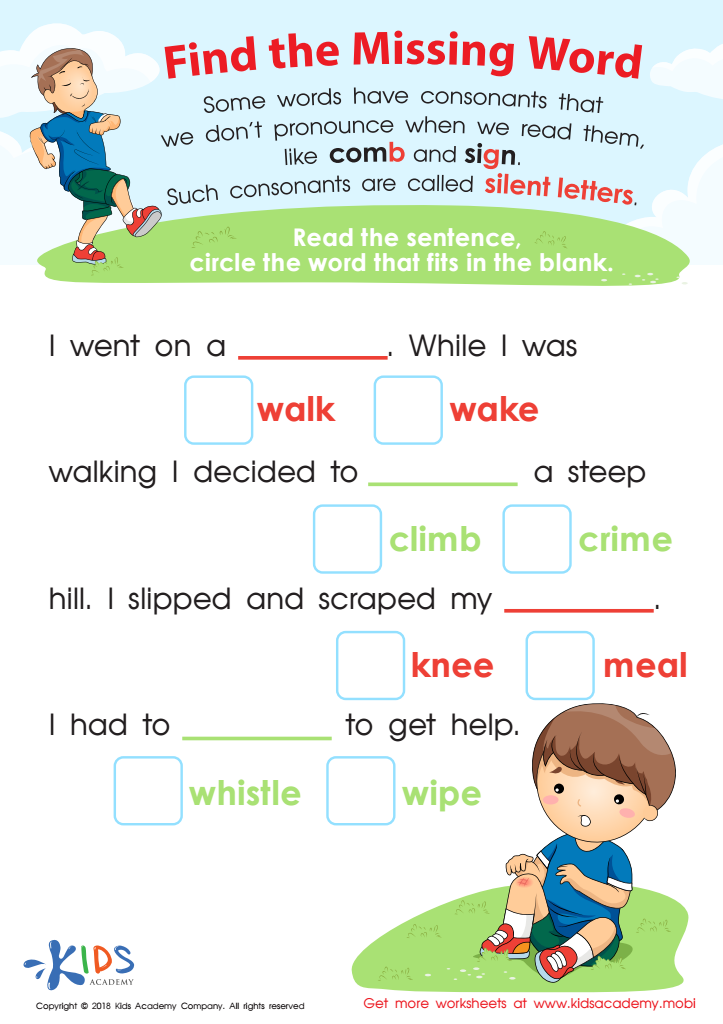
Find The Missing Word Worksheet
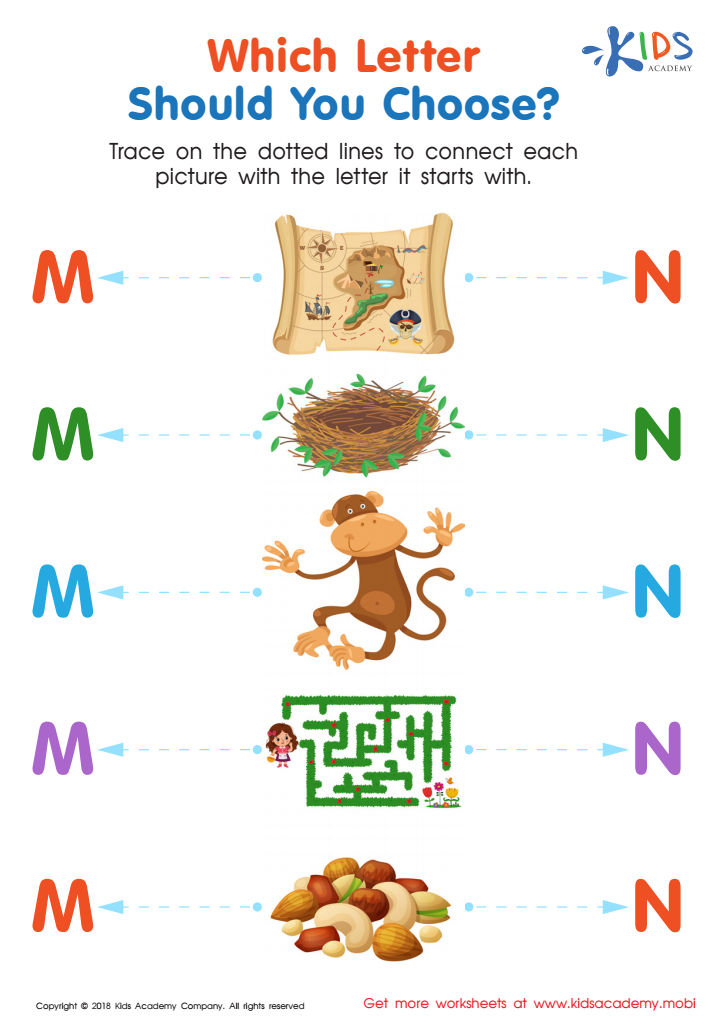
Which Letter Should you Choose? Worksheet
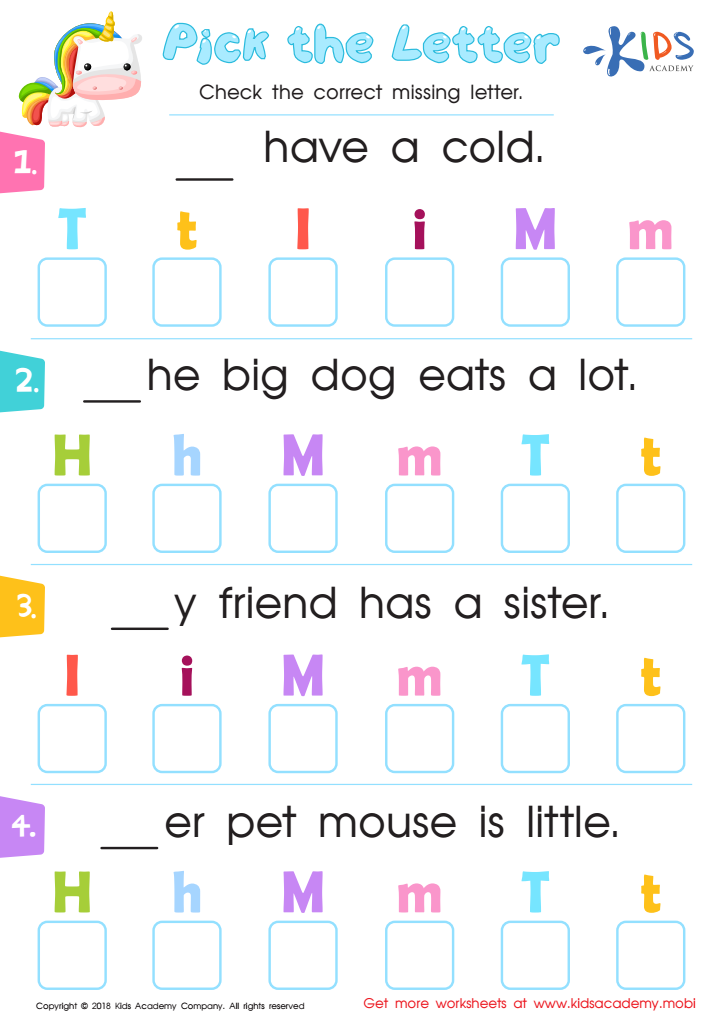
Pick the Letter Worksheet
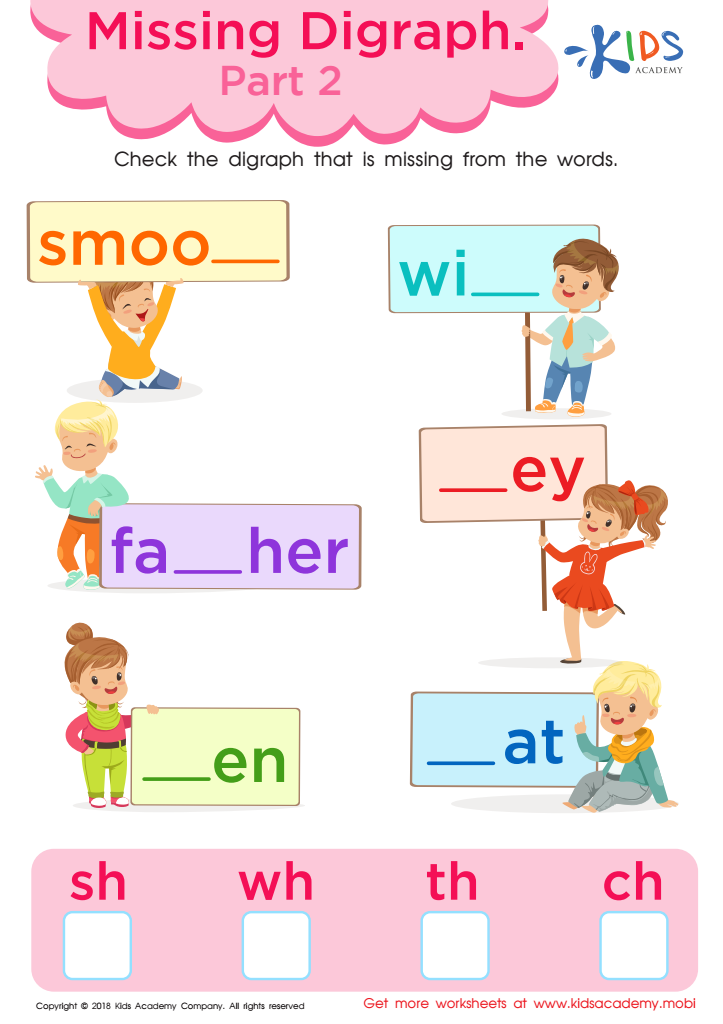
Missing Digraph: Part 2 Worksheet



Parents and teachers should certainly care about Normal Missing Letters for children aged 6-8, as it plays a crucial role in early literacy development. This age range is a pivotal period for learning foundational language skills, which include recognizing and understanding letters and their corresponding sounds. If children are missing letters or struggling with identifying them consistently, it could be indicative of challenges in their reading and writing development. By identifying and addressing Normal Missing Letters early, parents and educators can implement strategies to support and improve literacy skills more effectively.
Engaging children in activities that emphasize letter recognition, phonemic awareness, and orthographic knowledge helps build strong reading foundations. Focused interventions, such as personalized spelling and reading exercises, can rectify these gaps and foster confidence in young learners. Moreover, timely support can prevent minor difficulties from escalating into more significant learning issues.
By caring about and addressing Normal Missing Letters, parents and teachers not only promote better academic outcomes but also nurture a child’s love for reading, enhancing their educational journey and lifelong learning. This proactive approach sets the stage for successful literacy and positive attitudes towards education.







