Understanding fractions Normal Worksheets for Ages 6-8
17 filtered results
-
From - To
Discover the fun in learning fractions with our specially designed worksheets for ages 6-8! At Kids Academy, our engaging and educational "Understanding Fractions" worksheets break down this foundational math concept into easy, digestible activities. Designed to align with classroom learning, these printables introduce children to fractions through colorful visuals, hands-on exercises, and real-life scenarios. Your young learner will master halves, quarters, and more, building the critical skills needed for future math success. Perfect for reinforcing lessons at home or supplementing schoolwork, our worksheets make fractions accessible and enjoyable! Empower your child to understand and love fractions today.
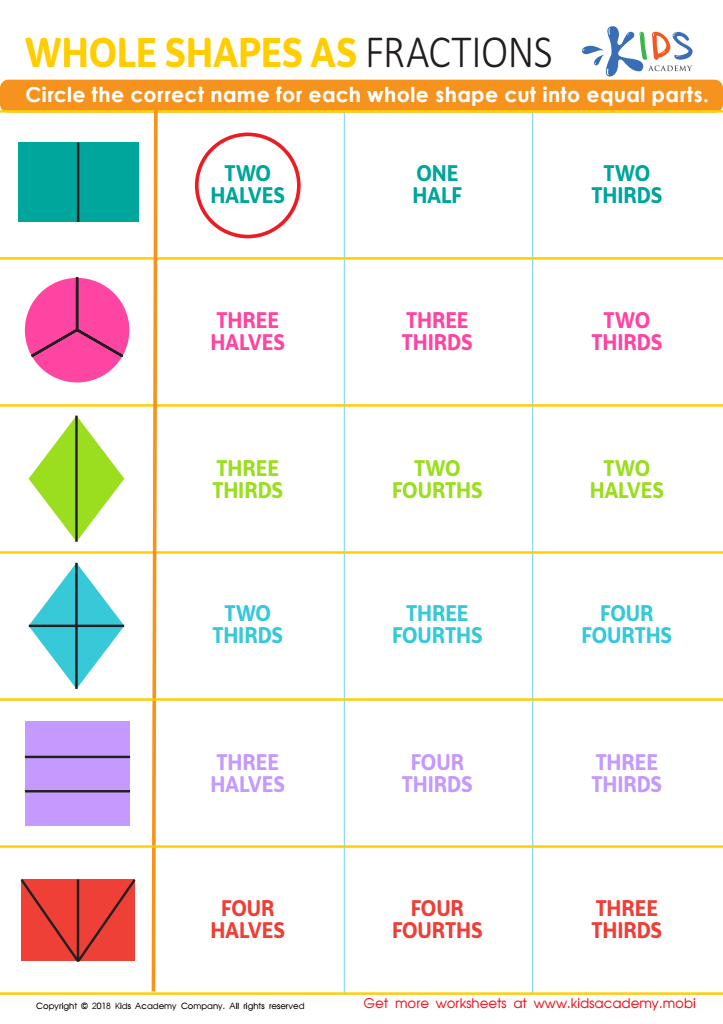
Whole Shapes as Fractions Worksheet
 Assign to My Students
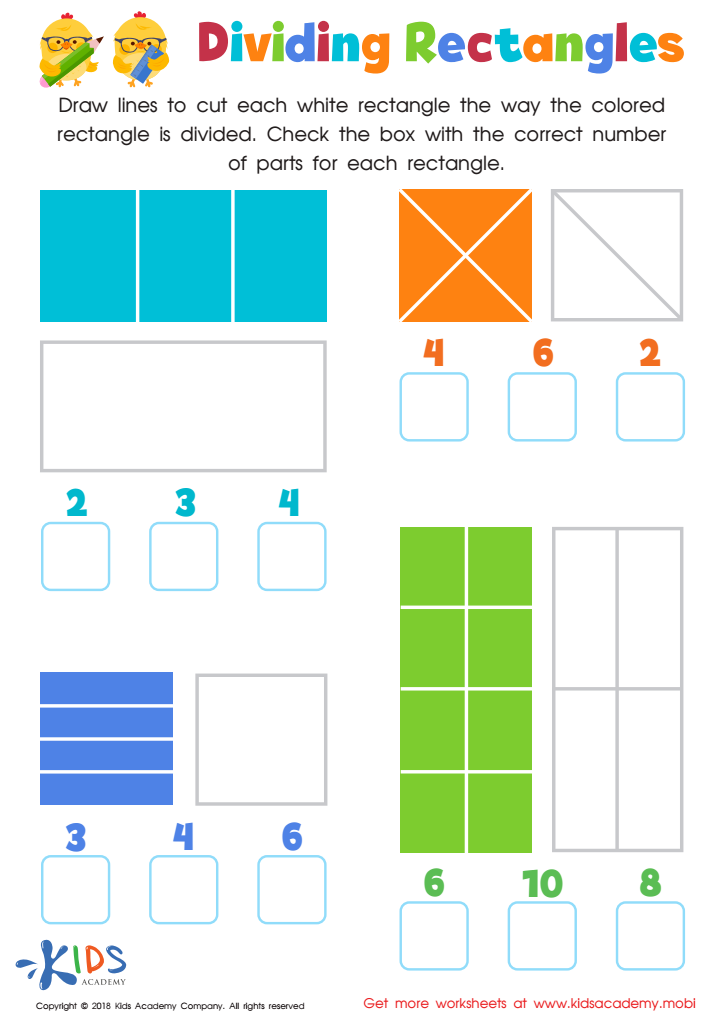
Dividing Rectangles Worksheet
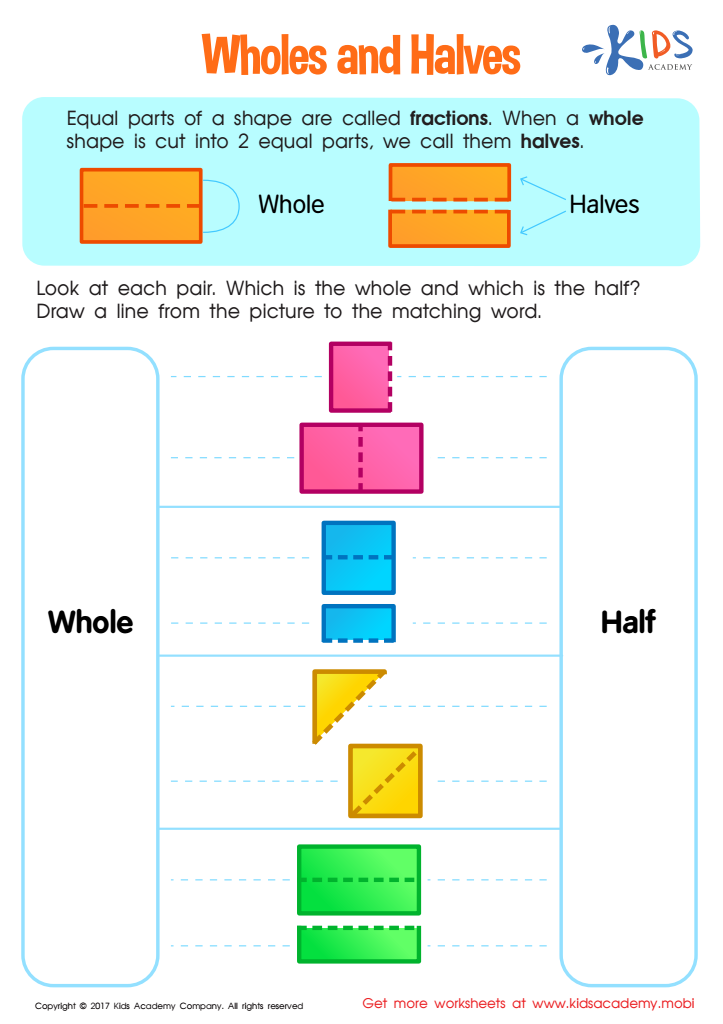
Wholes and Halves Worksheet
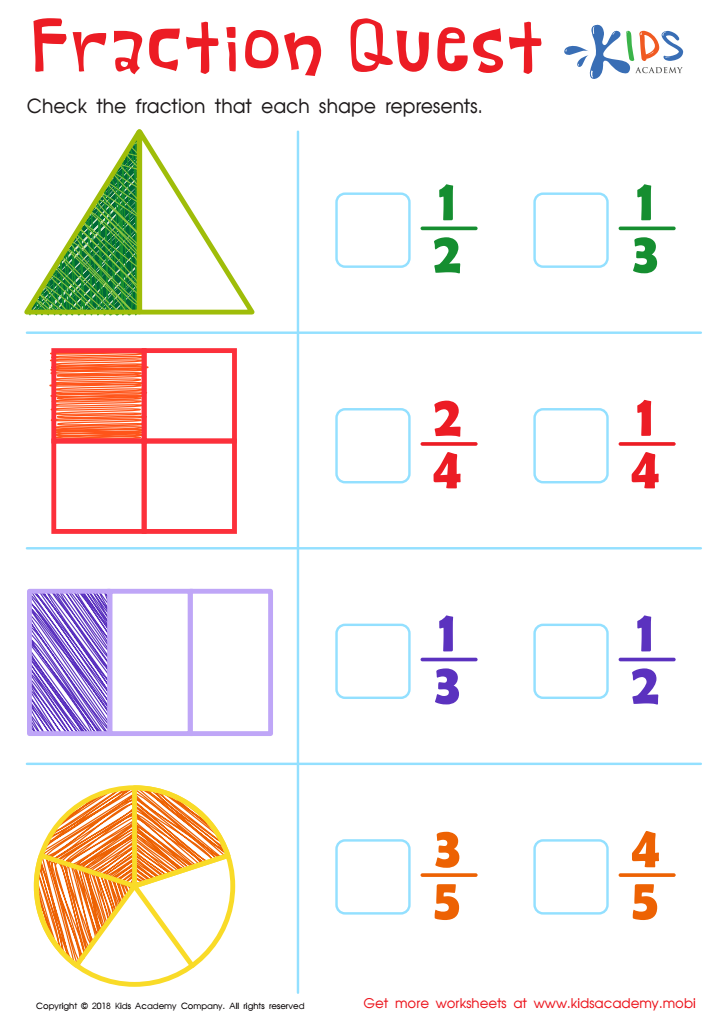
Fraction Quest Worksheet
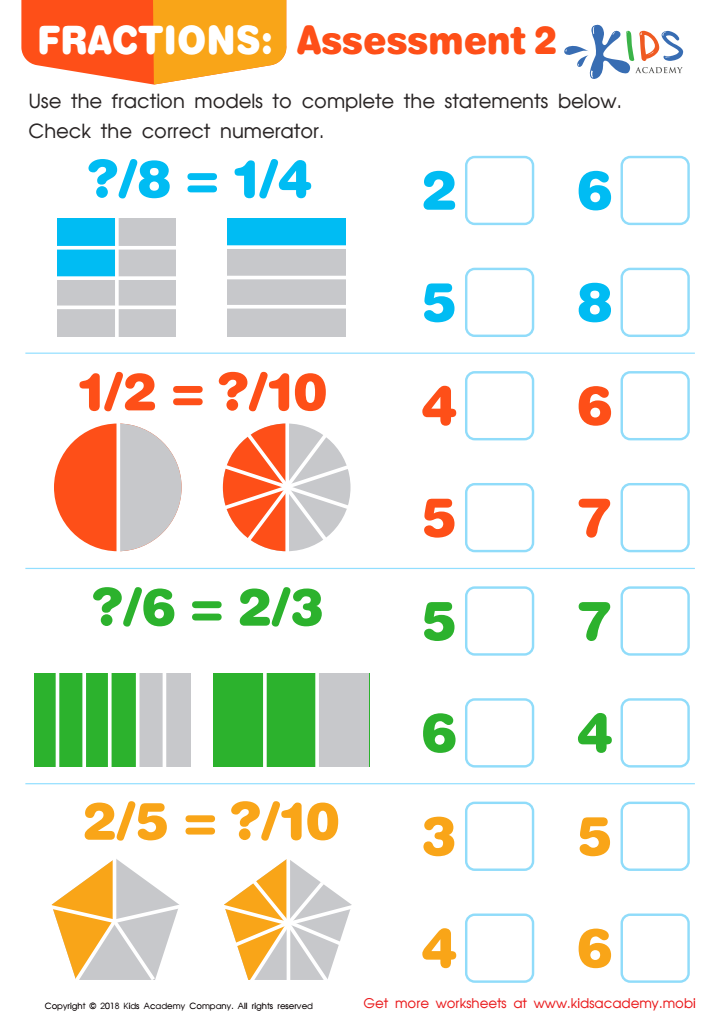
Fractions: Assessment 2 Worksheet
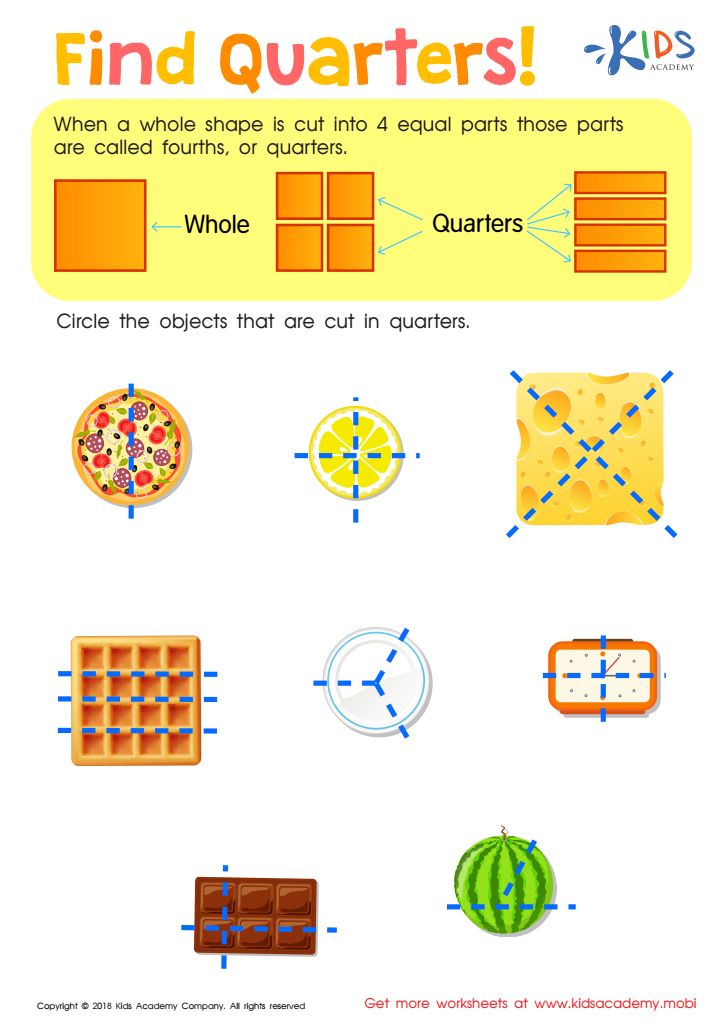
Find Quarters Worksheet
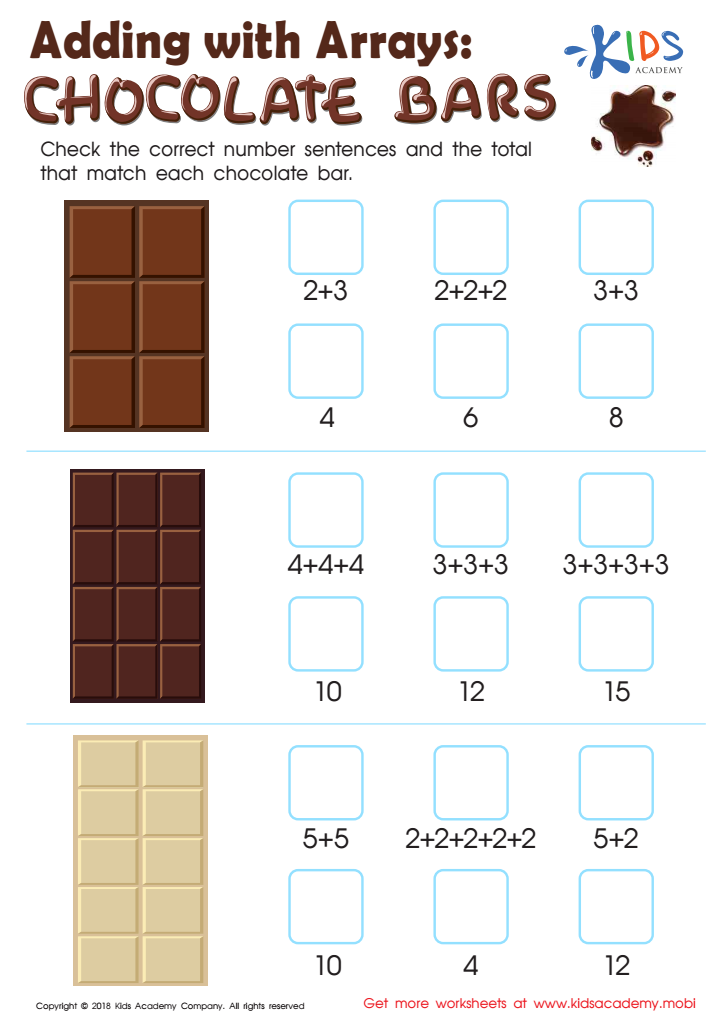
Adding with Arrays: Chocolate Bars Worksheet
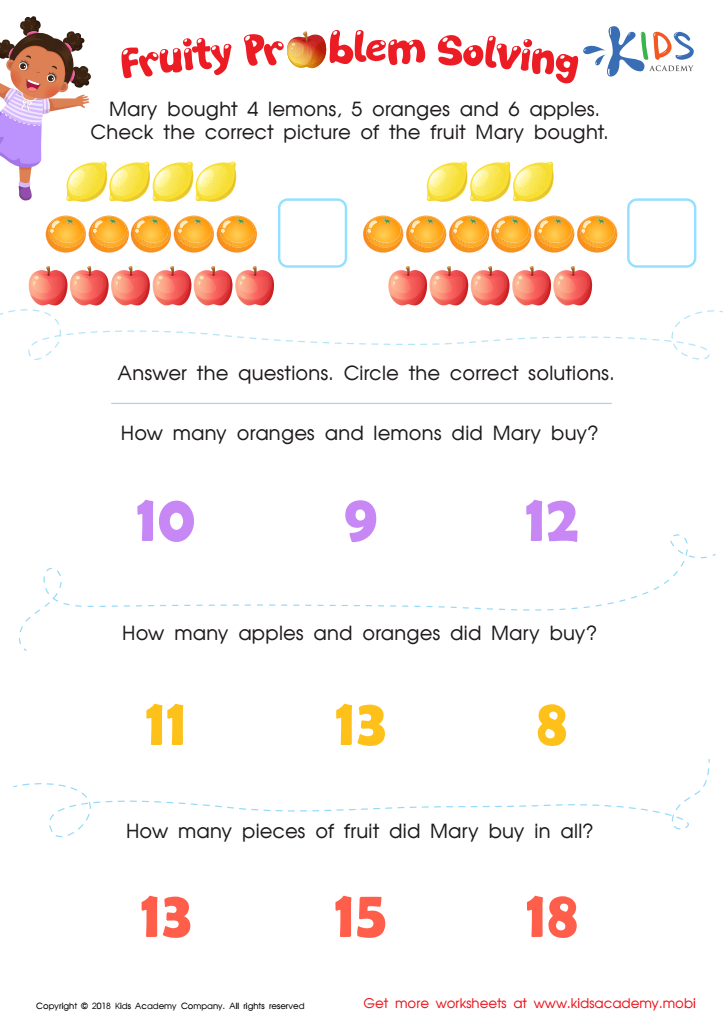
Fruity Problem Solving Worksheet
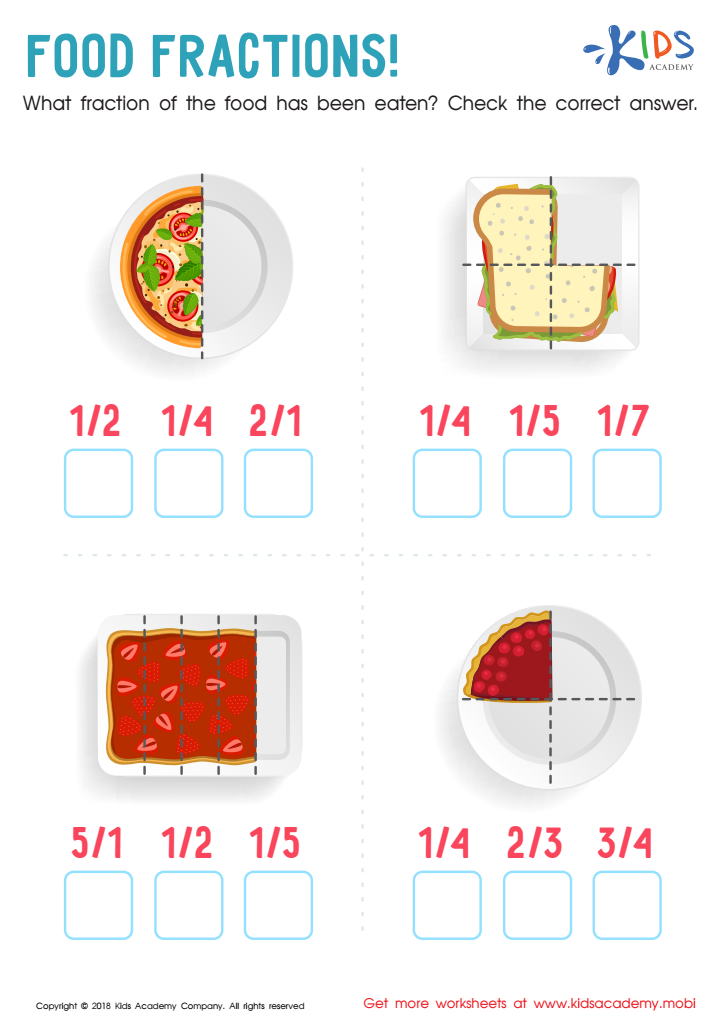
Food Fractions Worksheet
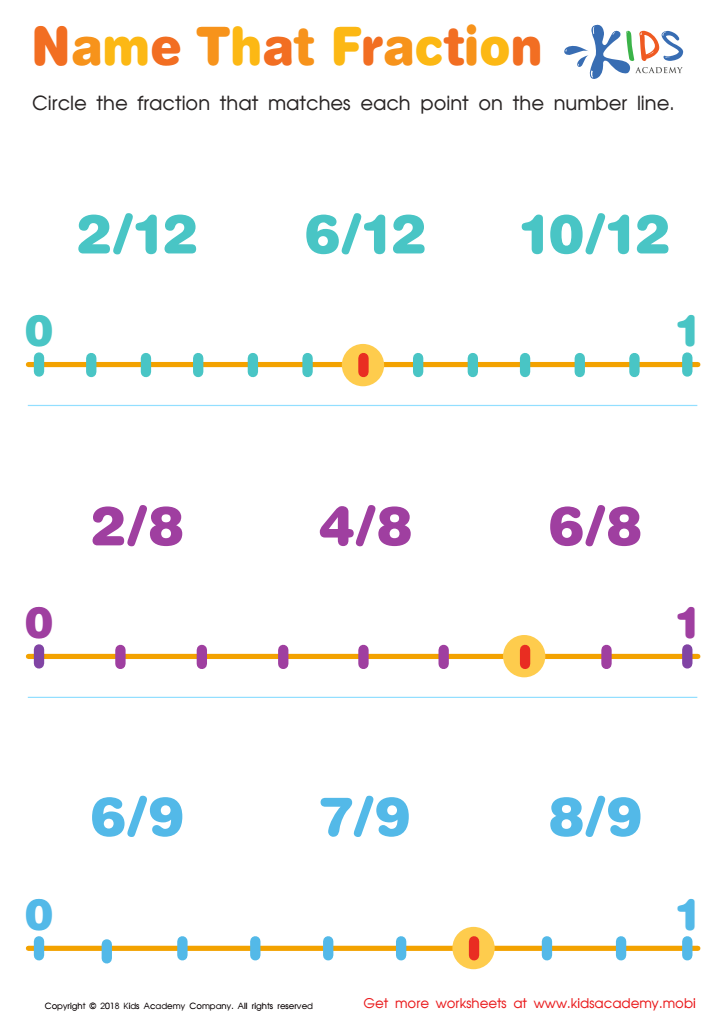
Name That Fraction Worksheet
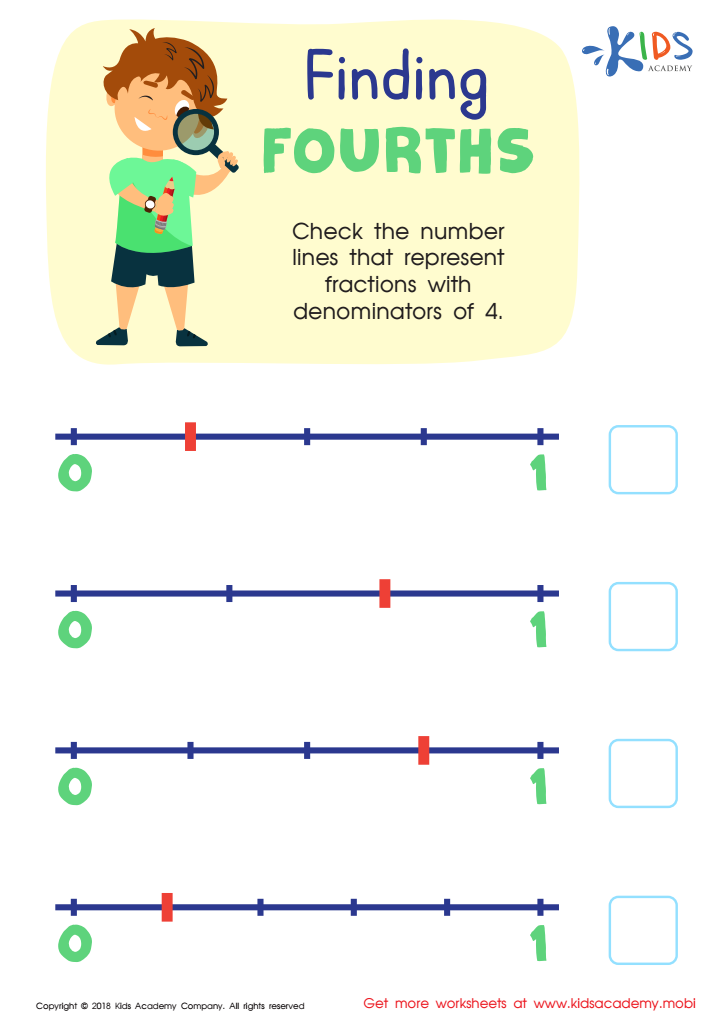
Finding Fourths Worksheet
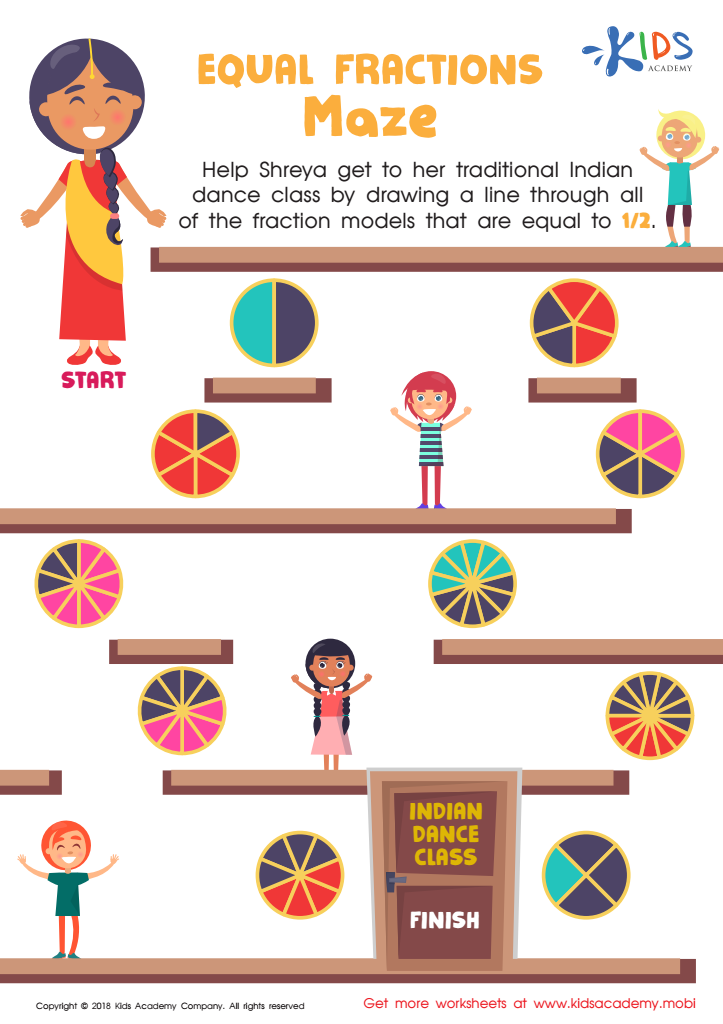
Equal Fractions Maze Worksheet
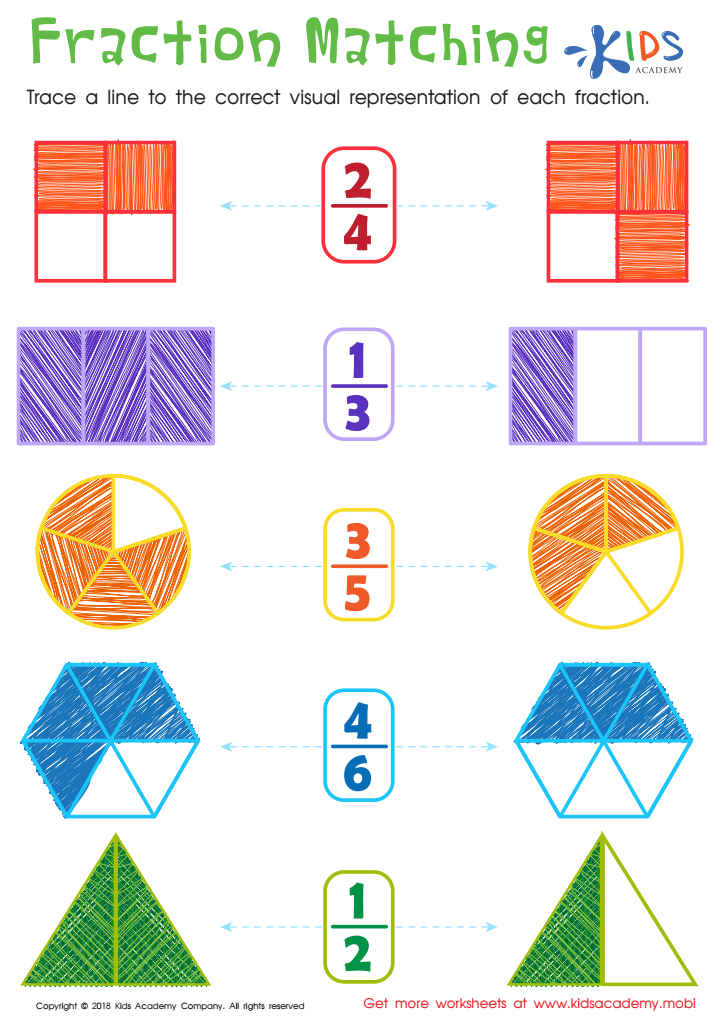
Fraction Matching Worksheet
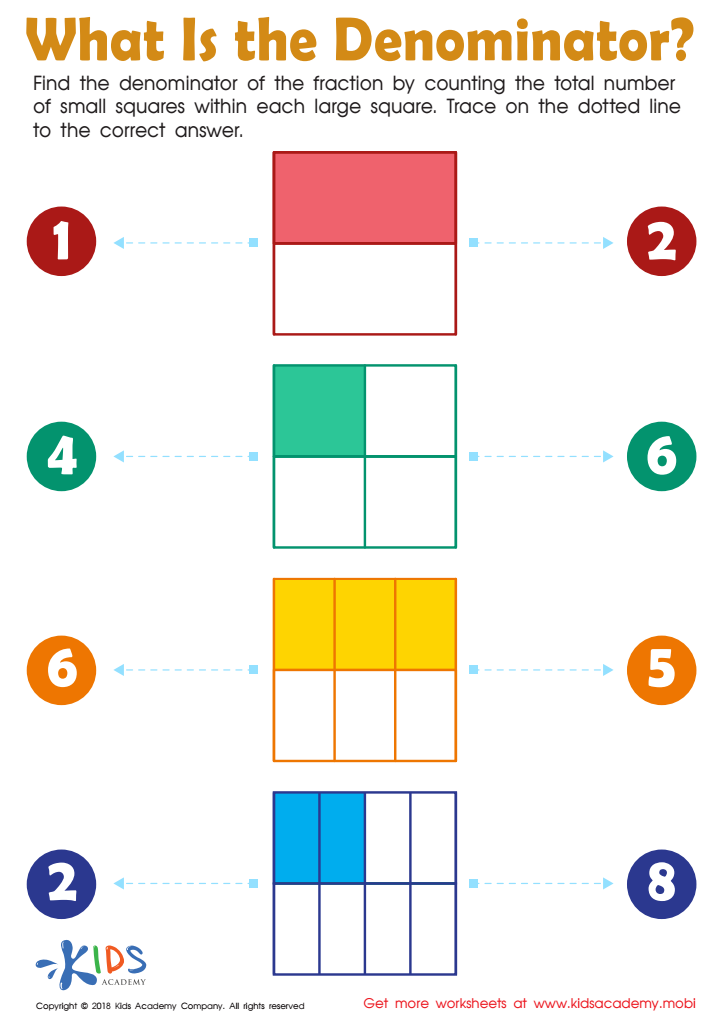
What Is the Denominator? Worksheet
Horse Race Worksheet
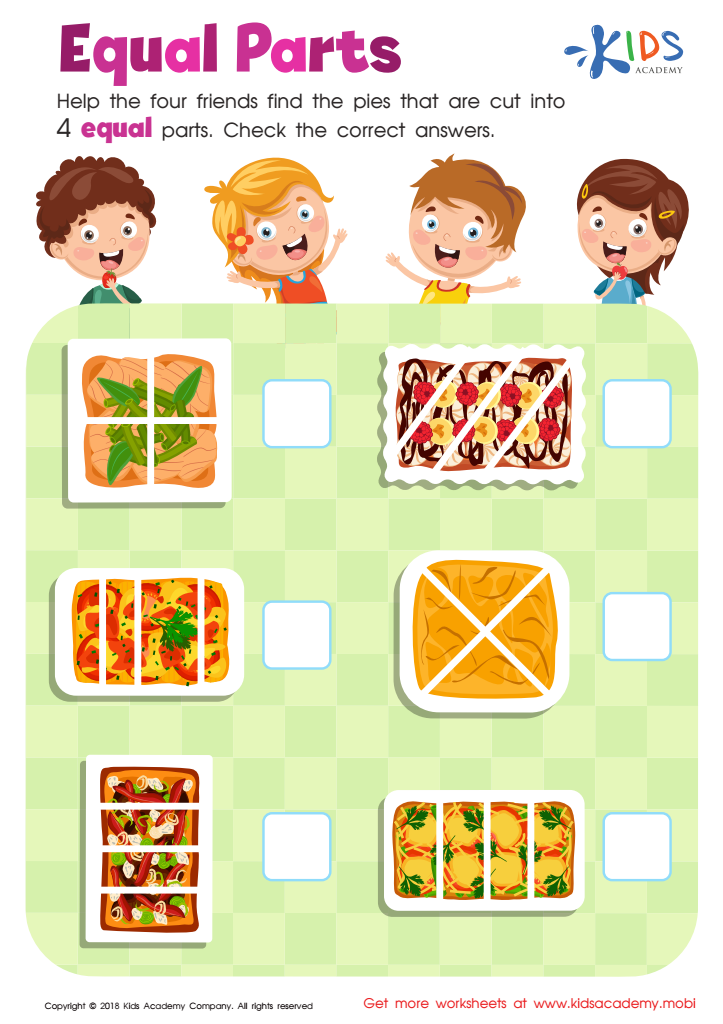
Equal Parts: Food Worksheet
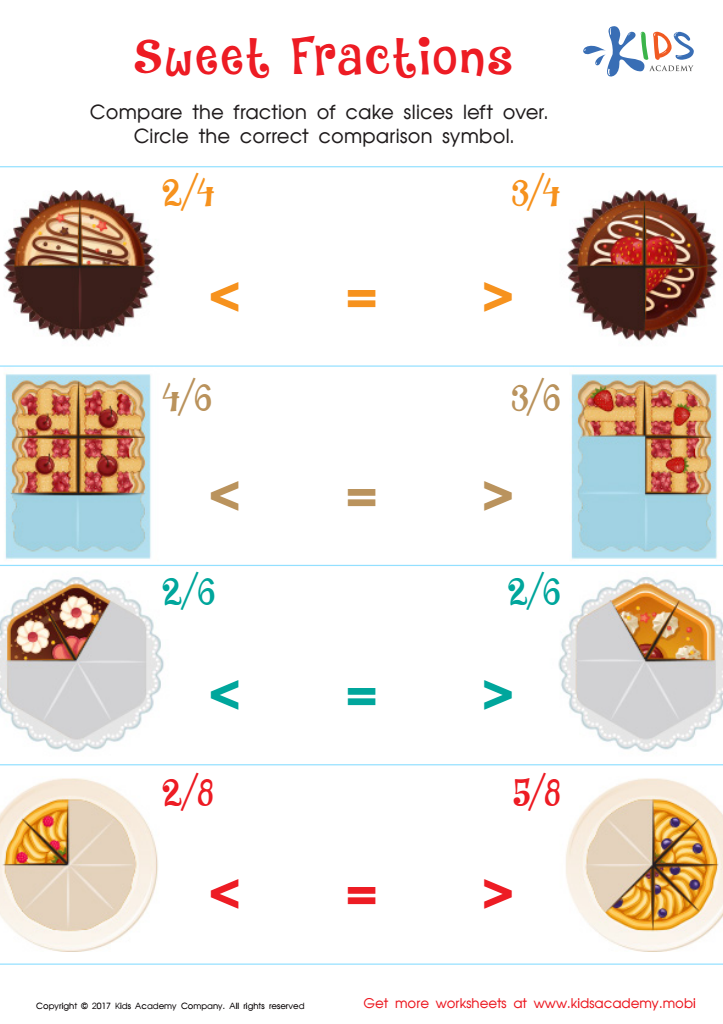
Compare Fractions Worksheet







Understanding fractions is crucial for children ages 6-8 as it lays a foundational block for their future mathematical success and critical thinking skills. During these early years, children are not just learning numbers; they are developing the capacity to grasp more complex numerical concepts. Introducing fractions helps young learners comprehend how numbers interact beyond whole numbers, promoting a deeper understanding of parts and wholes.
For parents and teachers, nurturing this comprehension has several benefits. Firstly, it enhances problem-solving skills. Activities that involve fractions often require children to think critically and approach problems from different angles. Secondly, it prepares them for real-life situations where fractions are indispensable, such as in cooking, sharing, and measuring.
Moreover, fractions are integral for advancing in math; a strong grasp of fractions will assist in learning subjects like algebra and geometry later on. Children’s confidence also blossoms when they master fractions as they feel capable of tackling challenging problems, fostering a positive attitude toward math.
Understanding fractions at an early age promotes academic growth and equips children with essential skills they’ll use throughout their education and everyday lives. Therefore, prioritizing this area of learning is vital for both parents and teachers who aim to support children's holistic development.








