Normal 2D Shapes Worksheets for Ages 6-9 - Page 2
26 filtered results
-
From - To
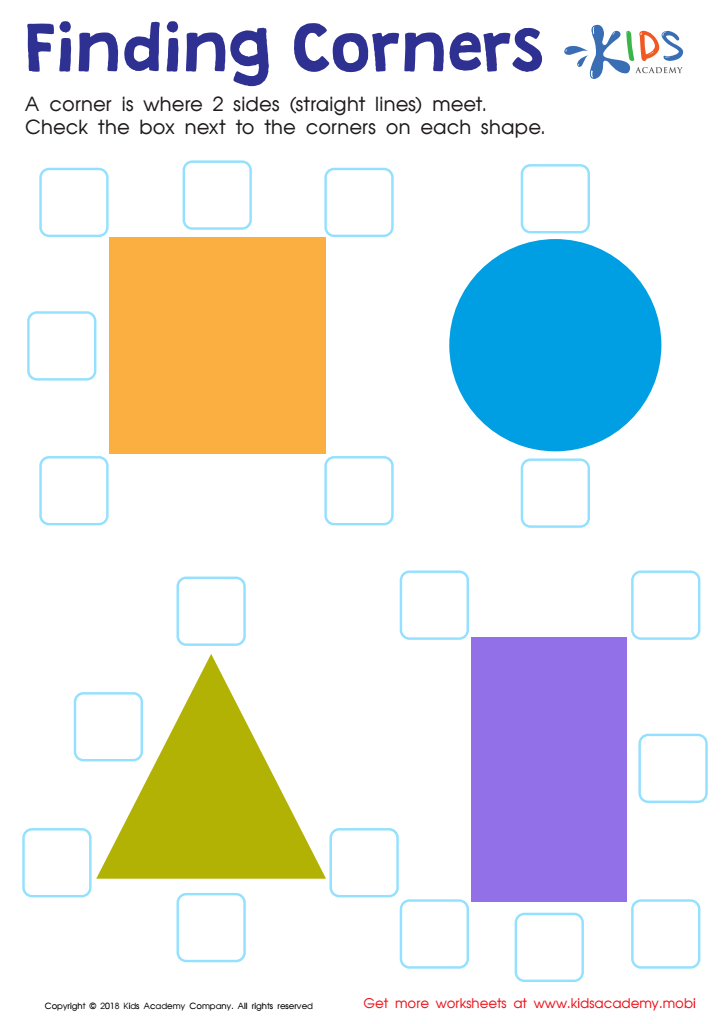
Finding Corners Worksheet
 Assign to My Students

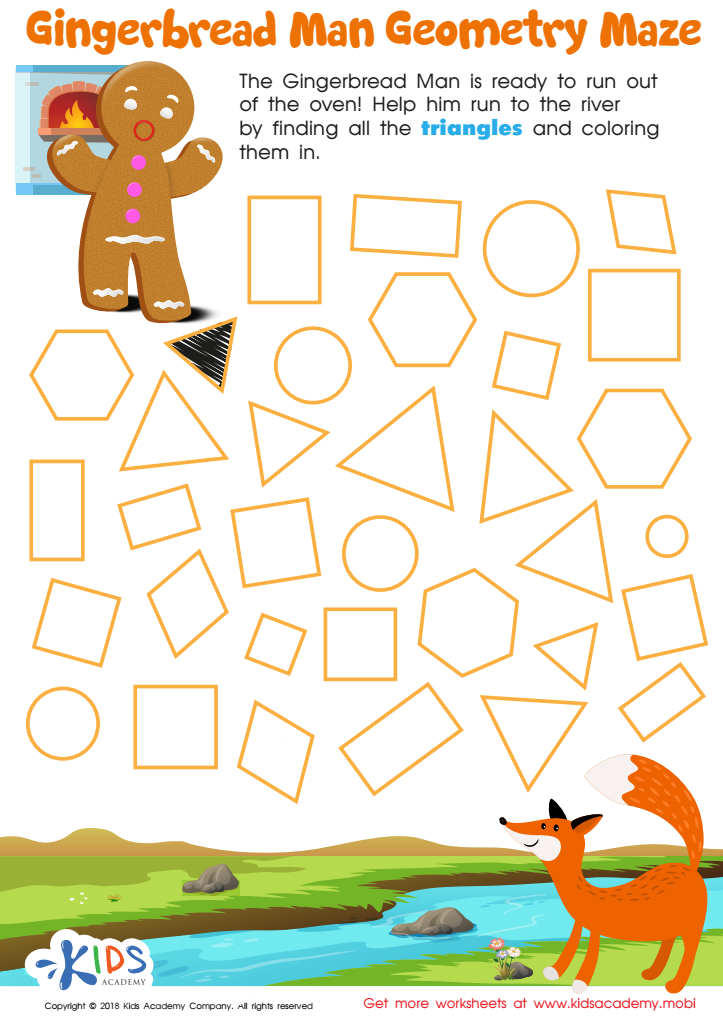
Gingerbread Man Geometry Maze Worksheet








Understanding normal 2D shapes is fundamental for children ages 6-9 as it lays the groundwork for their mathematical skills and cognitive development. At this stage, children are naturally curious and ready to explore the world around them, making it an ideal time to introduce geometric concepts. Recognizing shapes such as squares, circles, triangles, and rectangles helps them develop spatial awareness and improve their ability to classify and categorize objects.
Parents and teachers should care about 2D shapes because they are integral to numerous real-life contexts—from understanding maps to art and design. Engaging with shapes enhances critical thinking, problem-solving abilities, and boosts confidence in mathematics. Incorporating activities like drawing, sorting, and building with shapes can make learning more dynamic and enjoyable, empowering children to make connections beyond the classroom.
Additionally, the knowledge of basic shapes supports further learning in geometry and algebra, essential for later educational stages. Teaching these concepts also nurtures a child's ability to observe and describe their environment. By recognizing the importance of shapes in daily life, parents and teachers can help instill a lifelong interest in mathematics and a solid foundation for academic success.