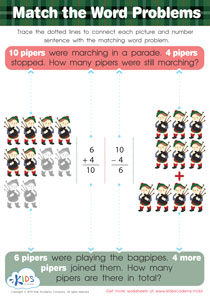
Problem-Solving Skills Normal Addition Worksheets for Ages 6-9
10 filtered results
-
From - To
Enhance your child's mathematical abilities with our Problem-Solving Skills Normal Addition Worksheets, specifically designed for ages 6-9. These engaging worksheets focus on developing critical thinking and problem-solving skills through fun, interactive addition exercises. Each activity encourages children to analyze problems, devise solutions, and build confidence in their mathematical abilities. Our easy-to-understand format ensures that young learners can grasp essential concepts while enjoying the learning process. Perfect for classroom use or at home, these worksheets are an excellent resource to support your child's journey in mastering addition and enhancing their overall cognitive skills. Unleash their potential today!
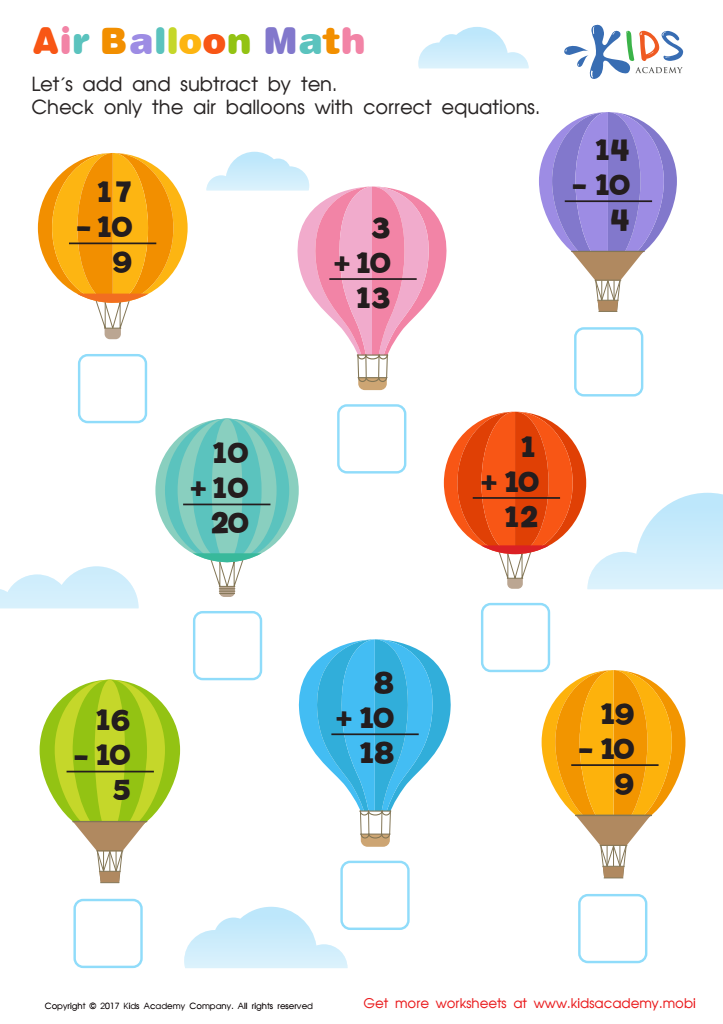
Air Balloon Math Worksheet
 Assign to My Students
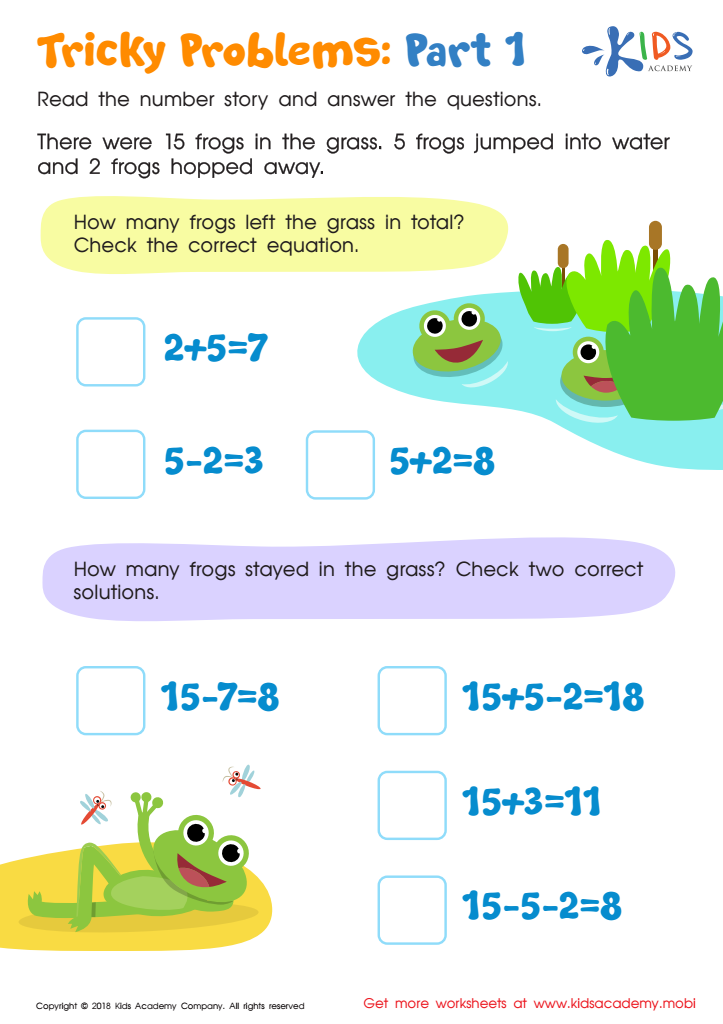
Tricky Problems Worksheet: Part 1
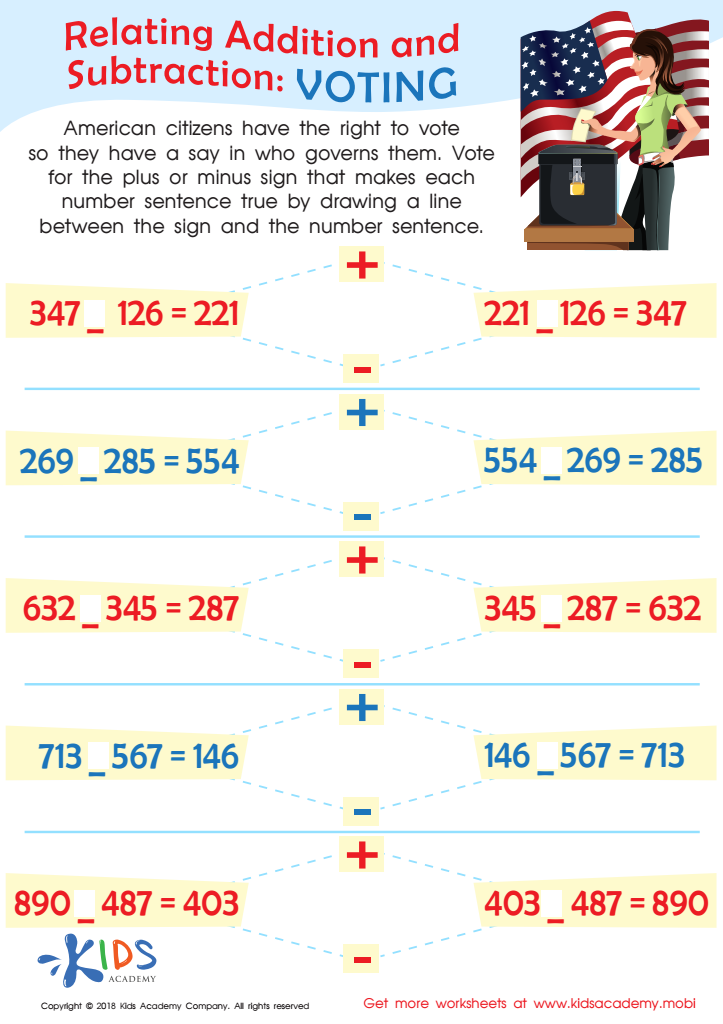
Voting Worksheet
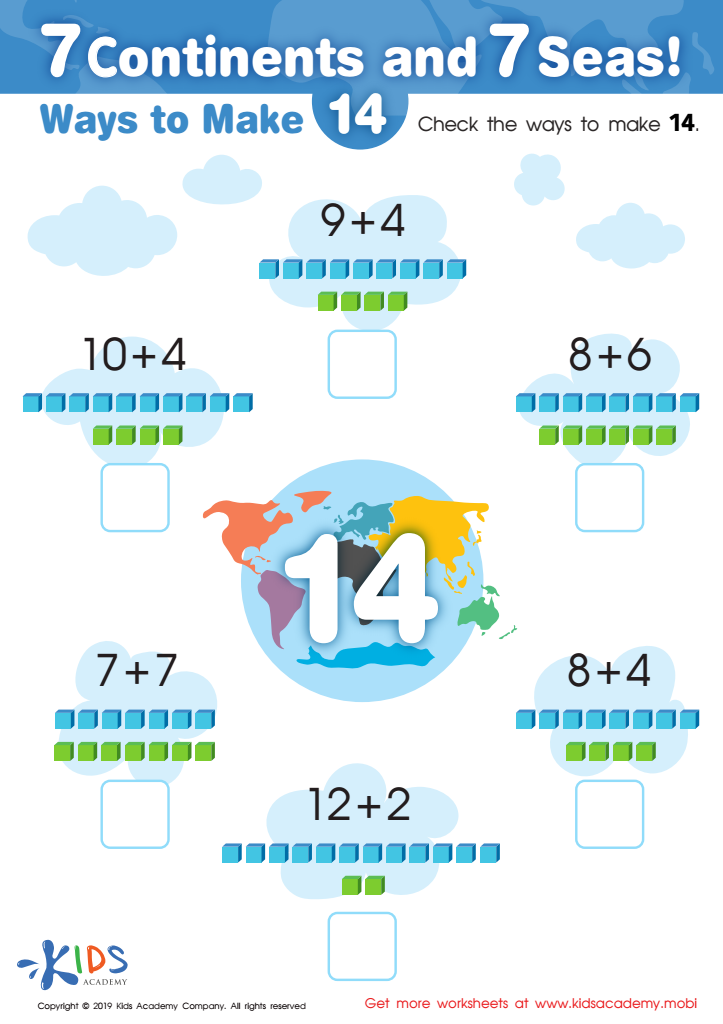
7 Continents and 7 Seas Worksheet
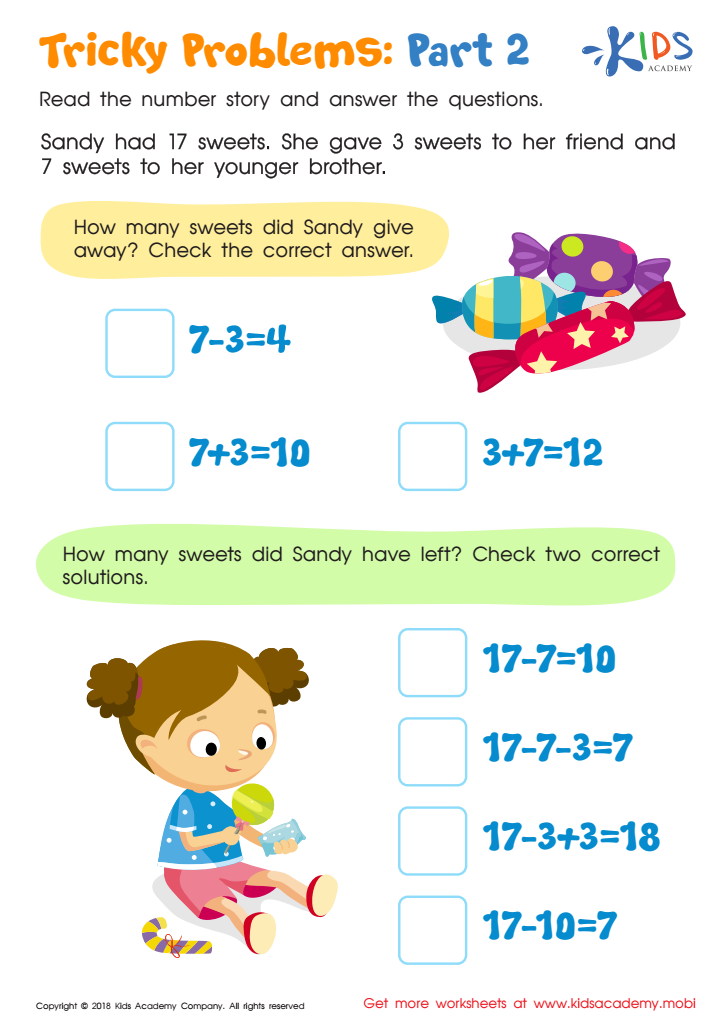
Tricky Problems Worksheet: Part 2
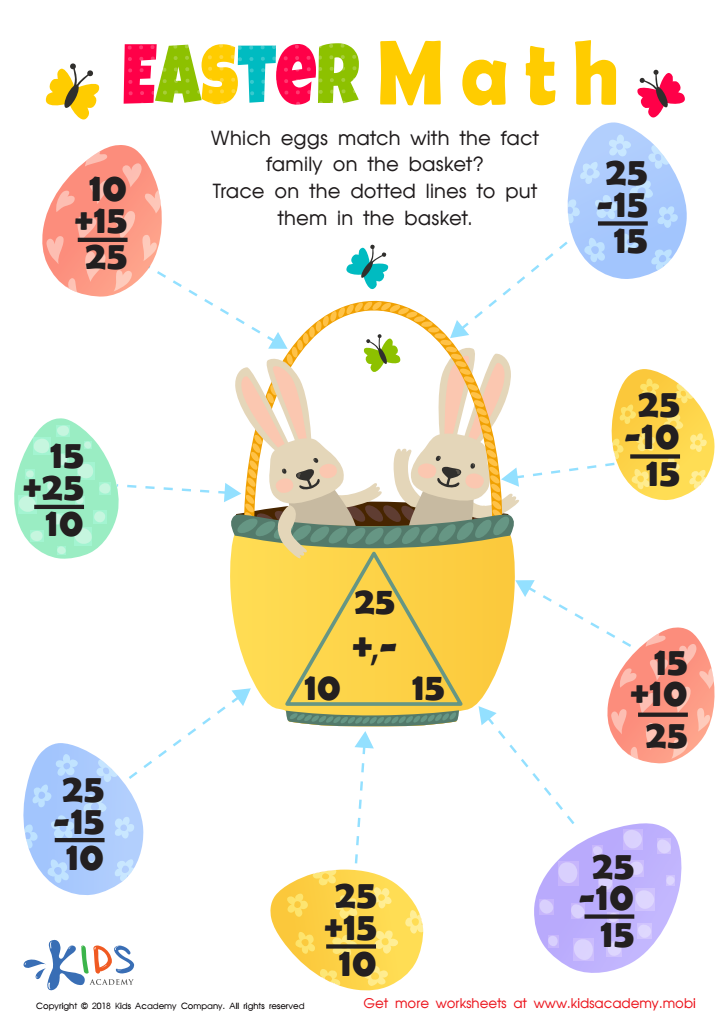
Fact Families: Easter Math Worksheet
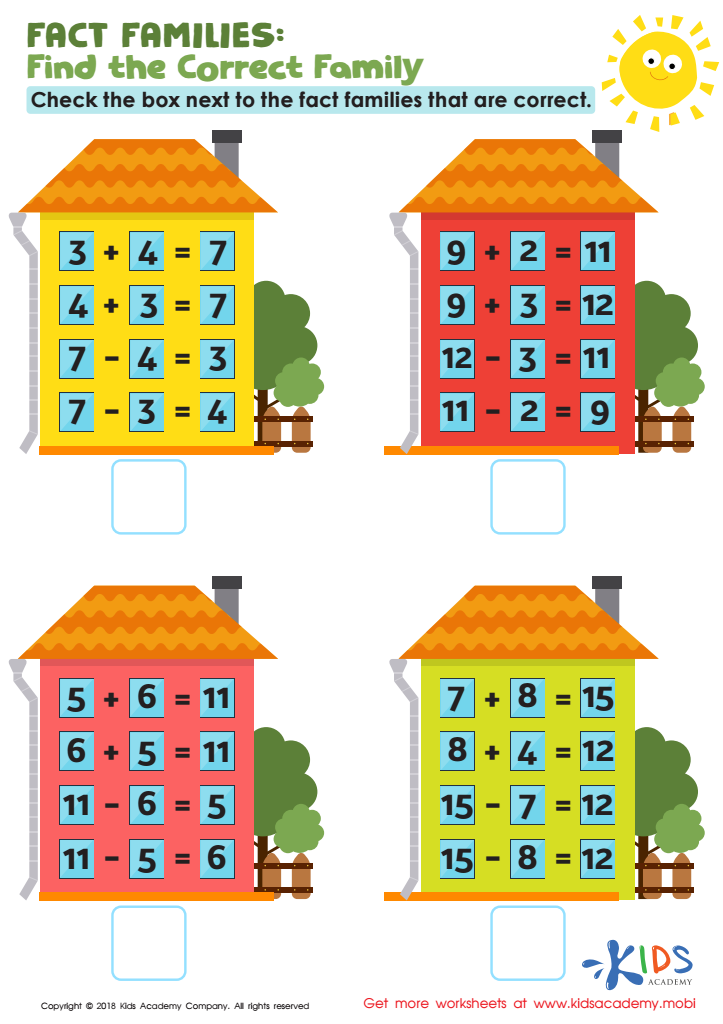
Fact Families: Find Correct Family Worksheet
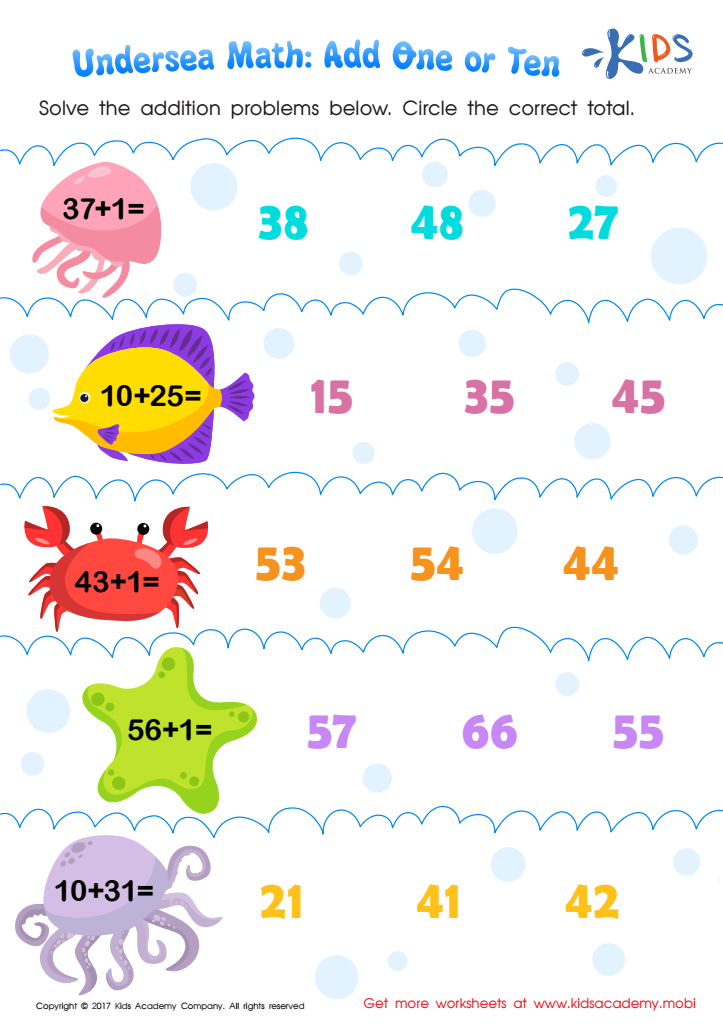
Undersea Math Worksheet
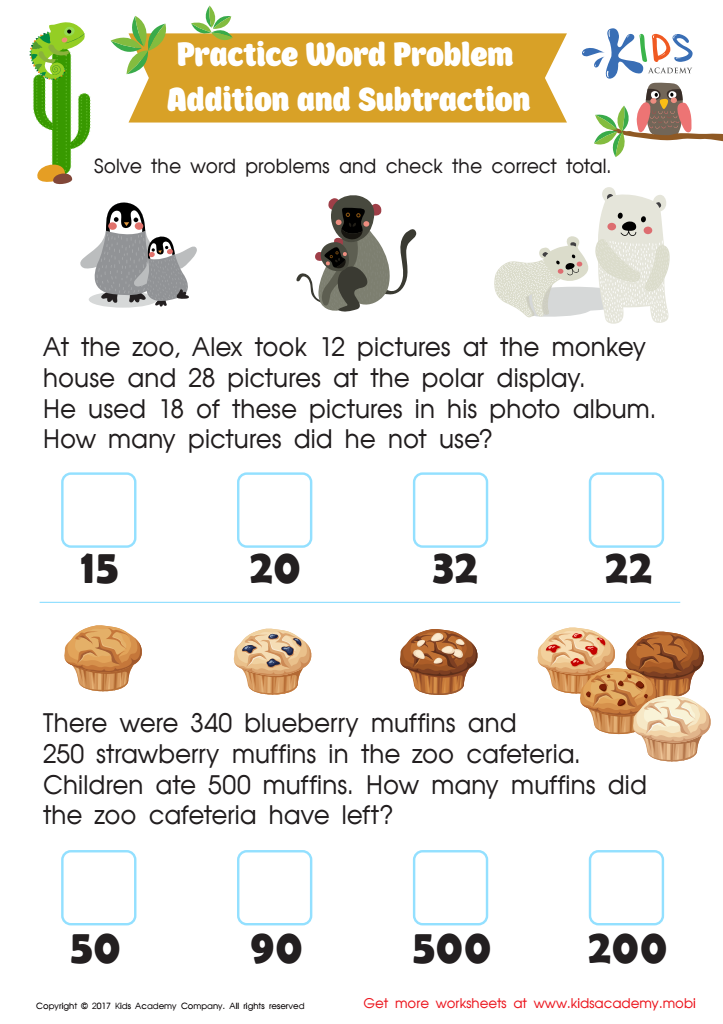
Addition and Subtraction: Word Problems Worksheet
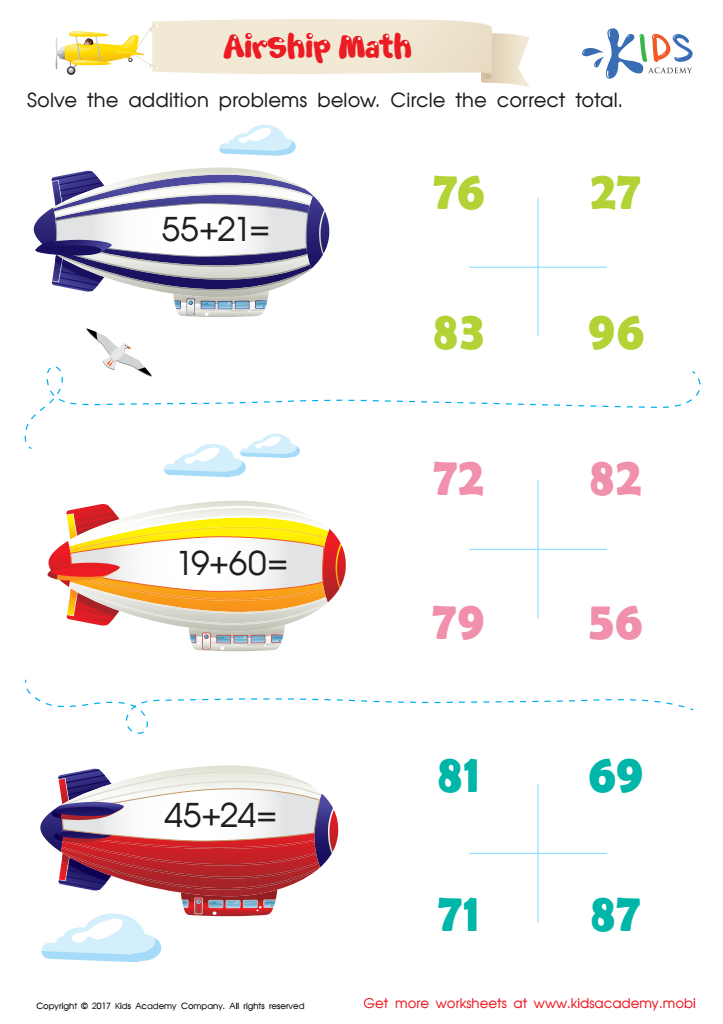
Airship Math Addition Printable








Parents and teachers should prioritize the development of problem-solving skills in normal addition for children aged 6-9 because these skills form the foundation for future mathematical understanding and critical thinking. At this developmental stage, children are not just learning to perform calculations; they are also beginning to comprehend concepts, analyze situations, and apply strategies to arrive at solutions.
Developing strong problem-solving skills allows children to approach mathematical challenges with a positive mindset and greater confidence. It encourages them to think creatively, enabling them to find multiple ways to solve a problem rather than relying on rote methods. This adaptability is essential in mathematics and in real-life situations.
Moreover, fostering problem-solving skills can enhance a child's engagement and interest in math, helping to diminish anxiety around the subject. When children grasp how to break down problems, they are more likely to persist when encounters difficulties, cultivating resilience.
Encouraging discussions around different problem-solving approaches also promotes better communication skills and teamwork among peers. Hence, emphasizing problem-solving in normal addition will lay a robust groundwork for children, ensuring they not only excel academically but also develop life skills that will benefit them in various aspects of their future.