Filters

11 filtered results

Clear all filters
Favorites
With answer key
Interactive

11 filtered results

Difficulty Level

Grade


Subject

    Explore our engaging "Normal Sorting Worksheets for Ages 6-9" designed to develop key math skills in young learners. Perfect for first, second, and third graders, these worksheets enhance critical thinking by teaching kids to categorize objects by various attributes such as size, shape, color, and more. Each activity encourages hands-on learning and visual discrimination, fostering a solid foundation in math concepts. Ideal for classroom use or home practice, our printable resources combine fun exercises with educational value. Support your child's learning journey with Kids Academy’s vibrant and interactive sorting worksheets tailored for ages 6-9.

    Check out this FREE Trial Lesson on Sorting for age 6-9!

    Sorting Objects into 3 Categories

    Favorites
    With answer key
    Interactive
    • 6-9
    • Sorting
    • Normal
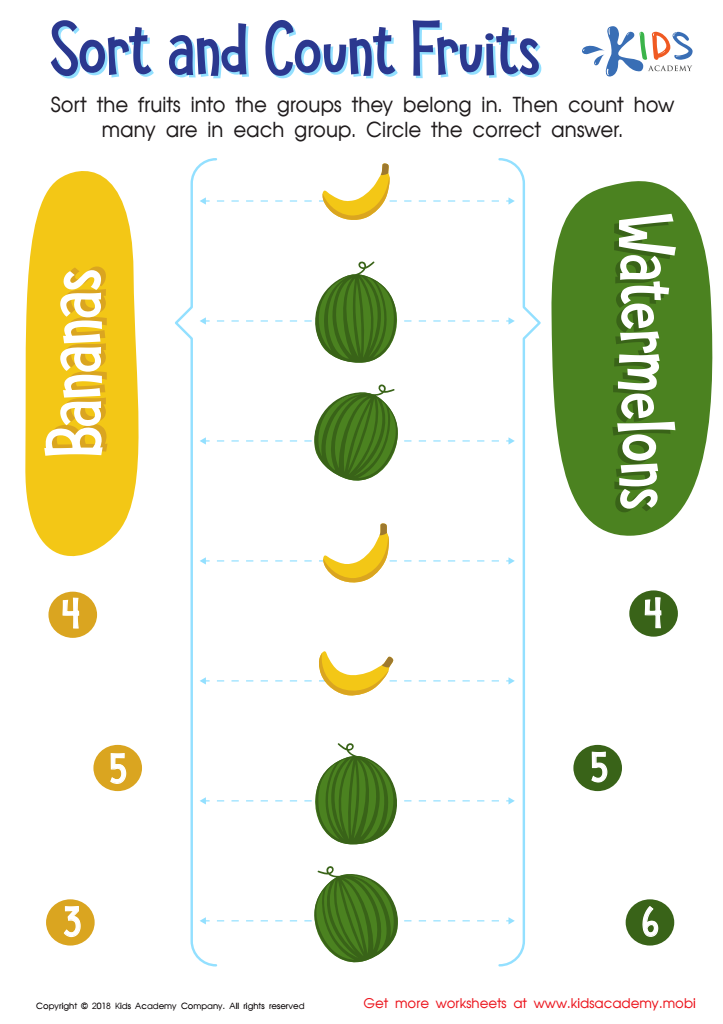
    Sort and Count Fruits Worksheet
    Sort and Count Fruits Worksheet

    Sort and Count Fruits Worksheet

    Allow your children to hone their critical thinking and number reasoning skills with this free worksheet. They'll sort, count, and trace fruits while learning basic number sense. A fun, delicious learning experience with familiar pictures they'll love.
    Sort and Count Fruits Worksheet
    Worksheet
    Sort and Count to the Moon Worksheet
    Sort and Count to the Moon Worksheet

    Sort and Count to the Moon Worksheet

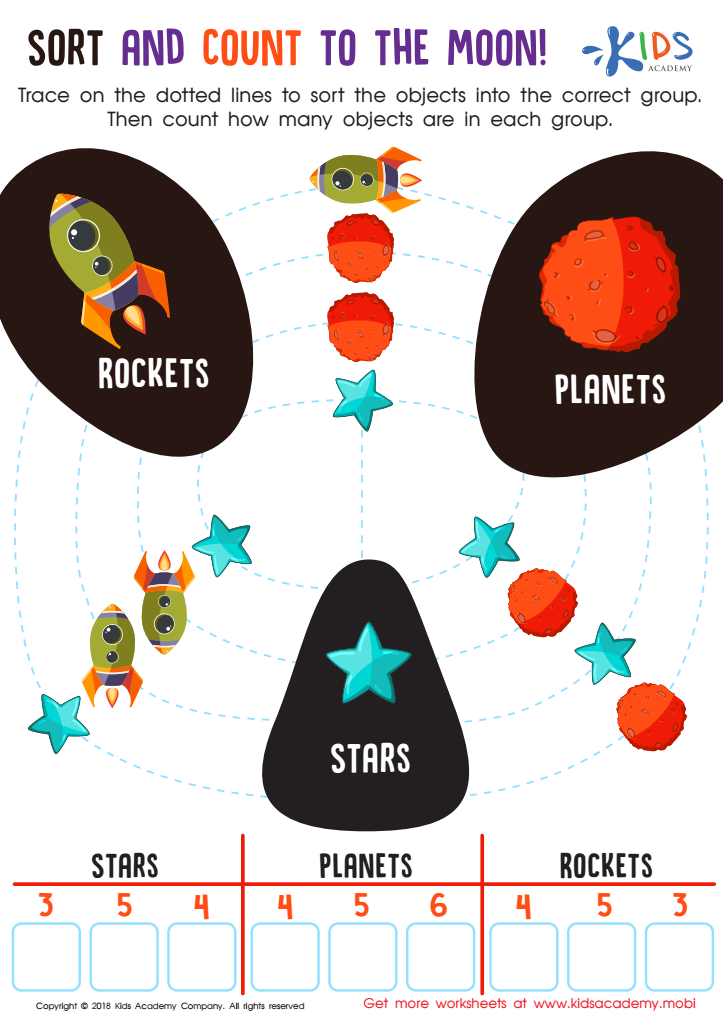
    Little space explorers will love counting, sorting and strengthening number sense with this galactic worksheet! They'll use traceable lines to sort pictures of stars, planets and rockets into categories according to properties. After sorting, they'll count each item and fill in the boxes. Bold pictures make it fun and build critical thinking skills.
    Sort and Count to the Moon Worksheet
    Worksheet
    Sorting Food Worksheet
    Sorting Food Worksheet

    Sorting Food Worksheet

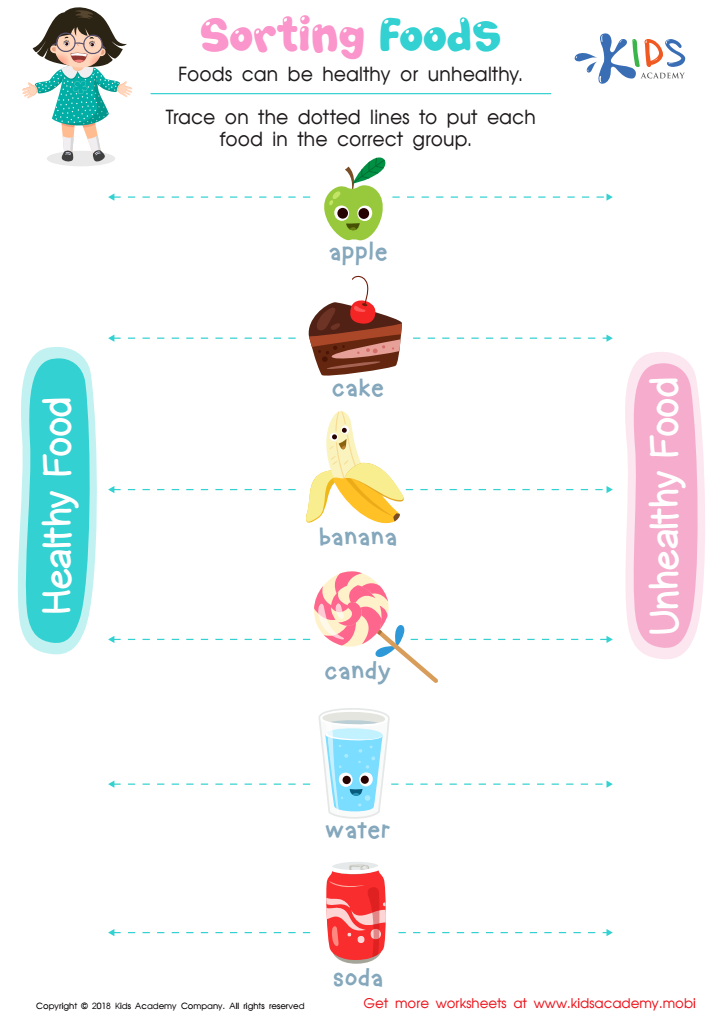
    This delightful worksheet boosts critical thinking and fine motor skills. Kids use prior knowledge and pictures to sort foods into healthy and unhealthy groups. Tracing lines support accurate sorting and matching. Enjoy fun and free learning!
    Sorting Food Worksheet
    Worksheet
    Sorting Animals in 3 Groups Worksheet
    Sorting Animals in 3 Groups Worksheet

    Sorting Animals in 3 Groups Worksheet

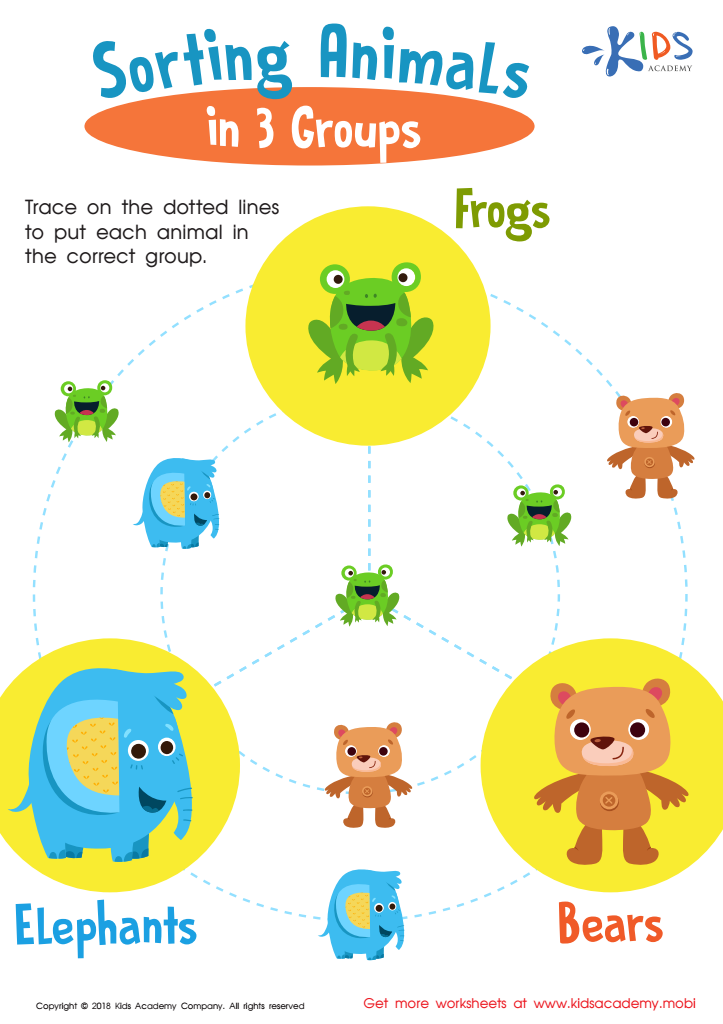
    Let your kids practice and build skills for future Venn Diagrams with this PDF worksheet. They'll trace lines to match and group animals, and learn the differences and similarities of animals by categorizing with pictures and words. Plus, it's a great way to develop fine motor skills.
    Sorting Animals in 3 Groups Worksheet
    Worksheet
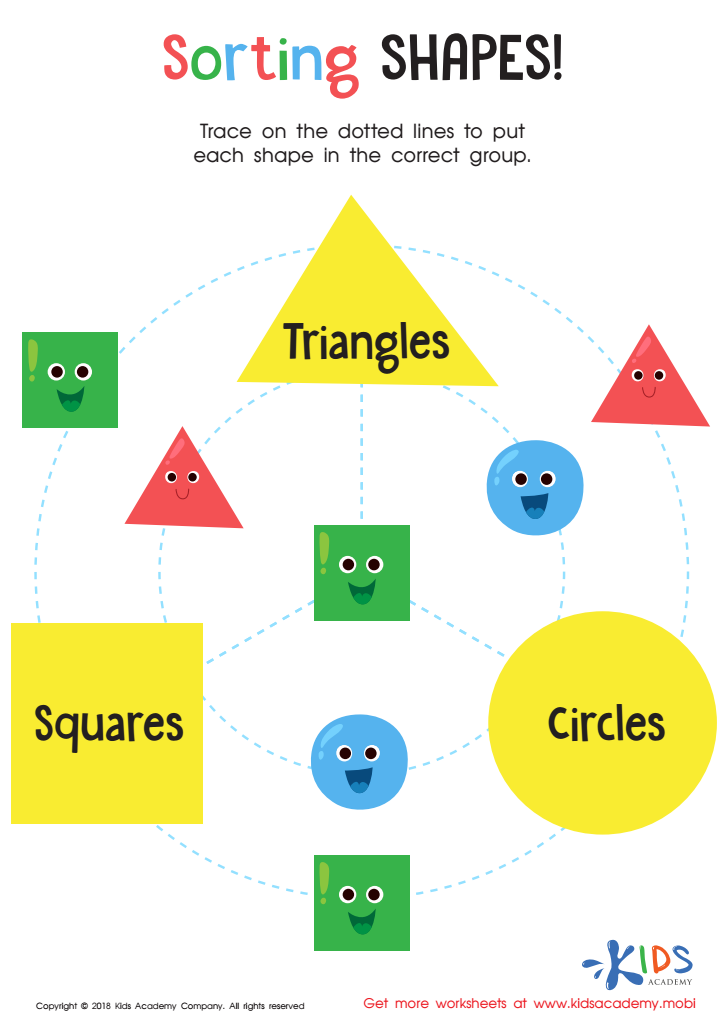
    Sorting Shapes - Part 3 Worksheet
    Sorting Shapes - Part 3 Worksheet

    Sorting Shapes - Part 3 Worksheet

    Download this fun PDF to help your kiddos recognize basic shapes like circles, squares, and triangles. It'll sharpen their fine motor skills as they trace and sort shapes by color, size, and sides. Your kids won't even realize they're learning with these cheery shapes!
    Sorting Shapes - Part 3 Worksheet
    Worksheet
    Recycle Sort Worksheet
    Recycle Sort Worksheet

    Recycle Sort Worksheet

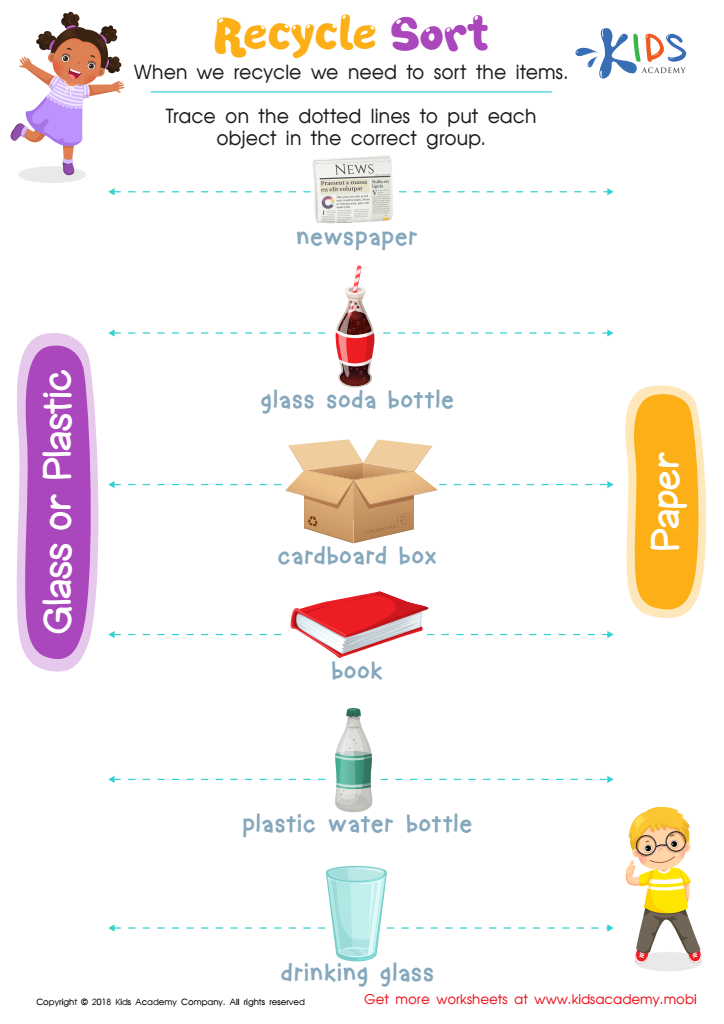
    Help your children become eco-warriors while they develop critical thinking and fine motor skills with this free downloadable worksheet! Engaging pictures and matching words, plus fun and bright colors, will have kids analyzing and sorting recyclables into paper or glass/plastic groups using traceable lines.
    Recycle Sort Worksheet
    Worksheet
    Sorting Animals Worksheet
    Sorting Animals Worksheet

    Sorting Animals Worksheet

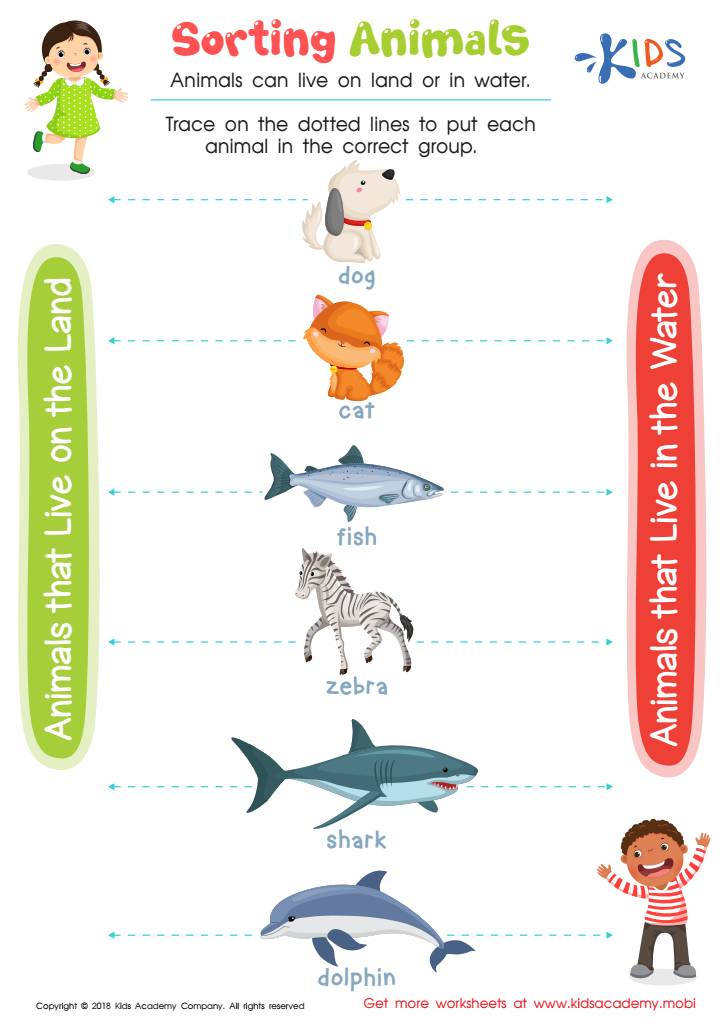
    Your kids will love this free, interactive worksheet! With image clues, they can read and trace the animal names, and then sort them into groups of land or water animals. It's an enjoyable way to boost their critical thinking, fine motor and prior knowledge skills.
    Sorting Animals Worksheet
    Worksheet
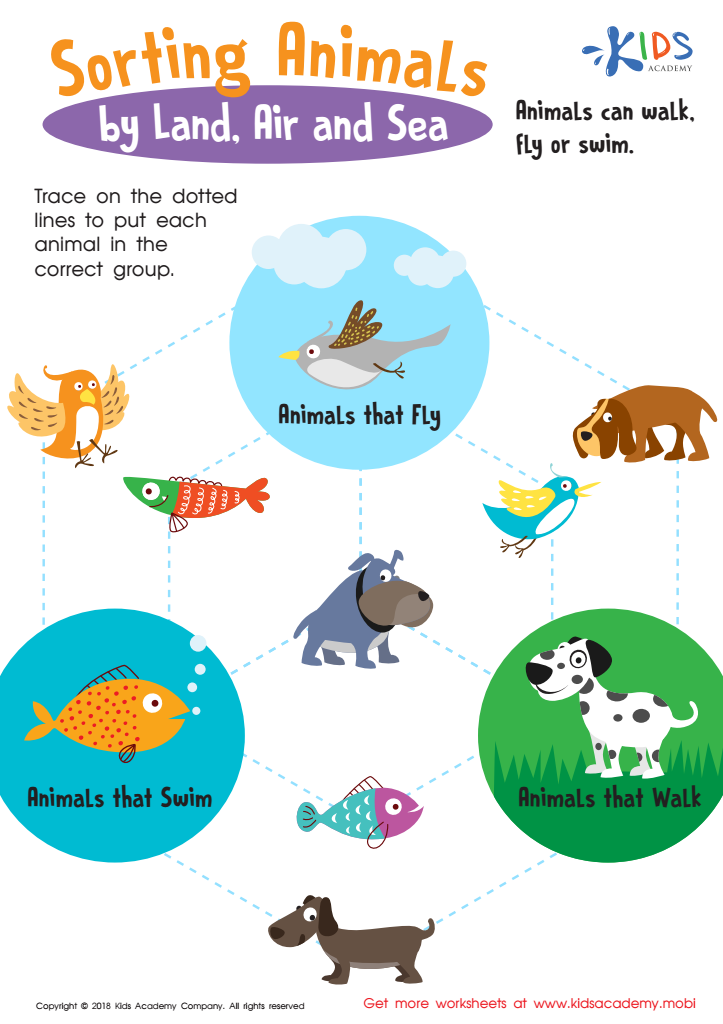
    Sorting Animals by Land, Air and Sea Worksheet
    Sorting Animals by Land, Air and Sea Worksheet

    Sorting Animals by Land, Air and Sea Worksheet

    Kids will use critical thinking and fine motor skills with this worksheet! They'll analyze animal traits and draw lines to sort them into groups of those that fly, swim, or walk. It's a fun way to hone skills and have a great time!
    Sorting Animals by Land, Air and Sea Worksheet
    Worksheet
    Matching and Sorting for Kindergarten: Assessment 1 Worksheet
    Matching and Sorting for Kindergarten: Assessment 1 Worksheet

    Matching and Sorting for Kindergarten: Assessment 1 Worksheet

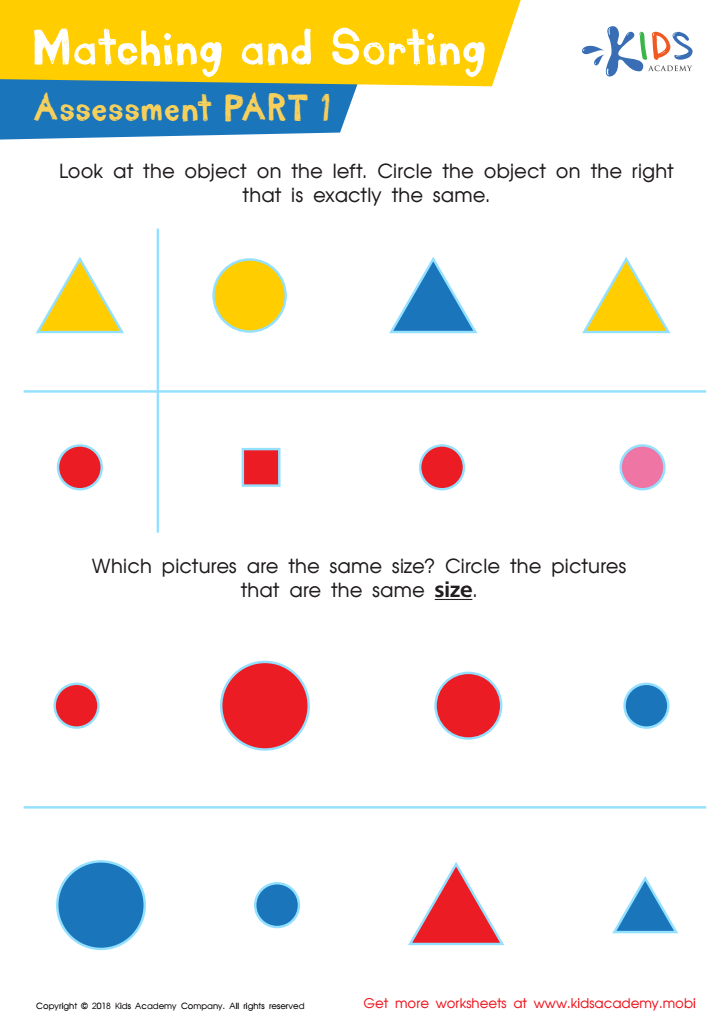
    Kids can sharpen their visual discrimination skills and analyze properties of shapes with this free downloadable worksheet. They'll identify color, size, shape, and symmetry, working with bright primary colors. This helps build a strong geometric foundation, learning to identify shape attributes.
    Matching and Sorting for Kindergarten: Assessment 1 Worksheet
    Worksheet
    Heavy or Light? Worksheet
    Heavy or Light? Worksheet

    Heavy or Light? Worksheet

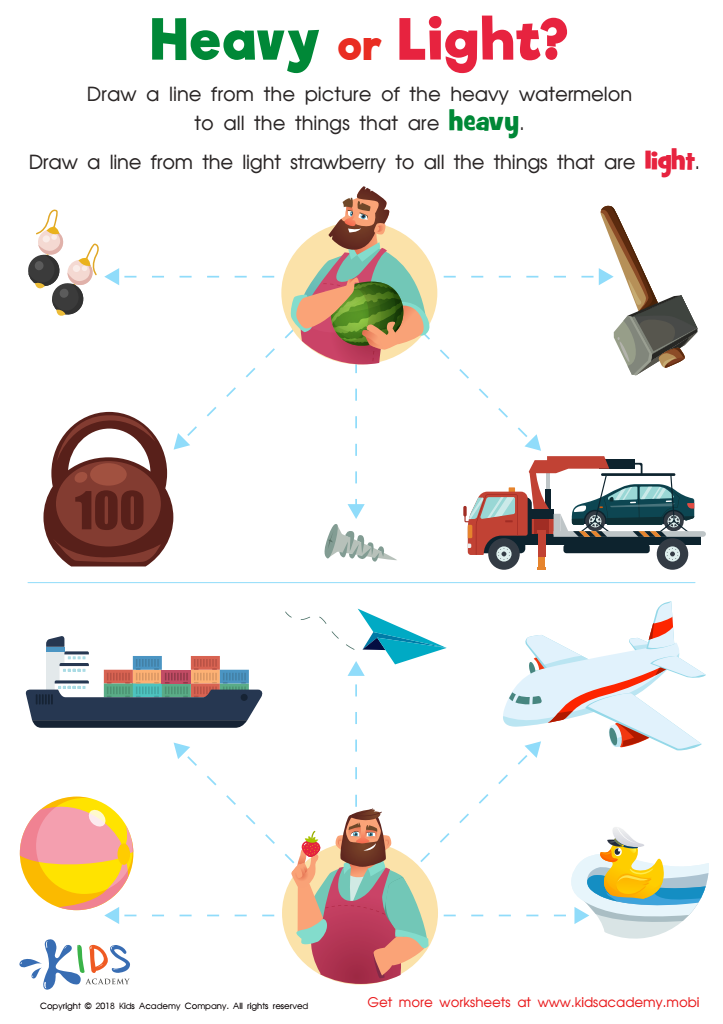
    This fun, free worksheet helps kids build measurement skills and reinforce concepts of 'heavy' and 'light', while also improving their fine motor skills. Kids use traceable lines to connect the gentleman to objects they know, giving them a strong foundation for understanding weight.
    Heavy or Light? Worksheet
    Worksheet
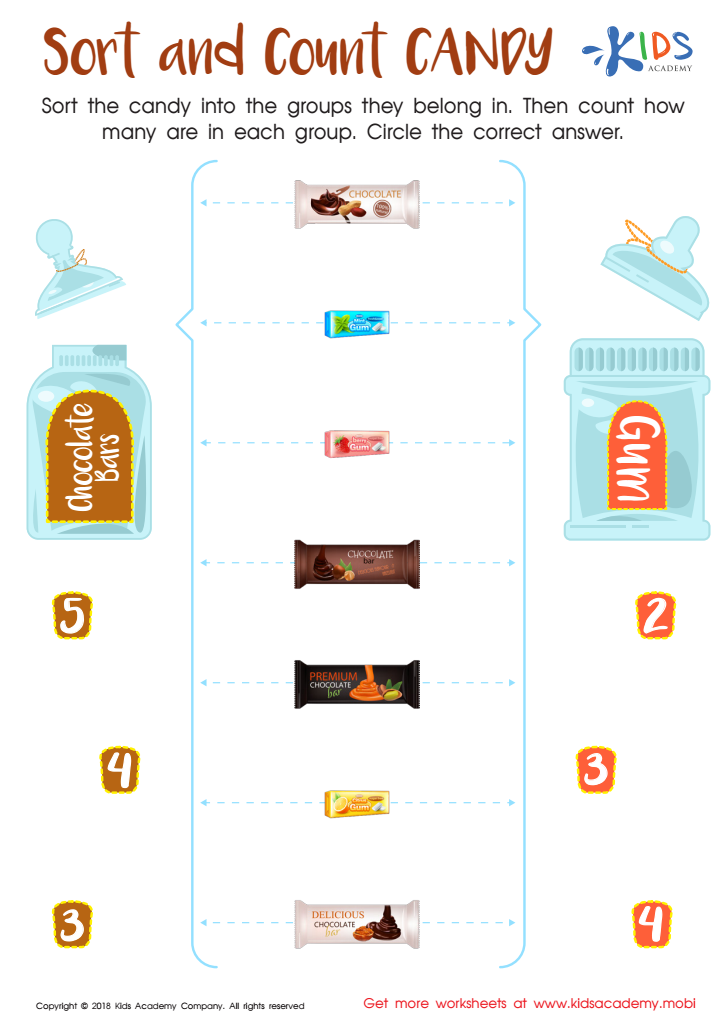
    Sort and Count Candy Worksheet

    Sort and Count Candy Worksheet

    Sort and Count Candy Worksheet

    Sort chocolate and candy with your kids! Help them use recognizable items and pictures to sort, practice counting with one-to-one representation, and develop their fine motor skills with the traceable lines. Download this free worksheet to get started. Yum!
    Sort and Count Candy Worksheet

    Worksheet


    Normal sorting involves organizing objects or information into specific groups or categories based on common attributes like size, color, shape, or function. This skill is essential for kids aged 6-9 for several reasons.

    Firstly, normal sorting promotes cognitive development. When children categorize items, they practice critical thinking, differentiation, and problem-solving, foundational skills for complex math and science concepts. Sorting helps them see patterns and relationships, essential for understanding the world around them.

    Secondly, normal sorting provides a basis for building vocabulary and language skills. As children sort and describe groups, they learn new words and terminologies, enhancing their communication abilities. For example, they may learn terms like "bigger," "smaller," or "similar."

    Thirdly, normal sorting aids in organization and responsibility. When kids learn to group items, they become more adept at organizing their own belongings, making it easier for them to manage their school materials and clean up after activities.

    Lastly, normal sorting activities can be fun and engaging, fostering motivation and active participation in learning. Whether sorting toys, blocks, or even everyday items at home, these activities can be shared bonding experiences for parents and children.

    In summary, understanding and practicing normal sorting significantly enhances cognitive, linguistic, organizational, and social skills, proving critically beneficial for children's overall development.