Normal Subtraction Worksheets for Ages 6-9 - Page 2
29 filtered results
-
From - To
 Assign to My Students
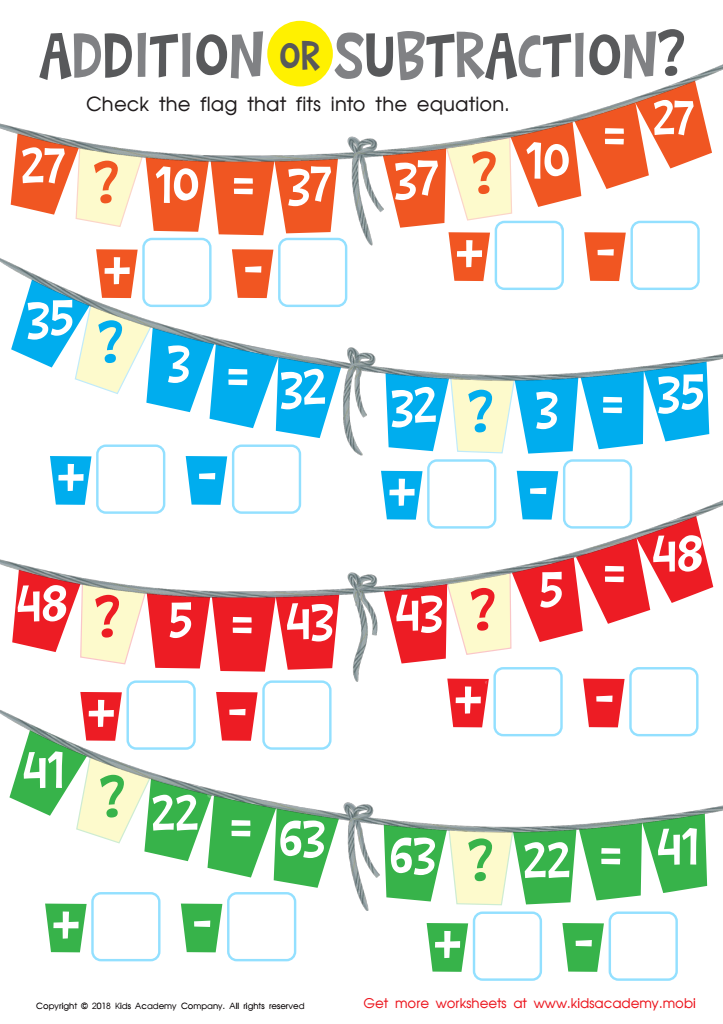
Addition or Subtraction? Worksheet
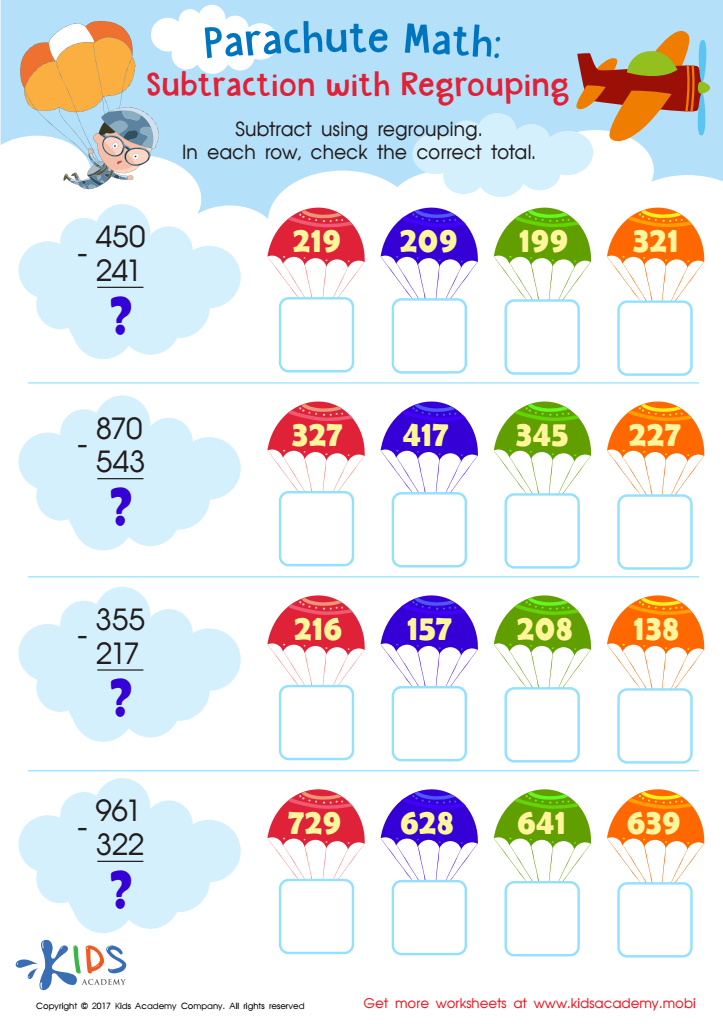
Subtraction with Regrouping for 3rd Grade Worksheet
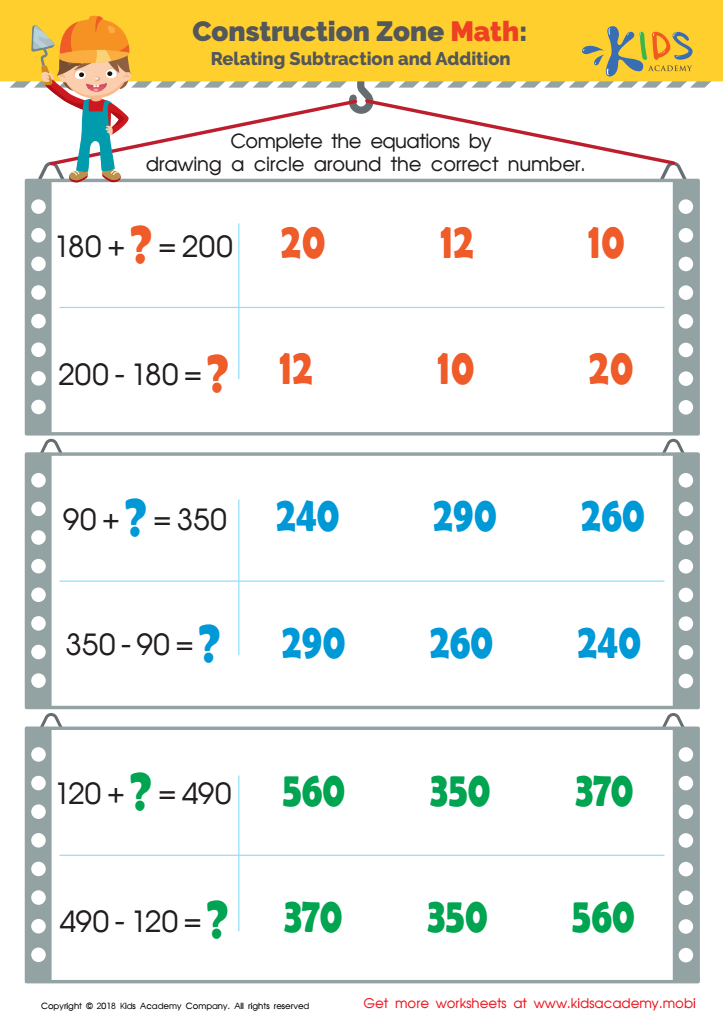
Construction Zone Math: Relating Subtraction and Addition Worksheet
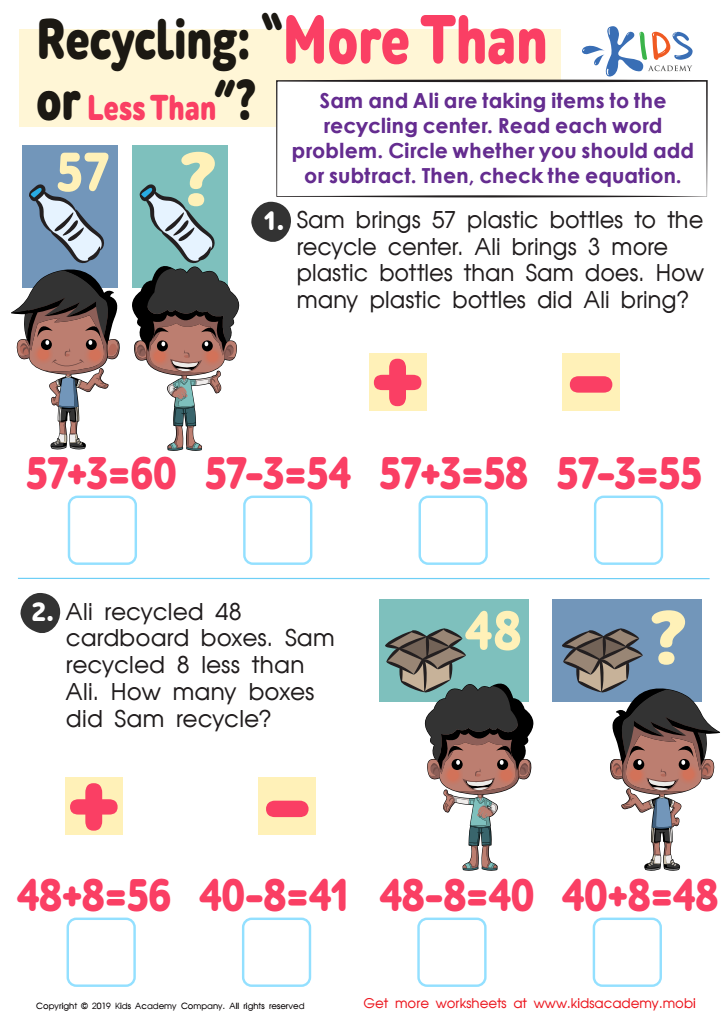
Recycling - More or Less Worksheet








Normal subtraction is a fundamental mathematical operation that plays a crucial role in children's development during ages 6-9. This period is one where children transition from concrete understanding to more abstract thinking. Mastery of normal subtraction is vital for several reasons.
Firstly, it builds a strong foundation for mathematical fluency. As children learn to subtract, they develop problem-solving skills that are essential for tackling more complex topics, such as multiplication and division, later on. A solid grasp of subtraction enhances their ability to perform calculations effortlessly, fostering confidence.
Moreover, subtraction aids cognitive development by encouraging logical reasoning and critical thinking. When children solve subtraction problems, they learn to analyze scenarios and make decisions based on numerical relationships.
In addition, subtraction is integral to many real-life situations, from meal planning to budgeting. By understanding how to subtract, children gain valuable skills that are applicable beyond the classroom.
Lastly, strong parental or teacher involvement in teaching subtraction nurtures a supportive learning environment. Engaging with children in fun and interactive ways can make learning enjoyable and less intimidating. Thus, emphasizing normal subtraction can play a pivotal role in shaping a child's overall mathematical competence and enthusiasm for learning.