Understanding fractions Normal Geometry Worksheets for Ages 7-9
6 filtered results
-
From - To
Discover our engaging "Understanding Fractions" Normal Geometry Worksheets designed specifically for ages 7-9! These thoughtfully crafted resources aim to enhance your child's mathematical skills by introducing fundamental concepts of fractions in a fun and interactive way. Each worksheet encourages exploration and develops a solid foundation in understanding parts of a whole, equivalencies, and visual representation of fractions. By using colorful graphics and relatable examples, children will gain confidence in their abilities while reinforcing critical geometry and fraction concepts. Perfect for home or classroom use, our worksheets will make learning fractions an enjoyable experience for young learners.
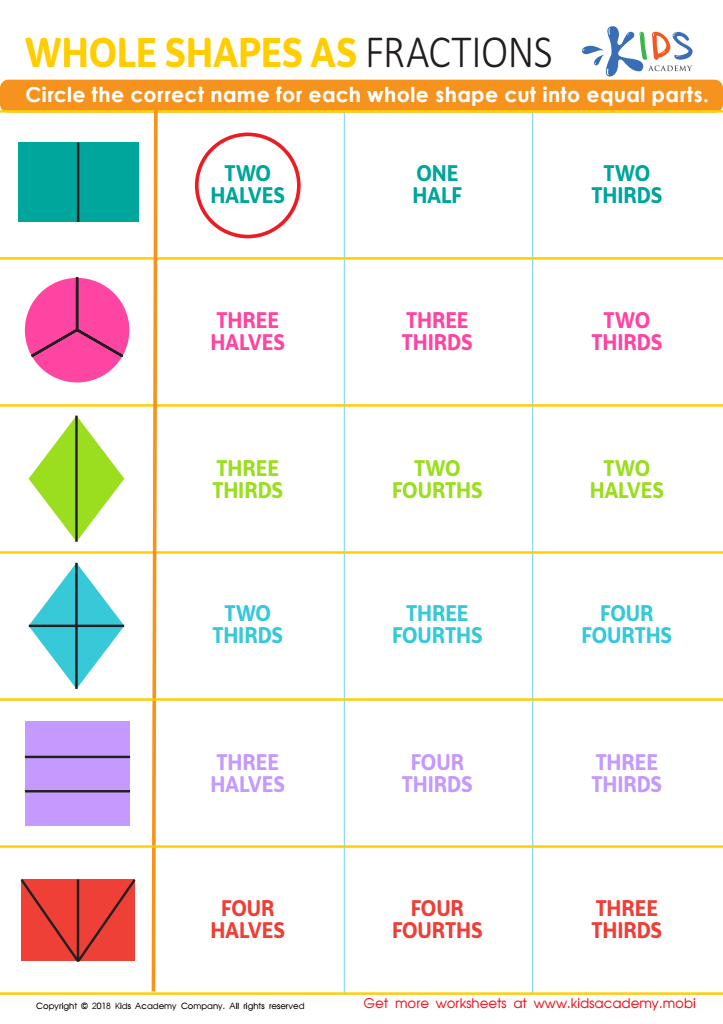
Whole Shapes as Fractions Worksheet
 Assign to My Students











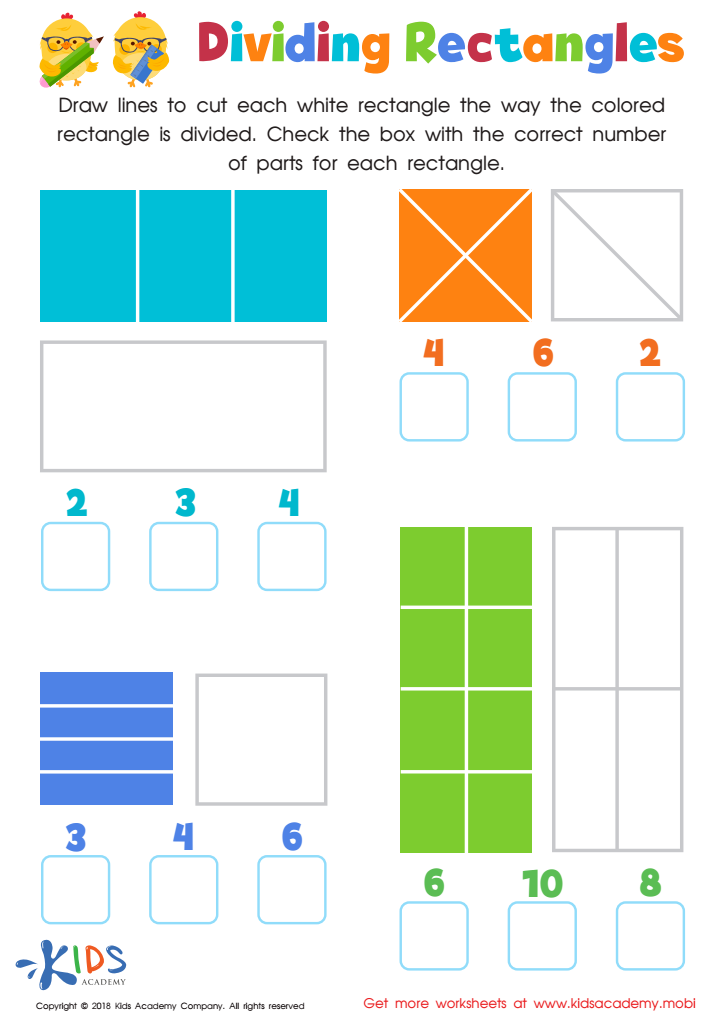
Dividing Rectangles Worksheet
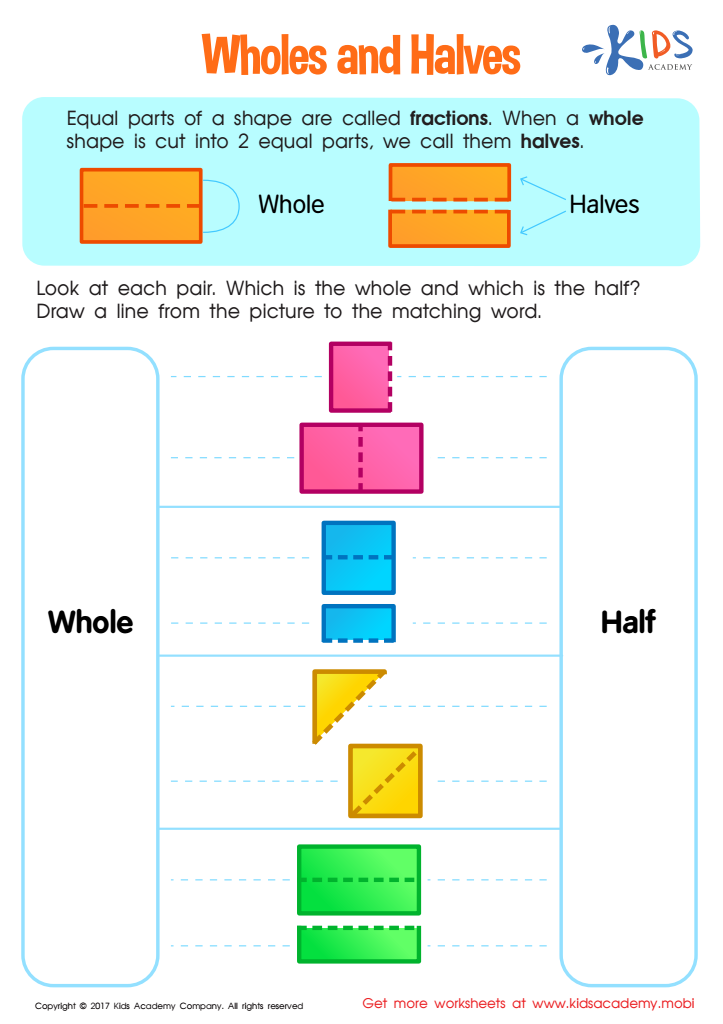
Wholes and Halves Worksheet
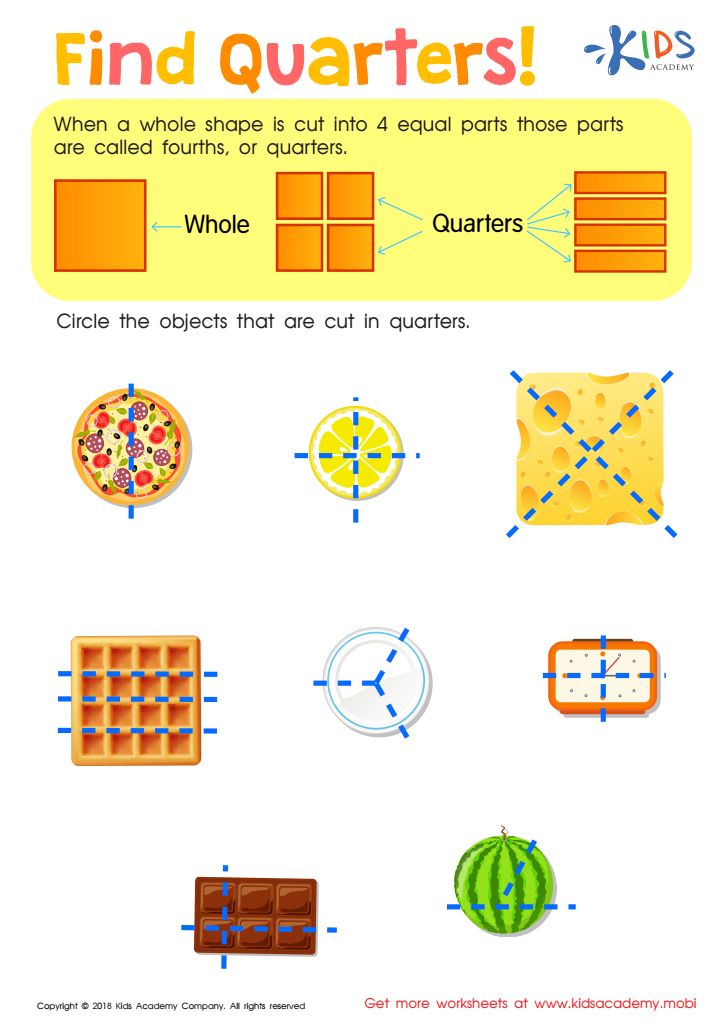
Find Quarters Worksheet
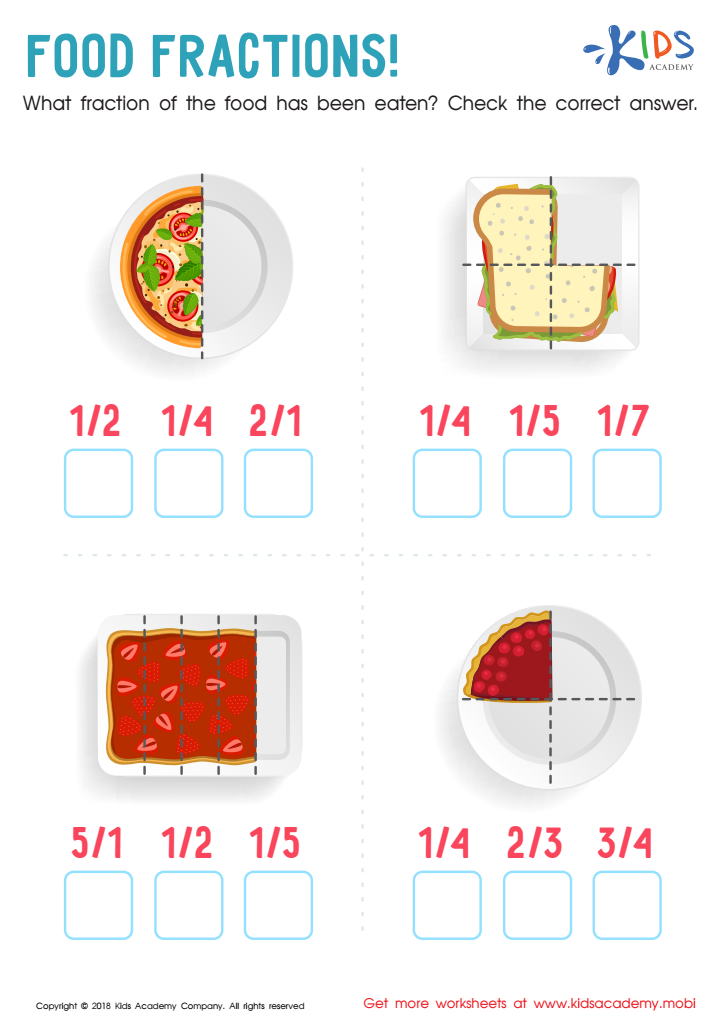
Food Fractions Worksheet
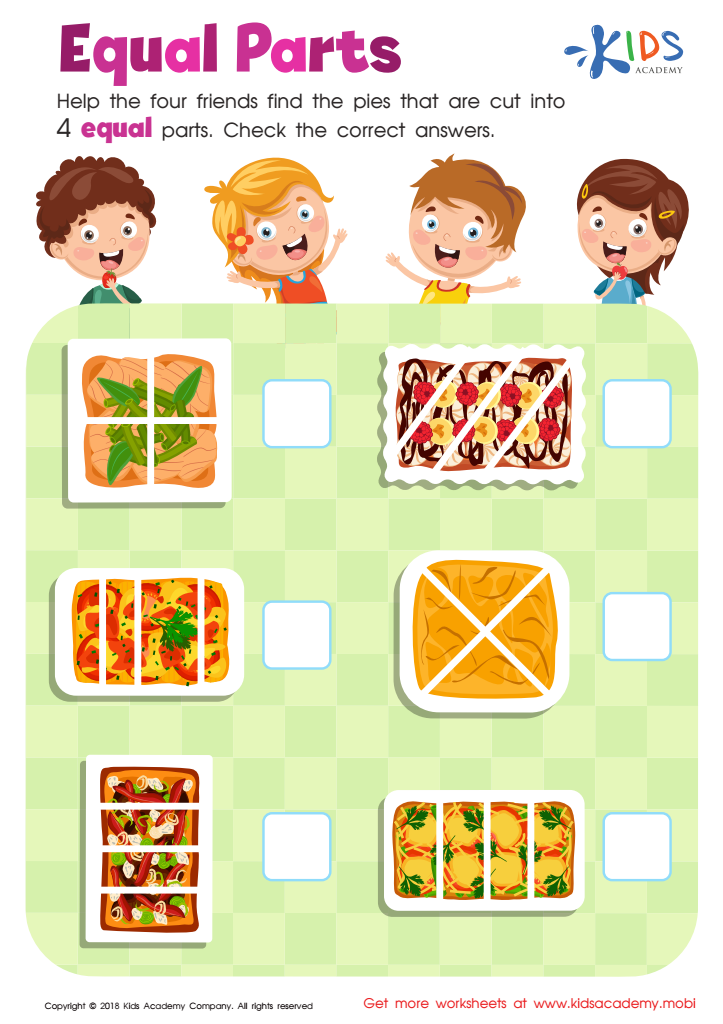
Equal Parts: Food Worksheet








Understanding fractions and geometry is crucial for children ages 7 to 9 as these concepts form the foundation for future mathematical learning and real-life problem-solving. At this age, students are transitioning from concrete to more abstract thinking, making it an ideal time to introduce fractions as part of their mathematical repertoire.
Fractions help children grasp the idea of parts of a whole, enabling them to make sense of division, division in everyday contexts, and relationships between numbers. This understanding is vital not only for advanced math but also for subjects such as science and economics later on. Furthermore, mastering fractions will bolster their confidence in mathematics, reducing anxiety and building a positive attitude towards learning.
Similarly, fundamental geometry skills, including shapes, spatial awareness, and properties, are essential for cognitive development. They foster critical thinking and problem-solving abilities, as children learn to identify, describe, and categorize their environment.
When parents and teachers focus on these core areas, they equip children with essential tools that aid in their social, emotional, and academic development. Supporting this learning creates a strong mathematical foundation that is necessary for success in more complex math topics and everyday life situations, underscoring the importance of nurturing these skills at an early age.








