Filters

10 filtered results

Clear all filters
Favorites
With answer key
Interactive

10 filtered results

Difficulty Level

Grade


Subject

    Discover engaging Normal Matching Worksheets designed specifically for children ages 7 to 9! These worksheets offer a fun and interactive way for young learners to strengthen their vocabulary and reading skills through matching exercises. Perfect for classroom use or at-home learning, these resources cover a variety of topics and encourage critical thinking. Each worksheet is carefully crafted to engage students and boost their confidence in independent work. Ideal for reinforcing concepts in a playful and stress-free manner, our Normal Matching Worksheets are a valuable addition to any educational toolkit. Make learning enjoyable and effective with these engaging resources today!

    Check out this FREE Trial Lesson on Matching for age 7-9!

    Match Exactly the Same

    Favorites
    With answer key
    Interactive
    • 7-9
    • Matching
    • Normal
    Matching Game for Toddlers
    Matching Game for Toddlers

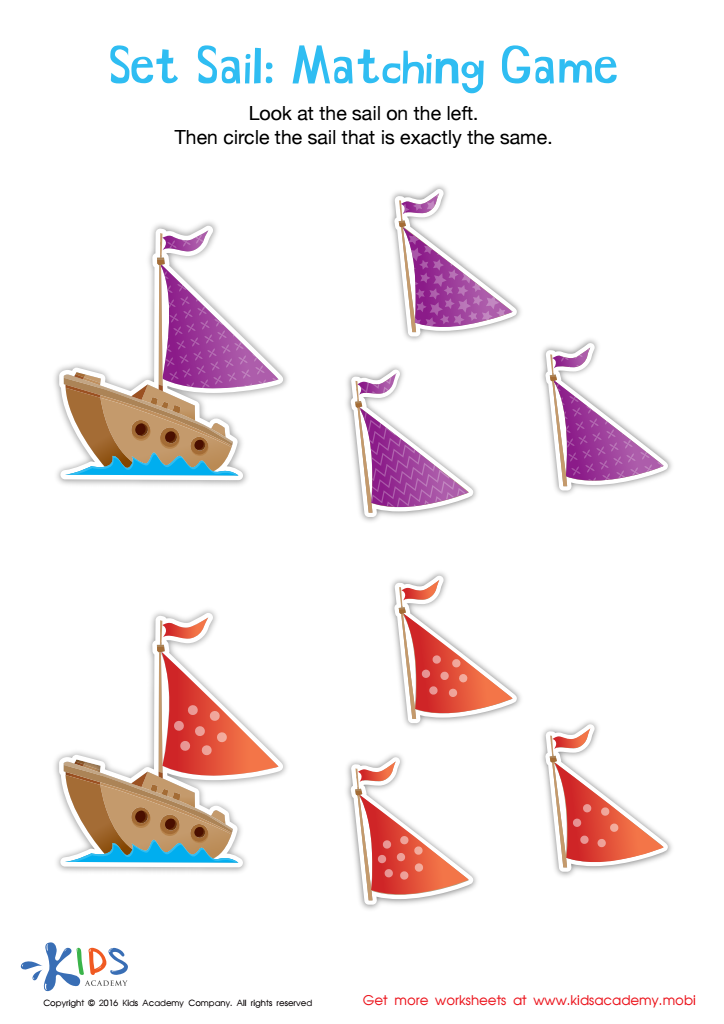
    Set Sail Worksheet

    Set sail with this fun matching game for toddlers! Kids will love finding the same pattern on the sails, improving their problem-solving and counting skills. Enjoy this bright and engaging worksheet!
    Set Sail Worksheet
    Worksheet
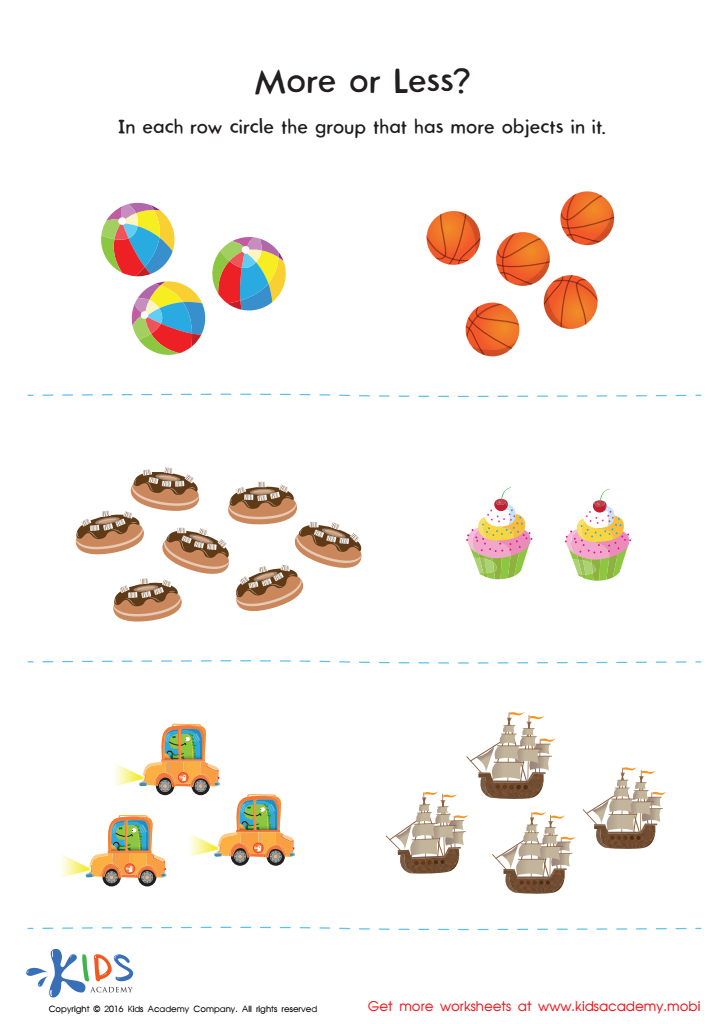
    More or Less PDF Printable Worksheet
    More or Less PDF Printable Worksheet

    More or Less Size Worksheet

    Try this "More or Less" PDF printable worksheet to help them out!
    More or Less Size Worksheet
    Worksheet
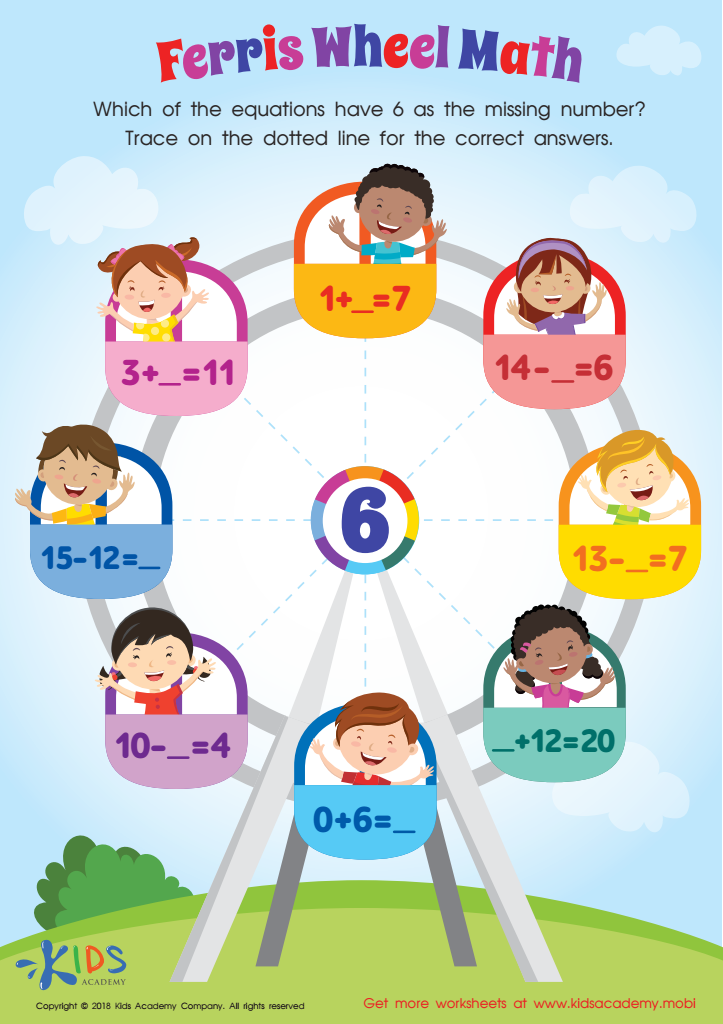
    Missing Number: Ferris Wheel Math Worksheet
    Missing Number: Ferris Wheel Math Worksheet

    Missing Number: Ferris Wheel Math Worksheet

    Hop on the Ferris wheel and solve the equations in the baskets! If the missing number is 6, draw a line from the basket to the middle of the wheel. Kids Academy's addition worksheet will not only help practice pre-algebra but also keep kids entertained with its vibrant illustrations. So, go round and round and have fun with math!
    Missing Number: Ferris Wheel Math Worksheet
    Worksheet
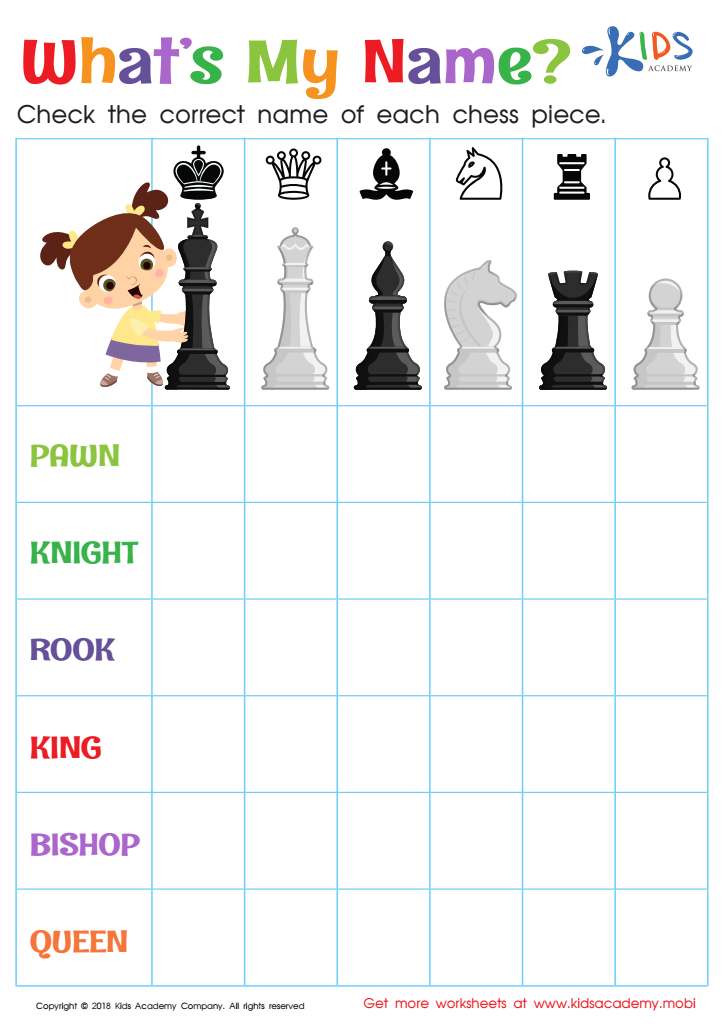
    What's My Name? Worksheet
    What's My Name? Worksheet

    What's My Name? Worksheet

    Test your child's chess knowledge with this colorful worksheet! There are six pieces lined up with names underneath. Ask your child to name each piece, then check if it's correct. Help them succeed by brushing up on the different pieces and their names.
    What's My Name? Worksheet
    Worksheet
    Matching Worksheet for Toddlers
    Matching Worksheet for Toddlers

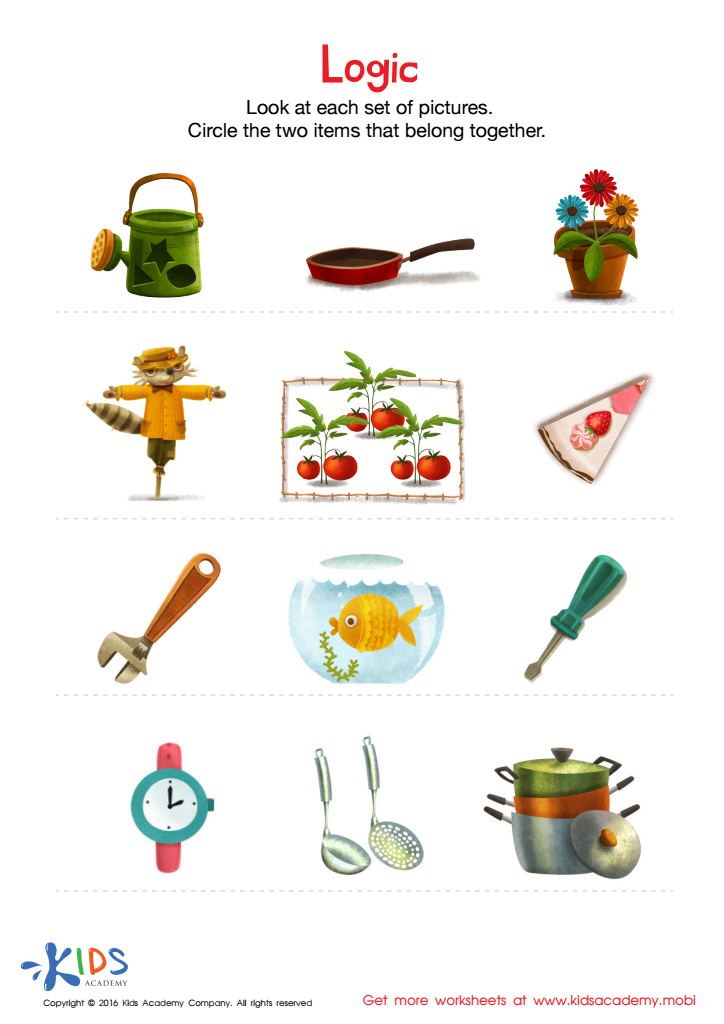
    Logic Game Sorting Worksheet

    Start your child's logic and reasoning development early with this fun matching worksheet! Through cute images and simple conversations, your little one can learn problem-solving, categorization, and matching skills. Plus, it's a great way for children to explore how items are used in real life. Try it and watch them boost skills with ease and fun!
    Logic Game Sorting Worksheet
    Worksheet
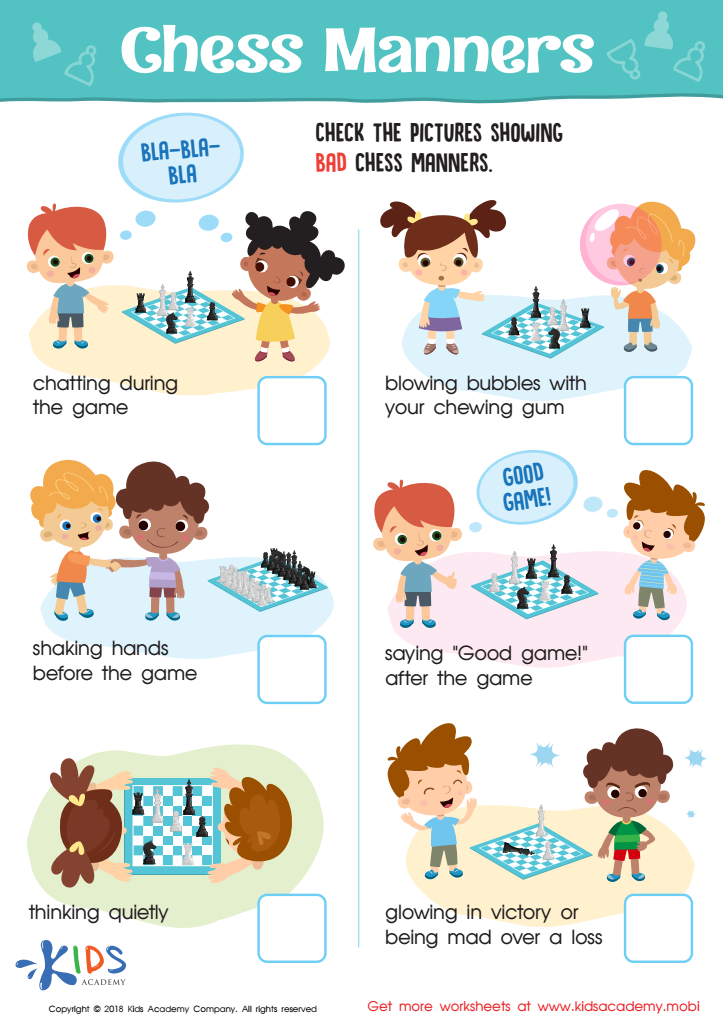
    Chess Manners Worksheet
    Chess Manners Worksheet

    Chess Manners Worksheet

    Teach your child chess manners in addition to table and social ones. Chess has clear rules and etiquette which must be followed for a proper game. Review this worksheet with your kid and discuss the pictures that show inappropriate behaviours. This will help them understand how to play the game correctly and with good manners.
    Chess Manners Worksheet
    Worksheet
    Birds of a Feather: Commutative Property Worksheet
    Birds of a Feather: Commutative Property Worksheet

    Birds of a Feather: Commutative Property Worksheet

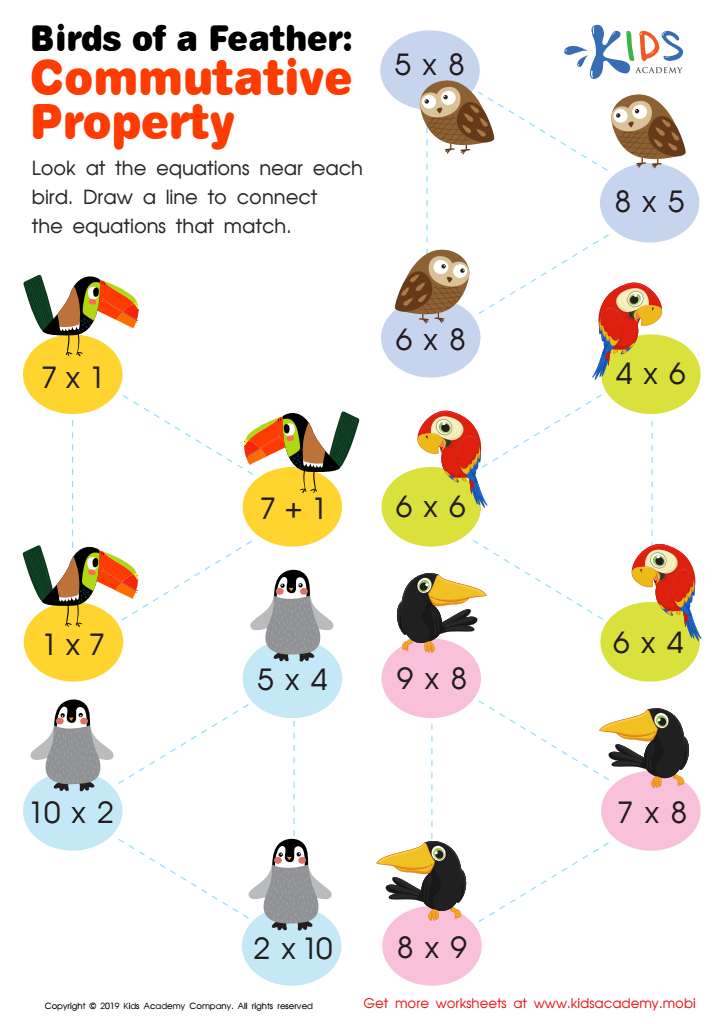
    The commutative property states that order of factors doesn't affect the product. Use it to help your kids solve simple problems. If they love birds, they'll love the colorful worksheet to identify exotic ones. Practicing is the best way to understand difficult topics. Look at the equations in this tracing sheet; help them draw a line to connect equations that match.
    Birds of a Feather: Commutative Property Worksheet
    Worksheet
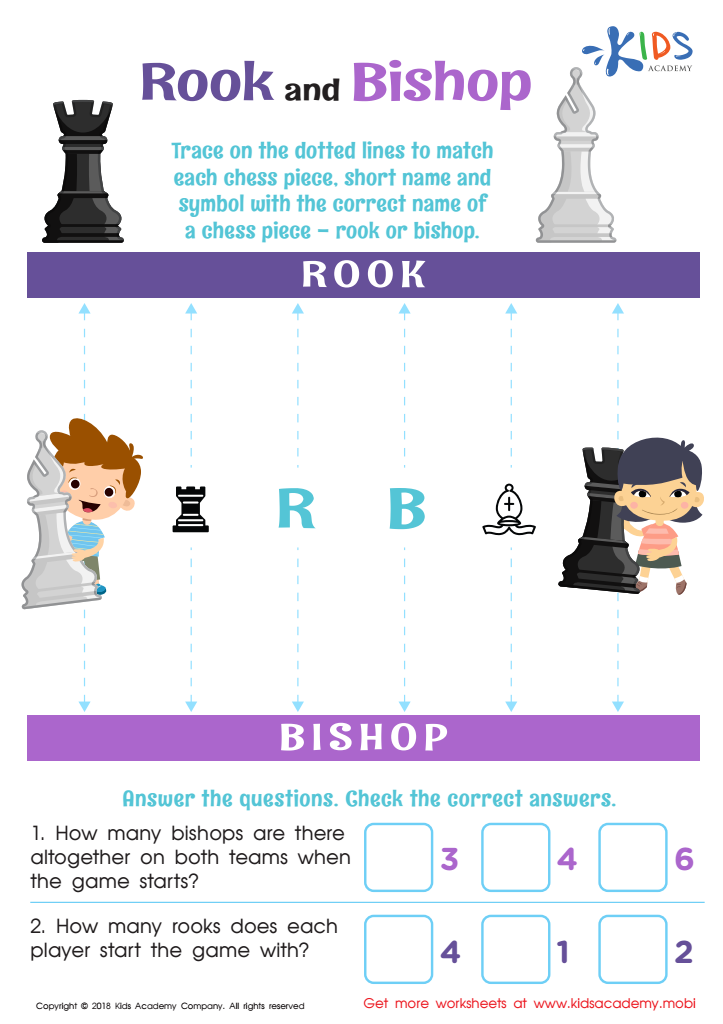
    Rook and Bishop Worksheet

    Rook and Bishop Worksheet

    Rook and Bishop Worksheet

    This tracing sheet helps your child learn chess pieces by matching each piece, short name and symbol to the correct name. After tracing, have them answer the questions and check their answers. It's a great way for them to become familiarized with chess.
    Rook and Bishop Worksheet
    Worksheet
    Pattern Recognition Worksheet
    Pattern Recognition Worksheet

    Practice Patterns Worksheet

    Practice Patterns Worksheet
    Worksheet
    Size Worksheet: Big, Small, Medium
    Size Worksheet: Big, Small, Medium

    Practice with Sizes Size Worksheet

    Practice with Sizes Size Worksheet
    Worksheet


    Normal Matching is crucial for children aged 7 to 9 as it plays a significant role in their cognitive, emotional, and social development. At this stage, children are becoming more proficient in recognizing patterns and relationships, which fosters critical thinking skills essential for problem-solving and logical reasoning. By encouraging Normal Matching activities, parents and teachers can help children enhance their ability to identify similarities and differences, facilitating a deeper understanding of their environment.

    Furthermore, Normal Matching nurtures memory skills and concentration, as children must focus on specific traits and attributes when pairing items. This process also strengthens their organizational skills, enabling them to categorize information more effectively. Additionally, engaging in Normal Matching promotes social skills through group activities, where children learn to negotiate, share, and collaborate with peers.

    From an emotional perspective, successfully mastering matching tasks can boost self-esteem and confidence, as children feel a sense of achievement in completing challenges. For parents and educators, integrating Normal Matching into learning activities not only aligns with cognitive development goals but also supports a well-rounded educational framework that recognizes the importance of play and exploration in learning. Ultimately, investing time in Normal Matching enriches children's early education experience, setting a solid foundation for future learning.