
Visual Learning Normal Math Worksheets for 7-Year-Olds
4 filtered results
Difficulty Level
Grade
Age
-
From - To
Subject
Activity
Standards
Introduce your 7-year-old to the world of math with our engaging Visual Learning Normal Math Worksheets, thoughtfully designed to align with early learners' needs. These worksheets blend colorful visuals and simple instructions to make math concepts easily understandable and enjoyable. Ideal for young brains, each activity focuses on key learning skills, including addition, subtraction, and problem-solving, strengthening their foundational math knowledge. Encourage independent learning and cognitive development with our easy-to-navigate, printable worksheets. Kids Academy's dedicated approach ensures your child gains confidence and skills through an immersive and visually stimulating educational experience. Start building a solid math foundation today!
Favorites
With answer key
Interactive
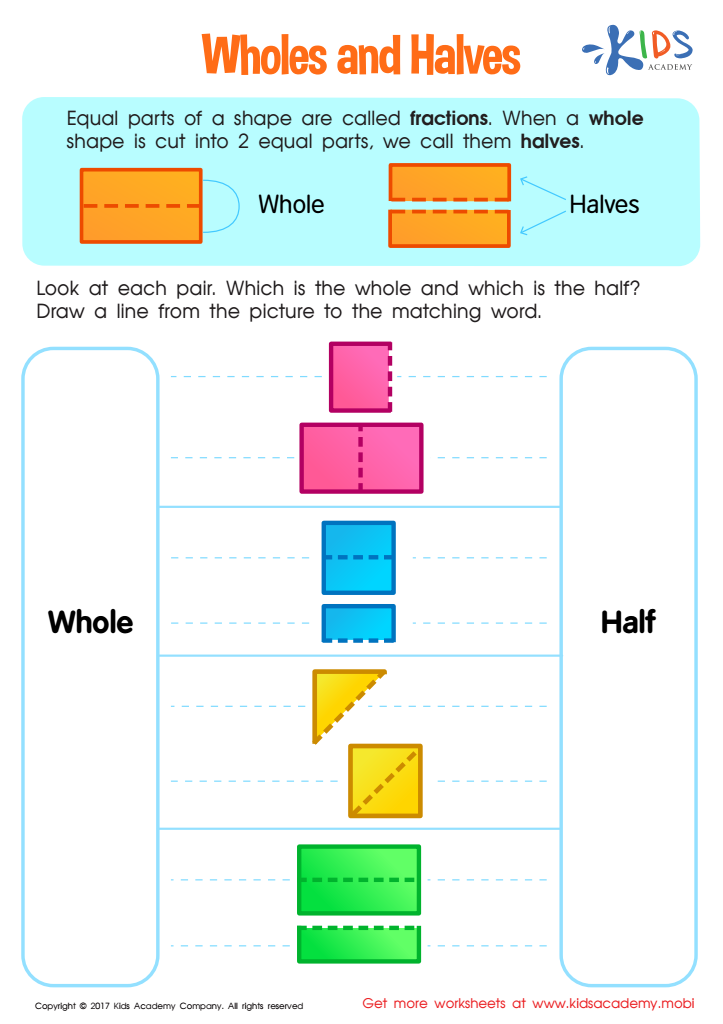
Wholes and Halves Worksheet
Students can feel overwhelmed with fractions. Help take the stress off by using a colorful worksheet to explain whole shapes and how to find halves. Ask them to identify the whole and point to the matching word for the half. A free printout can help guide them.
 Assign to My Students
Wholes and Halves Worksheet
Worksheet
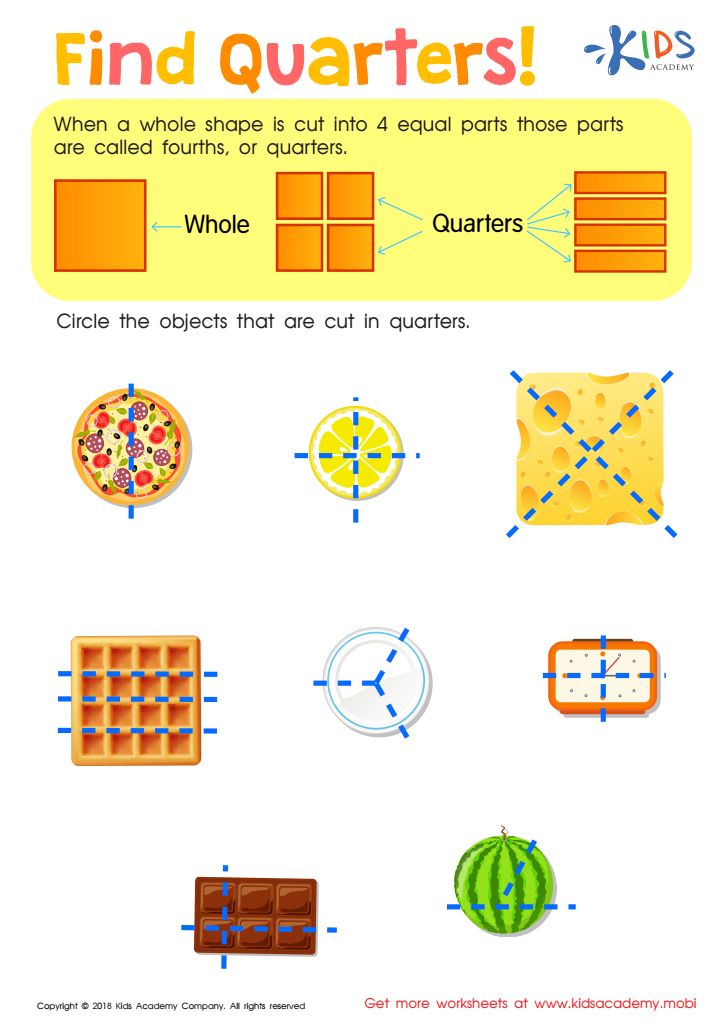
Find Quarters Worksheet
Ask your child if they know what it is called when a shape is cut into two equal parts. If yes, introduce them to quarters. Tell them that when a shape is cut into 4 equal parts, each part is called a quarter. Have them do this exercise by finding and circling objects split into quarters.
Find Quarters Worksheet
Worksheet
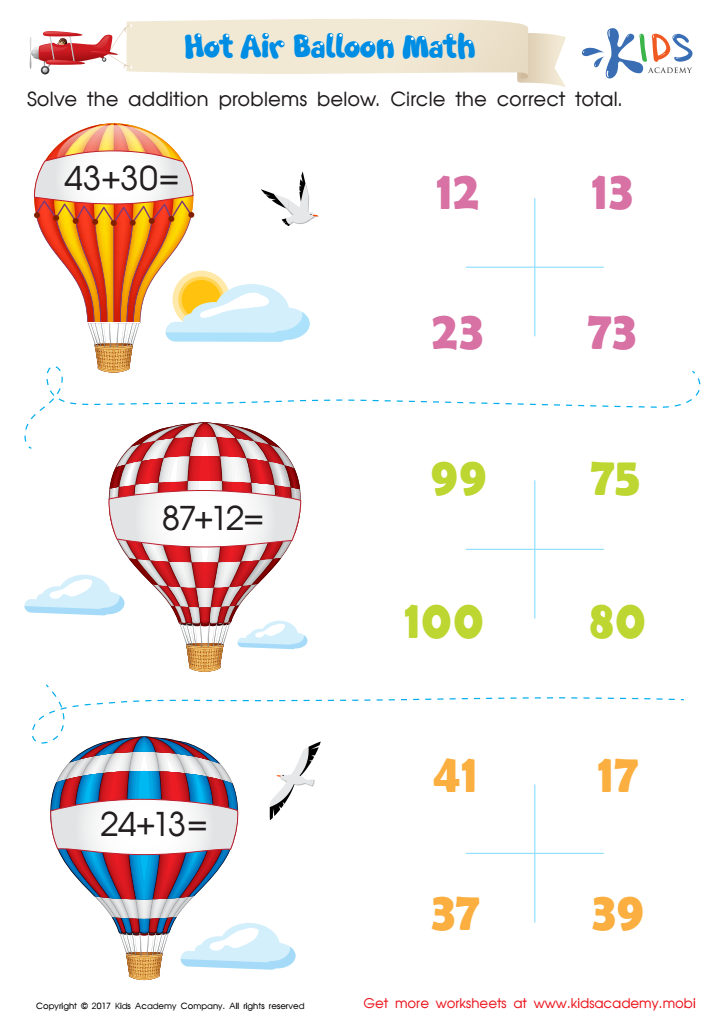
Hot Air Balloon Math Worksheet
It uses engaging pictures and a hot air balloon theme to keep your child interested, and it’s designed to build addition confidence.
Hot Air Balloon Math Worksheet
Worksheet
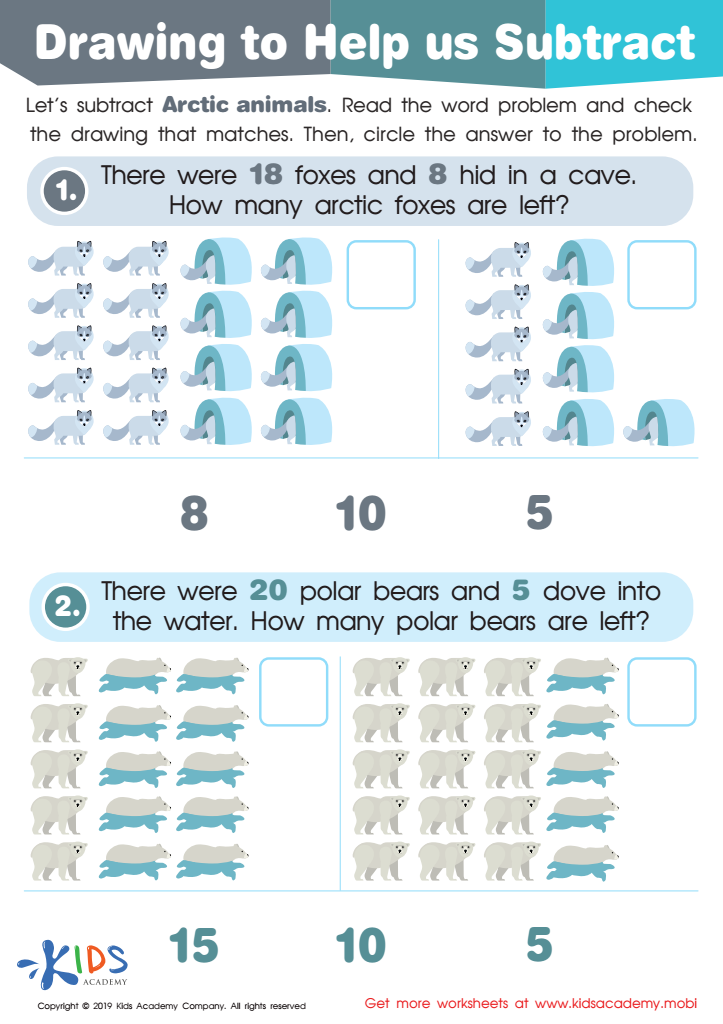
Drawing to Help Us Subtract Worksheet
Math is made fun with this free worksheet featuring Arctic animal pictures to solve basic subtraction word problems. Kids read the problem and choose the correct drawing of the animals to represent the solution. They'll have a blast with their cool animal friends while learning math!
Drawing to Help Us Subtract Worksheet
Worksheet
Join Kids Academy for Free
Who is primarily going to use this learning content?








Visual learning in mathematics for 7-year-olds is essential because it harnesses their natural ability to process and understand information through images and spatial reasoning. At this developmental stage, children are concrete thinkers who grasp concepts more readily when they can see or manipulate visual representations. Visual tools like number lines, geometric shapes, graphs, and pictures help young learners conceptualize abstract math ideas, making them more tangible and easier to understand.
Using visual learning techniques can also engage students more effectively. Young children tend to be more interested and focused when lessons incorporate colorful, interactive, and visually stimulating materials. This increases their willingness to participate and can boost their overall enjoyment and enthusiasm for math, fostering a positive attitude towards the subject from an early age.
Moreover, visual learning supports differentiation in the classroom. It accommodates diverse learning styles, ensuring that visual learners can comprehend the material alongside their peers who might be more comfortable with auditory or kinesthetic learning methods. Integrating visual elements into math instruction aids in bridging potential learning gaps and promotes equity, ensuring all students have the opportunity to grasp foundational math skills.
In summary, visual learning in math education leverages natural cognitive strengths, boosts student engagement, and supports a diverse array of learners, laying a strong foundation for a child's mathematical journey.








