Filters

56 filtered results

Clear all filters
Favorites
With answer key
Interactive

56 filtered results

Difficulty Level

Grade


Check out this FREE Math Trial Lesson for age 3-7!

Exactly the Same, or Not

Favorites
With answer key
Interactive
  • Math
  • 3-7
  • Interactive
Geometry - Assessment 2 Worksheet Preview

Geometry – Assessment 2 Worksheet

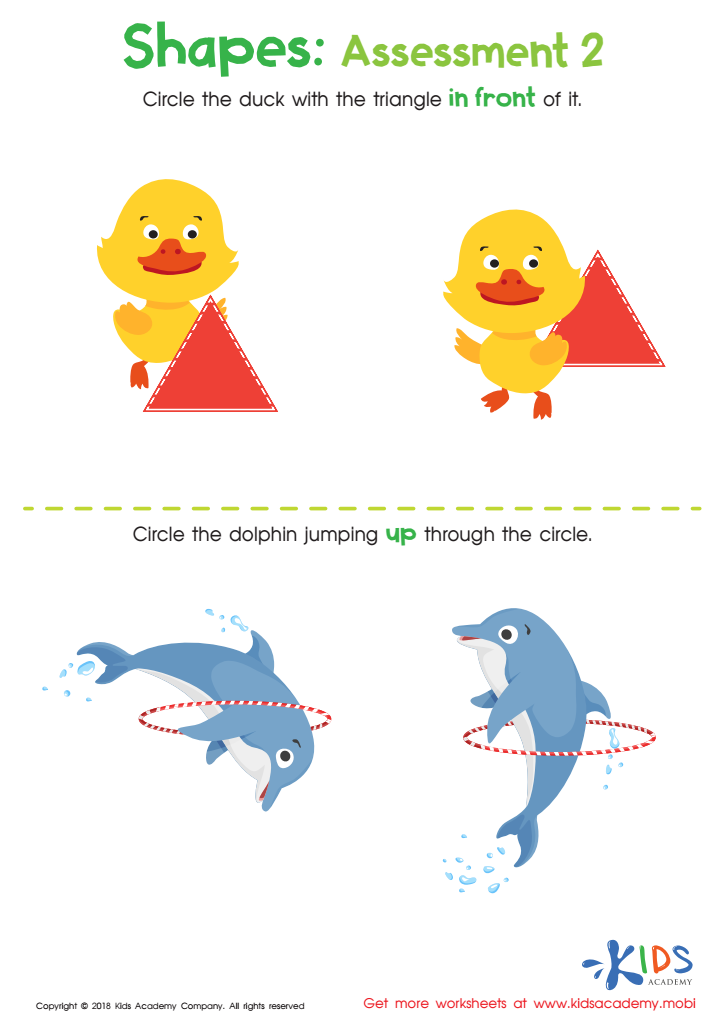
Preschoolers will learn to identify circles and triangles and practice using terms like "in front of" to place objects. This skill is key to further learning and is an important part of development.
Geometry – Assessment 2 Worksheet
Worksheet
Geometry - Assessment 1 Worksheet Preview

Geometry – Assessment 1 Worksheet

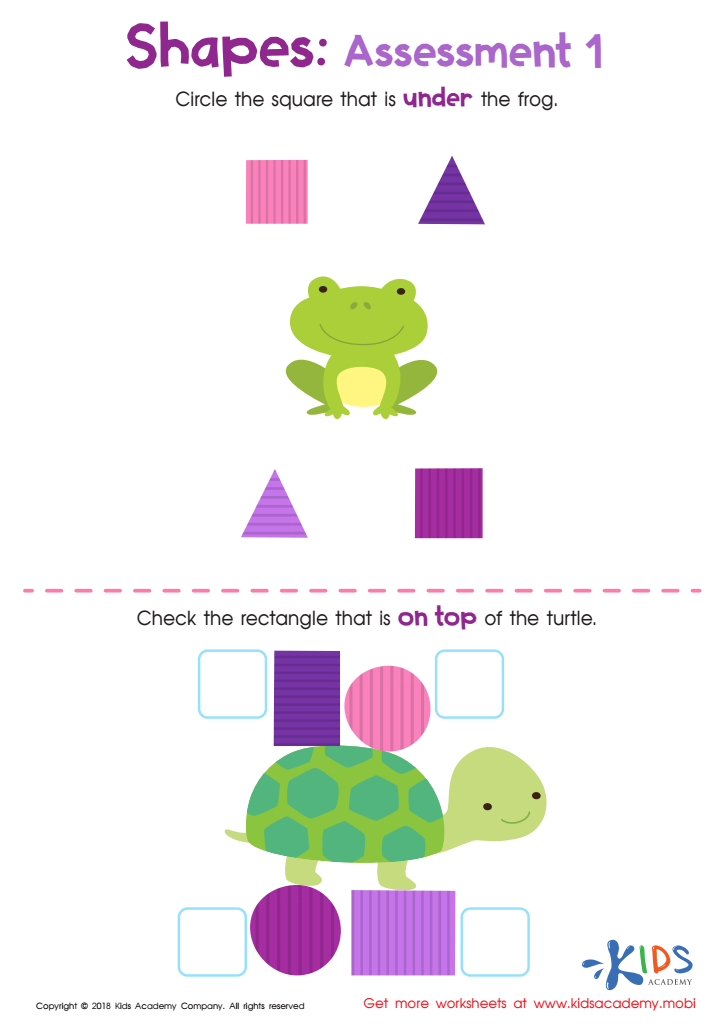
This activity helps preschoolers find shapes "on top of" and "under" animals. They must identify the correct shapes assigned to them. It's a great way to learn geometry and placements of objects.
Geometry – Assessment 1 Worksheet
Worksheet
Place Value: Chapter 1 Worksheet

Place Value: Chapter 1 Worksheet

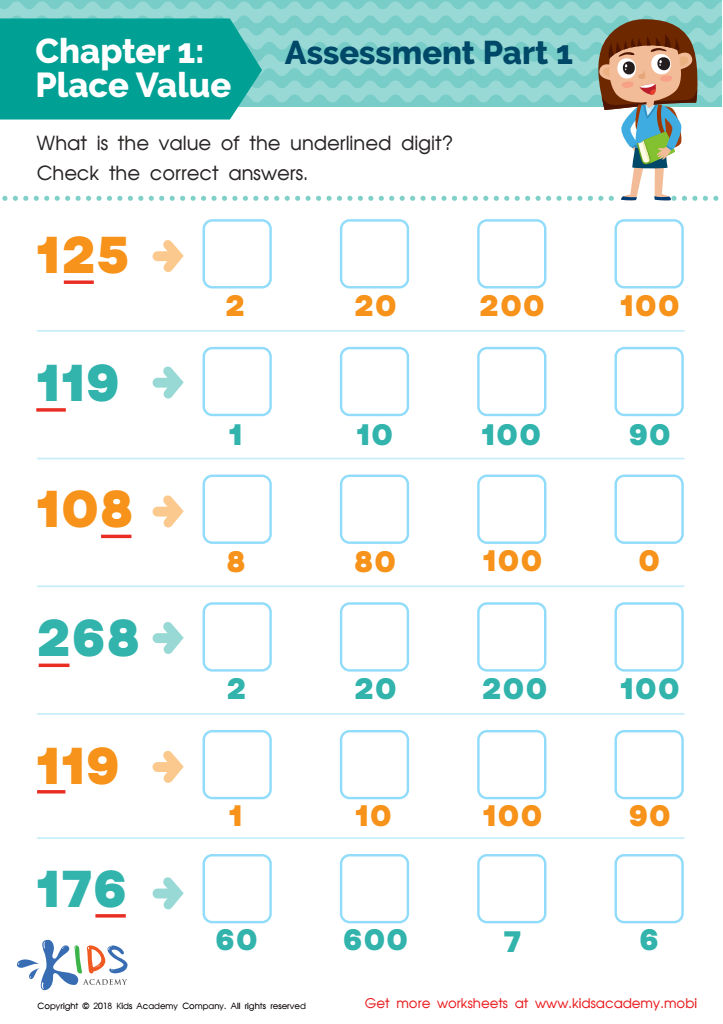
Check your kid's place value understanding with this assessment worksheet. It features 6 questions with one digit underlined for your child to determine the correct value of. Get the download and see if they can correctly choose the answer from the options given. It's a great way to test progress and keep their minds sharp!
Place Value: Chapter 1 Worksheet
Worksheet
Counting: Assessment 5 Worksheet

Counting: Assessment 5 Worksheet

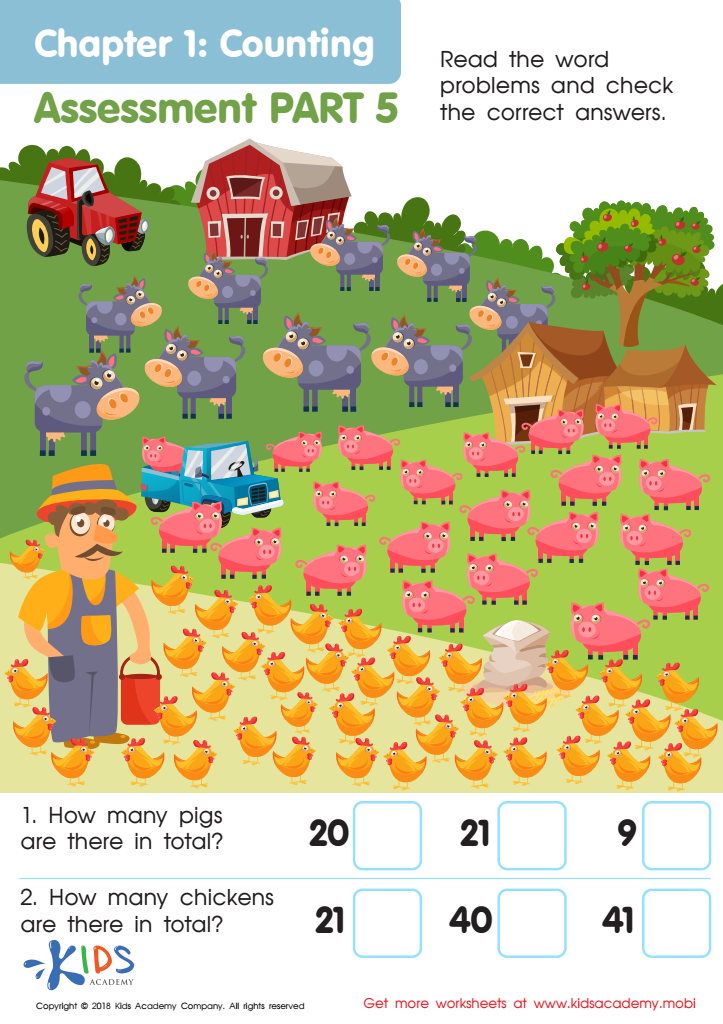
Let your kids have fun counting farm animals on this worksheet! Help the farmer count the animals and have your child check the answers to assess their counting skills. Read the word problem at the bottom of the page and count the animals together. It's an entertaining way to practice counting and have a great time!
Counting: Assessment 5 Worksheet
Worksheet
Counting: Assessment 4 Worksheet

Counting: Assessment 4 Worksheet

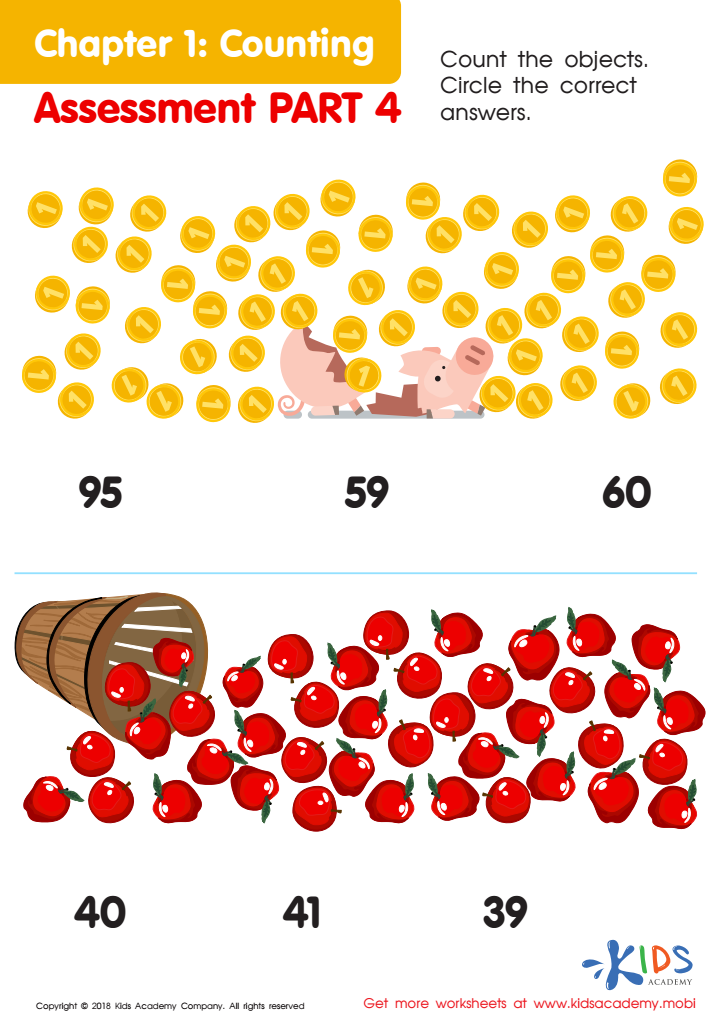
Encourage your students to count objects in this colorful worksheet. Ask them to circle the correct answers from the options given. See how much their counting skills have improved with your guidance. Have fun!
Counting: Assessment 4 Worksheet
Worksheet
Counting: Assessment 3 Worksheet

Counting: Assessment 3 Worksheet

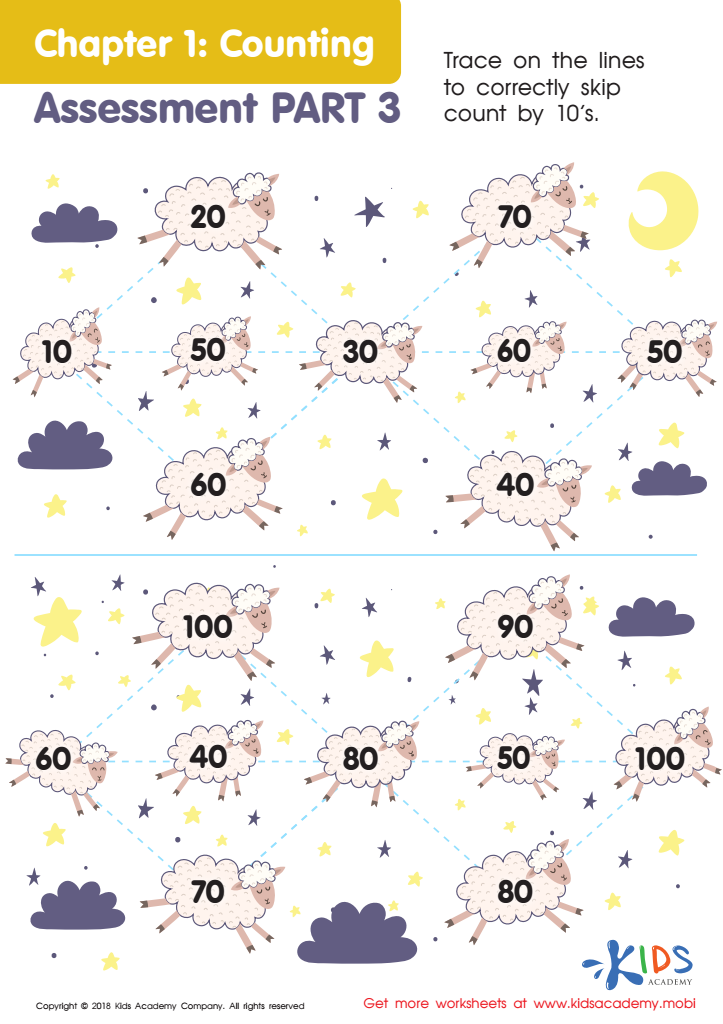
This worksheet is great for assessing your child's counting skills. It's a bit more challenging than the usual 'count to fifty' exercises. Have them trace the lines and skip count by 10's to help them learn counting in tens.
Counting: Assessment 3 Worksheet
Worksheet
Counting: Assessment 2 Worksheet

Counting: Assessment 2 Worksheet

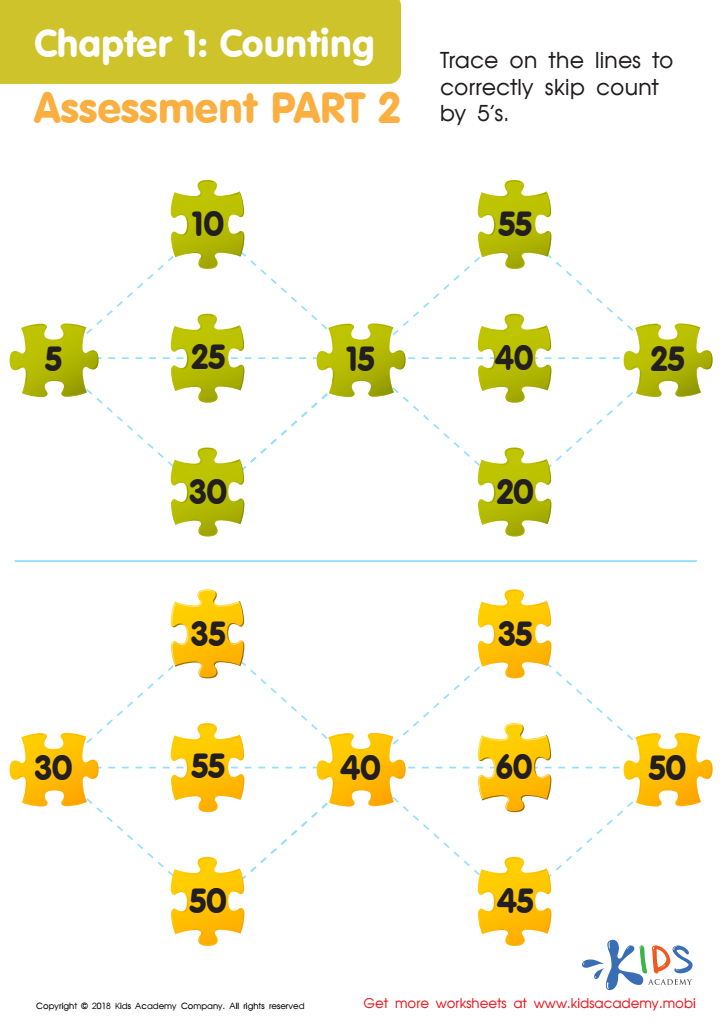
By now, your child should be able to count up to the hundreds. If they're still learning the tens, that's okay - as long as they're going at their own pace. This worksheet will be easy if they can count to ten. Ask them to trace the lines and skip count by 5's.
Counting: Assessment 2 Worksheet
Worksheet
Counting Past 1: Assessment 1 Worksheet


Counting Past 1: Assessment 1 Worksheet

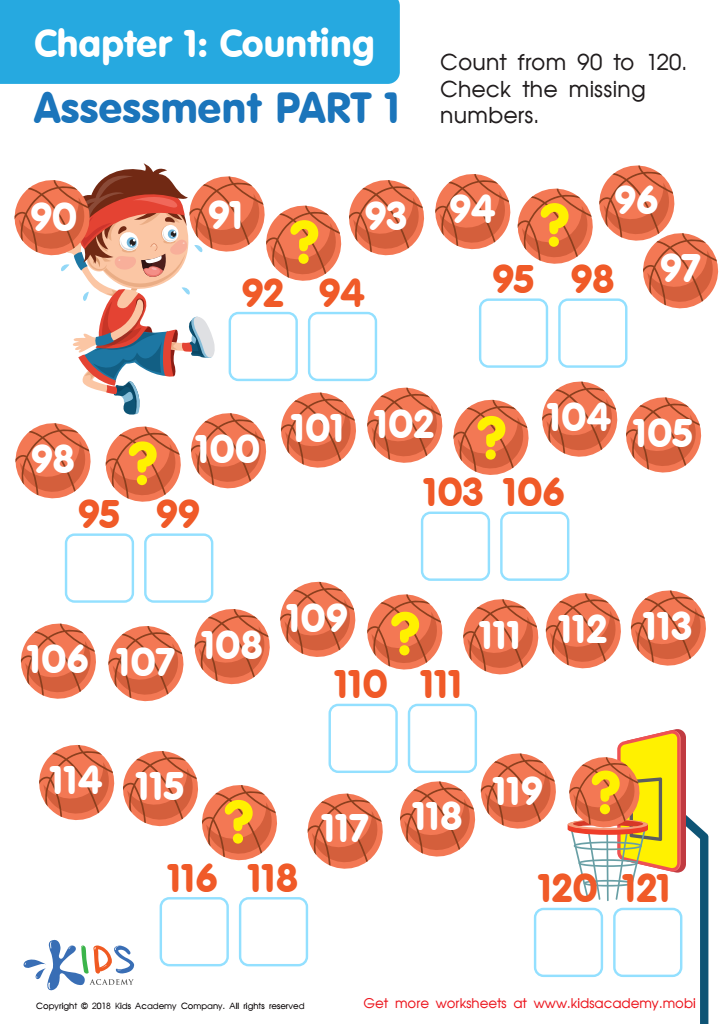
Test your children's counting skills with this worksheet. Have them count from 90 to 120, checking for missing numbers. You'll be able to see how well they do and how far they have progressed. See how high they can count with little or no mistakes!
Counting Past 1: Assessment 1 Worksheet
Worksheet


... 2 3

Math activities for young children, particularly those aged 3-7, are crucial for their cognitive development and foundational skills. During these formative years, children are naturally curious, making it an ideal time to cultivate an interest in mathematics. Engaging in math activities fosters critical thinking, problem-solving, and reasoning skills that are essential for later academic success.

Parents and teachers should care about these activities because they help children develop a strong number sense—a vital skill that supports everything from basic arithmetic to more complex concepts as they progress in school. Through playful exploration of math concepts, children learn to categorize, measure, and recognize patterns, setting the groundwork for future learning in mathematics and other subjects.

Furthermore, early math experiences can be particularly beneficial in promoting perseverance and a growth mindset. When kids encounter challenges in a math activity, they learn resilience and the importance of effort.

Additionally, incorporating math into everyday activities (like cooking, shopping, and nature walks) can transform mundane tasks into engaging learning experiences. This not only strengthens math skills but also creates a positive attitude towards learning, encouraging lifelong curiosity. Ultimately, nurturing early math skills can empower children to navigate their world with confidence and confidence in their abilities.