Easy Upper & Lowercase Letters worksheets activities for Ages 4-6
2 filtered results
-
From - To
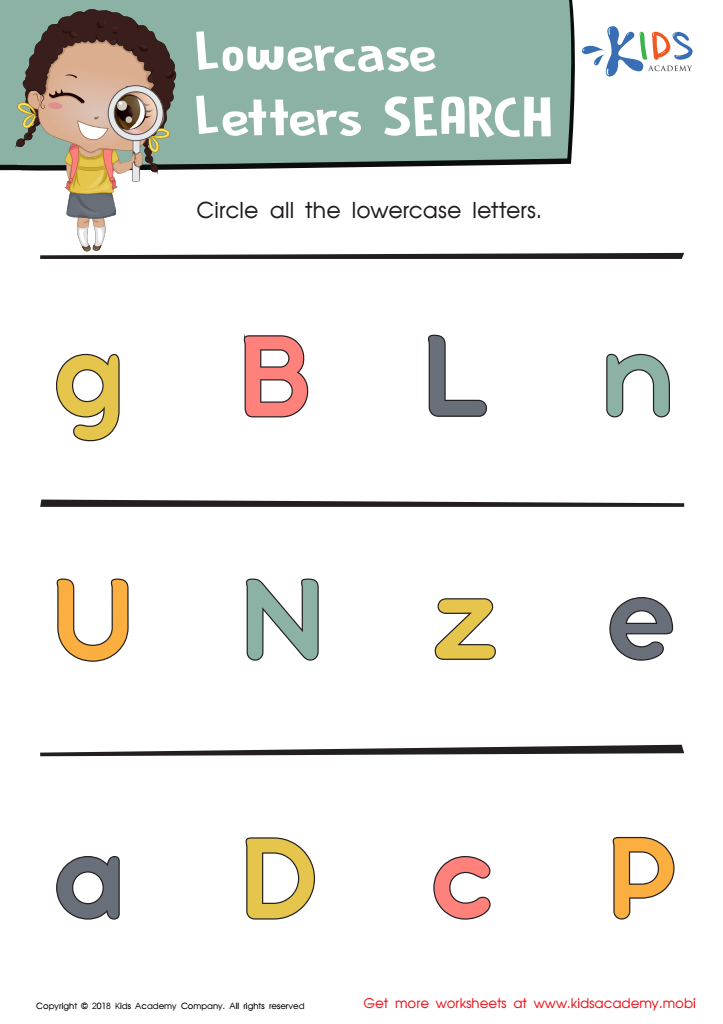
Lowercase Letters Search: Assessment Worksheet
 Assign to My Students
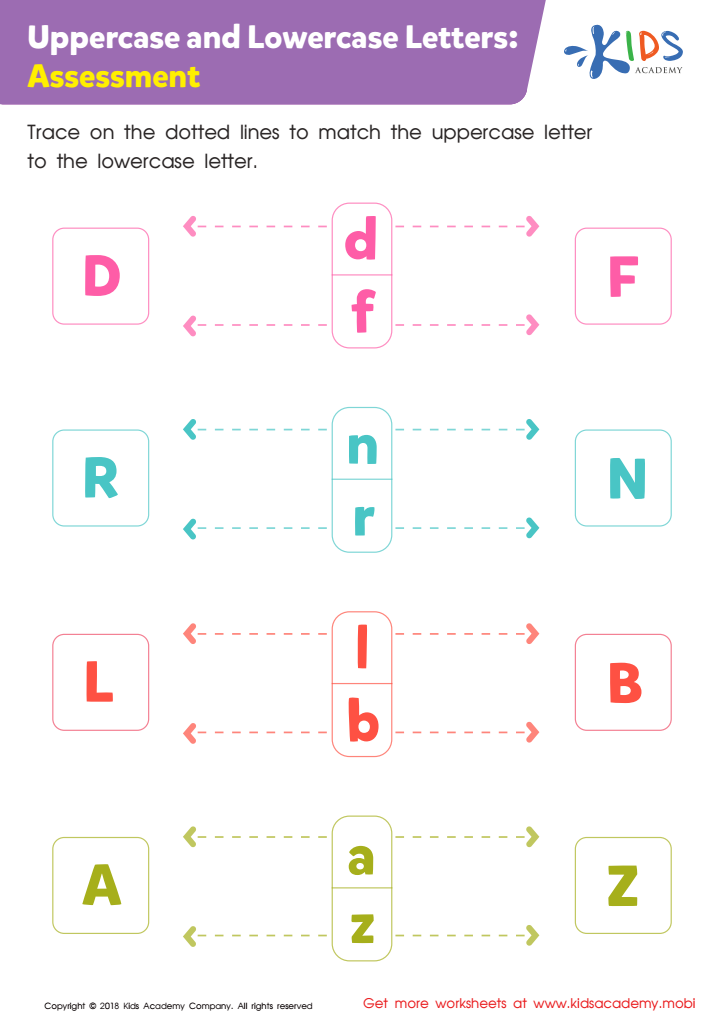
Uppercase and Lowercase Letters: Assessment Worksheet


.jpg)

.jpg)


Easy Upper & Lowercase Letters worksheets activities offer numerous benefits for early learners embarking on their journey into the realm of literacy. These engaging and straightforward exercises are designed to enhance children's understanding of the alphabet in a fun and interactive manner. Here’s why they are incredibly useful:
Firstly, Easy Upper & Lowercase Letters worksheets activities lay a solid foundation for reading and writing skills. By distinguishing between uppercase and lowercase letters, children begin to understand that letters can have different forms but the same sound and meaning. This foundational knowledge is crucial for decoding words and comprehending text, paving the way for fluent reading and effective writing.
Secondly, these activities help in improving fine motor skills. As children trace, write, and color letters, they develop hand-eye coordination and pencil grip. This physical interaction with letters not only reinforces their learning but also prepares them for more advanced writing tasks in the future.
Moreover, Easy Upper & Lowercase Letters worksheets activities promote visual discrimination. Through various exercises, children learn to recognize and differentiate letters based on their shapes and sizes. This skill is essential not only for reading but also for other areas of learning, such as mathematics and science.
Engagement and enjoyment are also key benefits of these activities. Worksheets often come in colorful and interesting designs, featuring puzzles, matching games, and other interactive elements. This makes learning about letters an enjoyable experience for young learners, keeping them motivated and eager to explore more.
Lastly, Easy Upper & Lowercase Letters worksheets activities are adaptable to individual learning paces. Whether a child grasps concepts quickly or needs more time to understand, worksheets can be completed at their own pace, ensuring a stress-free learning environment.
In conclusion, Easy Upper & Lowercase Letters worksheets activities are an invaluable tool in early childhood education. They not only foster literacy skills but also support overall cognitive development and instill a love for learning from a young age.








