Extra Challenge Tracing Shapes worksheets activities for Ages 4-6
4 filtered results
-
From - To
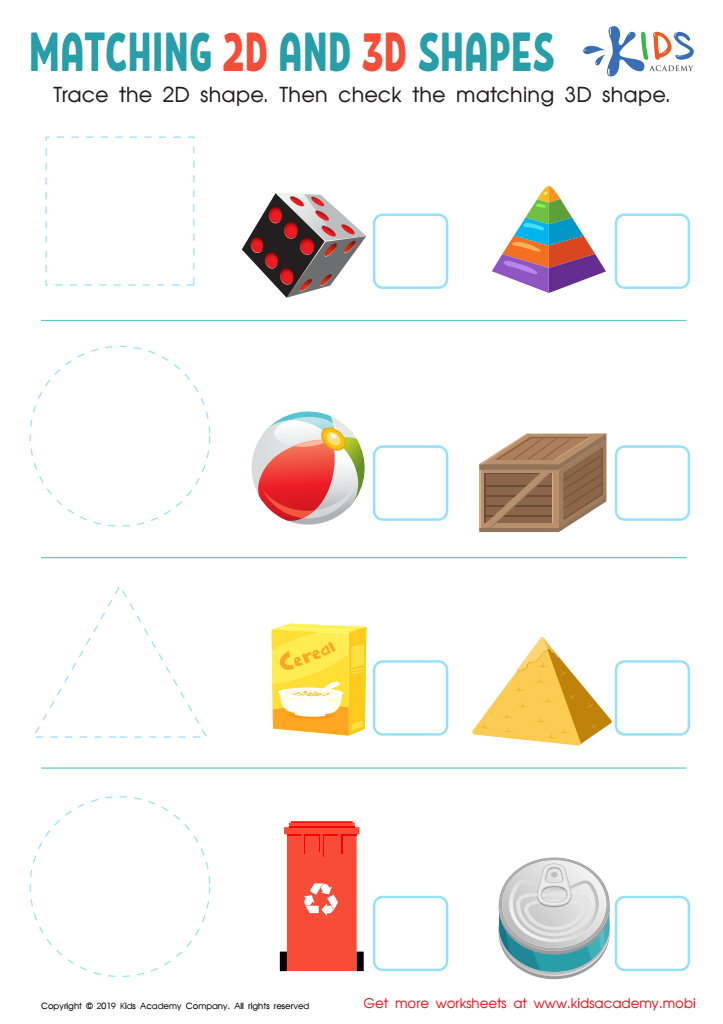
Matching 2D and 3D Shapes Worksheet
 Assign to My Students
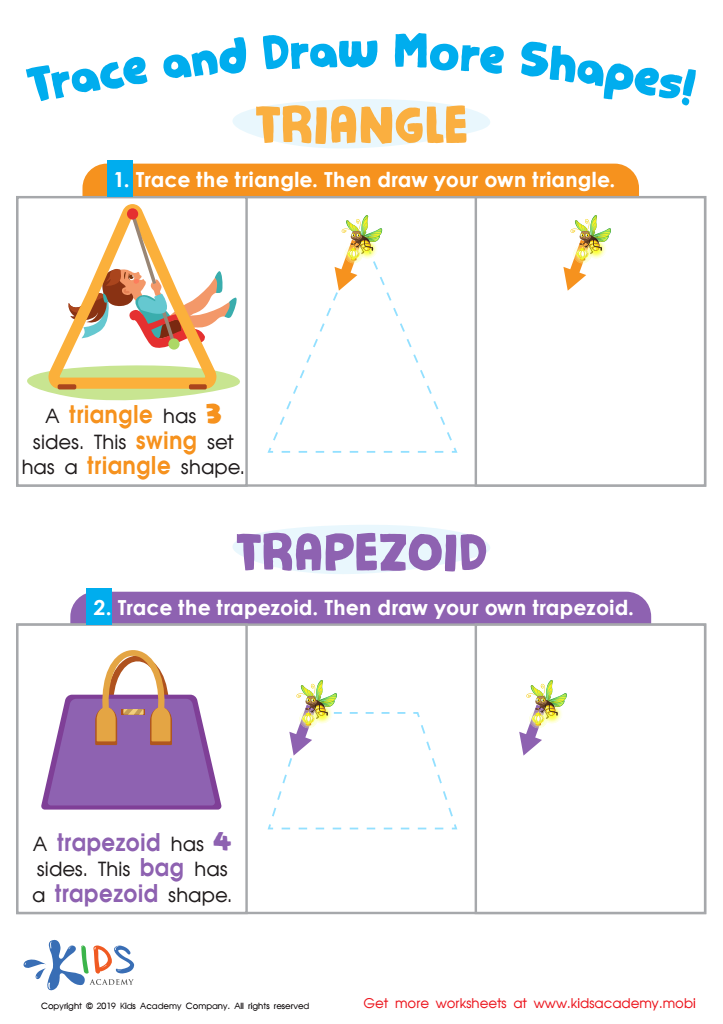
Trace and Draw More Shapes Worksheet
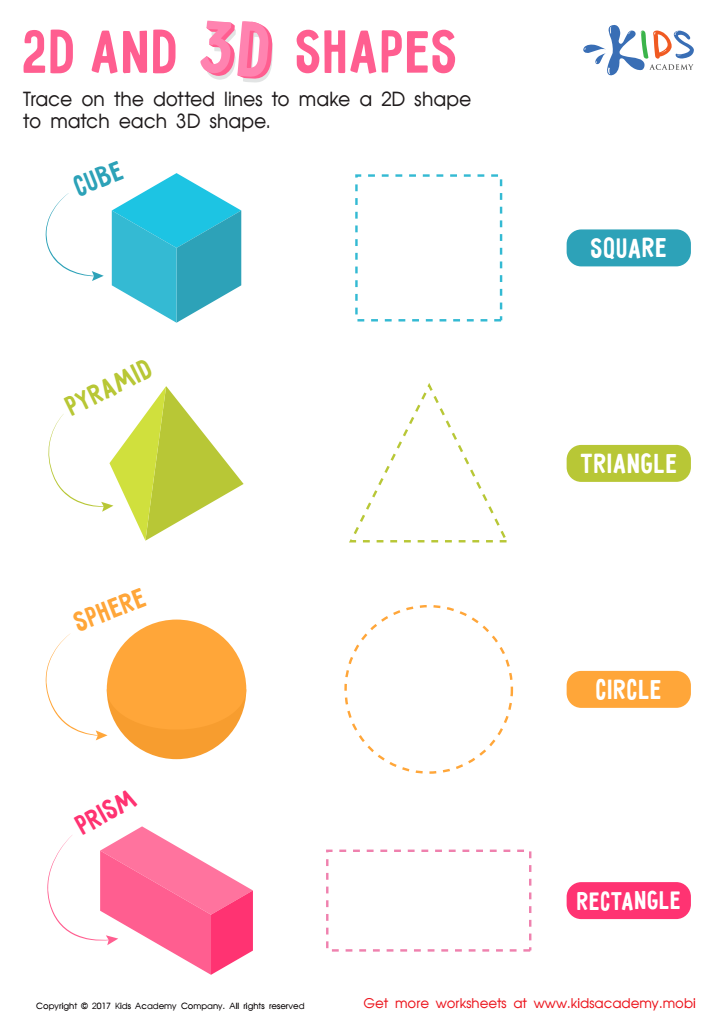
2D and 3D Shapes Worksheet
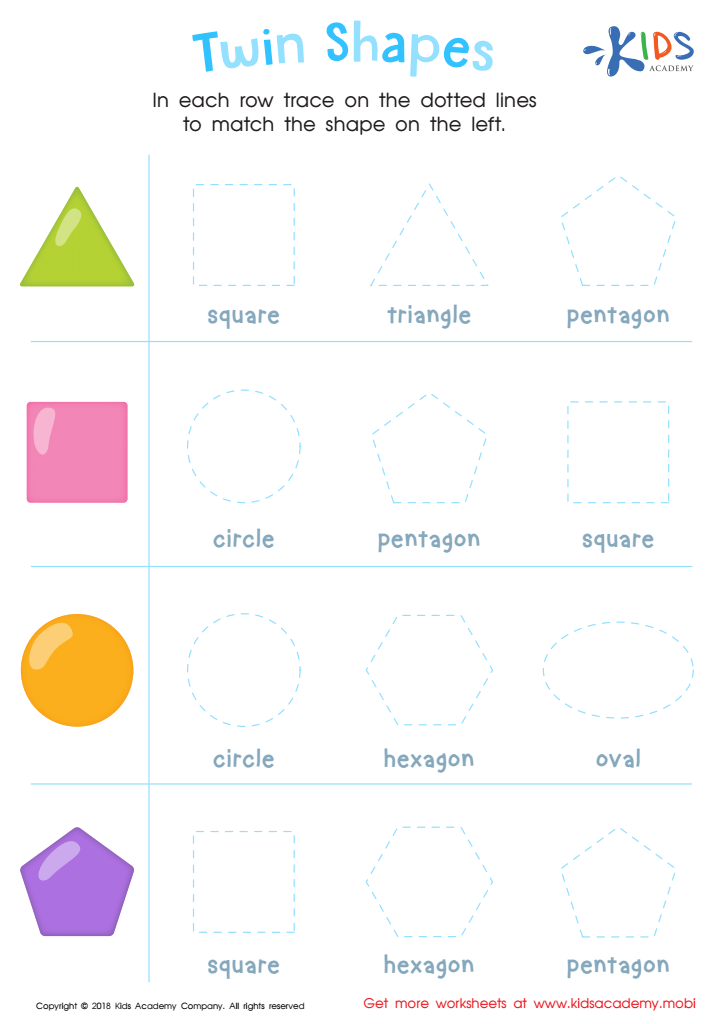
Twin Shapes Dot-to-Dot Worksheet




.jpg)


Extra Challenge Tracing Shapes worksheets activities play a pivotal role in the foundational development of young learners. These carefully designed activities not only introduce students to the world of geometry and spatial understanding but also enhance fine motor skills, critical thinking, and concentration. The importance of integrating Extra Challenge Tracing Shapes worksheets activities into early education cannot be overstated.
To begin with, these worksheets serve as an excellent tool for developing hand-eye coordination. As children trace various shapes, they learn how to control their hand movements, which is essential for writing and other everyday tasks. This kind of precise motor control is foundational for academic success and day-to-day activities.
Moreover, Extra Challenge Tracing Shapes worksheets activities encourage cognitive development. Children learn to recognize and name different shapes, which is a crucial aspect of their cognitive development. This recognition plays a significant role in their ability to categorize, compare, and contrast objects in their environment, enhancing their observational skills and critical thinking.
These activities are also designed to improve concentration and patience in young learners. Tracing shapes requires focus and persistence, qualities that are invaluable in any learning environment. By engaging in these worksheets, children learn to concentrate on a task until it is completed, fostering a sense of accomplishment and self-esteem.
Furthermore, the Extra Challenge aspect of these worksheets provides an opportunity for children to stretch their abilities and engage with material that is slightly beyond their current skill level. This encourages a growth mindset, teaching children that with practice and effort, they can improve and master new skills.
In conclusion, Extra Challenge Tracing Shapes worksheets activities are an indispensable part of early childhood education. They not only support the development of fine motor skills and cognitive abilities but also foster critical life skills such as concentration, patience, and perseverance. Integrating these activities into educational settings paves the way for holistic development, preparing children for academic success and beyond.








