
Normal Reading Non-Fiction worksheets activities for Ages 3-9
4 filtered results
Difficulty Level
Grade
Age
-
From - To
Subject
Activity
Standards
Discover our engaging Normal Reading Non-Fiction worksheets, meticulously designed for children ages 3 to 9. Encourage young minds to explore the wonders of the world with hands-on activities that promote comprehension and foster a love for reading. Each worksheet features age-appropriate themes, from exploring nature to learning about various professions, helping children connect with real-world knowledge. Our user-friendly format allows for easy navigation and prompts valuable discussions. Perfect for parents and educators alike, these worksheets not only enhance literacy skills but also inspire curiosity and critical thinking. Join the adventure of discovery and watch your child thrive in their reading journey!
Favorites
With answer key
Interactive
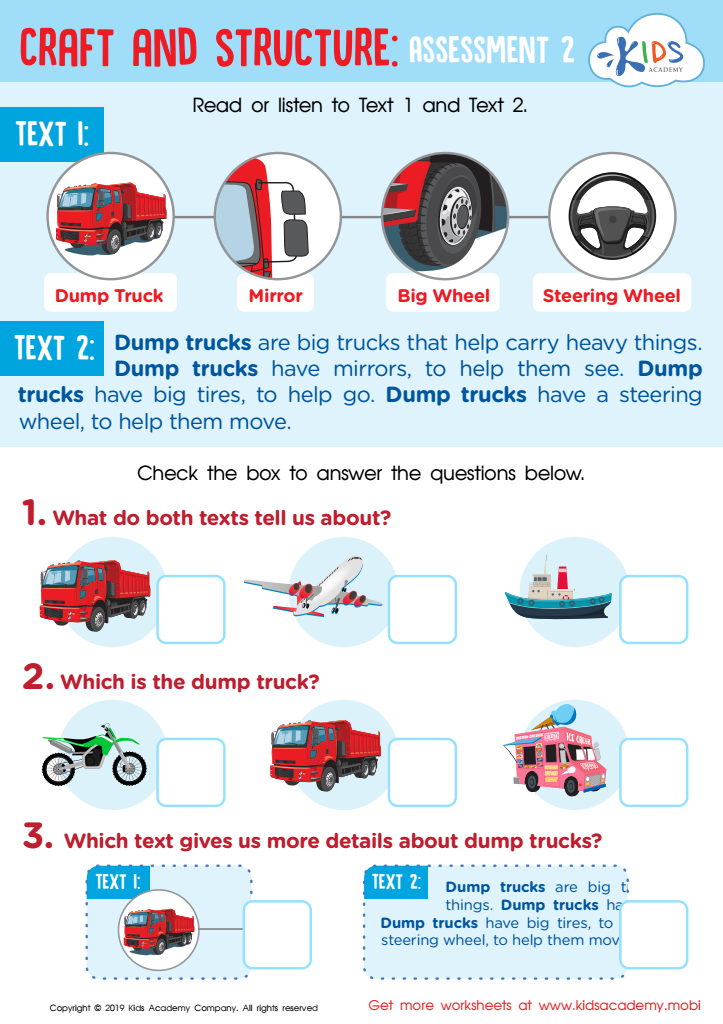
Craft and Structure: Assessment 2 Worksheet
Good readers need to analyze text features and use picture clues to understand. This assessment worksheet gives your child info in different formats and they can show understanding using answer options to check the correct answers. (80 words)
 Assign to My Students
Craft and Structure: Assessment 2 Worksheet
Worksheet
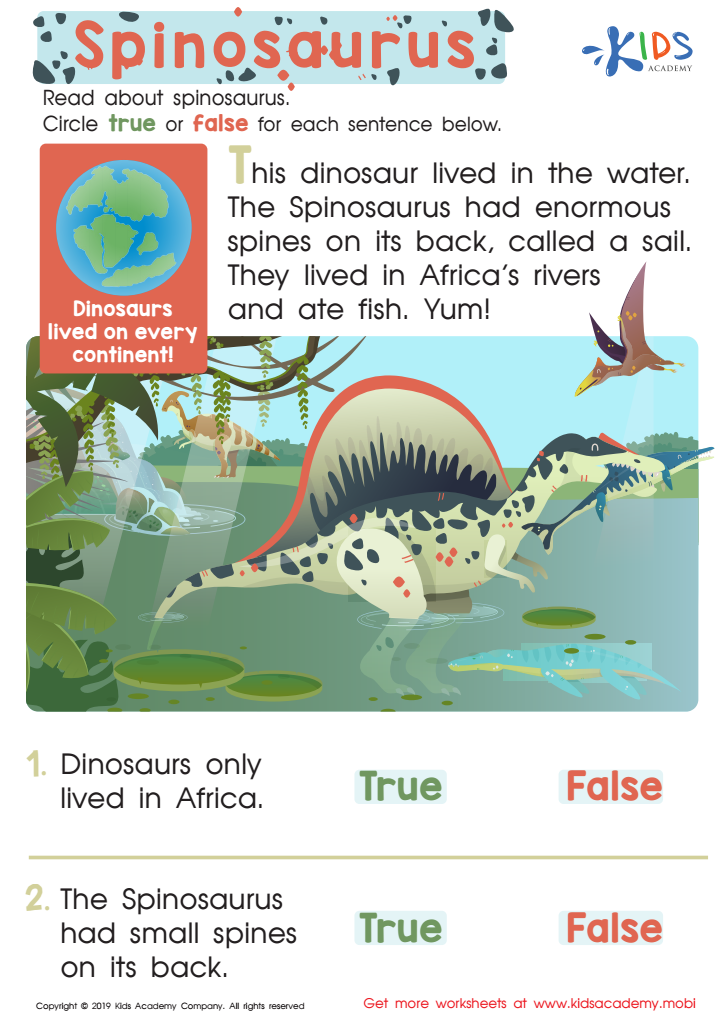
Spinosaurus Assessment Worksheet
Take your child on a journey to discover the Spinosaurus! This worksheet combines an engaging nonfiction passage about this incredible dinosaur with comprehension questions. Invite kids to read the text before deciding if the statements are true or false. Then, have them circle the right answers to complete the activity.
Spinosaurus Assessment Worksheet
Worksheet
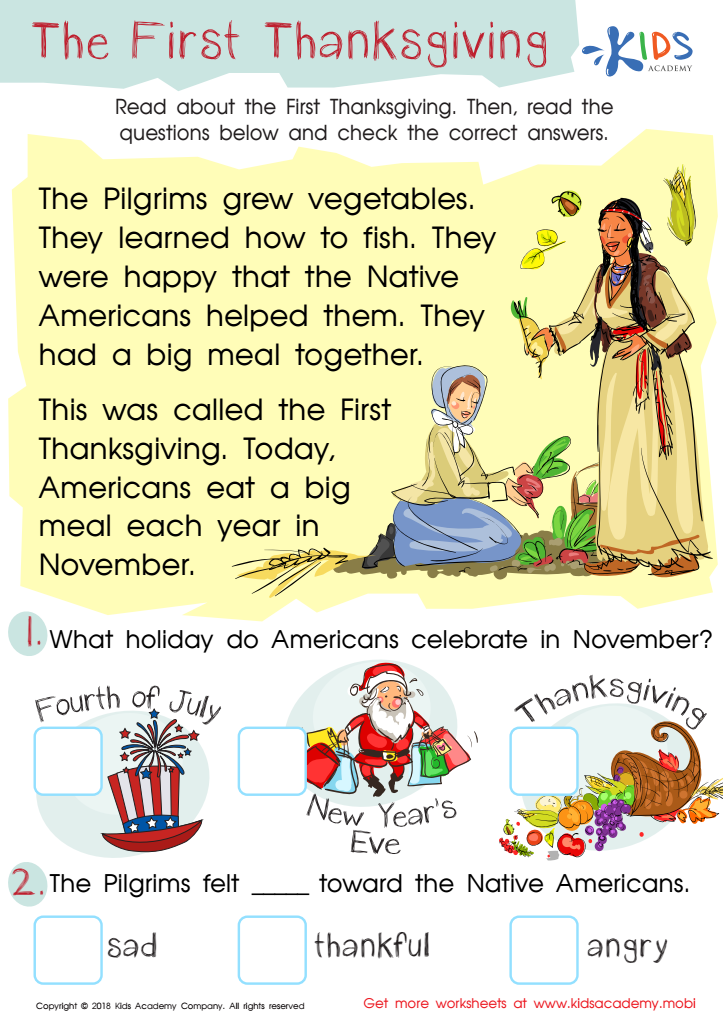
Assessment: First Thanksgiving Worksheet
When the Pilgrims arrived in America in 1620, they met the Native Americans and formed a pact to live in harmony. The Native Americans taught the Pilgrims how to survive in the new land, which helped them celebrate the First Thanksgiving. Read this text to your children and help them answer the questions below.
Assessment: First Thanksgiving Worksheet
Worksheet
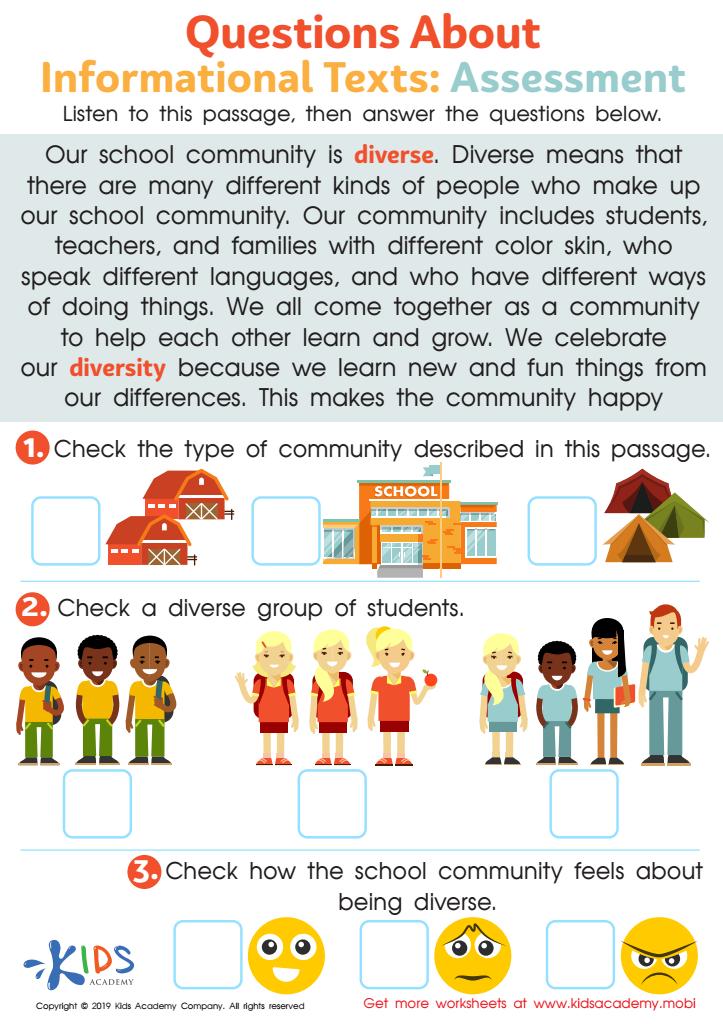
Questions About Informational Texts: Assessment 1 Worksheet
Ask your students: What comes to mind when we talk about a community? What different habits do people practice? What do fellow students do that seems strange? Read this passage aloud to your kindergartners and make sure they understand it. Then, answer the questions at the bottom of the page. (80 words)
Questions About Informational Texts: Assessment 1 Worksheet
Worksheet
Join Kids Academy for Free
Who is primarily going to use this learning content?





Parents and teachers should prioritize Normal Reading Non-Fiction activities for children ages 3-9 because such experiences play a critical role in early literacy development and cognitive growth. These activities introduce young learners to the world of real-life information, helping them grasp essential concepts about nature, cultures, science, and everyday life. As children engage with factual texts, they expand their vocabulary and understanding of new ideas, promoting critical thinking.
Reading non-fiction also nurtures children's curiosity and encourages a love for learning by answering their questions about the world around them. This genre often involves informative illustrations, tables, and diagrams, enhancing comprehension skills and presenting information in a way that is accessible and engaging.
Furthermore, exposure to non-fiction texts helps children develop essential skills, such as understanding how to locate information, distinguishing between different types of content, and recognizing the purpose of reading for knowledge rather than just entertainment. These activities can be easily integrated into daily routines, thus fostering richer, more complex conversations between parents, teachers, and children.
Ultimately, encouraging Normal Reading Non-Fiction helps lay the foundation for academic success and a lifelong love of reading, making it an invaluable practice in early childhood education.








