Normal Tracing worksheets activities for Ages 4-8 - Page 5
98 filtered results
-
From - To
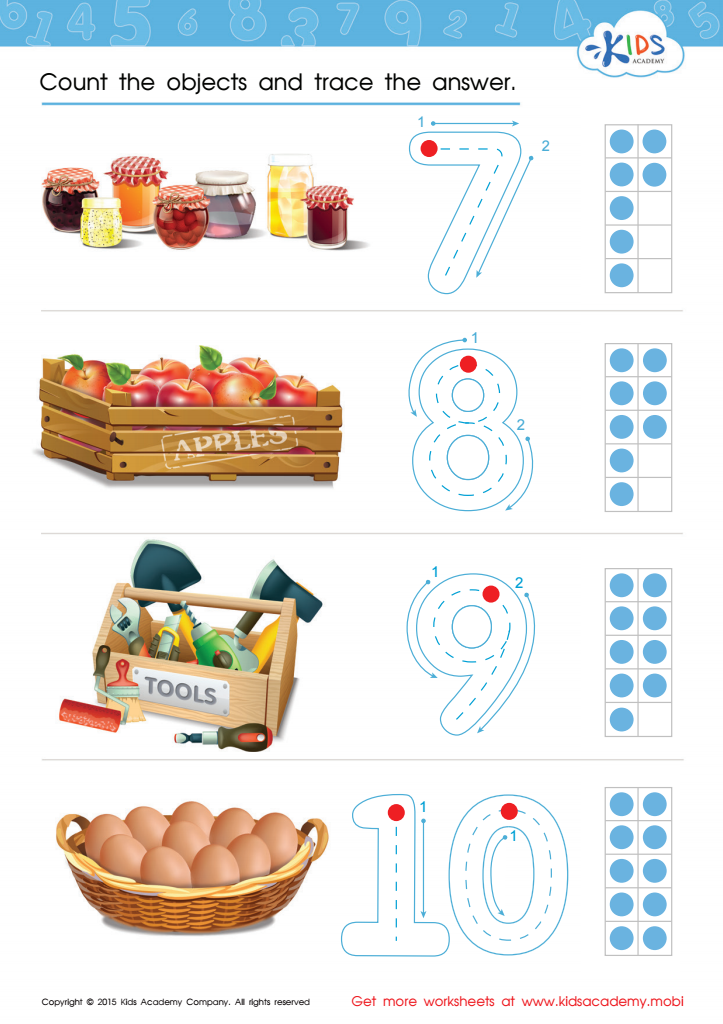
Count and Trace 7 – 10 Worksheet
 Assign to My Students
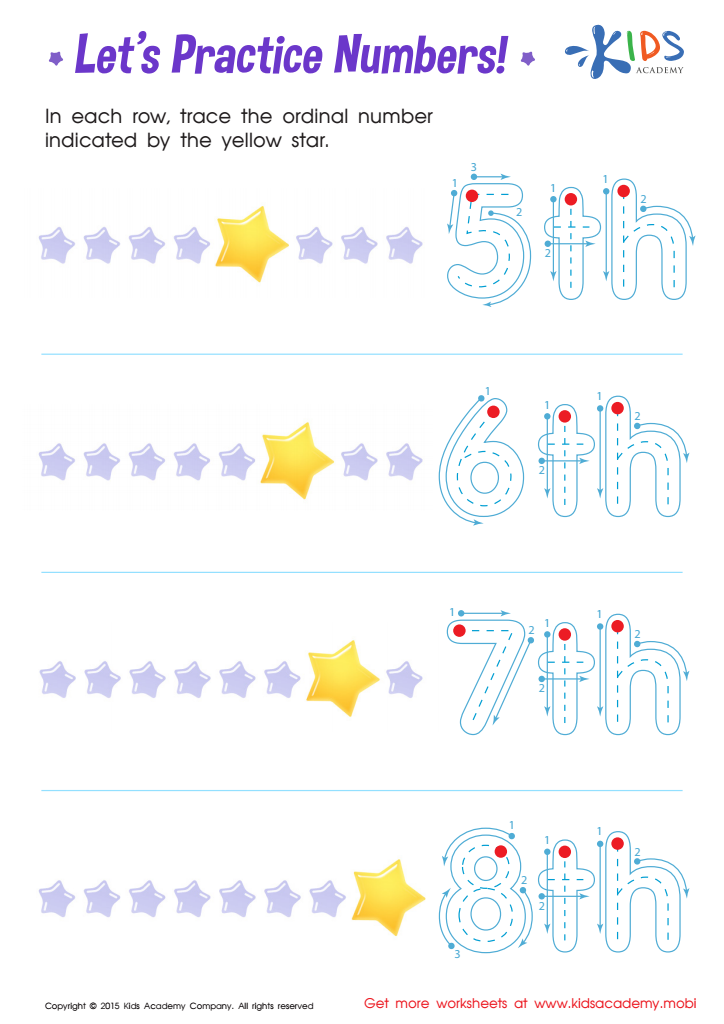








Normal tracing activities are crucial for children aged 4-8 as they play a significant role in developing essential skills. For parents and teachers, these activities foster fine motor skills, hand-eye coordination, and cognitive development. Engaging in tracing helps children practice pencil control, paving the way for successful writing later on. It introduces them to shapes, letters, and numbers in a fun and interactive way, enhancing their spatial awareness and recognition of symbols.
Moreover, normal tracing activities can support literacy development, as children become familiar with letters and words through repetitive practice. This early exposure lays a strong foundation for reading and writing, making the transition into formal education smoother.
In addition to the physical and cognitive benefits, tracing can also be a calming and focus-enhancing activity, promoting concentration and patience. It can easily be integrated into everyday learning and supports differentiated instruction, catering to various learning styles and needs.
Ultimately, by incorporating normal tracing activities, parents and teachers can nurture a child's developmental journey, encouraging a love for learning while building the necessary skills for future academic success. Engaging children in these activities not only facilitates learning but also provides opportunities for creativity and self-expression.








