Matching Worksheets for Ages 3-4 - Page 4
75 filtered results
-
From - To
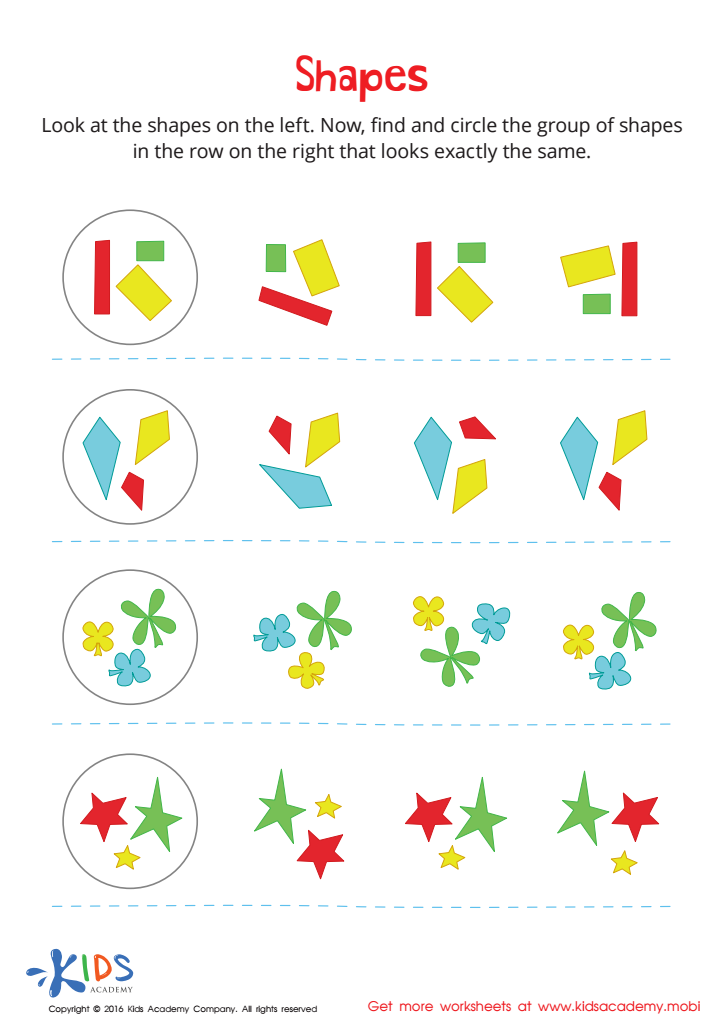
Shapes Worksheet
 Assign to My Students
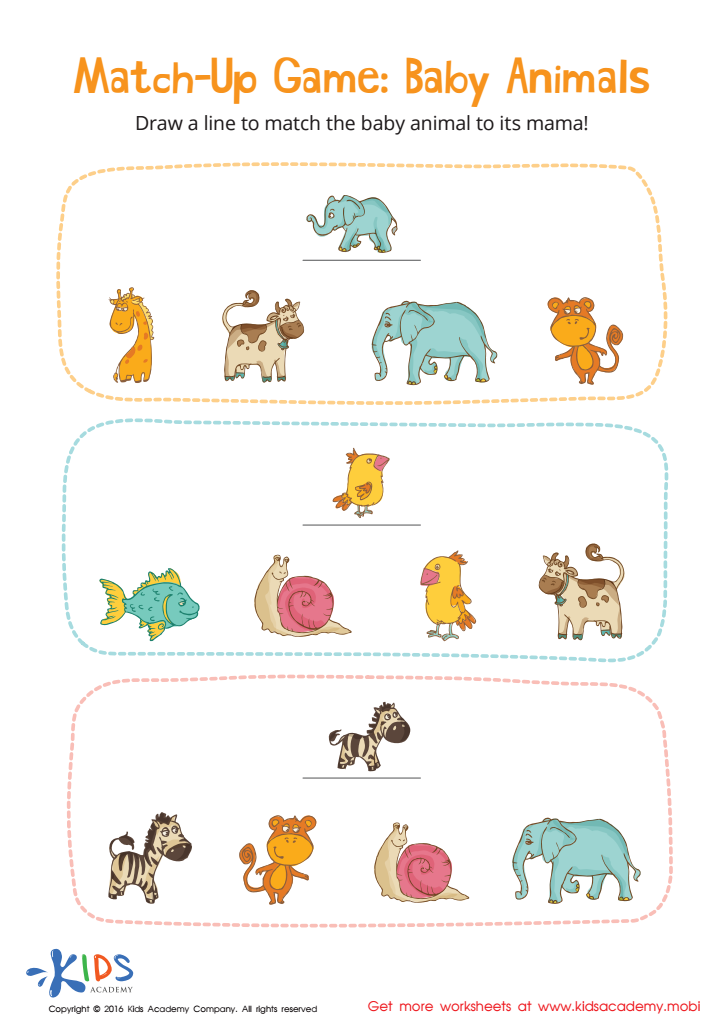
Baby Animals Match-Up Worksheet






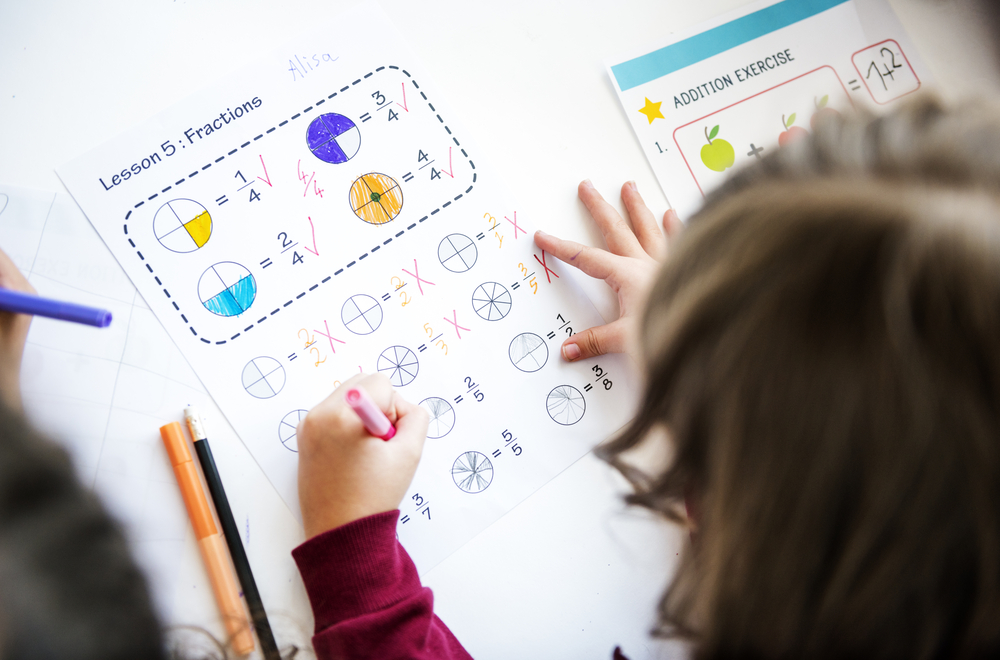

Matching worksheets for Ages 3-4 are an invaluable resource in the developmental journey of young learners. At this pivotal age, children are like sponges, absorbing information and skills that lay the foundation for future learning. Matching activities, specifically designed for this age group, are tailored to captivate their interest while fostering critical cognitive skills.
Firstly, Matching worksheets for Ages 3-4 boost pattern recognition abilities. Recognizing patterns is not just a key math skill but also crucial for reading and science, preparing children for a wide range of future academic pursuits. Through these engaging worksheets, children learn to identify similarities and differences, an essential skill for understanding the world around them.
Moreover, these matching activities enhance memory and concentration. As children focus on finding pairs or matching items, they exercise their short-term memory, improving their ability to recall information. This, in turn, benefits their overall learning process.
Additionally, Matching for Ages 3-4 supports language development. As children match objects, they also learn new words and concepts, expanding their vocabulary and comprehension skills. This interaction with language through play makes learning both effective and enjoyable.
In conclusion, Matching worksheets for Ages 3-4 are not just another activity. They are a carefully designed educational tool that supports cognitive development, language acquisition, and foundational learning skills, all while keeping young learners engaged and entertained.








