
Addition Facts Worksheets for Ages 3-6
42 filtered results
Difficulty Level
Grade
Age
-
From - To
Subject
Activity
Standards
Discover engaging and carefully designed Addition Facts Worksheets for children ages 3-6! Our collection focuses on building foundational math skills through fun activities and colorful illustrations. These worksheets help young learners master essential addition concepts, promoting early numeracy in a friendly, interactive way. Each worksheet encourages practice in a stress-free environment, making learning math enjoyable for preschool and kindergarten kids. Perfect for home or classroom use, these resources support cognitive development and boost confidence in young mathematicians. Explore our variety of printable worksheets that inspire curiosity and ensure your child has a solid grasp of addition facts. Get started today!
Favorites
With answer key
Interactive
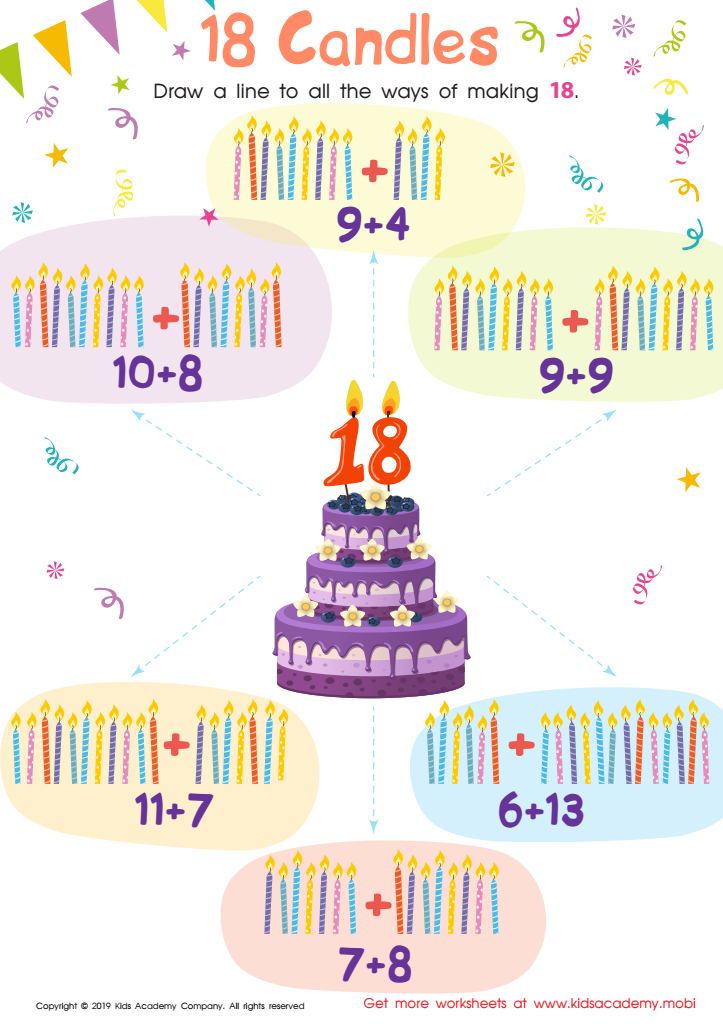
18 Candles Worksheet
This worksheet is great for introducing your students to addition and subtraction. Help your kids solve the simple equations on it and draw a line from the birthday cake with 18 on it to all the solutions. Practice like this will prepare them to tackle more complex math problems.
 Assign to My Students
18 Candles Worksheet
Worksheet


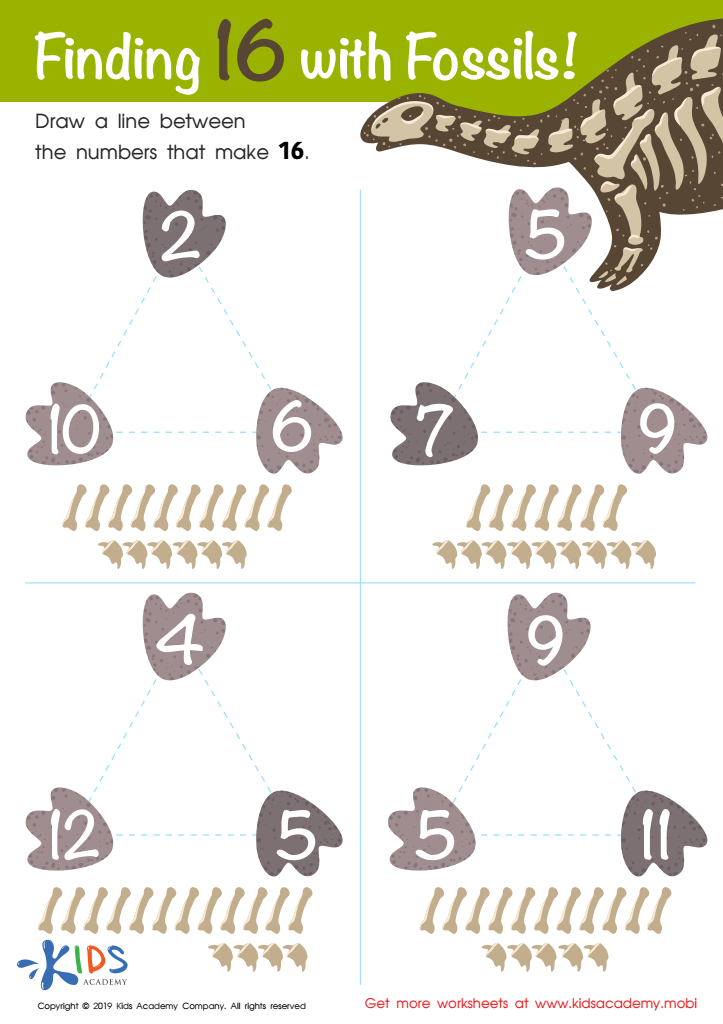
Finding 16 With Fossils Worksheet
Experts hunt for fossils, dig them up, and study them to learn more about past life forms - how they lived, what they looked like, and when they lived. Show kids the picture in this worksheet and point out the fossils. Help them count the bones and draw a line between the numbers that add up to 16 in each triangle.
Finding 16 With Fossils Worksheet
Worksheet
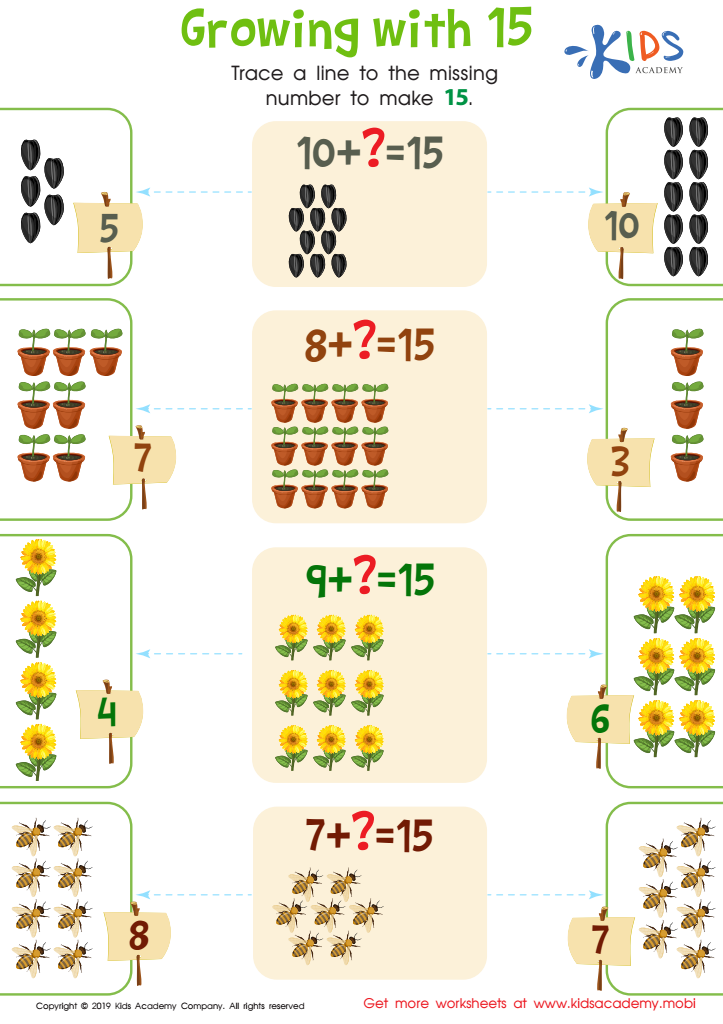
Growing with 15 Worksheet
Remind your kids that adding different sets of numbers can give the same total (e.g. 2+3=5, 4+1=5). Test their understanding by asking them for more examples. Move onto the worksheet: count objects, then trace the line to the number making a total of 15.
Growing with 15 Worksheet
Worksheet
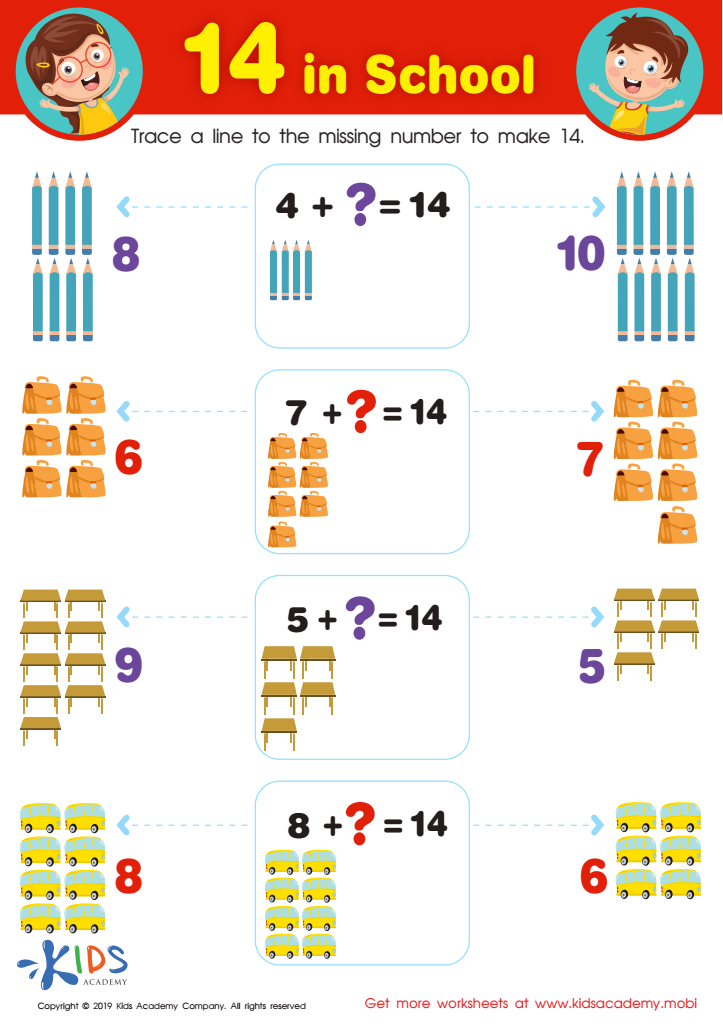
14 in School Worksheet
Remind your kids that adding different sets of numbers can give the same total (e.g. 2+3=5, 4+1=5). Ask them for more examples. Afterwards, work through the exercise. Help them count the objects and trace a line to the missing number that makes the total 14.
14 in School Worksheet
Worksheet
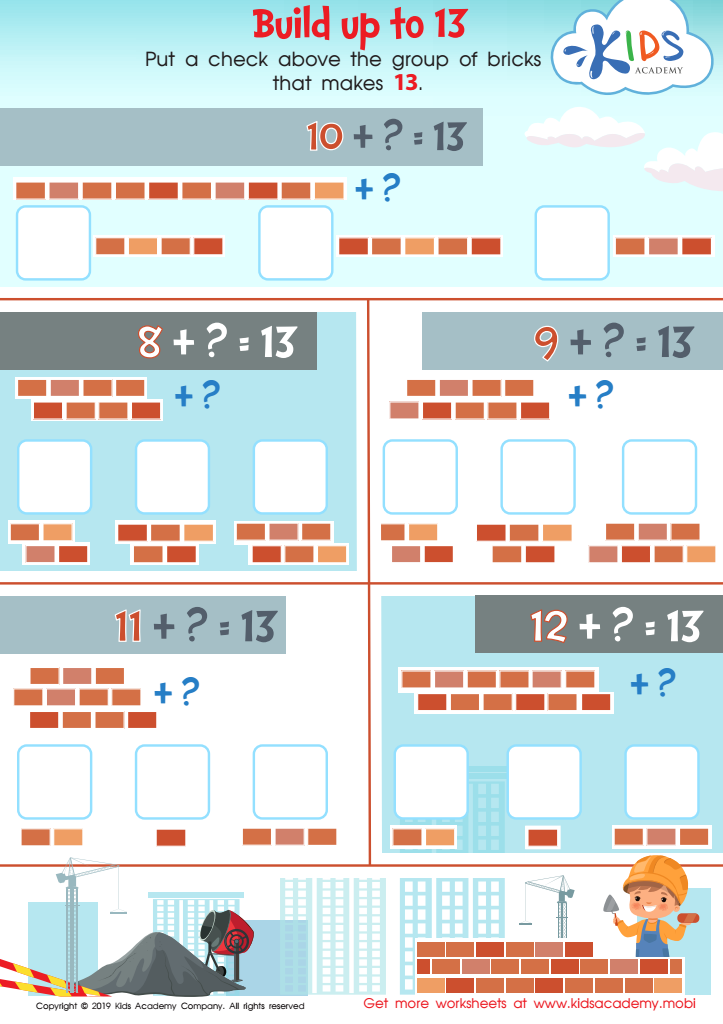
Build up to 13 Worksheet
Help your kids master addition and subtraction with this worksheet! It'll help clear up any confusion they may have with adding different numbers. Have them add up the simple equations and mark the group of bricks that makes 13. It's a great way for them to get familiar with the basics.
Build up to 13 Worksheet
Worksheet
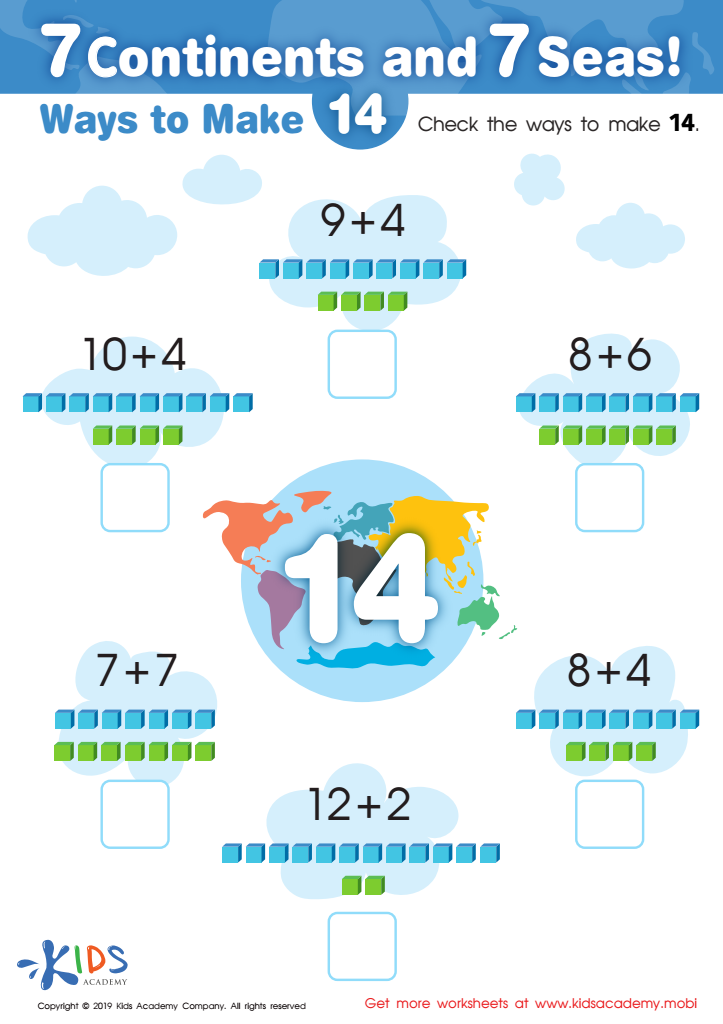
7 Continents and 7 Seas Worksheet
Remind kids of the continents and show them how different numbers can add up to the same figure. Give examples, like 2+2 =4, and 3+1 =4. Ask if they can provide other examples, then work through the simple additions in this worksheet with them. Ask them to circle all equations that make 14.
7 Continents and 7 Seas Worksheet
Worksheet
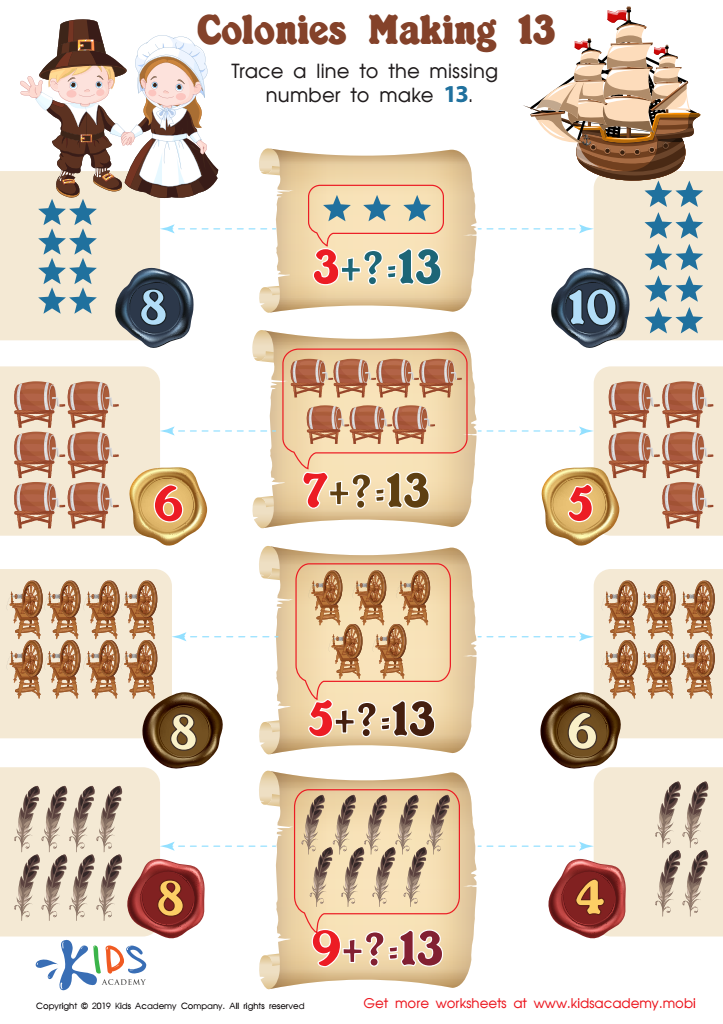
Colonies Making 13 Worksheet
Help your students trace the lines to complete the puzzle! They must identify the objects in the pictures and find the missing numbers that add up to 13. Colonizers arrived in America on a ship, forming an agreement with the Native Americans. Can your students fill in the gaps?
Colonies Making 13 Worksheet
Worksheet
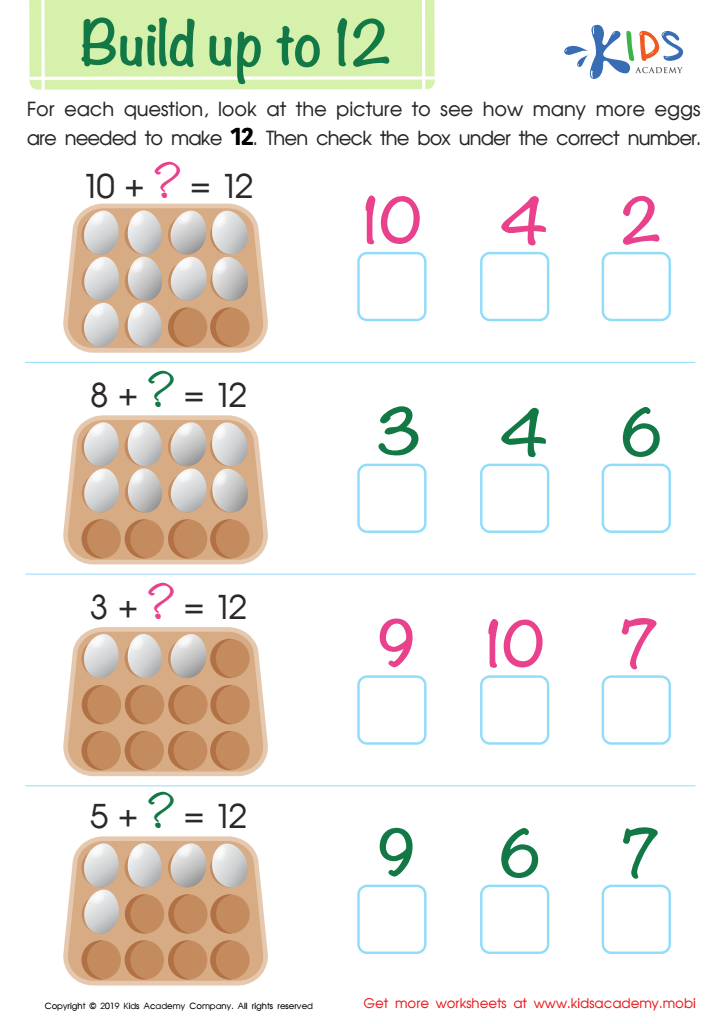
Build up to 12 Worksheet
Love eggs? Kids can identify them in the picture in this worksheet. We need to add numbers to make 12. Look at the picture and see how many eggs are needed. Check the correct number box. Breakfast or baking, eggs are essential!
Build up to 12 Worksheet
Worksheet
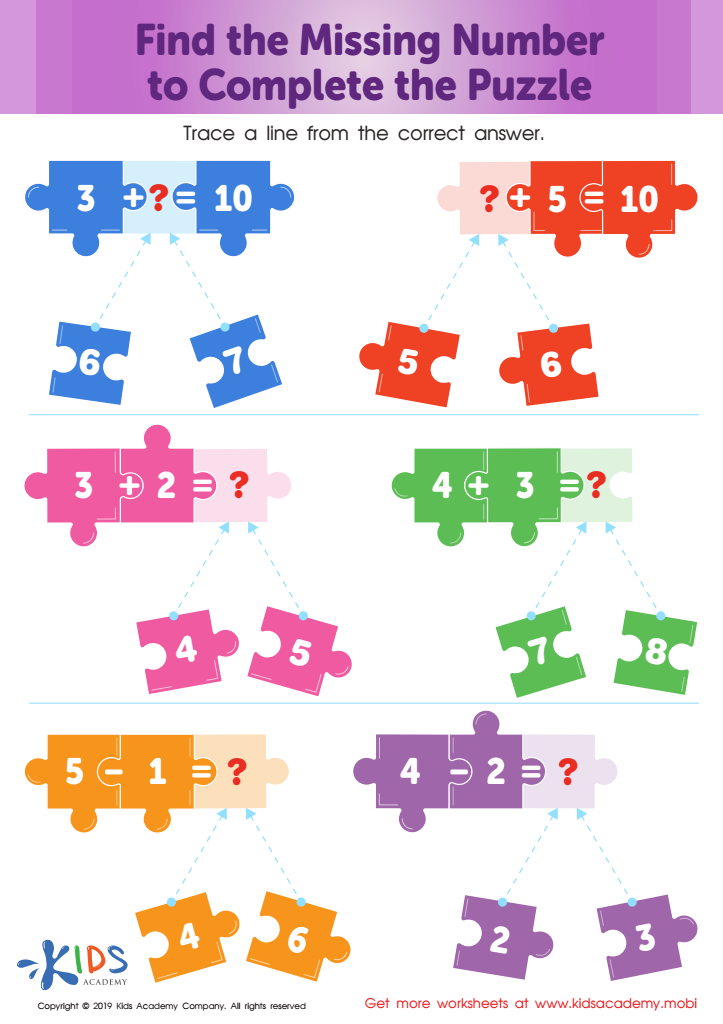
Find the Missing Number to Complete the Puzzle Worksheet
Teach math with fun puzzles! Have kids solve the six equations and trace lines to the correct answer. Puzzles engage minds and help students learn. Try this worksheet to make math learning fun.
Find the Missing Number to Complete the Puzzle Worksheet
Worksheet
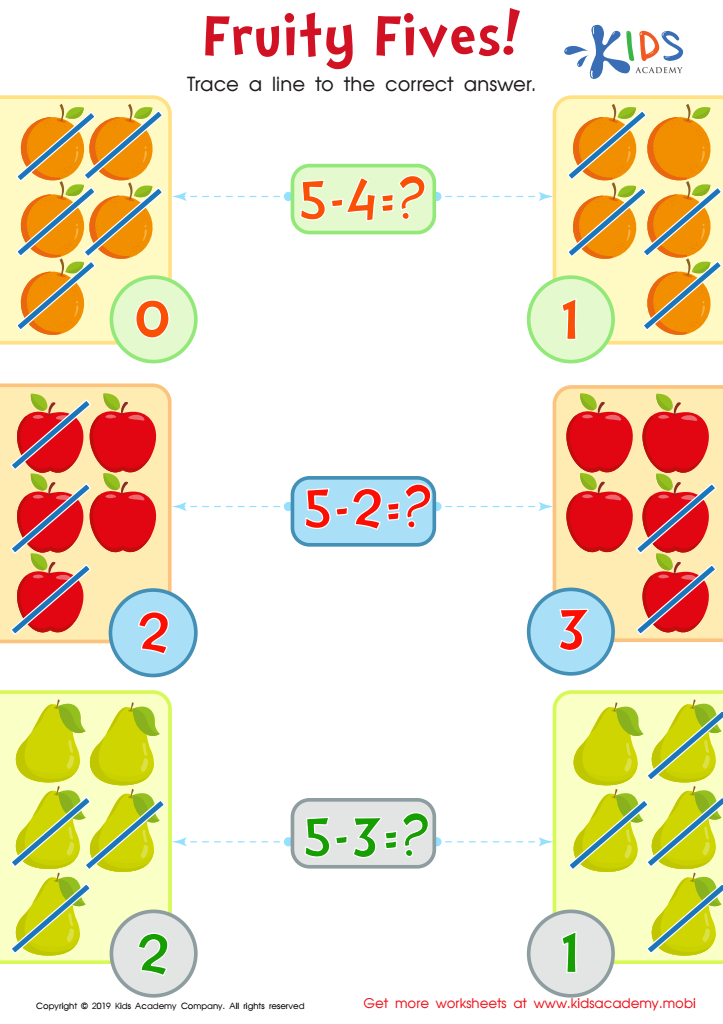
Fruity Fives! Worksheet
This tracing sheet has three equations for your kids to solve. Make learning fun with colorful objects and text! They may need help, so be prepared to assist them. Help them solve the equations and trace a line to the correct answer.
Fruity Fives! Worksheet
Worksheet
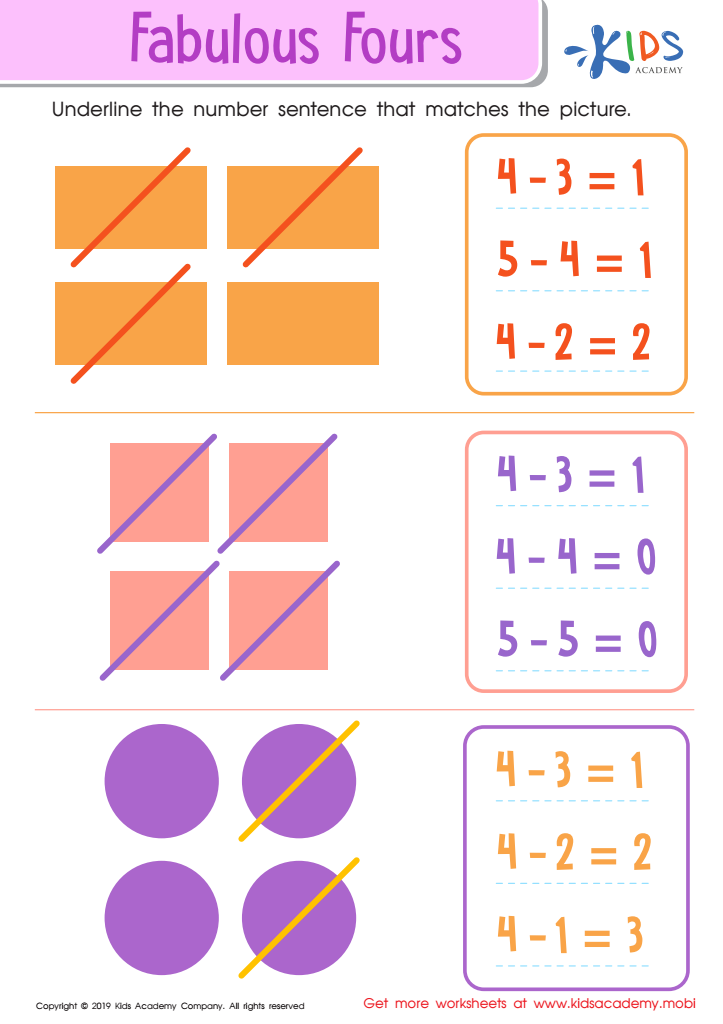
Fabulous Fours Worksheet
Mastering basic math like addition and subtraction is essential for your kids. Use fun exercises and tests to evaluate their understanding of equations. Challenge them with this worksheet - have them count the objects in each picture, then trace a line to the pictures which show the equation 3-2.
Fabulous Fours Worksheet
Worksheet
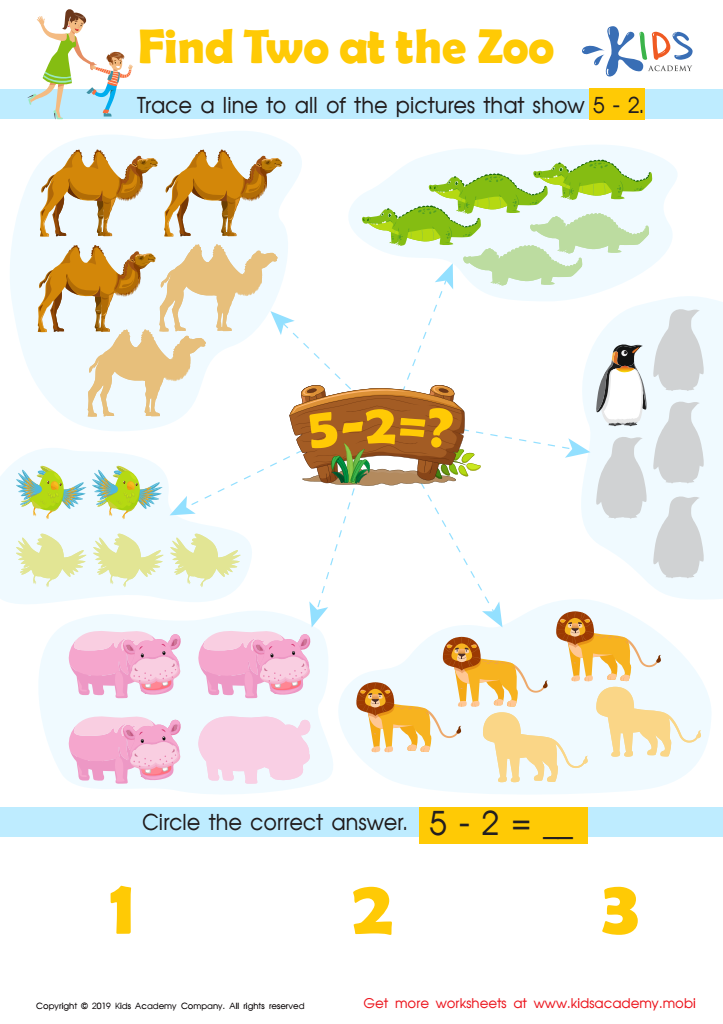
Find Two at the Zoo Worksheet
Help your kids overcome math fears and practice subtracting numbers with this traceable PDF. Ask them to identify the 6 groups of animals in the picture and count the animals in each group. Then, help them trace a line to all of the pictures that illustrate the equation 5-2.
Find Two at the Zoo Worksheet
Worksheet
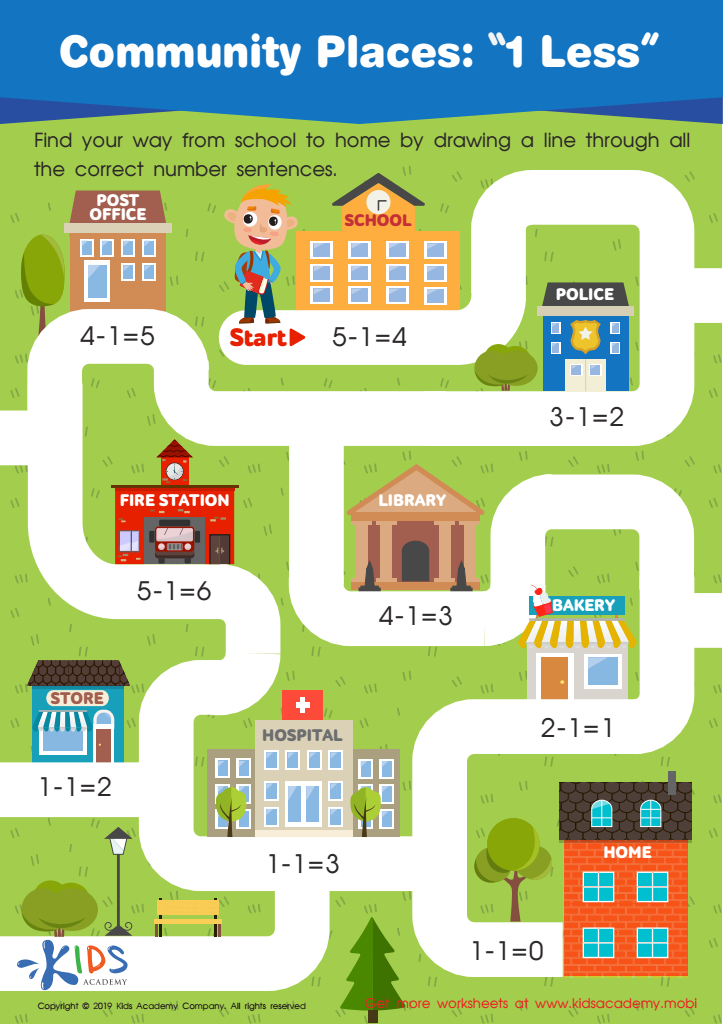
Community Places: 1 Less Worksheet
Have your kindergarteners draw a line through the correct number sentences as they find their way home from school. Ask them to identify the people, places, and buildings in their community and the jobs they do.
Community Places: 1 Less Worksheet
Worksheet
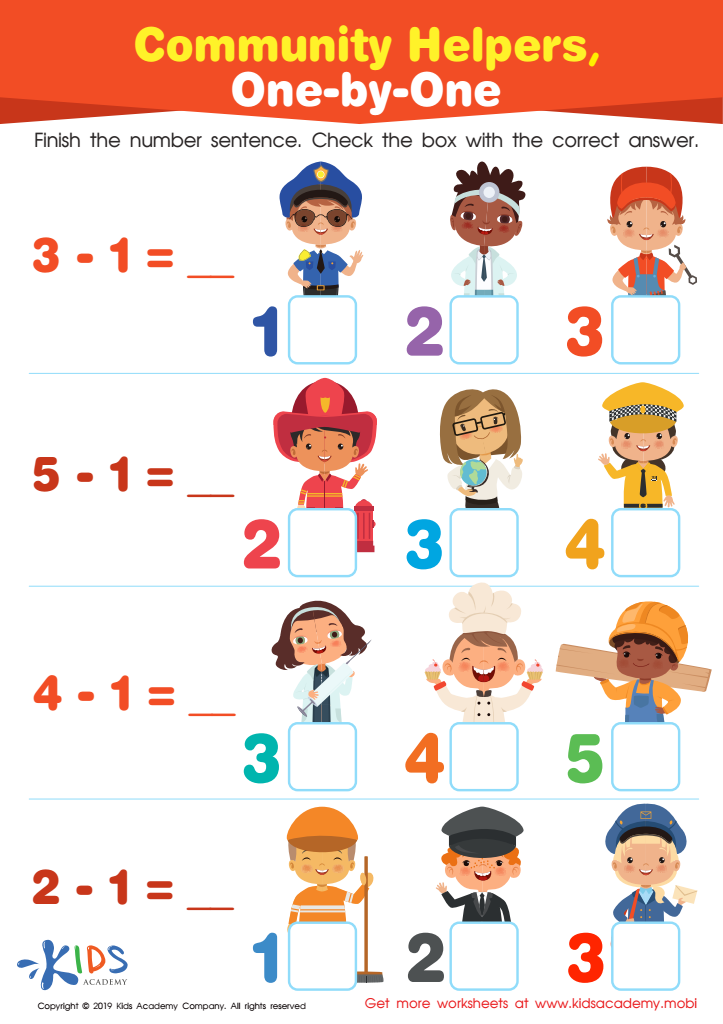
Community Helpers, One-by-One Worksheet
There are many people, buildings and places in our community, so it's important to have people who maintain order. It's important citizens do their part too! This worksheet will introduce kids to community helpers. Have them complete the number sentences by checking the correct box.
Community Helpers, One-by-One Worksheet
Worksheet
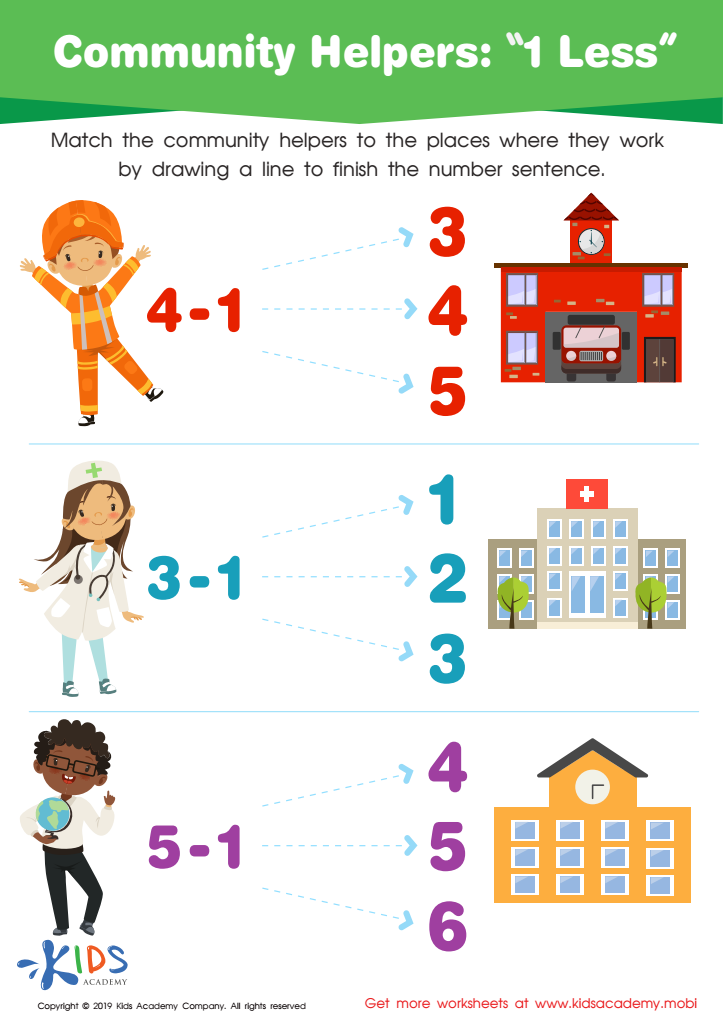
Community Helpers: 1 less Worksheet
Look at this worksheet with your child and ask them to identify the different community helpers. Match them to the places where they work by drawing a line to finish the number sentence. This helps them identify the people that help keep the community organized and running smoothly. Examples of community helpers include doctors, police officers, firefighters, teachers, etc.
Community Helpers: 1 less Worksheet
Worksheet
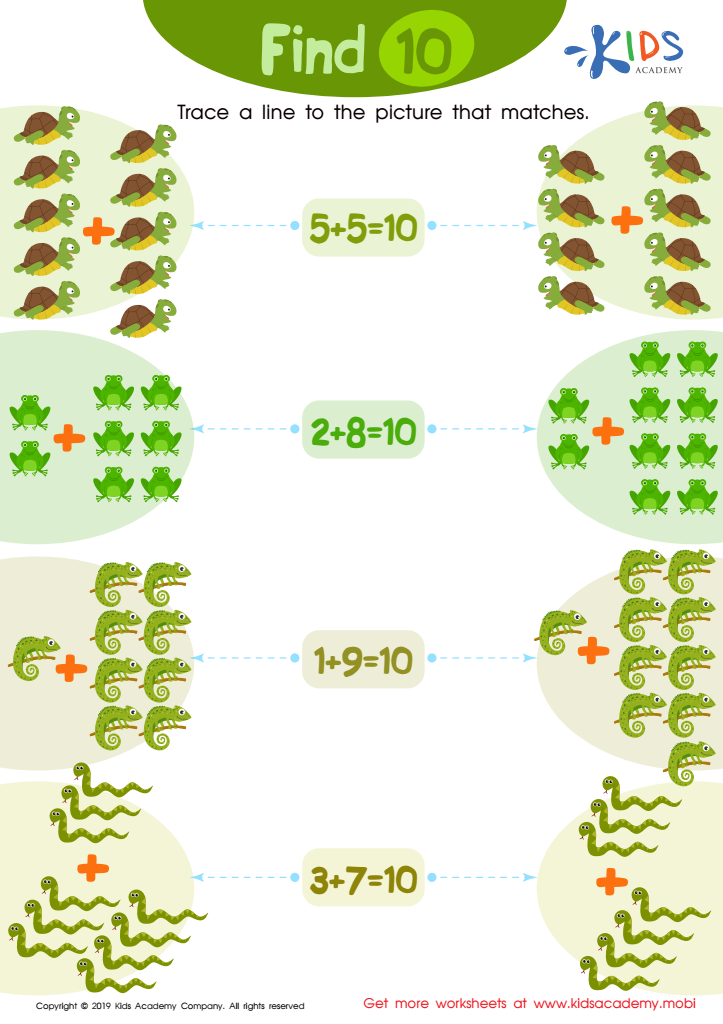
Find 10 Worksheet
Counting can be tricky, but your kids can master it with regular practice. Here's a fun activity to help: count the animals, then trace a line to the pictures that matches. With these tips, math will be an easy walk in the park.
Find 10 Worksheet
Worksheet
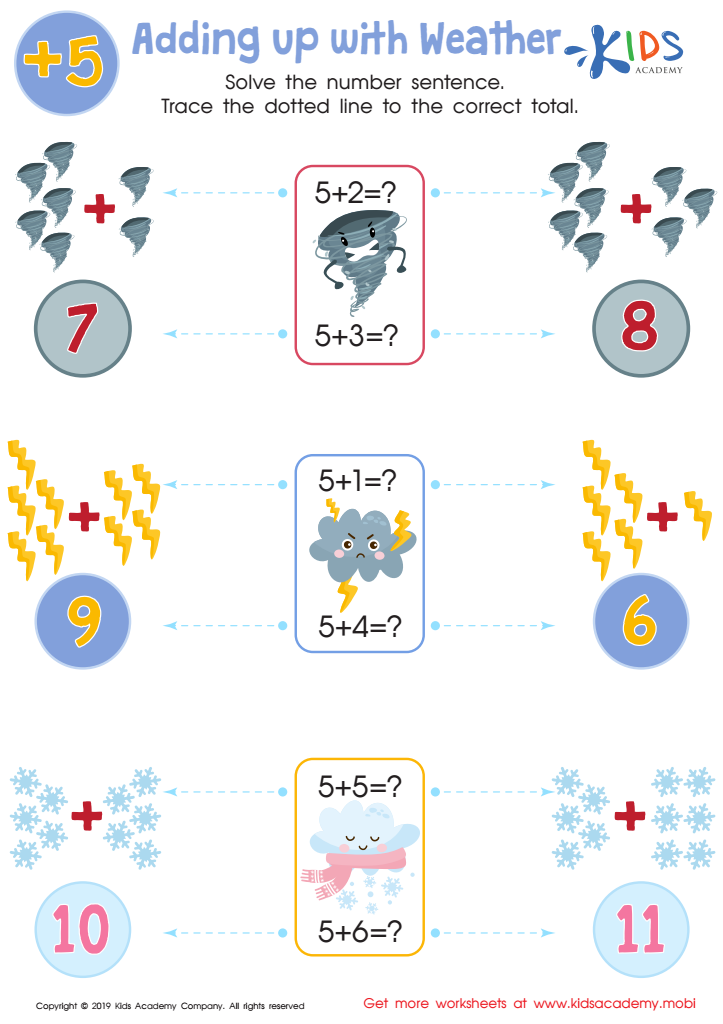
Adding up With Water Worksheet
Ask your kids to name different kinds of weather and what it's like outside now. Then, help them solve the number sentences on the worksheet by tracing the dotted line to the correct total.
Adding up With Water Worksheet
Worksheet
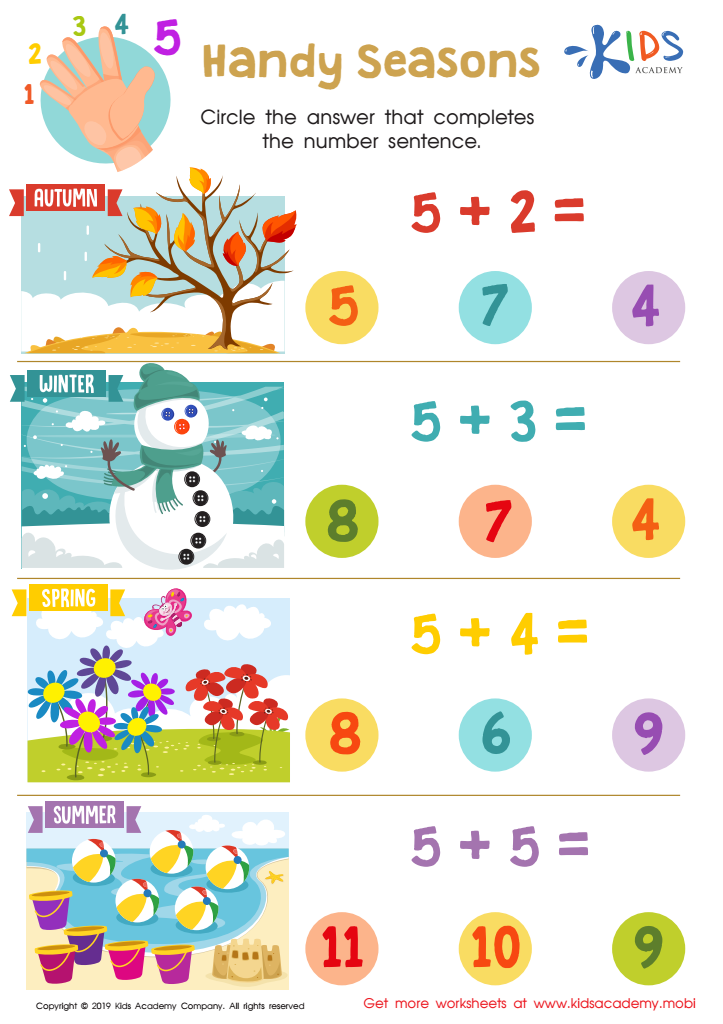
Handy Seasons Worksheet
Help your kids understand number sentences with this fun and colorful worksheet, featuring 4 pictures. Get them to identify each season, then circle the answer that completes the number sentence given. Make math exciting and get your kids excited to learn!
Handy Seasons Worksheet
Worksheet
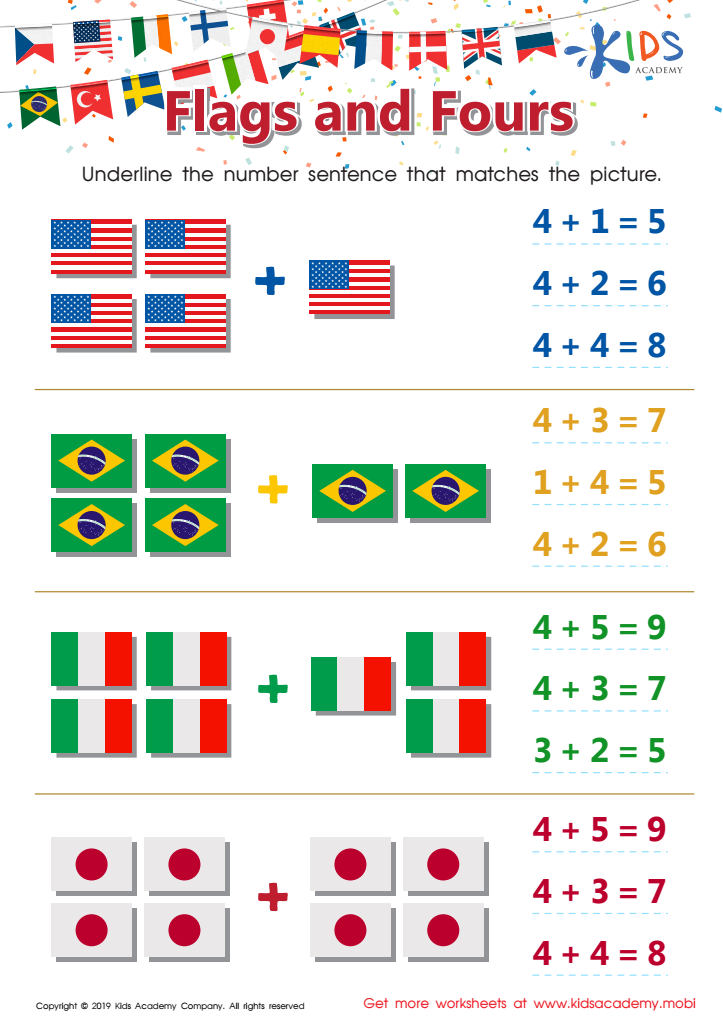
Flags and Fours Worksheet
Have your kids identify country flags from this colorful printout. Then, ask them to underline the number sentence that goes with each flag. Combining math with national flag recognition strengthens kids' knowledge of both, promoting an understanding of identity and numbers.
Flags and Fours Worksheet
Worksheet
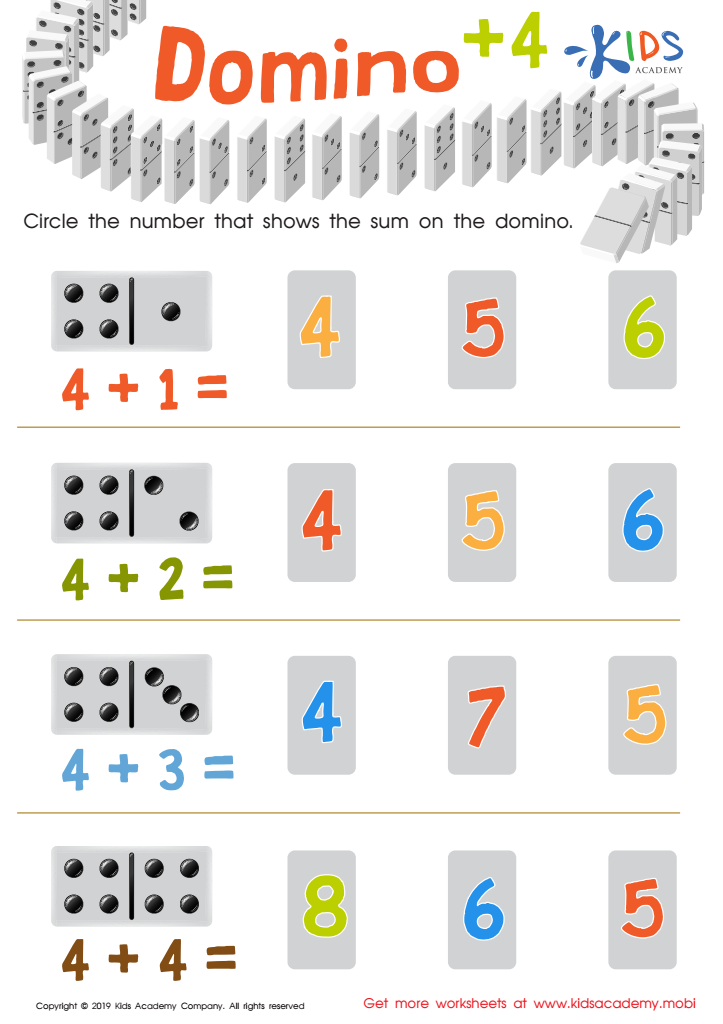
Domino +4 Worksheet
Ask your kids if they know what a domino is. Explain, then move on to solving the four simple equations on this printout, adding a number to 4. Help them find the sum and circle the number.
Domino +4 Worksheet
Worksheet
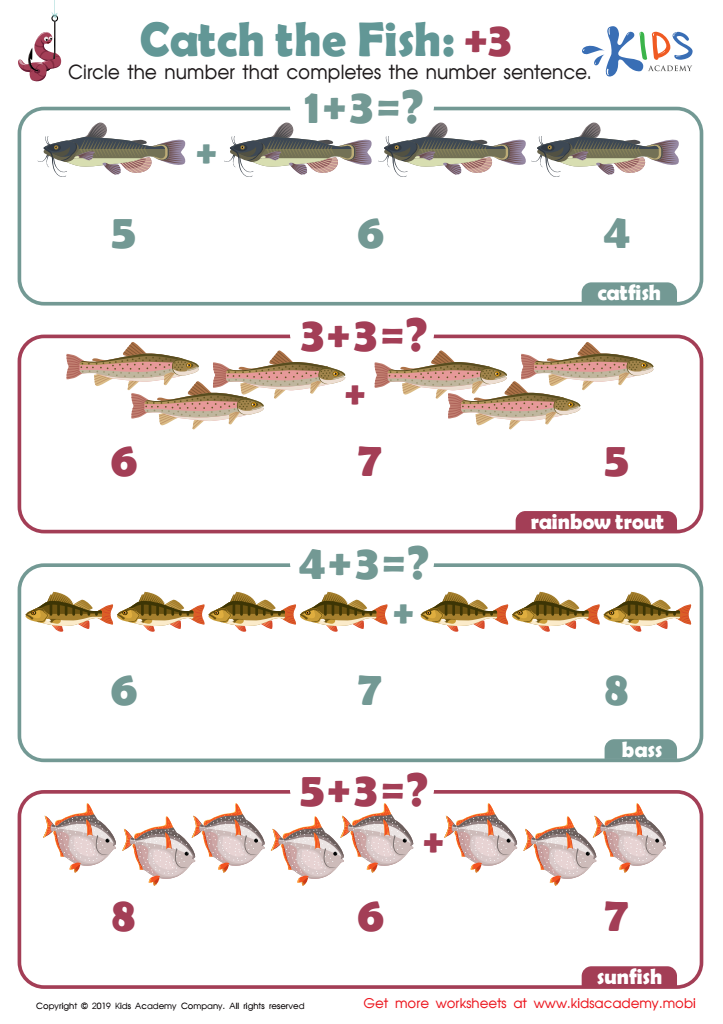
Catch the Fish: +3 Worksheet
Math may be tricky for your child, with all the numbers and calculations. This worksheet can help them brush up. Ask them to identify the objects in the picture, then count them and help them circle the right number to complete the sentence. It's a simple and effective way to improve math skills.
Catch the Fish: +3 Worksheet
Worksheet
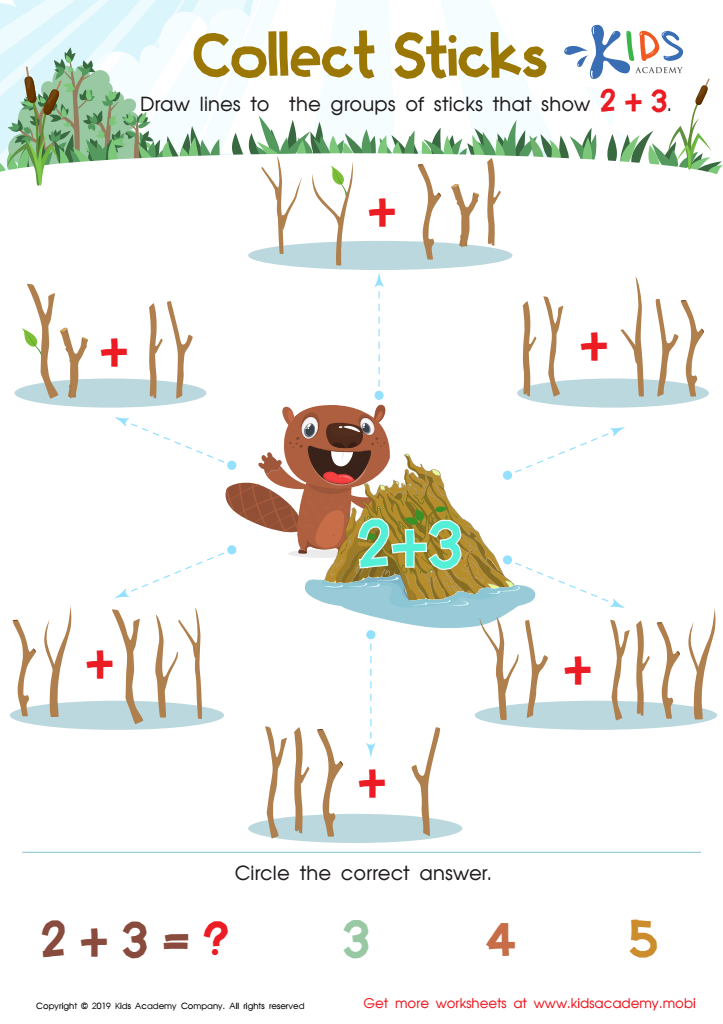
Collect Sticks Worksheet
Let math be fun for your kids with a simple and colorful worksheet exercise. Addition and subtraction can be daunting, but you can make it enjoyable with exercises like this one. Get them to draw lines to the groups of sticks that show 2+3 and watch them light up.
Collect Sticks Worksheet
Worksheet
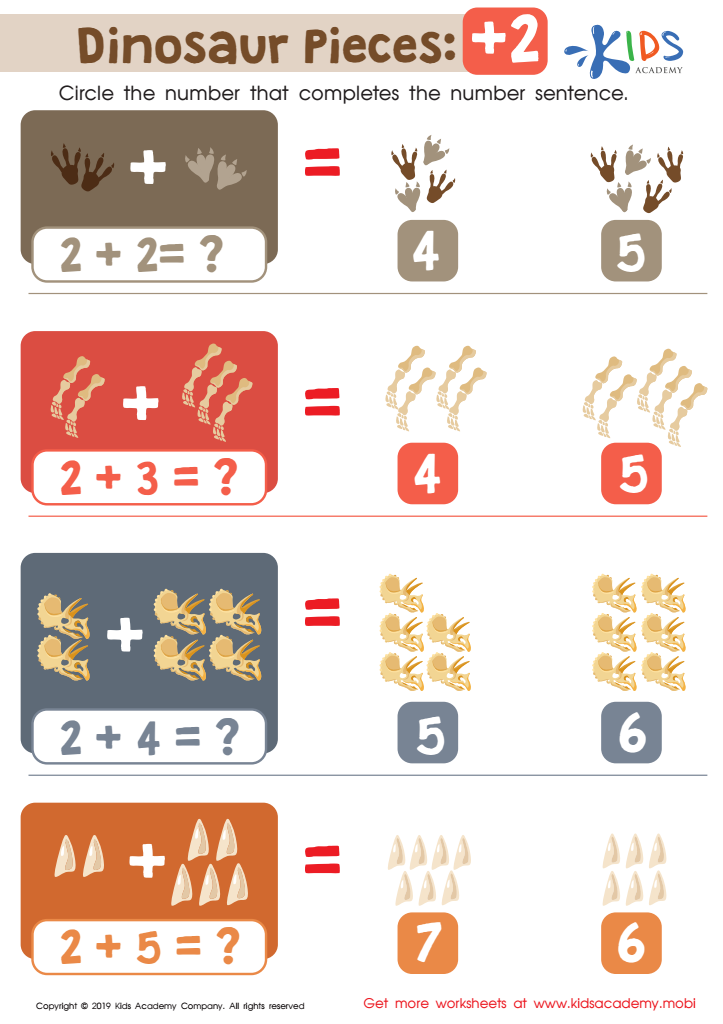
Dinosaur Pieces: +2 Worksheet
Kids love dinosaurs! See if your kids can solve these three equations featuring the mysterious creatures. Download the PDF and have them circle the number that completes each equation. Dinosaurs are extinct, not seen for thousands of years, but they can still help kids work on their math skills!
Dinosaur Pieces: +2 Worksheet
Worksheet
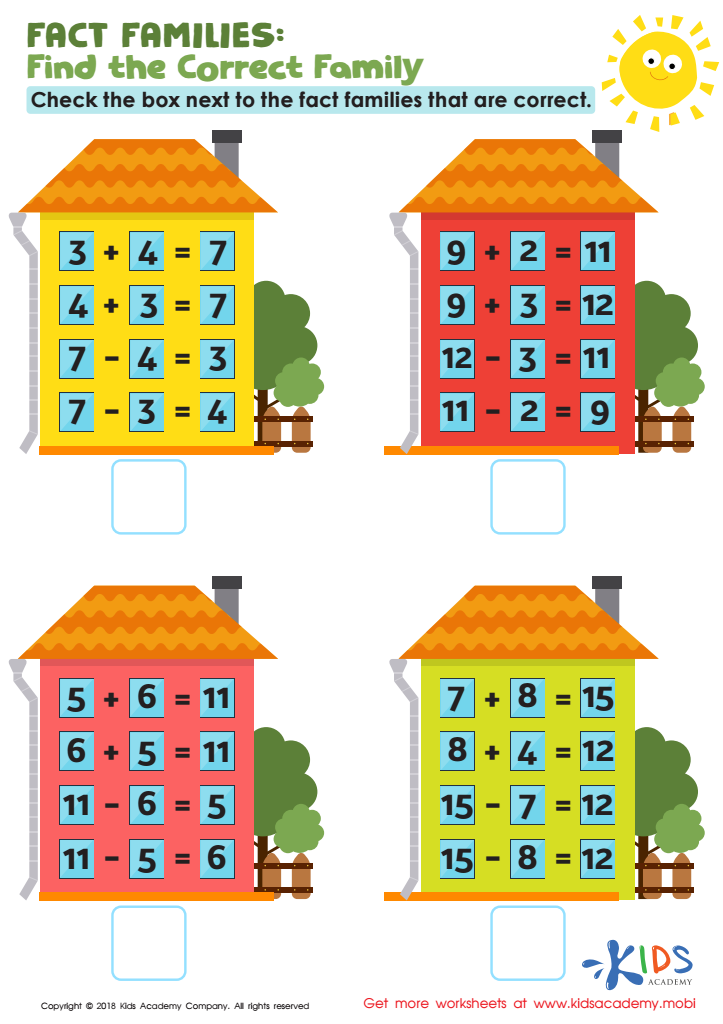
Fact Families: Find Correct Family Worksheet
Test your students' math and reasoning skills with this worksheet. It features 4 houses, each with a group of fact families on it. Some are correct, some are wrong - help students identify which are correct and circle the box next to them. This will help them progress in school.
Fact Families: Find Correct Family Worksheet
Worksheet
Join Kids Academy for Free
Who is primarily going to use this learning content?








Parents and teachers should care about addition facts for children aged 3-6 because these foundational skills are crucial for early mathematical development. Mastering basic addition lays the groundwork for more complex math concepts later on. During this formative period, children's cognitive abilities are rapidly developing, making it an ideal time to introduce these fundamental skills through engaging and age-appropriate activities.
Understanding simple addition also promotes critical thinking and problem-solving abilities. When children learn to recognize quantities and comprehend simple equations, they build confidence in their capabilities. This base knowledge fosters a positive attitude toward math, reducing anxiety as they advance through school.
Moreover, gathering addition facts can enhance children's fine motor skills and language development. Many activities that support addition, such as counting objects, can also promote vocabulary acquisition and communication skills.
Finally, integrating fun games and practical experiences to teach addition makes learning enjoyable and memorable, allowing children to grasp concepts in a relaxed environment. By focusing on these early math skills, parents and teachers can set the stage for lifelong learning and a strong mathematical mindset, ultimately benefiting children's academic performance in the future.








