Numbers up to 100 Worksheets for Ages 3-8 - Page 3
50 filtered results
-
From - To
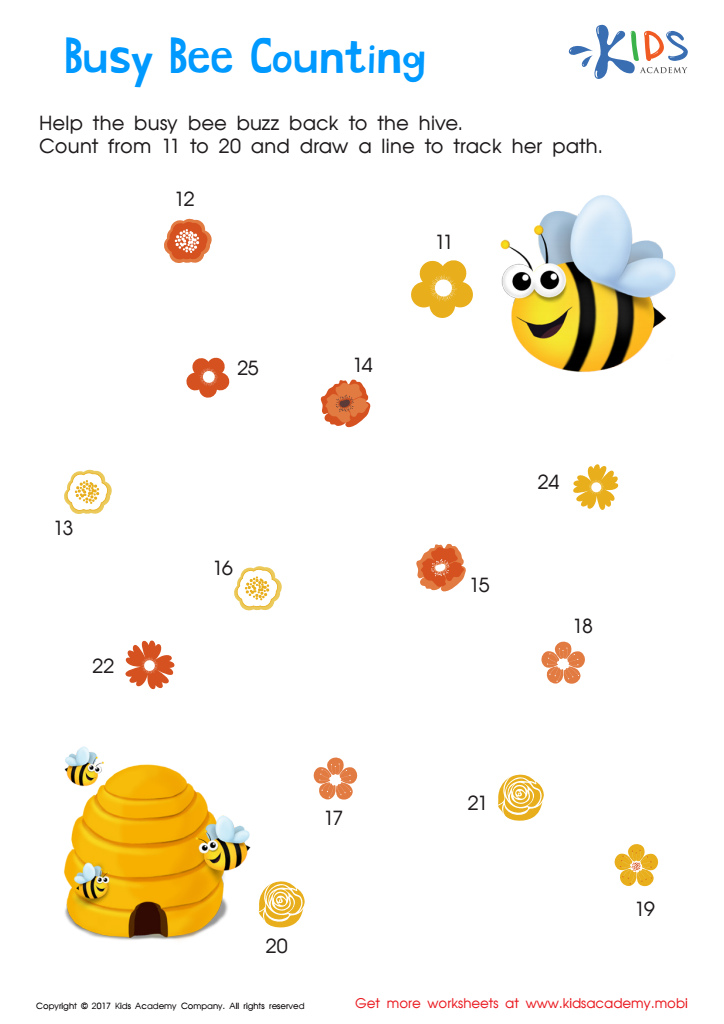
Ordering 11–20: Busy Bee Counting Worksheet
 Assign to My Students
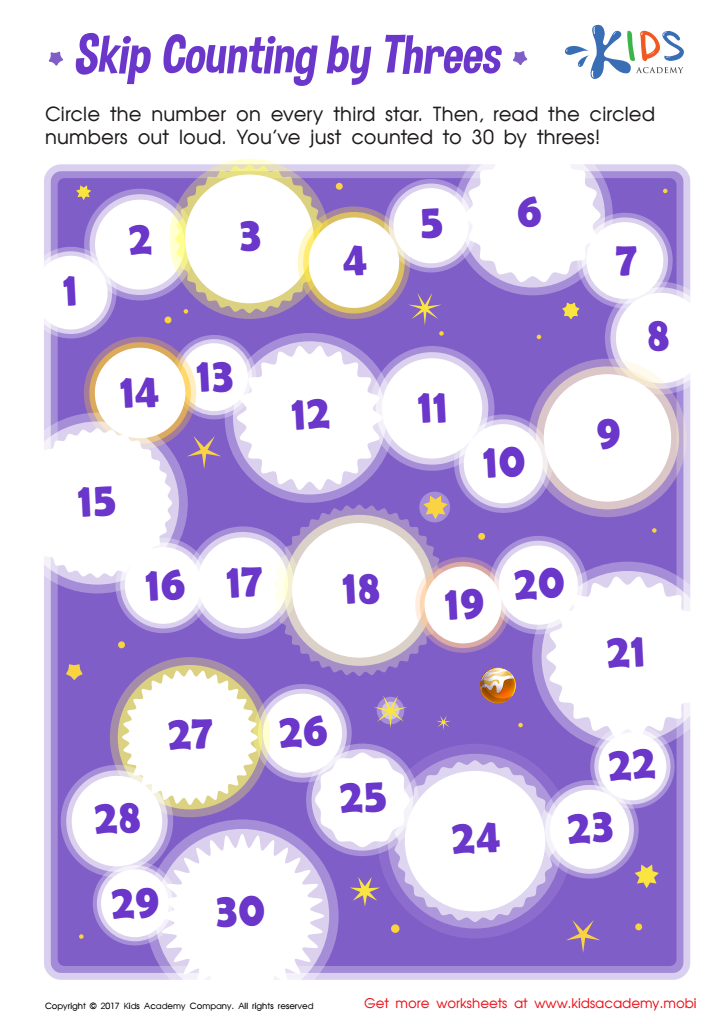
Skip Counting By Three Printable








Introducing numbers up to 100 to children ages 3-8 is foundational for their mathematical development and overall cognitive growth. During these early years, children’s brains are highly receptive, making it the ideal time to build numeracy skills. Understanding and working with numbers up to 100 lays the groundwork for more complex mathematical concepts they will encounter later, such as addition, subtraction, place value, and even basic geometry.
Aside from enhancing future academic skills, early exposure to numbers also supports critical thinking and problem-solving abilities. By counting, recognizing, and manipulating numbers, children develop their memory, concentration, and ability to process information logically. These cognitive skills extend beyond math, benefiting areas like reading comprehension and scientific reasoning.
Moreover, familiarity with numbers boosts self-confidence and fosters a positive attitude toward learning. When children feel competent in basic numeracy, they are more likely to approach more advanced topics with eagerness and resilience. Teachers and parents play a crucial role in this process, as their encouragement and engagement can transform learning numbers into an enjoyable and meaningful experience. In essence, investing time and effort into teaching numbers up to 100 provides children with invaluable tools for their educational journey and everyday life.








