Time Worksheets for Ages 3-8 - Page 2
25 filtered results
-
From - To
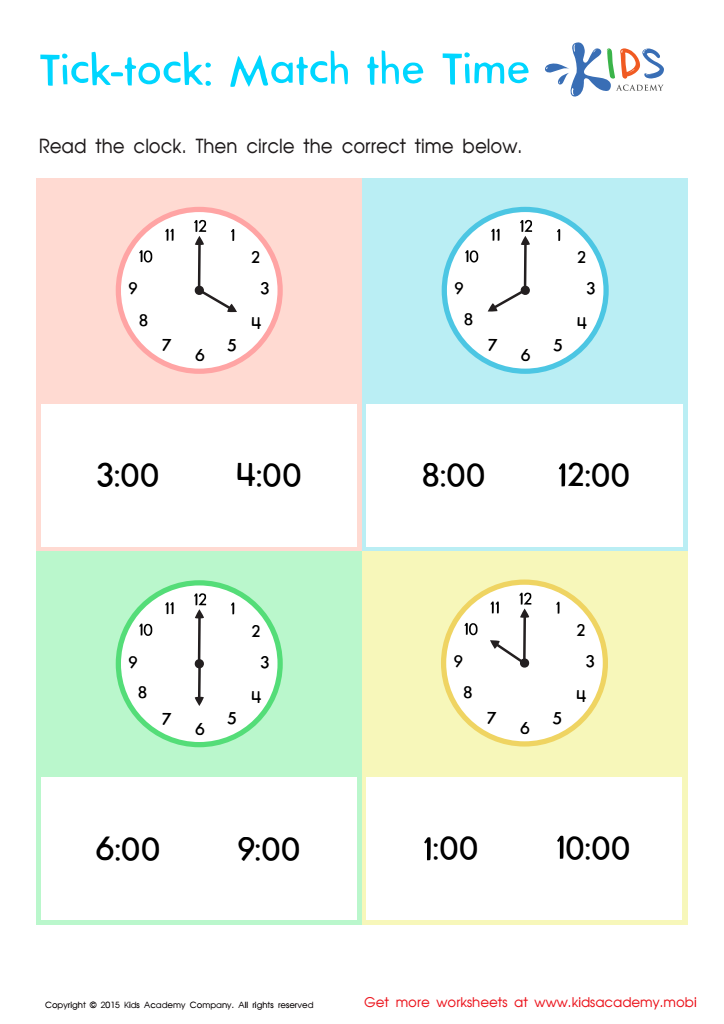
Telling The Time Worksheet: Part 4
 Assign to My Students








Time is a fundamental concept that shapes children's understanding of the world around them, and for ages 3-8, it is particularly crucial. At this stage, children begin to develop their cognitive and social skills, and an understanding of time enhances these capabilities. Learning about time helps children sequence events, comprehend daily routines, and grasp the concept of past, present, and future. This cognitive groundwork supports their problem-solving skills and enhances their ability to organize tasks and cooperate with peers.
Furthermore, awareness of time fosters independence and responsibility as children learn to manage their schedules, whether it be during playdates or daily chores. When parents and teachers emphasize the importance of time, they equip children with tools they need for effective time management throughout their lives, setting them up for success in academic and personal pursuits.
Additionally, incorporating time-telling skills into activities can make learning enjoyable and engaging, fostering a lifelong love for learning. Creative and age-appropriate methods, such as storytelling or educational games, can make the concept of time relatable and exciting. Therefore, recognizing its significance allows parents and teachers to enrich children's developmental journeys holistically.








