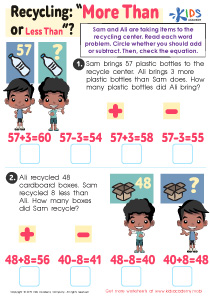
Numbers up to 100 Worksheets for Ages 3-9 - Page 3
50 filtered results
-
From - To
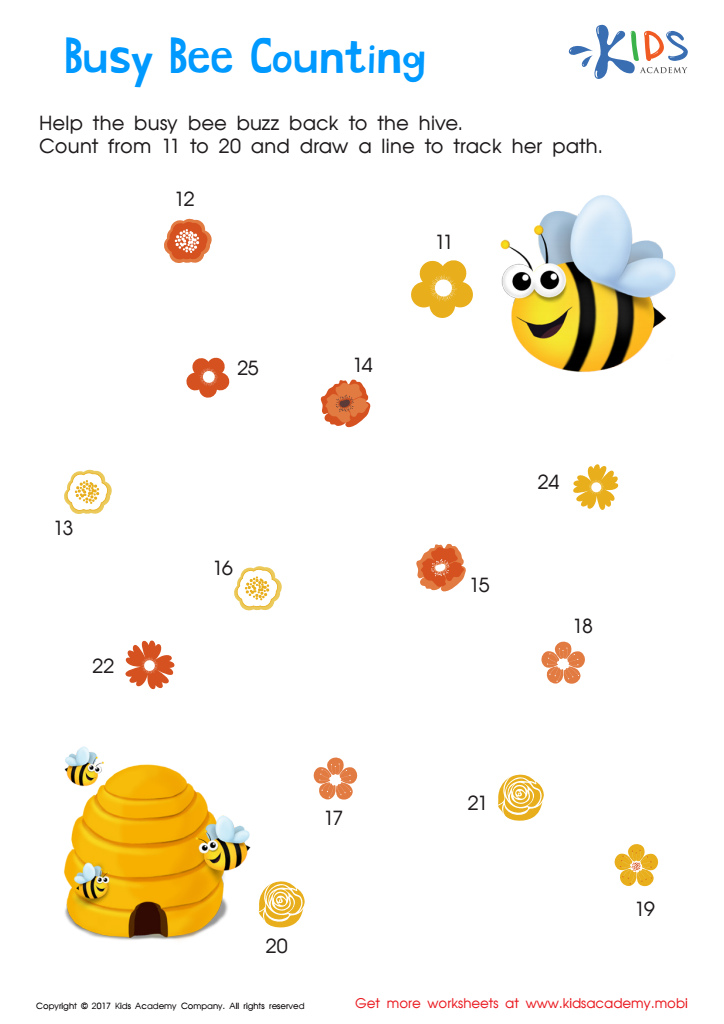
Ordering 11–20: Busy Bee Counting Worksheet
 Assign to My Students
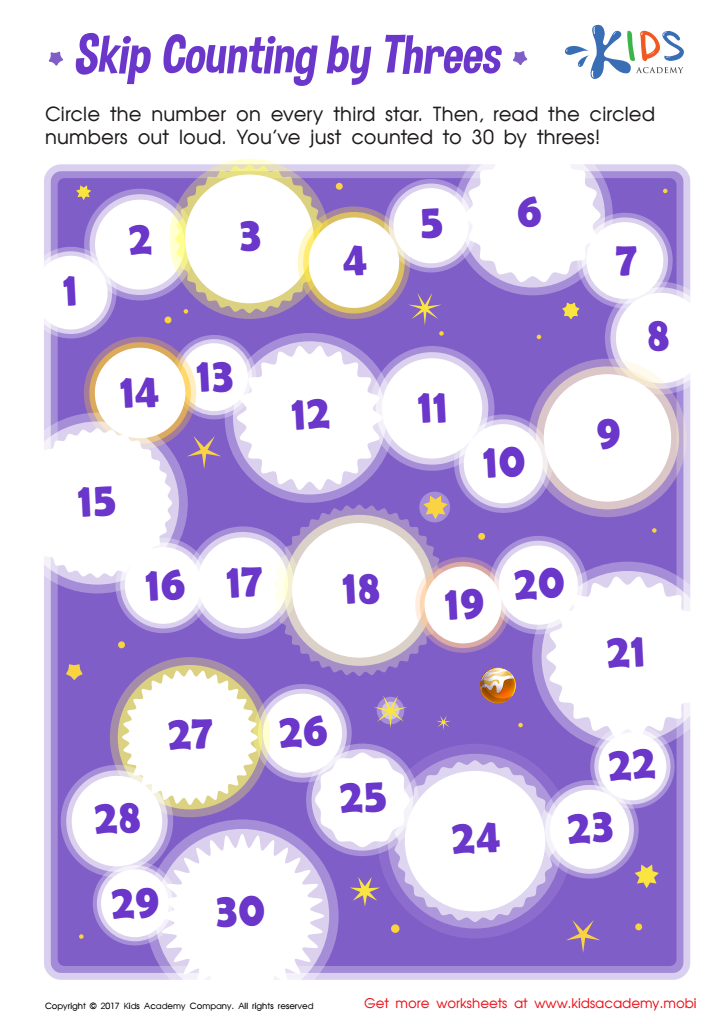
Skip Counting By Three Printable



%20(1).jpg)



Understanding numbers up to 100 is crucial for young children because it forms the foundation for their mathematical development. Early numeracy skills are essential for daily life and academic success. For ages 3-9, mastering numbers up to 100 enhances cognitive skills such as counting, number recognition, and sequencing. These skills are the building blocks for more advanced mathematical concepts like addition, subtraction, and place value.
Parents and teachers play a vital role in fostering these skills. When children engage with numbers through games, activities, and everyday experiences, they develop confidence and curiosity about math. Counting objects, recognizing number patterns, and using numbers in real-life situations, such as shopping or cooking, make learning meaningful and practical.
Moreover, understanding numbers up to 100 improves problem-solving abilities and logical thinking. These skills are not only essential for math but also benefit other academic subjects and daily decision-making.
By providing a strong numerical foundation early on, parents and teachers set children up for future academic success and broader cognitive development. Encouraging a positive attitude toward math can lead to a lifelong interest in the subject, paving the way for future opportunities in STEM fields and beyond.