
Rhyming Worksheets for Ages 5-6
12 filtered results
Difficulty Level
Grade
Age
-
From - To
Subject
Activity
Standards
Introducing our captivating Rhyming Worksheets, meticulously crafted for children Ages 5-6! Embark on a delightful journey into the world of sounds and words with our engaging activities designed to spark joy and ignite a love for rhyming. Each worksheet is filled with colorful illustrations and playful exercises tailored to enhance your child's phonemic awareness, critical for early reading skills. Perfect for both classroom use and at-home learning, these worksheets provide a solid foundation in recognizing and producing rhyming words in a fun and interactive way. Dive into our Rhyming Worksheets for Ages 5-6 and watch your child's language skills blossom!
Favorites
With answer key
Interactive
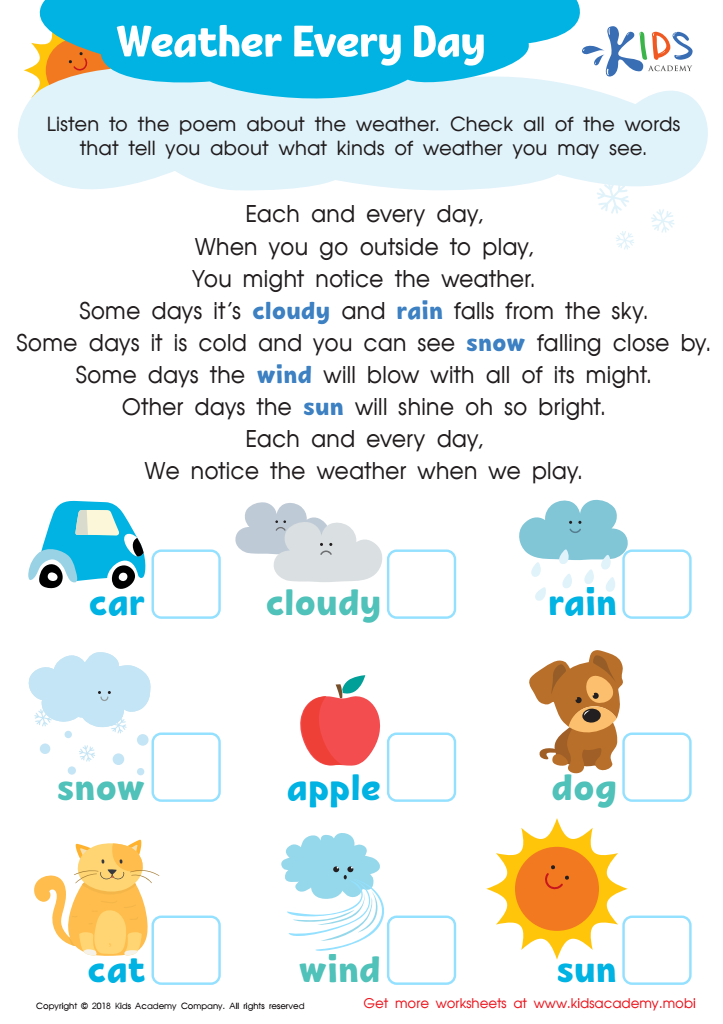
Weather Every Day Worksheet
Ask your child to look out the window and tell you what the weather's like. Is it raining, stormy, cloudy, snowing or sunny? Help them observe all the different types of weather and then check the words at the bottom of the worksheet. What's their favorite type of weather? Read them this poem about the weather and see what they think!
 Assign to My Students
Weather Every Day Worksheet
Worksheet
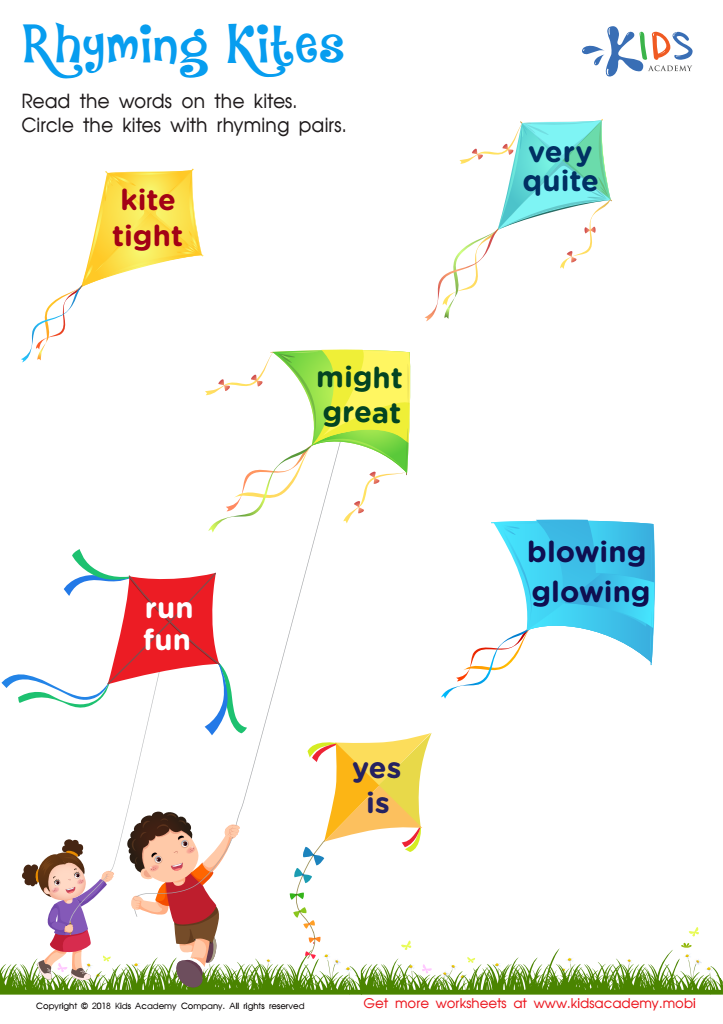
Rhyming Kites Worksheet
On a spring day, fly a kite! Kids Academy has a rhyming worksheet to boost your child's skills. Read the pairs of words aloud. Circle the kites if they rhyme, leave them blank if they don't. Listen carefully and find all the rhyming word pairs to complete this sheet!
Rhyming Kites Worksheet
Worksheet
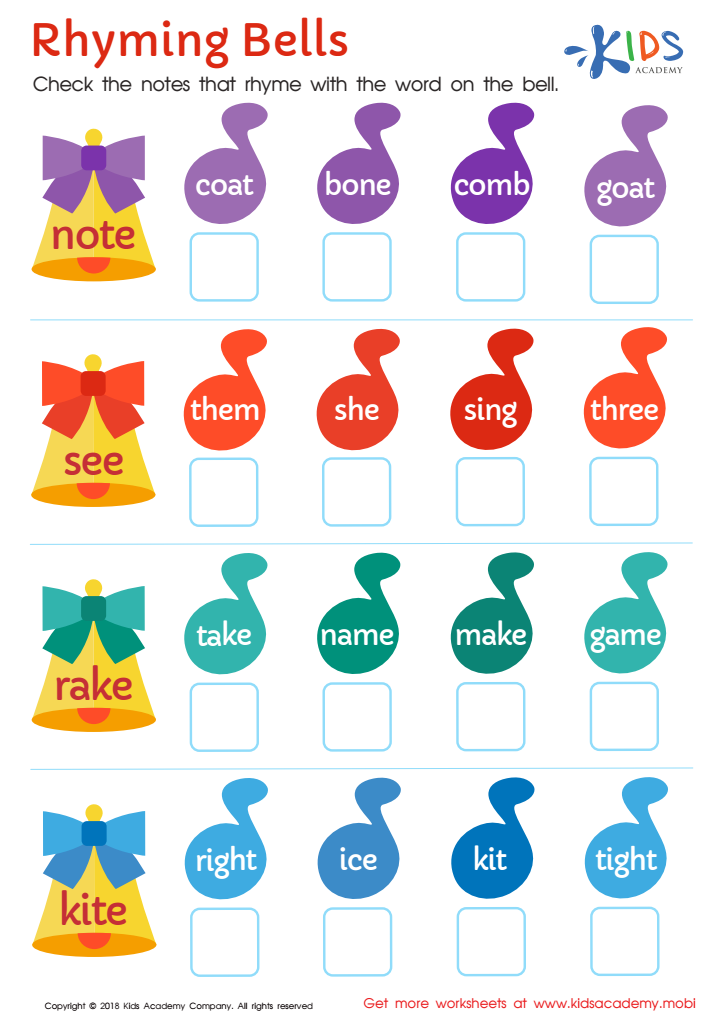
Rhyming Bells Worksheet
This printable worksheet helps students recognize rhyming words. Read a word, then pick the 4 words that rhyme. Look out for words with different spellings but same ending sound. It's a great exercise to improve understanding of rhyming words.
Rhyming Bells Worksheet
Worksheet
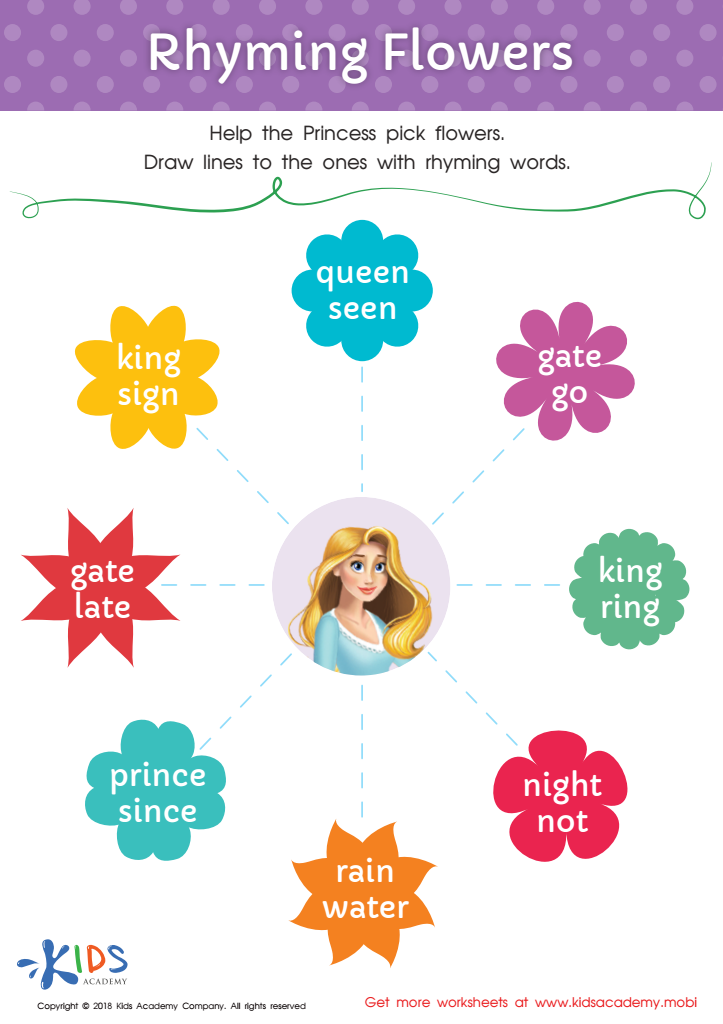
Rhyming Flowers Worksheet
Recognizing rhyming words boosts phonological awareness. With this skill, students can identify similar sounds in words and predict new words more accurately. This worksheet provides practice and is ideal for the reading classroom. Download and find the rhyming words! (80 words)
Rhyming Flowers Worksheet
Worksheet
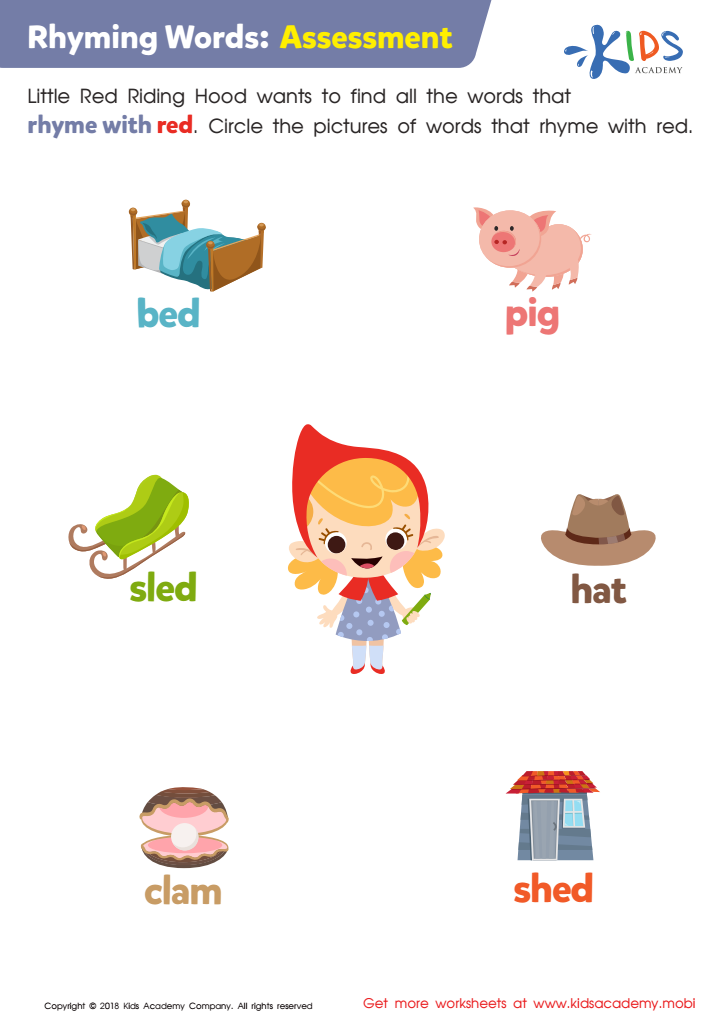
Rhyming Words: Assessment Worksheet
Help Little Red Riding Hood find rhyming words with "red". Download and print this worksheet. Have your child circle the rhyming words and pictures. Get them to say each word out loud and compare it to the word "red". When they're done, review the answers and talk about any words that don't rhyme.
Rhyming Words: Assessment Worksheet
Worksheet
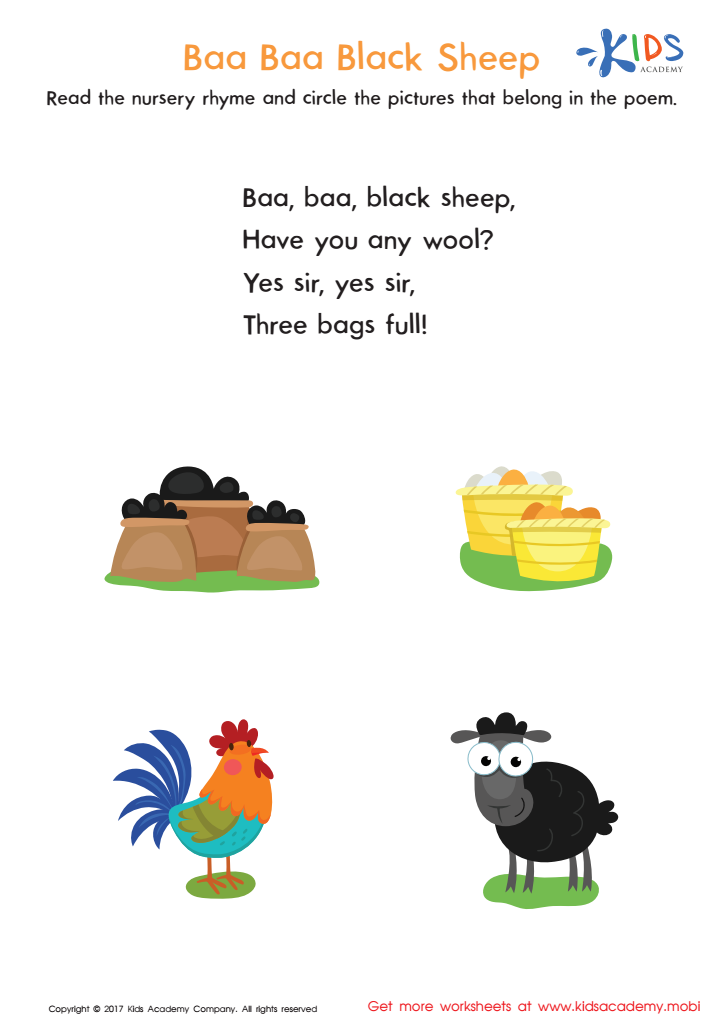
Baa Baa Black Sheep Printable
Jumpstart your child's reading skills with this printable Baa Baa Black Sheep worksheet! Recite the lines with them, then have them select the pictures associated with the poem to test comprehension. Fun and educational!
Baa Baa Black Sheep Printable
Worksheet
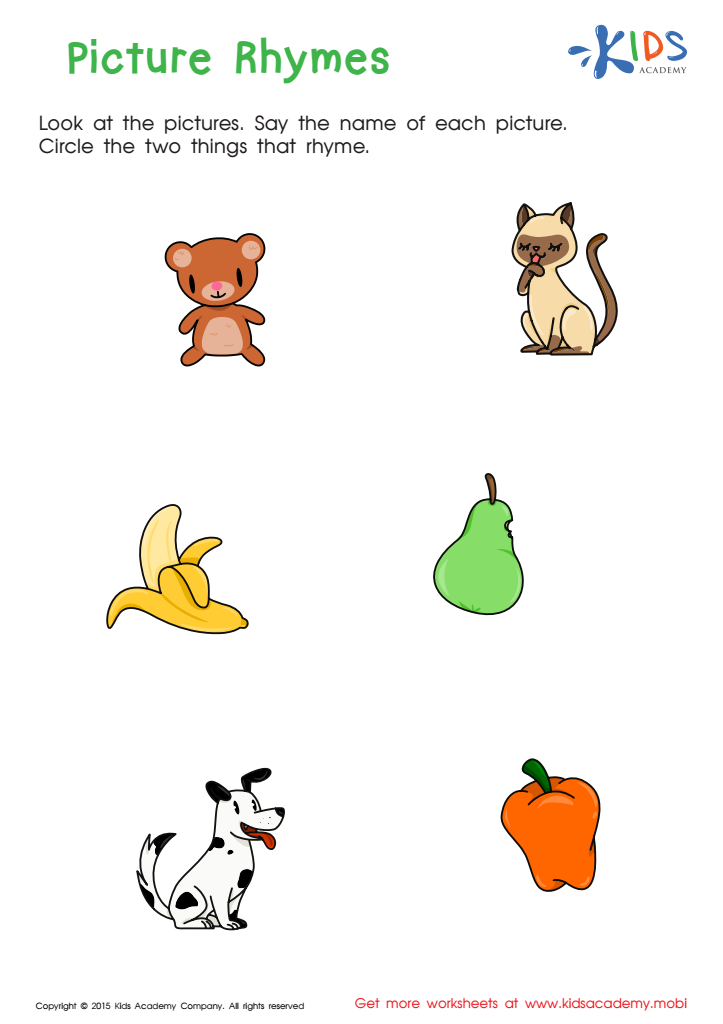
First Words: Picture Rhymes Worksheet
Rhyming helps kids understand language, read and write better. This printable worksheet boosts problem-solving and cognitive skills with vibrant pictures. It teaches kids to identify words, recognize rhymes, complete mental tasks and write words. An extra activity: show them how rhyming words share some of the same letters.
First Words: Picture Rhymes Worksheet
Worksheet
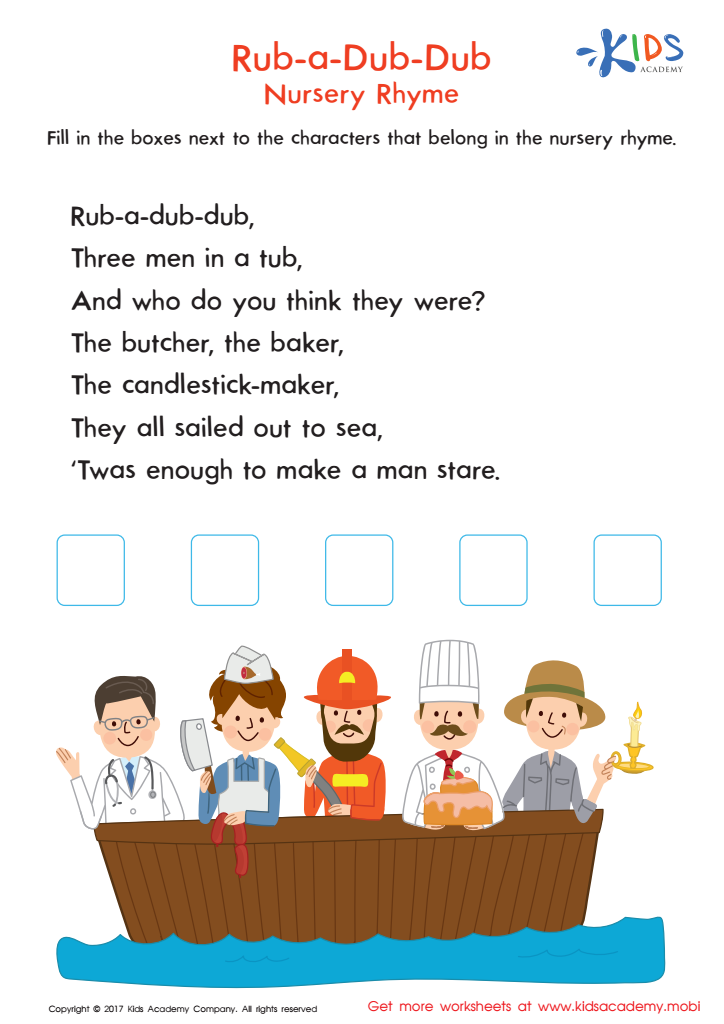
Rub a Dub Dub Printable
Delight your child and foster early reading skills with this printable nursery rhyme, Rub a Dub Dub! Let your little reader select the three men in the tub and practice important reading comprehension skills.
Rub a Dub Dub Printable
Worksheet
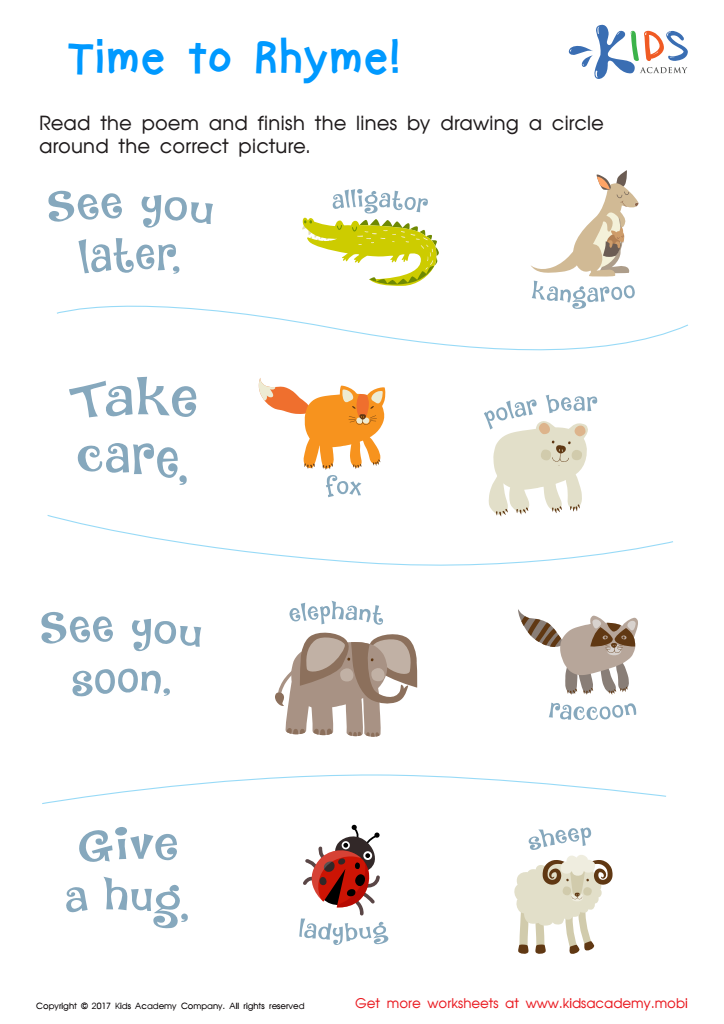
Time to Rhyme Rhyming Worksheet
This worksheet helps kids learn catchy sayings with rhymes, notice words and sounds that rhyme, and use problem solving to solve expressions. By using these expressions in everyday talk, kids gain the repetition needed to internalize the skills they've learned. Check out our nursery rhymes to further support them!
Time to Rhyme Rhyming Worksheet
Worksheet

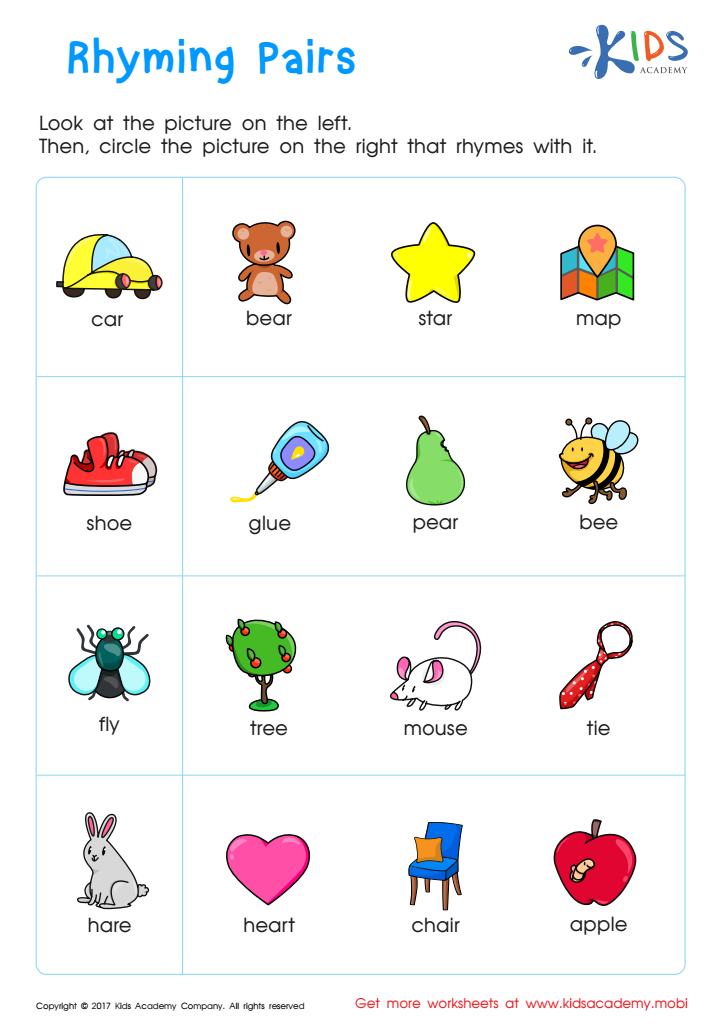
Rhyming Words Rhyming Worksheet
This worksheet is great for honing pre-reading skills. It helps kids make connections between pictures and written words, use problem-solving, and recognize sounds and words that rhyme. Have fun exploring rhyming words with your child, and they'll be rhyming in no time!
Rhyming Words Rhyming Worksheet
Worksheet
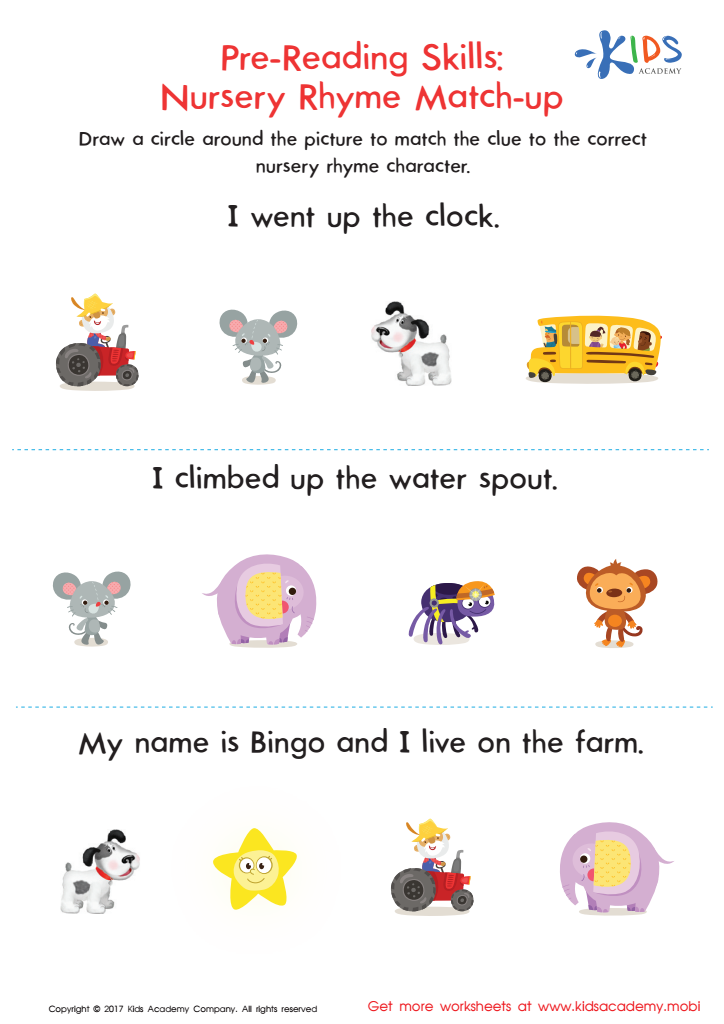
Nursery Rhyme Match–Up Worksheet
This worksheet helps kids build pre-reading skills using stories they know and love! By connecting with prior knowledge, kids can develop ideas about characters and set the stage for reading strategies.
Nursery Rhyme Match–Up Worksheet
Worksheet
Join Kids Academy for Free
Who is primarily going to use this learning content?








Rhyming worksheets designed specifically for ages 5-6 serve as a pivotal tool in the foundational years of a child’s literacy development. At this critical age, children are not just learning to read and write; they are also exploring the musicality of language, an aspect where rhyming plays a vital role.
Rhyming for ages 5-6 helps children recognize sound patterns, enhancing their phonemic awareness. This key literacy skill is crucial for word recognition and is a predictor of future reading success. By engaging with rhyming worksheets, children learn to identify words that sound similar, which can make learning to read more enjoyable and less intimidating.
Moreover, rhyming activities spark creativity and imagination in young learners. They begin to understand language as not just a mode of communication but also as a plaything, allowing them to experiment with sounds and meanings. This playful approach to learning can foster a lifelong love for reading and writing.
Additionally, rhyming worksheets for ages 5-6 can boost verbal memory and language fluency. As children match rhyming words, they practice retention and recall, improving their memory skills. The repetition found in rhymes enhances their ability to remember sequences and patterns, essential skills in both literacy and numeracy.
In summary, rhyming worksheets for ages 5-6 not only strengthen the foundational elements of literacy but also nourish creativity, memory, and a love for the rhythm and melody of language. This makes them an invaluable resource in the early education of children.







