Filters

2423 filtered results

Clear all filters
Favorites
With answer key
Interactive

2423 filtered results

Difficulty Level

Grade


Check out this FREE Trial Lesson for age 5-7!

Matching Initial Letter Sounds 2

Favorites
With answer key
Interactive
  • 5-7
  • Interactive
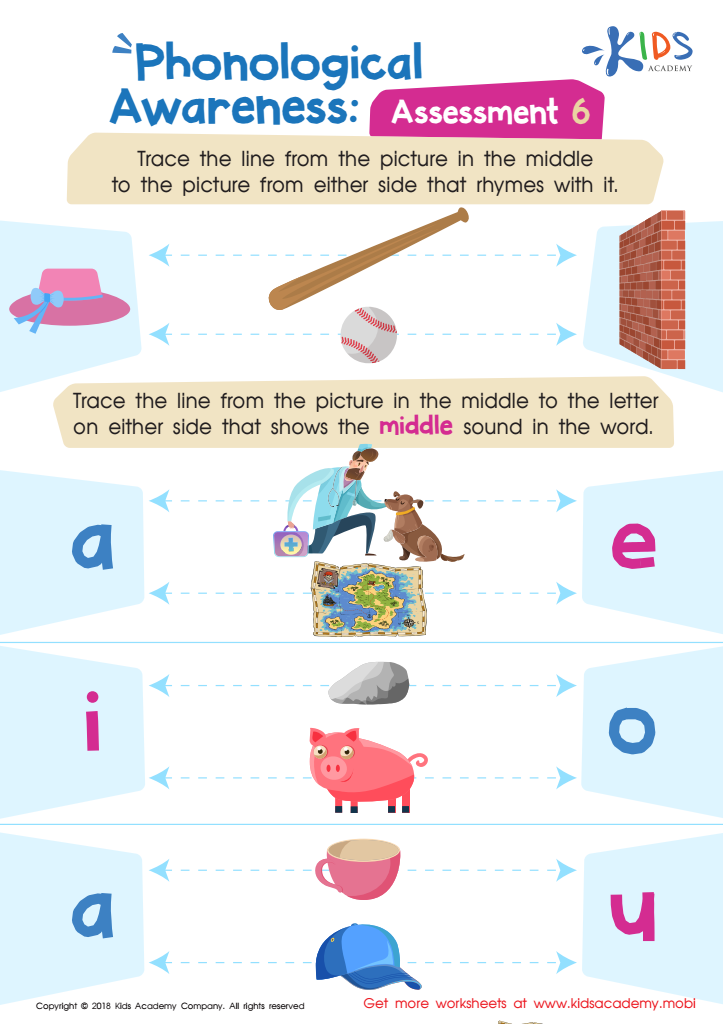
Phonological Awareness: Assessment 6 Worksheet

Phonological Awareness: Assessment 6 Worksheet

Check your child's ability to recognize middle word sounds using this free worksheet. Help them learn phonics by practicing with rhyming. Trace the line from the image to its rhyming match then encourage them to name each image aloud to identify which letter matches the sound. It's a great way to assess letter and sound recognition.
Phonological Awareness: Assessment 6 Worksheet
Worksheet
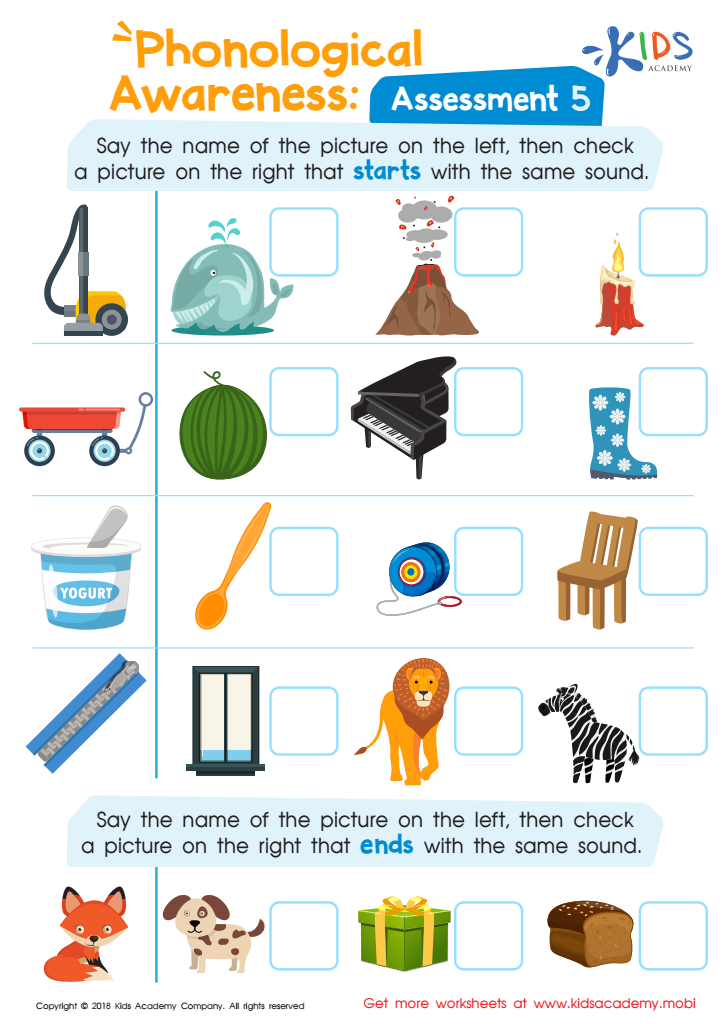
Phonological Awareness: Assessment 5 Worksheet

Phonological Awareness: Assessment 5 Worksheet

Repetition is key to success! This worksheet tests kids' ability to match beginning and ending sounds in words. Instruct them to say each word and listen closely to the sounds they make. Focus on the starting sounds for the first four pics, then the last one to hear ending sounds and find the right match!
Phonological Awareness: Assessment 5 Worksheet
Worksheet
Phonological Awareness: Assessment 4 Worksheet

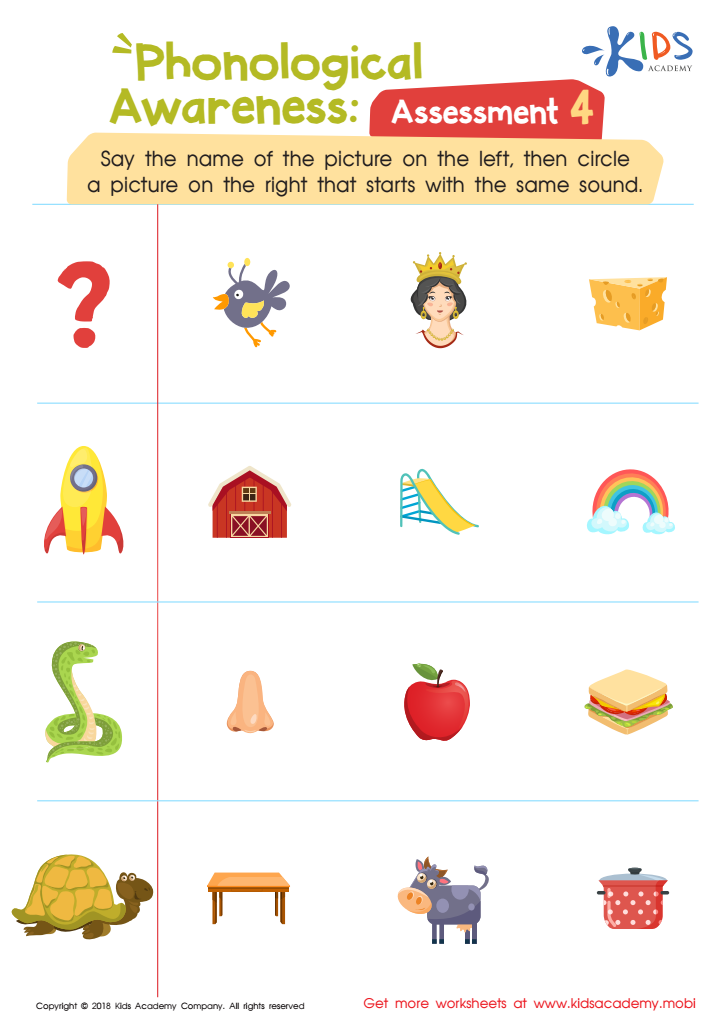
Phonological Awareness: Assessment 4 Worksheet

It can be tricky for young readers to differentiate between sounds in words. Make it fun with this downloadable worksheet! Ask your child to name each picture on the left and match the starting sound with an image on the right. This helps assess their phonics skills and make learning enjoyable.
Phonological Awareness: Assessment 4 Worksheet
Worksheet
Phonological Awareness: Assessment 3 Worksheet

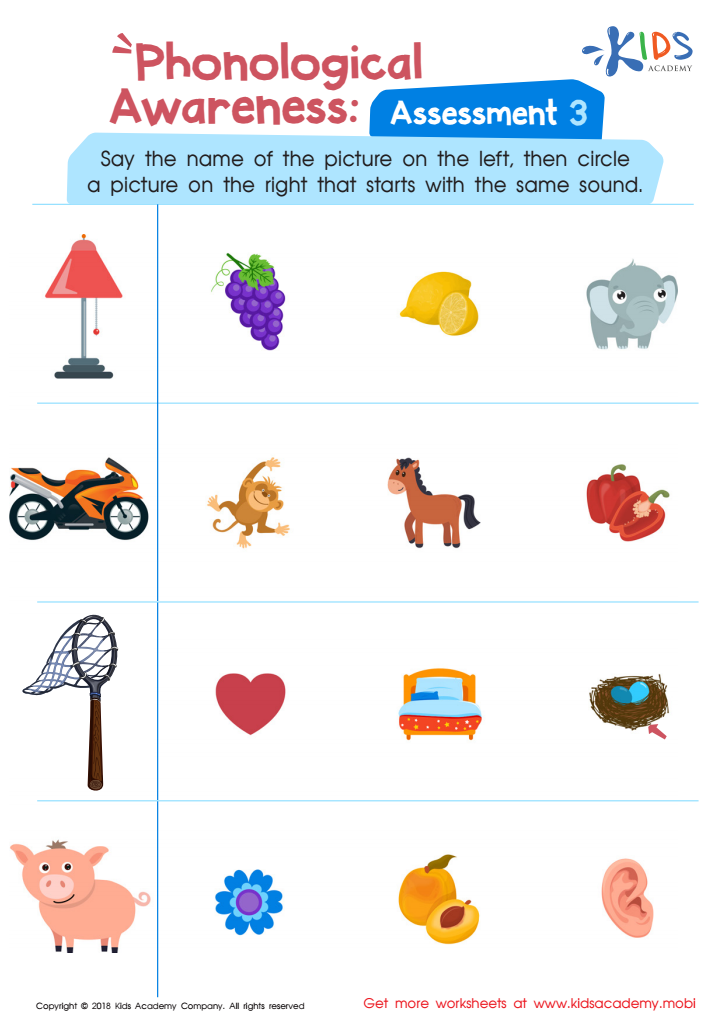
Phonological Awareness: Assessment 3 Worksheet

Test kids' reading readiness with a phonological awareness worksheet! With this PDF exercise, encourage children to name each picture aloud and match left to right. Help them learn to recognize word sounds at the start, middle and end of words. They'll be sure to remember that lamp doesn't sound like elephant!
Phonological Awareness: Assessment 3 Worksheet
Worksheet
Phonological Awareness: Assessment 2 Worksheet

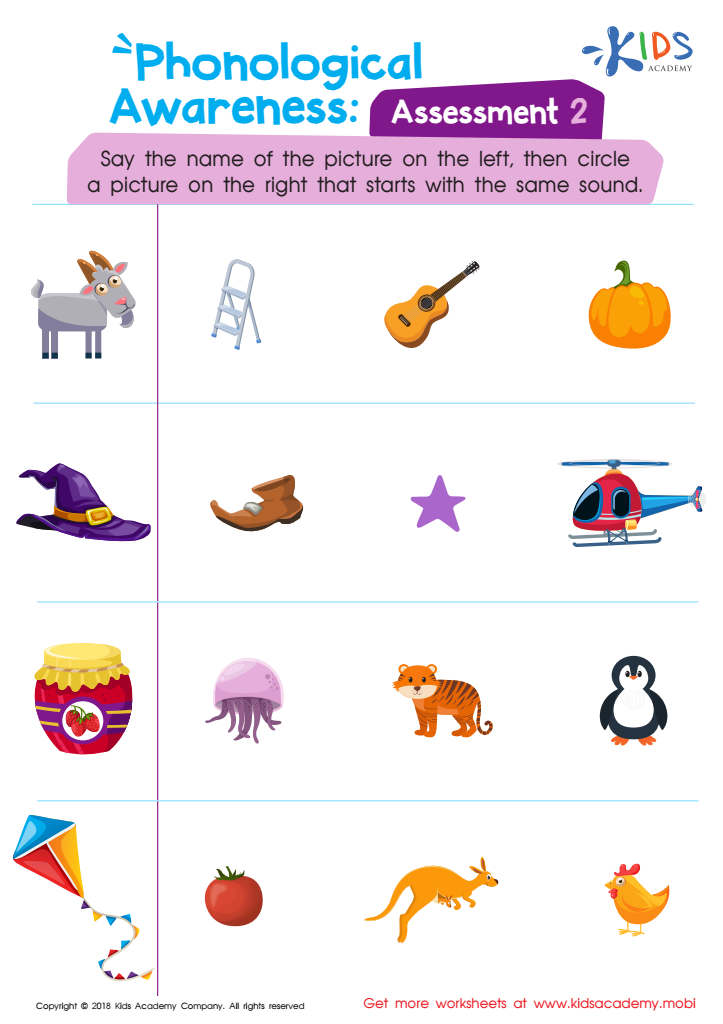
Phonological Awareness: Assessment 2 Worksheet

Test your child’s phonological awareness and reading readiness with this charming worksheet! Perfect for K-1, it assesses if they can name a picture aloud, listening for the starting sound and matching it to another word. Watch as they think deeply and listen to the sounds as they name each picture. Determine if your child is ready to sound out words or needs more phonics practice.
Phonological Awareness: Assessment 2 Worksheet
Worksheet
Phonological Awareness: Assessment 1 Worksheet

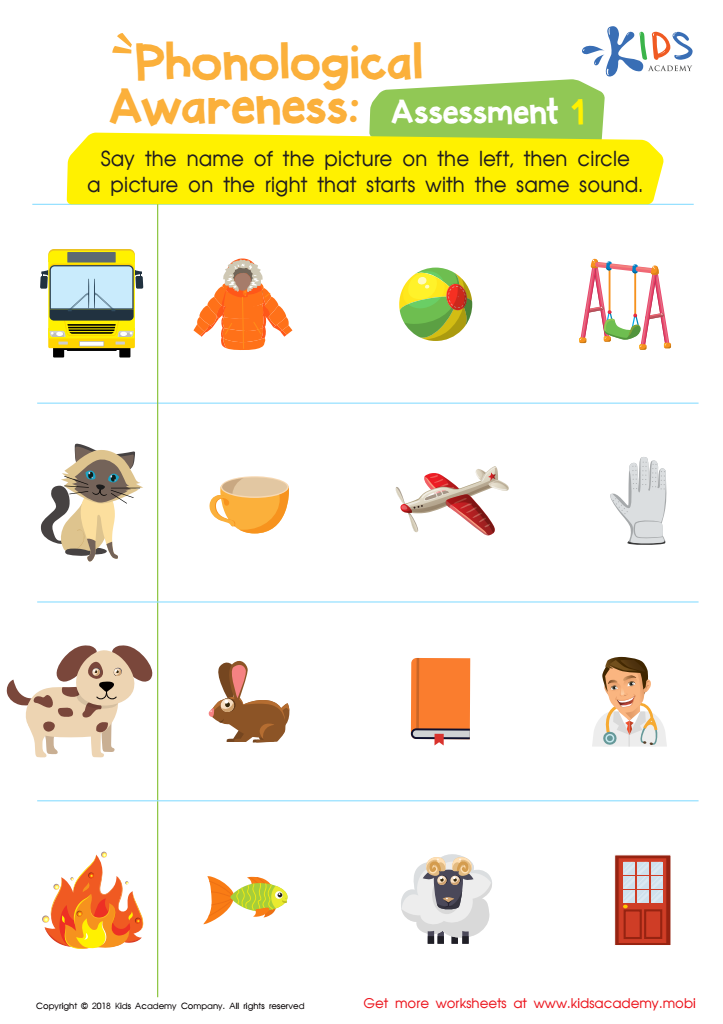
Phonological Awareness: Assessment 1 Worksheet

This worksheet helps kids build key phonics skills for pre-reading. They say each picture name aloud, focusing on the starting sound. Then, they match the sound with an image in the same row. Use as a checkpoint for kindergarten or grade 1 phonics readiness.
Phonological Awareness: Assessment 1 Worksheet
Worksheet
Finding the Details and Connections: Assessment 2 Worksheet

Finding the Details and Connections: Assessment 2 Worksheet

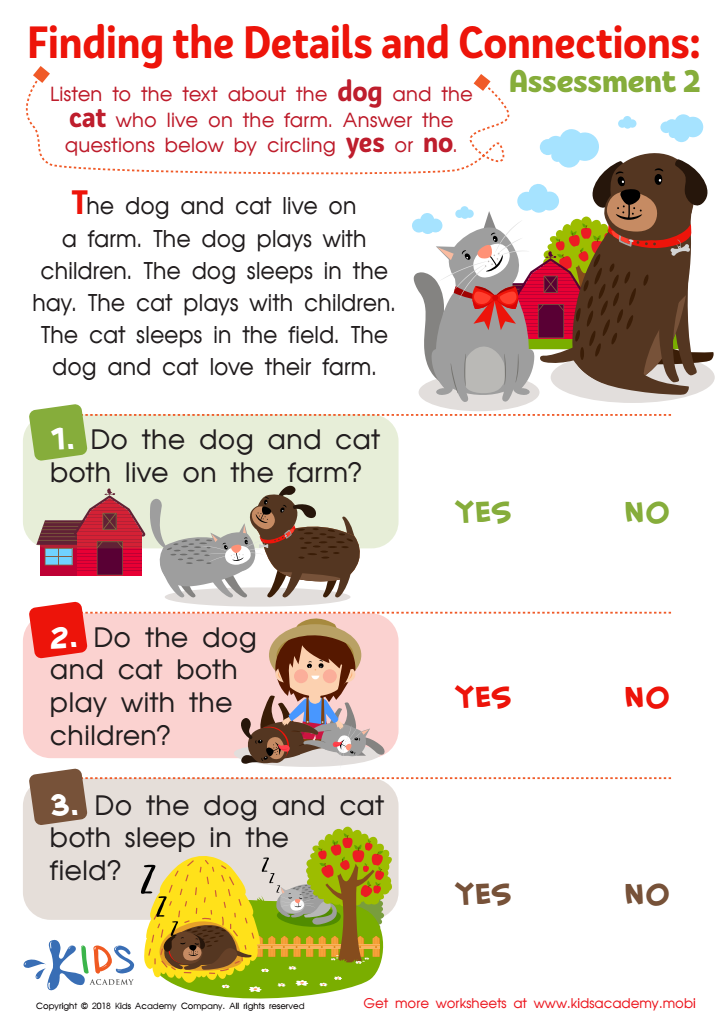
Does your child love animals? If you have pets, they'll relate to the text in this worksheet. Read it aloud to them and help them answer the simple questions by circling yes or no. The story is about a dog and cat living on a farm. Let your child read it aloud to you if they can.
Finding the Details and Connections: Assessment 2 Worksheet
Worksheet
Finding the Details and Connections: Assessment 1 Worksheet

Finding the Details and Connections: Assessment 1 Worksheet

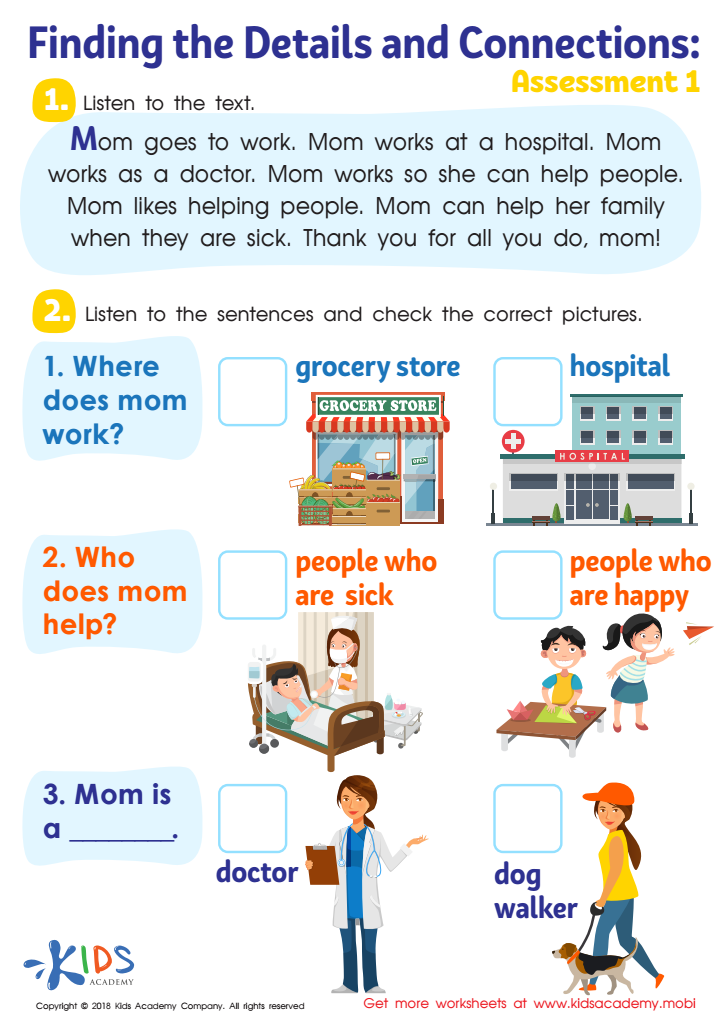
Ask your students what their parents do for a job. Do they know what profession their mom is in and where she works? Professionals have places they go to do their job. In this task, Mom goes to a hospital and is a doctor. Read the text and help them check the right pictures.
Finding the Details and Connections: Assessment 1 Worksheet
Worksheet
Walk In the Woods: Finding Connections Worksheet

Walk In the Woods: Finding Connections Worksheet

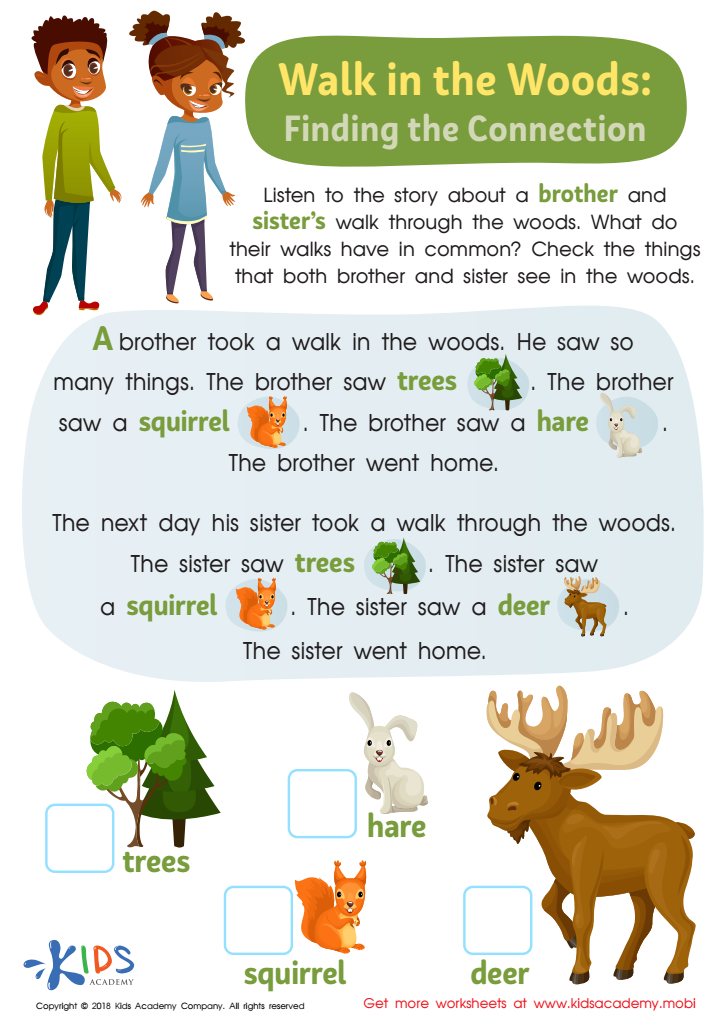
Brother and sister took a walk in the woods to connect with nature and get some exercise. As they went, they noted different things like birds and plants, which they share in this story. Read it to your little ones, and help them check off the items the two saw. It's a great way to learn about nature and enjoy the outdoors.
Walk In the Woods: Finding Connections Worksheet
Worksheet
At a Pizza Party Worksheet

At a Pizza Party Worksheet

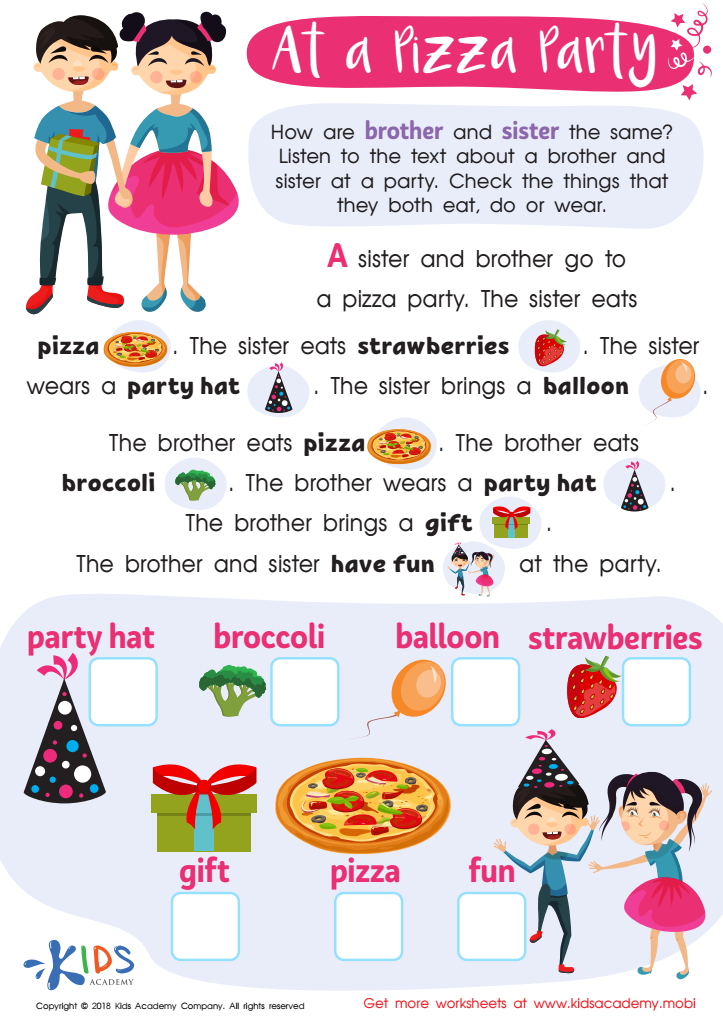
Parties are the best! Eating, playing, singing, dancing and gift-exchange - what's your child's fave part? In this worksheet, a brother and sister are eager to enjoy their party. Read the text to them and help them check what they do, eat, and wear. 80 words.
At a Pizza Party Worksheet
Worksheet
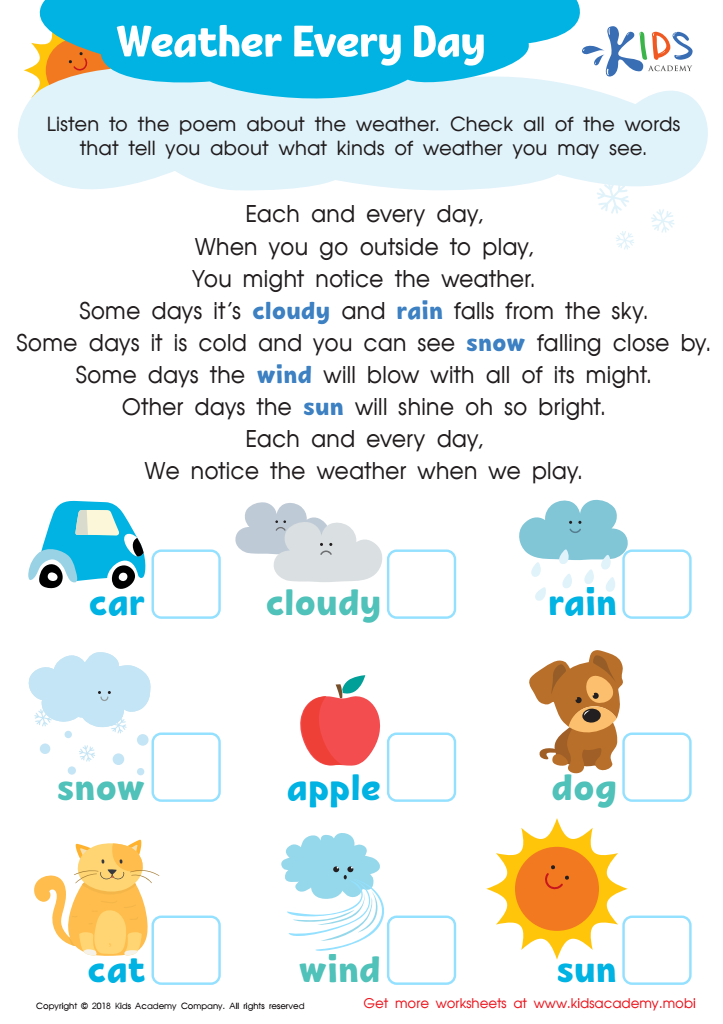
Weather Every Day Worksheet

Weather Every Day Worksheet

Ask your child to look out the window and tell you what the weather's like. Is it raining, stormy, cloudy, snowing or sunny? Help them observe all the different types of weather and then check the words at the bottom of the worksheet. What's their favorite type of weather? Read them this poem about the weather and see what they think!
Weather Every Day Worksheet
Worksheet
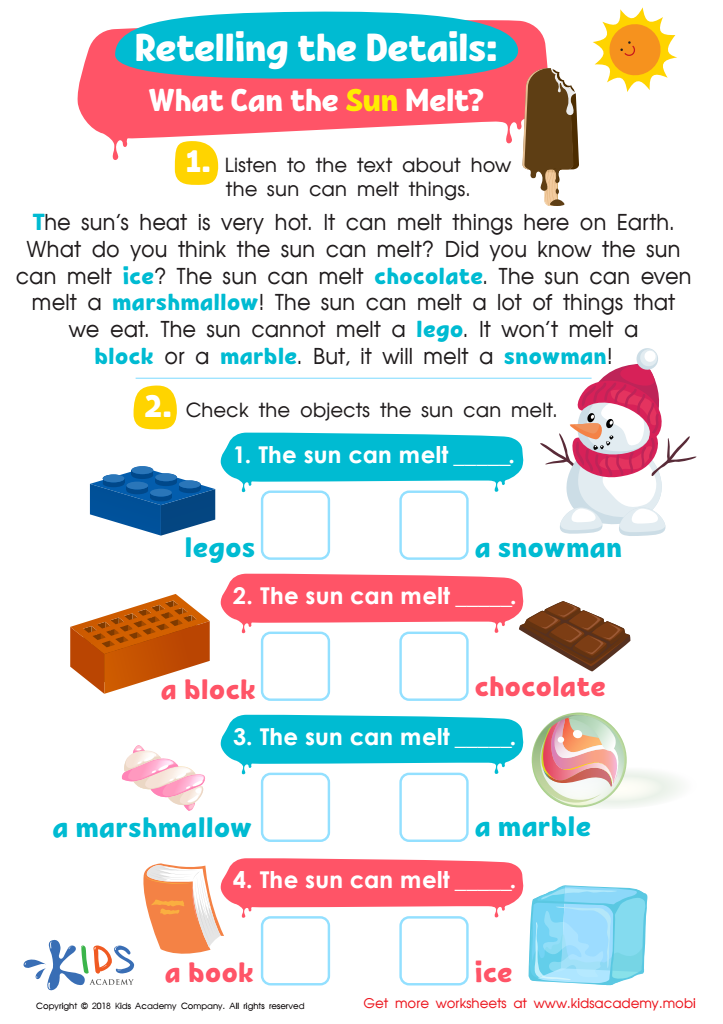
Retelling the Details: What Can the Sun Melt? Worksheet

Retelling the Details: What Can the Sun Melt? Worksheet

The sun is that hot yellow ball in the sky. Its intense heat can make us sweat and even melt things! Ask your kids what things the sun can melt. Read this short informative text and have them highlight the objects. Then, read the questions out loud and help them find the right answers.
Retelling the Details: What Can the Sun Melt? Worksheet
Worksheet
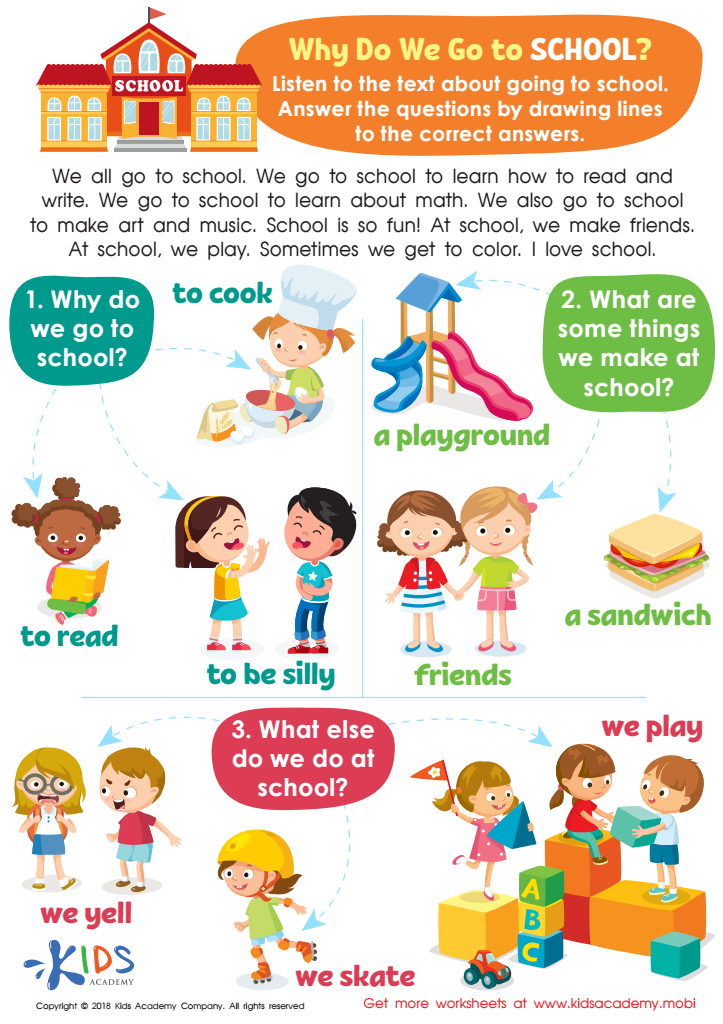
Why Do We Go To School? Worksheet

Why Do We Go To School? Worksheet

Ask your kids why they go to school and what they learn. Explain that some schools specialise in certain subjects like music or art. Show them the pictures and help them answer the questions by drawing lines to the correct answers. School is important and helps us learn, even though it may not feel enjoyable at times.
Why Do We Go To School? Worksheet
Worksheet
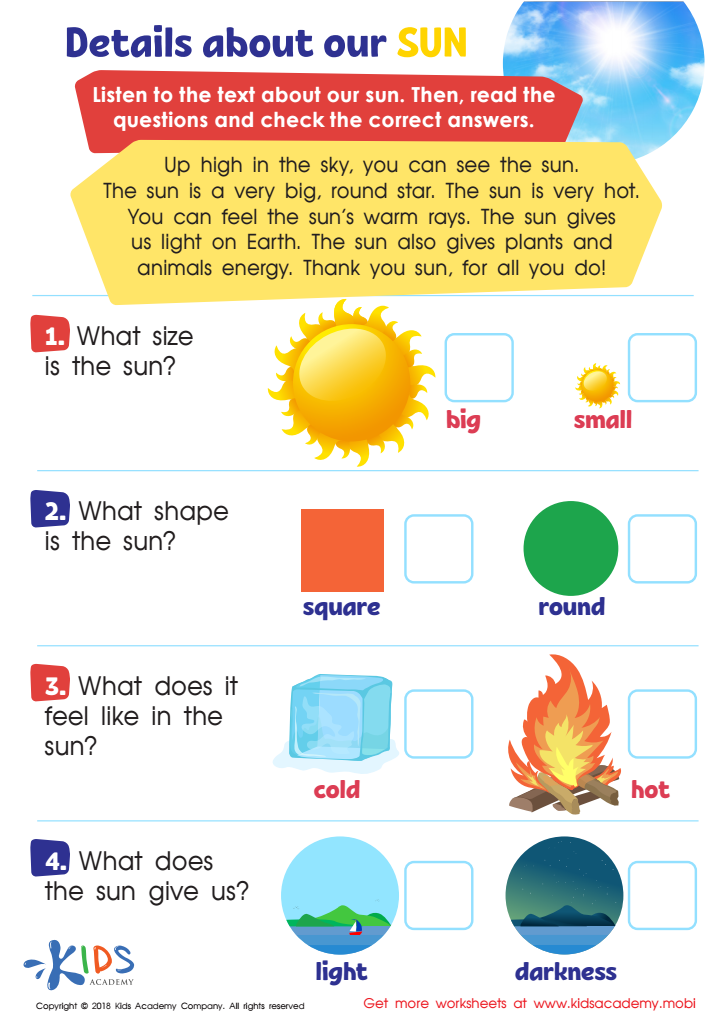
Details About Our Sun Worksheet

Details About Our Sun Worksheet

Teach your kindergartners about the sun with this worksheet. Read the informative text to them, then ask the questions and help them mark the right answers. Discover what your student knows about this big glowing ball of fire in the sky.
Details About Our Sun Worksheet
Worksheet
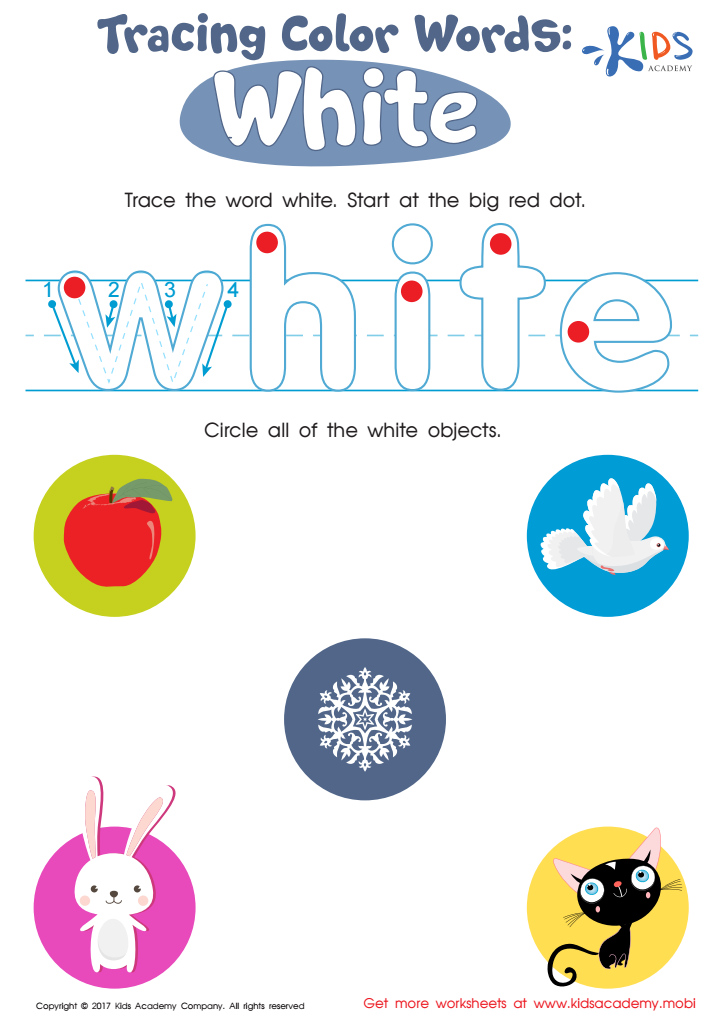
White Tracing Color Words Worksheet

White Tracing Color Words Worksheet

This fun worksheet helps children learn color words quickly. They trace the letters and circle pictures of the color. This helps them practice reading and identifying objects, and they can do it without needing to read phonetically. Download it now and watch your child's skill grow!
White Tracing Color Words Worksheet
Worksheet
Ecosystems: Assessment 2 Worksheet

Ecosystems: Assessment 2 Worksheet

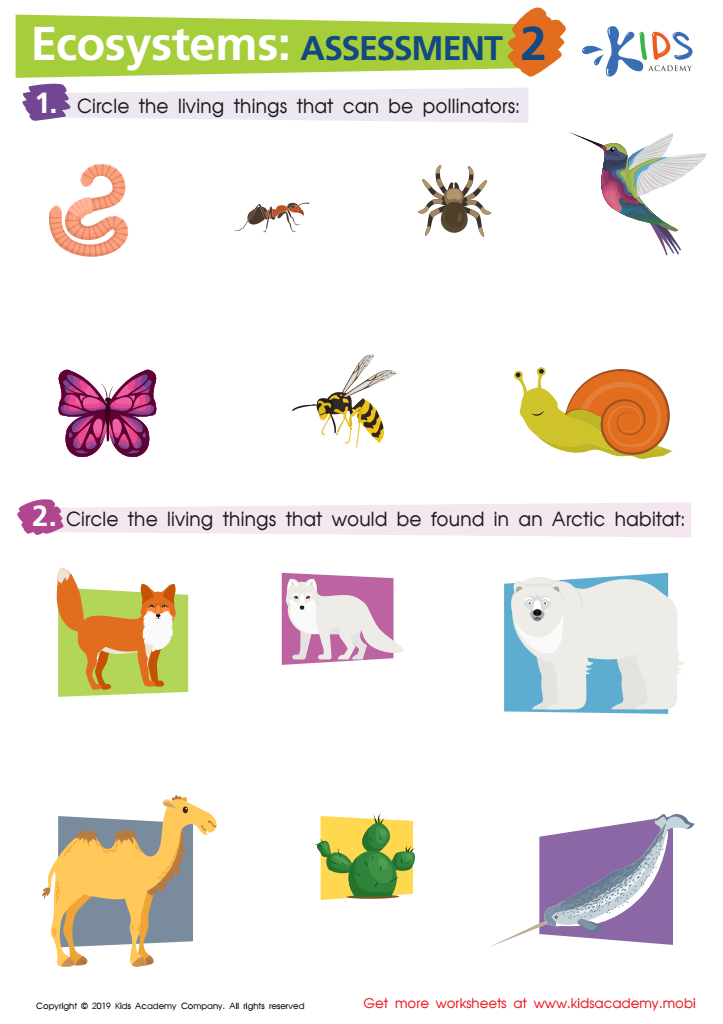
Pollinators are living or non-living things that help pollen spread. Test your child's knowledge of the ecosystem with this worksheet. Point out animals in the picture, then ask the simple questions. Help your child circle the right answers.
Ecosystems: Assessment 2 Worksheet
Worksheet
Ecosystems: Assessment 1 Worksheet

Ecosystems: Assessment 1 Worksheet

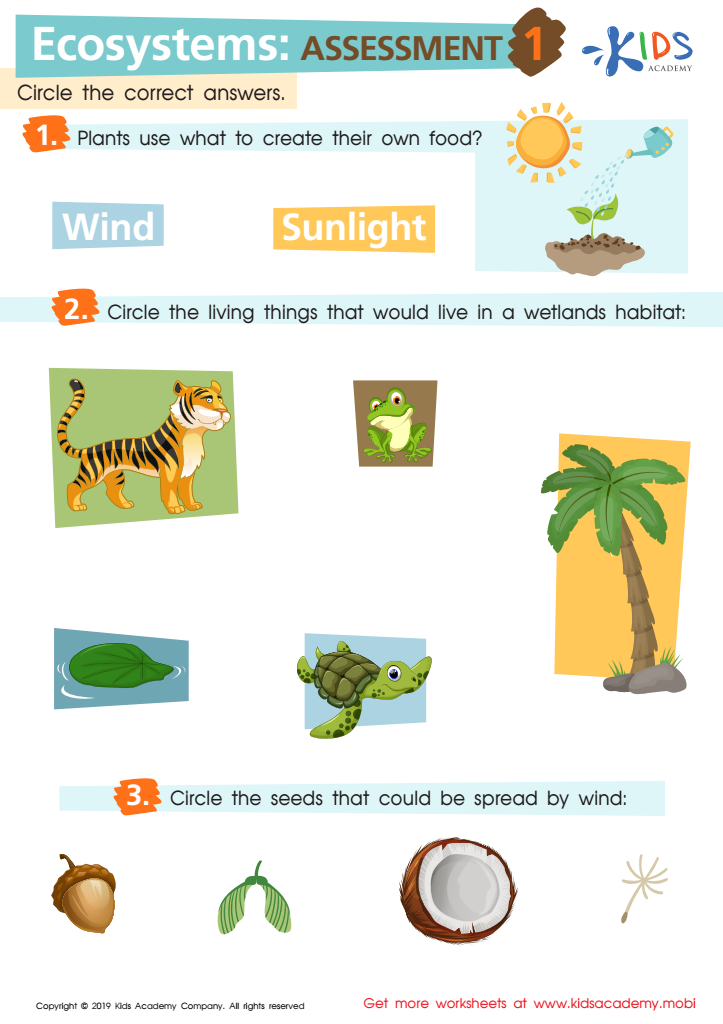
Before starting the worksheet, remind your child of the basics of the ecosystem, e.g. plants need light and winds carry small seeds. Encourage them to identify the images in the colorful printout. Ask them the questions and help them circle the correct answers.
Ecosystems: Assessment 1 Worksheet
Worksheet
Seeds on the Move Worksheet

Seeds on the Move Worksheet

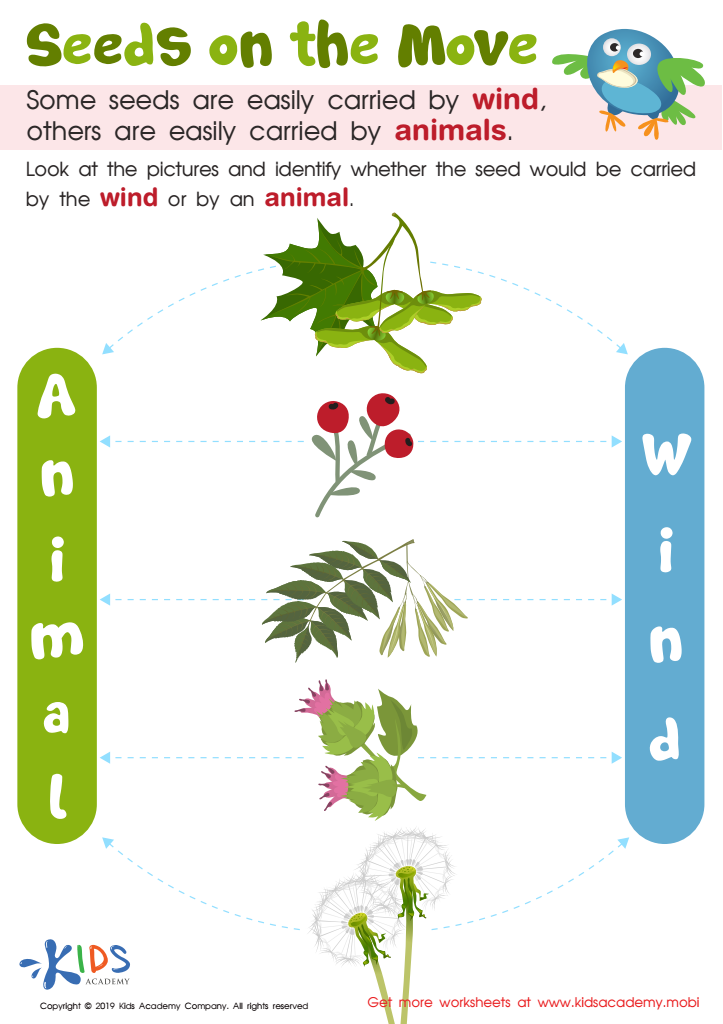
Help students understand the concept of spreading seeds with this fun traceable worksheet. Discuss the pictures, and see if they can identify whether the seed is carried by the wind or an animal. Explain how seeds can travel from place to place without human help, and how this helps them grow in new locations.
Seeds on the Move Worksheet
Worksheet
The Path of Pollinators Worksheet

The Path of Pollinators Worksheet

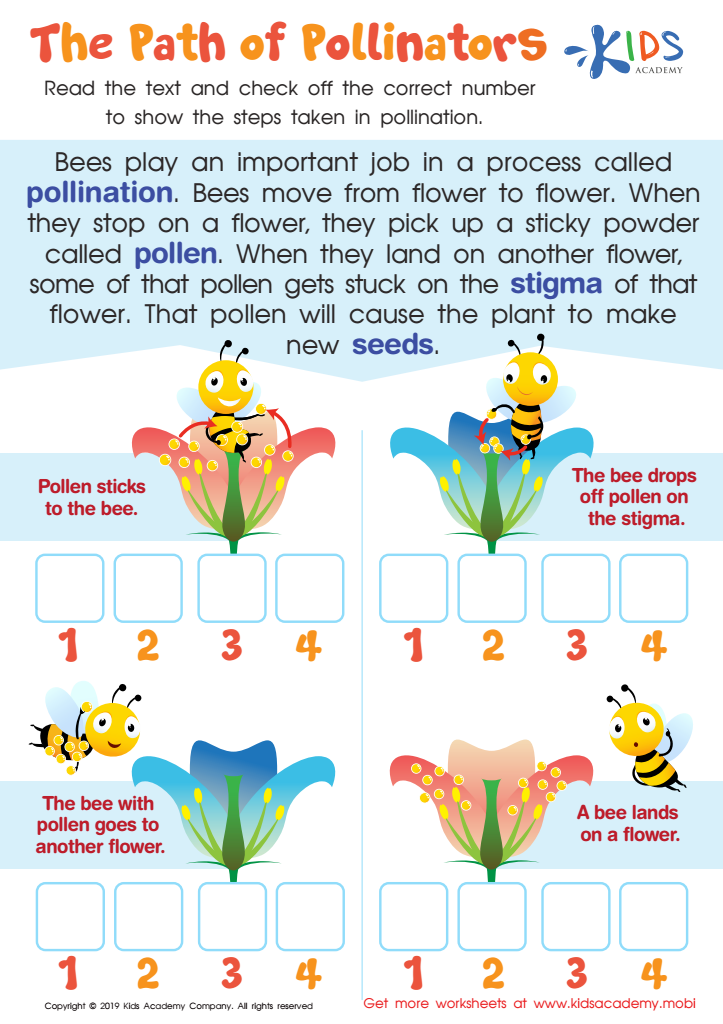
Bees play a vital role in pollination: they transfer pollen between flowers, allowing them to produce new seeds. Without bees, we'd have less flowers and vegetation. Explain the process to your students and have them check off the right number to show the steps in pollination.
The Path of Pollinators Worksheet
Worksheet
Subtracting Numbers: Growing Plants Worksheet

Subtracting Numbers: Growing Plants Worksheet

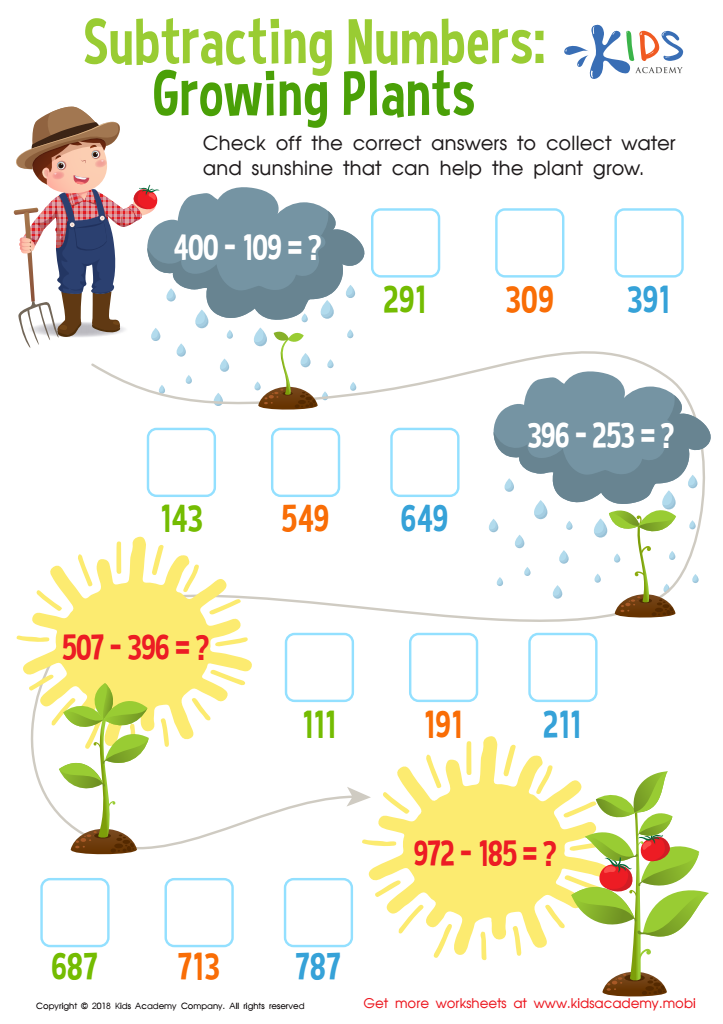
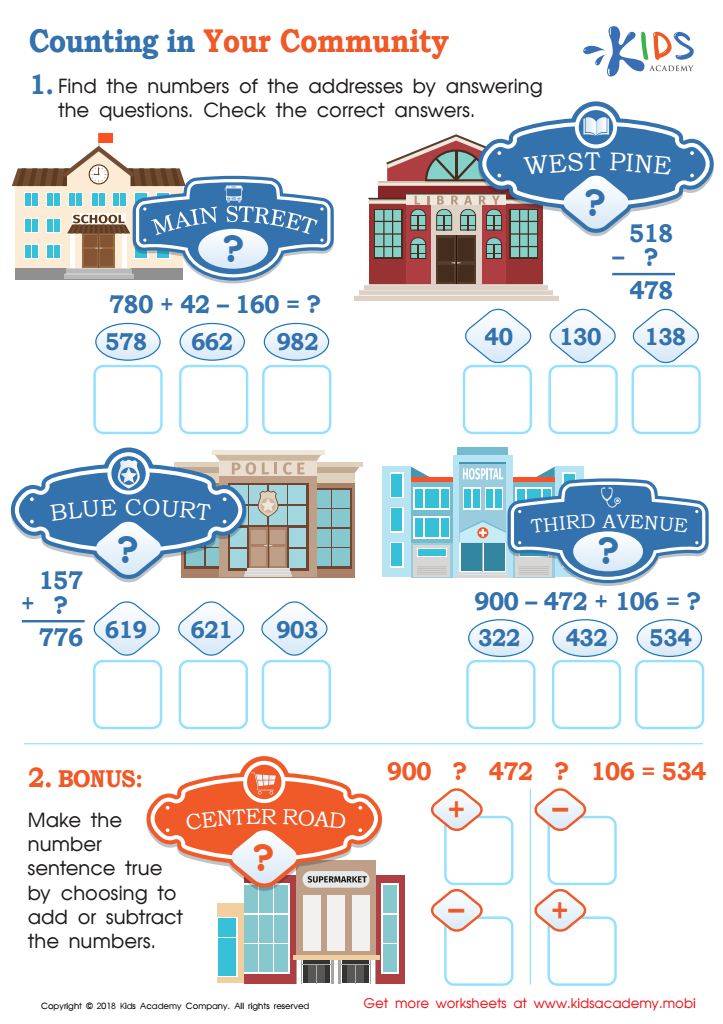
Farmers plant and nurture crops for us to eat. To help them, check off the items a plant needs to survive: water and sunshine. Ask your child to explain more!
Subtracting Numbers: Growing Plants Worksheet
Worksheet
Counting in Your Community Worksheet

Counting in Your Community Worksheet

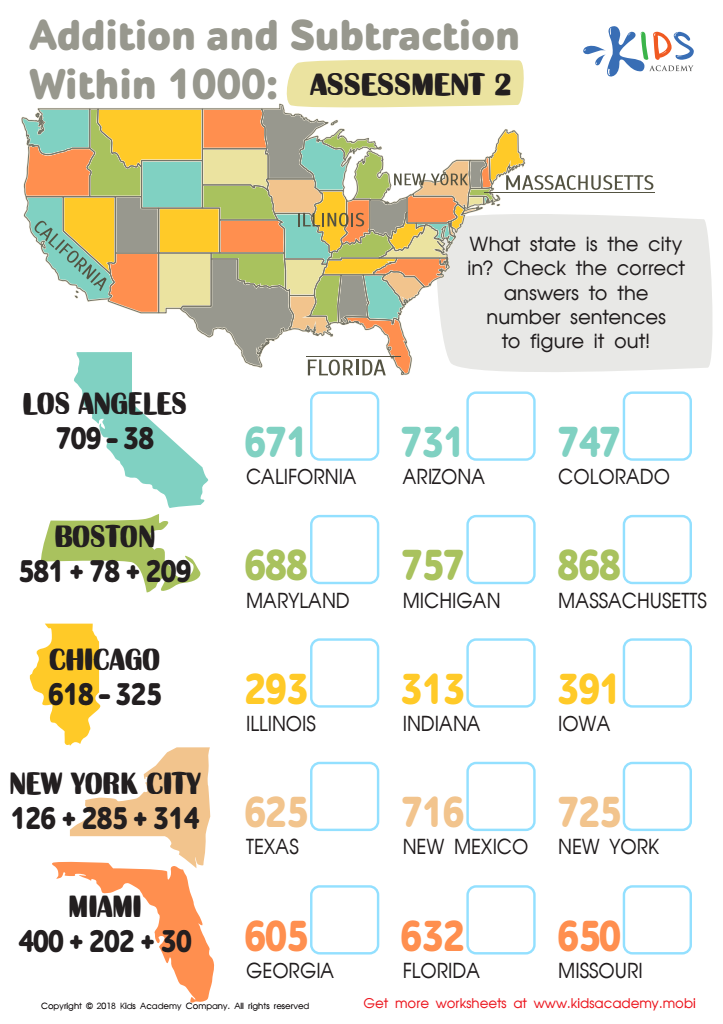
Introduce your kids to the idea of a community, where different people and buildings co-exist, each playing their part for the community's progress. Ask them to name the buildings they see in their community. Then work through this worksheet to find the numbers of the addresses by answering the questions. Check the answers once they've solved the equations.
Counting in Your Community Worksheet
Worksheet
Addition and Subtraction Within 1000: Assessment 2 Worksheet

Addition and Subtraction Within 1000: Assessment 2 Worksheet

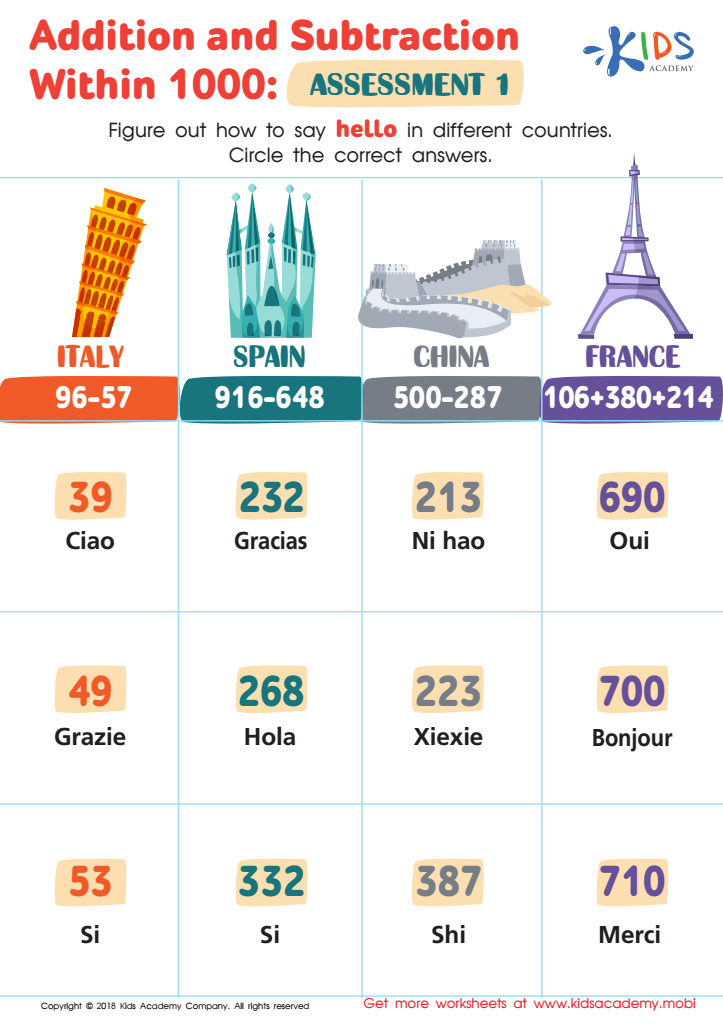
This worksheet assesses students' abilities to add and subtract numbers up to 1000, while also introducing them to simple geography. Ask them what state the city is in, then guide them to check the number sentence solutions to find out.
Addition and Subtraction Within 1000: Assessment 2 Worksheet
Worksheet
Addition and Subtraction Within 1000: Assessment 1 Worksheet

Addition and Subtraction Within 1000: Assessment 1 Worksheet

As your students grow, their knowledge and skills do too. Use this worksheet to test their adeptness in adding and subtracting numbers in the 1000s and introduce them to different ways to say hello. Let them circle the correct answers.
Addition and Subtraction Within 1000: Assessment 1 Worksheet
Worksheet
Subtracting Numbers: Music Worksheet


Subtracting Numbers: Music Worksheet
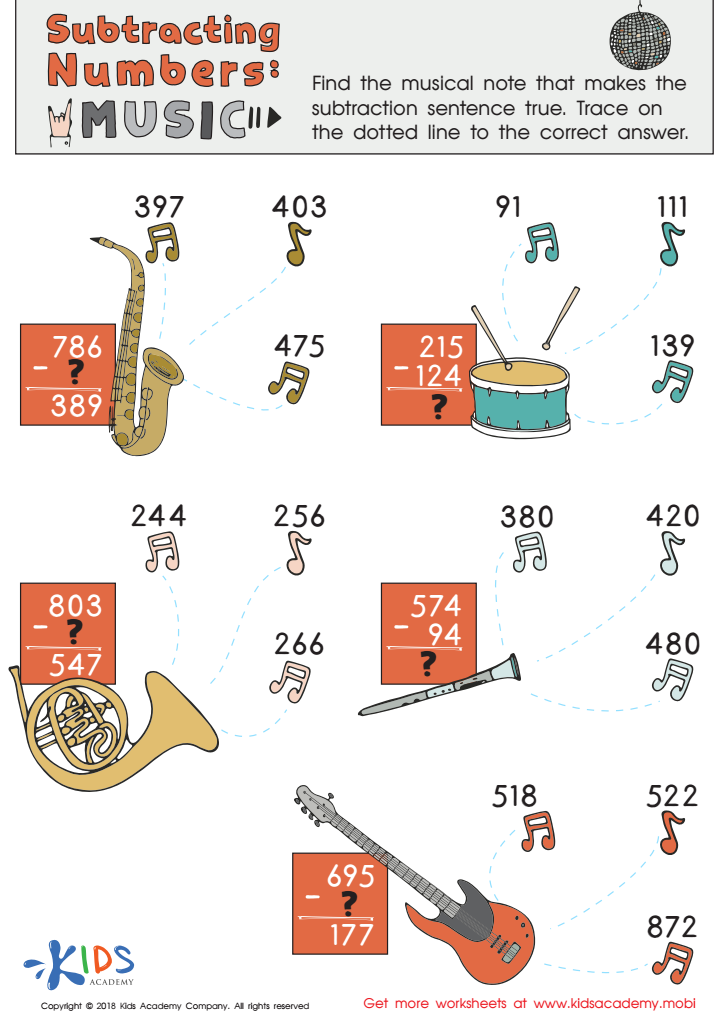
Enroll your kids in a music class and let them express their feelings via music! This worksheet challenges them to identify the musical note that makes the subtraction sentence true. Help them solve the problem and trace the dotted line to the correct answer. Let their appreciation for music grow!
Subtracting Numbers: Music Worksheet

Worksheet


Parents and teachers should prioritize the educational development of children aged 5-7 because this period is critical for cognitive, emotional, and social growth. During these early years, children form foundational skills such as reading, writing, and basic mathematics, which are essential for future learning. Research shows that early intervention and support can lead to improved academic performance throughout their educational journey.

Furthermore, this age group is characterized by rapid brain development, making it an ideal time for instilling a love for learning. Engaging in interactive and playful learning experiences fosters curiosity and creativity, helping children build confidence in their abilities. Additionally, social skills developed during this time, such as sharing, cooperation, and communication, are vital for peer interactions and overall emotional well-being.

By investing time and resources into nurturing this critical stage of development, parents and teachers can significantly impact a child's trajectory, paving the way for lifelong learning and success. Moreover, early support can help identify and address any learning challenges, ensuring that all children have equal opportunities to thrive. Ultimately, fostering a positive and enriching environment for children ages 5-7 lays a strong foundation for their academic and personal growth.