Filters

1773 filtered results

Clear all filters
Favorites
With answer key
Interactive

1773 filtered results

Difficulty Level

Grade


Check out this FREE Trial Lesson for age 6!

Match Digital to Analog Clocks

Favorites
With answer key
Interactive
  • 6
  • Interactive
Matching Time Worksheet

Matching Time Worksheet

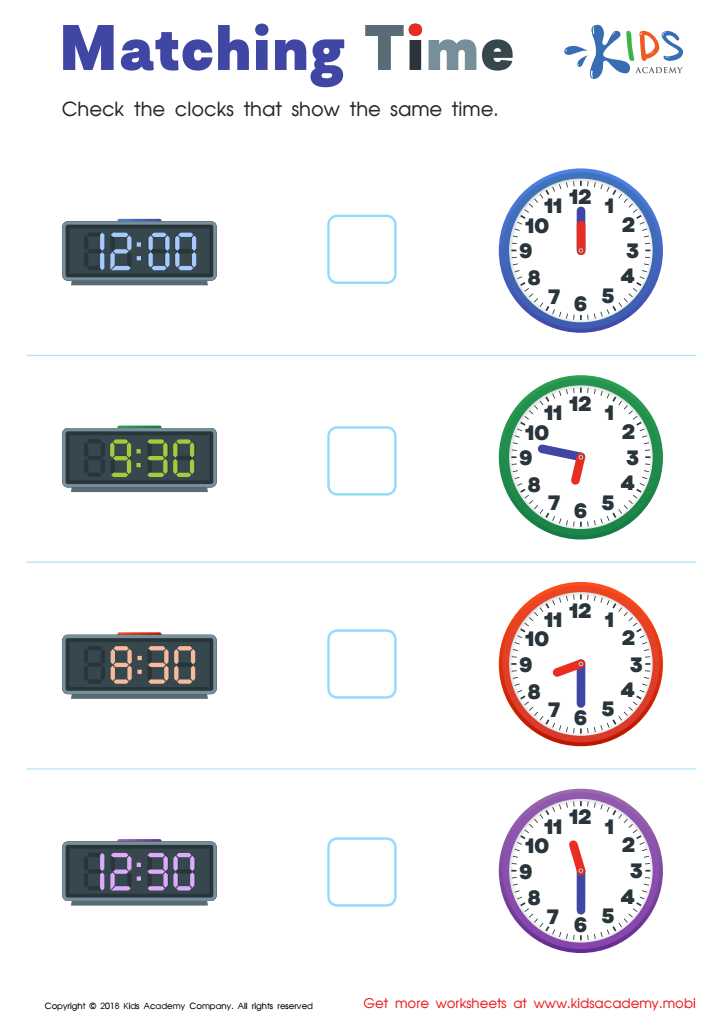
Teach your child to read time in both digital and analog formats with this helpful printout. They'll identify clocks that match in both formats and check them off. Colorful and engaging, it's a great way to help your child understand the concept of time-telling.
Matching Time Worksheet
Worksheet
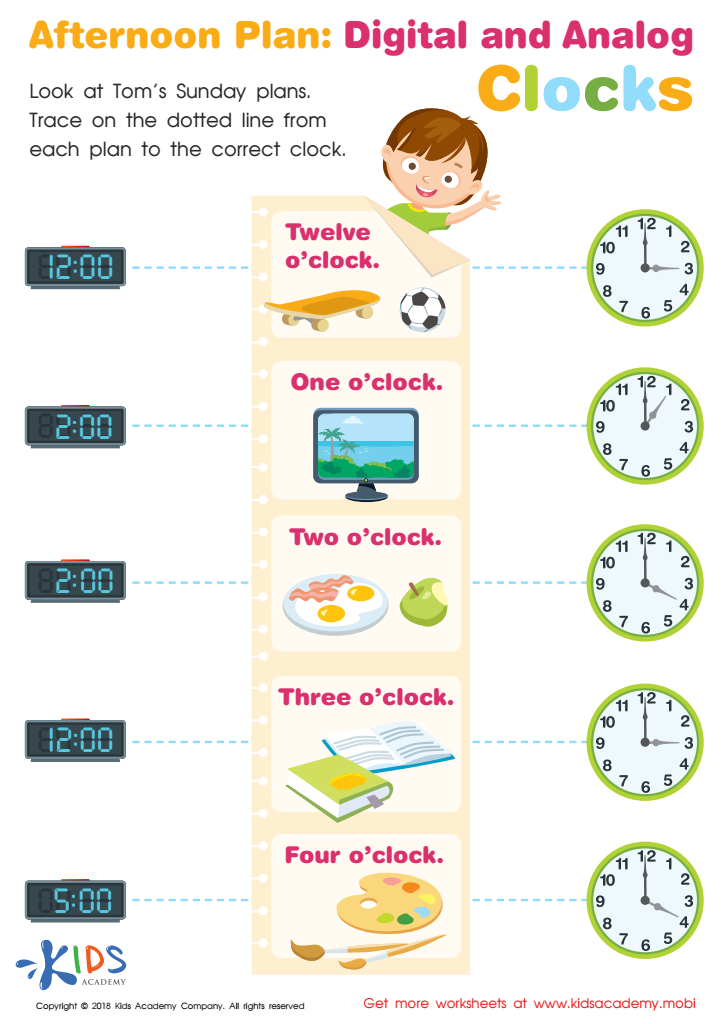
Afternoon Plan: Digital and Analog Clocks Worksheet

Afternoon Plan: Digital and Analog Clocks Worksheet

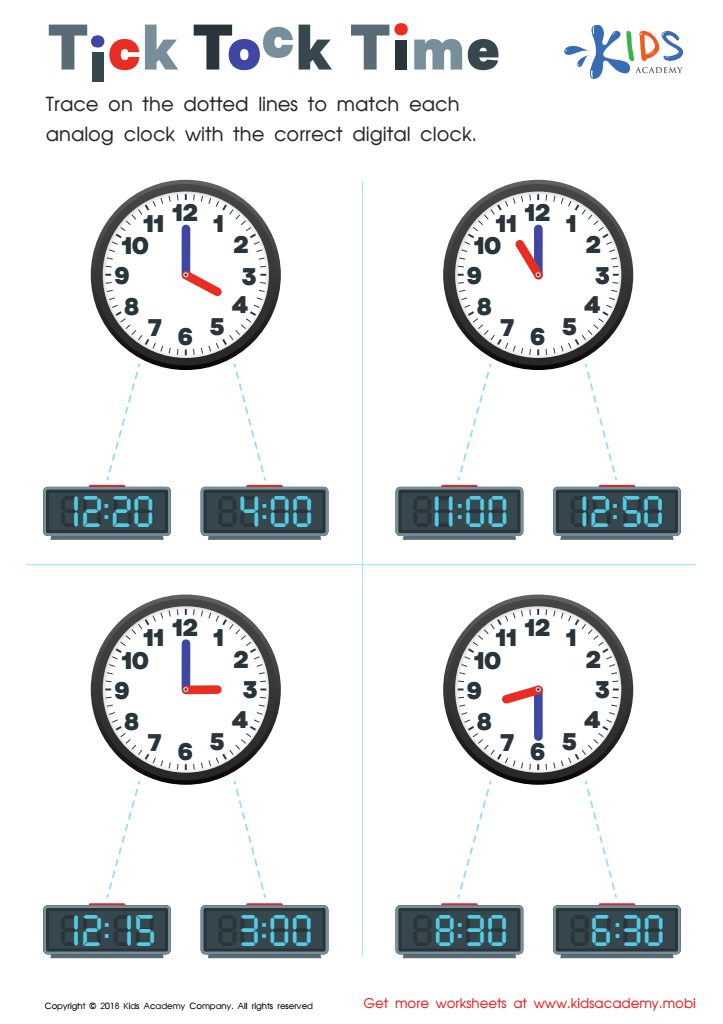
Tom's got Sunday plans and your kids can use this worksheet to help them learn how to tell the time. With tracing dotted lines from plans to the correct clock, they'll gain the skills to accurately convert digital time to analog. It'll be a great way to get them better at telling the time.
Afternoon Plan: Digital and Analog Clocks Worksheet
Worksheet
Tilling Time by the Hour: a.m. or p.m.? Worksheet

Tilling Time by the Hour: a.m. or p.m.? Worksheet

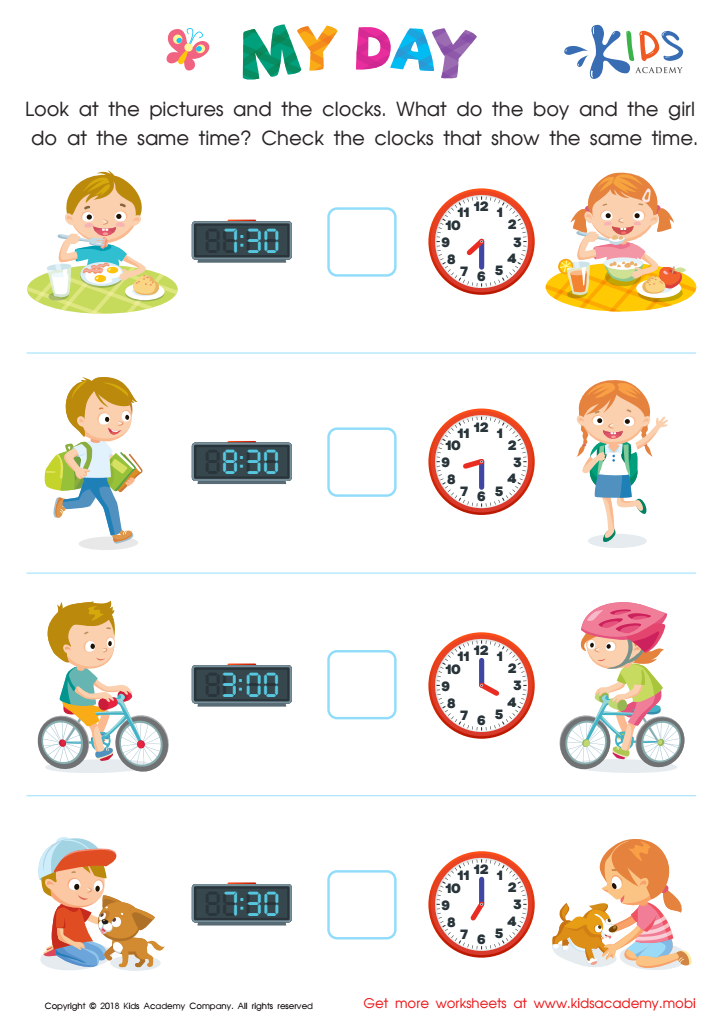
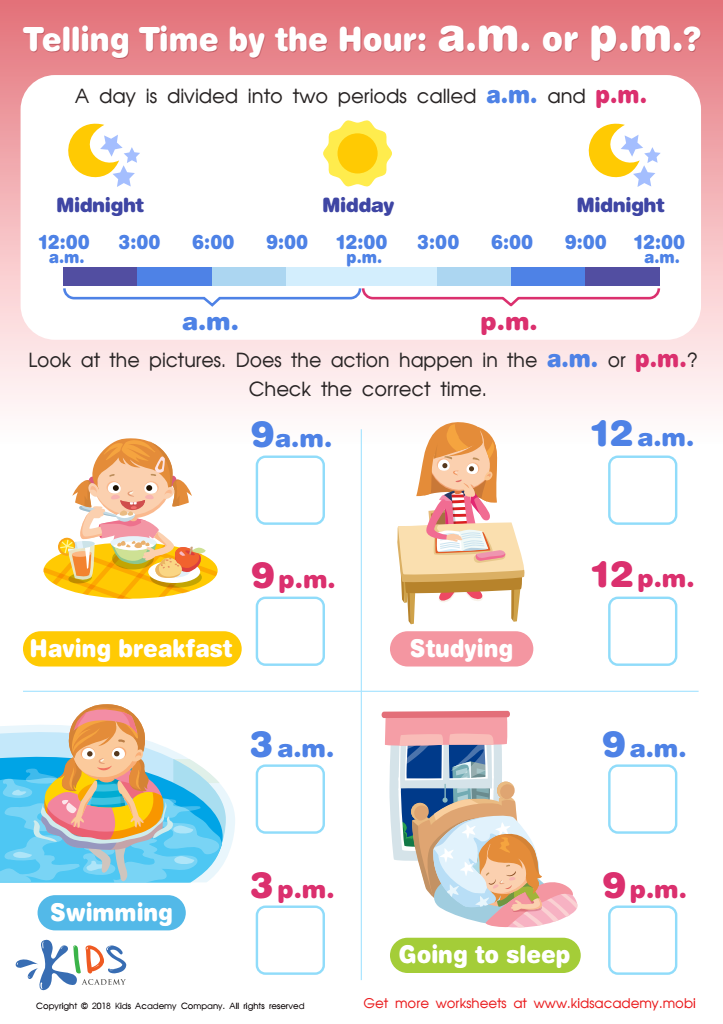
Can your child tell the time? This worksheet will help them learn. Explain a.m and p.m. and look at the pictures together. Ask your child if the activities happen in the a.m or p.m and help them check the correct time.
Tilling Time by the Hour: a.m. or p.m.? Worksheet
Worksheet
Telling Time by the Hour: Digital Clock Worksheet

Telling Time by the Hour: Digital Clock Worksheet

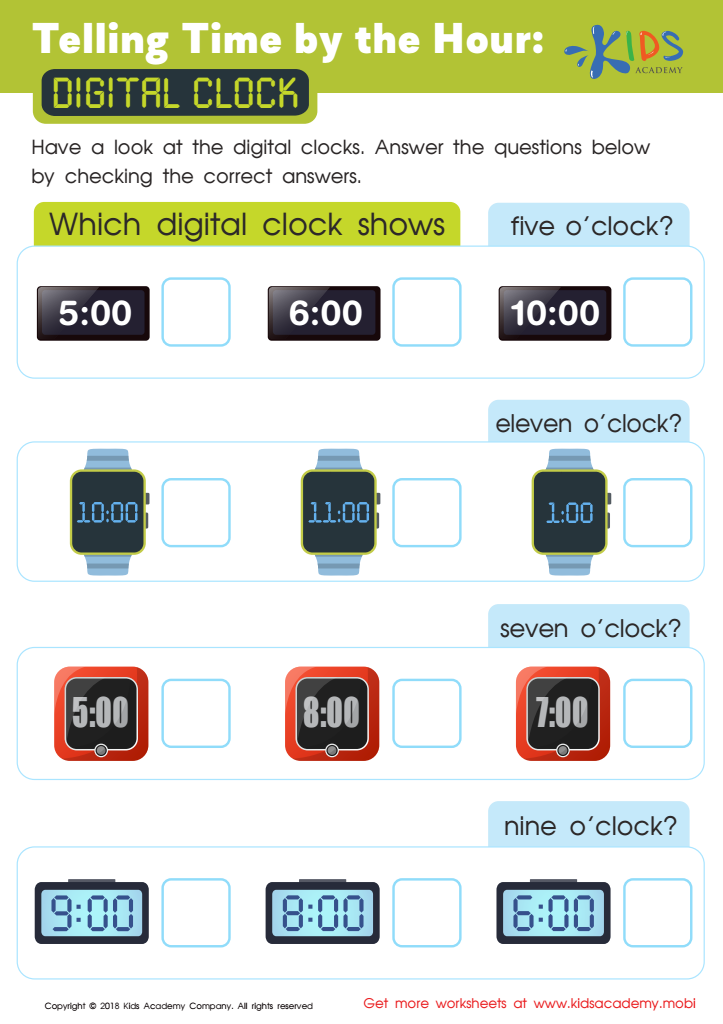
Introduce your students to digital clocks. This worksheet will help them become familiar with them. Guide them through answering the questions - they're simple and stimulating. Encourage their young minds to explore the digital clocks in the exercise.
Telling Time by the Hour: Digital Clock Worksheet
Worksheet
Telling Time by the Hour: Analog Clock Worksheet

Telling Time by the Hour: Analog Clock Worksheet

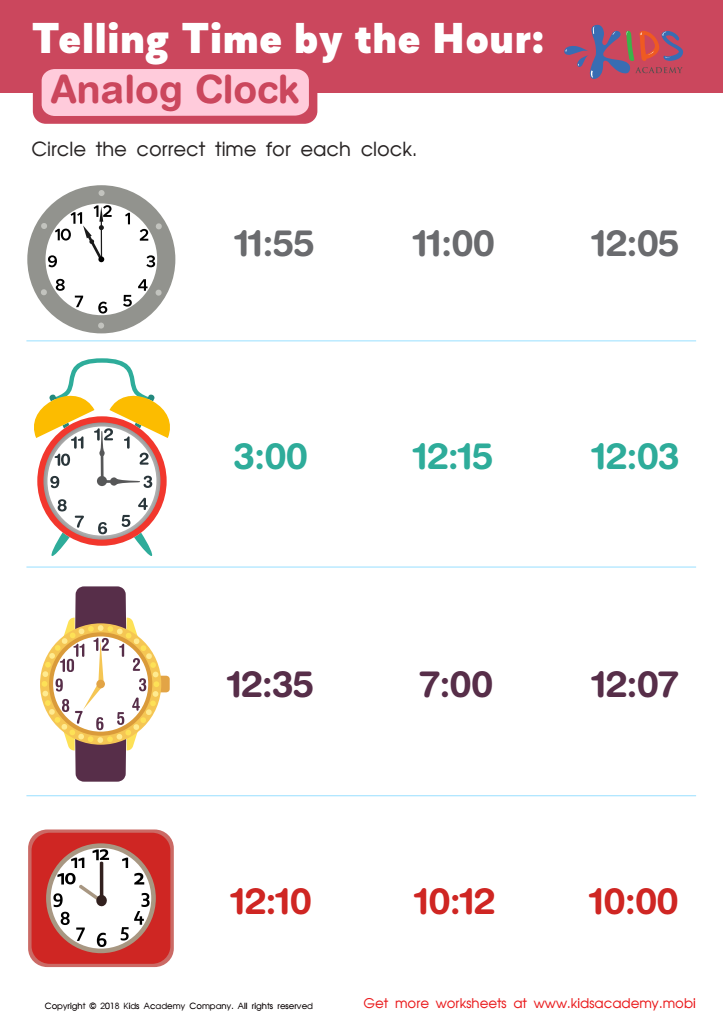
Are your kids skilled at telling time? Find out with this worksheet featuring four clocks. Ask your child to identify the type of clock, then circle the correct time from the options. Help your child if needed and get the answers you need.
Telling Time by the Hour: Analog Clock Worksheet
Worksheet
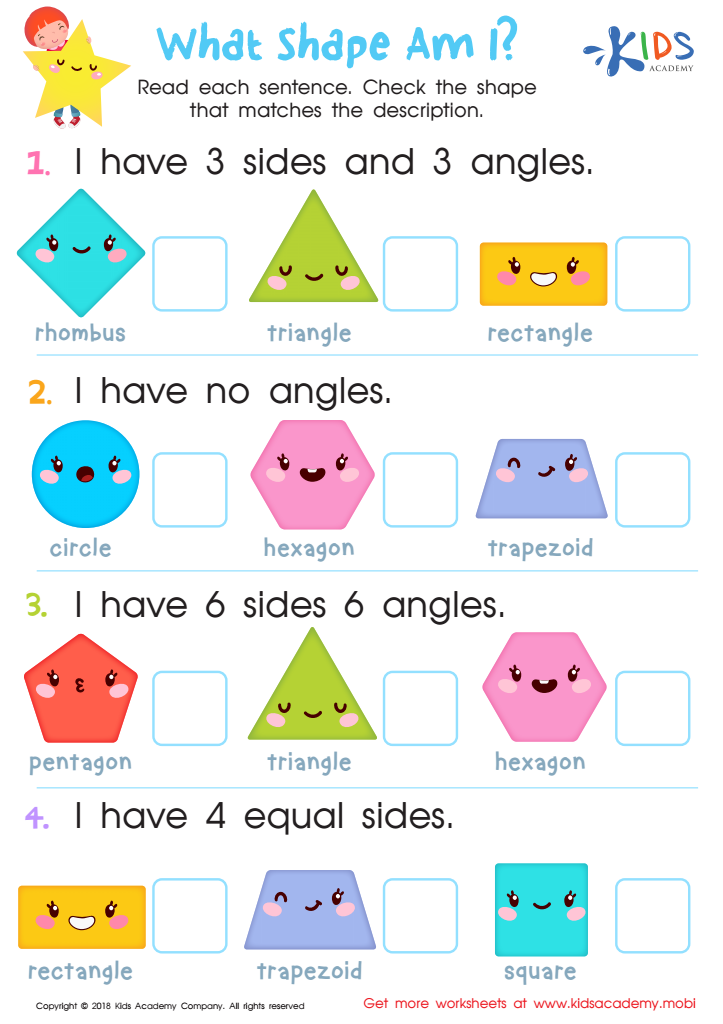
What Shape Am I? Worksheet

What Shape Am I? Worksheet

Help your child read each sentence in this colorful worksheet. Have them identify the shapes described and check the boxes. To prepare, ask simple questions like "How many sides does a triangle have?" and "Which shape has 4 equal sides?" Your child will become more skilled at shapes by the end of this activity.
What Shape Am I? Worksheet
Worksheet
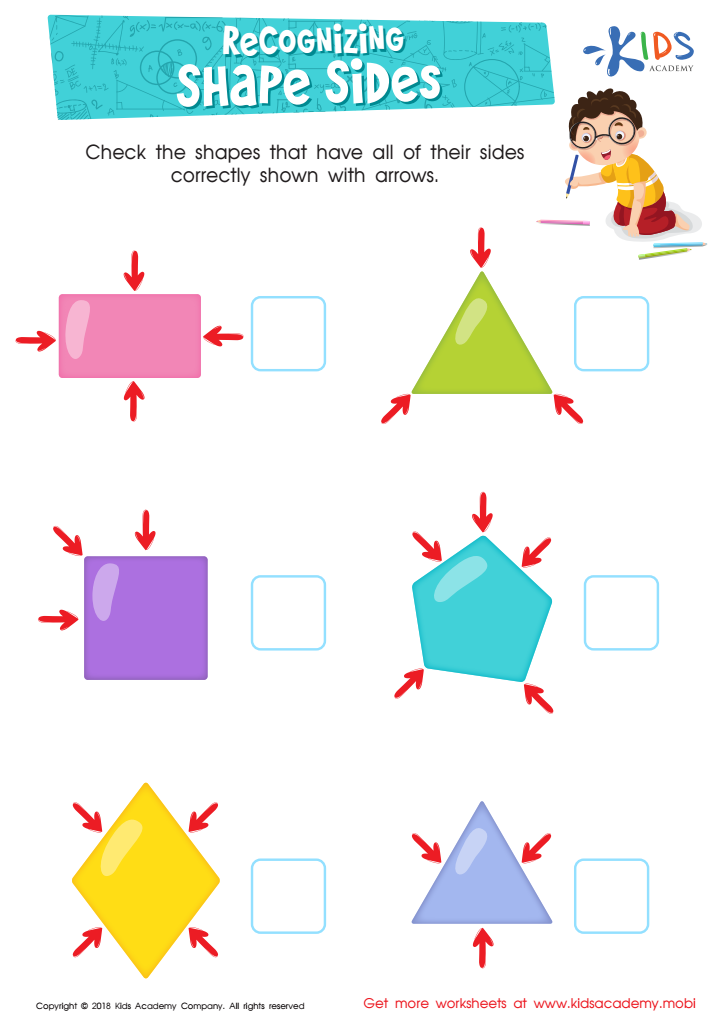
Recognizing Shape Sides Worksheet
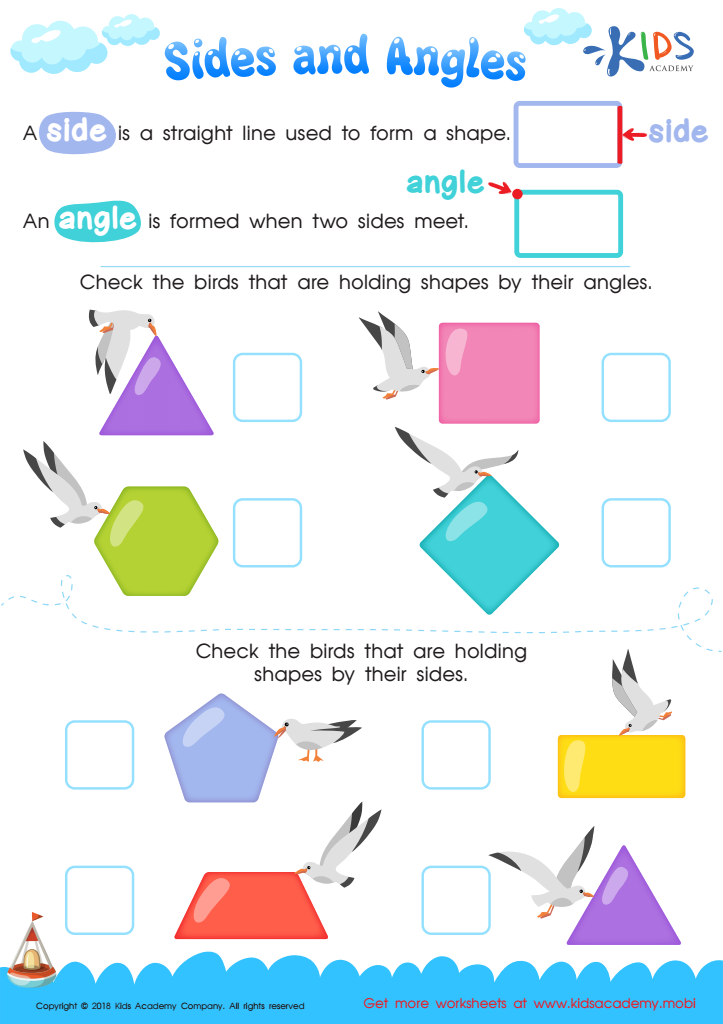

Recognizing Shape Sides Worksheet

This exercise will help your child recognize shape sides. Go over the difference between sides and angles first, then have them check the shapes with arrows to show the sides. They'll quickly get the hang of it and find it much easier after completing the colorful worksheet.
Recognizing Shape Sides Worksheet
Worksheet
Sides and Angles Worksheet
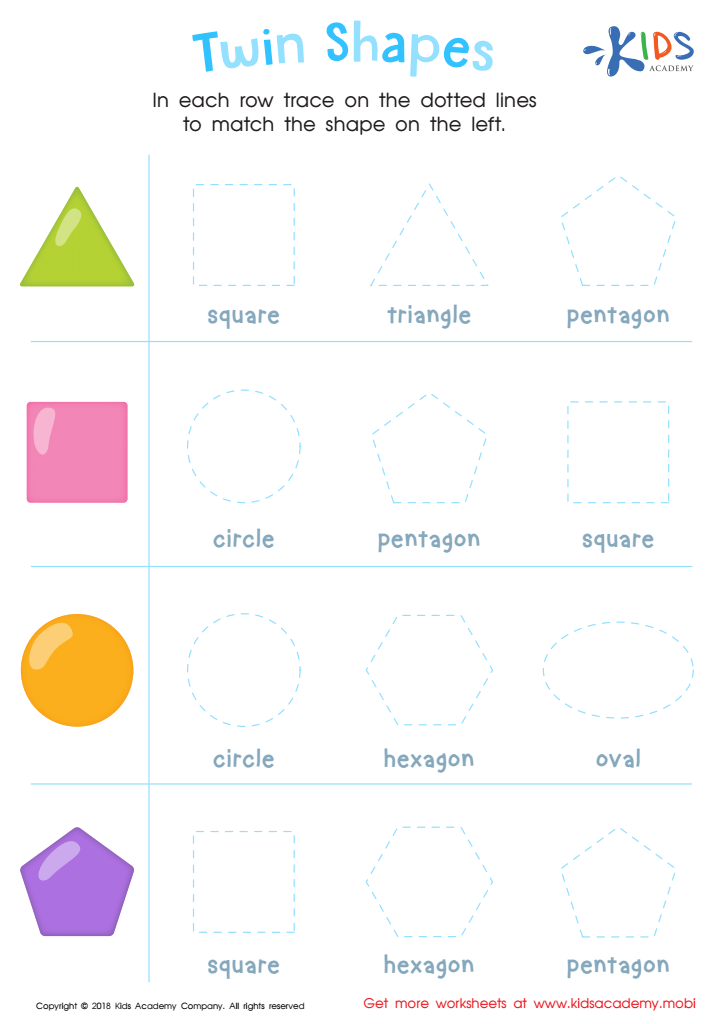
Sides and Angles Worksheet

Sides are lines forming a shape; angles are points where two sides meet (pictured). Before going through the exercise, explain this to your kids. In the first exercise, check for birds holding shapes by their angles. In the second, check for birds holding shapes by their sides.
Sides and Angles Worksheet
Worksheet
Twin Shapes Dot-to-Dot Worksheet
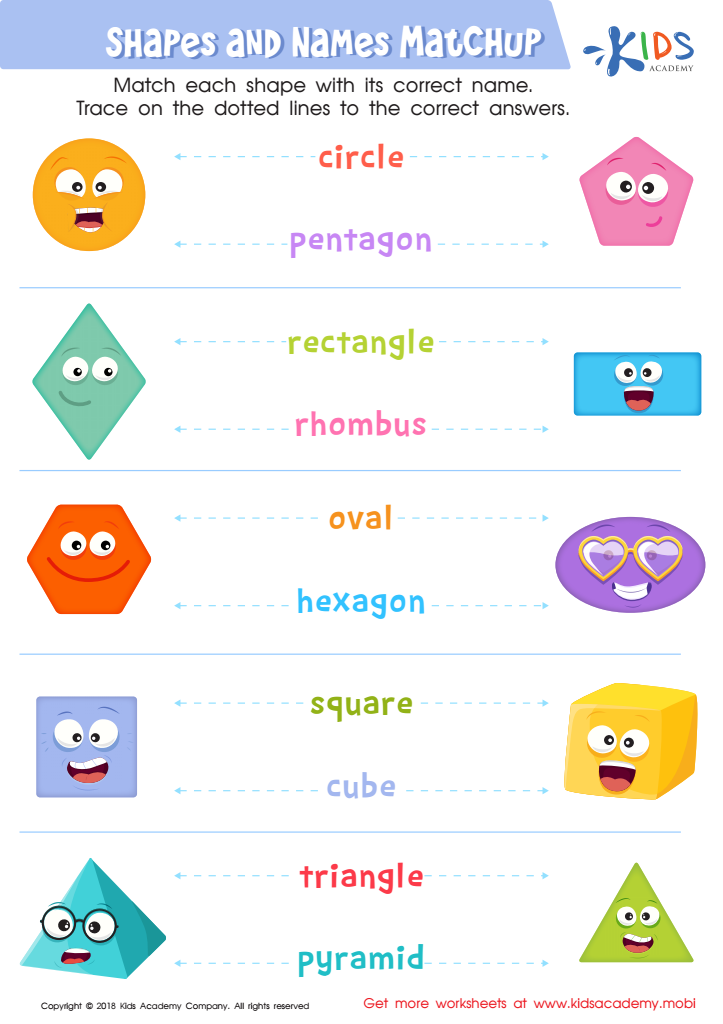

Twin Shapes Dot-to-Dot Worksheet

Test your child's ability to copy with this worksheet. Ask them to find and name the four shapes on the left. Then, they must match each with the dotted lines on the right. Help your child with all four shapes in this fun exercise.
Twin Shapes Dot-to-Dot Worksheet
Worksheet
Shapes and Names Matchup Worksheet

Shapes and Names Matchup Worksheet

Introduce your students to shapes if they aren't familiar. Look at the sheet with them and ask them to identify shapes. Help them match each shape to its name, then trace the dotted lines to the answers. Even if they haven't seen shapes before, this exercise will be easy - with your help!
Shapes and Names Matchup Worksheet
Worksheet
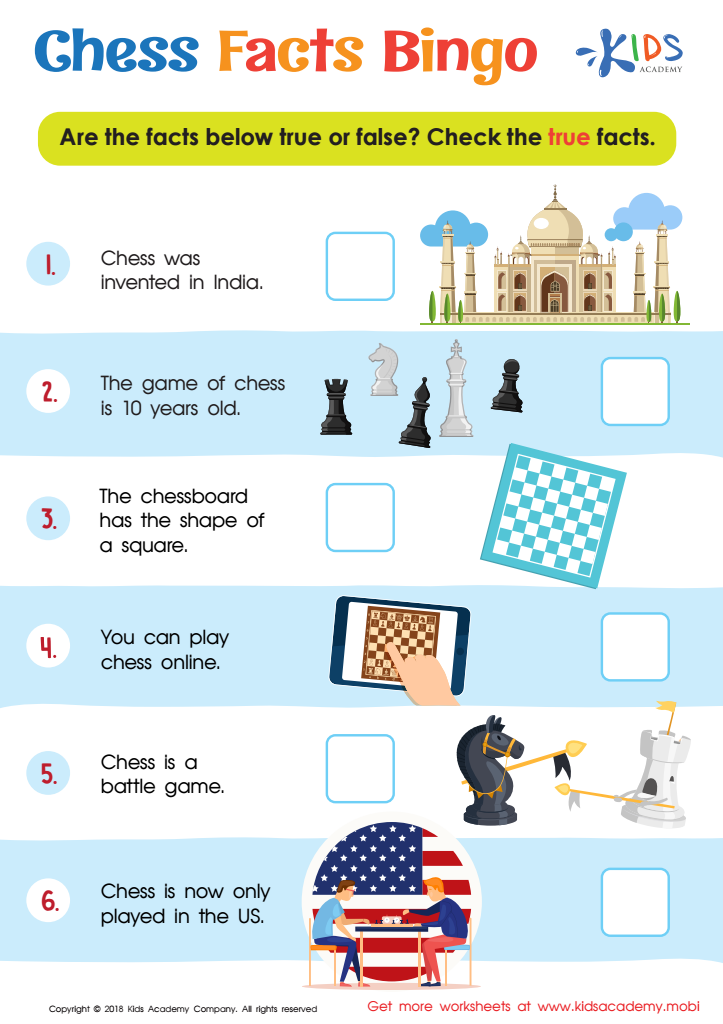
Chess Facts Bingo Worksheet

Chess Facts Bingo Worksheet

Help your child assess their knowledge of chess with our simple worksheet. It contains six questions; read them to your child and ask them if the statements are true or false. Once they check the boxes for the true statements, you'll have a better understanding of their understanding of the game.
Chess Facts Bingo Worksheet
Worksheet
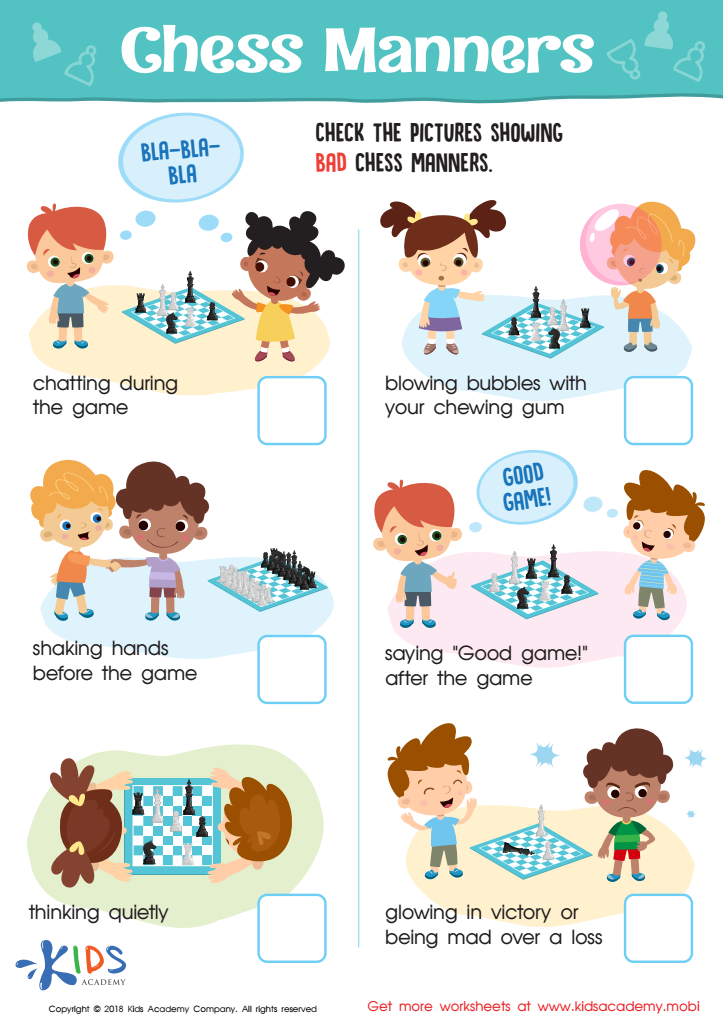
Chess Manners Worksheet

Chess Manners Worksheet

Teach your child chess manners in addition to table and social ones. Chess has clear rules and etiquette which must be followed for a proper game. Review this worksheet with your kid and discuss the pictures that show inappropriate behaviours. This will help them understand how to play the game correctly and with good manners.
Chess Manners Worksheet
Worksheet
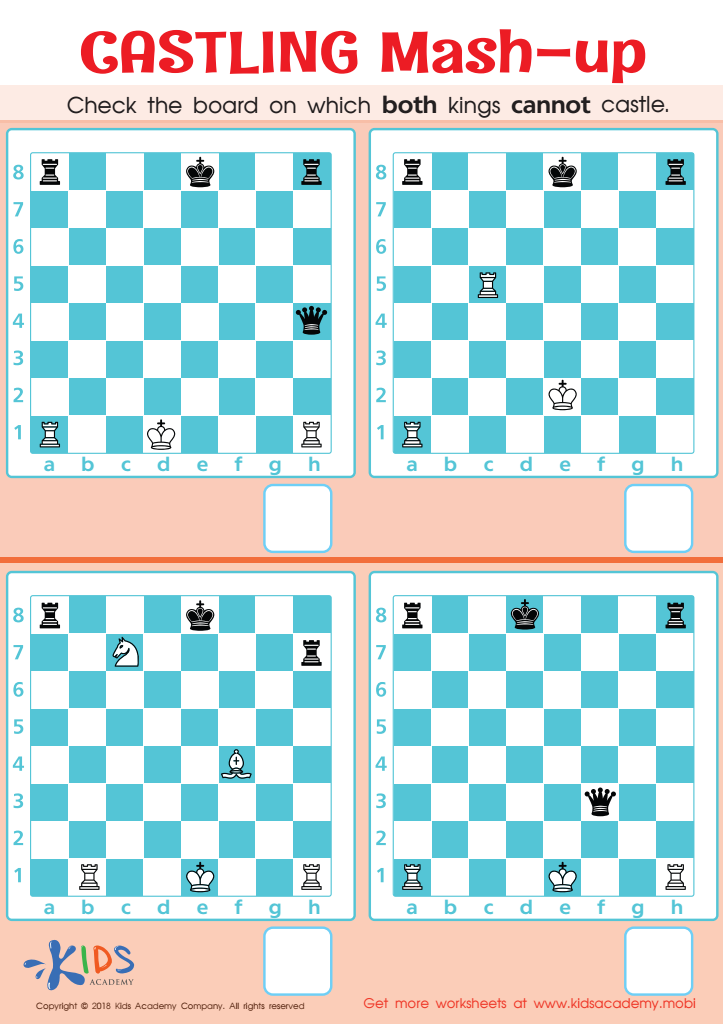
Castling Mash–up Worksheet

Castling Mash–up Worksheet

Before starting the worksheet, ensure your child understands castling in chess. If not, take time to explain it. Once they have a clear grasp of the rules, help them complete the exercise. Check the board to ensure that neither king can castle.
Castling Mash–up Worksheet
Worksheet
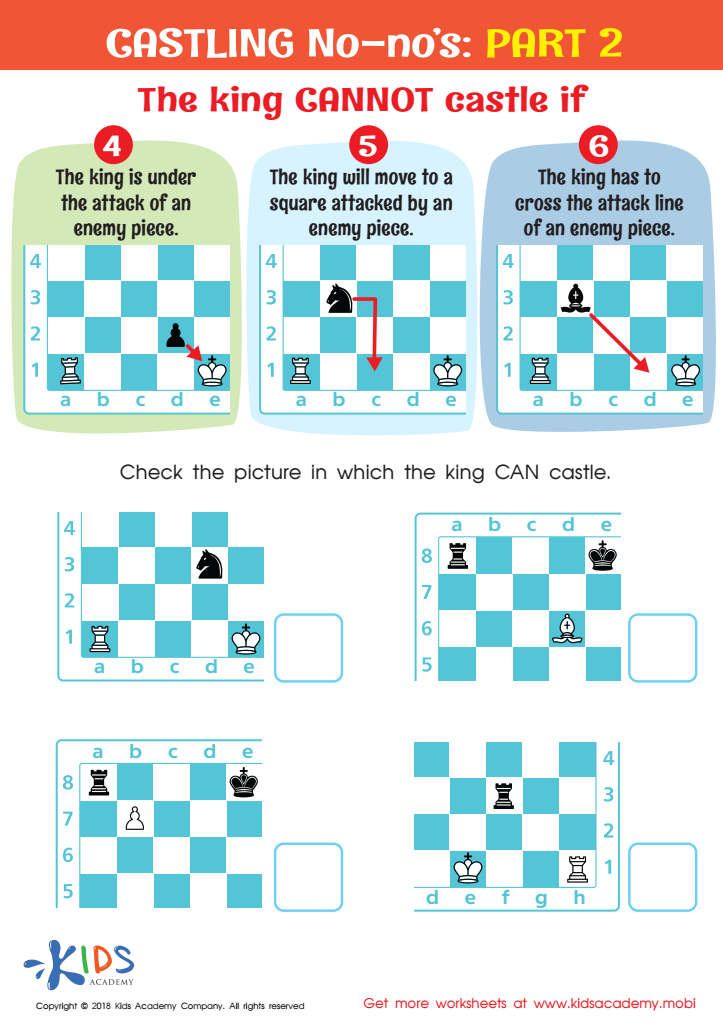
Castling No - no's: Part 2 Worksheet

Castling No - no's: Part 2 Worksheet

Teach your child the rules of castling: no castling if the king is under attack or will move onto an attacked square, or cross an attack line. To prepare for a game of chess, help your child complete the exercise of identifying when the king can castle – check the pictures.
Castling No - no's: Part 2 Worksheet
Worksheet
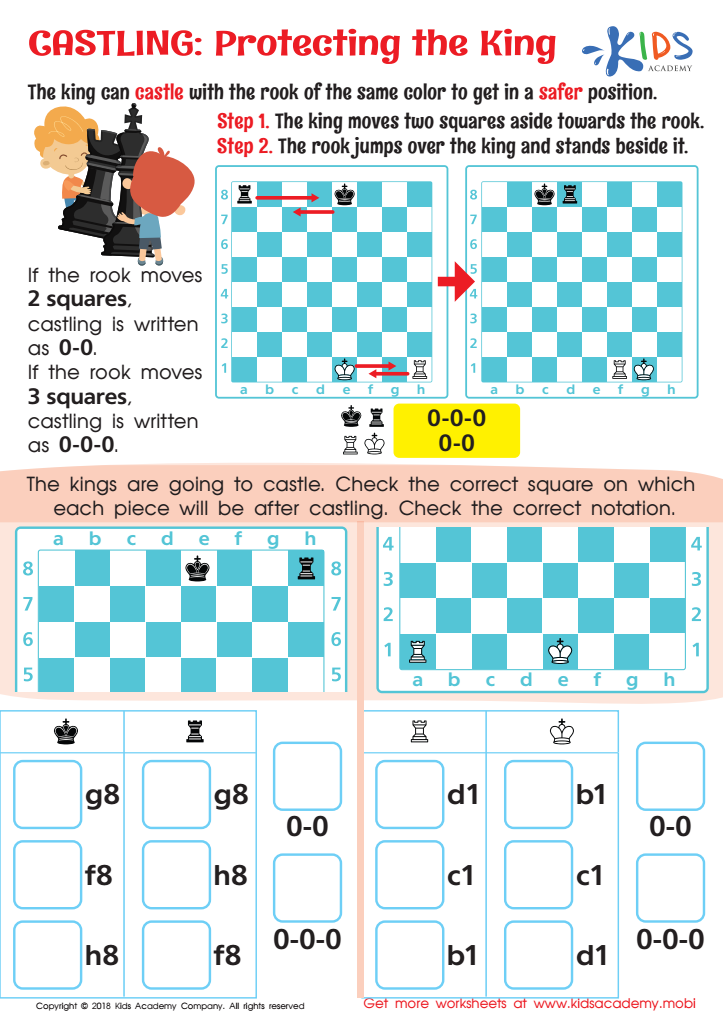
Castling: Protecting the King Worksheet

Castling: Protecting the King Worksheet

Castle your king with the rook to get into a safer position! Write 0-0 for a two-square move, or 0-0-0 for a three-square move. Look at the worksheet with your child; on the first chessboard, the king has moved two squares and the rook is beside it. On the second, the rook has jumped over the king. Let your child use their castling knowledge to answer the questions in the easy pdf.
Castling: Protecting the King Worksheet
Worksheet
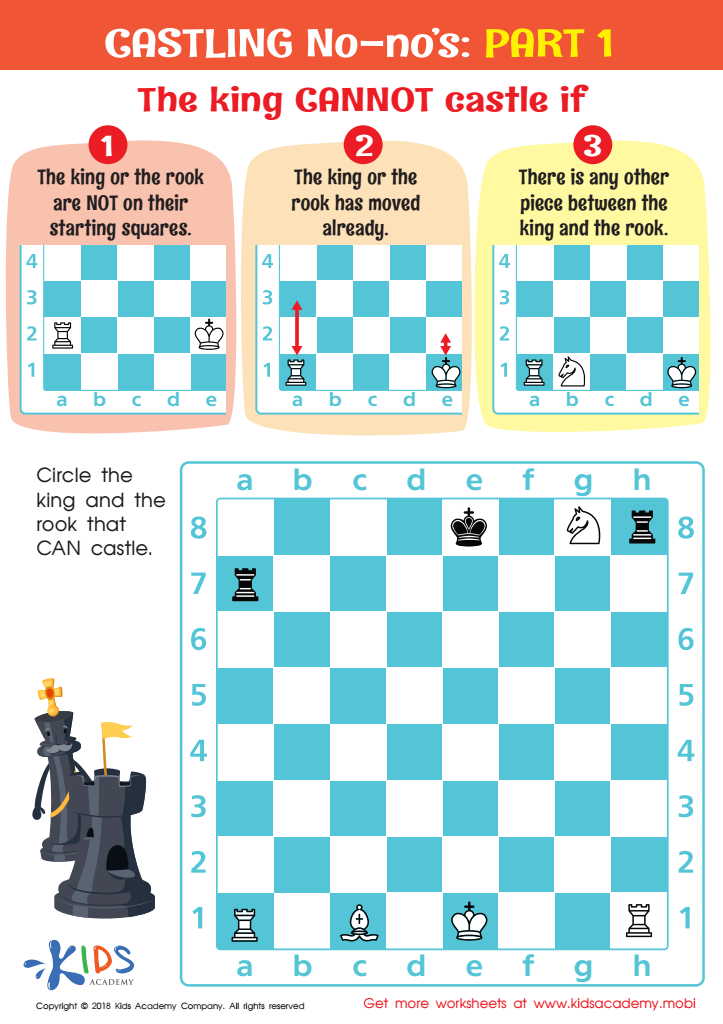
Castling No–no's: Part 1 Worksheet

Castling No–no's: Part 1 Worksheet

Help your child learn how to play chess by using this worksheet. Ask them to circle the king and rook that can castle in the picture. Explain that a king cannot castle if the king or rook has moved, or if there is any other piece between them. Knowing these rules will make playing a lot easier!
Castling No–no's: Part 1 Worksheet
Worksheet
Notation Quest Worksheet

Notation Quest Worksheet

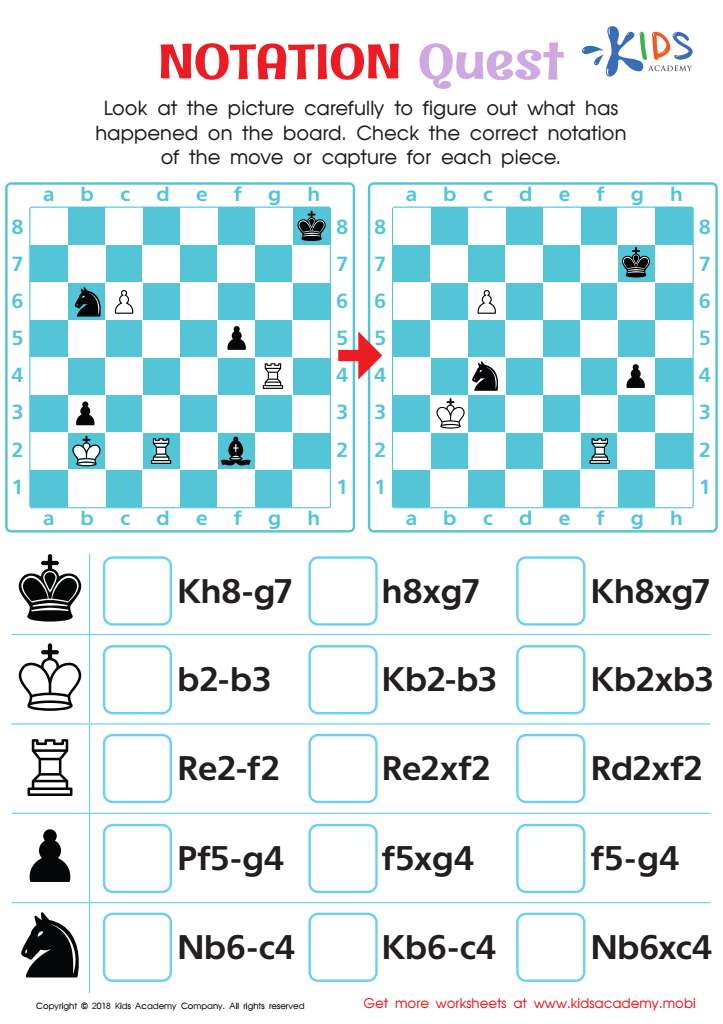
Examine the two chess boards with your kids. On one, chess pieces haven't moved; on the other, pieces have captured each other. Get your child to note the moves and captures with this simple worksheet.
Notation Quest Worksheet
Worksheet
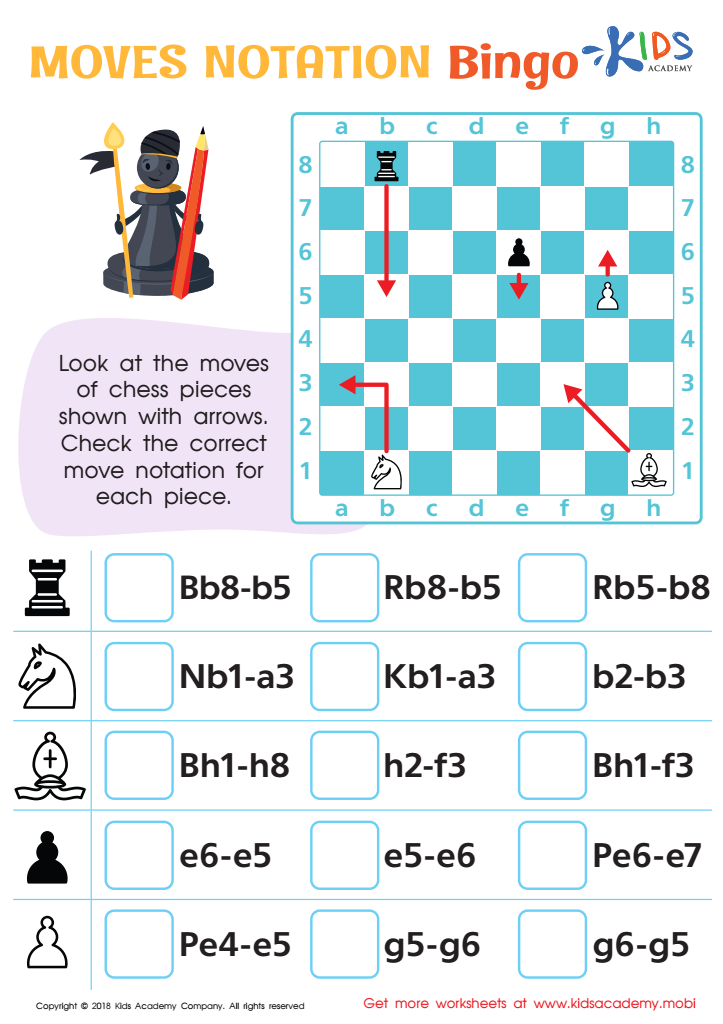
Moves Notation Bingo Worksheet

Moves Notation Bingo Worksheet

Test your child's chess notation skills with this simple worksheet. Download the PDF which shows a chess board and arrows pointing to pieces. Ask your child to identify the moves and note them down correctly. The notations needed are for bishop, pawn, rook and knight. Up to 80 words.
Moves Notation Bingo Worksheet
Worksheet
Notation of Moves Writing it Down Worksheet

Notation of Moves Writing it Down Worksheet

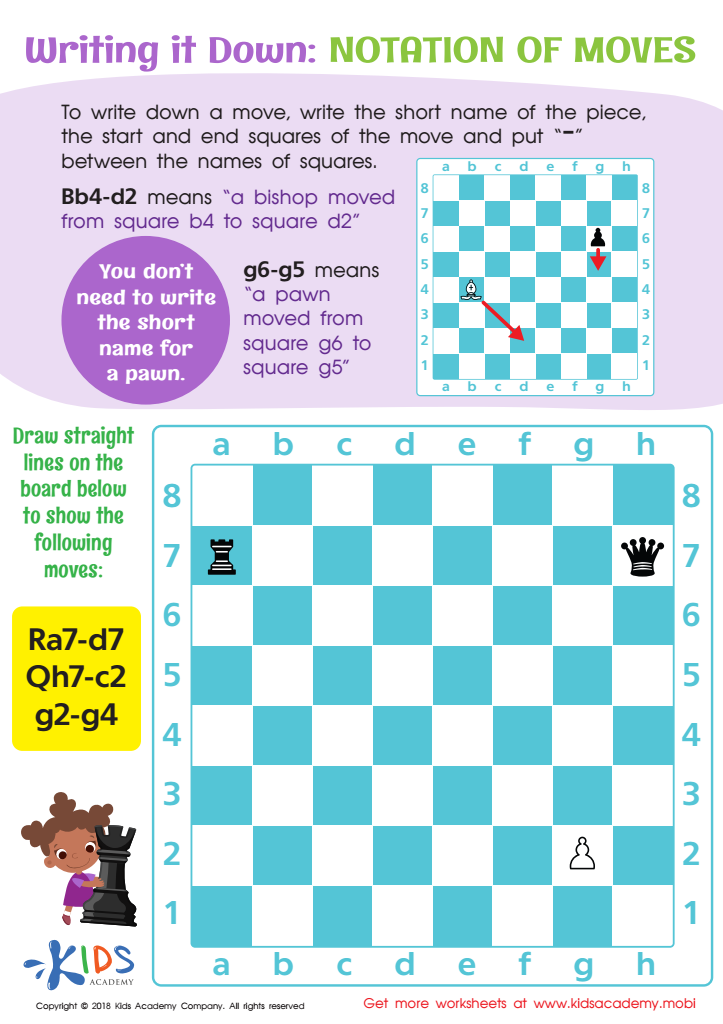
Notating chess moves can be tricky for kids to learn. This worksheet will help them better understand it. To notate a move, write the piece's short name, start and end squares, and separate them with a "-". For instance, Bd4-d2 means a bishop moved from b4 to d2. No need to write pawns' short names.
Notation of Moves Writing it Down Worksheet
Worksheet
Notation of Captures Writing it Down Worksheet

Notation of Captures Writing it Down Worksheet

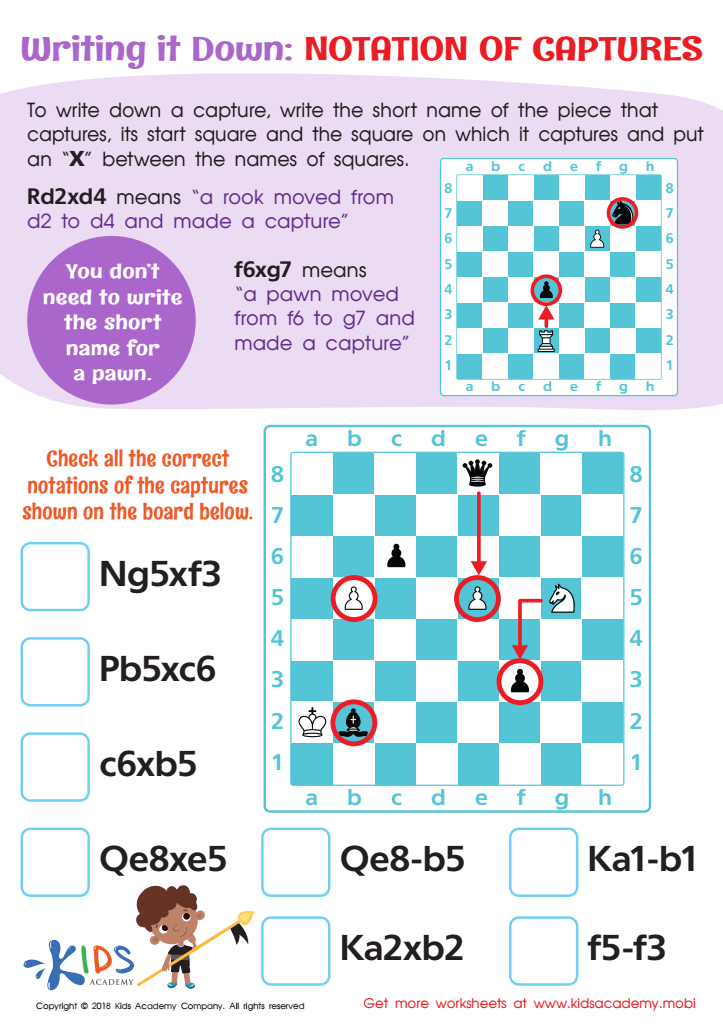
To teach students how to record captures in chess, use this worksheet. Write down the piece's short name, start sq., and the sq. where it captures, separating them with an X. For example, Rd2Xd4 means a rook moved d2 to d4 and took a piece. Pawn captures don't need a name.
Notation of Captures Writing it Down Worksheet
Worksheet
Chess Pieces Quest Worksheet


Chess Pieces Quest Worksheet

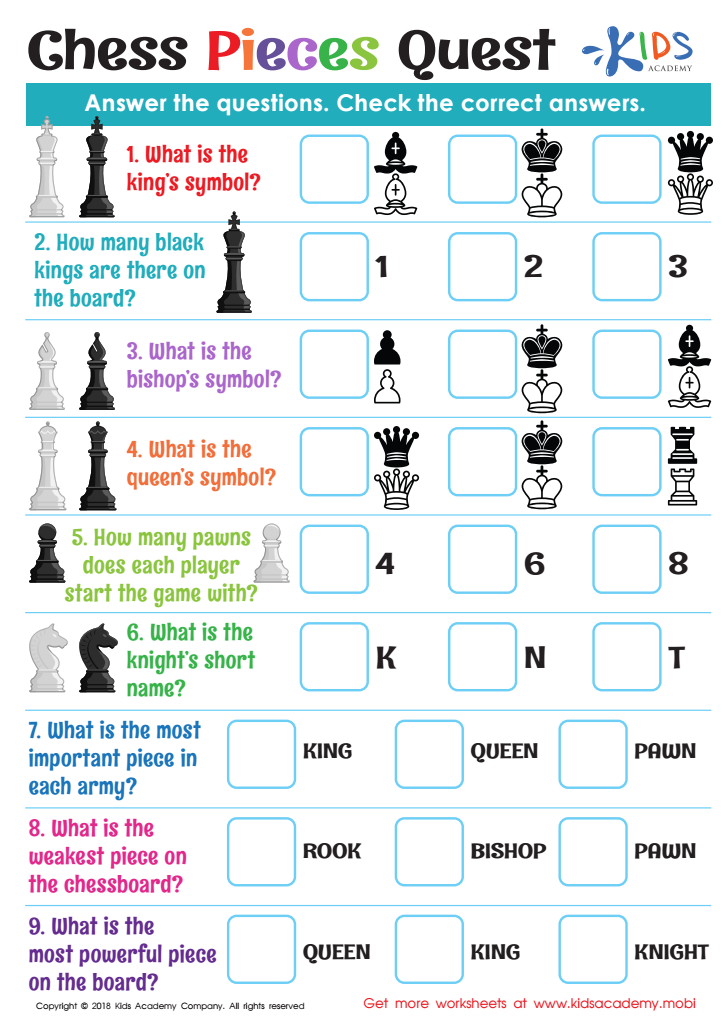
Help your child prepare for the chess quest by refreshing their knowledge of the symbols and characteristics of each chess piece. Then, have them try the 9 questions on this worksheet. These questions will assess their understanding of the symbols and how many pieces each player starts with.
Chess Pieces Quest Worksheet
Worksheet
What's My Name? Worksheet

What's My Name? Worksheet

Test your child's chess knowledge with this colorful worksheet! There are six pieces lined up with names underneath. Ask your child to name each piece, then check if it's correct. Help them succeed by brushing up on the different pieces and their names.
What's My Name? Worksheet
Worksheet
Rook and Bishop Worksheet

Rook and Bishop Worksheet

This tracing sheet helps your child learn chess pieces by matching each piece, short name and symbol to the correct name. After tracing, have them answer the questions and check their answers. It's a great way for them to become familiarized with chess.
Rook and Bishop Worksheet
Worksheet
=
=

Drawing by Squares Worksheet

Test your child's chess skills and ability to name squares with this worksheet. Have them draw a chess piece from the squares at the top of the chessboard in the picture. Guide them to draw lines between the given squares for the correct outline of a chess piece.
Drawing by Squares Worksheet
Worksheet


Worksheets designed specifically for 6-year-olds offer an array of benefits that are pivotal to the developmental phase these young learners are navigating through. At this age, children are at a crucial stage where they are beginning to solidify the foundation of their academic and cognitive skills. Worksheets tailored for 6-year-olds cater to their unique learning needs, presenting concepts in an engaging and age-appropriate manner.

One of the primary advantages of these worksheets is that they foster independence in learning. As 6-year-olds begin to grasp reading and follow instructions, worksheets allow them to work at their own pace, encouraging self-directed learning. This independence in tackling tasks not only boosts their confidence but also cultivates a sense of responsibility towards their education.

Moreover, worksheets for 6-year-olds are designed to enhance fine motor skills through activities such as writing, cutting, and coloring. These exercises are crucial for developing hand-eye coordination and preparing children for more complex tasks in the future.

Another significant benefit is the reinforcement of academic concepts. Through repeated practice and engaging exercises, children can consolidate their understanding of basic literacy and numeracy skills, which are foundational to their future academic success.

Additionally, these worksheets offer a structured way for parents and educators to assess a child's learning progress, identify areas of strength, and areas that may require more attention. This ongoing assessment ensures that learning gaps are addressed promptly, setting children on a path of continuous improvement and growth.

In summary, worksheets for 6-year-olds are an invaluable tool in the educational journey of young learners. They not only make learning fun and engaging but also play a critical role in developing key skills that will serve children well beyond their early years of schooling.