Filters

101 filtered results

Clear all filters
Favorites
With answer key
Interactive

101 filtered results

Difficulty Level

Grade


Check out this FREE Trial Lesson on English for Beginners for age 7-9!

D

Favorites
With answer key
Interactive
  • 7-9
  • Interactive
  • English for Beginners
letter C worksheets
letter C worksheets

Letter C Tracing Page

Trace and write the letter 'C'! Put the pencil at the red dot then follow the lines – the capital letter first then the lowercase one. Cats love it and so will you! Get more free printables to practice tracing and writing.
Letter C Tracing Page
Worksheet
letter d worksheets
letter d worksheets

Letter D Tracing Page

Trace and write capital and lowercase letter "D" with our free printable alphabet worksheet! Be careful not to mix up "b" and "d" - just look at the ducks and write their first letter. The dolphin wants to join the fun too - do you like dolphins? Get more fun worksheets and activities at Kids Academy!
Letter D Tracing Page
Worksheet
letter F worksheets
letter F worksheets

Letter F Tracing Page

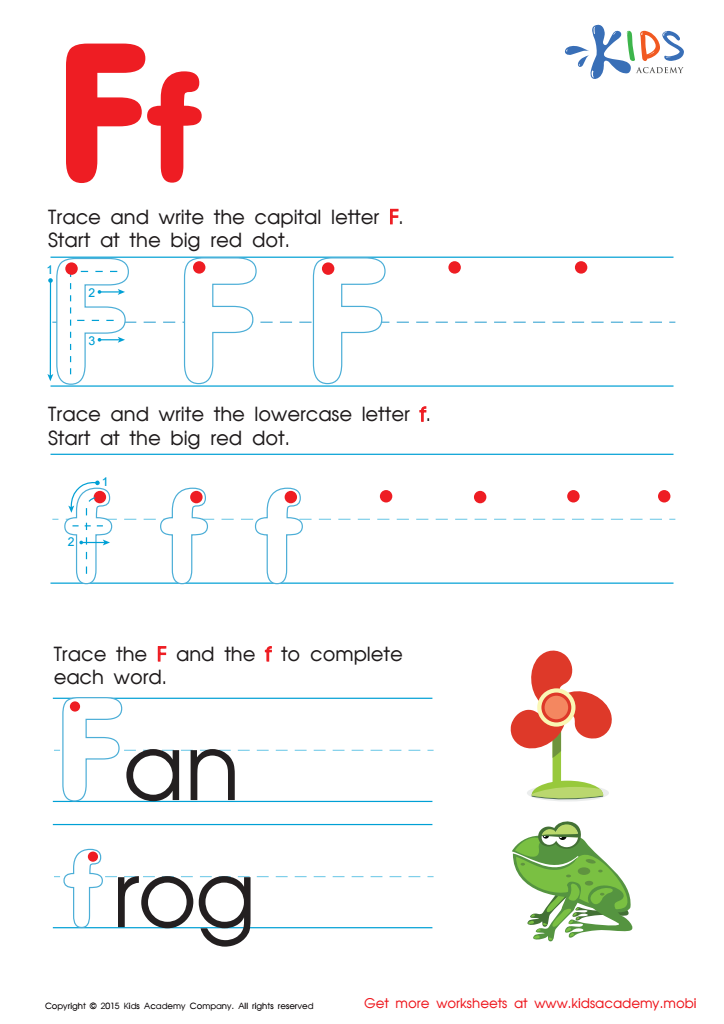
Trace "F" with your pencil! Start at the red dot and draw lines — it's fun! Check it out — it looks great! Keep practicing to make it even better. Then, try completing words. Help out the broken fan and funny frog! Get free alphabet worksheets and activities for your kids. Come see our new tracing pages!
Letter F Tracing Page
Worksheet
letter e worksheets
letter e worksheets

Letter E Tracing Page

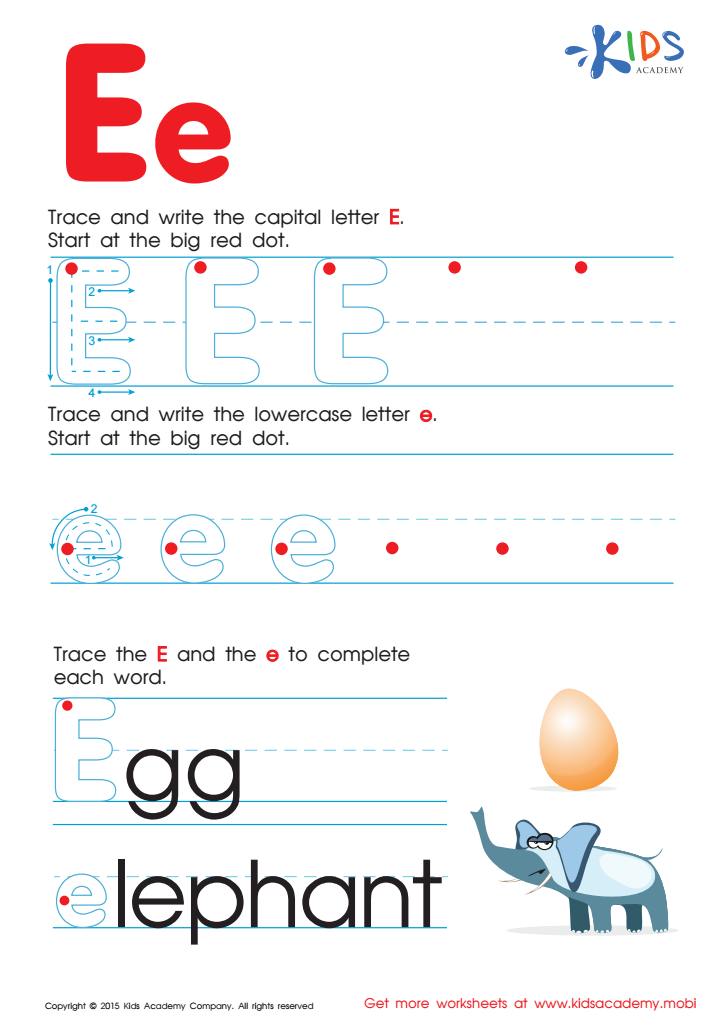
Trace and write the uppercase and lowercase "E" starting at the big red dot. Complete words to perfect letter writing. Egg and Elephant must be written carefully. More alphabet worksheets for kindergarten are available for download to spend more time with your children learning.
Letter E Tracing Page
Worksheet
Feelings and emotions worksheet

Feelings and Emotions Worksheet

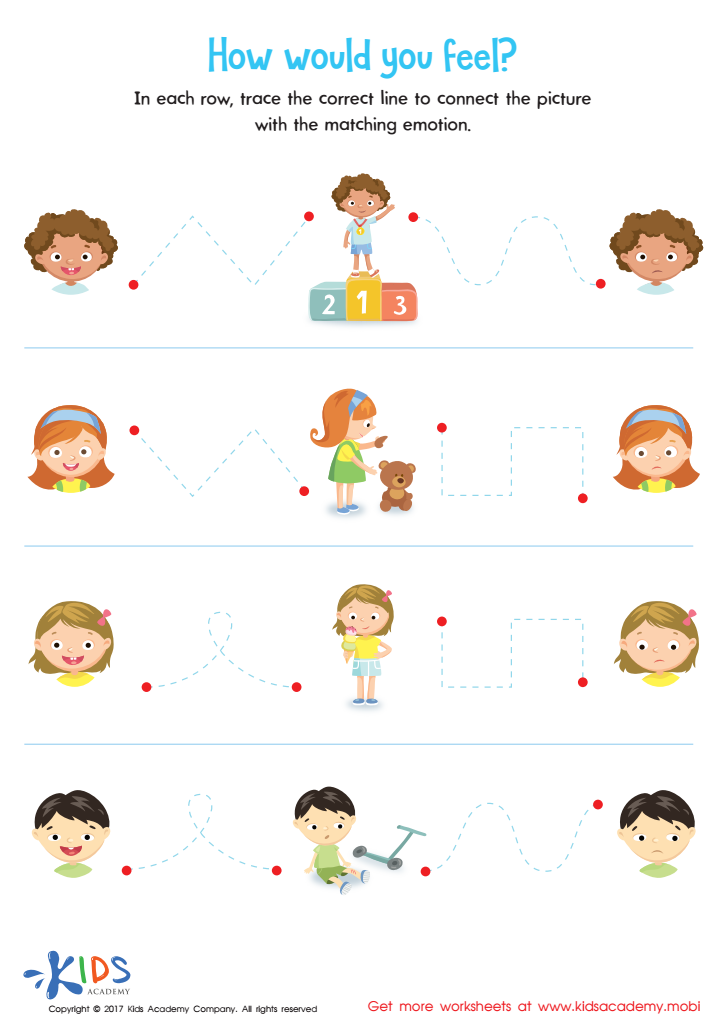
Kids must learn how to deal with situations and handle their own emotions. This worksheet helps them practice empathy and resilience, making them more self-aware and confident. It also helps them to relate their life experiences to common disappointments and develop coping mechanisms.
Feelings and Emotions Worksheet
Worksheet


... 4 5

Parents and teachers should care about English for beginners, particularly for children ages 7-9, because this is a critical period for language development and foundational learning. At this age, children's brains are highly receptive, enabling them to absorb language naturally. Early exposure to English lays the groundwork for effective communication skills, which are essential for academic success and personal development.

Furthermore, English is a global lingua franca, and proficiency can open doors to diverse opportunities in future education and careers. By learning English early on, children can partake in a wider range of cultural materials, from literature to online content, enriching their knowledge and creativity.

Additionally, mastering English supports not only language acquisition but also cognitive skills, such as problem-solving and critical thinking, as they engage in conversations, storytelling, and collaborative learning activities.

Teachers and parents play vital roles in fostering a supportive and enriching environment, making learning enjoyable and interactive. When children find joy in learning English, they are more likely to develop a lifelong love for language, enhancing their confidence and social skills. Therefore, prioritized investment in English education for young learners has far-reaching benefits for their individual growth and future success.