Word Problems Worksheets for Ages 7-9 - Page 6
123 filtered results
-
From - To
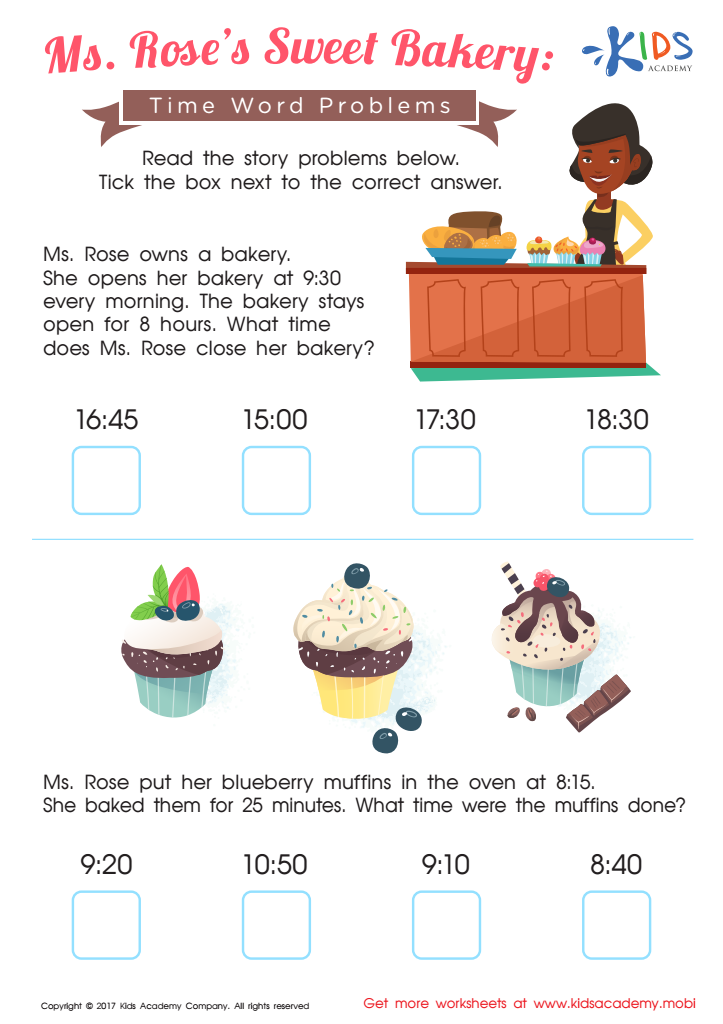
Ms. Roseв's Sweet Bakery Time Worksheet
 Assign to My Students
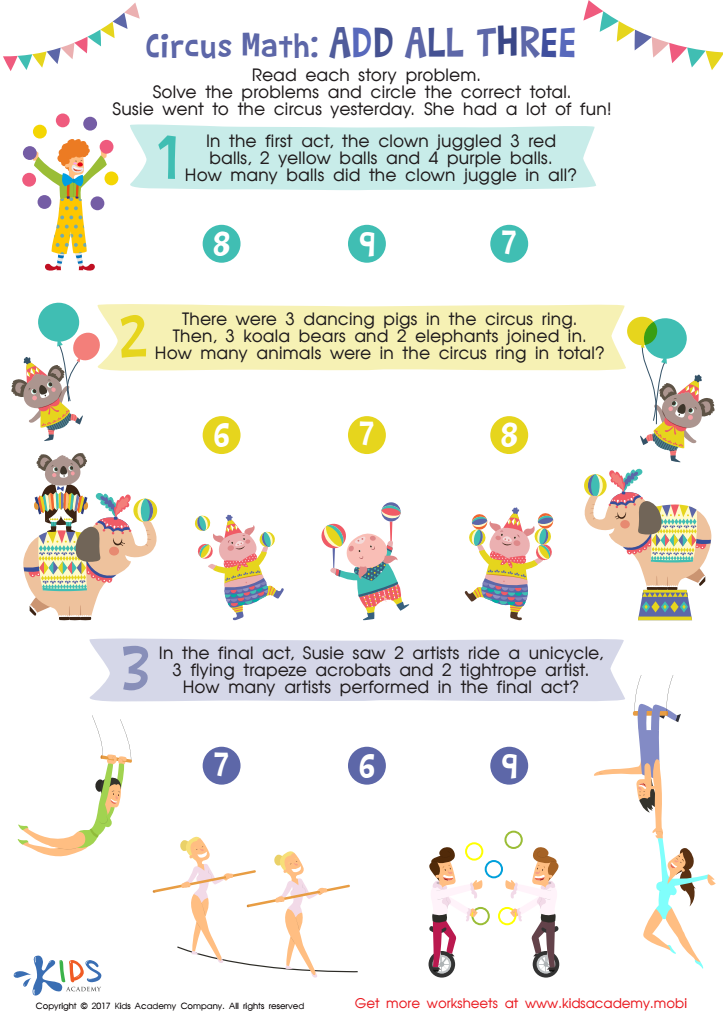
Circus Math Printable








Parents and teachers should greatly value word problems for children ages 7-9 because they foster critical thinking, enhance problem-solving skills, and link mathematics to the real world. At this crucial stage, kids are beginning to move from basic arithmetic to applying their math knowledge in diverse contexts. Word problems help children understand that math isn't just about numbers on a page – it's a tool for solving everyday issues.
First, word problems encourage critical thinking by requiring children to break down a scenario, determine what's being asked, and devise a method to find the solution. This process enhances their analytical skills and fosters mental agility. Secondly, solving word problems improves reading comprehension and the ability to extract relevant information from a text, thus integrating literacy skills with mathematical understanding.
Lastly, word problems make learning engaging and meaningful. They illustrate how math operates in real-life scenarios, such as shopping or time management, making abstract concepts more concrete for young learners. By encountering these practical applications early, children develop a positive attitude toward math and build a strong foundation for more advanced studies.
In essence, nurturing 7-9 year-olds with word problems not only improves their cognitive abilities but also aligns education with everyday experiences, equipping them with essential life skills.








