English Language Arts online worksheets - Page 9
704 filtered results
Difficulty Level
Grade
Age
-
From - To
Subject
Activity
Standards
Favorites
With answer key
Interactive
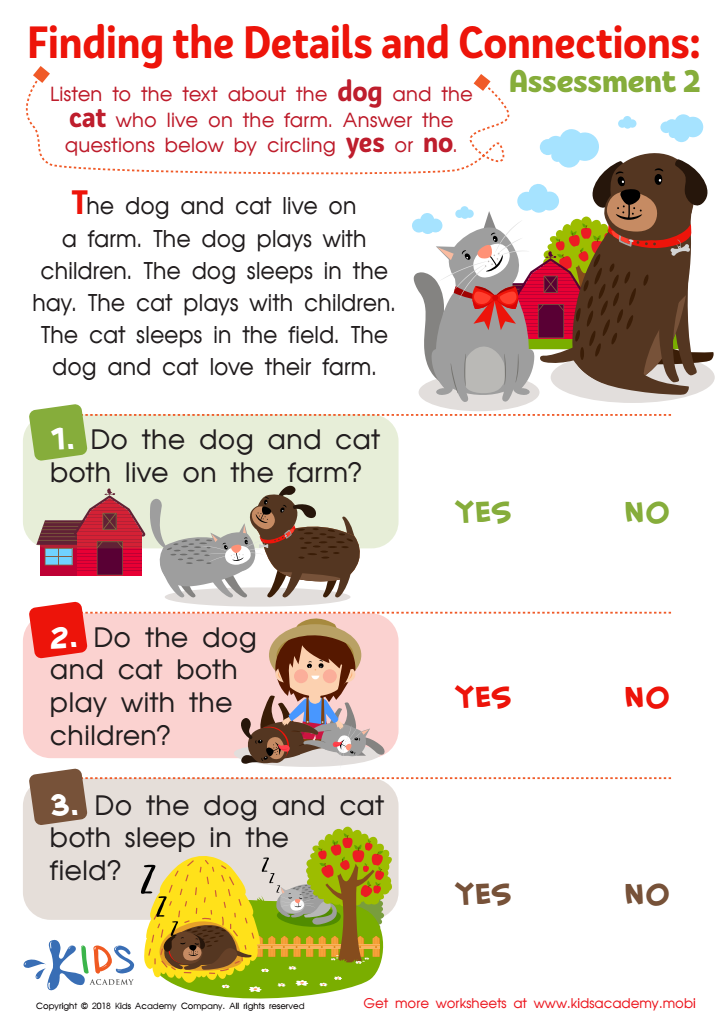
Finding the Details and Connections: Assessment 2 Worksheet
Does your child love animals? If you have pets, they'll relate to the text in this worksheet. Read it aloud to them and help them answer the simple questions by circling yes or no. The story is about a dog and cat living on a farm. Let your child read it aloud to you if they can.
 Assign to My Students
Finding the Details and Connections: Assessment 2 Worksheet
Worksheet
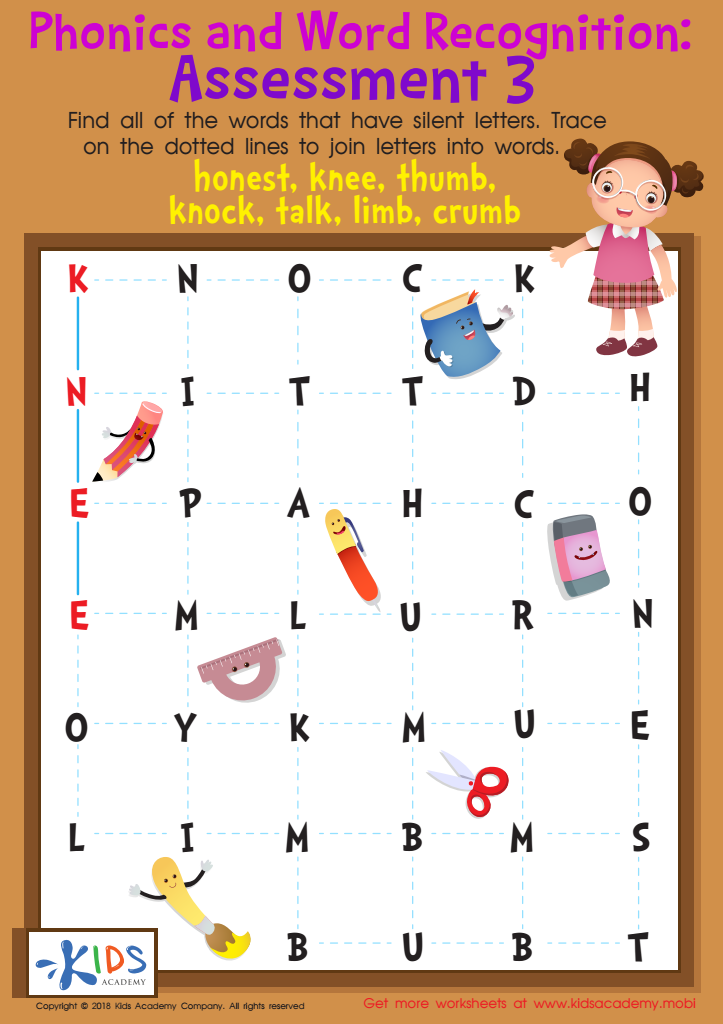
Phonics and Word Recognition: Assessment 3 Worksheet
Silent letters can be tricky for kids learning to read and write. Show them how they work with words like 'knee' and 'dumb'. Then, challenge them to come up with their own. Give them a worksheet with silent letters and trace the lines to join the letters into words.
Phonics and Word Recognition: Assessment 3 Worksheet
Worksheet
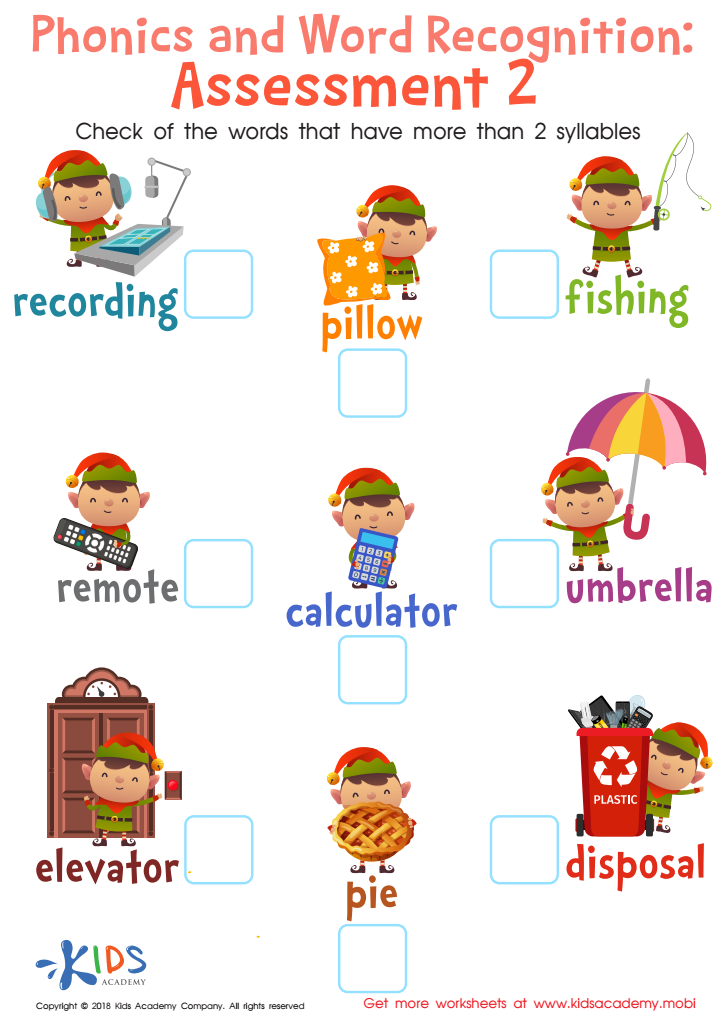
Phonics and Word Recognition: Assessment 2 Worksheet
Help your kids learn proper pronunciation by counting syllables. Most words they'll encounter have 1-3 syllables, making them simple to say. Have them repeat the words in your worksheet after you. Focus on longer words with more than two syllables.
Phonics and Word Recognition: Assessment 2 Worksheet
Worksheet
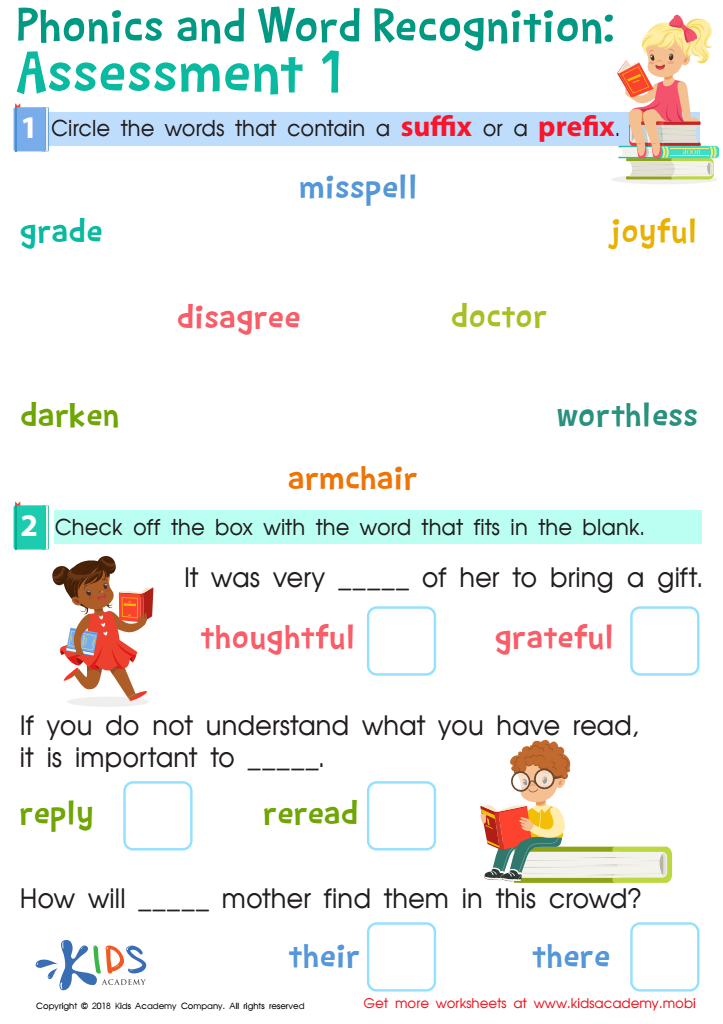
Phonics and Word Recognition: Assessment 1 Worksheet
Explain prefixes (words added to start of another word to give it a new meaning) and suffixes (added to end of word to change its meaning) to your kids with examples like 'unhappy' (prefix) and 'forgetful' (suffix). Now, help your child complete this worksheet, including circling words and checking boxes.
Phonics and Word Recognition: Assessment 1 Worksheet
Worksheet
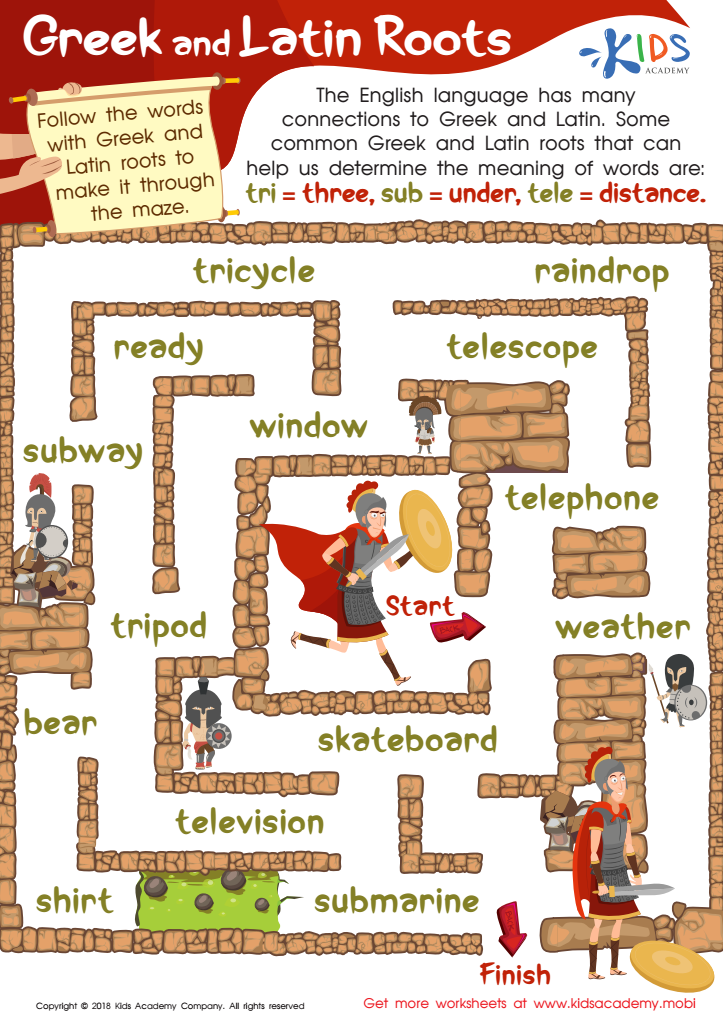
Greek and Latin Roots Worksheet
English borrows lots of words from other languages, and it has many ties to Greek and Latin. For example, 'tri', 'sub' and 'tele' (all from Greek and Latin) mean 'three', 'under' and 'distance' respectively. Help your child understand the meanings of words by having them work through a maze with words from these languages.
Greek and Latin Roots Worksheet
Worksheet
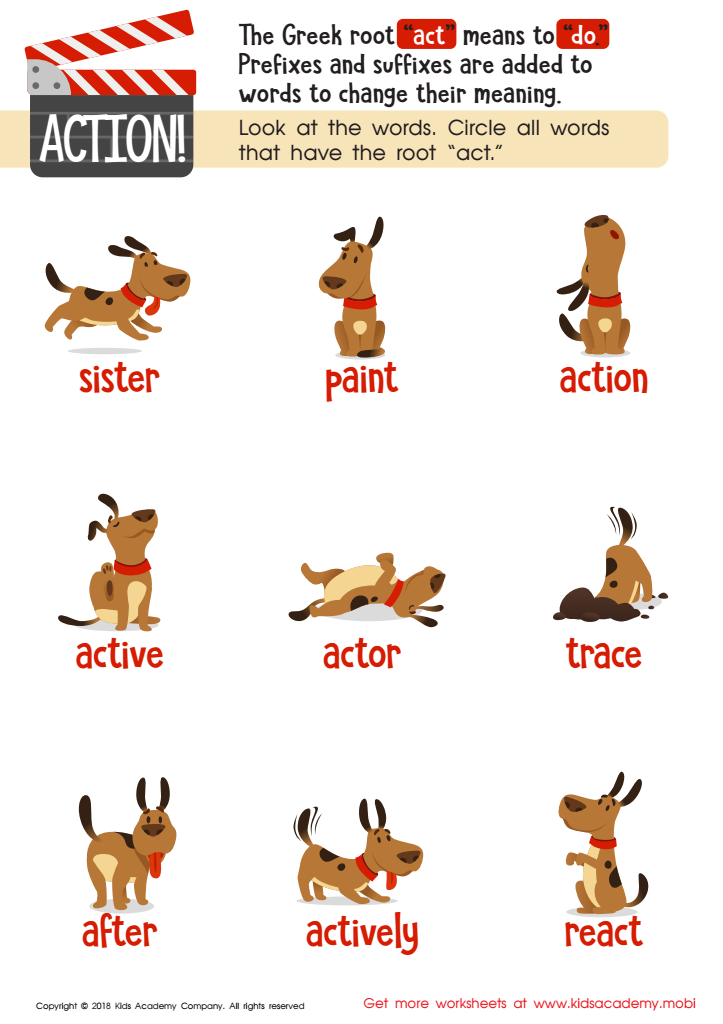
Action! Worksheet
Most English words are borrowed, and prefixes and suffixes are added to change the meaning. A popular prefix is 'act', from the Greek root meaning 'to do'. With your kids, look at the words in this worksheet and circle those with the root 'act'.
Action! Worksheet
Worksheet
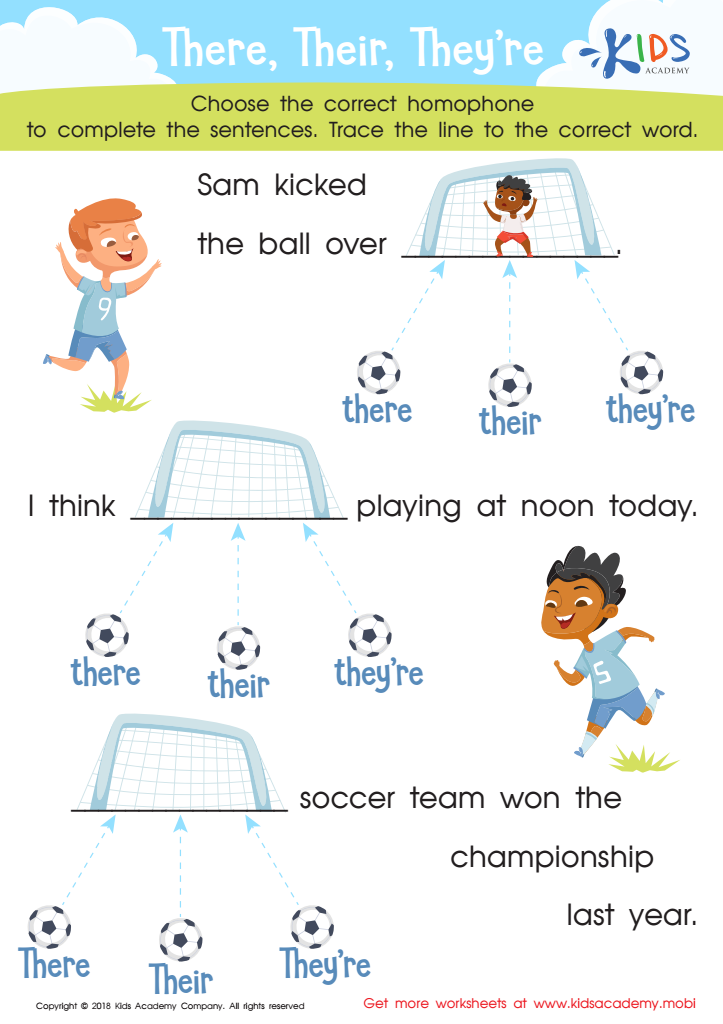
There, Their, They're Worksheet
Explain to your kids the difference between 'there', 'their' and 'they're'. These three words are homophones - spelt similarly but with different meanings. Help them choose the correct homophones when completing sentences, and trace the line to the right word.
There, Their, They're Worksheet
Worksheet
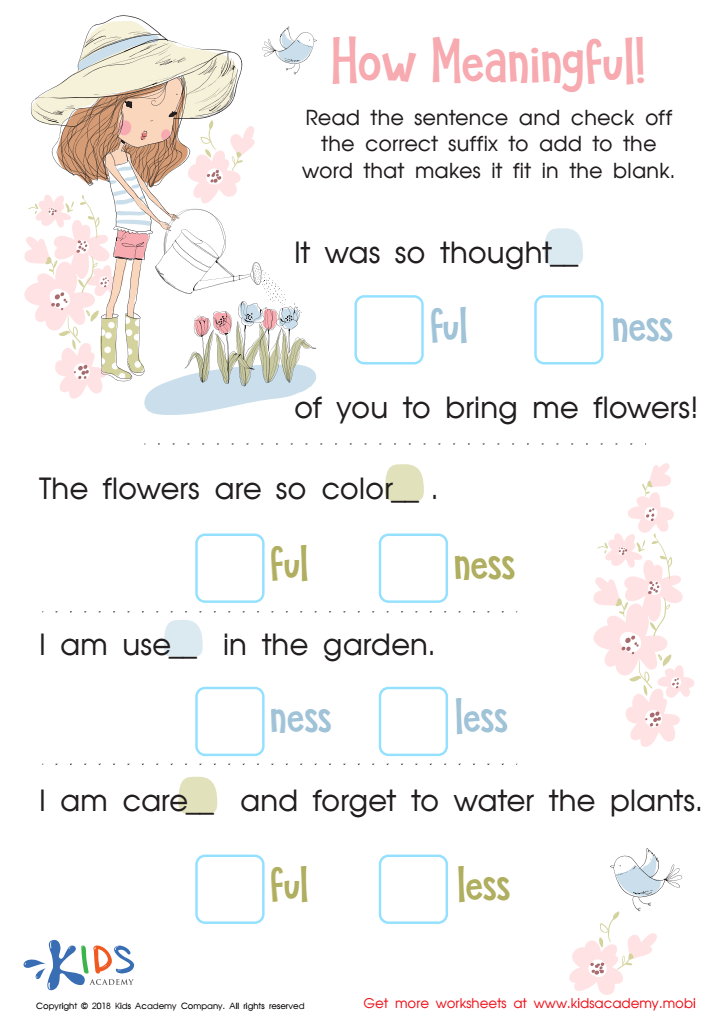
How Meaningful! Worksheet
'Meaningful' is used to describe something that carries importance to someone else. For example, calling friends on their birthdays. The suffix -ful can also be added to other words to create new meanings; try this with your kids and help them check the correct suffix to complete the sentence.
How Meaningful! Worksheet
Worksheet
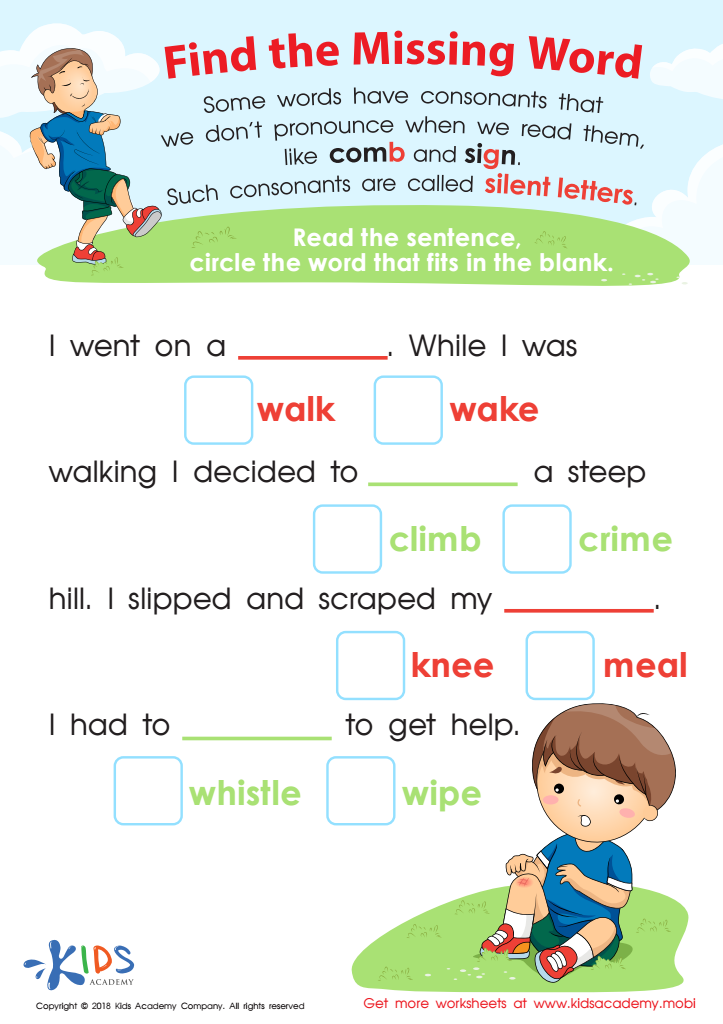
Find The Missing Word Worksheet
Master silent letters like "b" and "k" with this illustrated worksheet! Read the sentences and fill in the blanks with the correct word, checking the box. Read all the way to the bottom and review words containing silent letters. A great way to help your little learner tackle a tough topic!
Find The Missing Word Worksheet
Worksheet
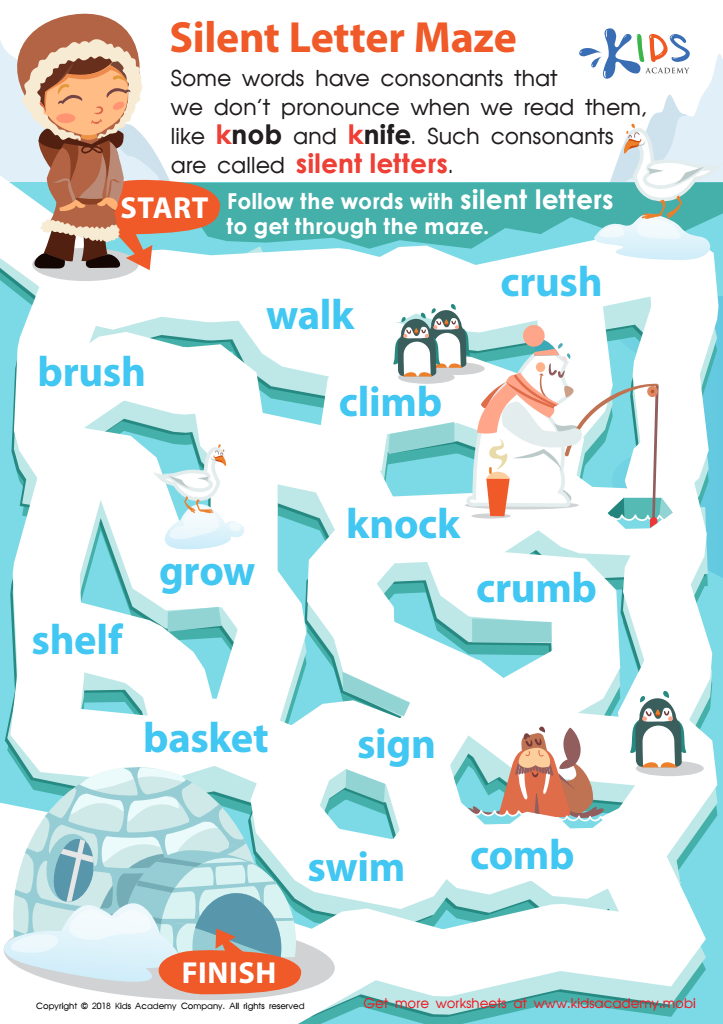
Silent Letter Maze Worksheet
Learning to read can be tricky, especially with words with irregular pronunciations. Explain to your child that some words have consonants we do not pronounce when reading. Ask them for examples like 'knife' and 'knob'. These consonants are called silent letters. Download this pdf to practice words with silent letters and complete the maze.
Silent Letter Maze Worksheet
Worksheet
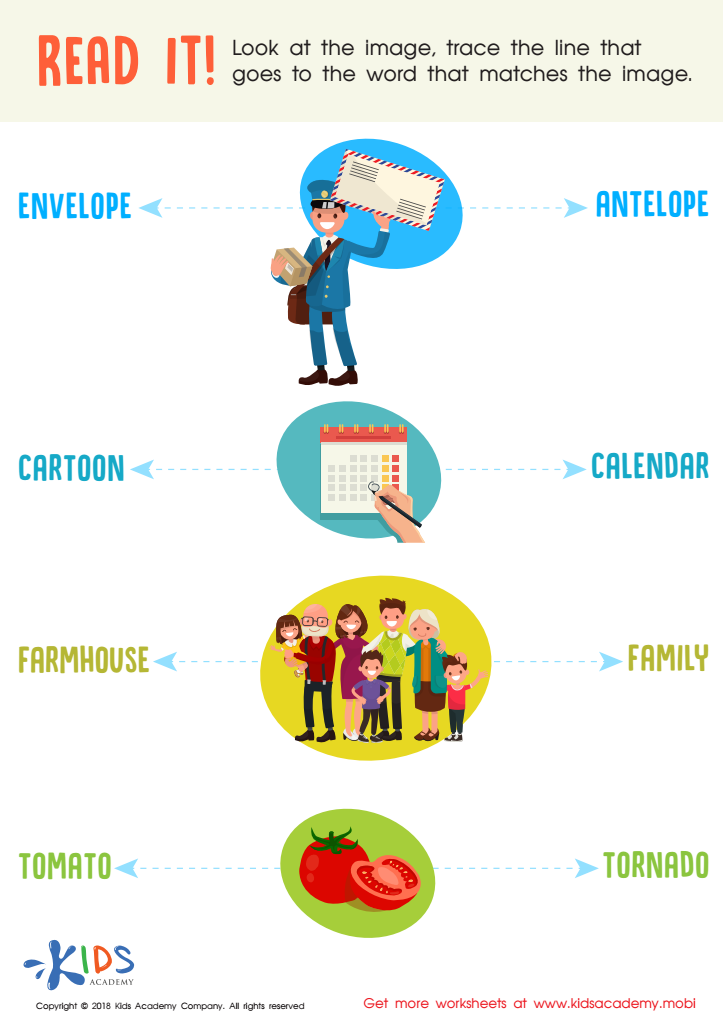
Read It! Worksheet
Point to each image on this worksheet, asking your child what it is. Read the 2 options then help your child trace the line to the correct word. It'll keep them engaged and provide visual stimulation.
Read It! Worksheet
Worksheet
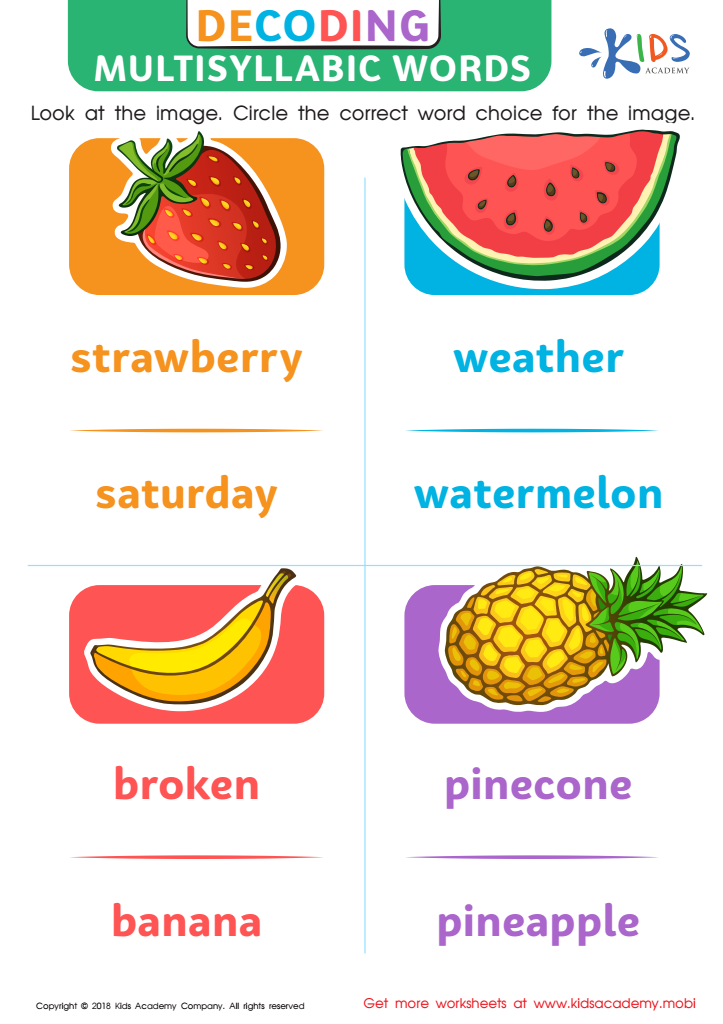
Decoding Multisyllabic Words Worksheet
Ask your kids what their favorite fruits are. Show them the 4 images and point to each one, asking them what it's called. Help them circle the correct word choice for each one. Fruits are a healthy and delicious way to eat; get your kids to identify them!
Decoding Multisyllabic Words Worksheet
Worksheet
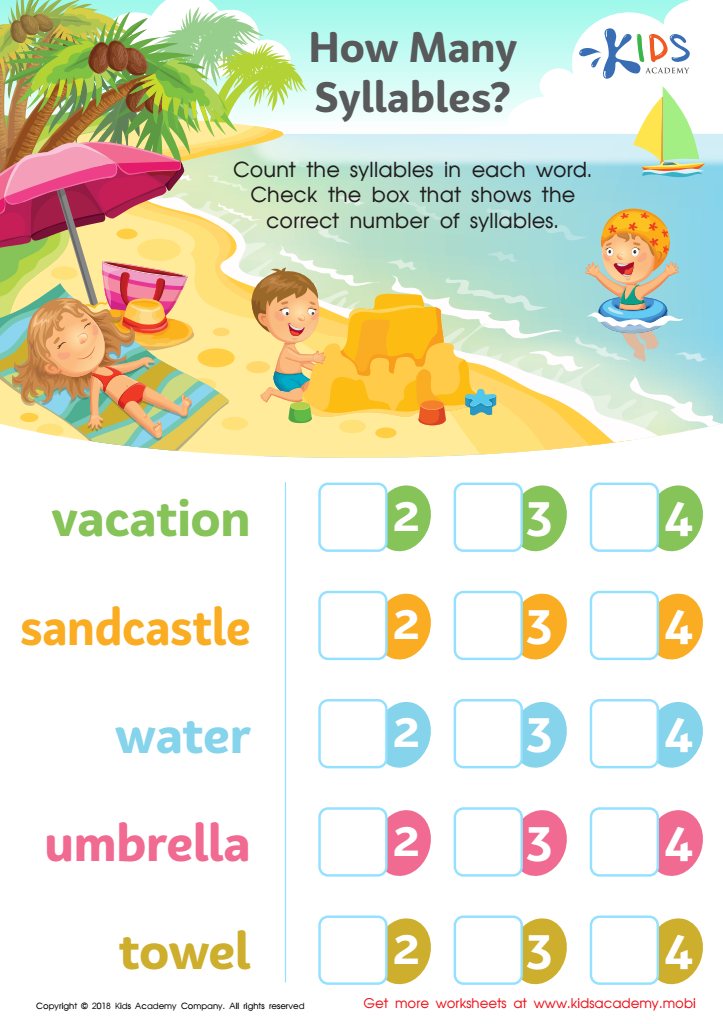
How Many Syllables Worksheet
Draw up memories of sunny beach days with your child. Ask them to tell you their favourite activities, objects seen. Read the words in the picture aloud and help them count the syllables. Then check the box with the right number of syllables.
How Many Syllables Worksheet
Worksheet
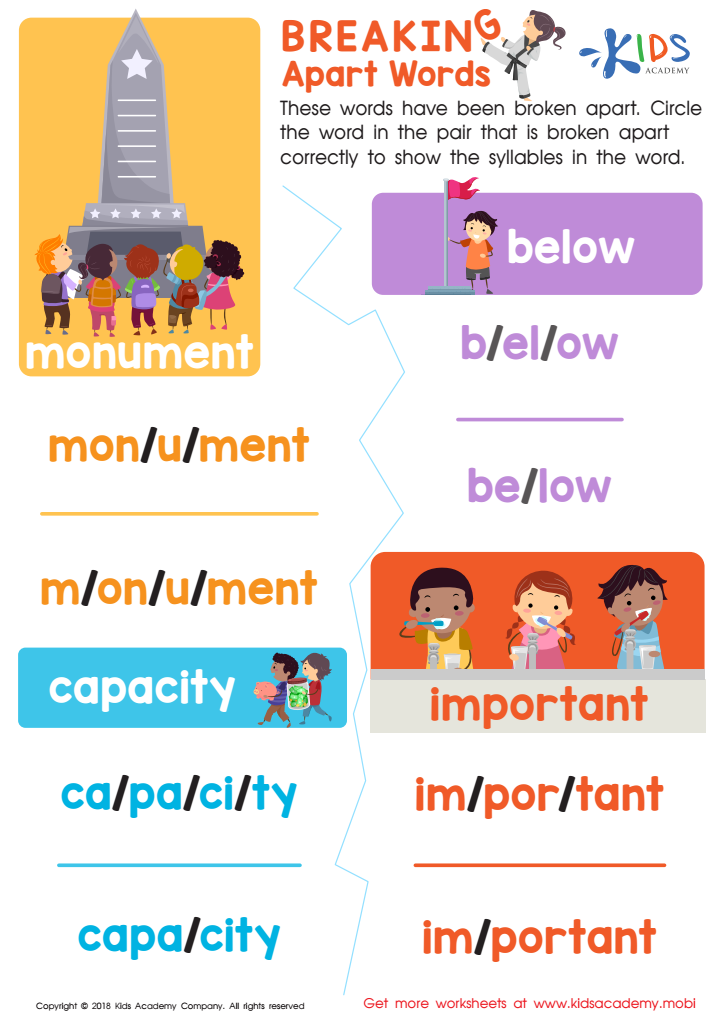
Breaking Apart Words Worksheet
Break words into syllables to make them easier to say correctly. Say each word carefully aloud and get kids to circle the correctly broken apart word in the pair to show the syllables. This worksheet has four words to practice with.
Breaking Apart Words Worksheet
Worksheet
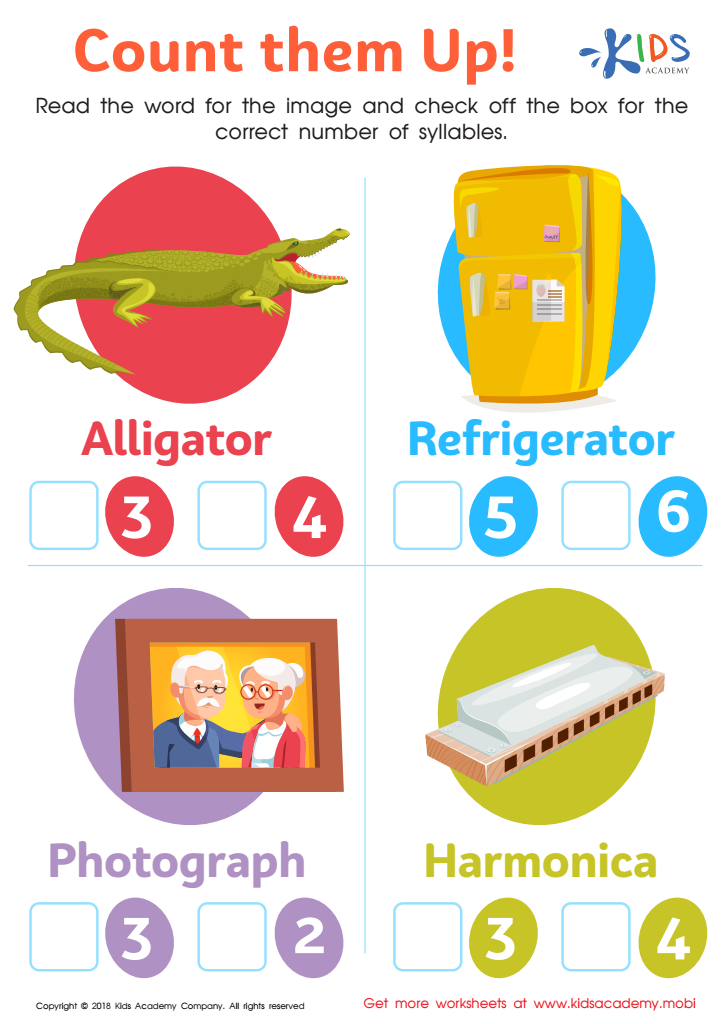
Count Them Up Worksheet
This worksheet has four colorful pictures. Ask your students to identify and name each image, then count the syllables in the word. Make them repeat the word after you, and check off the box with the correct number of syllables. Mastering the art of counting goes beyond numbers. Get your students counting syllables with this activity!
Count Them Up Worksheet
Worksheet
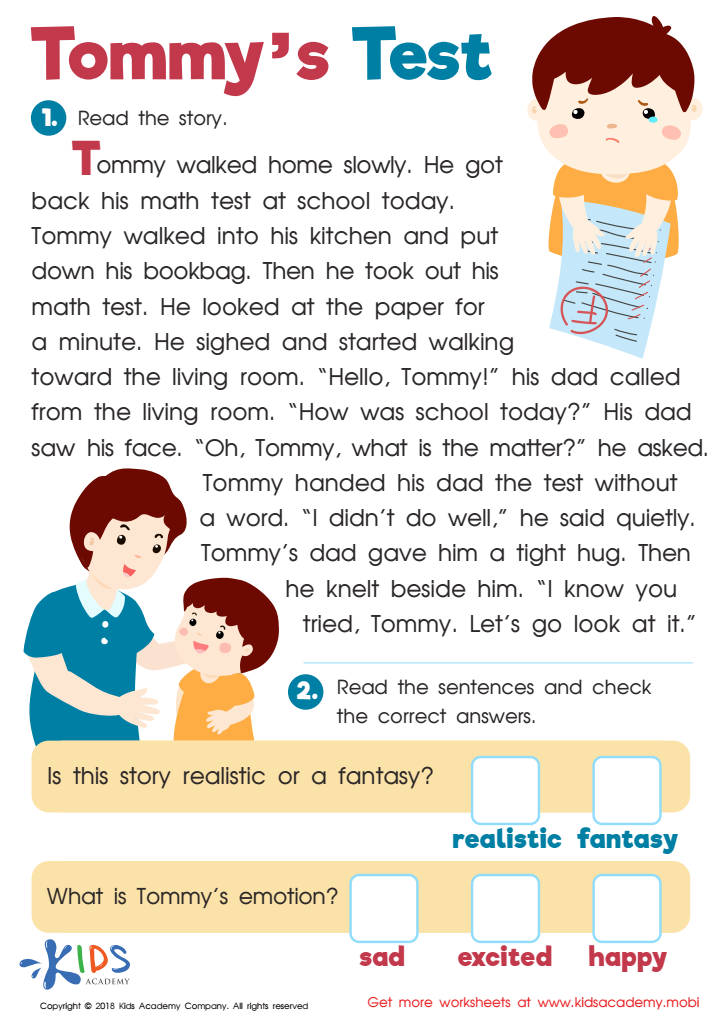
Tommys Test Worksheet
Reading short stories to your students builds a bond, teaches new words and lessons. Read the story aloud and then have them listen for details. Ask them the questions at the bottom and help them check the answers.
Tommys Test Worksheet
Worksheet
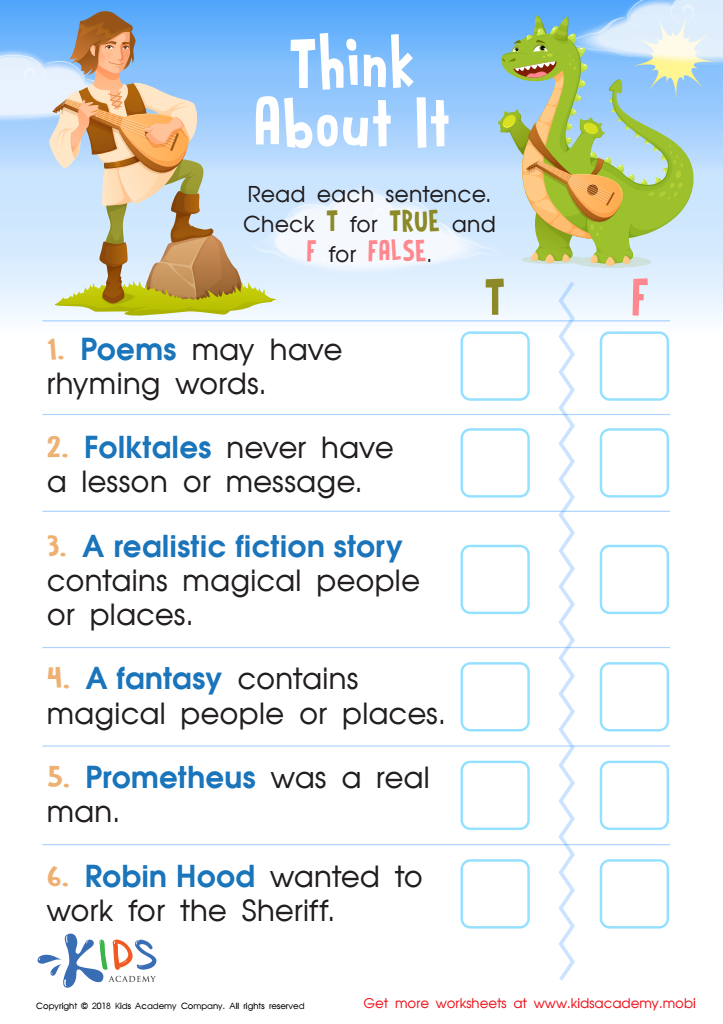
Think About It: Assessment Worksheet
Reading is a fun and important way to learn. Help your students become better readers with this simple yet colorful worksheet. Read each sentence aloud, then have them read it by themselves. Ask them to check T for True and F for False. It's a great way to practice their reading skills!
Think About It: Assessment Worksheet
Worksheet
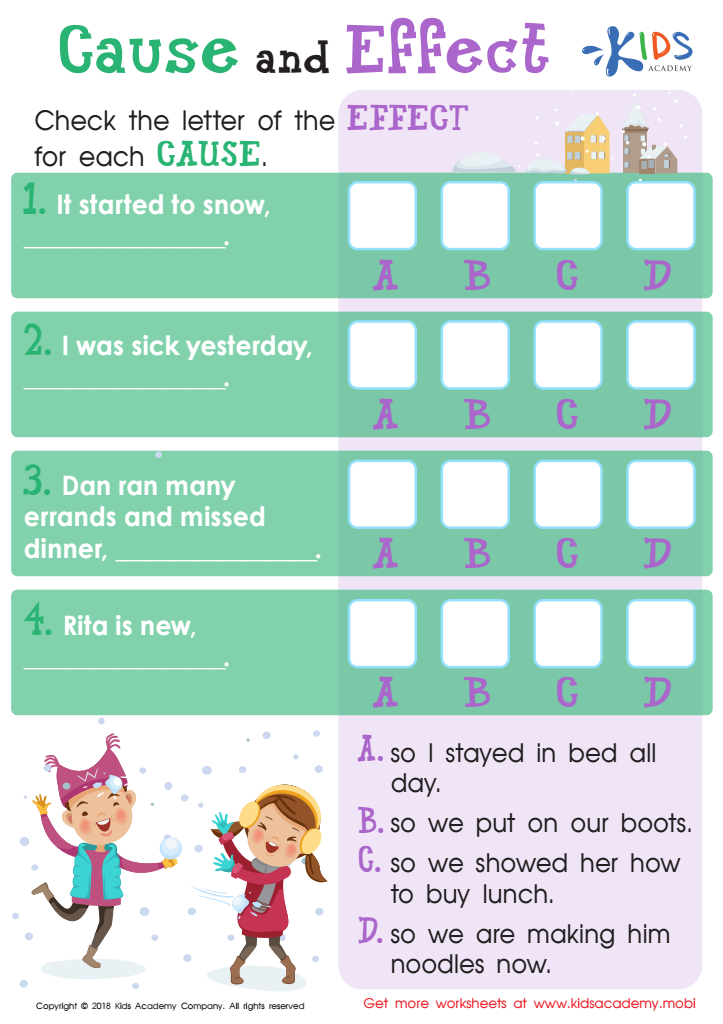
Cause and Effect Worksheet
Help your kids understand the cause-effect relationship of sentences by having them complete this worksheet. There are four incomplete sentences at the top and four options at the bottom. Have them select the appropriate letter for the effect of each cause. This will be the first step to their future of composing grammatically correct and meaningful sentences.
Cause and Effect Worksheet
Worksheet
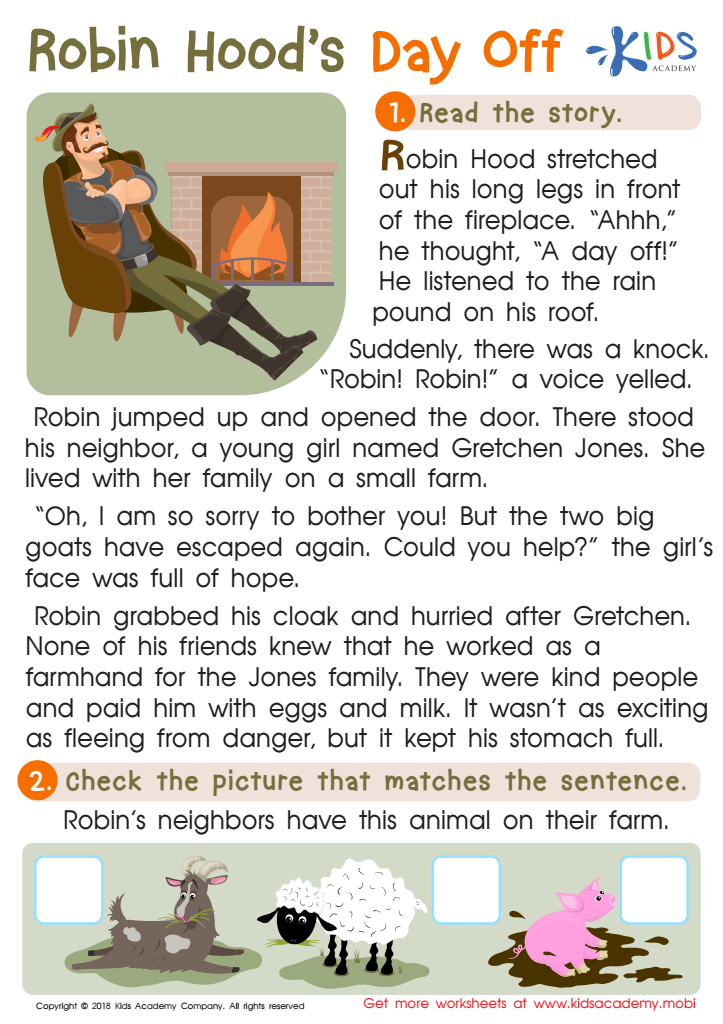
Robin Hood's Day Off Worksheet
Encourage your child to express their personality by writing stories. Show them this worksheet's short story about Robin Hood and read it slowly and carefully. Read it again if needed and ask the question below the story. This will help your child use their knowledge to answer it.
Robin Hood's Day Off Worksheet
Worksheet
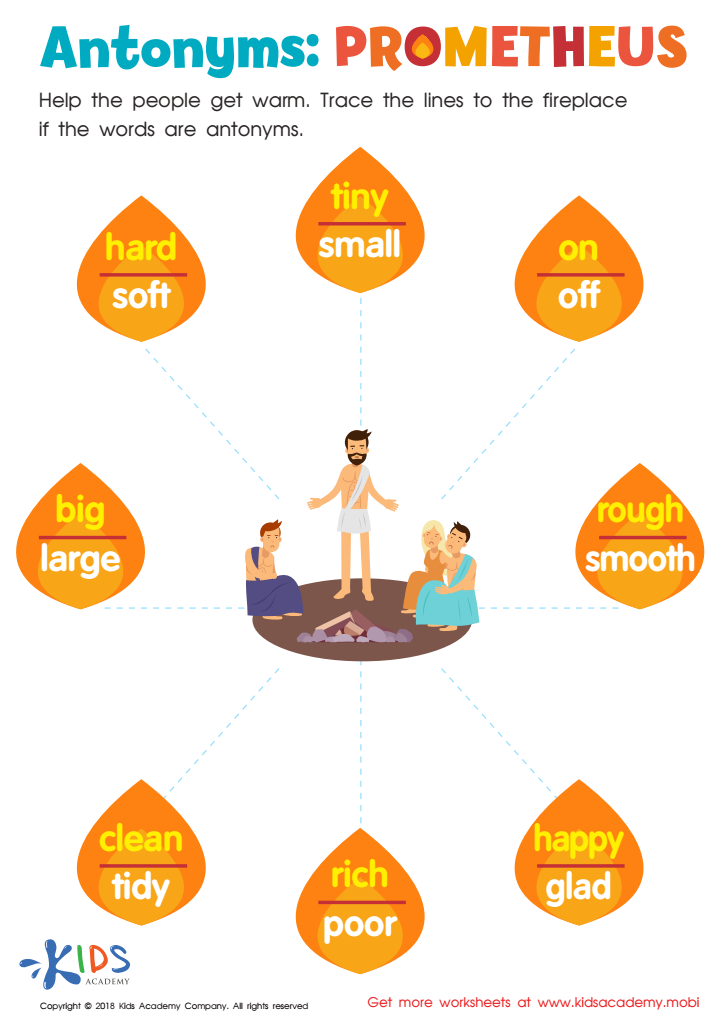
Antonyms: Prometheus Worksheet
Antonyms are words with opposite meanings to another. For example, the antonyms of 'good' are 'bad', 'poor' and 'wicked'. Ask your child to give you antonyms for 'Prometheus', which relates to fire. Invite your kids to trace the lines to the fireplace if the words are antonyms, helping the people in the tracing sheet get warm.
Antonyms: Prometheus Worksheet
Worksheet
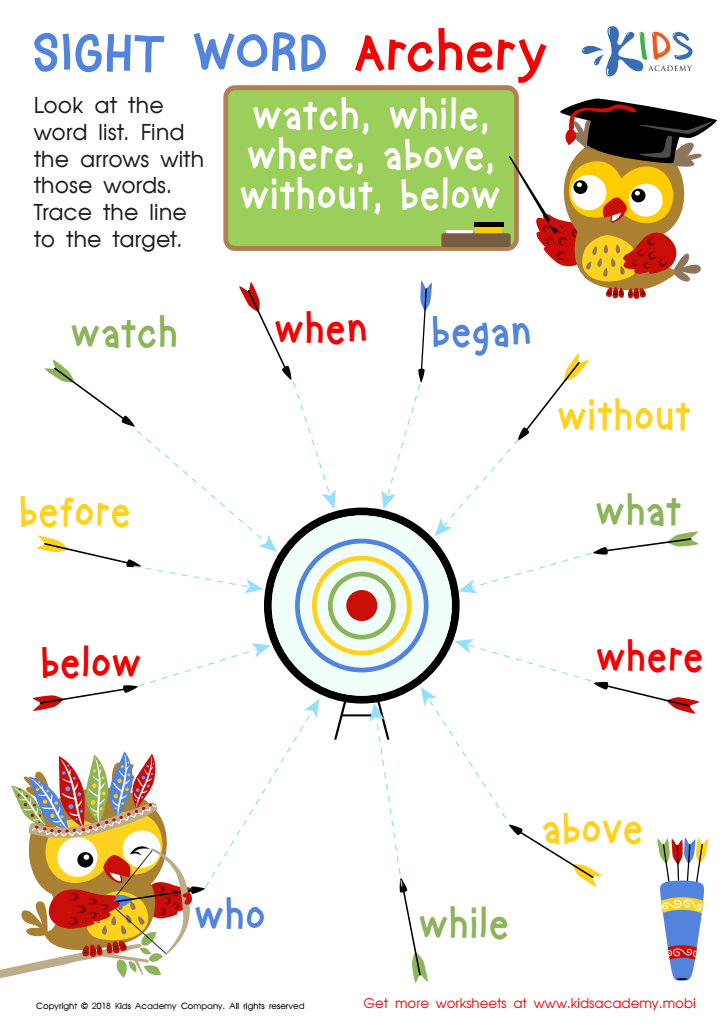
Sight Word Archery Worksheet
Read the words list with your kids, pointing at each one. Ask them to do the same. Help them find the arrows with those words and trace the line to the target in the centre.
Sight Word Archery Worksheet
Worksheet
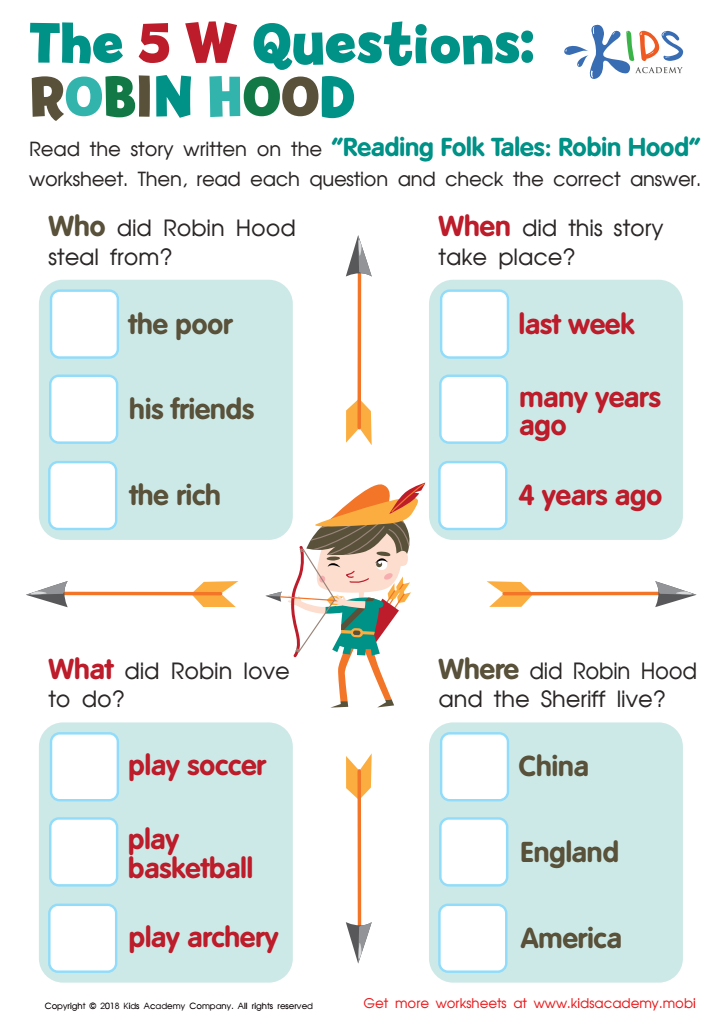
The 5 W Questions: Robin Hood Worksheet
Before embarking on this Robin Hood adventure, ensure your child reads and comprehends the 'Reading Folk Tales: Robin Hood' worksheet. Have them consider the story's lessons, and observe the details. Read the questions and help your kids select the correct answers.
The 5 W Questions: Robin Hood Worksheet
Worksheet
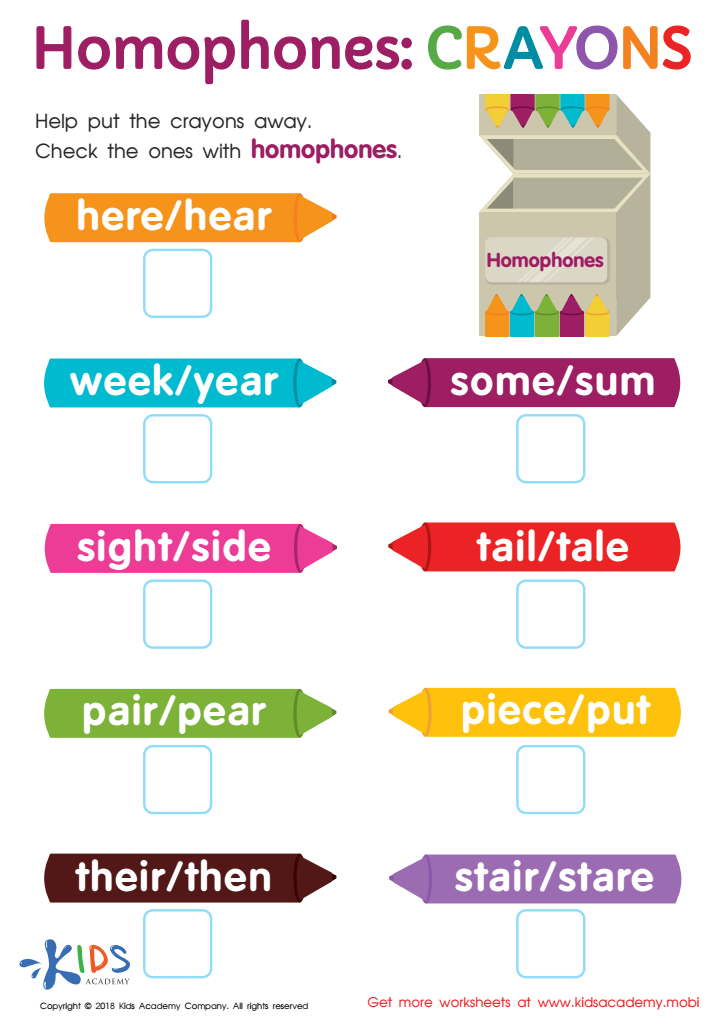
Homophones: Crayons Worksheet
Ask your kids: "What are homophones?" Explain that homophones are words that sound alike but have different meanings, like 'dare' and 'deer'. Ask them to identify homophones by putting the crayons in this printout away according to the words.
Homophones: Crayons Worksheet
Worksheet
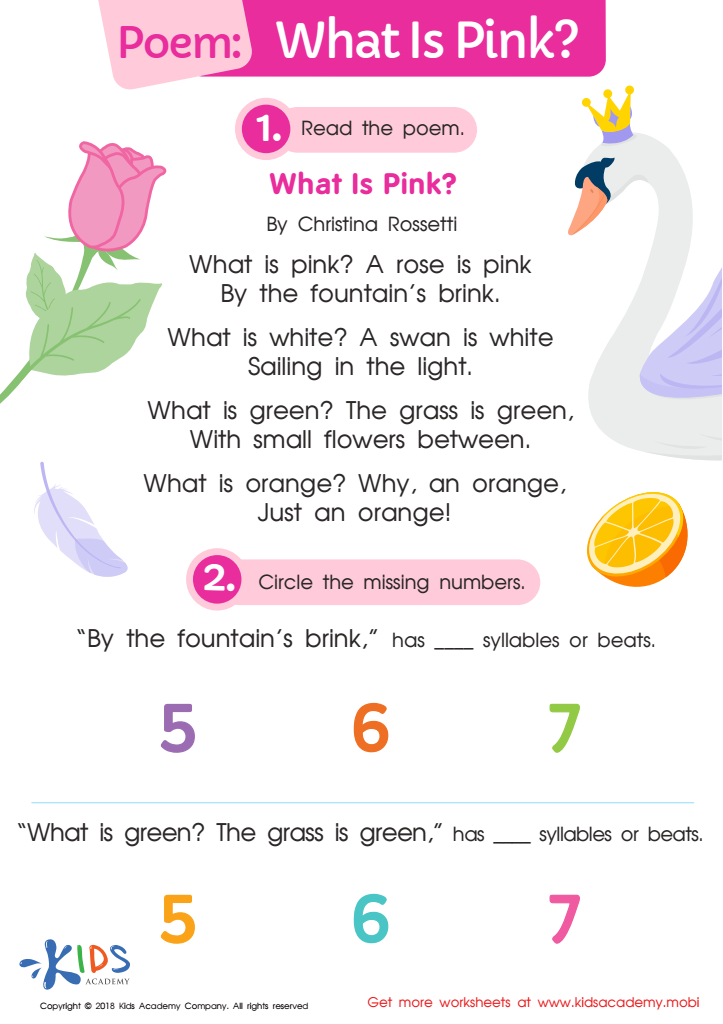
Poem: What Is Pink? Worksheet
Help your kids learn with short, fun, interesting poems! Read it aloud to them and point out the rhyme patterns. Have them circle the missing numbers to answer two questions. Show examples of objects with the colors in the poem. This will help them learn to read, and also understand colors better.
Poem: What Is Pink? Worksheet
Worksheet
Join Kids Academy for Free
Who is primarily going to use this learning content?