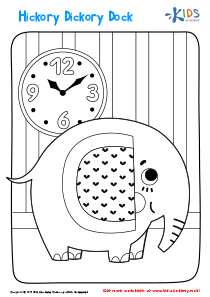
Easy Nursery Rhymes Worksheets for Ages 3-8
4 filtered results
-
From - To
Discover our "Easy Nursery Rhymes Worksheets for Ages 3-8," designed to enhance your child's learning through fun and interactive activities. Perfect for early learners, these worksheets combine the joy of nursery rhymes with essential skills like reading, writing, and fine motor development. Each worksheet includes vibrant illustrations and engaging tasks that make learning enjoyable and effective. Your child will explore classic nursery rhymes while practicing tracing, coloring, and matching exercises, ensuring they absorb key concepts effortlessly. Ideal for home or classroom settings, these worksheets are an excellent resource for building a strong foundation in literacy and creativity. Get started today!
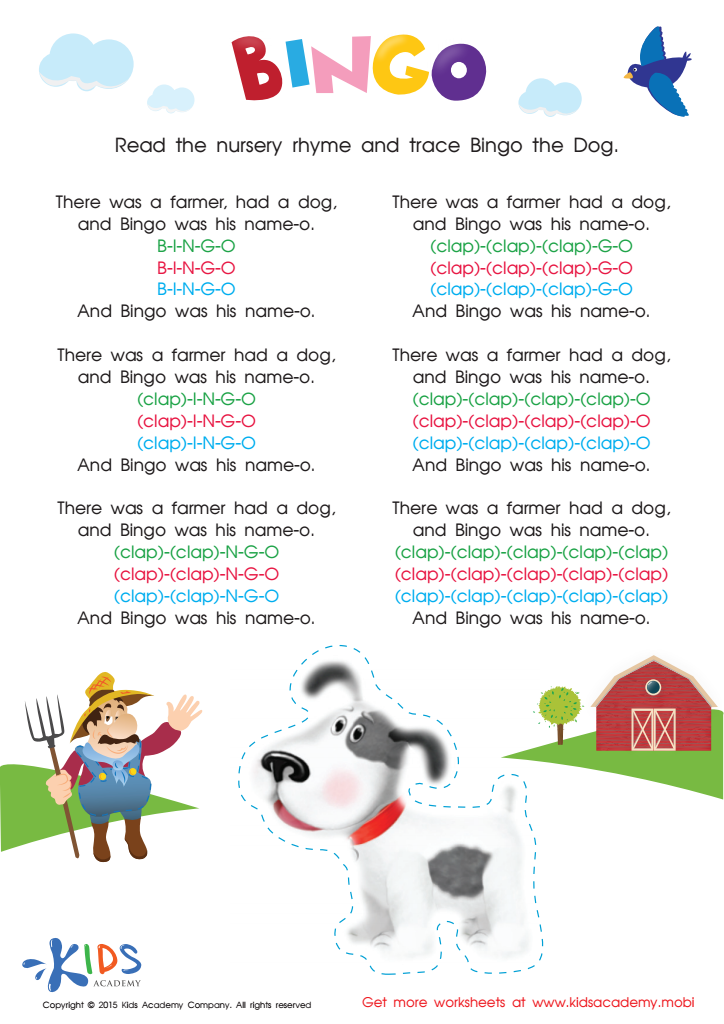
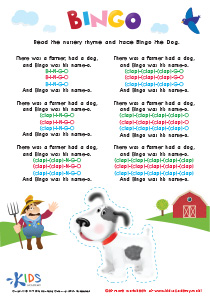
Nursery Rhymes: The Bingo Song Worksheet
 Assign to My Students
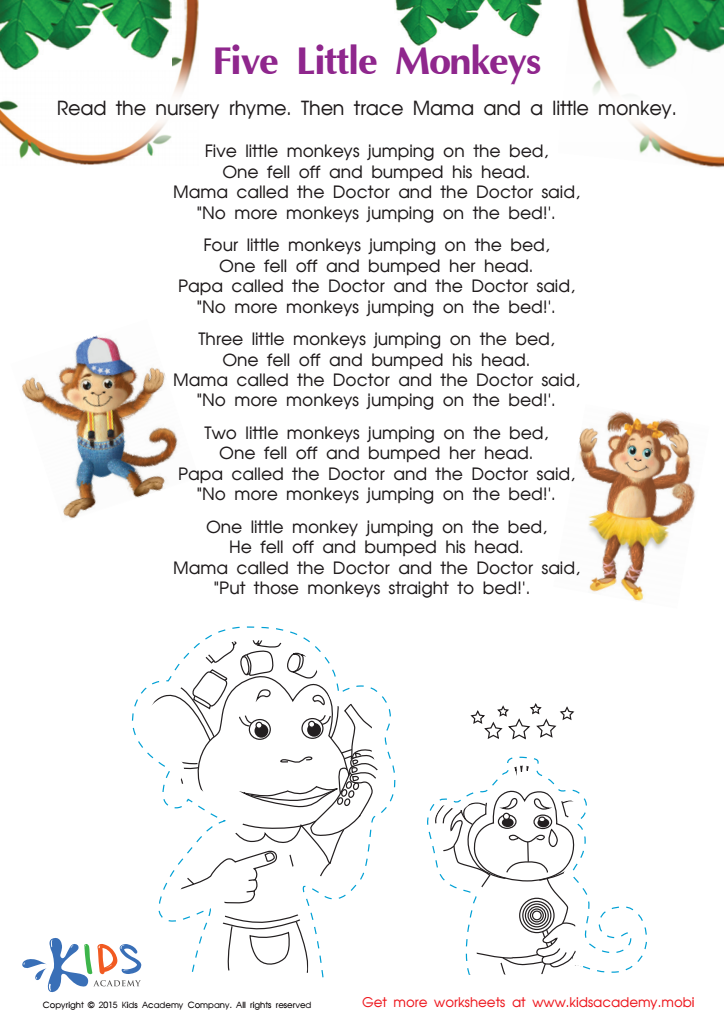
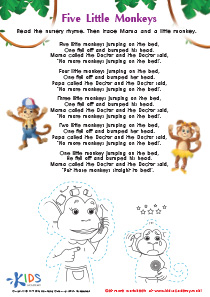
The Five Little Monkeys Nursery Rhyme Worksheet
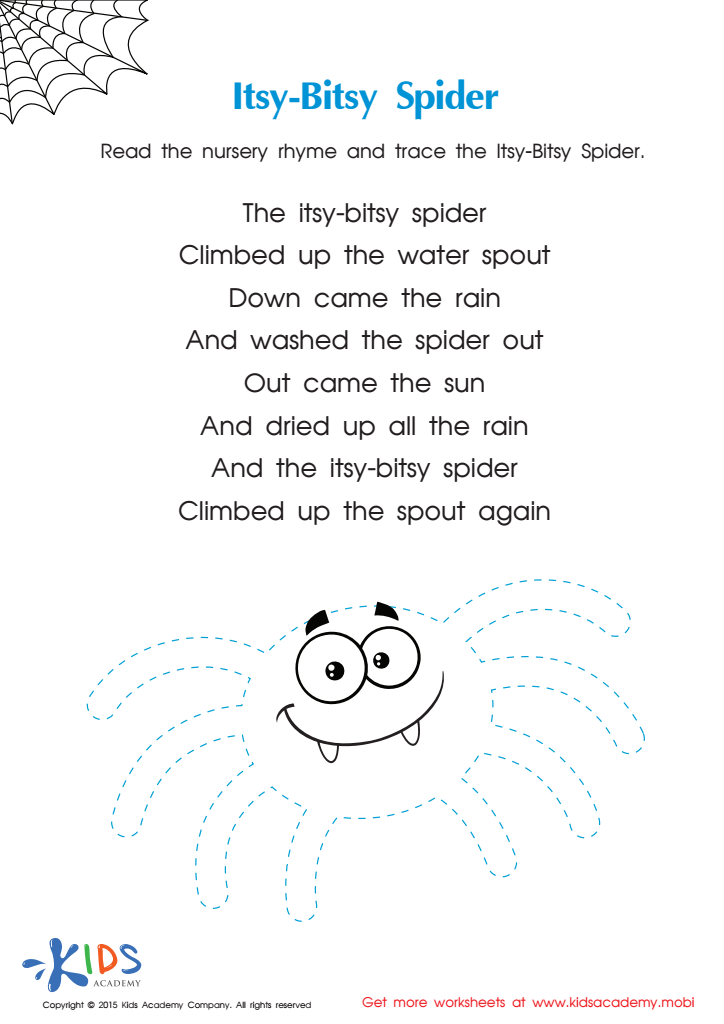
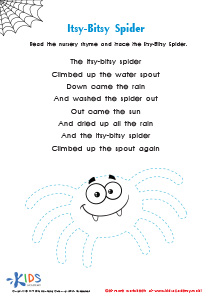
Itsy Bitsy Spider Nursery Rhyme PDF Worksheet
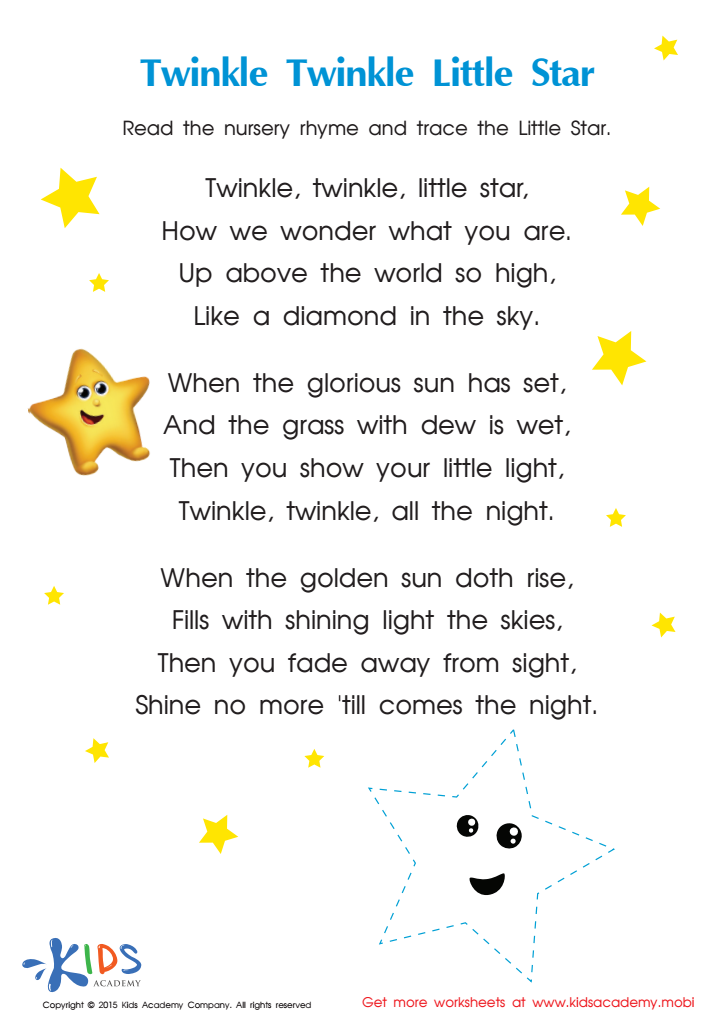
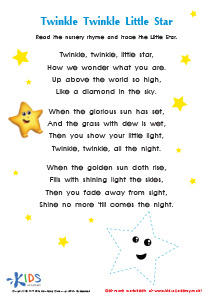
Nursery Rhymes: Twinkle Little Star Worksheet








Parents and teachers should care about Easy Nursery Rhymes for ages 3-8 because they play a vital role in a child's early development. Nursery rhymes enhance language skills, introducing children to rhythm, rhyme, and vocabulary, which are foundational for reading and writing. The repetitive nature of these rhymes helps toddlers and preschoolers in memorization and language recall, creating a fun and engaging learning environment.
Additionally, nursery rhymes stimulate cognitive development by encouraging pattern recognition and critical thinking. They often convey simple stories and morals, enriching children's understanding of emotions and social situations. This can promote empathy and communication skills.
Moreover, sharing nursery rhymes can strengthen the bond between parents, teachers, and children, creating happy, memorable shared moments. Rhymes offer opportunities for interactive play and singing, making learning active and enjoyable.
Lastly, in a diverse world, nursery rhymes often reflect cultural heritage and can be a starting point for conversations about different backgrounds, enhancing cultural awareness and appreciation from a young age. Overall, integrating easy nursery rhymes into daily routines fosters creativity, literacy, and emotional growth, making them an essential resource for nurturing young minds.