Easy Geometry Worksheets for Ages 4-9 - Page 3
52 filtered results
-
From - To
 Assign to My Students











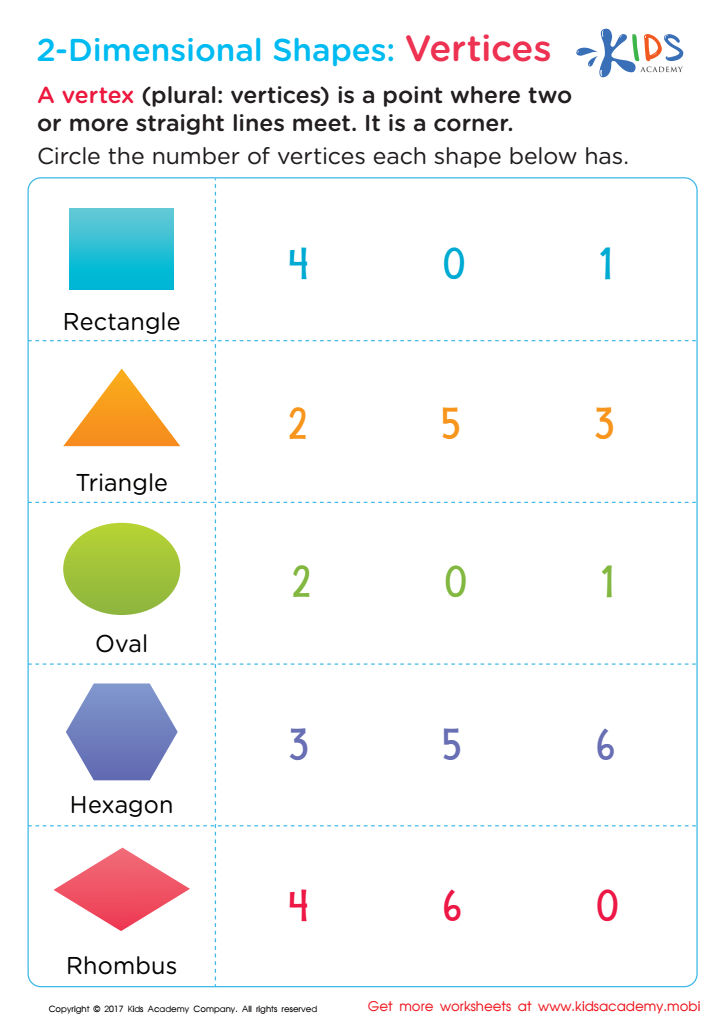
Two–Dimensional Shapes: Vertices Printable
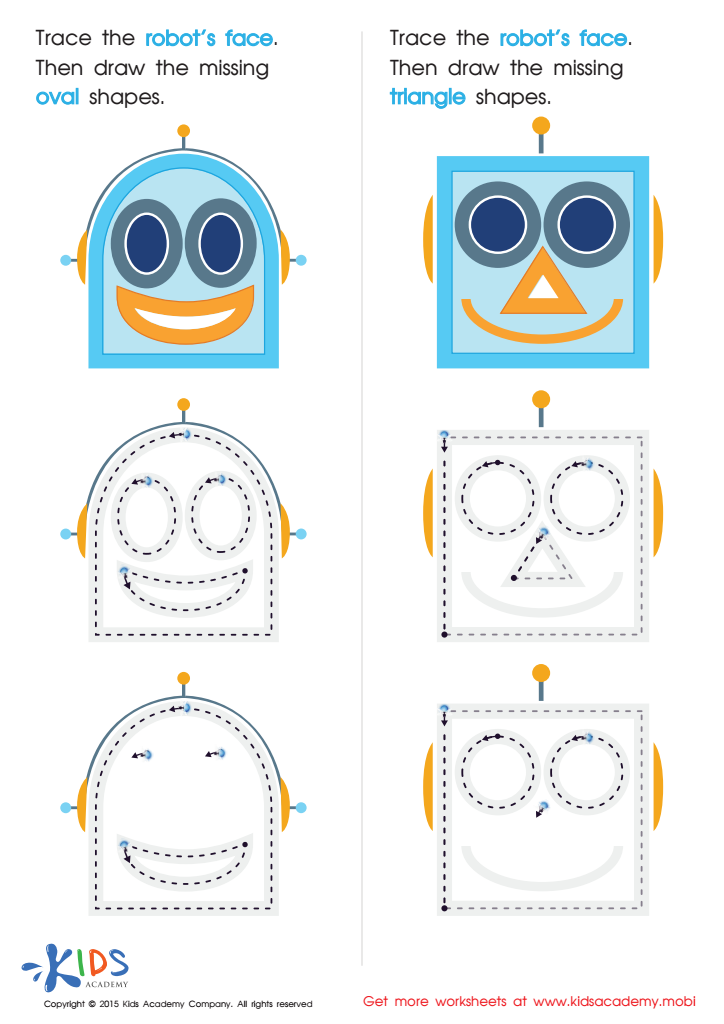
Drawing Ovals And Triangles with Fun Printable
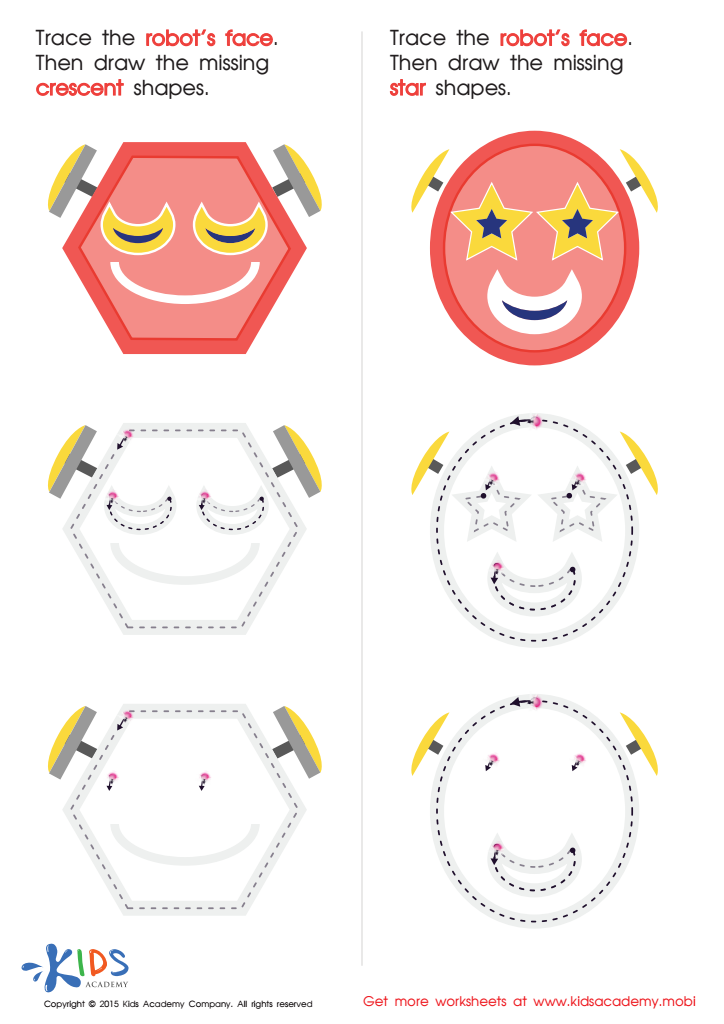
Composing a Robot's Face of Crescents And Stars Worksheet








Introducing Easy Geometry to children ages 4-9 is important for several reasons. Firstly, mathematical concepts underpin everyday life, and familiarity with geometry builds a strong foundational understanding for later math learning. Engaging in basic geometry helps cultivate spatial awareness, critical thinking, and problem-solving abilities. Young children naturally engage with shapes, sizes, and spaces in their environment; structured, easy-to-grasp geometric lessons channel this natural curiosity into meaningful learning experiences.
For parents and teachers, the value lies in fostering a positive and encouraging atmosphere around math from an early age. Presenting geometry in fun, accessible, and varied ways—such as through puzzles, drawing, and hands-on activities—makes math approachable and enjoyable. This proactive approach counters any math anxiety and sets the stage for a more confident attitude towards math as children progress to more complex subjects.
Additionally, early exposure to geometry aids linguistic development. Describing shapes and their properties enhances vocabulary and communication skills, supporting overall cognitive growth. For parents, incorporating geometry into playtime also enables closer interaction with their children’s learning journeys, enhancing their ability to support and reinforce school learning.
Ultimately, early engagement with geometry promotes holistic development—cognitive, linguistic, and emotional—setting children up for academic success and a lifetime of curiosity and problem-solving.








