
Easy Sorting Worksheets for Ages 6-8
3 filtered results
Difficulty Level
Grade
Age
-
From - To
Subject
Activity
Standards
Explore our Easy Sorting Worksheets for Ages 6-8! These engaging activities are designed to help young learners develop crucial math skills through fun, hands-on exercises. Created for children in the early elementary grades, our worksheets focus on enhancing their ability to categorize, compare, and contrast various objects and concepts. With colorful illustrations and interactive tasks, kids will enjoy sorting items by size, shape, color, and more. Perfect for classroom or home use, these worksheets provide a solid foundation for more advanced mathematical thinking. Visit us at Kids Academy to help your child master sorting in an enjoyable and effective way.
Favorites
With answer key
Interactive
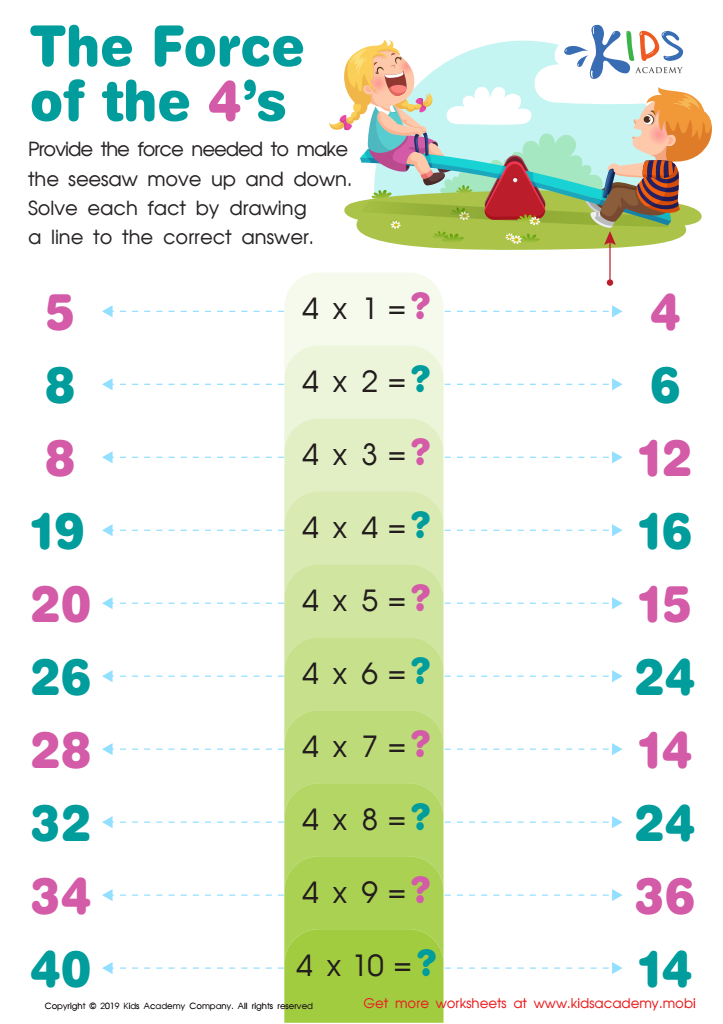
The Force of the 4's Worksheet
Ride a seesaw with your child and explore the physics behind it! Explain how it needs two people and how force makes it go up and down. Use the memories of the pleasurable experience to teach your kid a lesson in force. Show them how to solve the worksheet by drawing a line to the correct answer. This way, they'll learn the force needed for the seesaw to move.
 Assign to My Students
The Force of the 4's Worksheet
Worksheet
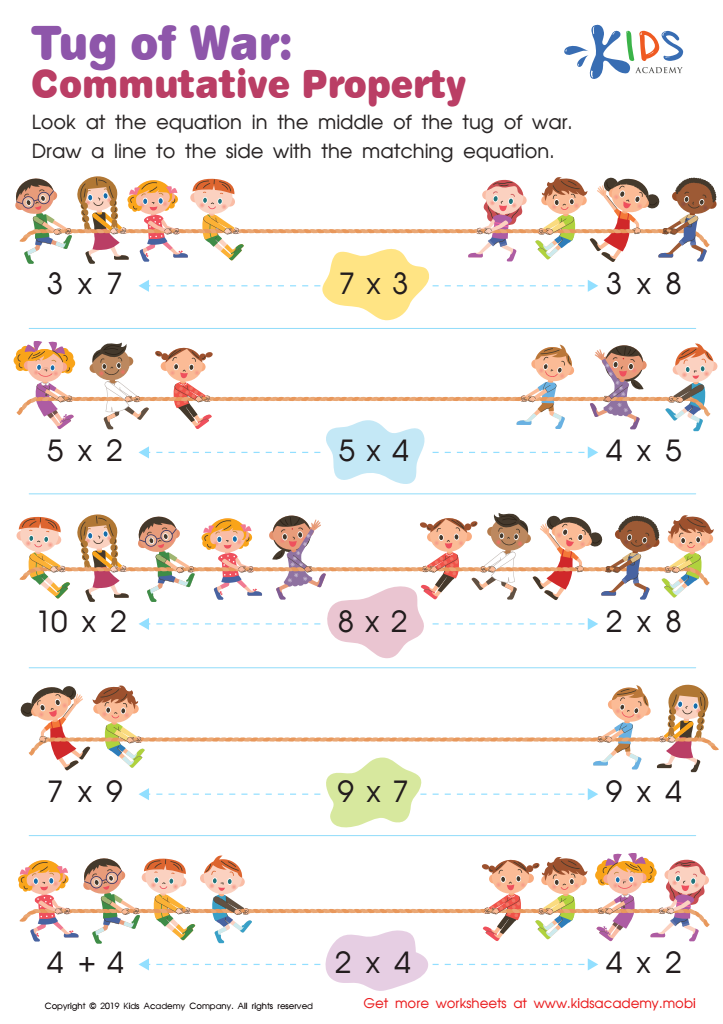
Tug of War: Commutative Property Worksheet
Tug of war is a great game to teach your child simple math. Explain the commutative property--it states that the product remains the same regardless of the order of factors. Use the equations in the middle of the worksheet and have your child draw a line to the corresponding equation. It's a fun and easy way to learn math.
Tug of War: Commutative Property Worksheet
Worksheet
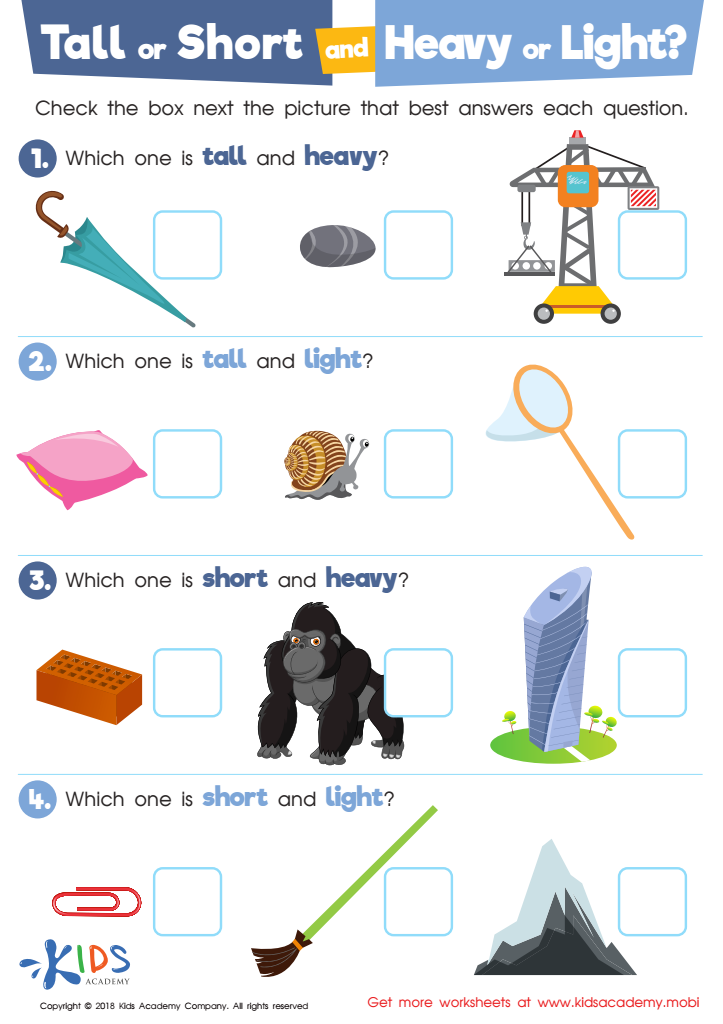
Tall or Short and Heavy or Light? Worksheet
Young children can find basic measurement concepts tricky. This PDF introduces them to the appropriate vocabulary for describing heavy, light, tall and short items, by using familiar pictures. It helps them accurately select which items fit each category.
Tall or Short and Heavy or Light? Worksheet
Worksheet
Join Kids Academy for Free
Who is primarily going to use this learning content?








Parents and teachers should care about easy sorting activities for ages 6-8 because sorting is a foundational cognitive skill that supports development in various key areas. At this age, children's brains are rapidly developing, and engaging them in sorting exercises can hugely benefit their learning trajectory.
Firstly, sorting helps enhance mathematical abilities. By grouping items based on different attributes such as size, shape, color, or category, children begin to understand basic math concepts such as sets, patterns, and beginning arithmetic. This lays a solid groundwork for more complex mathematical operations in later grades.
Secondly, sorting activities foster critical thinking and problem-solving skills. When children sort, they must observe the similarities and differences among objects, make decisions on the criteria for sorting, and adjust as they go along. This process hones their ability to analyze information and make logical choices.
Additionally, sorting contributes to language development. As children describe the categories or explain their sorting process, they expand their vocabulary and improve their verbal communication skills. They learn the names of the objects and the adjectives that describe them.
Moreover, sorting activities can be easily integrated into play, making learning enjoyable. This boosts children's engagement and encourages a love for learning, which is crucial at this stage in their cognitive development.








