Easy Geometry Worksheets for Ages 6-9 - Page 3
51 filtered results
-
From - To
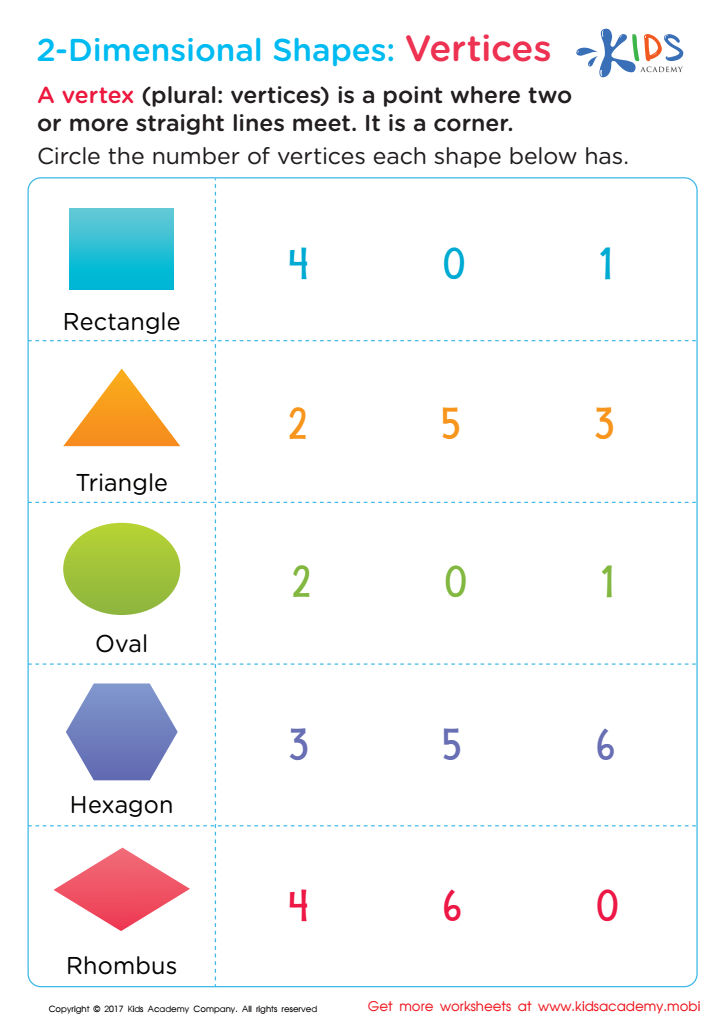
Two–Dimensional Shapes: Vertices Printable
 Assign to My Students











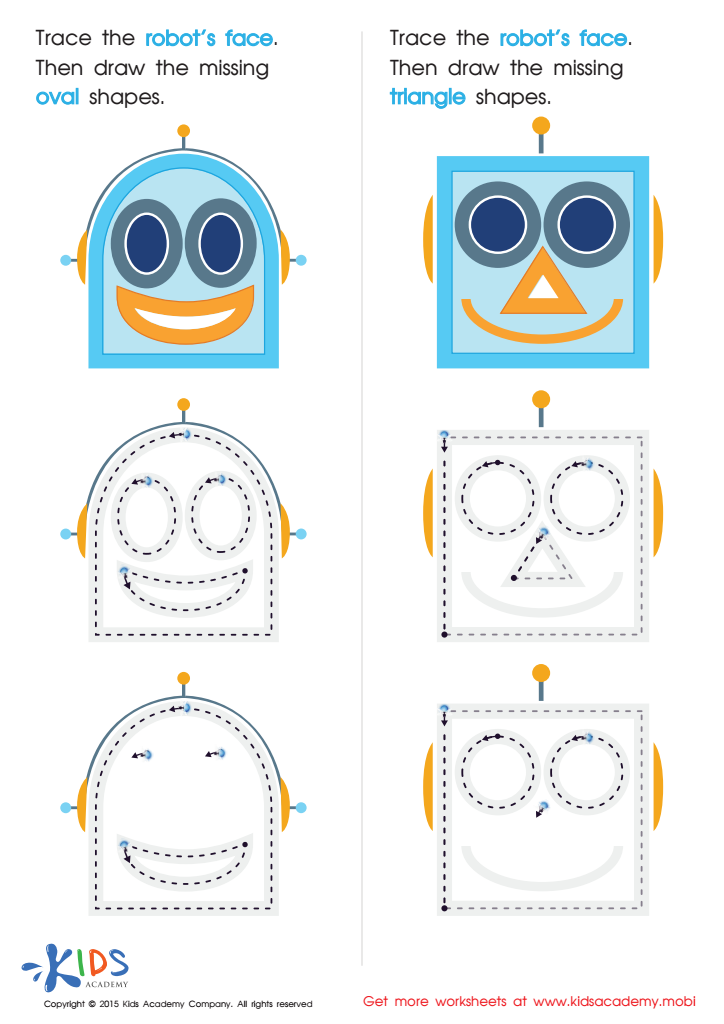
Drawing Ovals And Triangles with Fun Printable
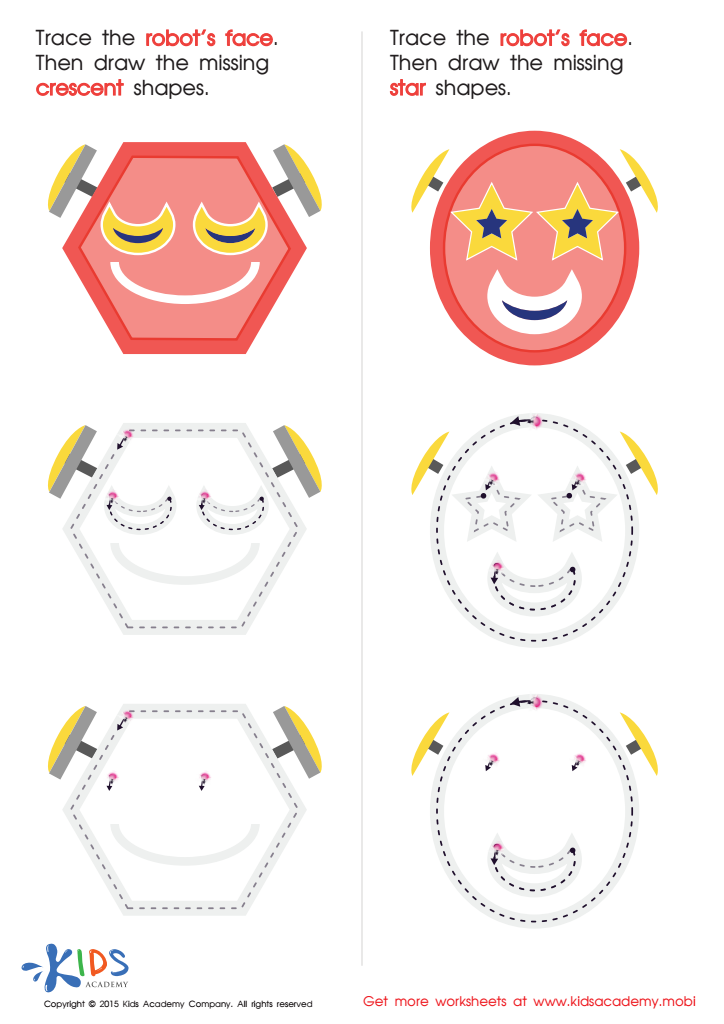
Composing a Robot's Face of Crescents And Stars Worksheet








Easy Geometry for Ages 6-9 is essential for parents and teachers for several reasons. Firstly, this foundational phase of education is crucial for developing mathematical thinking. Geometry, with its focus on shapes, sizes, and spatial understanding, helps young learners build critical reasoning skills, which they will use throughout their academic journey.
Geometry also promotes hands-on learning. Engaging activities such as shape sorting, pattern recognition, and spatial reasoning tasks can enhance a child's curiosity and problem-solving abilities. These activities are not only fun but also help children visualize and understand mathematical concepts in a tangible way.
Moreover, an early introduction to geometry supports STEM learning, which is vital in today’s rapidly evolving world. By nurturing these skills early on, parents and teachers can cultivate a positive attitude toward mathematics, reducing anxiety and raising confidence.
Additionally, mastering geometric principles lays the groundwork for advanced math topics. Understanding basic shapes and spatial relationships provides a vital toolkit for future learning in algebra, calculus, and beyond.
Ultimately, investing time in Easy Geometry is an investment in cognitive development, critical thinking skills, and a child’s overall educational success. It sets the stage for a lifelong appreciation of mathematics and its importance in everyday life.








