Extra Challenge Chess Worksheets for Ages 3-6 - Page 2
37 filtered results
-
From - To
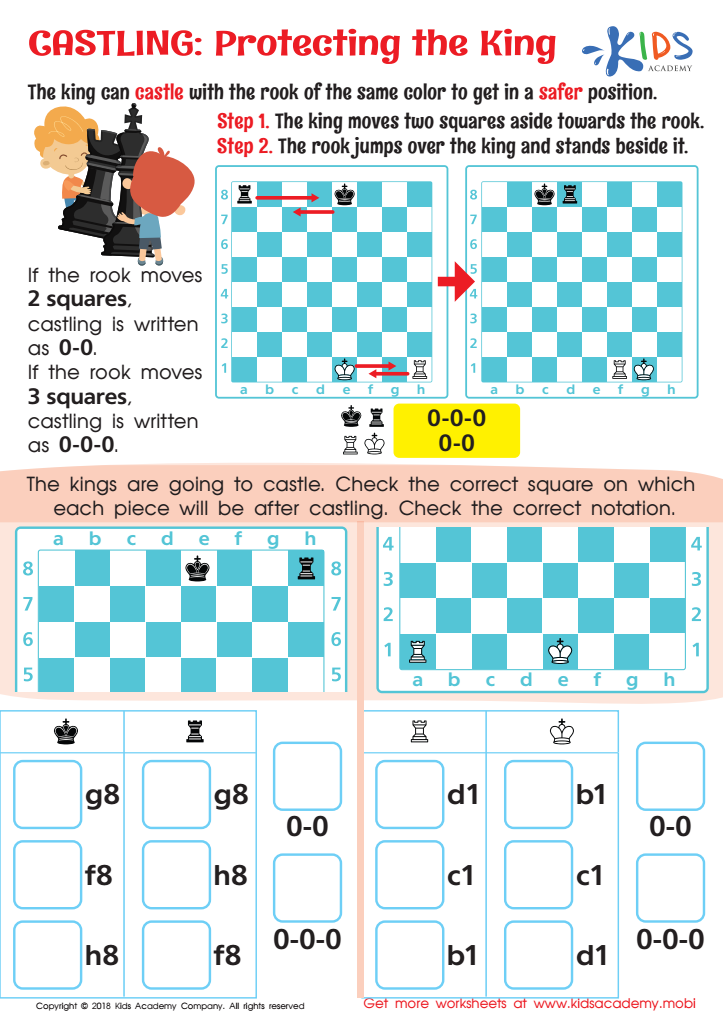
Castling: Protecting the King Worksheet
 Assign to My Students
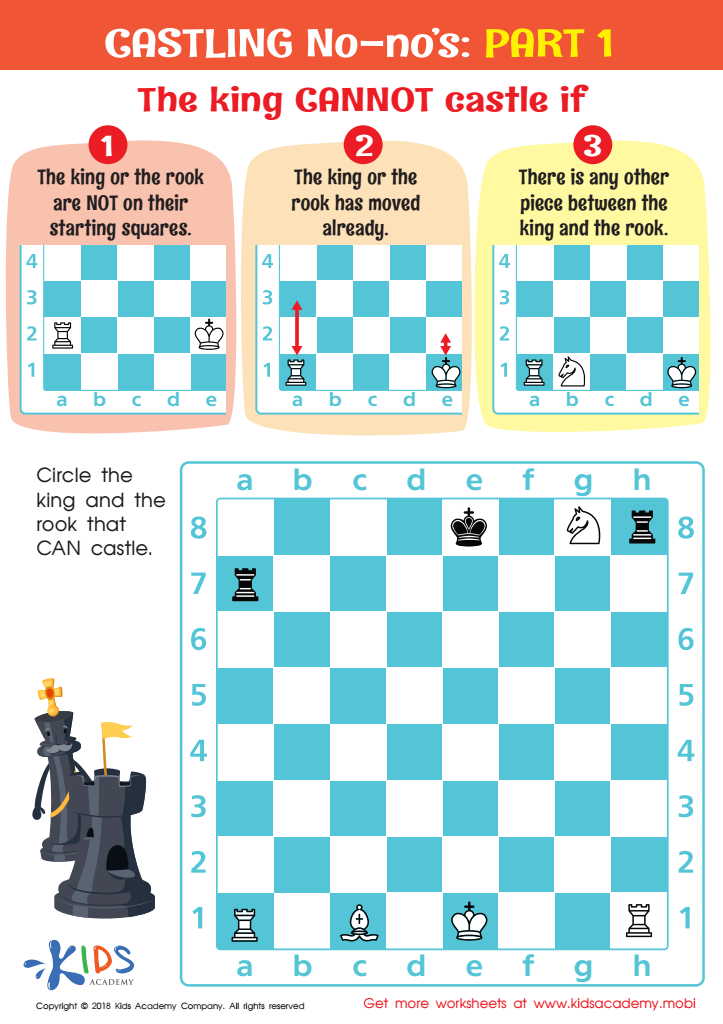
Castling No–no's: Part 1 Worksheet
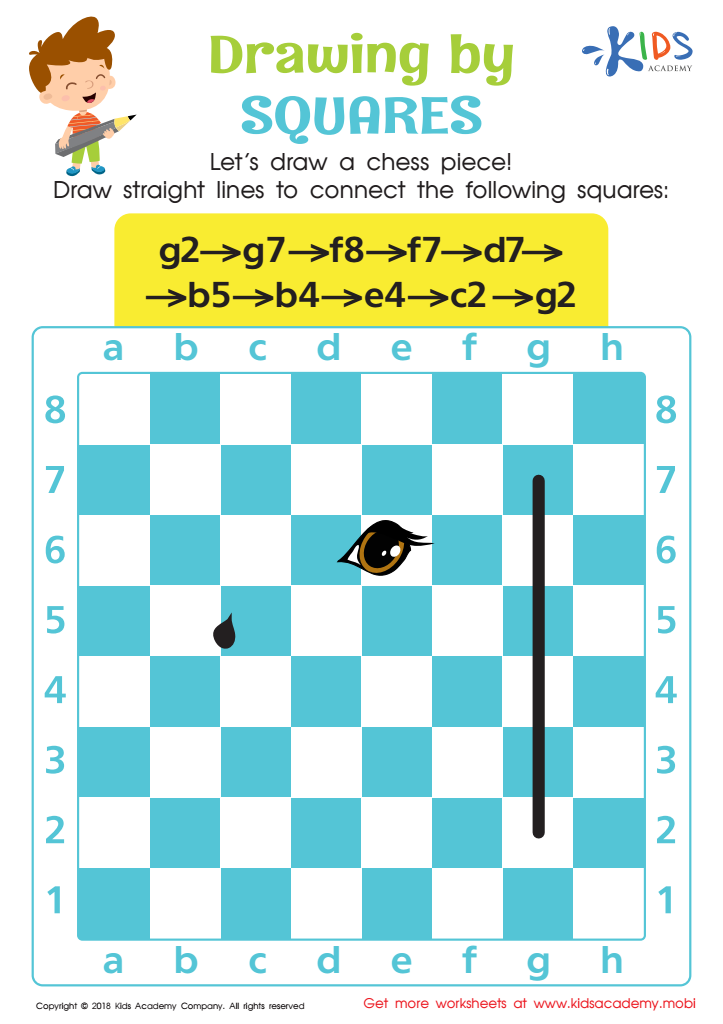
Drawing by Squares Worksheet
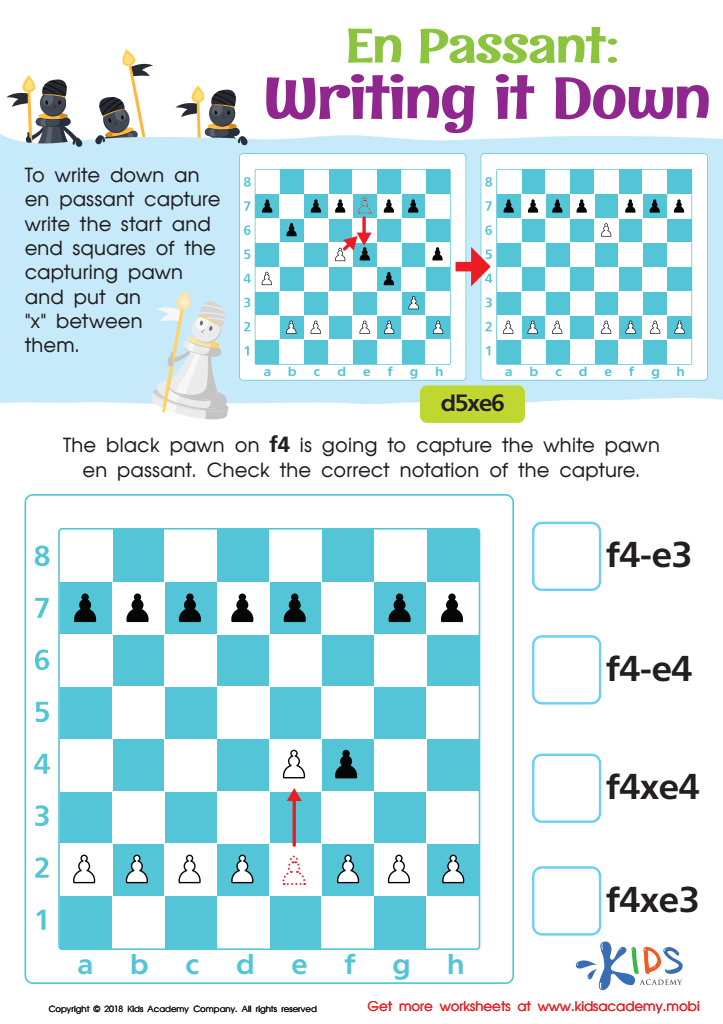
En Passant: Writing it Down Worksheet
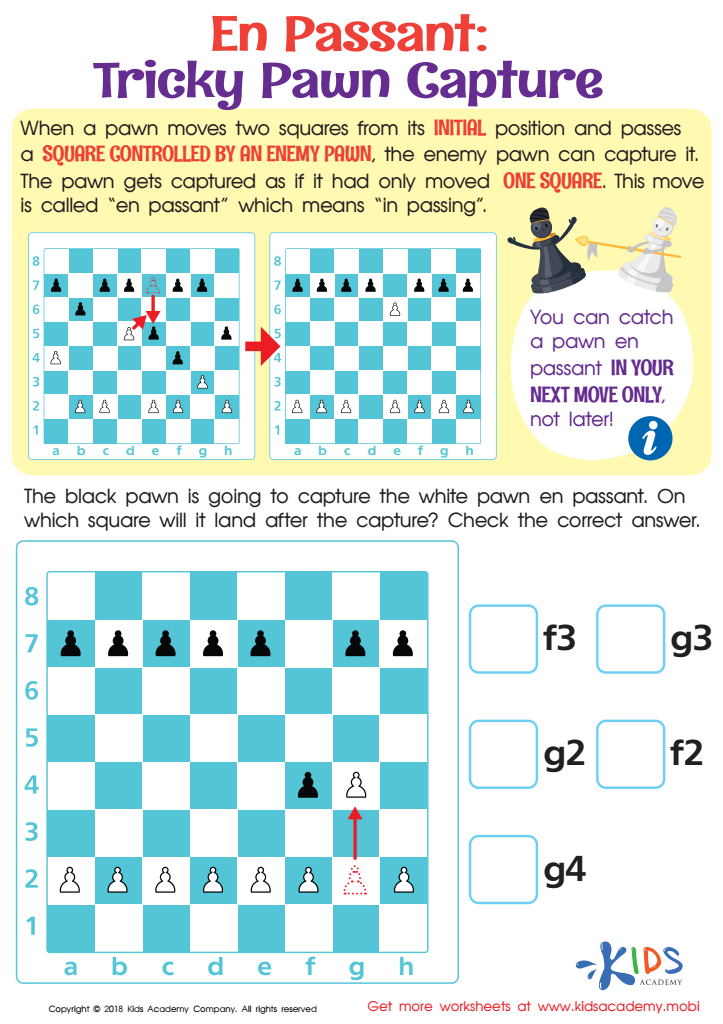
En Passant: Tricky Pawn Capture Worksheet
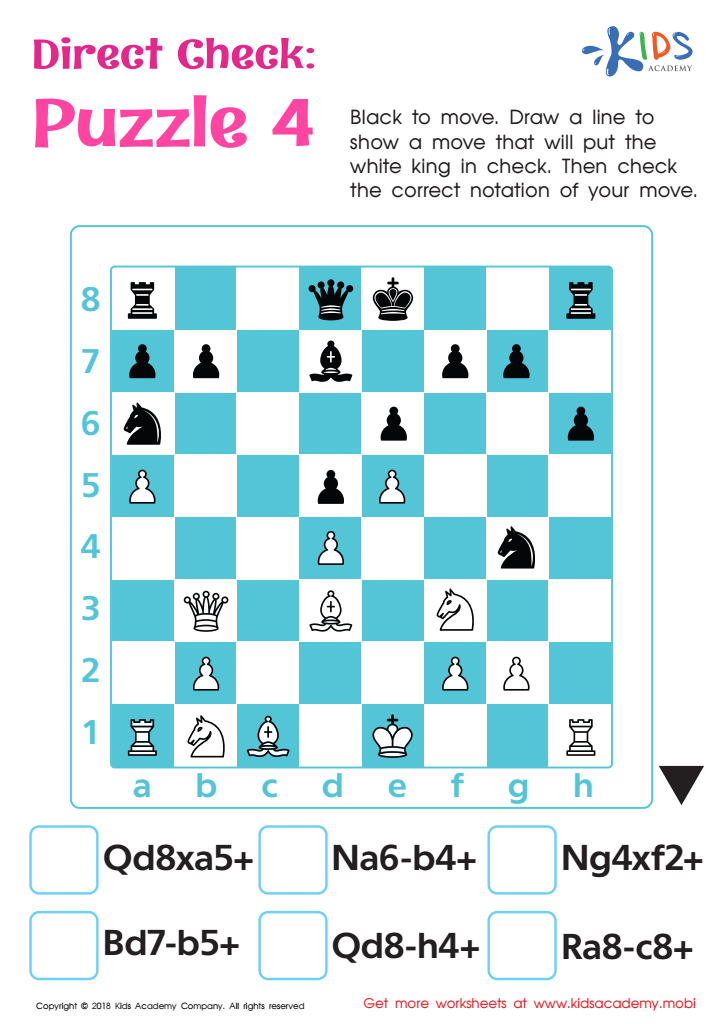
Direct Check: Puzzle 4 Worksheet
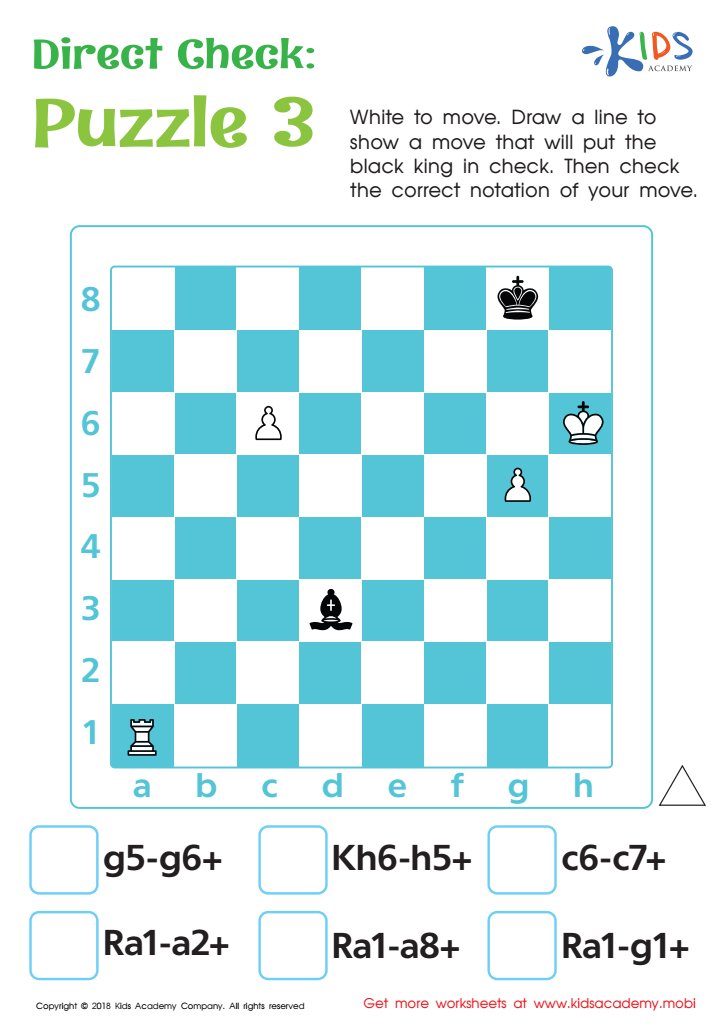
Direct Check: Puzzle 3 Worksheet
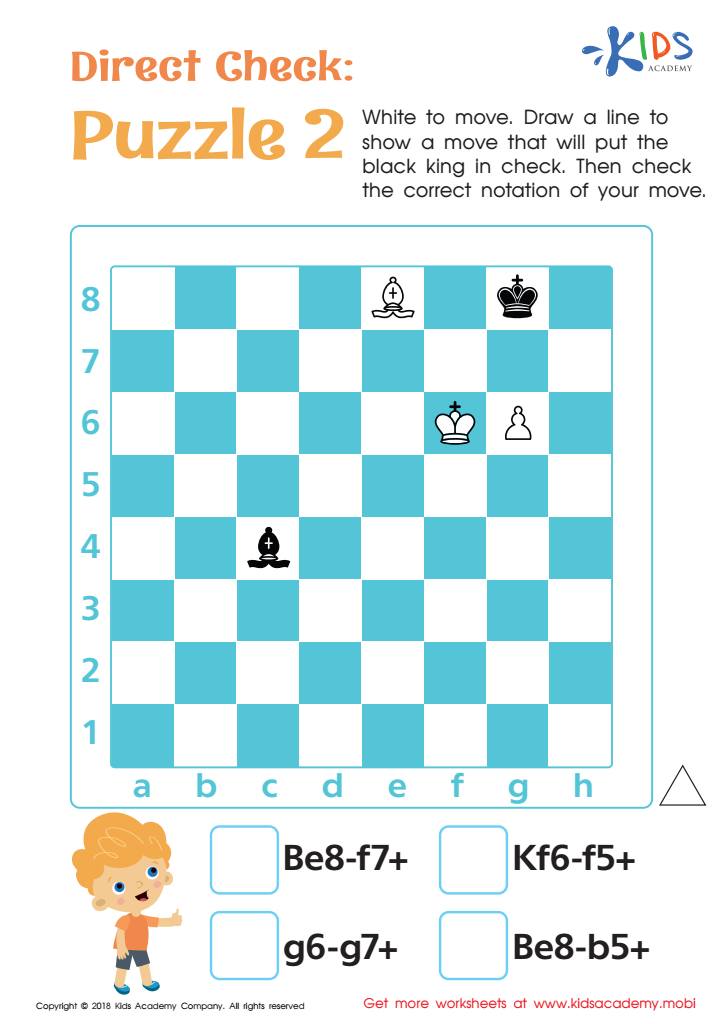
Direct Check: Puzzle 2 Worksheet
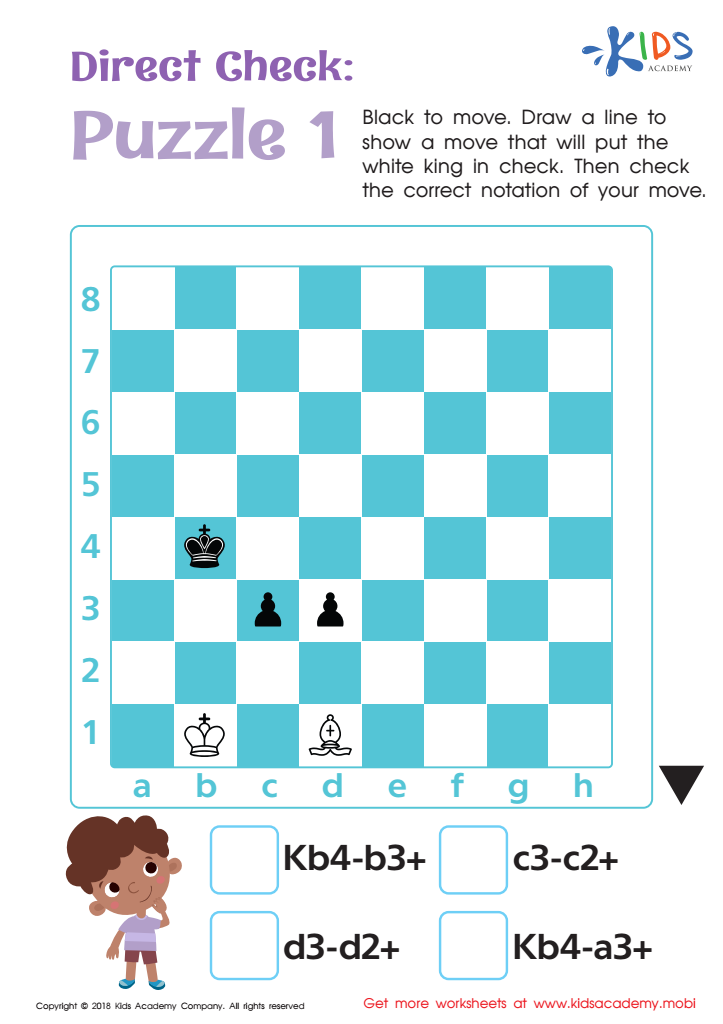
Direct Check: Puzzle 1 Worksheet
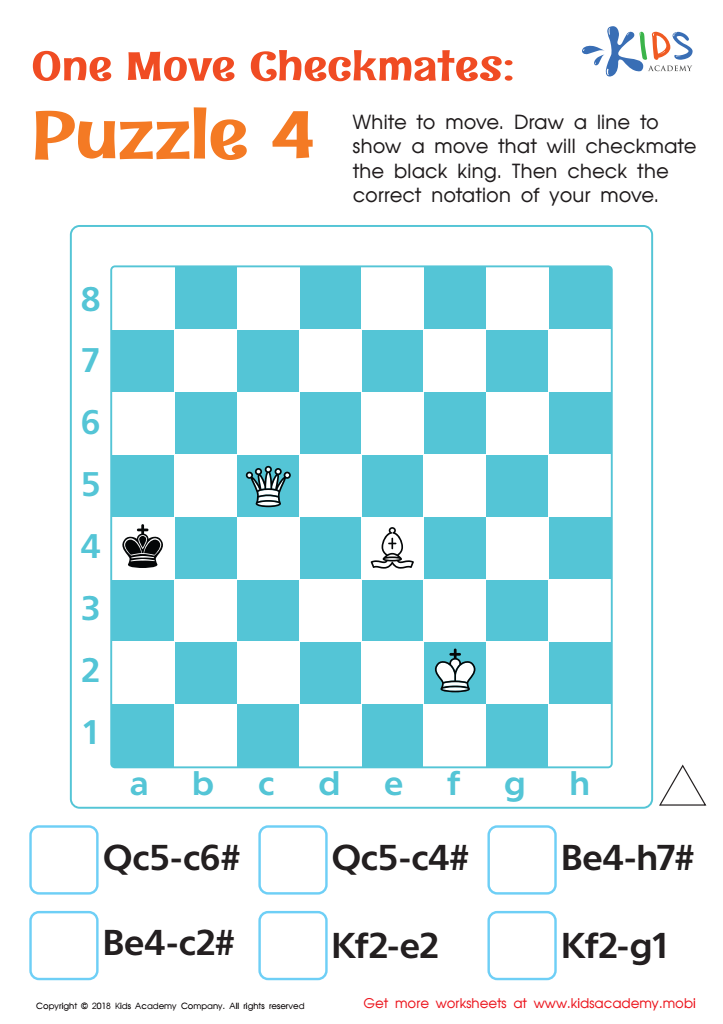
One Move Checkmates: Puzzle 4 Worksheet
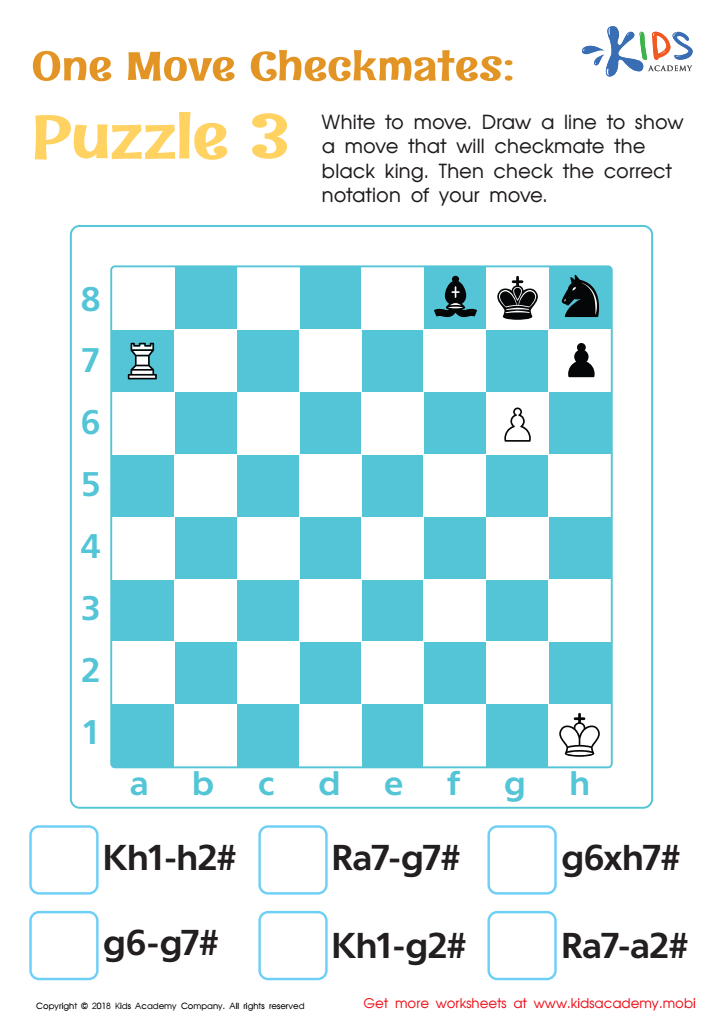
One Move Checkmates: Puzzle 3 Worksheet
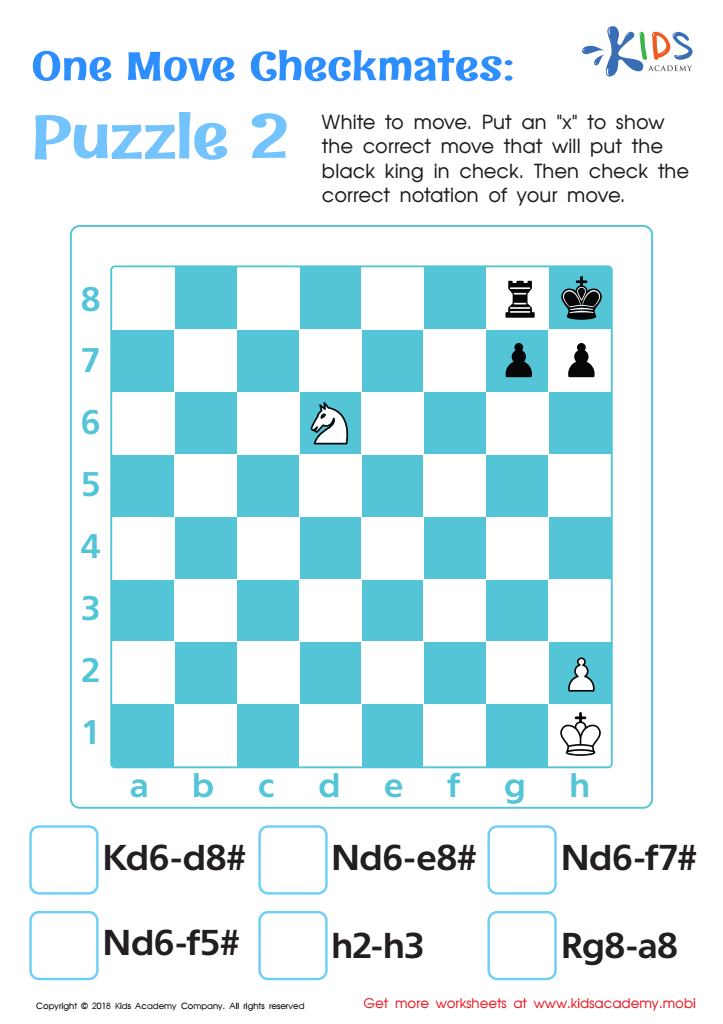
One Move Checkmates: Puzzle 2 Worksheet
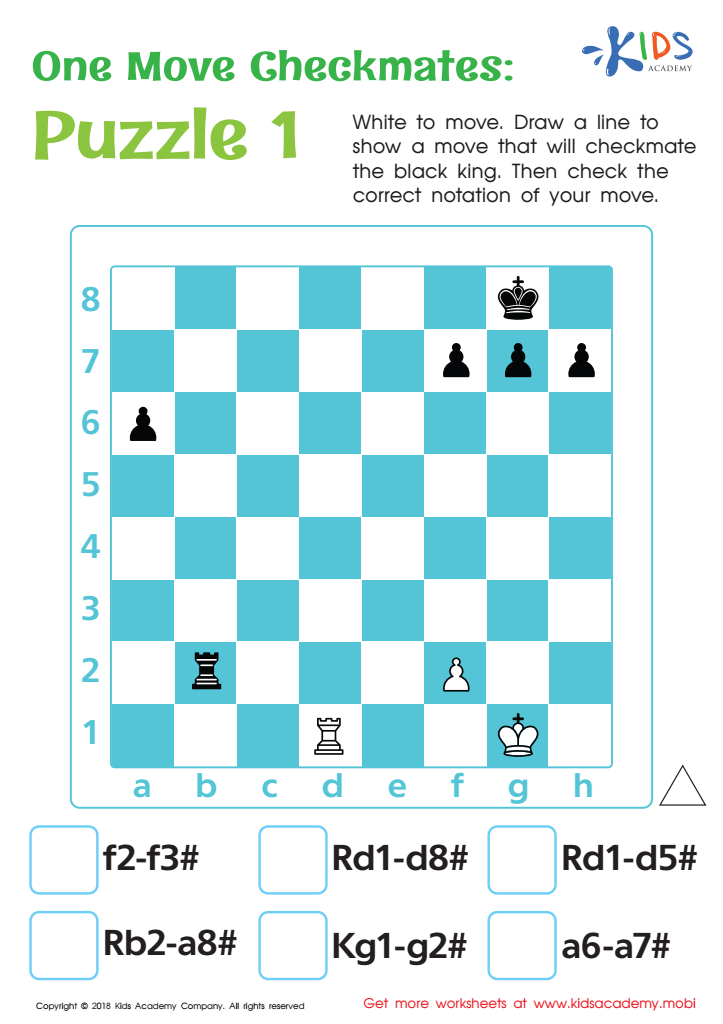
One Move Checkmates: Puzzle 1 Worksheet




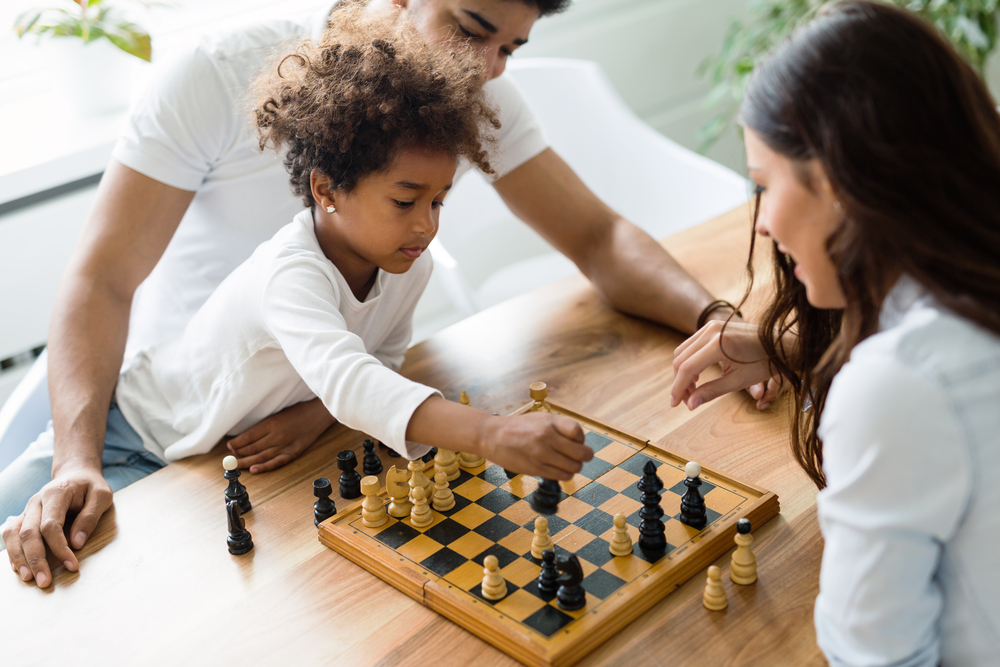

Extra Challenge Chess for Ages 3-6 offers significant benefits that make it a valuable addition to early childhood education. First and foremost, chess enhances critical thinking and problem-solving skills. By engaging in the game, children learn to analyze situations, contemplate possible moves, and foresee consequences. These skills are essential for their cognitive development.
Furthermore, chess encourages creativity and imagination. Young players must consider various strategies while remaining flexible in their thinking, fostering a robust creative mindset. Additionally, chess introduces children to the concepts of patience and perseverance. As they encounter challenges and setbacks, they learn the importance of resilience and the value of practice and improvement over time.
Social skills are also significantly enhanced; children typically play in groups, fostering cooperation, communication, and sportsmanship. Learning to respect opponents and celebrate achievements contributes positively to their emotional development.
Moreover, engaging in chess lays a foundation for mathematical skills, as players utilize patterns and sequences in their gameplay. In today’s rapidly changing world, the benefits of these skills will serve children well, equipping them with tools essential for lifelong learning. Therefore, parents and teachers should emphasize Extra Challenge Chess as a fundamental aspect of early cognitive and social growth.