Online Math Worksheets for Kindergarten - Page 12
580 filtered results
Difficulty Level
Grade
Age
-
From - To
Subject
Activity
Standards
Favorites
With answer key
Interactive
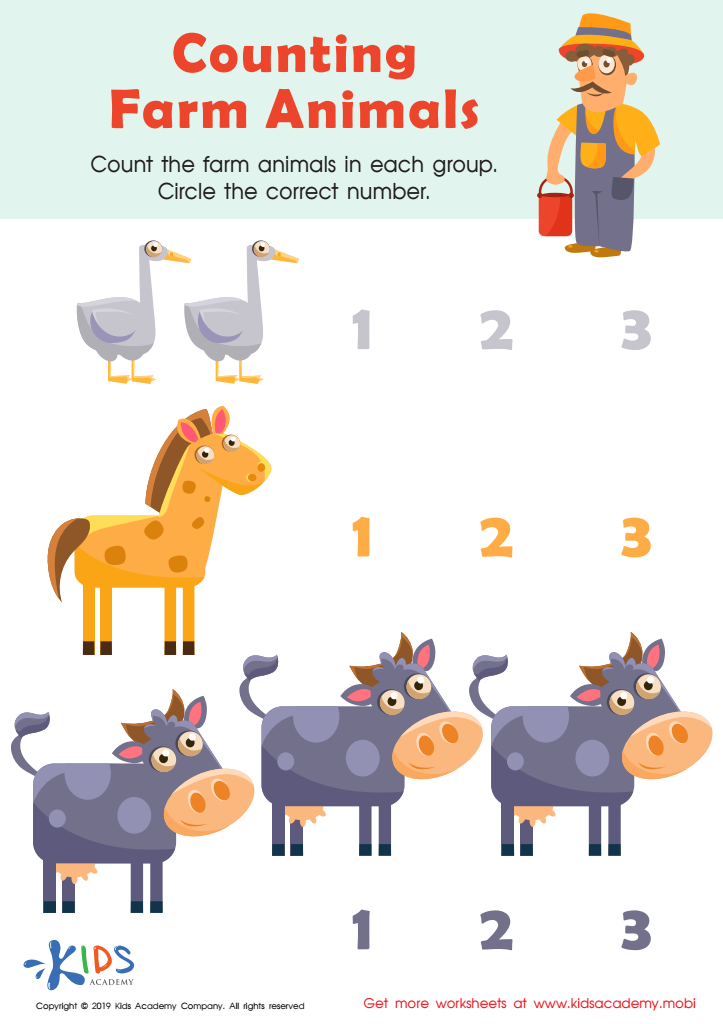
Counting Farm Animals Worksheet
Kids love farms! That's why this free farm animals counting worksheet is great for building number sense and counting skills. Have your young mathematician count the pictures, then circle the corresponding number. It's a fun and meaningful way to practice counting.
 Assign to My Students
Counting Farm Animals Worksheet
Worksheet
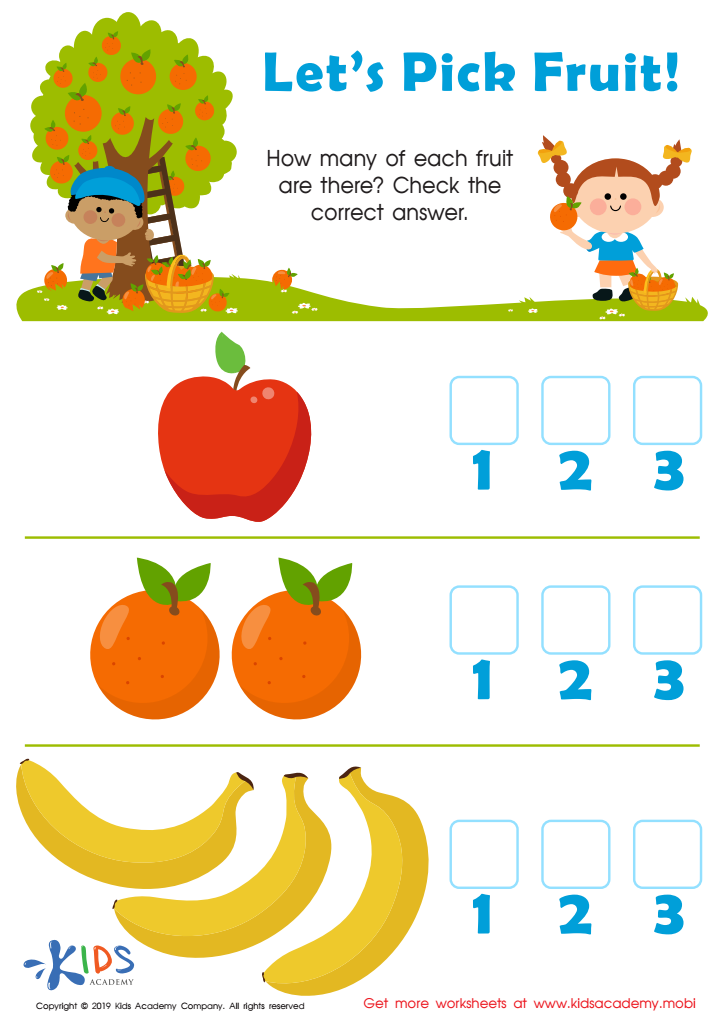
Let's Pick Fruit Worksheet
Picking fruit is fun - and counting it is even better! This free worksheet is perfect for young math learners. They'll use picture representation to count the fruit in each problem and then select the correct answer from the multiple-choice boxes. It's a great way to teach number sense in an easy, fun way!
Let's Pick Fruit Worksheet
Worksheet
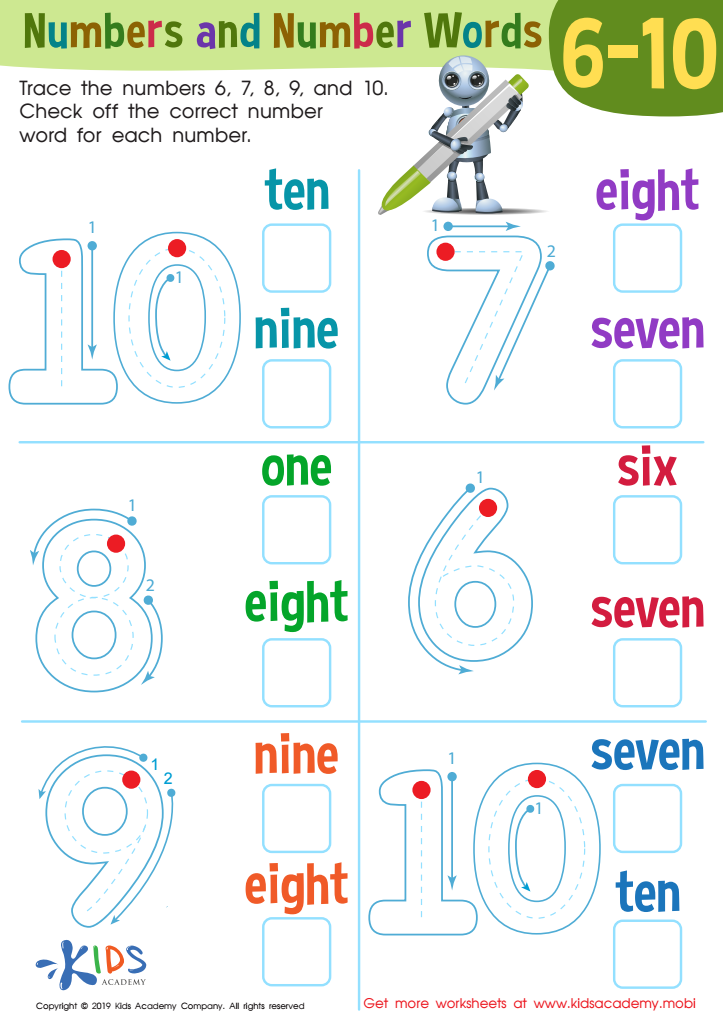
Numbers and Number Words 6–1 Worksheet
As children explore numbers and words, parents and teachers can help them learn to count and read with activities such as this worksheet. Here, the student traces numbers 6-10 and then selects the right number words to match. A fun and interactive way to learn!
Numbers and Number Words 6–1 Worksheet
Worksheet
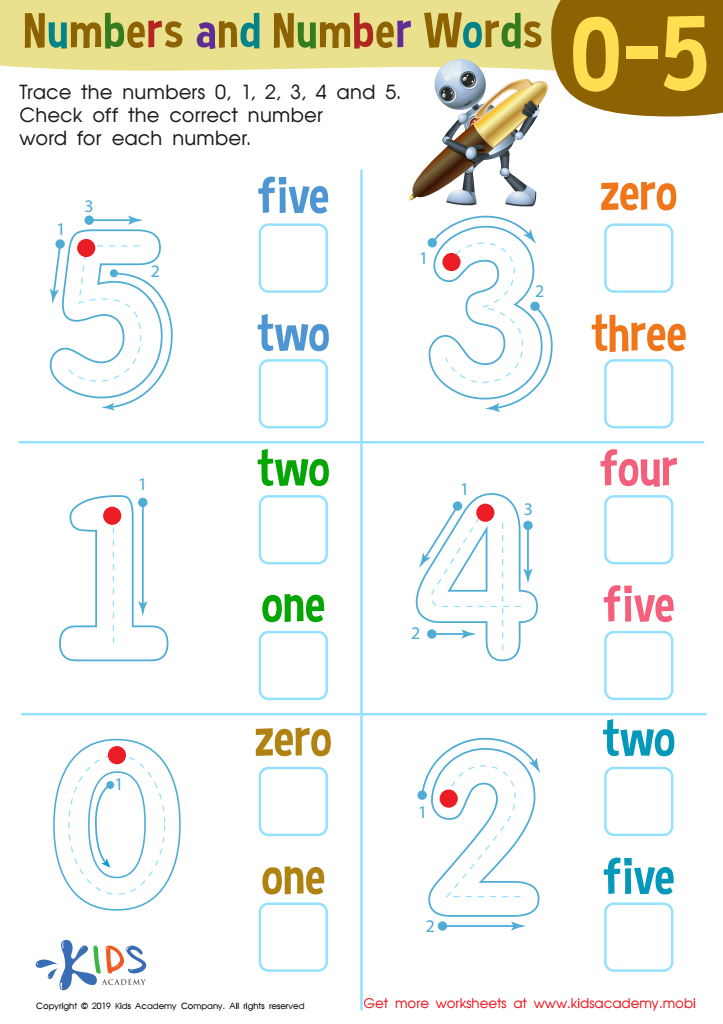
Numbers and Number Words Worksheet
Preschoolers can practice counting and recognizing numbers with this worksheet. Students trace the numbers zero through five and check the boxes next to each number to show the correct number word. Ideal for young kids, this printable helps them learn early math and number words.
Numbers and Number Words Worksheet
Worksheet
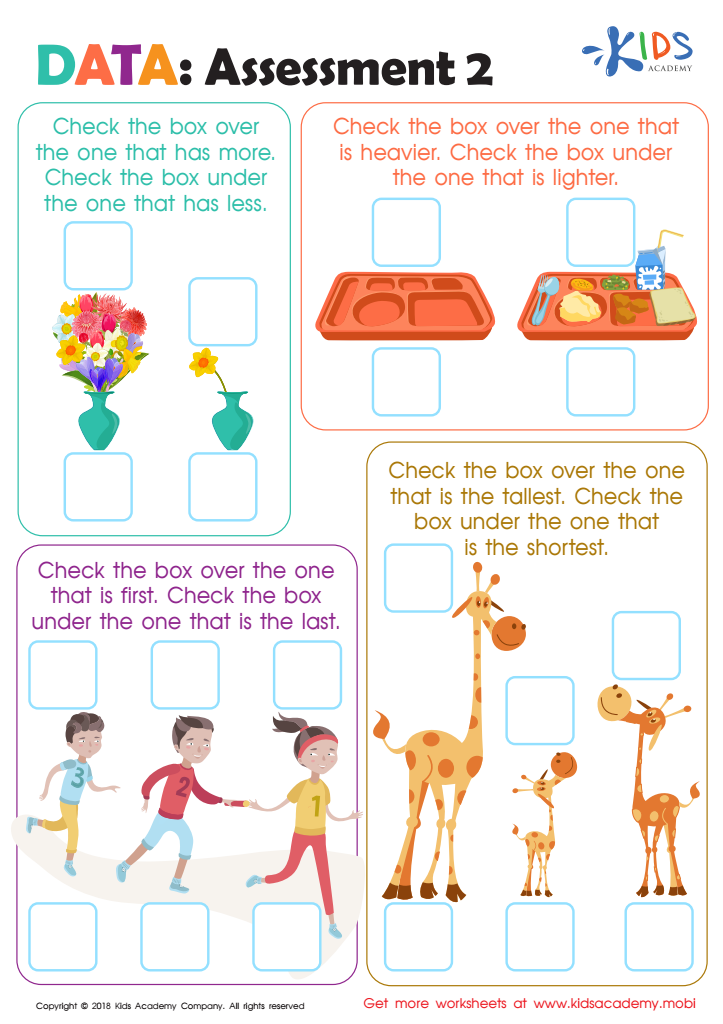
Data: Assessment 2 Worksheet
This printable worksheet tests students' understanding of words related to quantity and measurement, such as "more", "less", "heavy", "light", "first", "last", "tall", and "short". It helps children compare and contrast when solving measurement problems. Ideal for math classes, it encourages students to gain the essential skills needed in subjects like math, science, and reading.
Data: Assessment 2 Worksheet
Worksheet
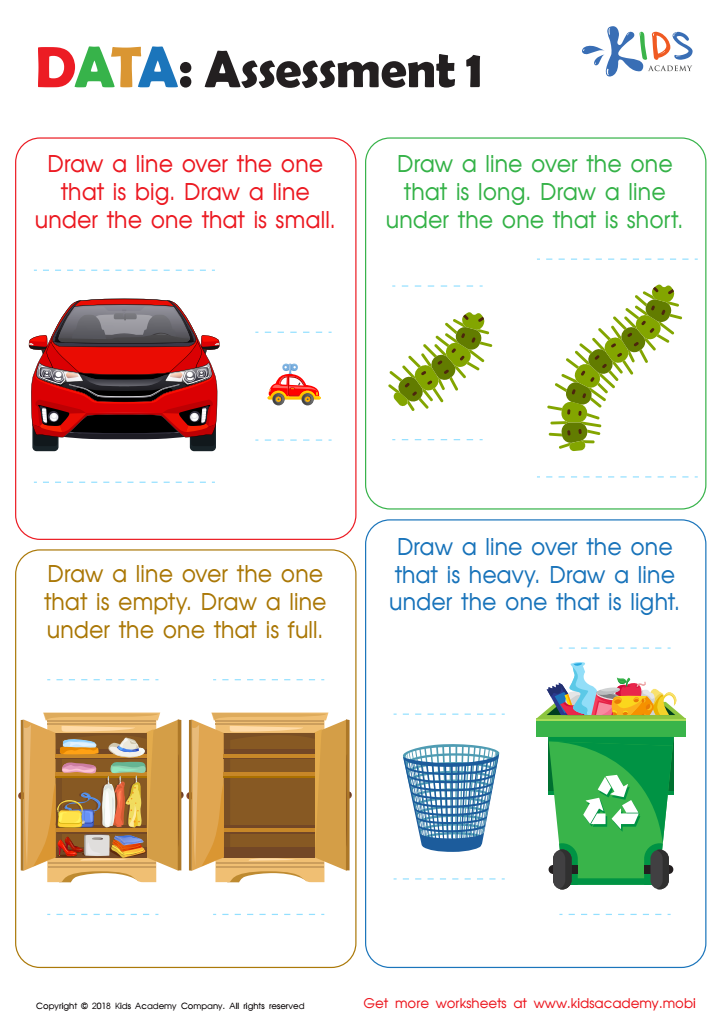
Data: Assessment 1 Worksheet
Assess your students' knowledge of measurement words with this worksheet. Have them compare and describe objects/quantities using words like "big", "small", "long", "short", "empty", "full", "heavy" and "light". Encourage further learning by asking students to provide examples of each word meaning.
Data: Assessment 1 Worksheet
Worksheet
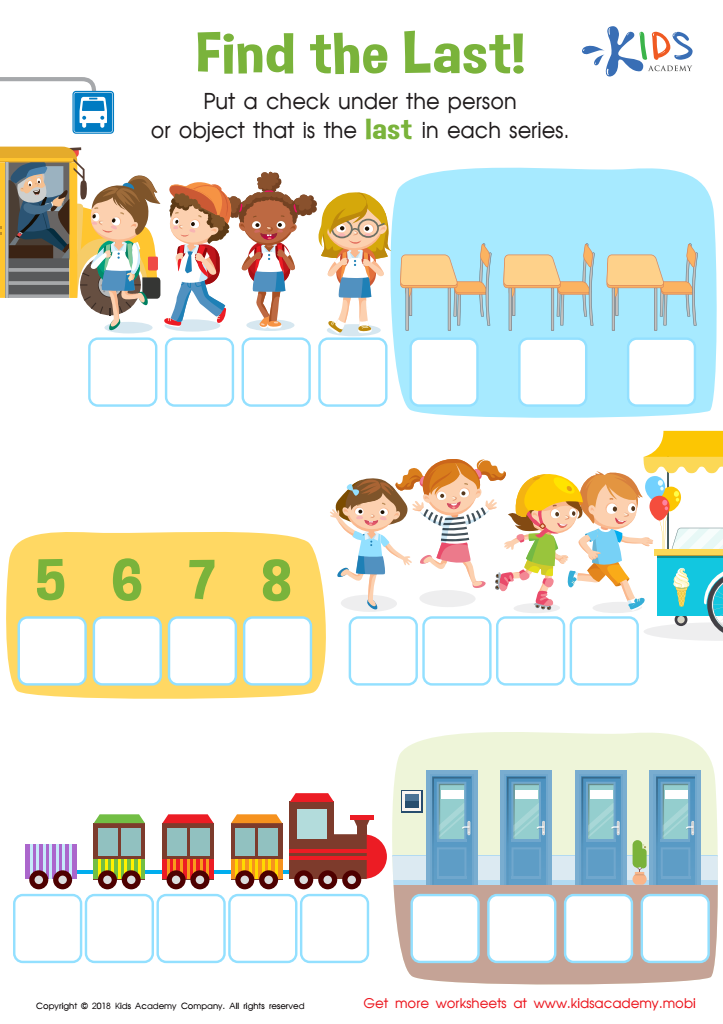
Find the Last! Worksheet
Teach young students about sequence words with this free worksheet. Have them look at sets of people or objects and choose the one that is last. Engage them further by having them describe or act out their day, and what happens last? Enjoy this printout and have fun!
Find the Last! Worksheet
Worksheet
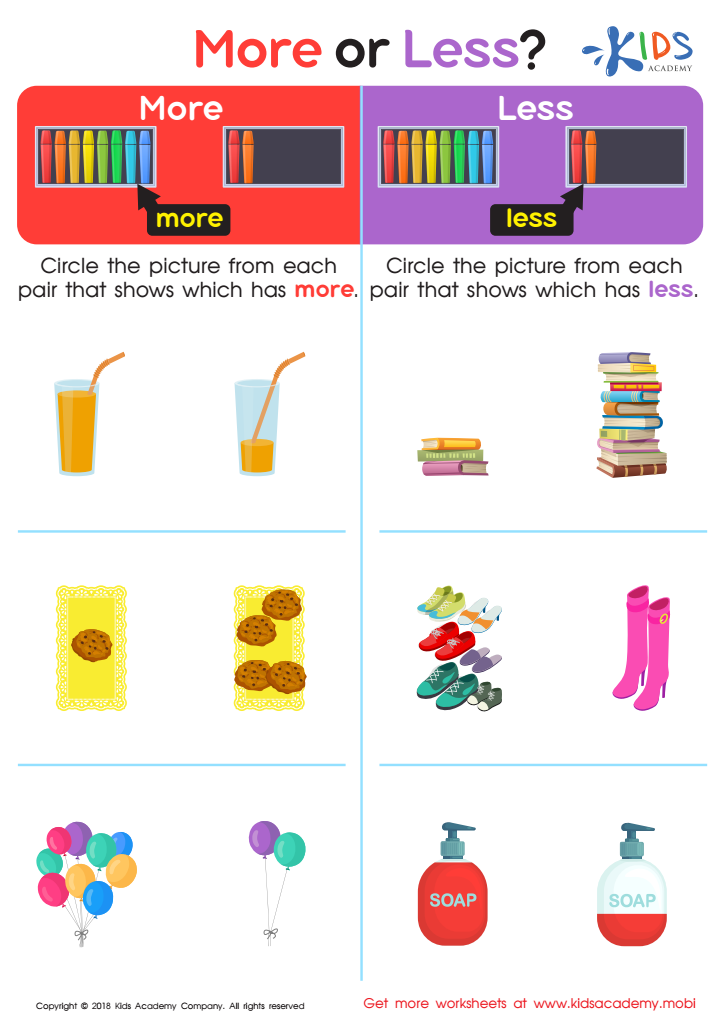
More or Less? Worksheet
Understanding "more or less" can be hard for kids. This PDF uses colorful images to help them learn. By matching the right picture pairs, children can gain a better understanding and strengthen their comparison skills for more complex tasks.
More or Less? Worksheet
Worksheet
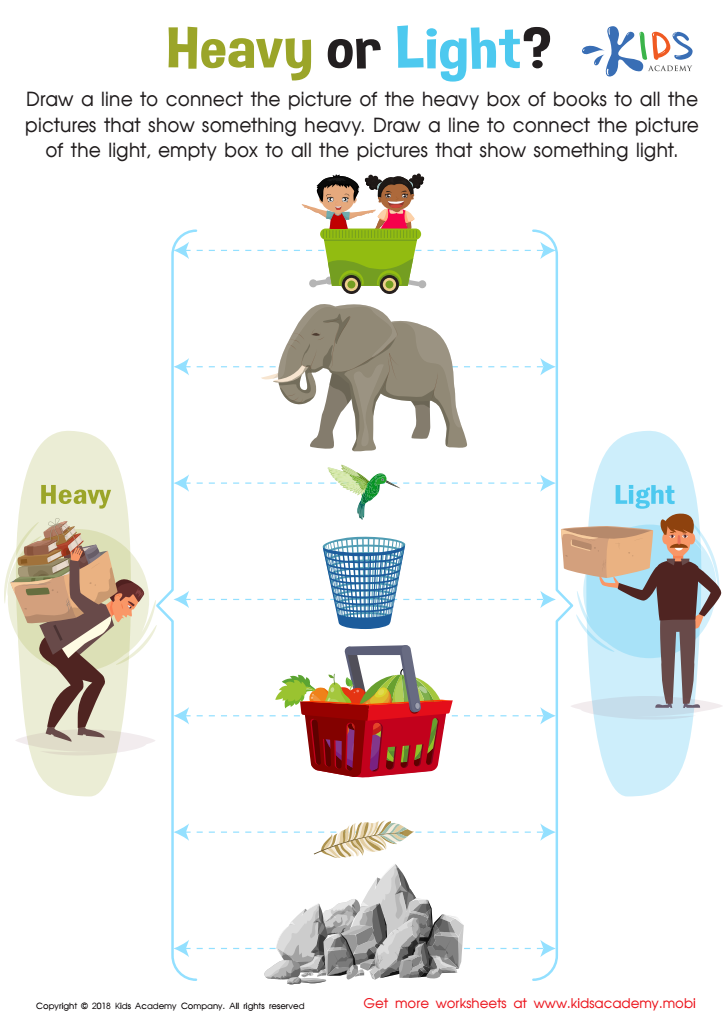
Heavy or Light? Worksheet
Kids can struggle to understand weight comparison, as size and mass matter. This free PDF helps develop fine-motor and hand-eye skills as kids trace lines to match pictures. The familiar pictures create concrete representations, ideal for learning more complex concepts.
Heavy or Light? Worksheet
Worksheet
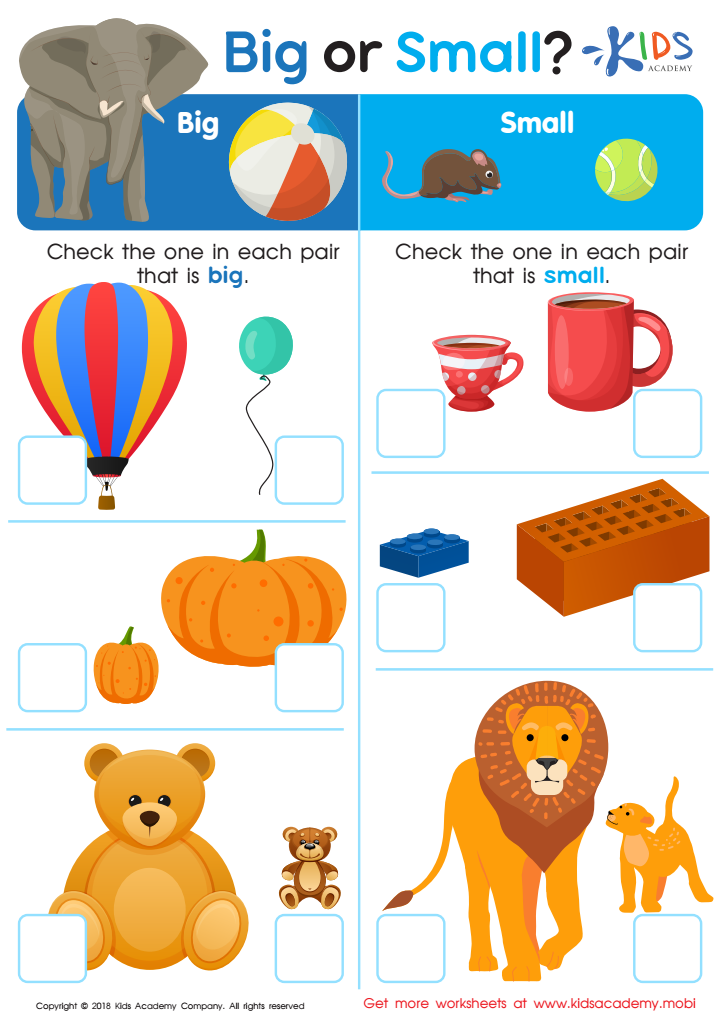
Big or Small? Worksheet
Kids need visuals to understand bigger and smaller concepts. This free PDF worksheet offers fun pictures that let them compare and gain a stronger understanding of sizes. Kids will enjoy it and won't realize they're learning since the pictures are so engaging. It's great preparation for future measurements.
Big or Small? Worksheet
Worksheet
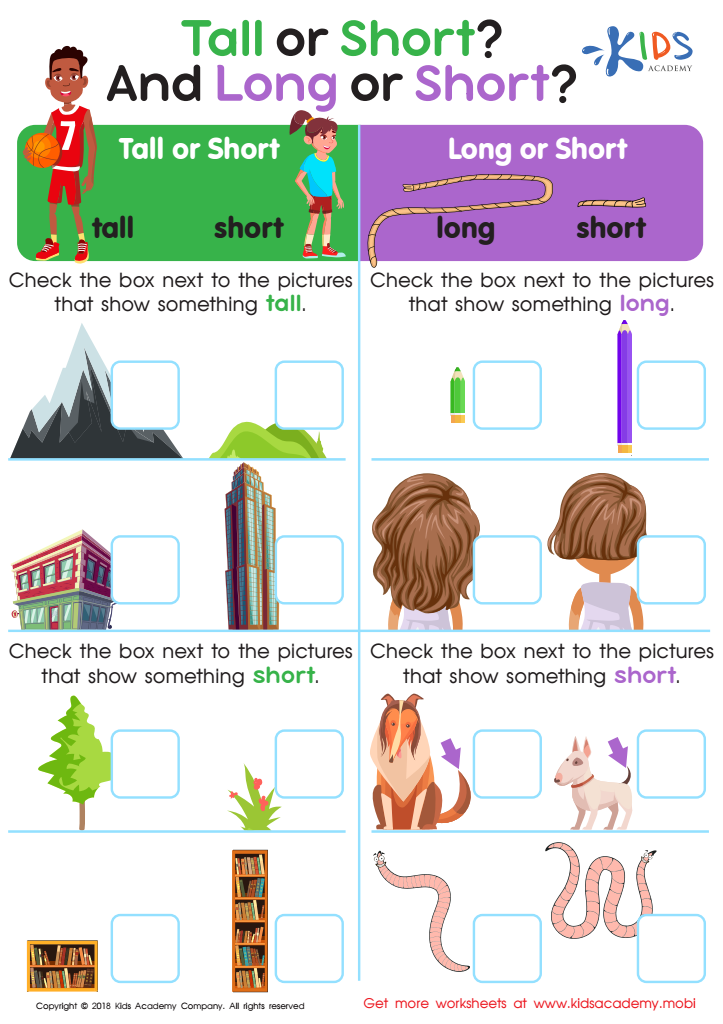
Tall or Short and Long or Short? Worksheet
This worksheet is fun and helpful for kids to understand the difference between height and length. With pictures of familiar objects, they can compare and choose the box with the right answer. This helps them gain skills and a better foundation for future measuring.
Tall or Short and Long or Short? Worksheet
Worksheet
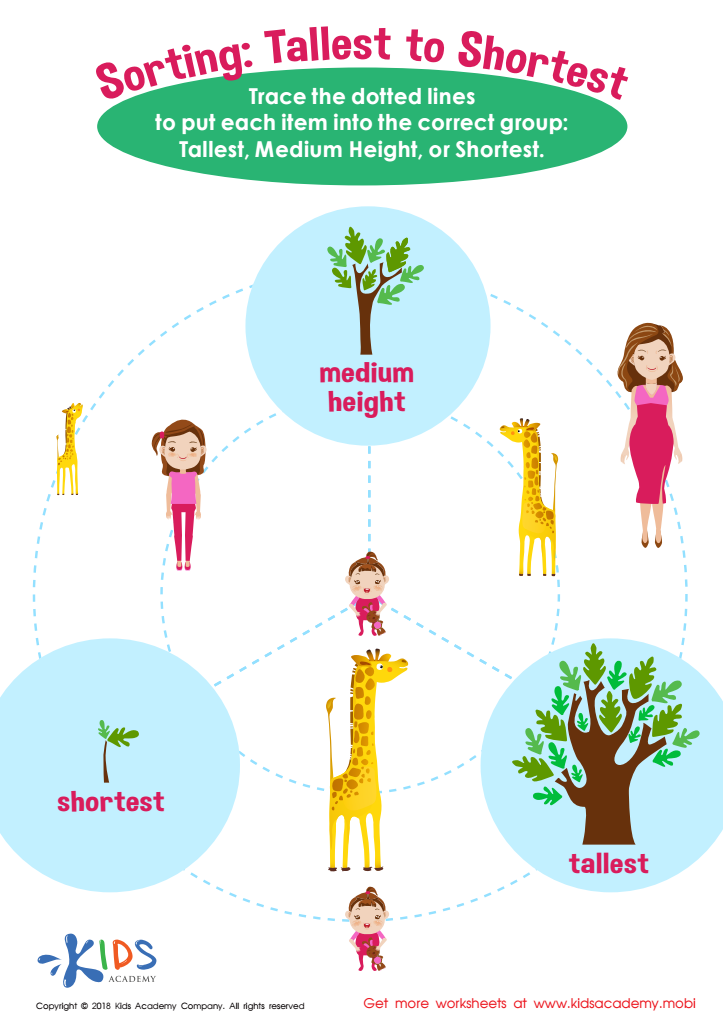
Sorting: Tallest to Shortest Worksheet
This worksheet is great for preschoolers to practice foundational measurement skills. Traceable lines help them sort pictures into Tallest, Shortest and Medium categories, giving them concrete examples to compare. Fine motor skills and understanding of relationships between sizes are also developed - perfect for preparing them for larger measurement concepts.
Sorting: Tallest to Shortest Worksheet
Worksheet
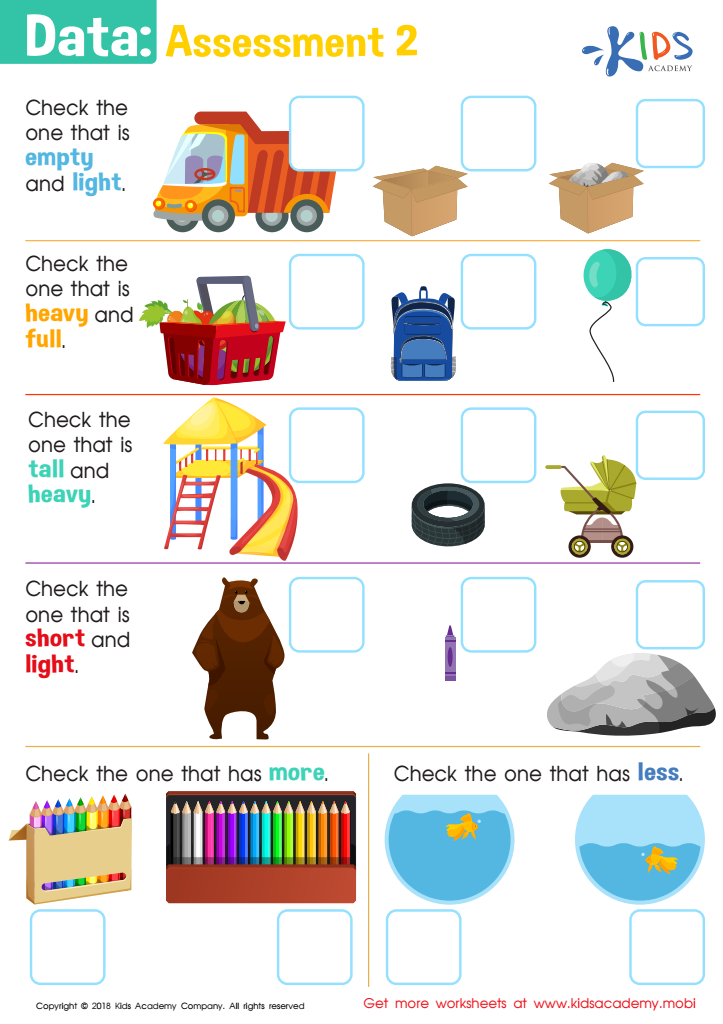
Data: Assessment 2 Worksheet
This PDF helps you assess your students' understanding of concepts like empty/light, full/heavy, tall/short, and more/less. With this worksheet, students use pictures to answer questions and check off the appropriate box. It's a fast, easy way to determine what concepts they have learned and which need more work.
Data: Assessment 2 Worksheet
Worksheet
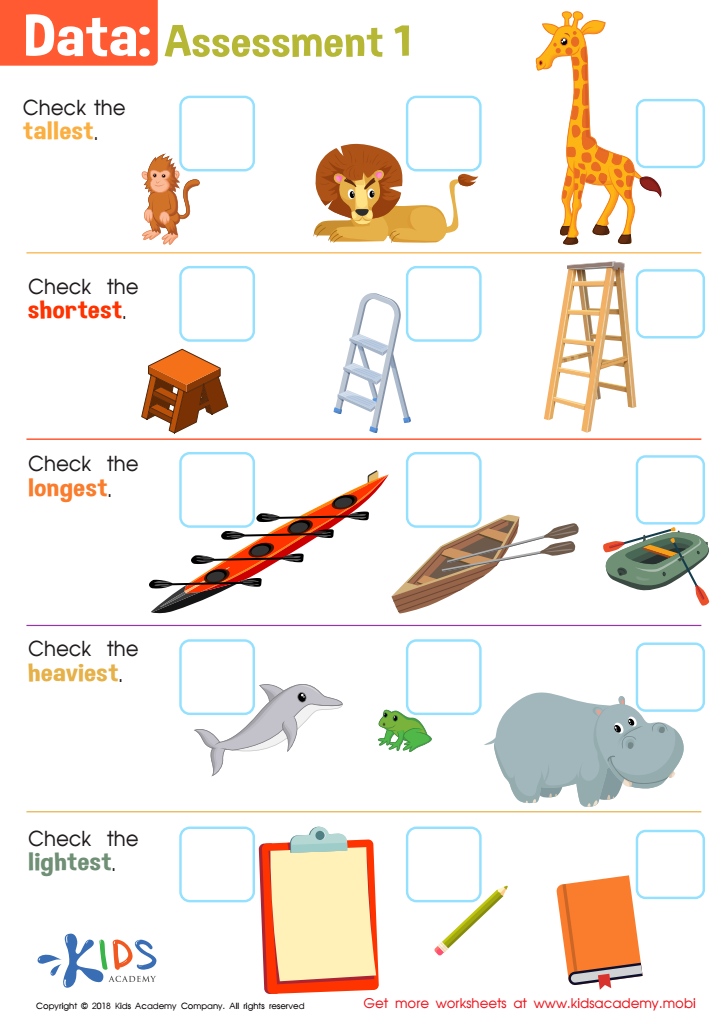
Data: Assessment 1 Worksheet
This free worksheet helps you assess where your young students are with measurement superlatives like tallest, shortest, heaviest, longest and lightest. It features cute, colorful pics of familiar objects so your kids have a reference, and helps you identify areas to work on.
Data: Assessment 1 Worksheet
Worksheet
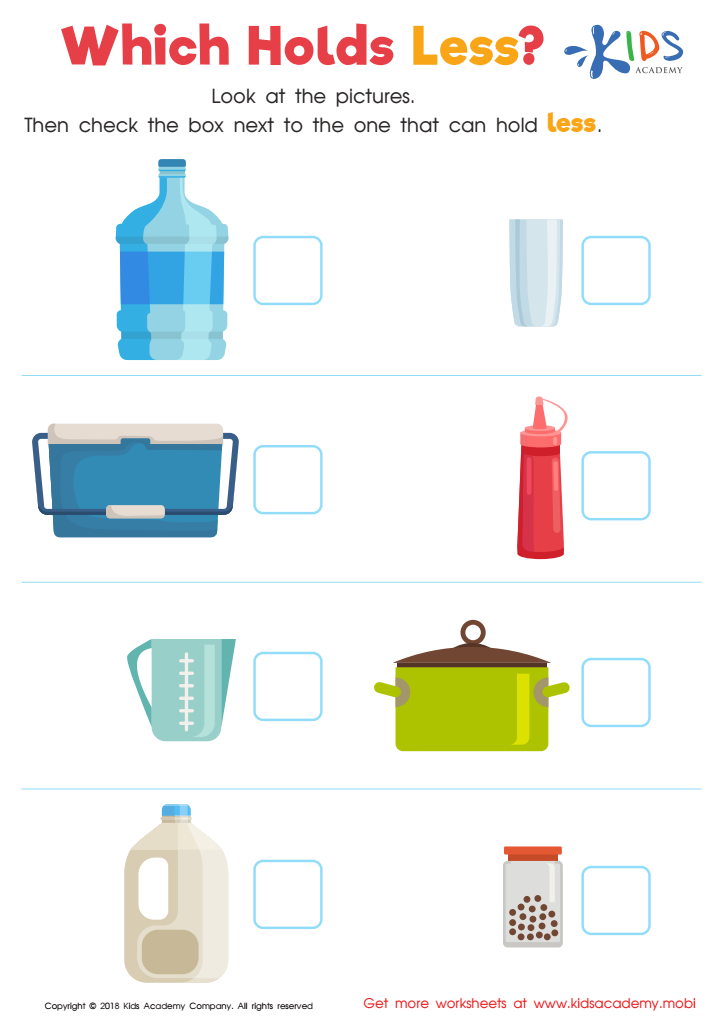
Which Holds Less? Worksheet
Students may find it hard to grasp volume without a visual aid. This free, downloadable worksheet helps with understanding by providing pictures of familiar objects. It allows students to practice comparing volumes and deciding which container holds less. It's a great introduction before they move onto using greater than and less than symbols.
Which Holds Less? Worksheet
Worksheet
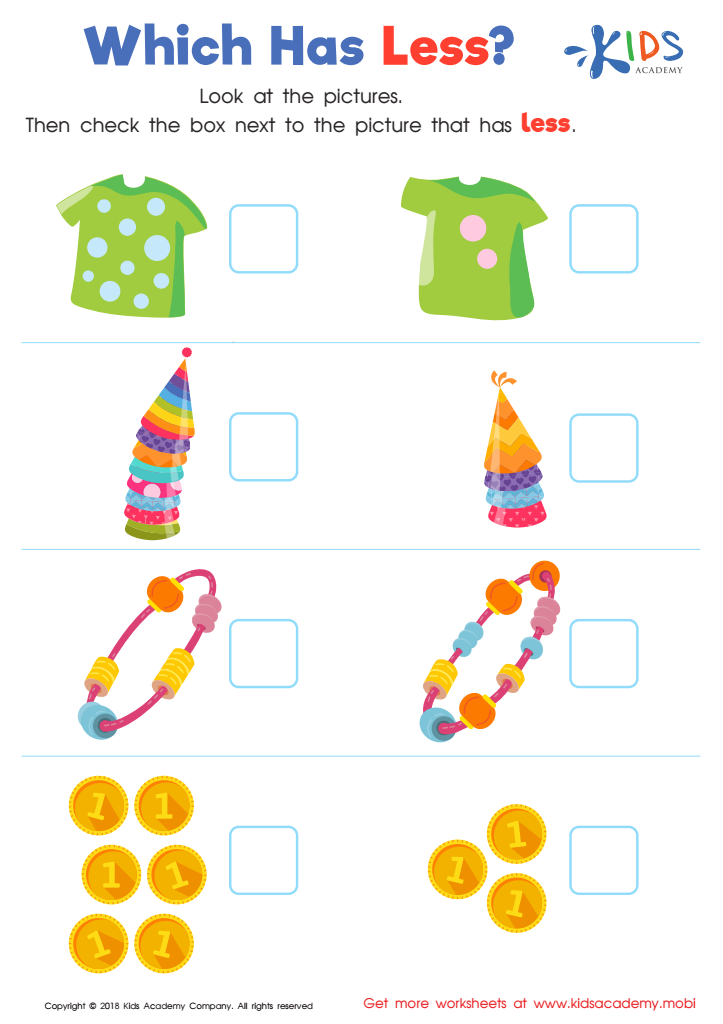
Which Has Less? Worksheet
Kids can develop their number sense by comparing and contrasting objects to identify which has less. This worksheet helps them practice: it's bright and colorful, featuring familiar objects and pictures to count, strengthening basic counting skills. It's the perfect warm-up for comparing and contrasting larger numbers.
Which Has Less? Worksheet
Worksheet
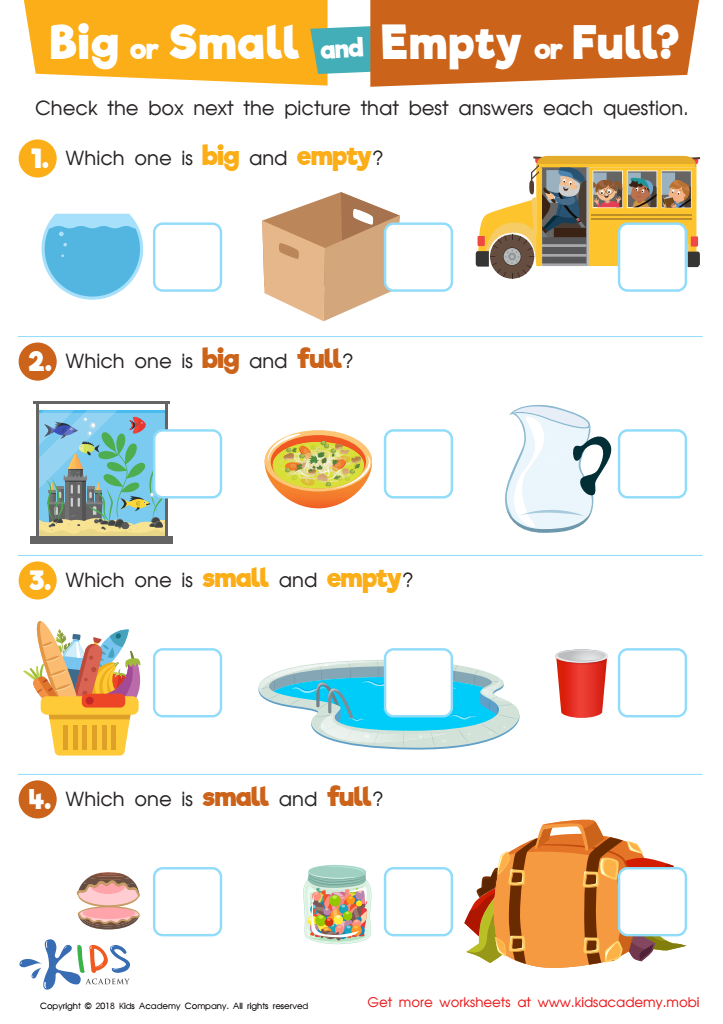
Big or Small and Empty or Full? Worksheet
Early learners can develop their math skills by using this Worksheet with fun, familiar pictures. It reinforces concepts like big/small and empty/full, helping them to differentiate and identify objects that meet those definitions.
Big or Small and Empty or Full? Worksheet
Worksheet
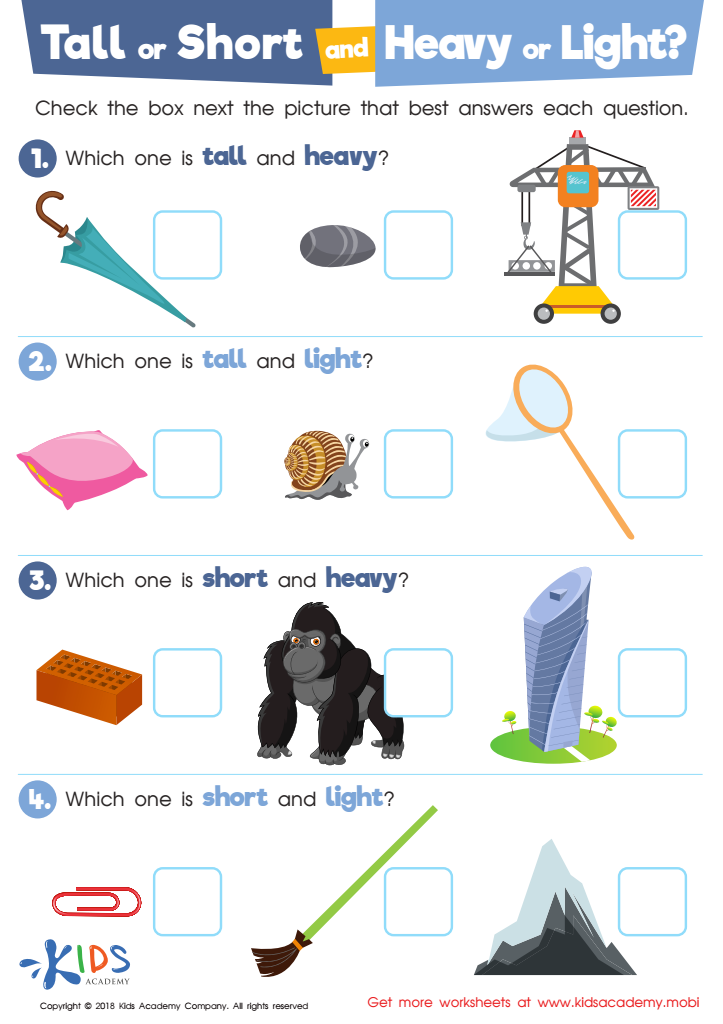
Tall or Short and Heavy or Light? Worksheet
Young children can find basic measurement concepts tricky. This PDF introduces them to the appropriate vocabulary for describing heavy, light, tall and short items, by using familiar pictures. It helps them accurately select which items fit each category.
Tall or Short and Heavy or Light? Worksheet
Worksheet
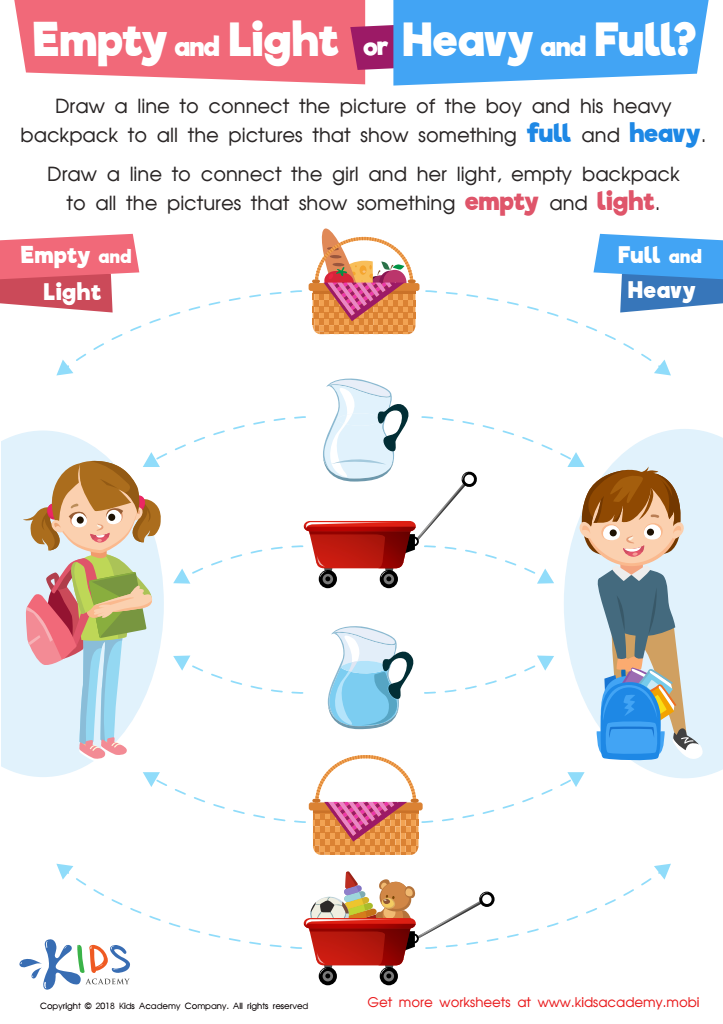
Empty and Light or Heavy and Full? Worksheet
Kids can have trouble understanding measurement, like the differences between heavy and light. This worksheet helps them associate full with heavy and empty with light, using familiar images. Plus, it's a fun way to practice fine motor skills, tracing the lines to connect the pictures.
Empty and Light or Heavy and Full? Worksheet
Worksheet
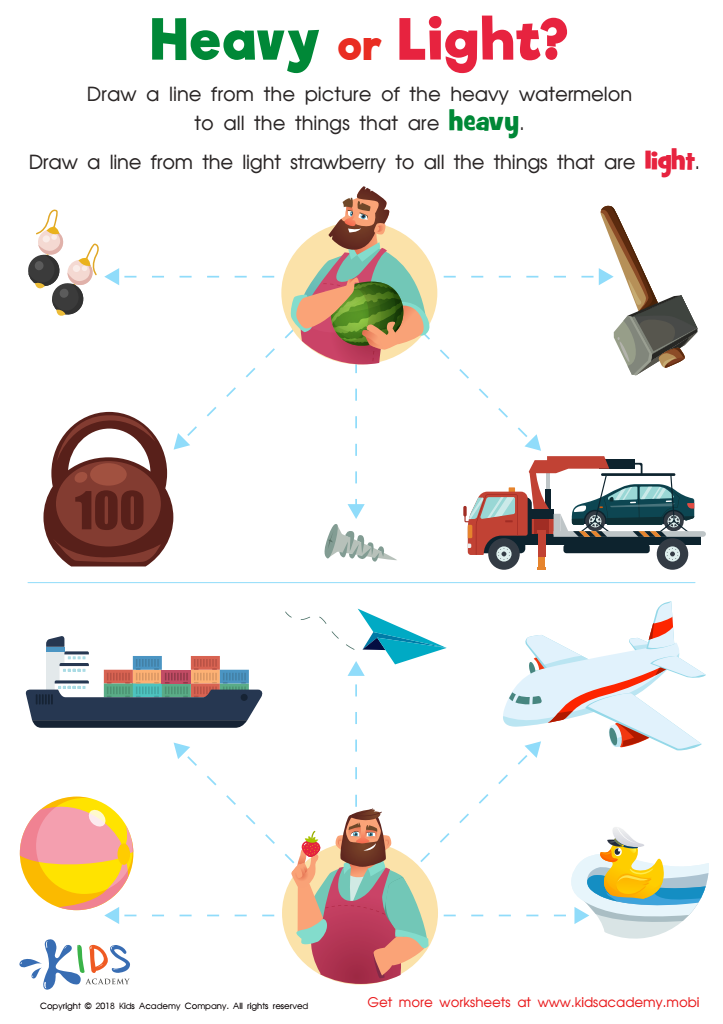
Heavy or Light? Worksheet
This fun, free worksheet helps kids build measurement skills and reinforce concepts of 'heavy' and 'light', while also improving their fine motor skills. Kids use traceable lines to connect the gentleman to objects they know, giving them a strong foundation for understanding weight.
Heavy or Light? Worksheet
Worksheet
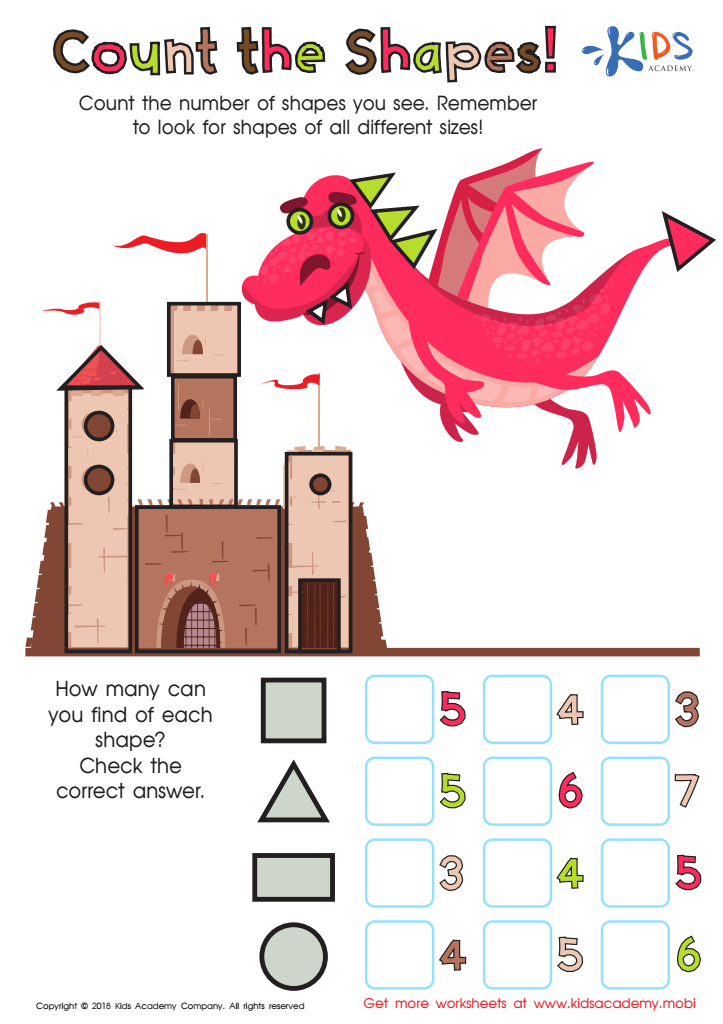
Count the Shapes Worksheet
This fun and learning worksheet is perfect for sharpening visual discrimination skills. Kids search a castle picture featuring a dragon and identify shapes, counting circles, squares, triangles and rectangles. Checking the correct box beside the number, they practice shape identification and counting. Download now and get started!
Count the Shapes Worksheet
Worksheet
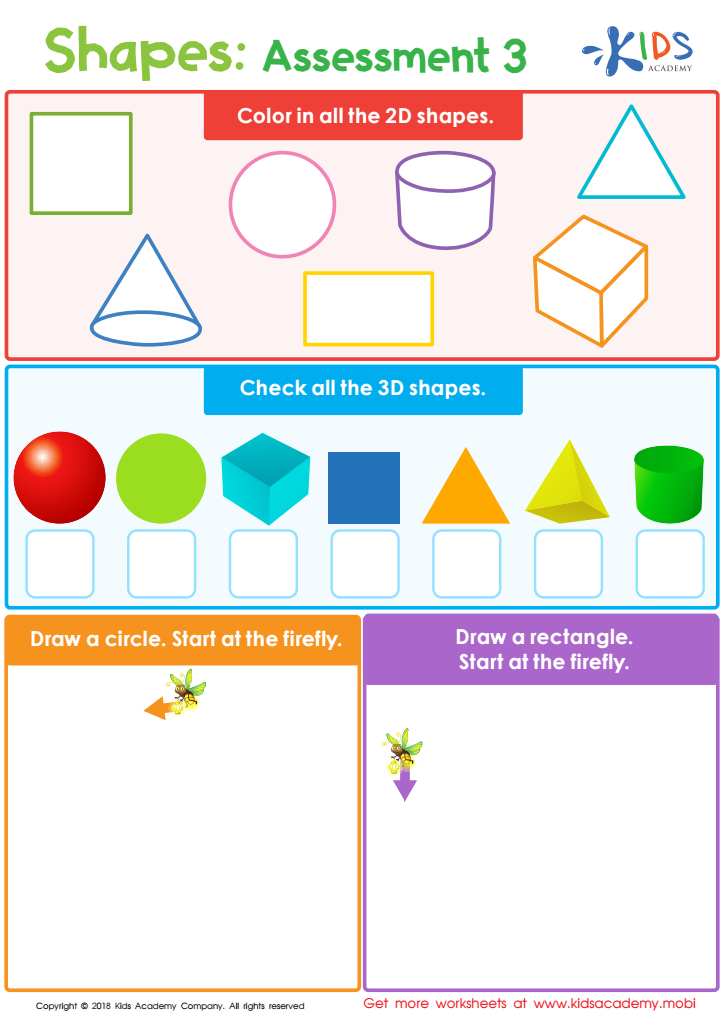
Shapes: Assessment 3 Worksheet
Shapes are everywhere! Help your students differentiate between 2D and 3D shapes. Ask them the difference between a triangle and pyramid, or a circle and a sphere. This worksheet tests their understanding of both types and is a useful assessment tool.
Shapes: Assessment 3 Worksheet
Worksheet
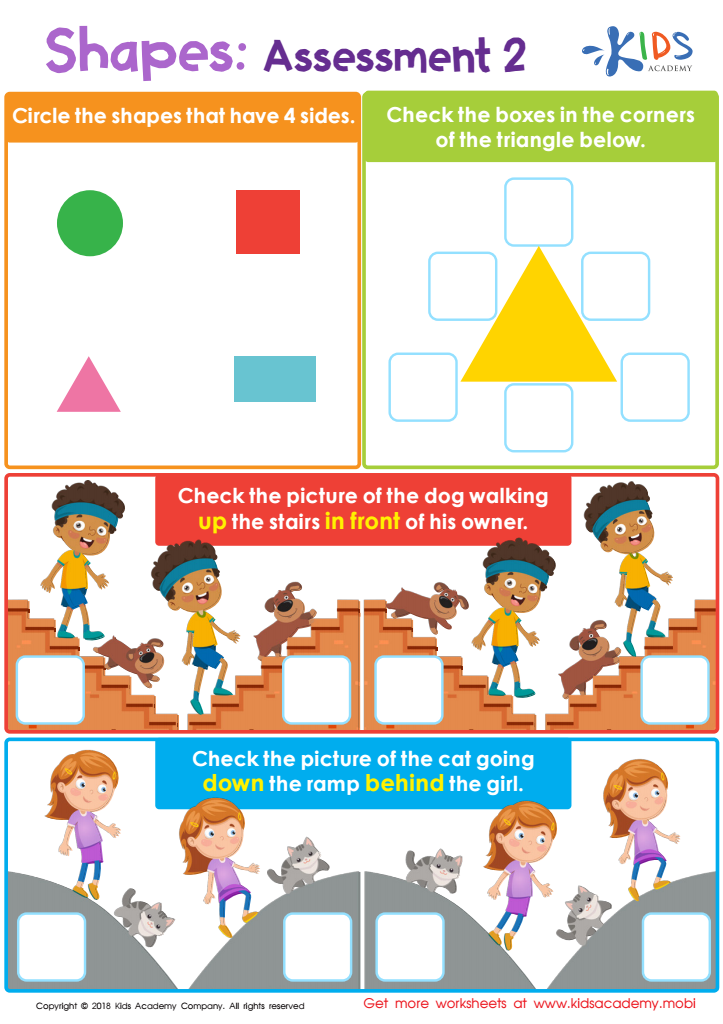
Shapes: Assessment 2 Worksheet
This geometry worksheet assesses a student's knowledge of shapes and positional words. They must identify shapes with 4 sides and corners on a triangle. The worksheet also tests understanding of words like "up", "front", "down" and "behind". Easily determine what your student knows about these concepts with this downloadable worksheet!
Shapes: Assessment 2 Worksheet
Worksheet
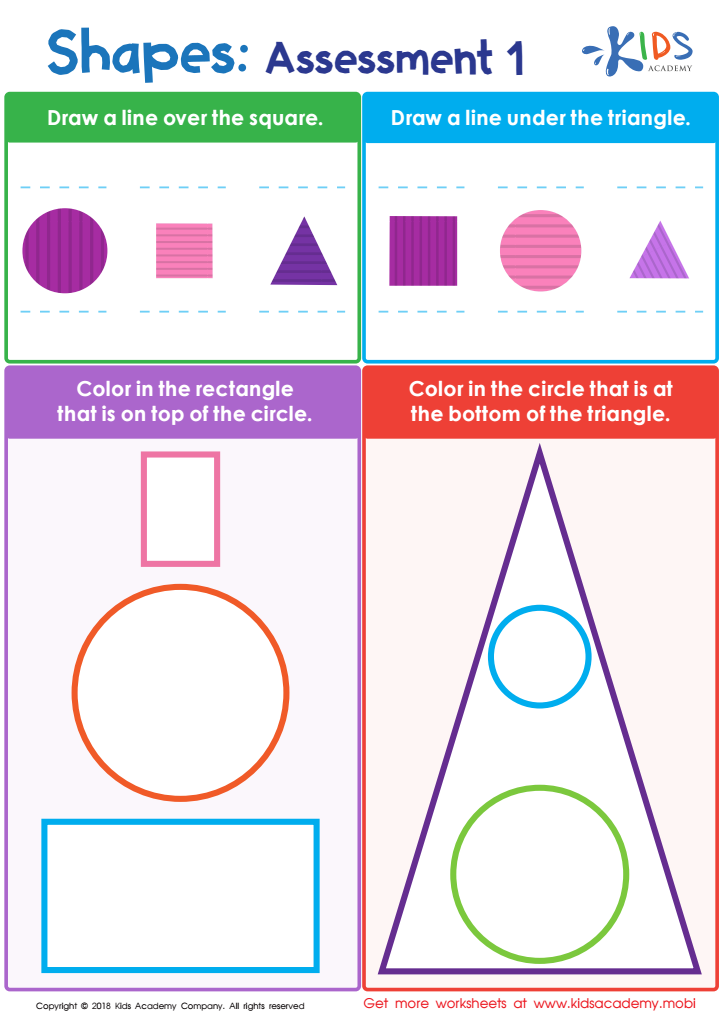
Shapes: Assessment 1 Worksheet
Test your students' understanding of the four basic shapes - circle, square, triangle and rectangle - with this assessment worksheet. Get them to draw a line over or under the shape indicated in the directions to show they can identify it correctly.
Shapes: Assessment 1 Worksheet
Worksheet
Join Kids Academy for Free
Who is primarily going to use this learning content?


.jpg)