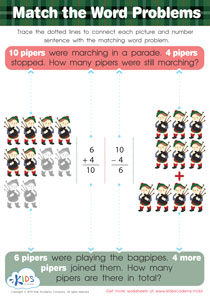
Normal Addition Worksheets for Ages 3-9 - Page 3
68 filtered results
-
From - To
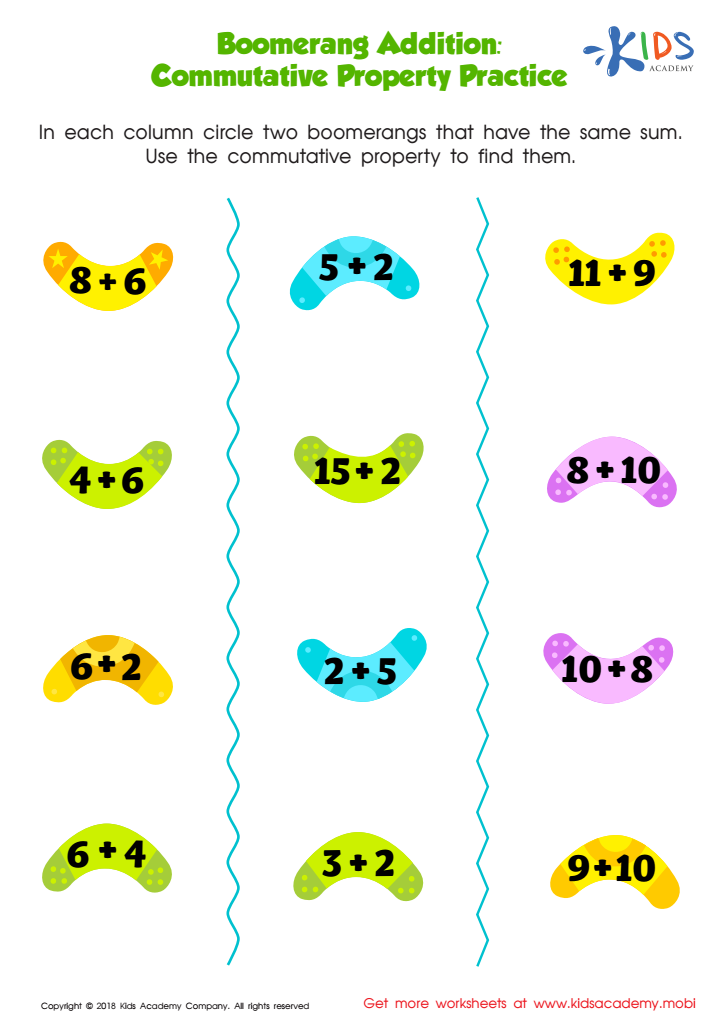
Boomerang Addition Worksheet
 Assign to My Students
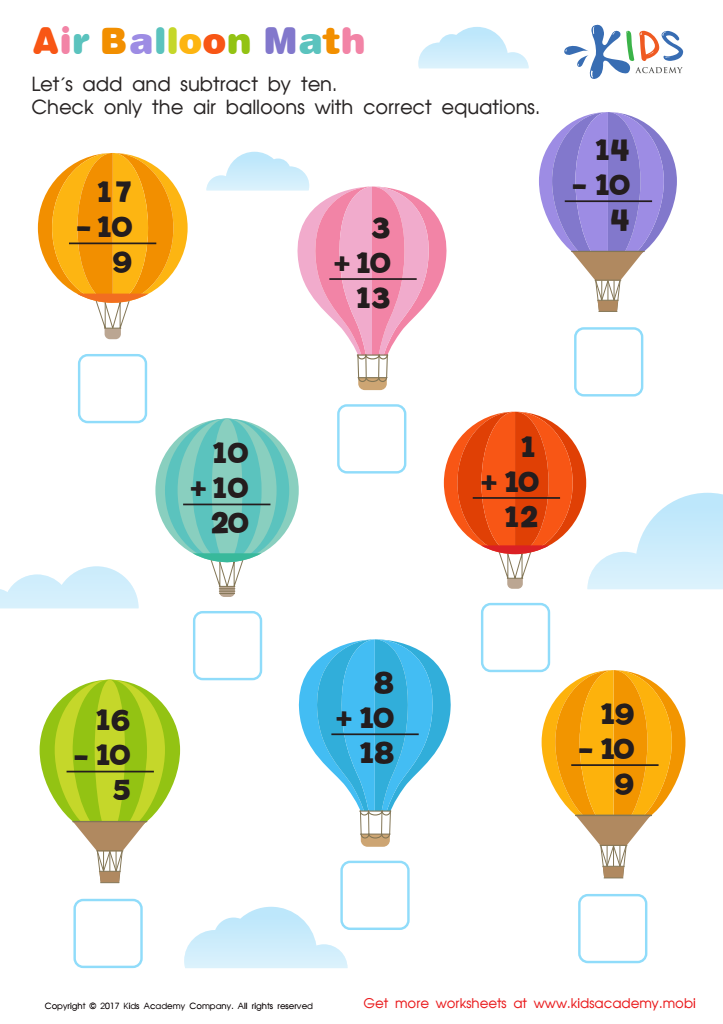
Air Balloon Math Worksheet
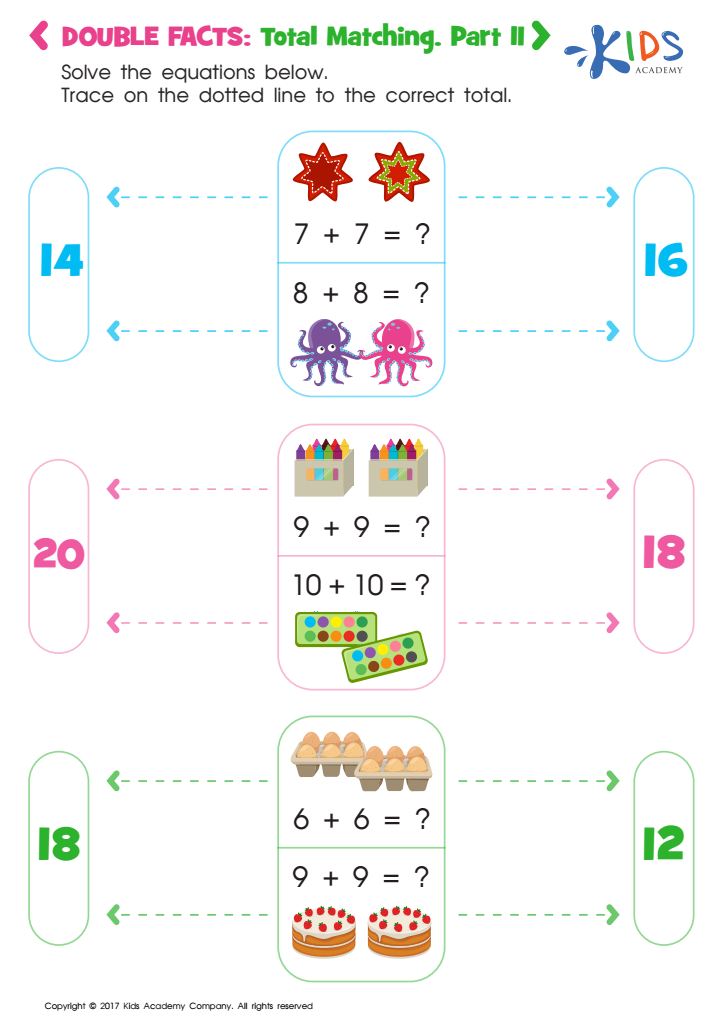
Double Facts: Total Matching 2 Worksheet
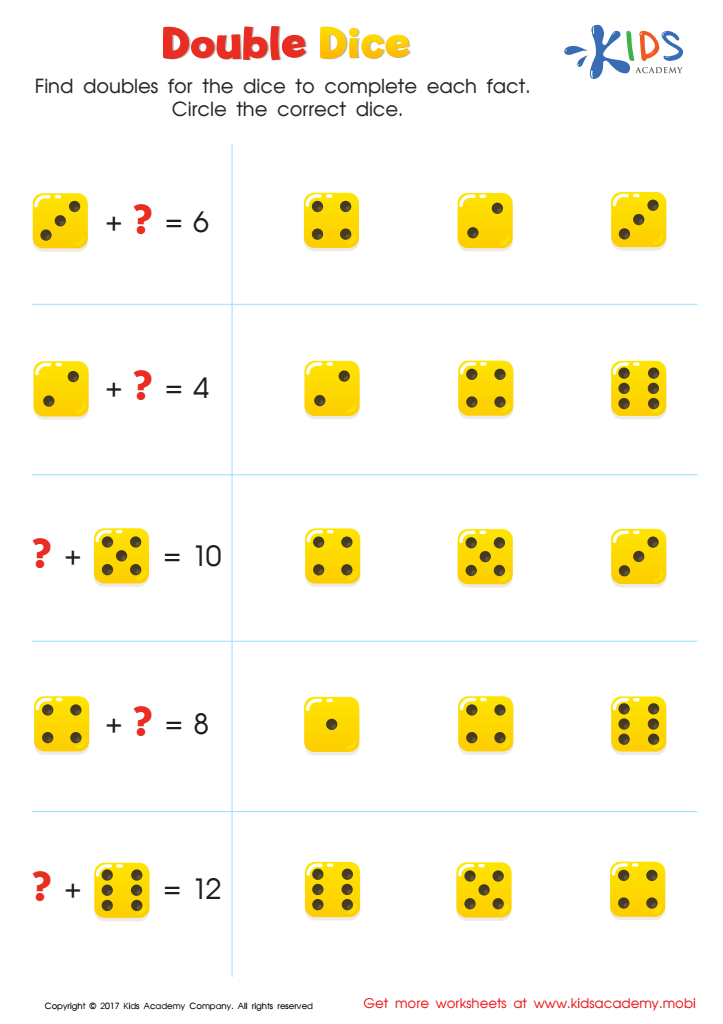
Addition Facts: Double Dice Worksheet
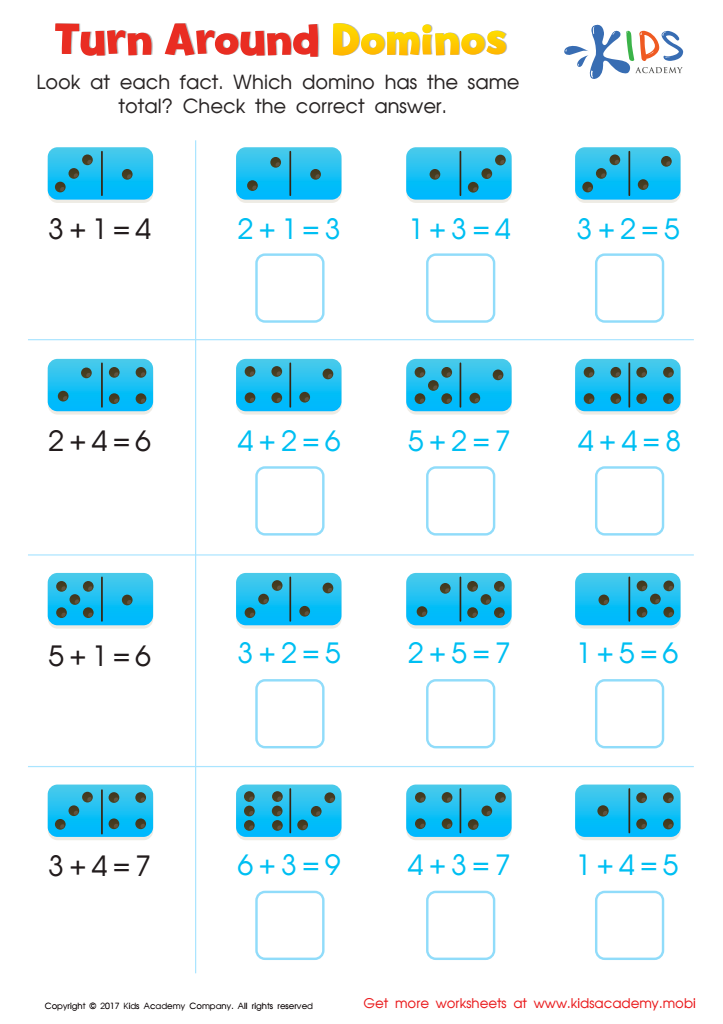
Turn Around Dominos Worksheet
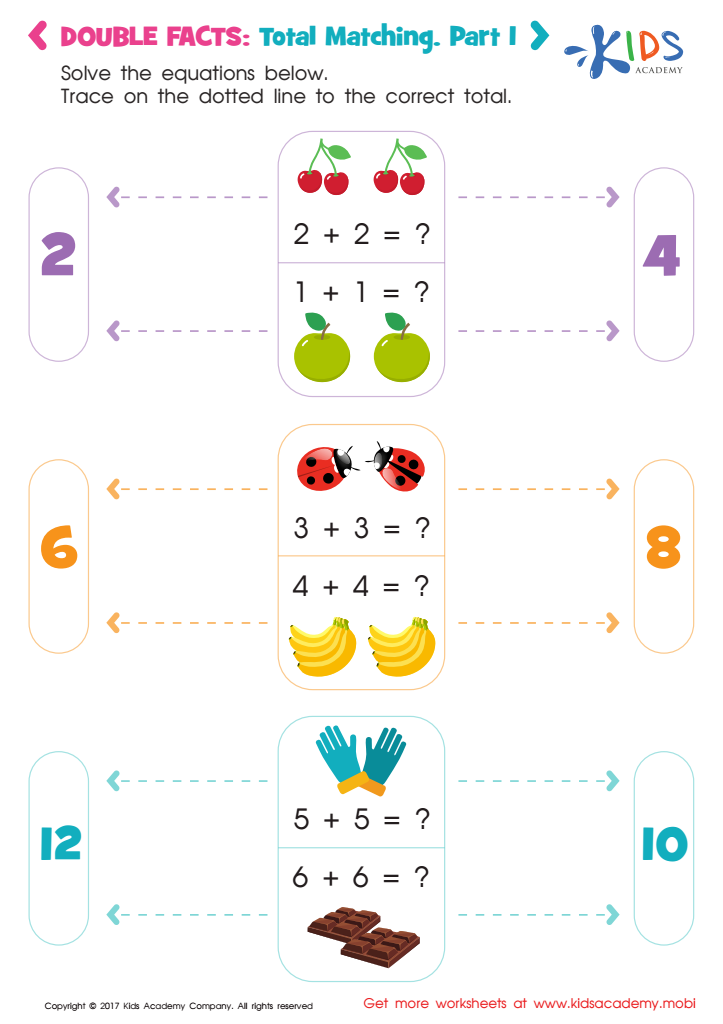
Double Facts: Total Matching Worksheet: Part 1
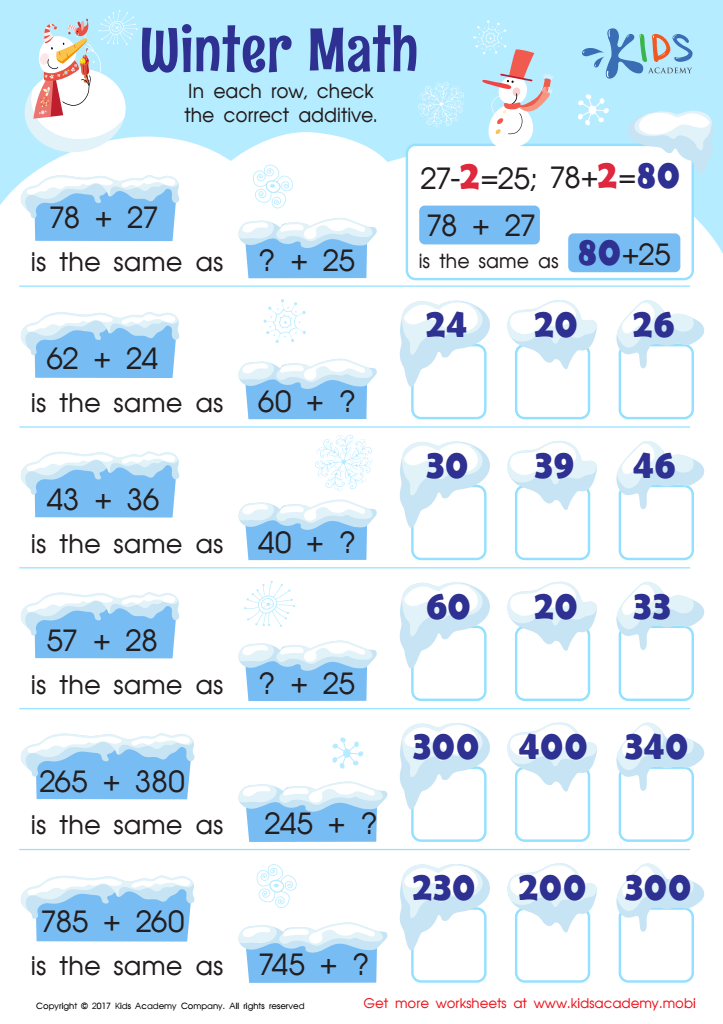
Free Addition Worksheet
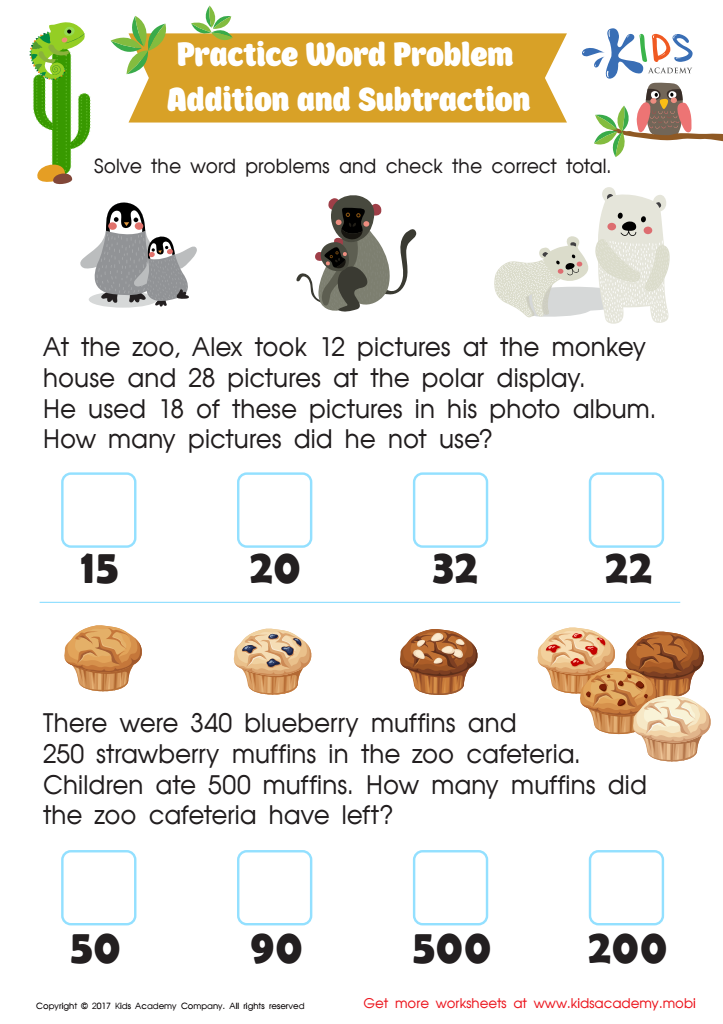
Addition and Subtraction: Word Problems Worksheet
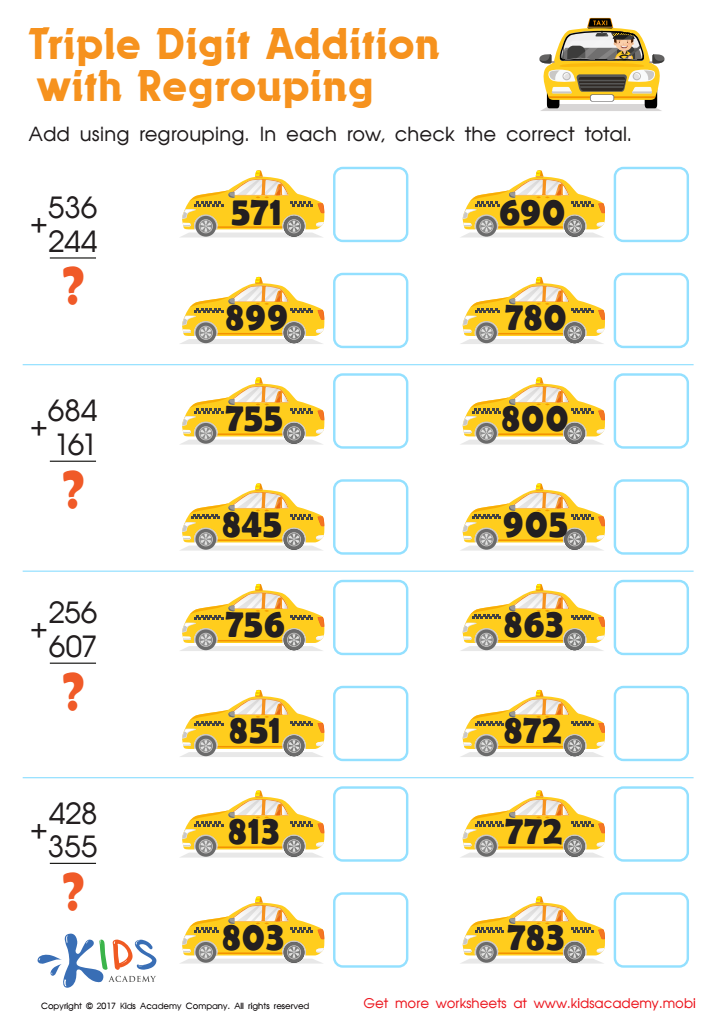
Triple Digit Addition with Regrouping Worksheet
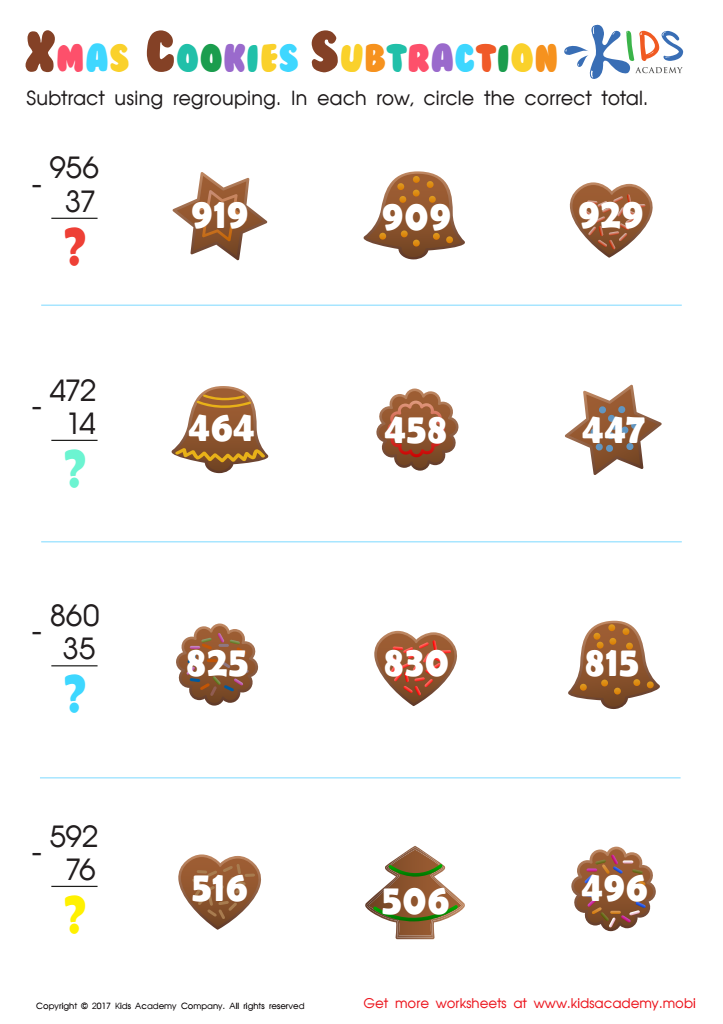
Three Digits Addition with Regrouping Worksheet
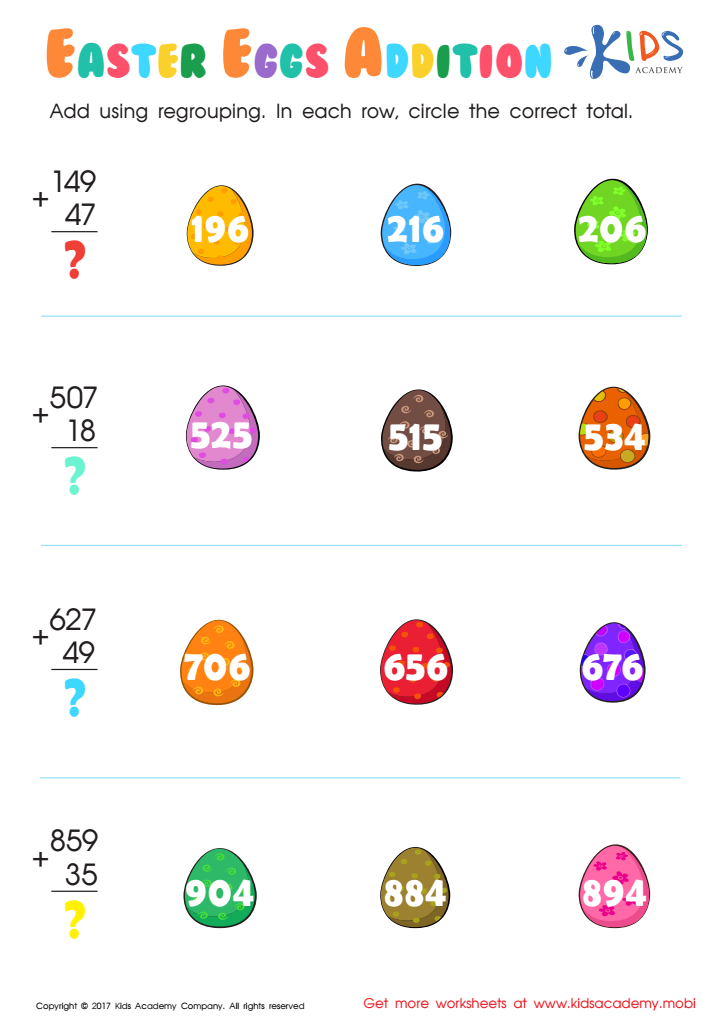
Addition with Regrouping Worksheet
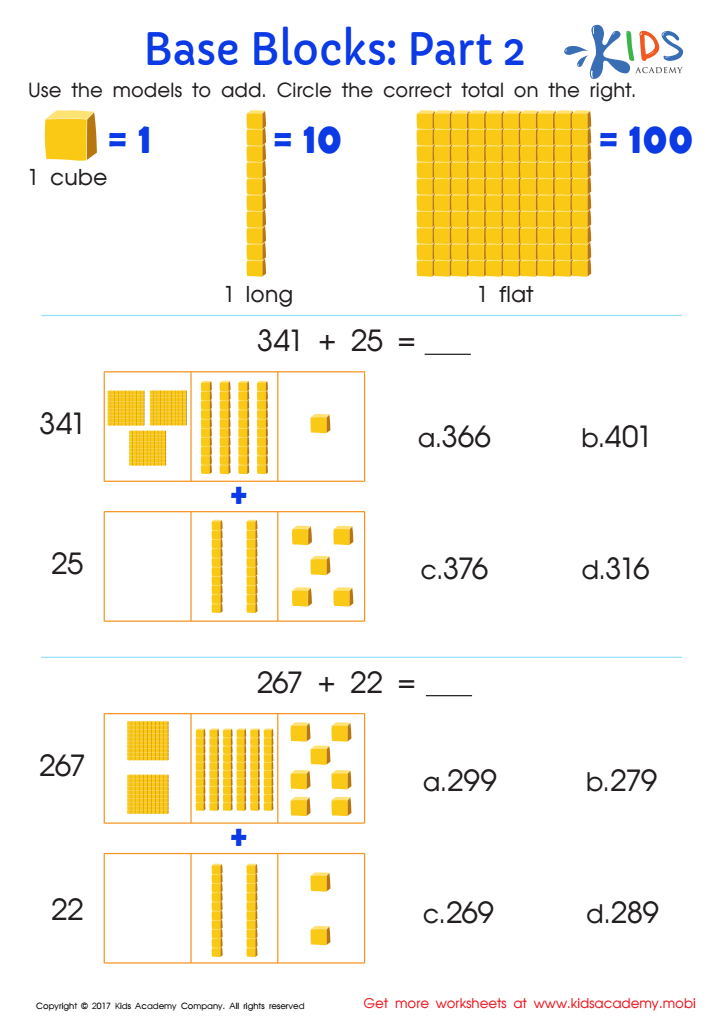
Base Ten Blocks Worksheet: Part 2
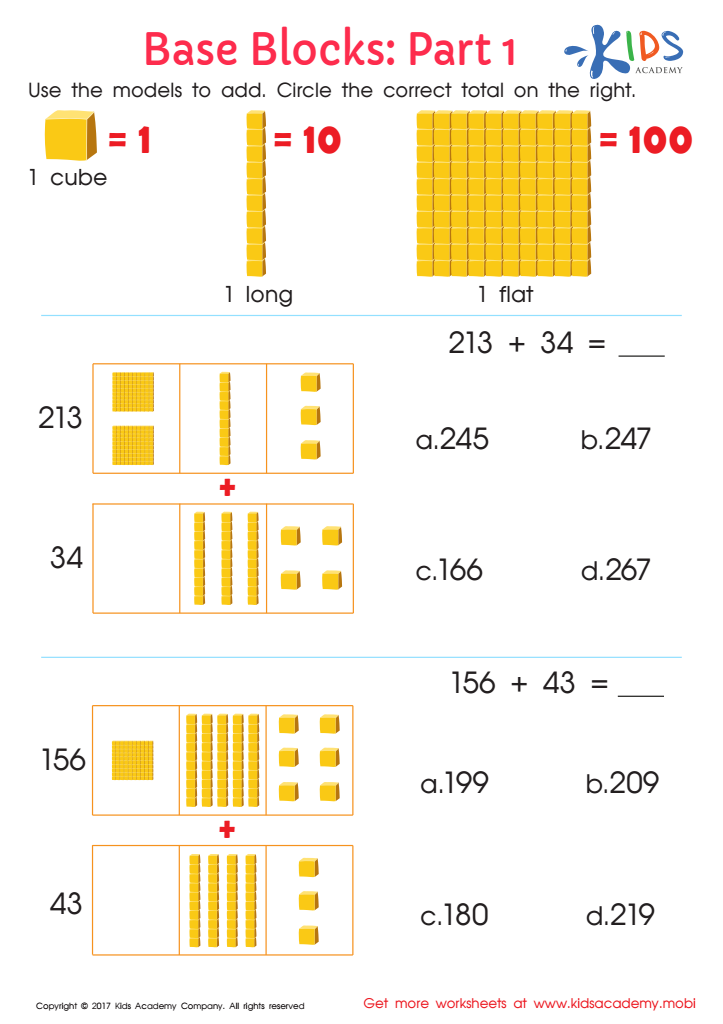
Base Ten Blocks Worksheet: Part 1
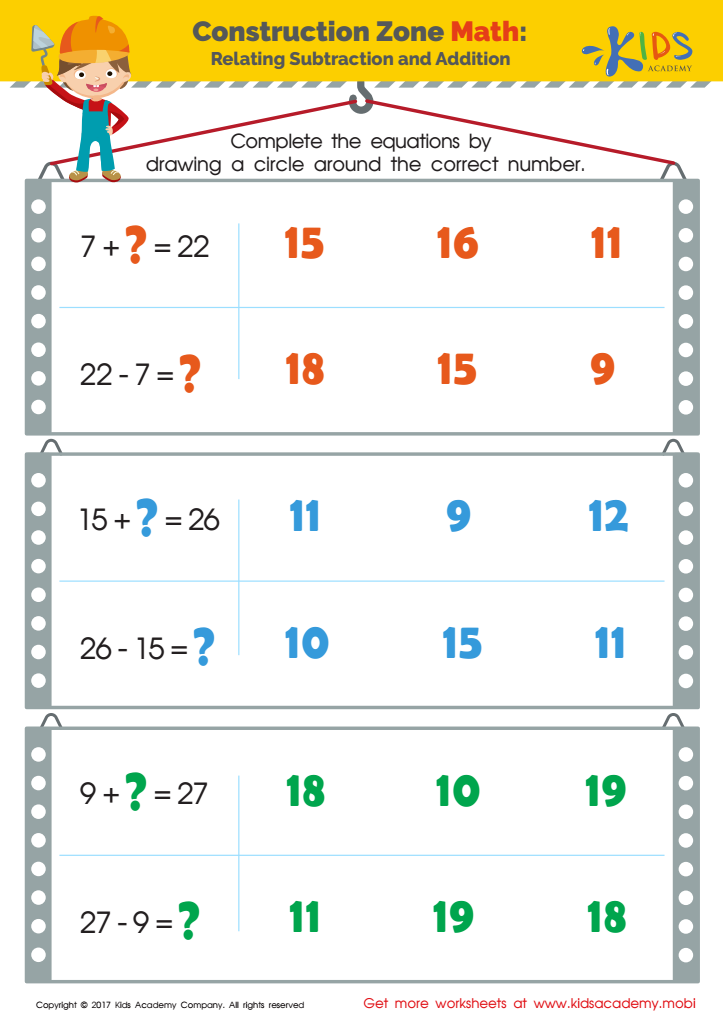
Related Addition and Subtraction Facts Worksheet
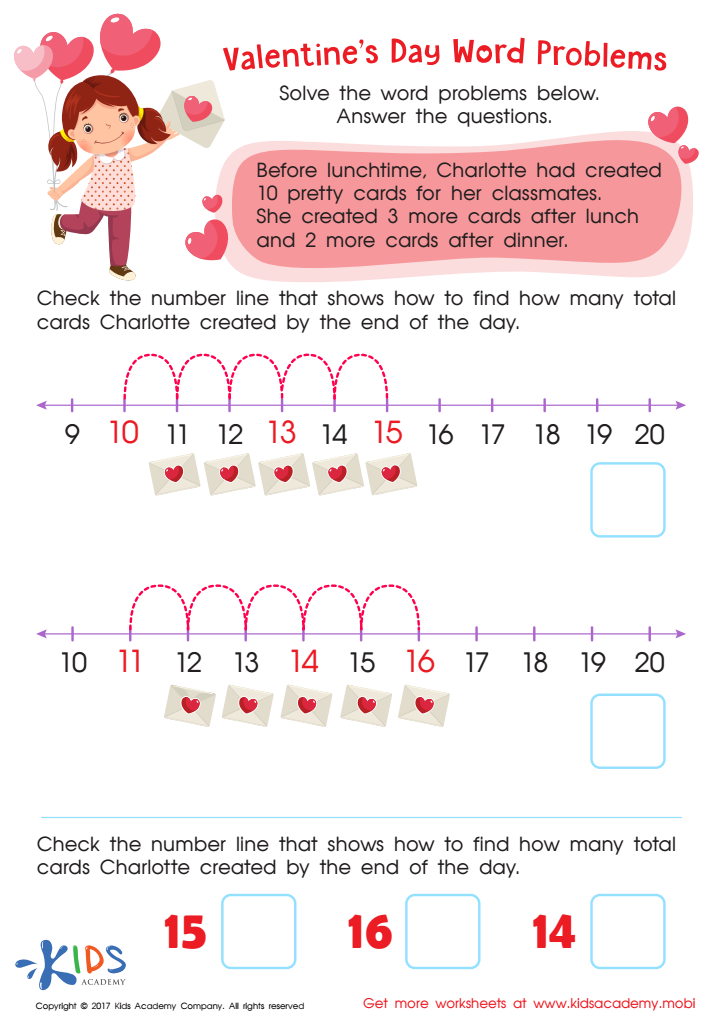
Valentines Day Word Problem Worksheet
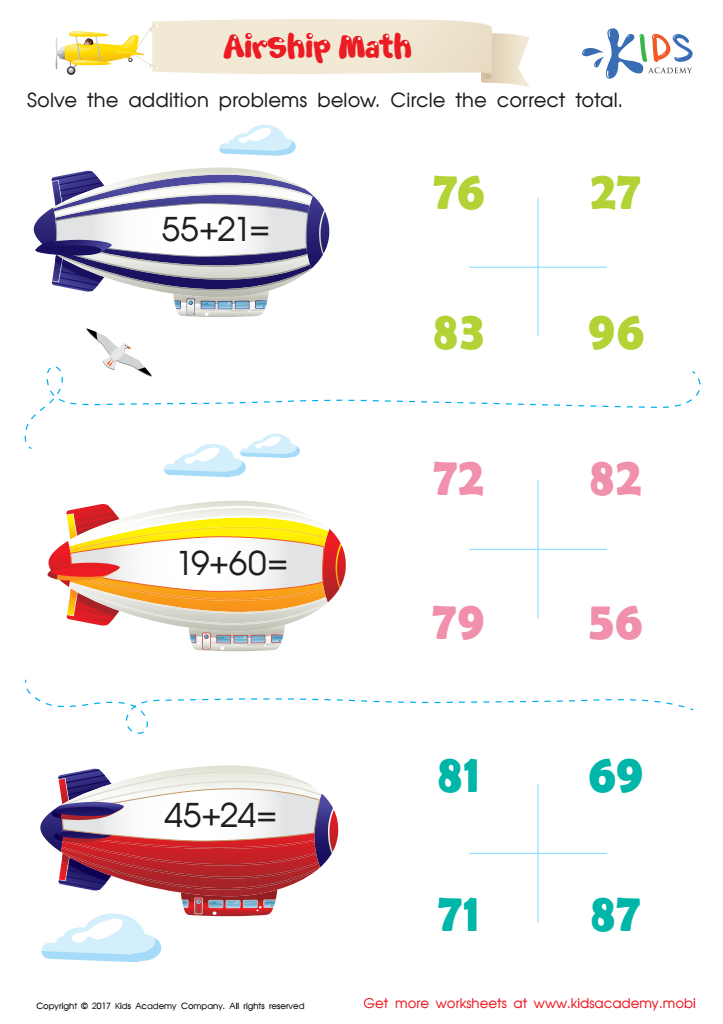
Airship Math Addition Printable
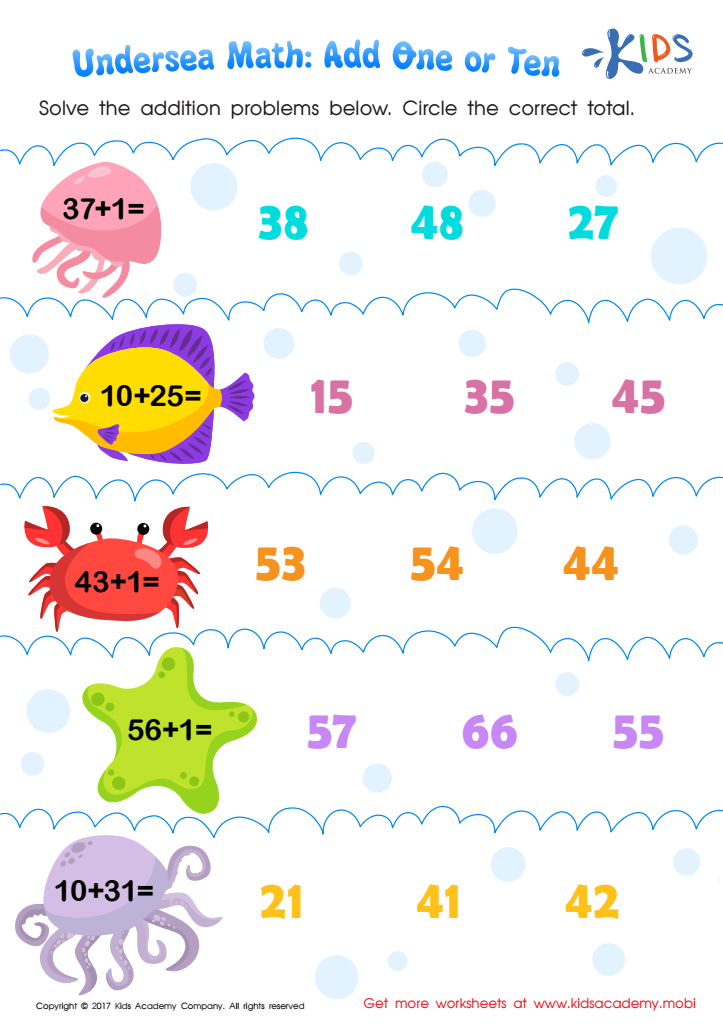
Undersea Math Worksheet
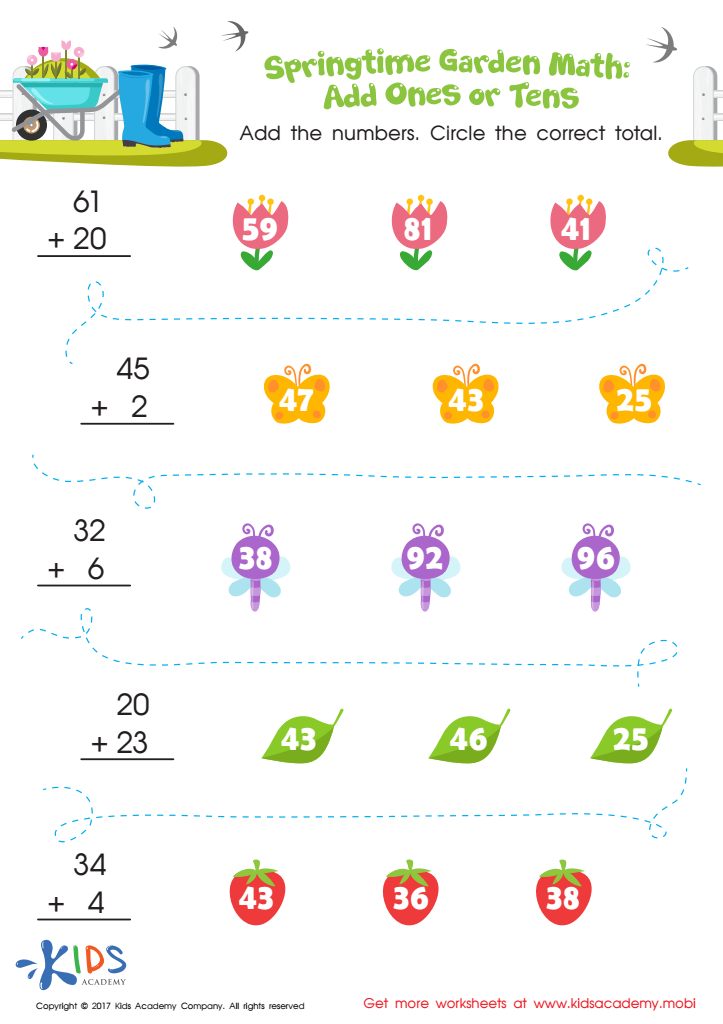
Springtime Garden Math Worksheet
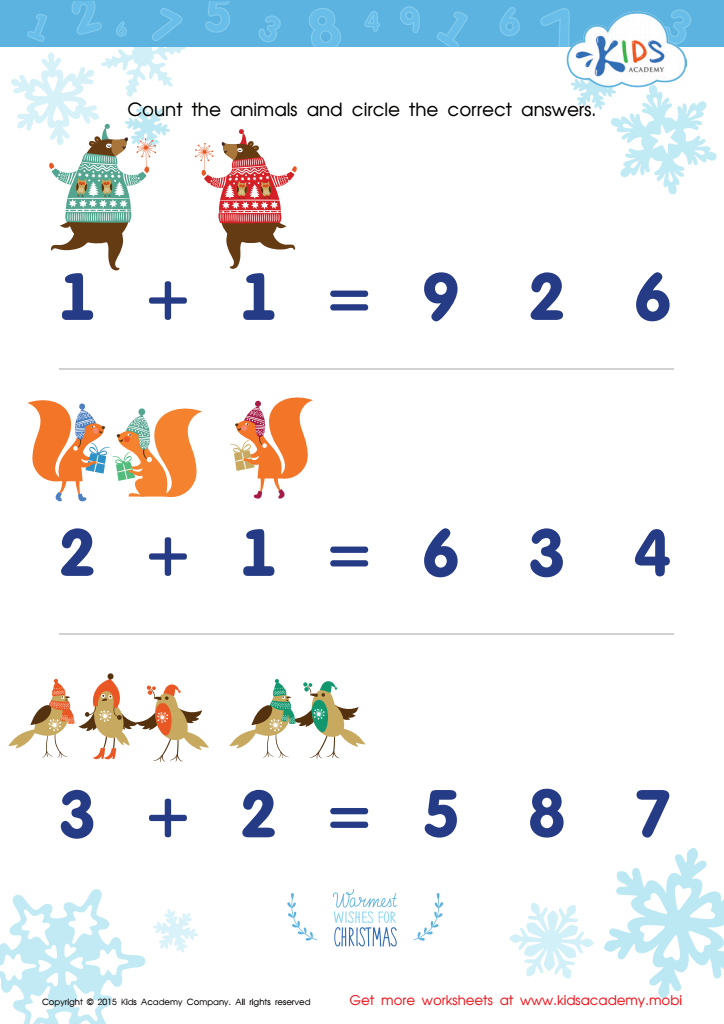
Count Funny Animals Worksheet







Normal Addition, or the base-ten method of addition, is essential for children aged 3-9 as it lays the foundation for mathematical understanding and problem-solving skills. At this developmental stage, children are inherently curious and capable of learning abstract concepts. Introducing them to Normal Addition helps them grasp fundamental mathematical principles through tangible, relatable methods involving groups of ten.
By mastering Normal Addition, children learn to visualize numbers and their relationships. This method encourages them to break down complex problems into simpler, manageable parts. Using physical objects like blocks, fingers, or drawings, young learners can concretely see the process, making abstract concepts like “carrying over” or regrouping more comprehensible.
Additionally, Normal Addition fosters critical thinking and promotes a positive attitude toward mathematics. Children gain confidence as they understand and manipulate numbers, laying the groundwork for more advanced math skills in the future. Moreover, this skill is crucial for real-life situations, enabling children to make sense of everyday tasks involving counting, measuring, and budgeting.
By prioritizing Normal Addition, parents and teachers not only support children’s immediate learning but also equip them with tools vital for lifelong mathematical competency and success.