Normal Vowels and Consonants Worksheets for Ages 4-9 - Page 2
26 filtered results
-
From - To
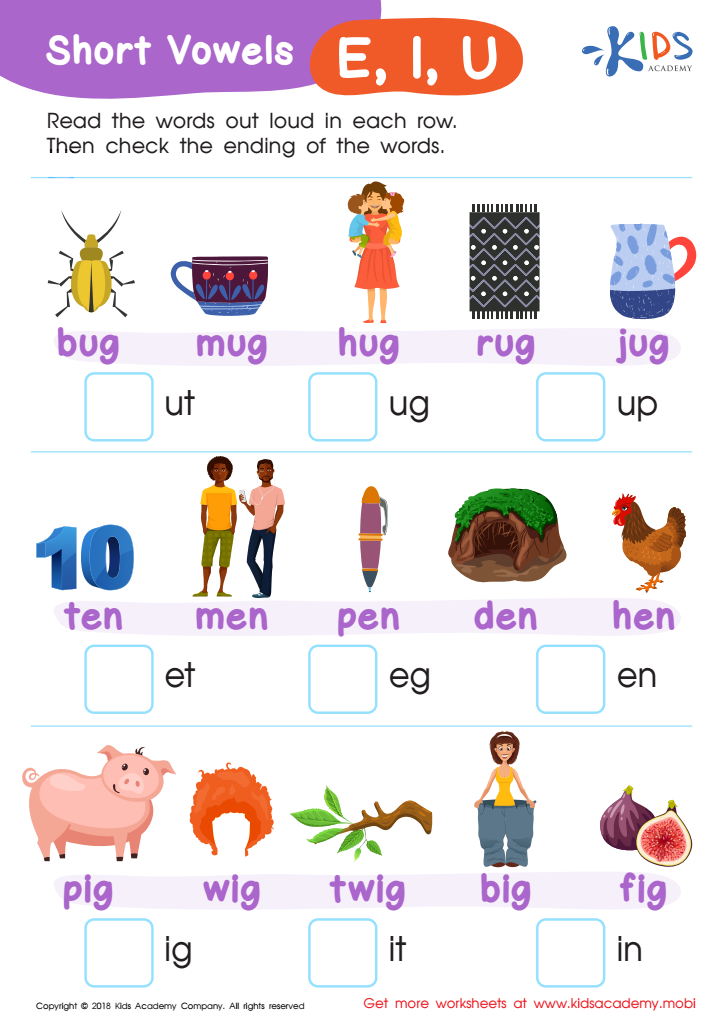
Short Vowels /e/, /i/, and /u/ Worksheet
 Assign to My Students
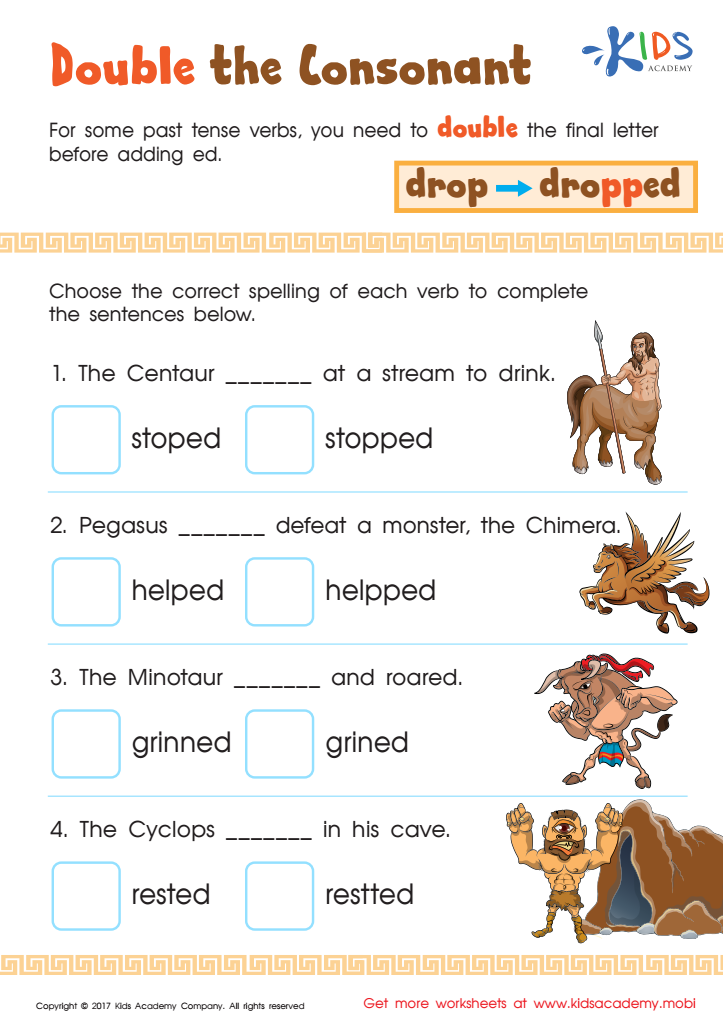
Double Consonant Spelling Worksheet



Understanding normal vowels and consonants is fundamental for children aged 4-9 as it serves as the cornerstone of their literacy development. During these formative years, children are in the critical phase of learning to read and write. Comprehending the distinct sounds associated with vowels (such as 'a', 'e', 'i', 'o', 'u') and consonants (like 'b', 'c', 'd', 'f', 'g') enables them to decode words, improving both their reading fluency and comprehension.
At this age, children primarily engage in phonemic awareness activities, which help them recognize and manipulate the basic sound units in words. By mastering the sounds of vowels and consonants, children can begin to blend these sounds together to form words, a skill known as phonics. For instance, understanding that the letter 'b' makes the /b/ sound and the letter 'a' typically makes the /a/ sound can help a child spell and read the word "bat."
Additionally, early familiarity with these sounds aids in spelling and writing proficiency, fostering confidence and preventing future academic struggles. Vowel and consonant knowledge also enhances children's vocabulary acquisition and pronunciation, promoting clearer communication. Thus, parents and teachers should prioritize teaching normal vowels and consonants to lay a strong foundation for lifelong literacy and learning success.






