Normal Missing Letters Worksheets for Ages 5-6
4 filtered results
-
From - To
Introducing our engaging Normal Missing Letters Worksheets, meticulously crafted for children aged 5-6. This collection is designed to sharpen young minds by enhancing their letter recognition and alphabetical sequencing skills. Through a series of fun, yet challenging activities, your child will embark on an educational journey, filling in the gaps to complete words, thereby boosting their spelling abilities and vocabulary. Perfect for both classroom and at-home learning, these worksheets are an essential tool for early literacy development. Give your child the advantage of mastering the basics of the English language with our Normal Missing Letters Worksheets for Ages 5-6. Dive into a world of learning and fun!
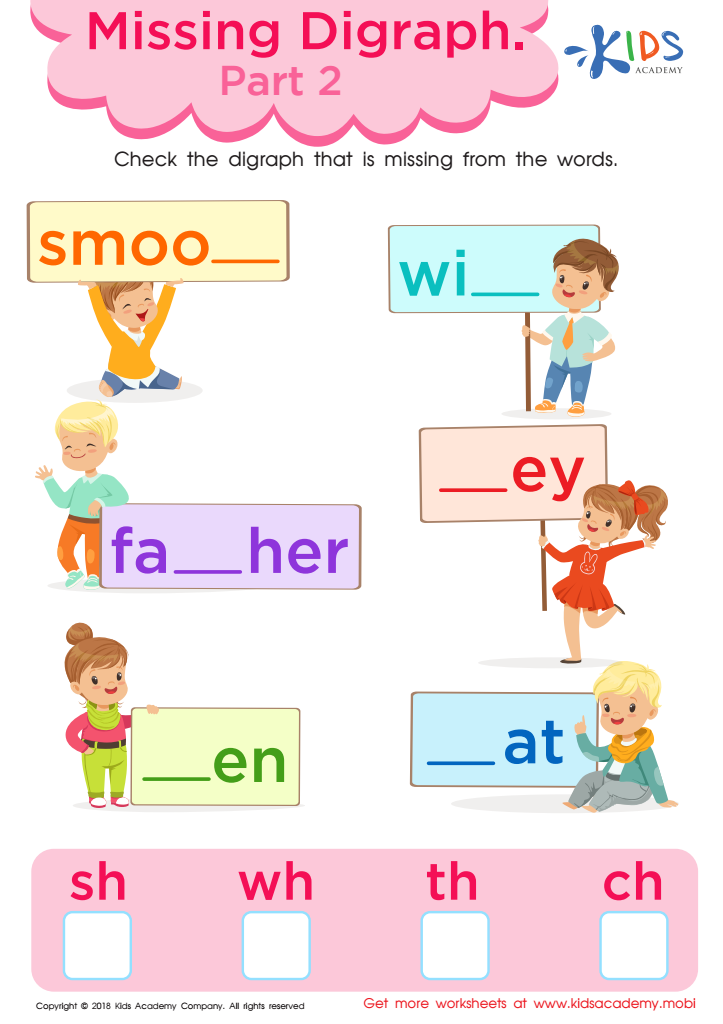
Missing Digraph: Part 2 Worksheet
 Assign to My Students
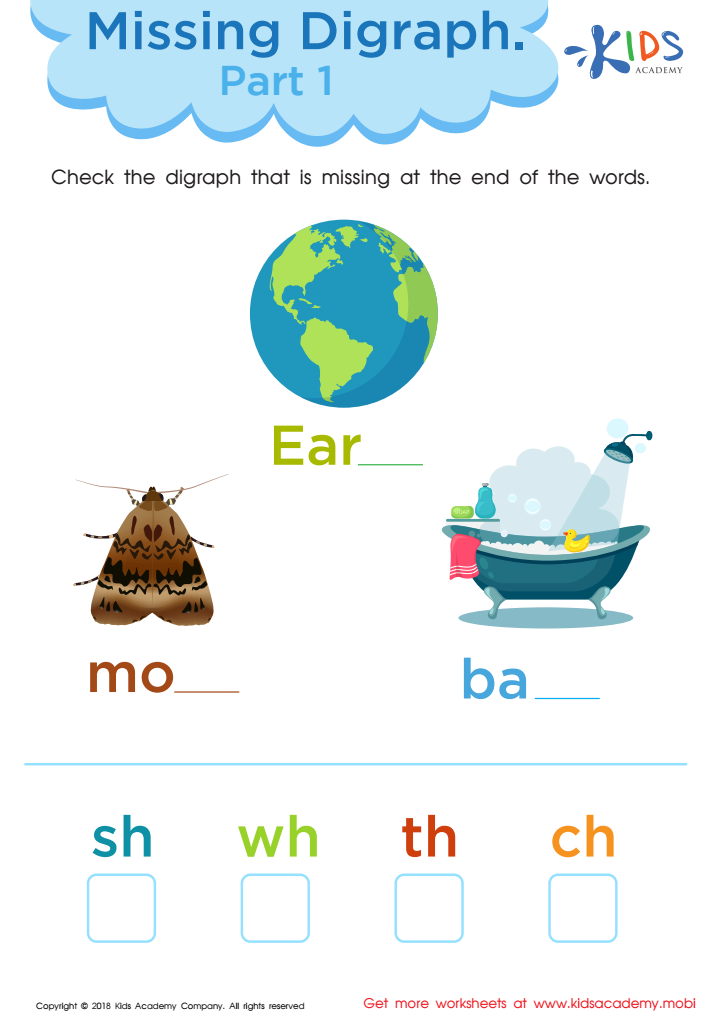
Missing Digraph: Part 1 Worksheet
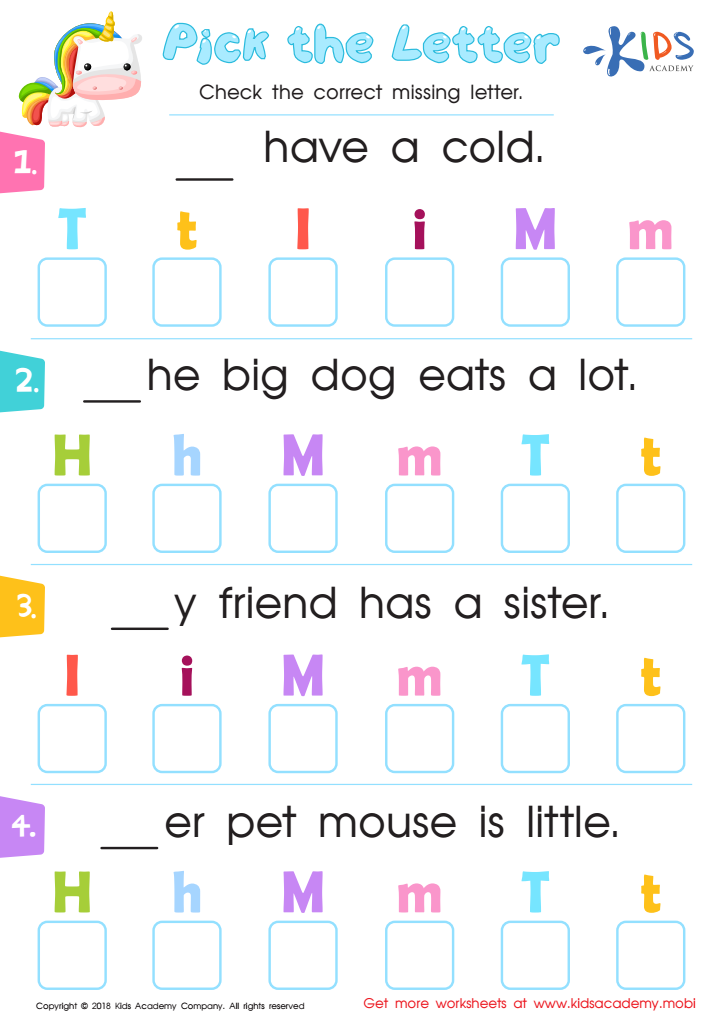
Pick the Letter Worksheet
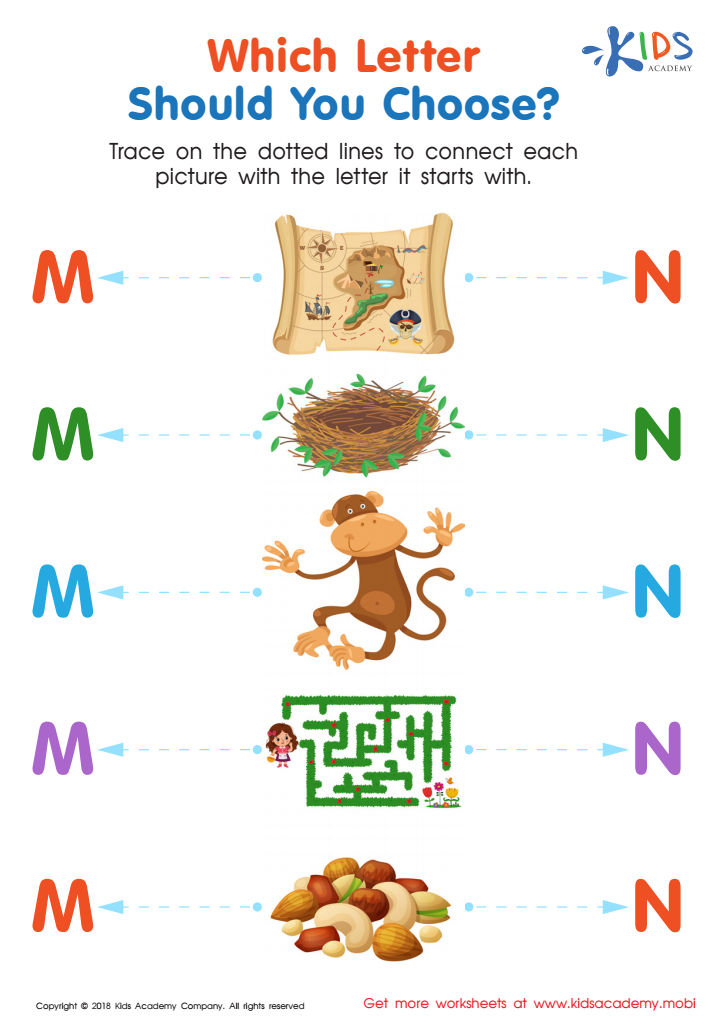
Which Letter Should you Choose? Worksheet



Normal Missing Letters worksheets for Ages 5-6 play a pivotal role in early childhood education, offering a range of benefits that extend beyond mere alphabet recognition. These worksheets are expertly designed to cater to children aged 5 to 6, a critical period for cognitive and linguistic development. Engaging young learners with Normal Missing Letters activities stimulates their brains, encouraging them to think critically and analytically as they deduce which letters are missing from given words.
This educational tool is not only about memorizing the alphabet; it's about understanding the structure and phonetics of words. Children learn to recognize patterns, which is essential for reading and spelling. Furthermore, these worksheets enhance problem-solving skills. When faced with the task of identifying missing letters, children learn to use context and their knowledge of word shapes, which boosts their confidence and independent thinking abilities.
Moreover, Normal Missing Letters worksheets for Ages 5-6 support the development of fine motor skills as children write down the missing letters. This practice is crucial for handwriting development, preparing them for more complex writing tasks in the future.
In essence, Normal Missing Letters worksheets are a multifaceted educational tool, offering a fun and engaging way for children aged 5 to 6 to develop crucial language, cognitive, and motor skills, laying a strong foundation for their future academic success.







