Normal Middle Vowel Worksheets for Ages 5-7
4 filtered results
-
From - To
Discover engaging Normal Middle Vowel Worksheets designed for children ages 5-7! These interactive resources help young learners develop essential skills in vowel recognition and sound differentiation. Our worksheets provide a fun and effective way to enhance reading, writing, and phonemic awareness. Each activity is crafted to capture children's attention, featuring colorful illustrations and age-appropriate exercises that promote effective learning. As kids work through identifying middle vowels in words, they build foundational language skills vital for their literacy journey. Perfect for both classroom settings and home practice, these worksheets make learning an enjoyable experience. Start enhancing your child's reading skills today!
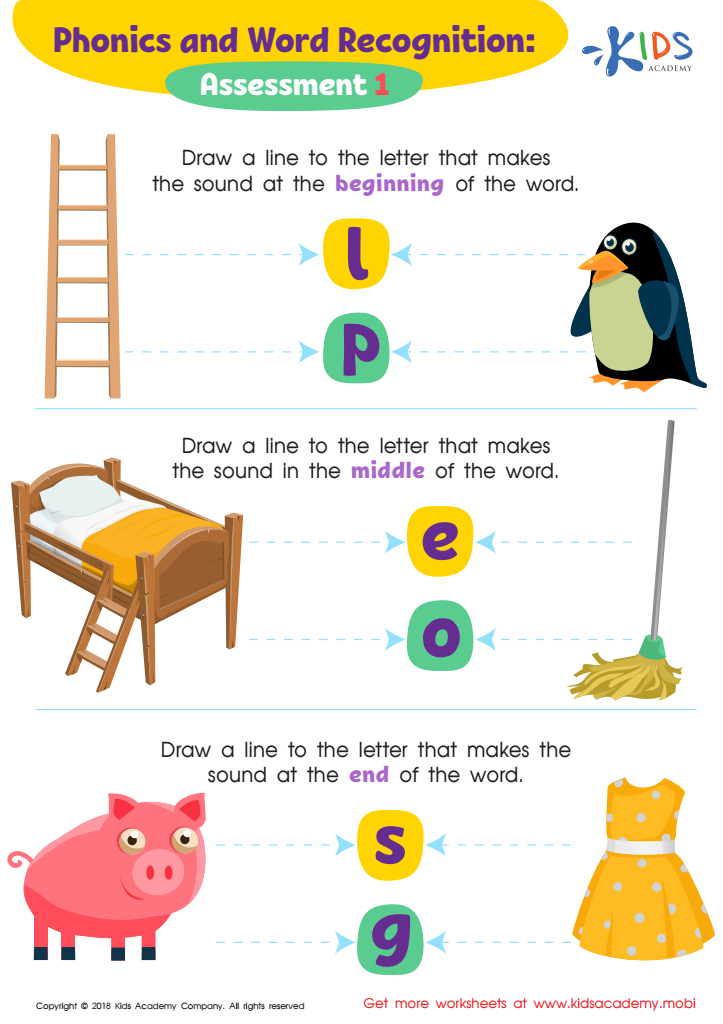
Phonics and Word Recognition: Assessment 1 ELA Worksheet
 Assign to My Students
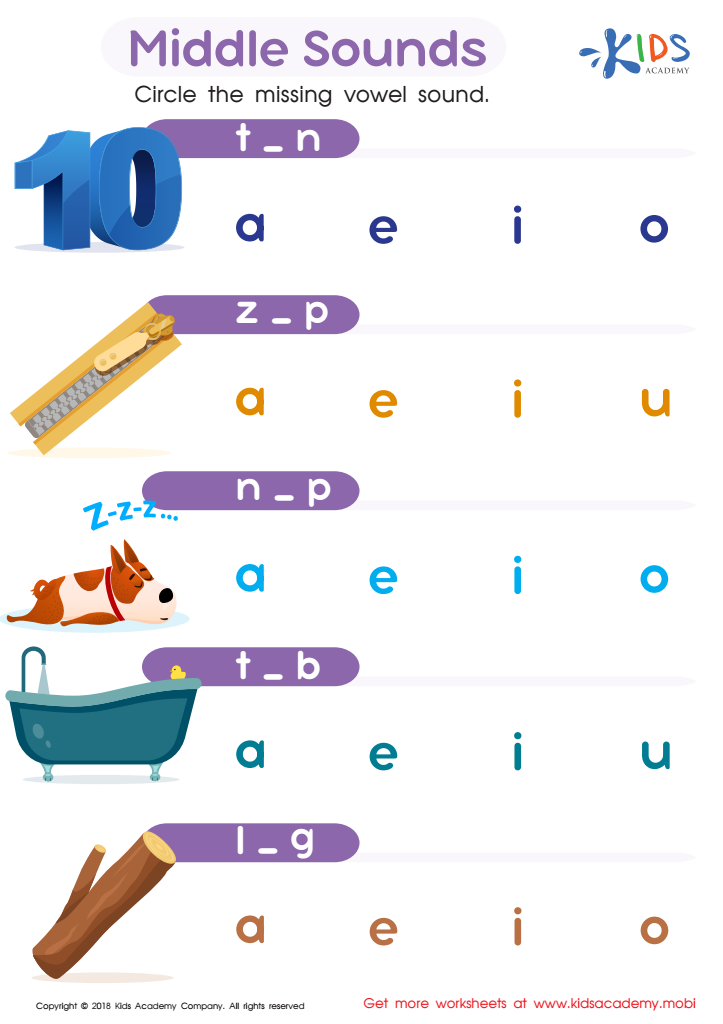
Middle Sounds Worksheet
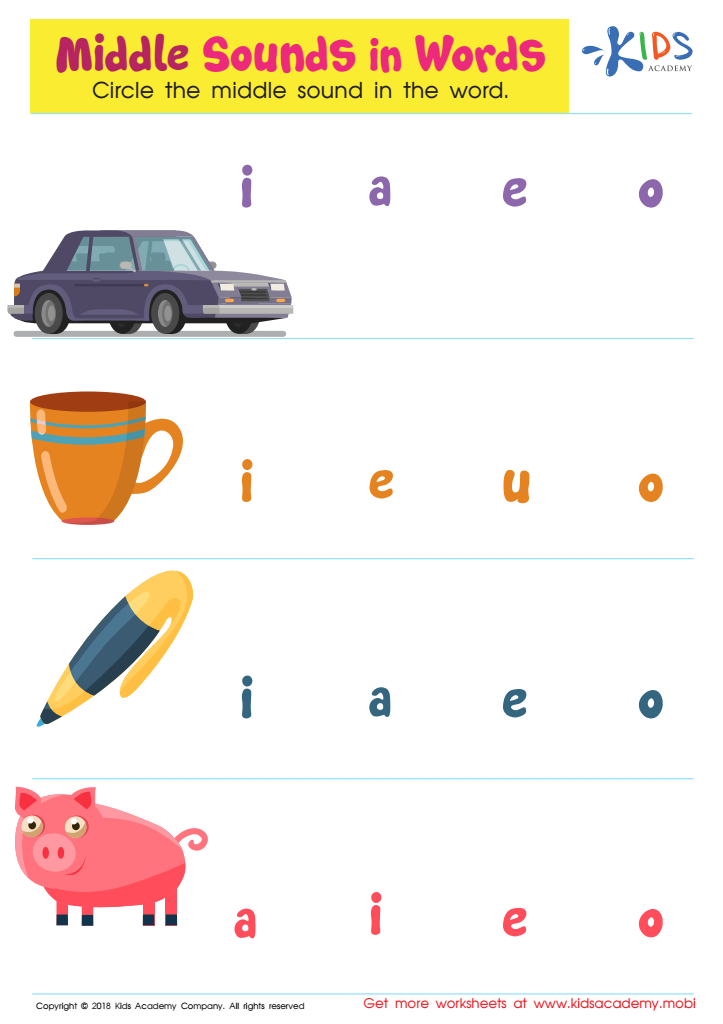
Middle Sounds in Words Worksheet
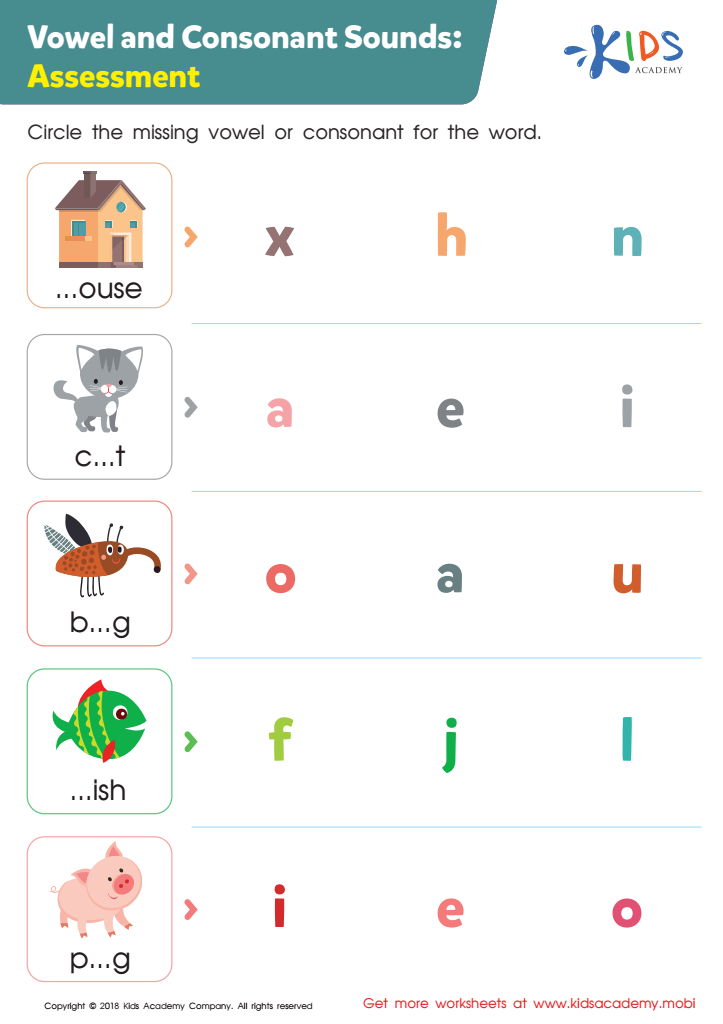
Vowel and Consonant Sounds: Assessment Worksheet



Understanding normal middle vowels is crucial for children aged 5-7 as these letters significantly enhance their early reading and writing skills. During this developmental stage, children are typically mastering phonics, which involves recognizing the sounds that letters and combinations of letters make. Normal middle vowels, like the "a" in "cat," "e" in "bed," "i" in "sit," "o" in "hot," and "u" in "cup," are instrumental in forming words correctly and understanding their pronunciation.
When parents and teachers emphasize the importance of these vowels, they help children build a solid foundation in literacy. Vowel sounds often change the meaning of words; understanding them can improve spelling skills and foster a love of reading. Furthermore, recognizing vowel sounds aids in phonemic awareness, which is crucial for decoding words.
Engagement in activities that highlight normal middle vowels can make learning fun and interactive, encouraging children to explore language creatively. This knowledge prepares young learners for more complex reading materials and subjects in the future, ultimately enhancing their academic success and boosting their confidence. Investing time in teaching these fundamental concepts can yield significant long-term benefits in a child's educational journey.