Normal Fractions of Shapes Worksheets for Ages 5-7
5 filtered results
-
From - To
Discover our engaging "Normal Fractions of Shapes Worksheets" designed specifically for children ages 5-7. These colorful and interactive worksheets introduce young learners to the concept of fractions through fun shapes and visual aids. Kids will explore common fractions by identifying, coloring, and matching various shapes, helping them enhance their understanding of parts and wholes in a playful manner. Perfect for enhancing math skills at home or in the classroom, these worksheets provide a solid foundation for early mathematical concepts. Download now and watch your child gain confidence in recognizing and working with fractions through exciting and educational activities!
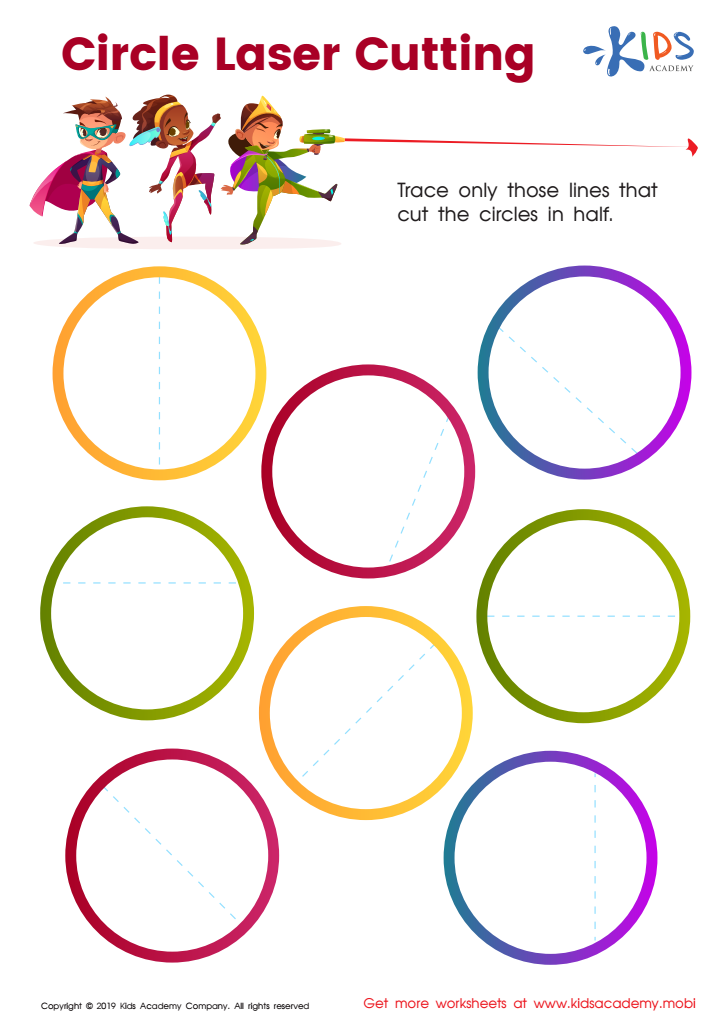
Circle Laser Cutting Worksheet
 Assign to My Students
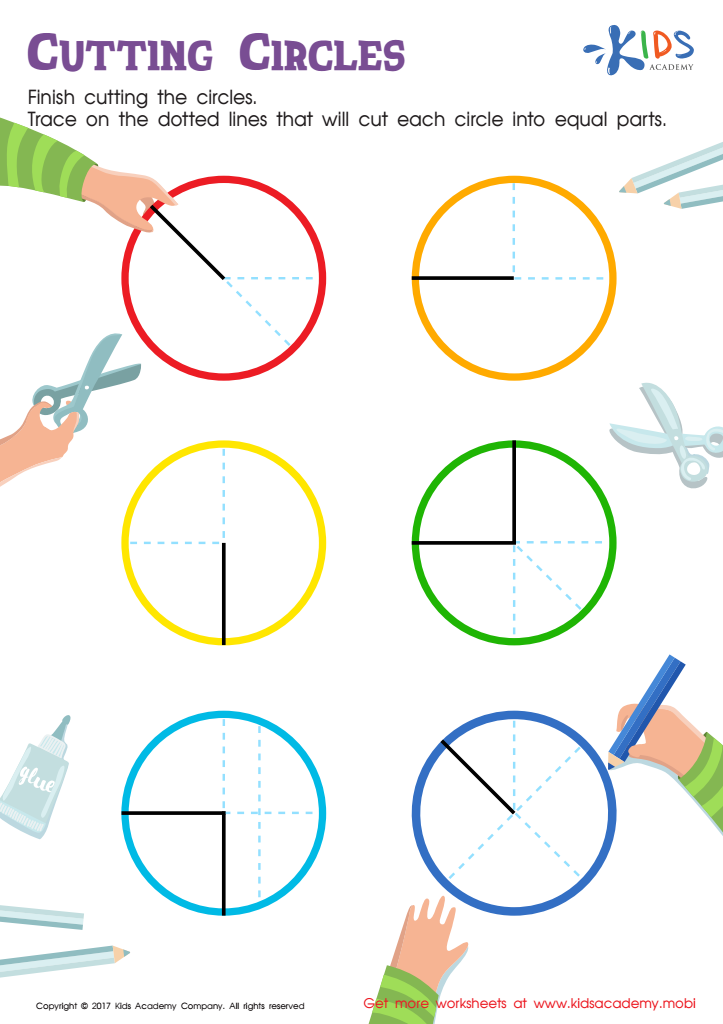
Cutting Circles Worksheet
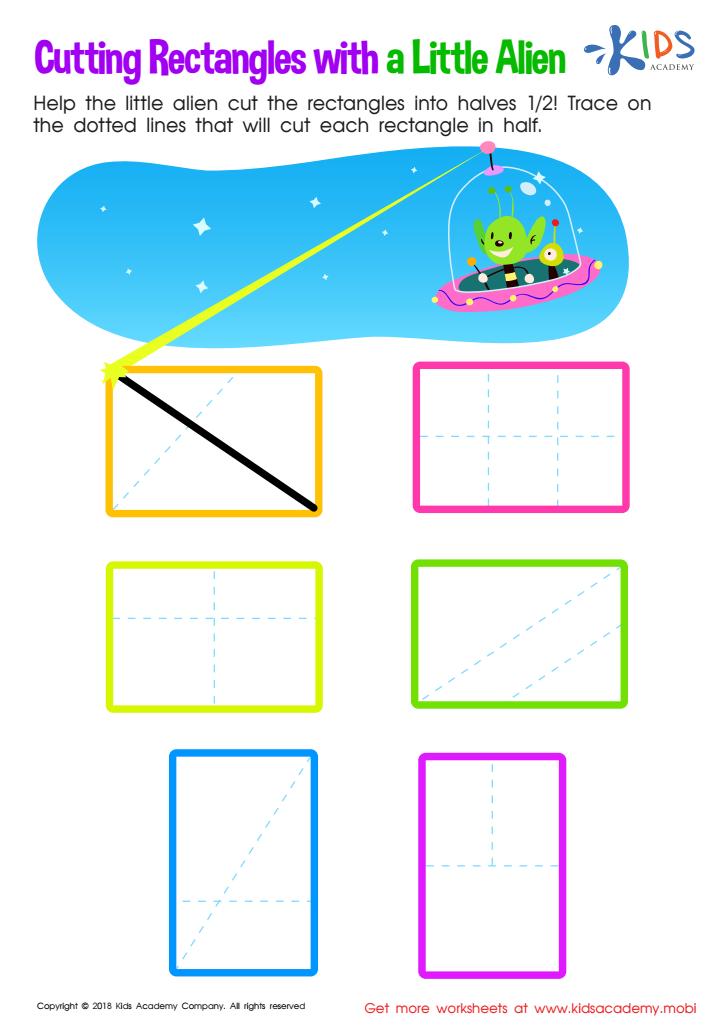
Cutting Rectangles with Alien Worksheet
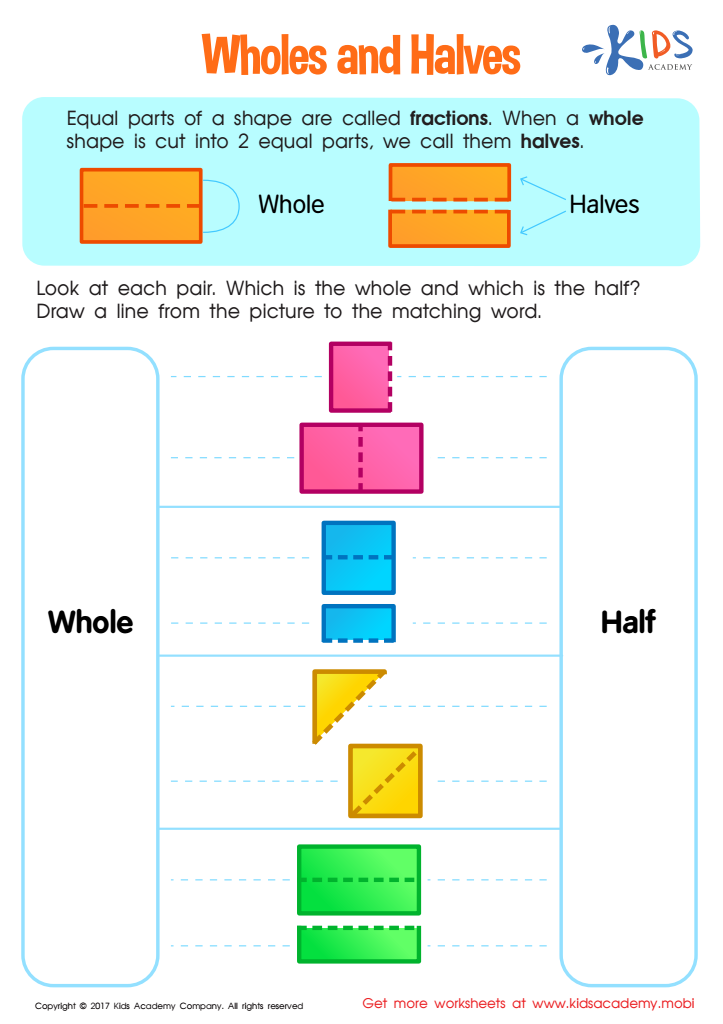
Wholes and Halves Worksheet
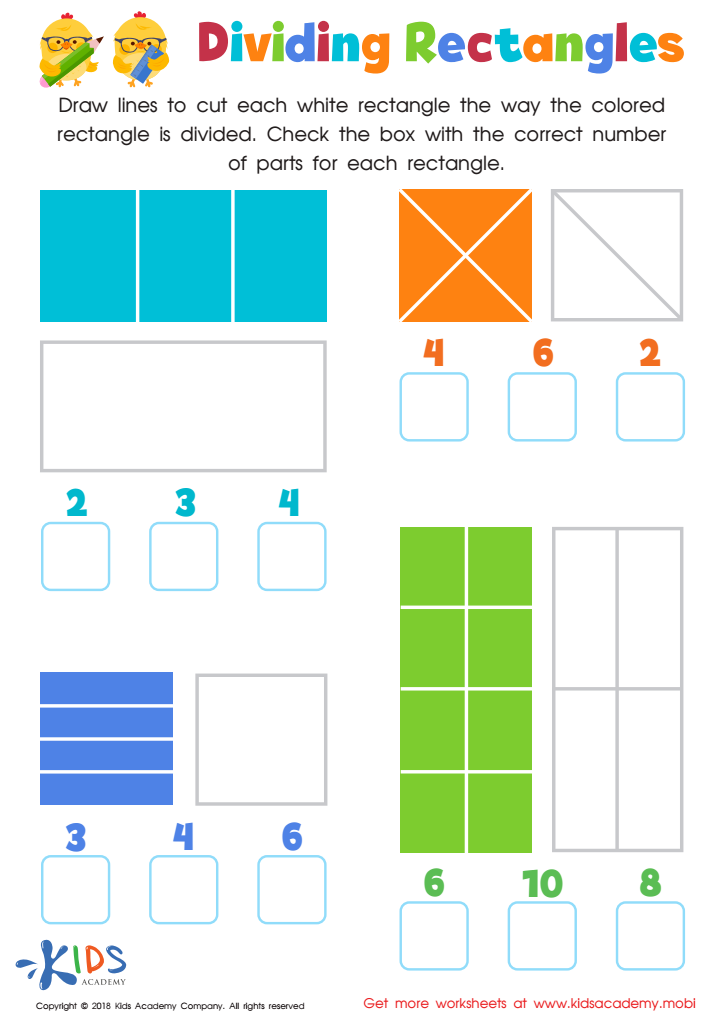
Dividing Rectangles Worksheet








Parents and teachers should care about normal fractions of shapes for children aged 5-7 because this foundational concept lays the groundwork for future mathematical understanding and critical thinking skills. At this age, children are naturally curious and eager to explore numbers and shapes, making it an ideal time to introduce them to fractions through visual and tangible experiences.
Understanding fractions as parts of a whole fosters spatial awareness, enhances problem-solving abilities, and encourages a visual approach to mathematics. For instance, when children manipulate shapes like circles or squares, they visually grasp concepts like halves, quarters, or thirds, making abstract ideas more accessible. It also helps them connect math with real-life situations, such as sharing pizza or dividing a cake, which makes math relevant and engaging.
Additionally, early exposure to fractions aids in developing essential skills for later topics like addition, subtraction, and even more complex numerical concepts in higher grades. By nurturing their understanding of normal fractions early on, parents and teachers can instill confidence, curiosity, and a positive attitude towards math, ultimately paving the way for academic success and a lifelong love for learning.