Filters

56 filtered results

Clear all filters
Favorites
With answer key
Interactive

56 filtered results

Difficulty Level

Grade


Check out this FREE Trial Lesson on Physical Science for age 5-7!

Observing Properties

Favorites
With answer key
Interactive
  • 5-7
  • Interactive
  • Physical Science
  • Normal
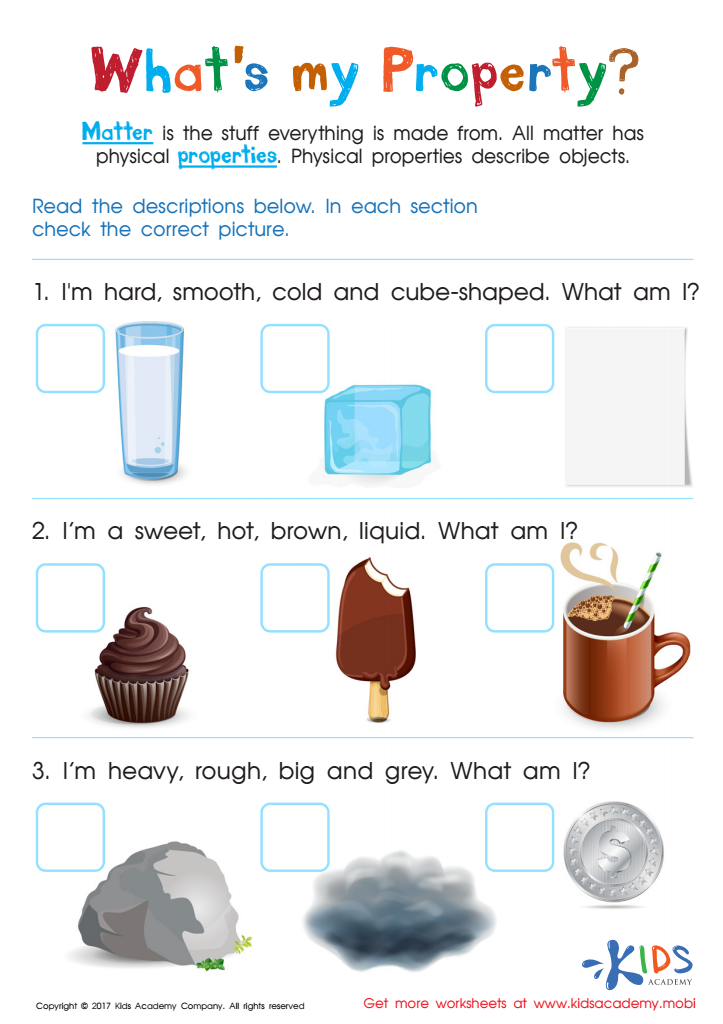
Physical properties of matter worksheet

Physical Properties Of Matter Worksheet

This physical properties of matter worksheet helps them explore liquids, gases and solids in an engaging way. Try it today! (80 words)
Physical Properties Of Matter Worksheet
Worksheet
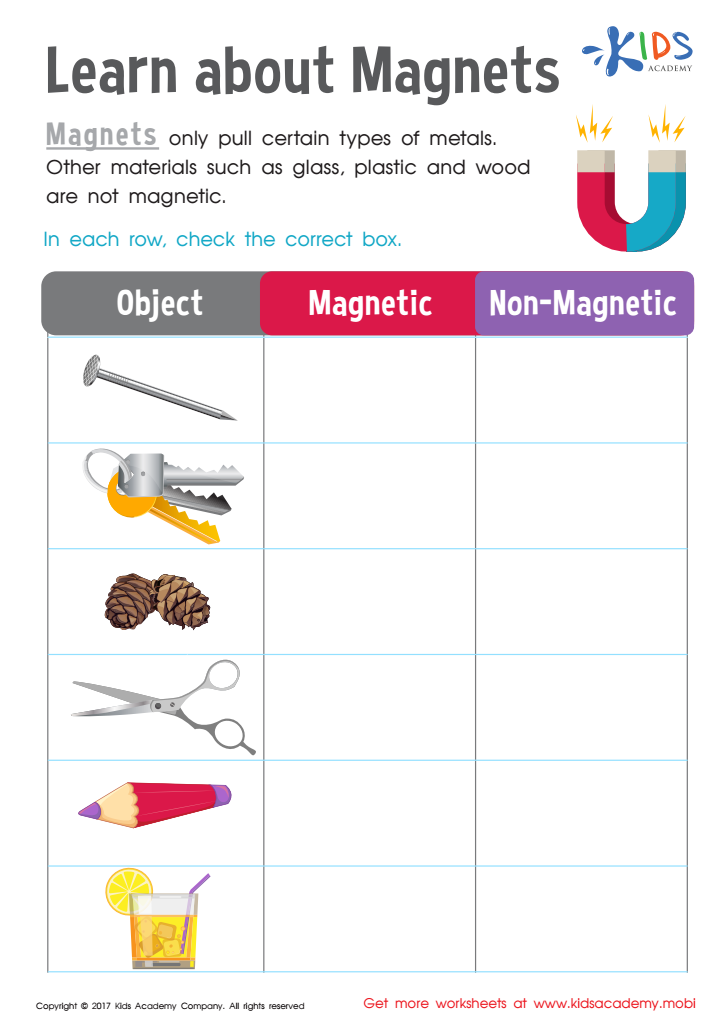
Magnetic or not worksheet

Magnetic Or Not Worksheet

Kids will love discovering the magical power of magnetism with this fun worksheet. Uncover the magic of magnetism with this fun worksheet! Kids will love identifying objects that are magnetic and those that are not. Objects made of metal and those that aren't can be identified, helping your child to gain valuable practice and explore the mysterious power of magnetism!
Magnetic Or Not Worksheet
Worksheet
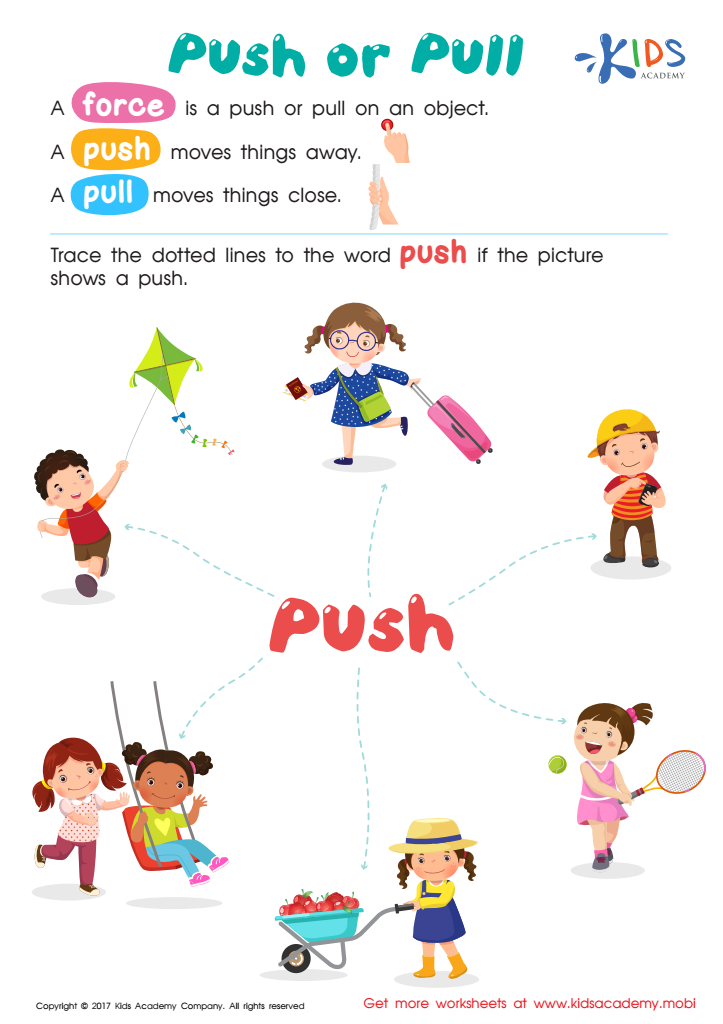
1st grade worksheet: Push or Pull

Push or Pull Worksheet

and which involve pulling! With this fun worksheet, your child will learn about force and its simple application in everyday activities. Get them started with Push or Pull! (80 words)
Push or Pull Worksheet
Worksheet
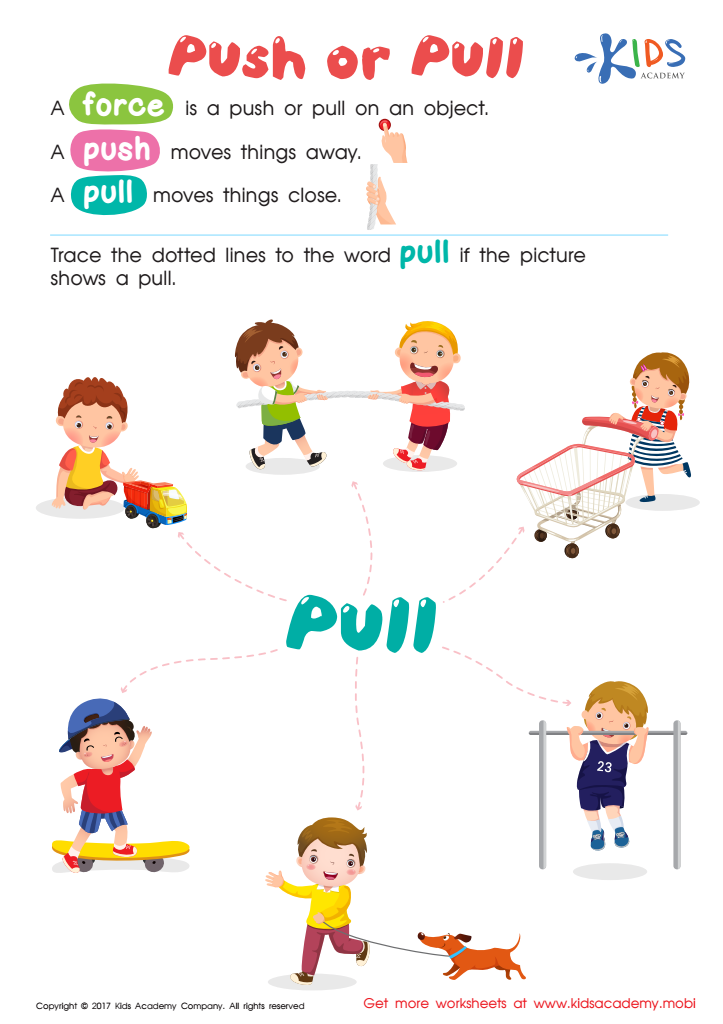
Worksheet: Push or Pull

Pull or Push Worksheet

With this fun worksheet, they'll explore physics by sorting objects into categories according to their mode of motion. It's a great way to get them interested in science.
Pull or Push Worksheet
Worksheet
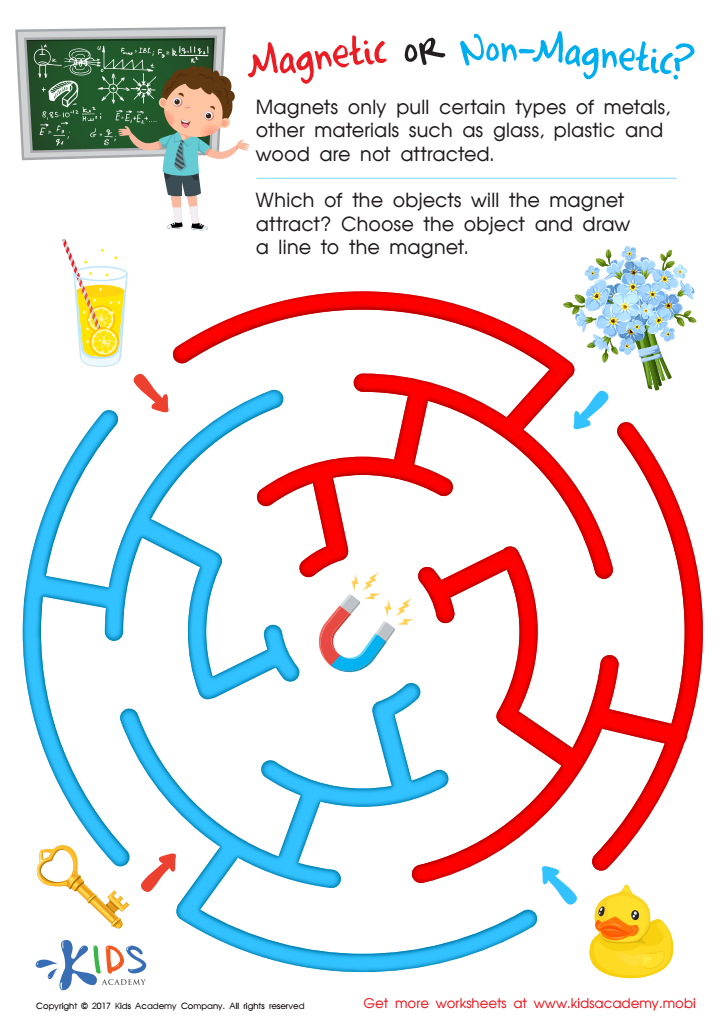
Worksheet: Magnetic or Non-Magnetic

Magnetic or Non–Magnetic Worksheet

Introduce your child to magnetism with this fun maze! Read the summary to explain the concept, then help them find the magnetic object as they navigate the maze. It's a great way to learn and have fun!
Magnetic or Non–Magnetic Worksheet
Worksheet
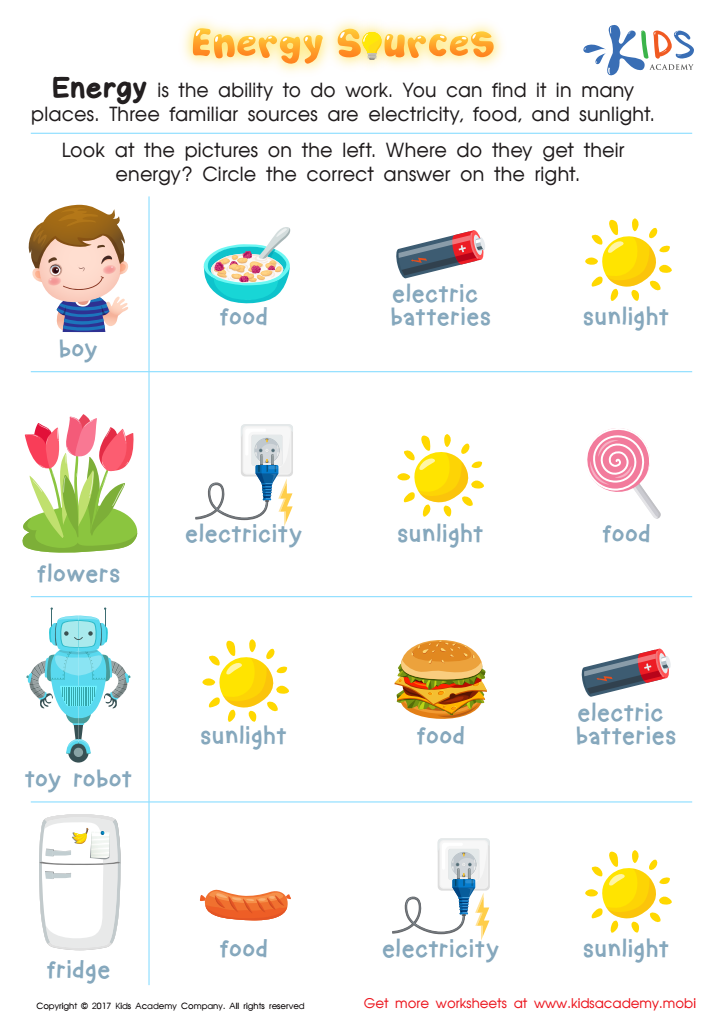
Energy sources worksheet PDF

Energy Sources Printable

Introduce energy sources with this worksheet PDF — explore the sun, batteries, and more! Get your mini scientist excited about energy and power up their learning.
Energy Sources Printable
Worksheet
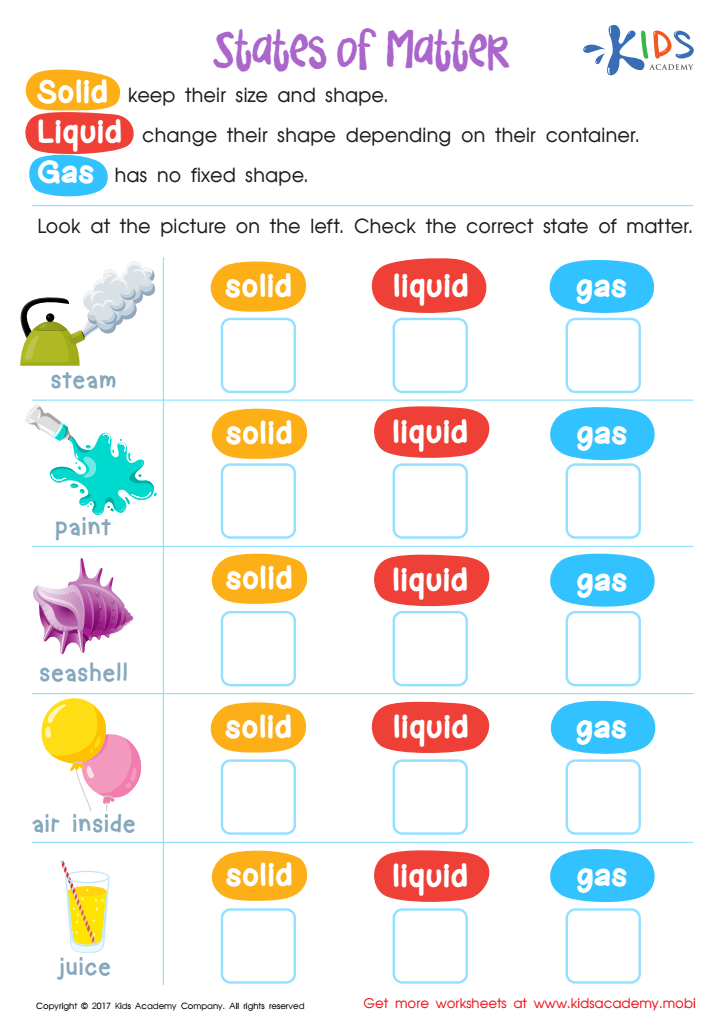
Worksheet: States of Matter

Physical Science: States of Matter Worksheet
Kids must identify a substance as solid, liquid, or gas to master physical science. Help them understand elements in the world with this engaging worksheet!
Physical Science: States of Matter Worksheet
Worksheet
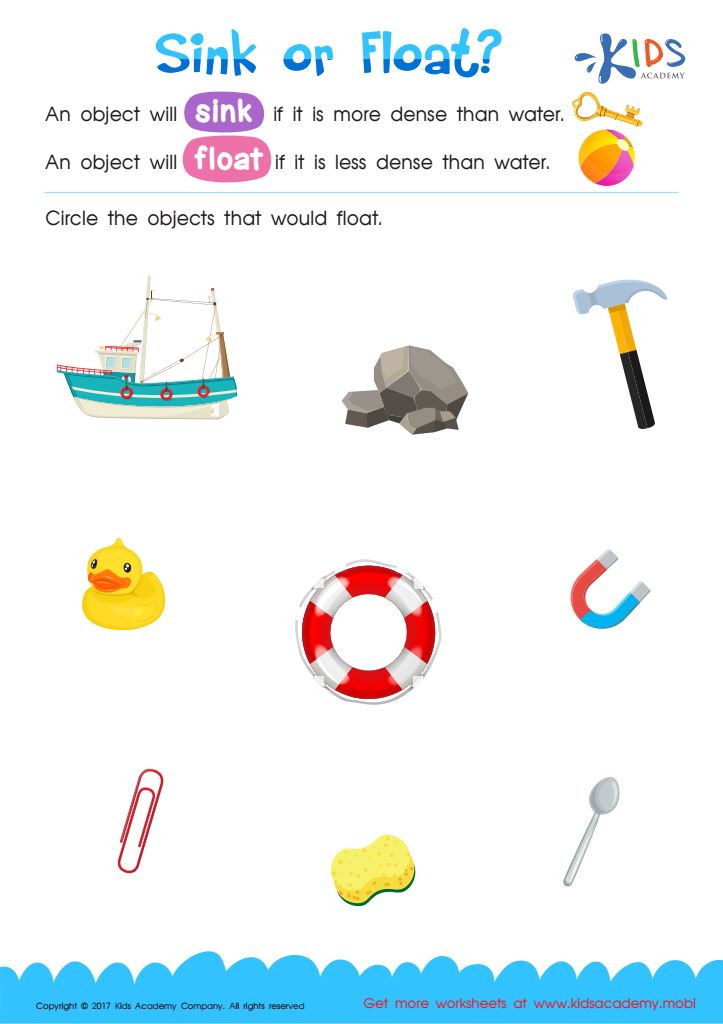
Worksheet: Sink or Float

Sink or Float Printable

They'll learn why some things stay on the surface and others sink to the bottom. (80 words)
Sink or Float Printable
Worksheet


... 2 3

Parents and teachers should care about Normal Physical Science for ages 5-7 because it lays the foundational understanding of how the world works. At this age, children are naturally curious and eager to explore their surroundings, making it the perfect time to engage them with scientific concepts. Introducing physical science helps nurture this curiosity, providing essential building blocks for critical thinking and problem-solving skills.

Furthermore, learning about basic concepts such as forces, motion, and energy can enhance a child's observational and reasoning abilities. These early experiences in science can inspire a lifelong interest in the subject, fostering future scientists, engineers, and informed citizens.

Moreover, incorporating normal physical science in early education encourages interactive, hands-on activities that promote collaboration and communication among peers. This not only helps children grasp difficult concepts but also builds social skills and teamwork.

Lastly, understanding physical science is crucial for developing a safe awareness of the world. For example, learning about the effects of gravity or the principles of motion can help children navigate their environment more confidently. By prioritizing physical science education, parents and teachers can equip young learners with the skills and knowledge necessary for academic success and responsible citizenship in an increasingly scientific world.