Normal Subtraction Worksheets for Ages 5-8 - Page 2
29 filtered results
-
From - To
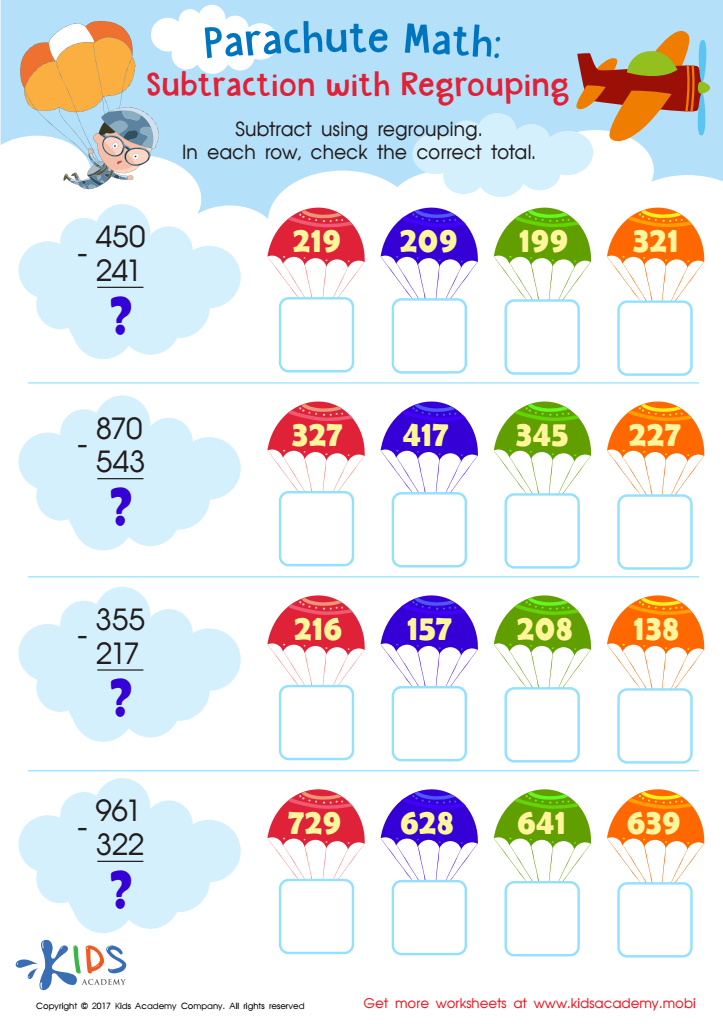
Subtraction with Regrouping for 3rd Grade Worksheet
 Assign to My Students
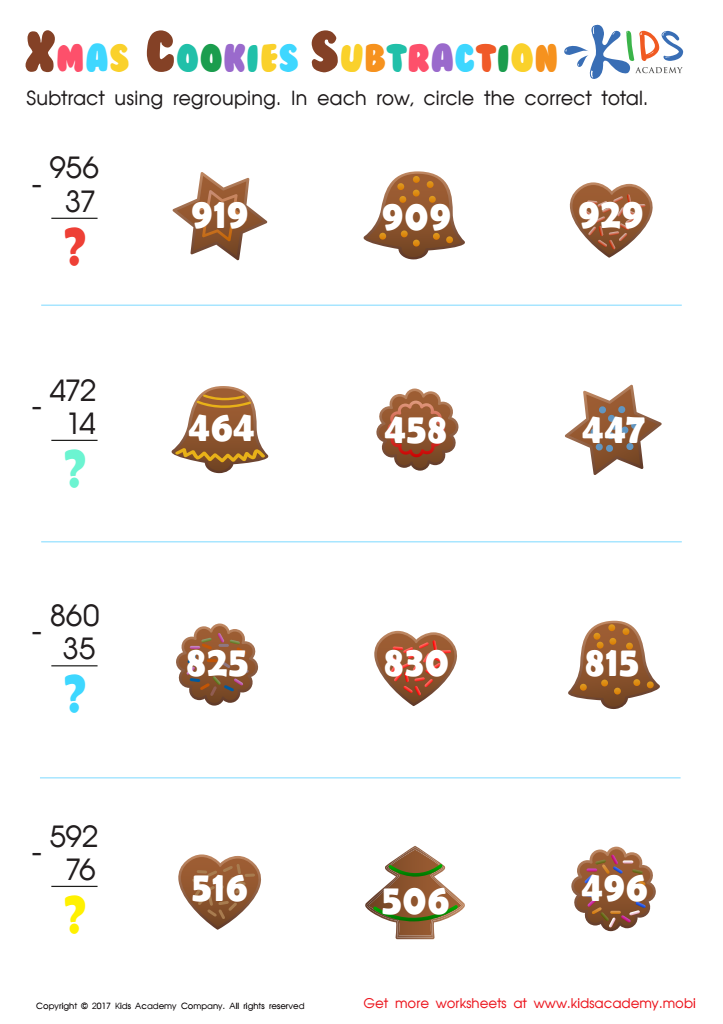
Three Digits Addition with Regrouping Worksheet
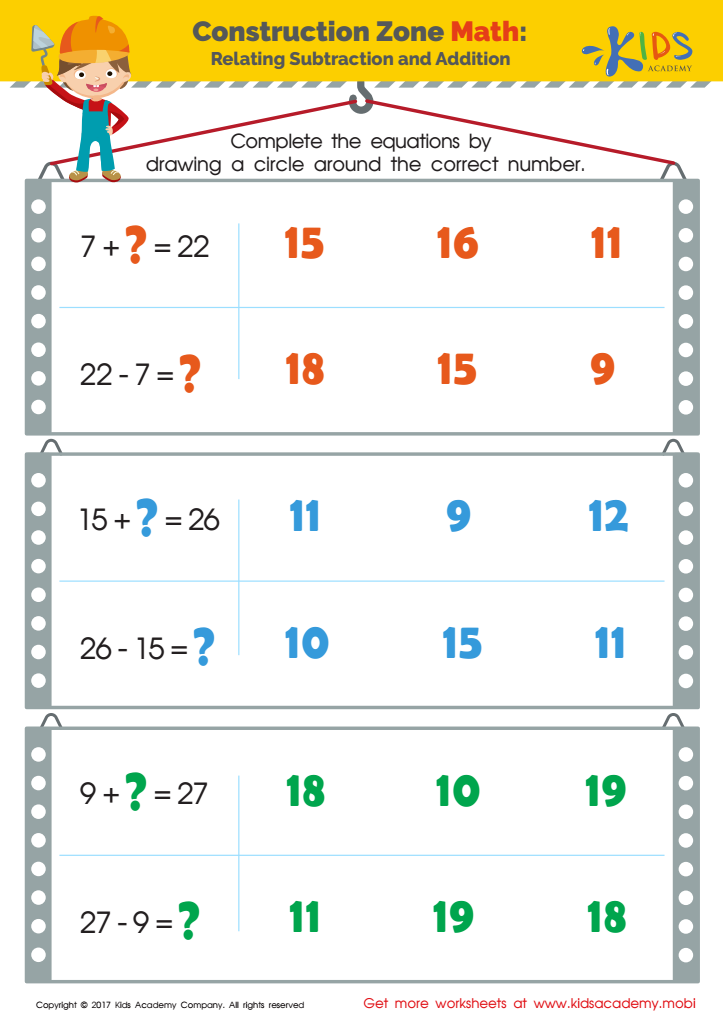
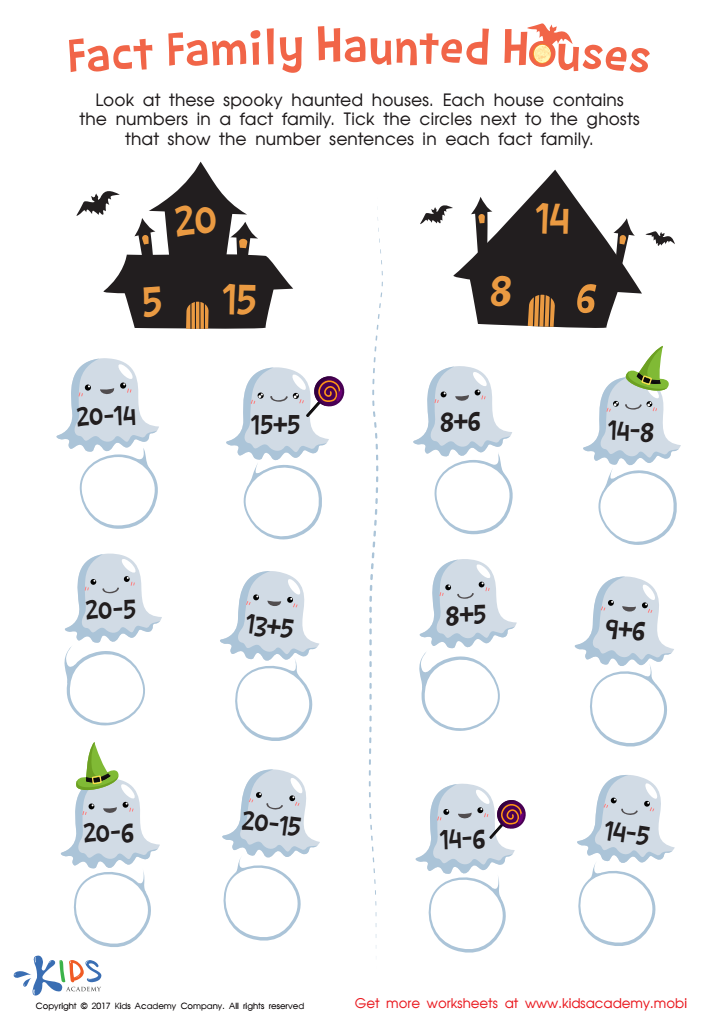
Related Addition and Subtraction Facts Worksheet
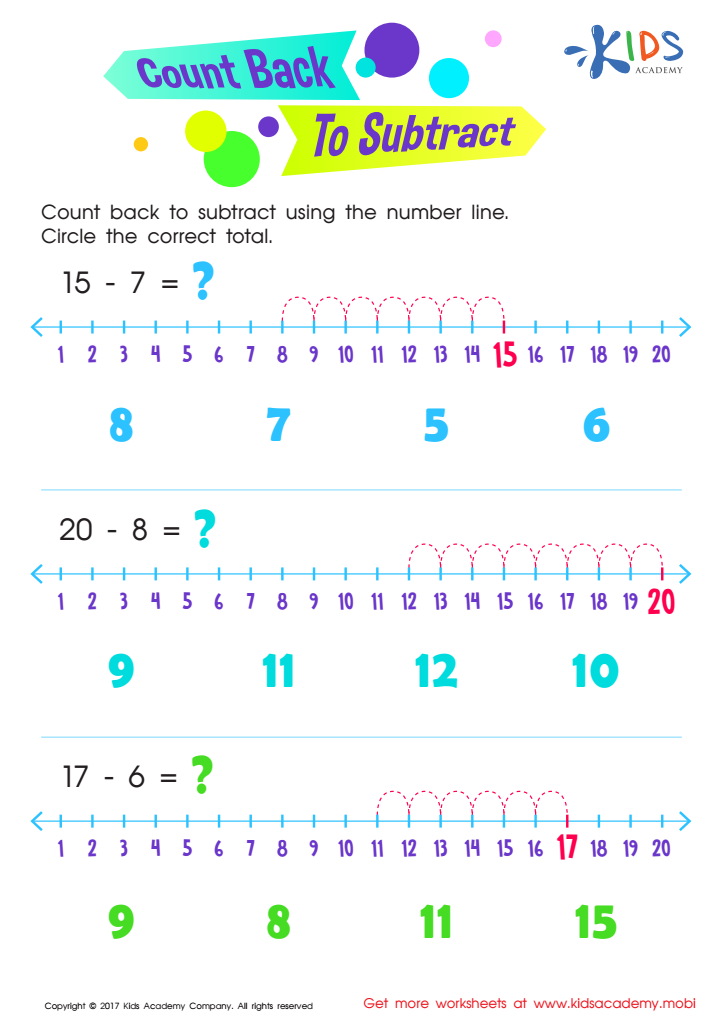
Count Back to Subtract Substraction Worksheet








Parents and teachers should care about normal subtraction for children aged 5-8 because it lays the foundation for essential mathematical skills and cognitive development. At this tender age, children are undergoing rapid brain growth, and learning subtraction helps to harness this developmental potential.
Subtraction is a fundamental part of arithmetic, and mastering it is crucial for understanding more complex math concepts down the line, such as division, fractions, and algebra. Engaging with subtraction also enhances a child's ability to solve problems and think logically, fostering critical analytical skills.
Moreover, developing subtraction skills is important beyond the math classroom. Children use subtraction in everyday situations, such as determining how many toys they have left after giving some away or figuring out how many apples are left in a fruit bowl. This practical application helps them grasp the relevance of math in real life, making learning more meaningful and engaging.
Finally, success in early math builds confidence and a positive attitude towards the subject, reducing math anxiety and fostering a love for learning. A solid grounding in subtraction can therefore promote a lifelong appreciation for math and bolster overall academic achievement. Thus, early intervention and continuous support in learning subtraction are vital for the holistic development of children.