Normal Rhyming Words Worksheets for Ages 5-8
16 filtered results
-
From - To
Introduce your young learners aged 5-8 to the magic of rhyming with our engaging worksheets! Our collection, specifically designed for reading practice, helps children recognize and master common rhyming words. These worksheets make learning fun with playful activities that include matching rhymes, identifying similar word endings, and completing rhyming word pairs. Enhance their phonemic awareness and build their reading skills with these enjoyable and educational resources. Perfect for classroom or home, our rhyming words worksheets pave the way for confident and fluent reading, all through the joy of rhyme! Download now to start the rhyming adventure.
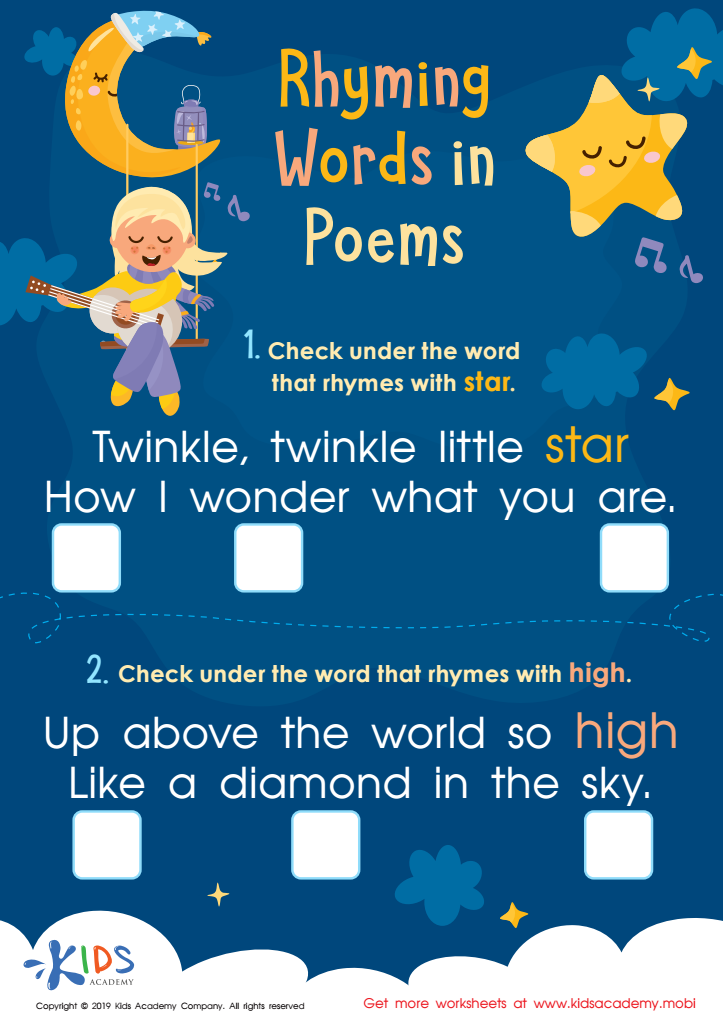
Rhyming Words in Poems Worksheet
 Assign to My Students
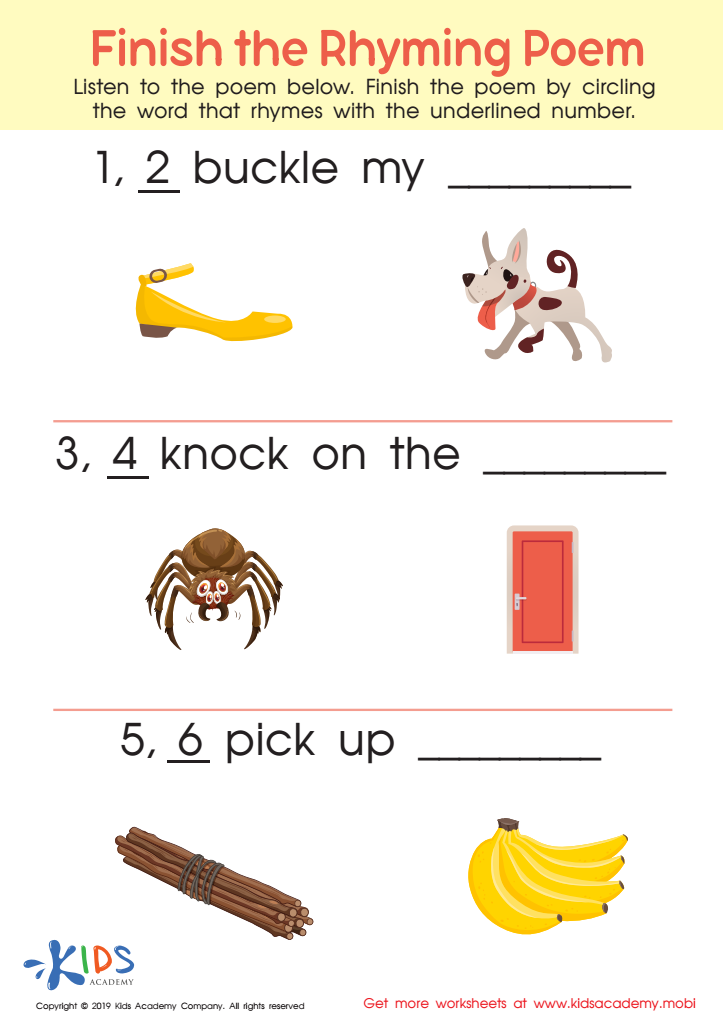
Finish Rhyming Poem Worksheet
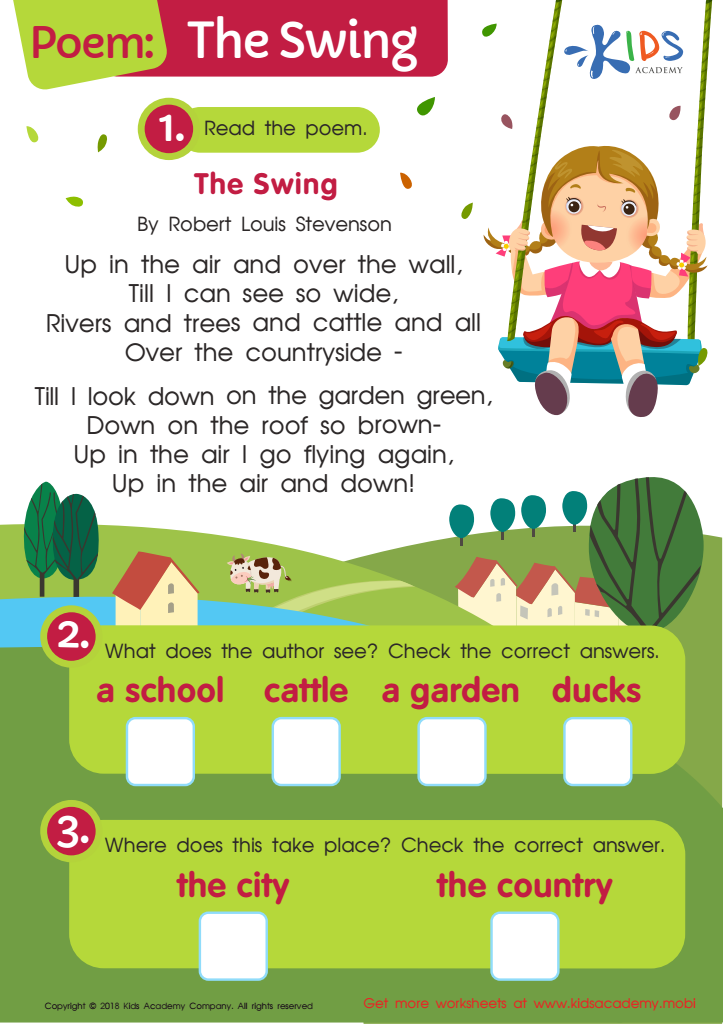
Poem: The Swing Worksheet
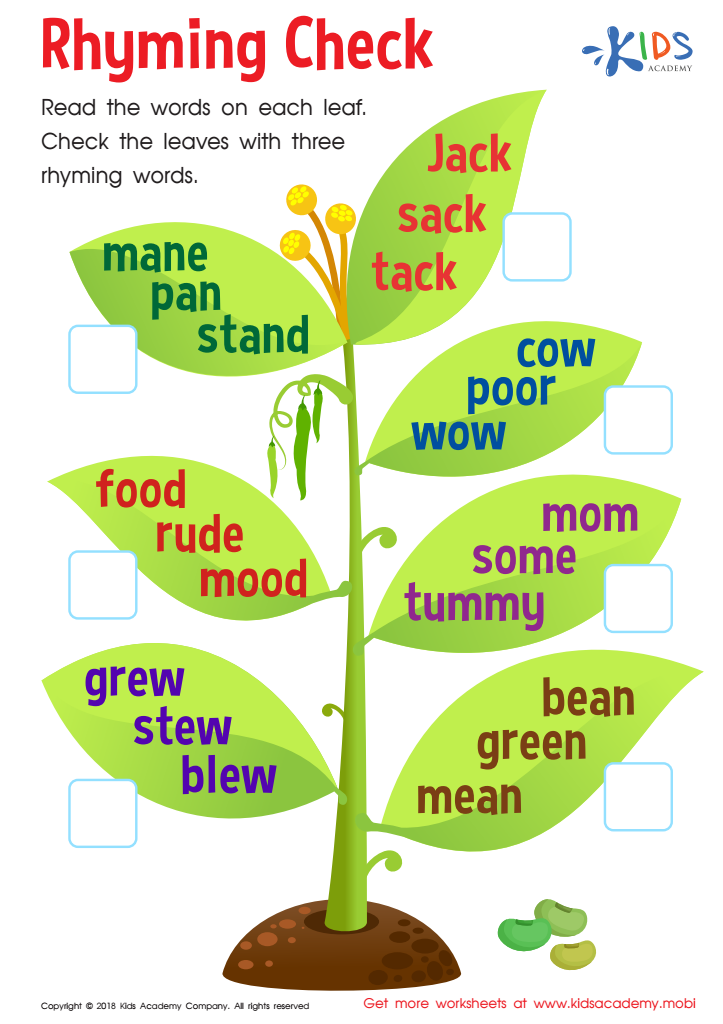
Rhyming Check Worksheet
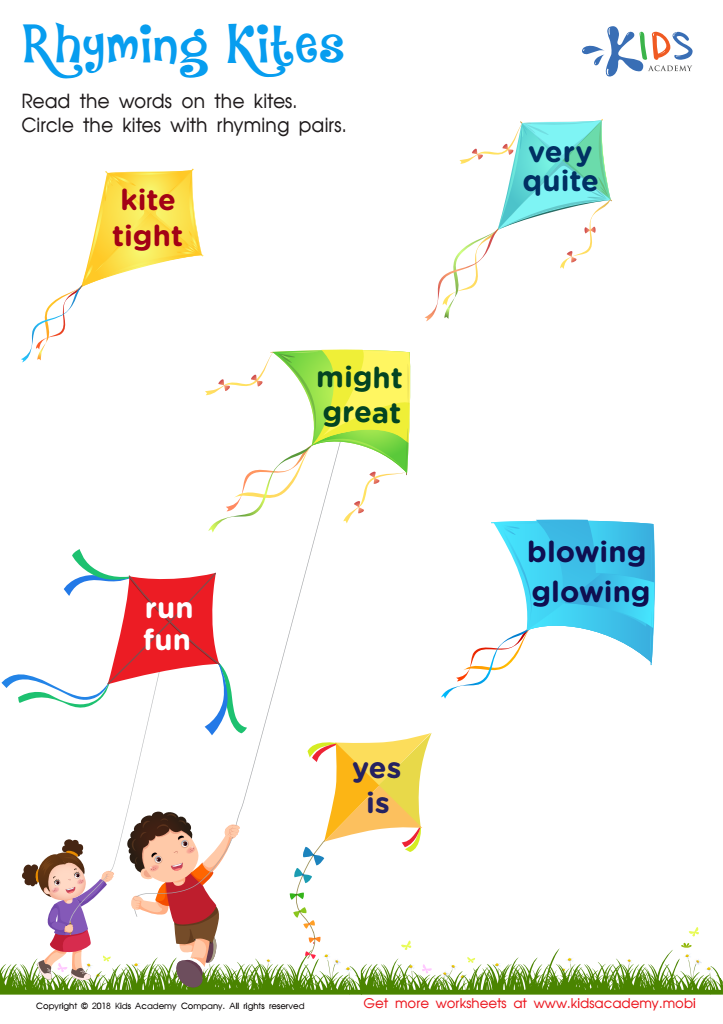
Rhyming Kites Worksheet
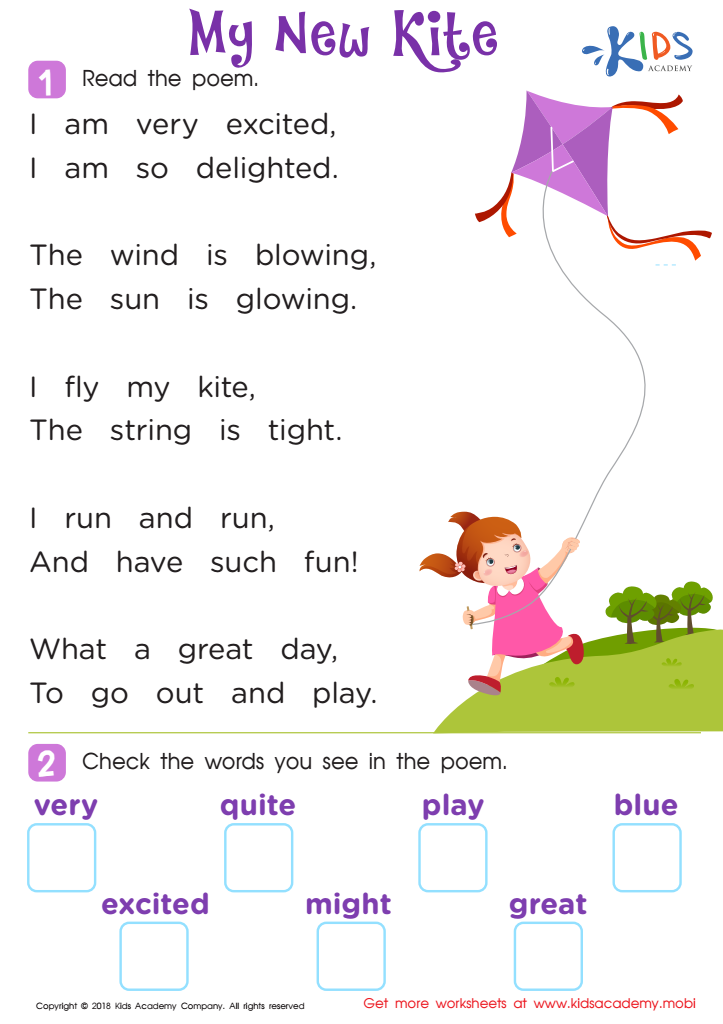
Poem: My New Kite Worksheet
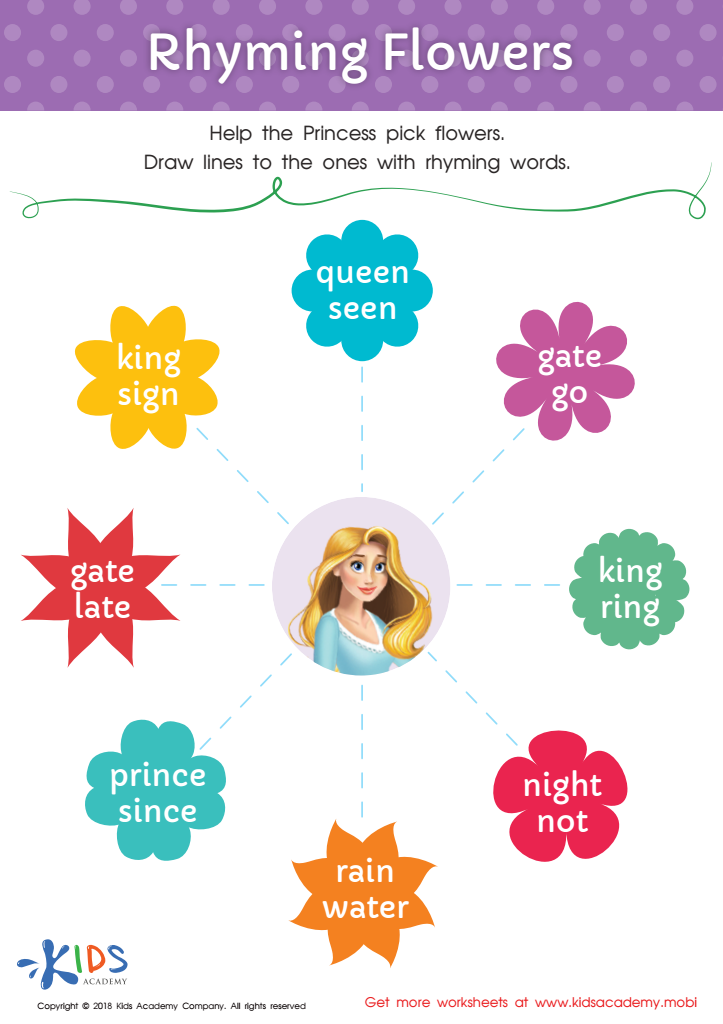
Rhyming Flowers Worksheet
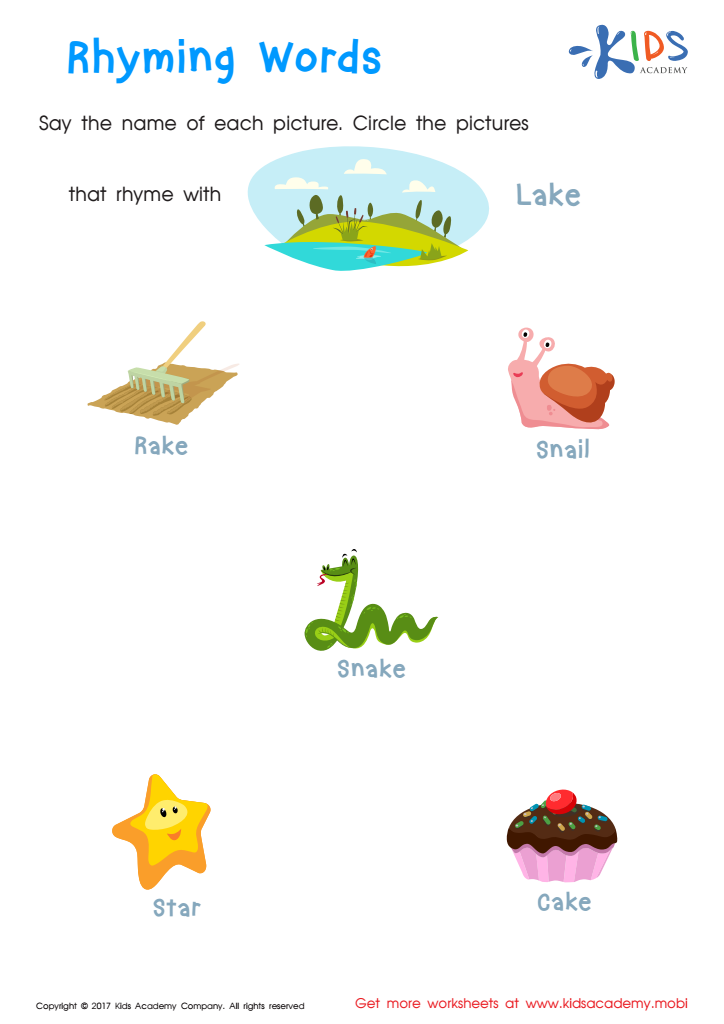
Rhyming Words Rhyming Worksheet
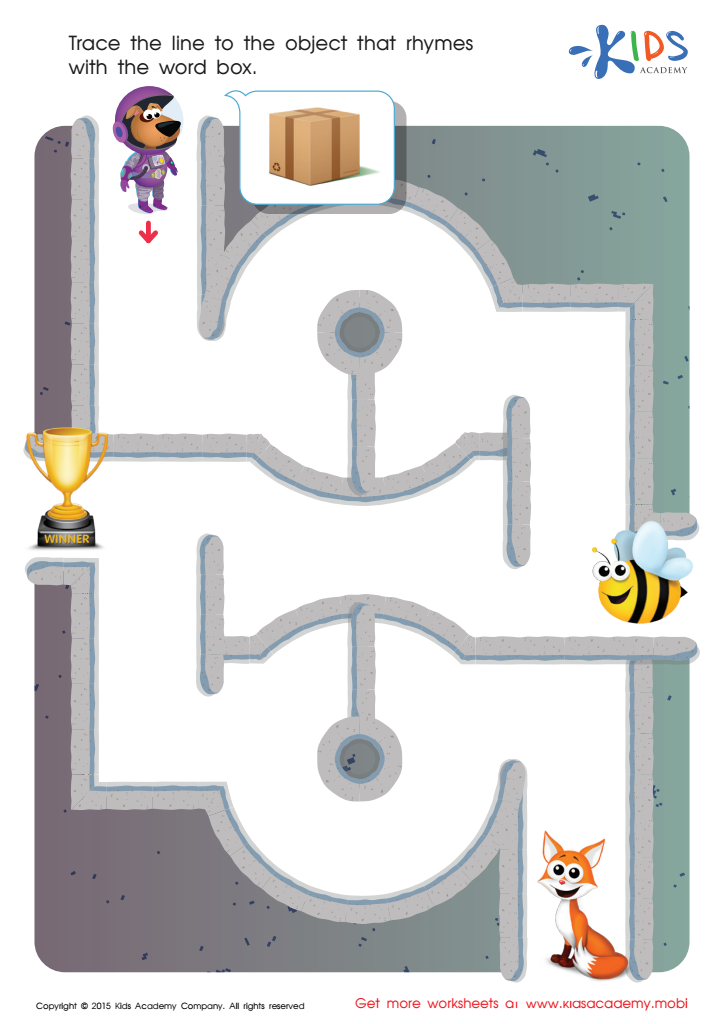
Box Rhyming Words Worksheet
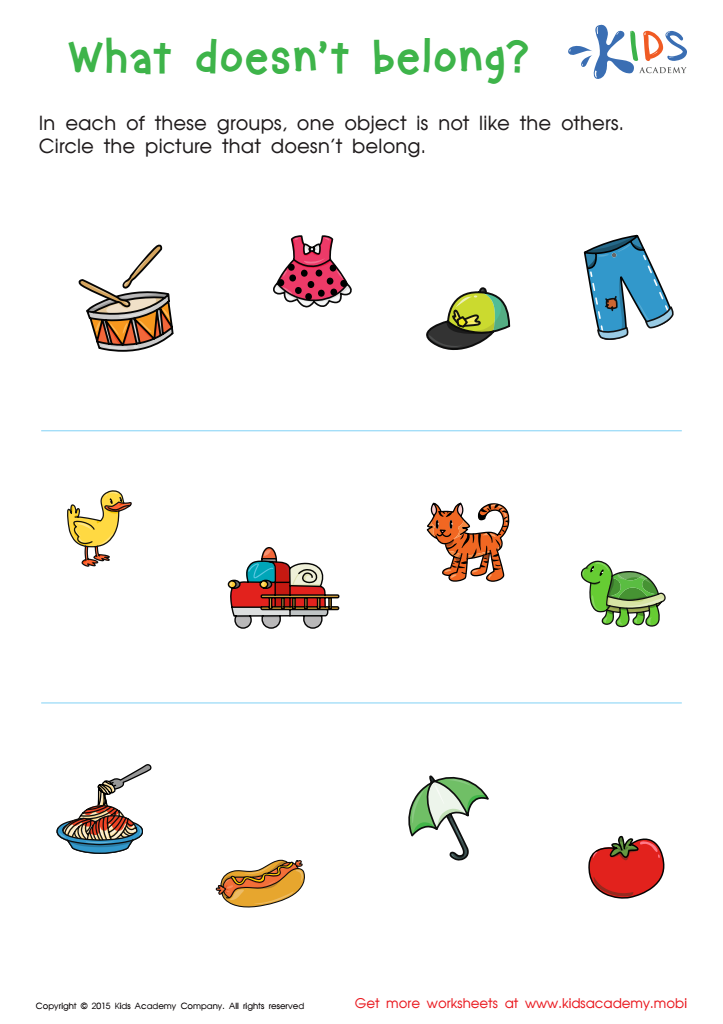
First Words: What Doesn't Belong Worksheet
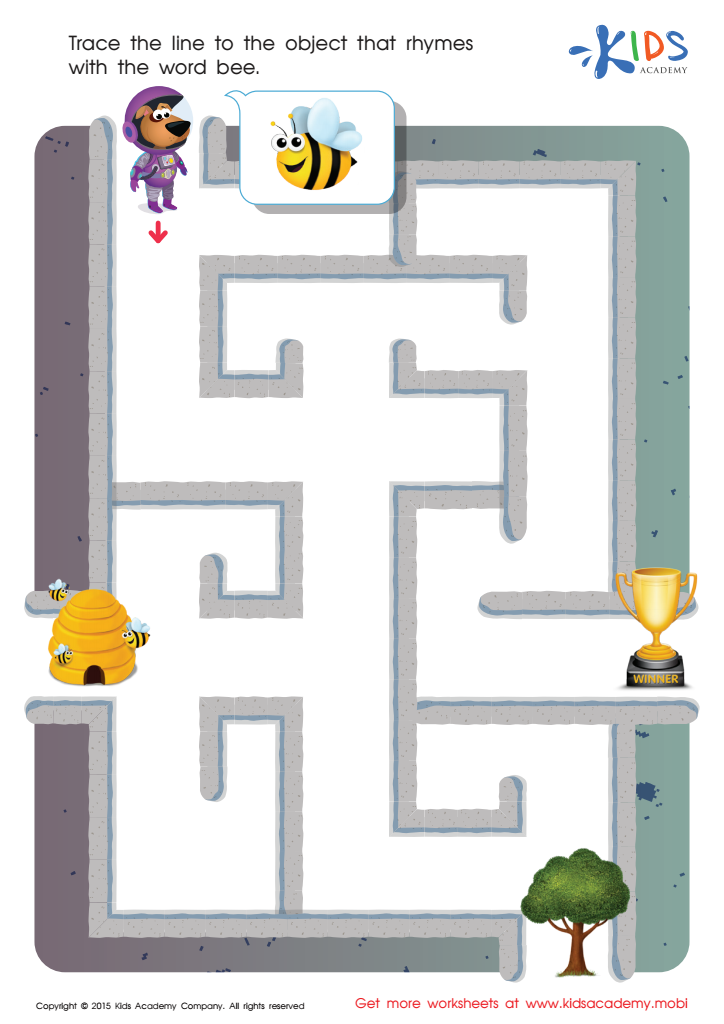
Bee Rhyming Words Worksheet
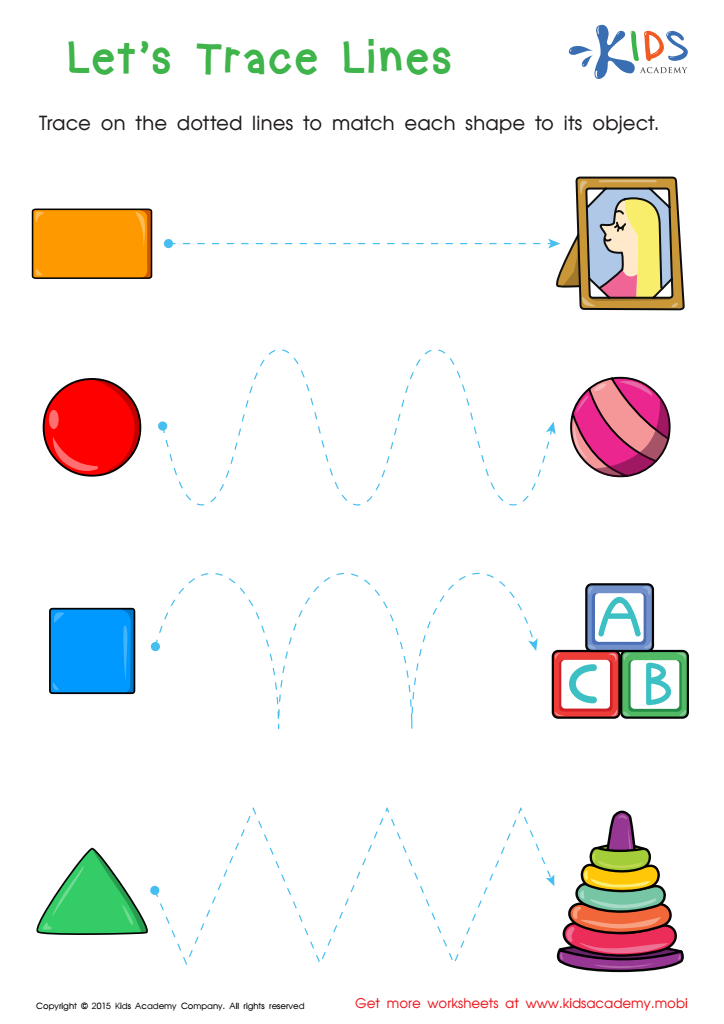
First Words: Let's Trace Lines Worksheet

First Words: Picture Rhymes Worksheet
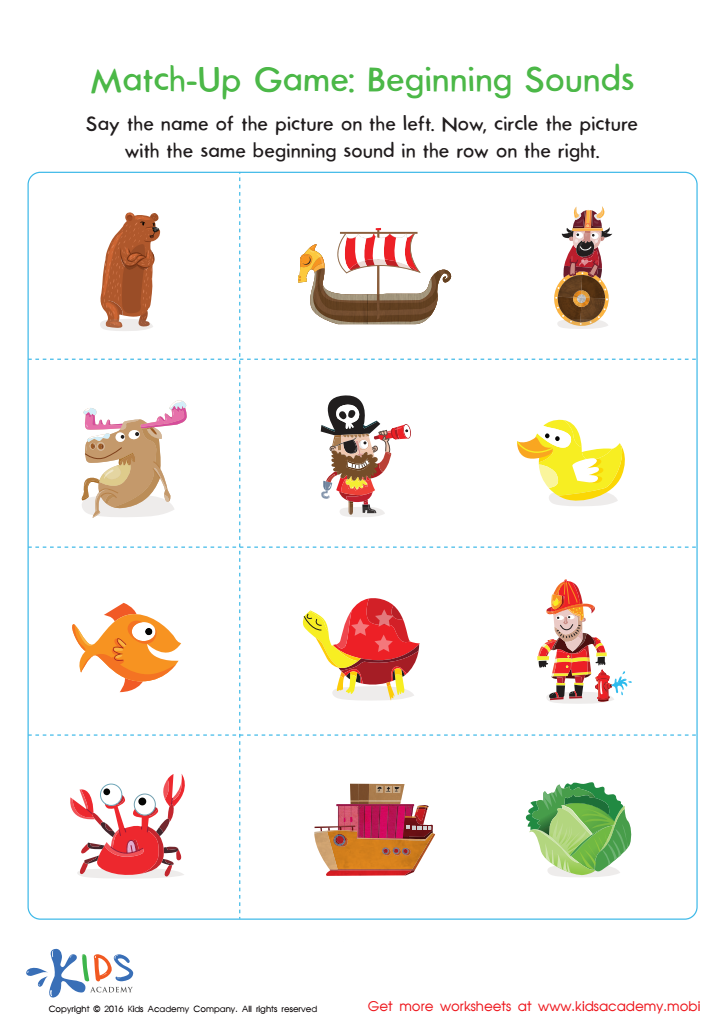
Match–Up Game: Beginning Sounds Worksheet
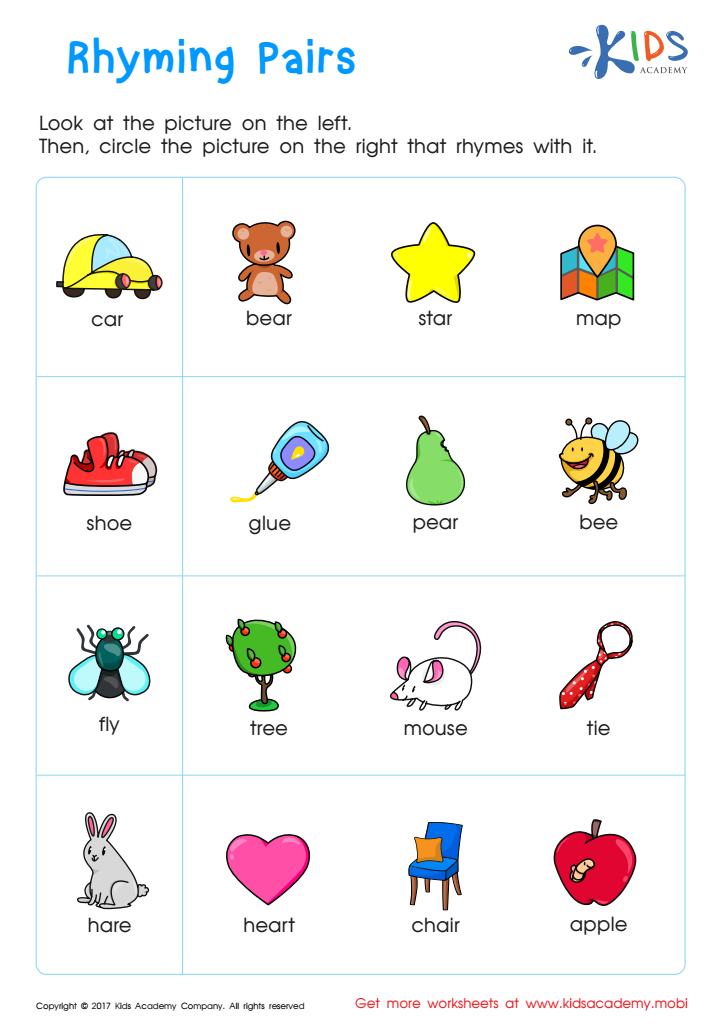
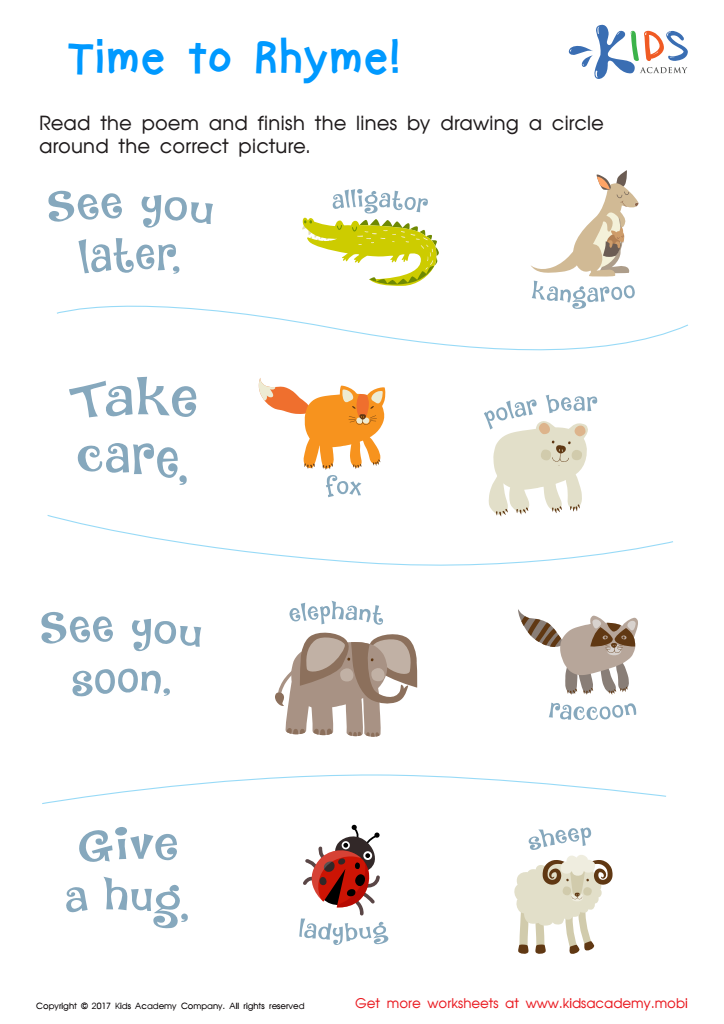
Time to Rhyme Rhyming Worksheet




.jpg)


Parents and teachers should prioritize exposure to normal rhyming words for children aged 5-8 because this foundational early literacy skill significantly supports their overall language development and reading proficiency. During these critical early years, children are at their most receptive stages for language acquisition. Introducing rhyming words can enhance their phonological awareness—the ability to recognize and manipulate sounds within spoken language.
Rhyming helps children detect patterns in words and sounds, which paves the way for decoding new words and building vocabulary. When children recognize that "cat," "hat," and "bat" share ending sounds, they are more likely to understand and predict the spelling and pronunciation of new words with similar patterns. This skill is crucial not just for reading but also for spelling and writing.
Engaging with rhymes makes learning fun and interactive, capturing children's attention and imagination. Rhyming games, songs, and poems can turn literacy lessons into enjoyable activities, thereby fostering a love for reading and learning. Additionally, mastering rhyming can boost children's confidence, setting a positive trajectory in other academic areas.
Therefore, incorporating rhyming into early education practices is an effective strategy that enriches language skills, nurtures a love for reading, and provides a strong literacy foundation for future educational success.








