Normal Missing Letters Worksheets for Ages 5-9
5 filtered results
-
From - To
Enhance your child's literacy skills with our Normal Missing Letters Worksheets designed for ages 5-9! These engaging and educational worksheets help young learners identify and fill in missing letters in various words, promoting phonemic awareness and a strong foundation in spelling. With colorful illustrations and age-appropriate activities, children will enjoy practicing their alphabet skills while building confidence in their reading abilities. Perfect for home or classroom use, these worksheets encourage creativity and critical thinking. Download and print our missing letters worksheets today, and watch your child thrive as they develop essential language skills in a fun and interactive way!
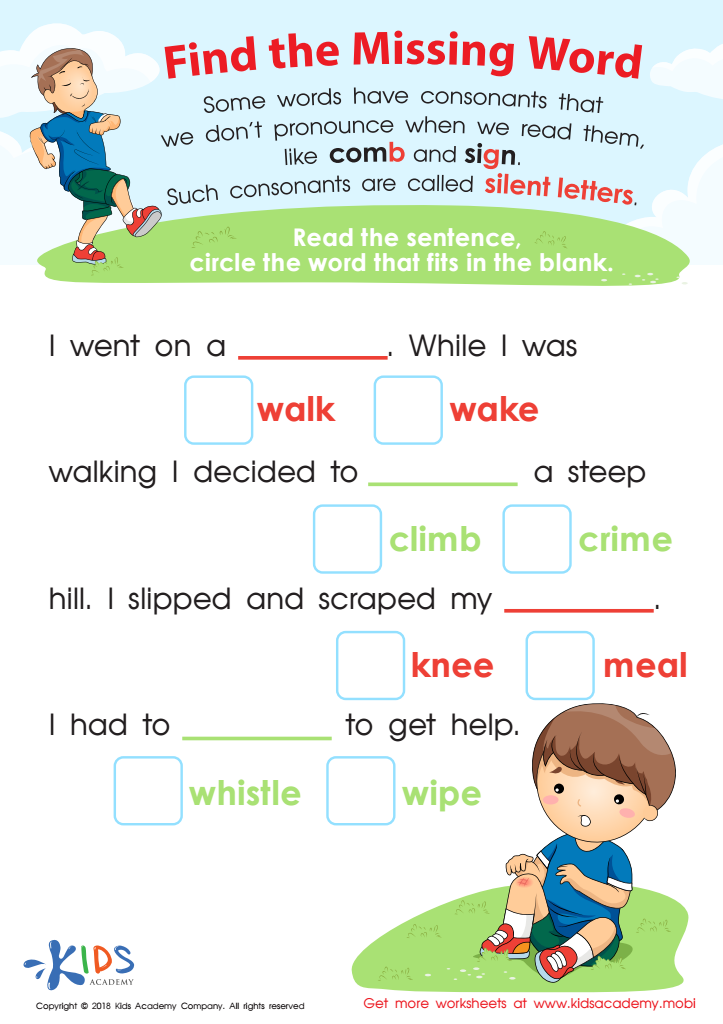
Find The Missing Word Worksheet
 Assign to My Students
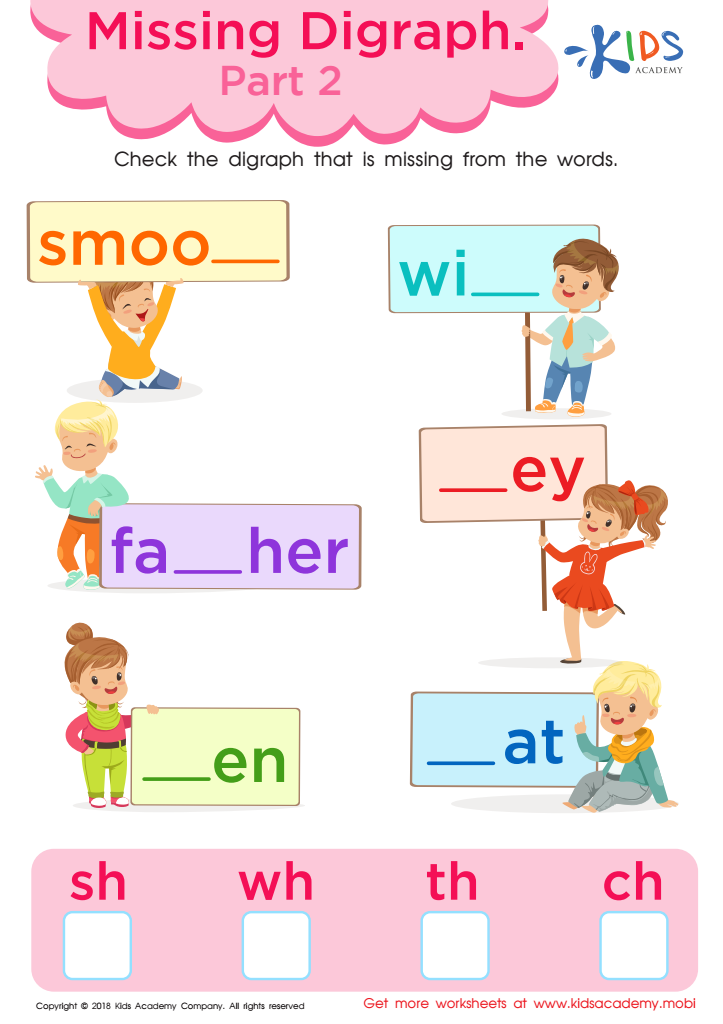
Missing Digraph: Part 2 Worksheet
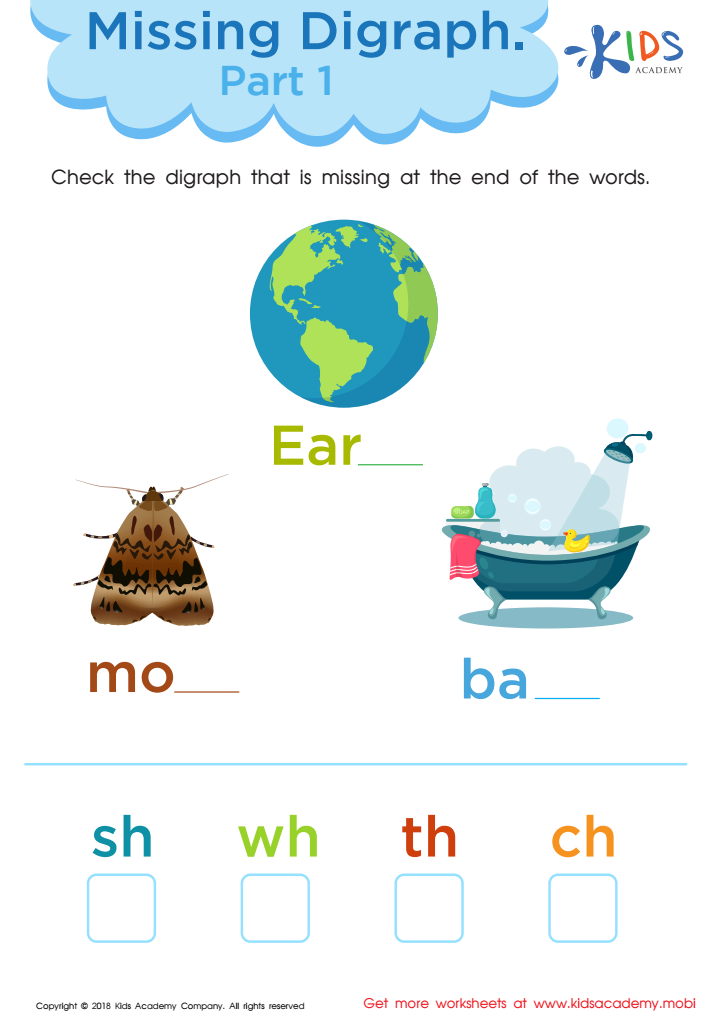
Missing Digraph: Part 1 Worksheet
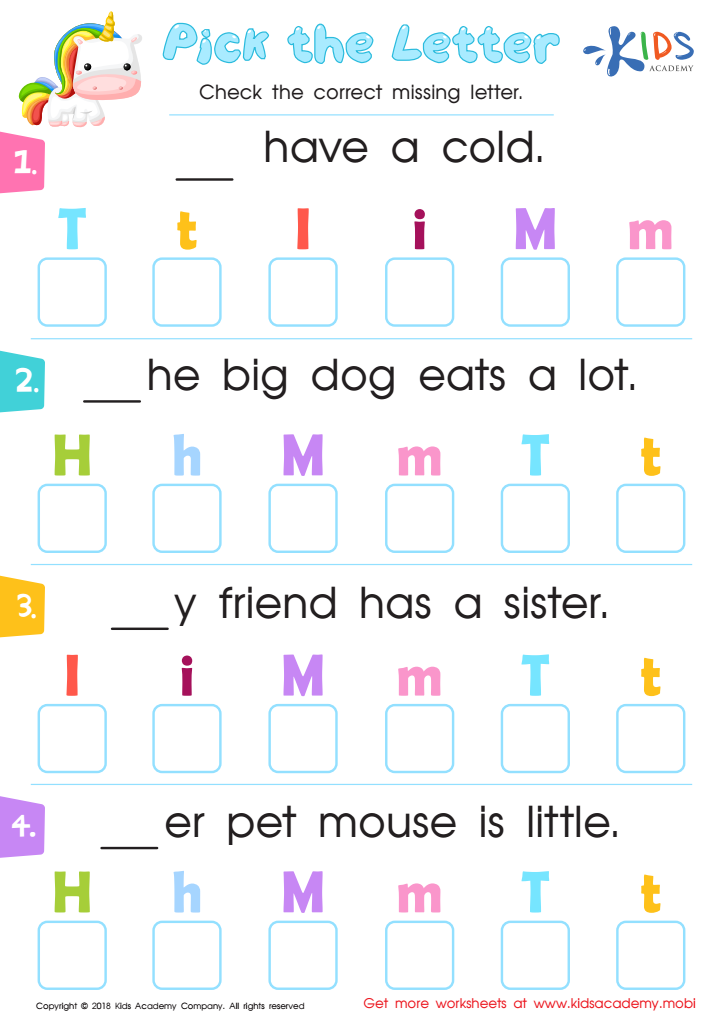
Pick the Letter Worksheet
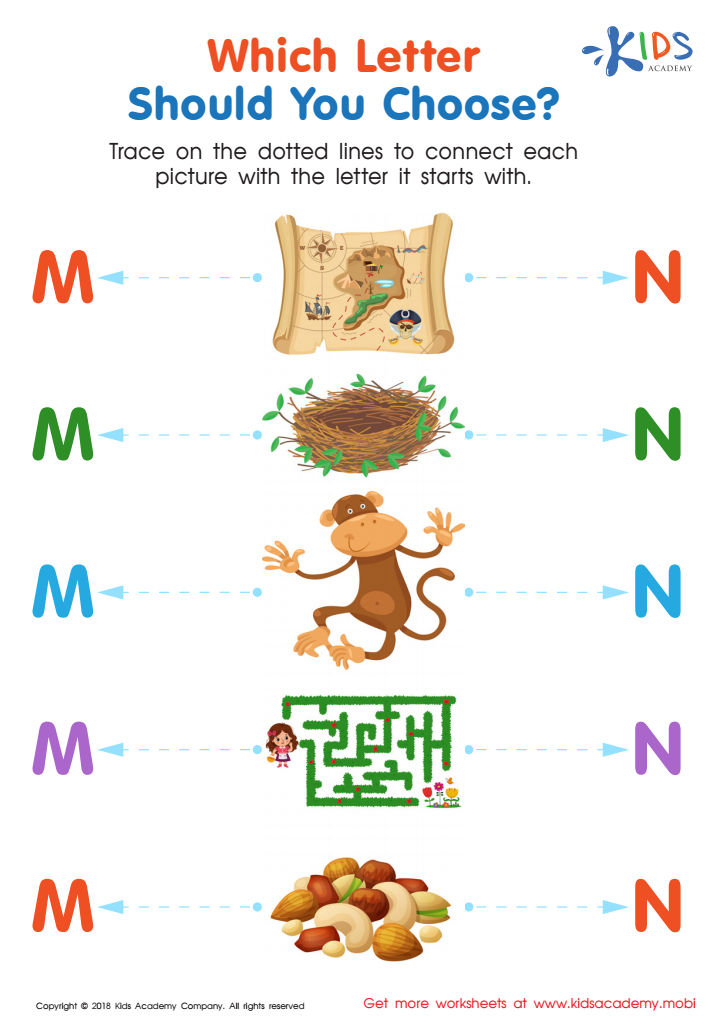
Which Letter Should you Choose? Worksheet



Normal Missing Letters is a crucial literacy strategy for children aged 5 to 9, as it enhances their reading and writing skills through engaging and interactive learning. At this developmental stage, children are forming the essential building blocks of language and literacy. Missing letters activities stimulate their cognitive skills by encouraging them to think critically about word structures and spellings.
Parents and teachers should prioritize this approach because it fosters phonemic awareness, allowing children to recognize sounds in words and understand their relationships to letters. This skill is vital for developing fluent reading and proficient writing abilities. By identifying and filling in missing letters, children also enhance their vocabulary and comprehension, leading to greater confidence in their language usage.
Moreover, such activities can be tailored to suit various learning styles, making them accessible and enjoyable for all children. With increased engagement, children are more likely to retain what they learn. Additionally, Normal Missing Letters promotes independent learning and problem-solving skills, essential for lifelong academic success. In summary, integrating this approach in early literacy development paves the way for improved educational outcomes and a more profound love for reading and writing.







