Filters

9 filtered results

Clear all filters
Favorites
With answer key
Interactive

9 filtered results

Difficulty Level

Grade


Subject

    Discover our engaging Normal Letter Sounds Worksheets designed for children aged 6-8, aimed at enhancing early literacy skills. These worksheets provide fun and interactive activities that help kids recognize and practice letter sounds, essential for reading and phonics development. With a variety of exercises—including tracing, coloring, and matching—children will strengthen their sound-letter associations while enjoying the learning process. Perfect for classroom or home use, these resources are suitable for various learning levels, ensuring your child's growth in foundational reading skills. Explore our collection and watch your little ones build confidence in their reading abilities with each engaging worksheet!

    Check out this FREE Trial Lesson on Letter Sounds for age 6-8!

    Segment Words with 3 or 4 Sounds

    Favorites
    With answer key
    Interactive
    • 6-8
    • Interactive
    • Letter Sounds
    • Normal
    Finding the Sounds Worksheet
    Finding the Sounds Worksheet

    Finding the Sounds Worksheet

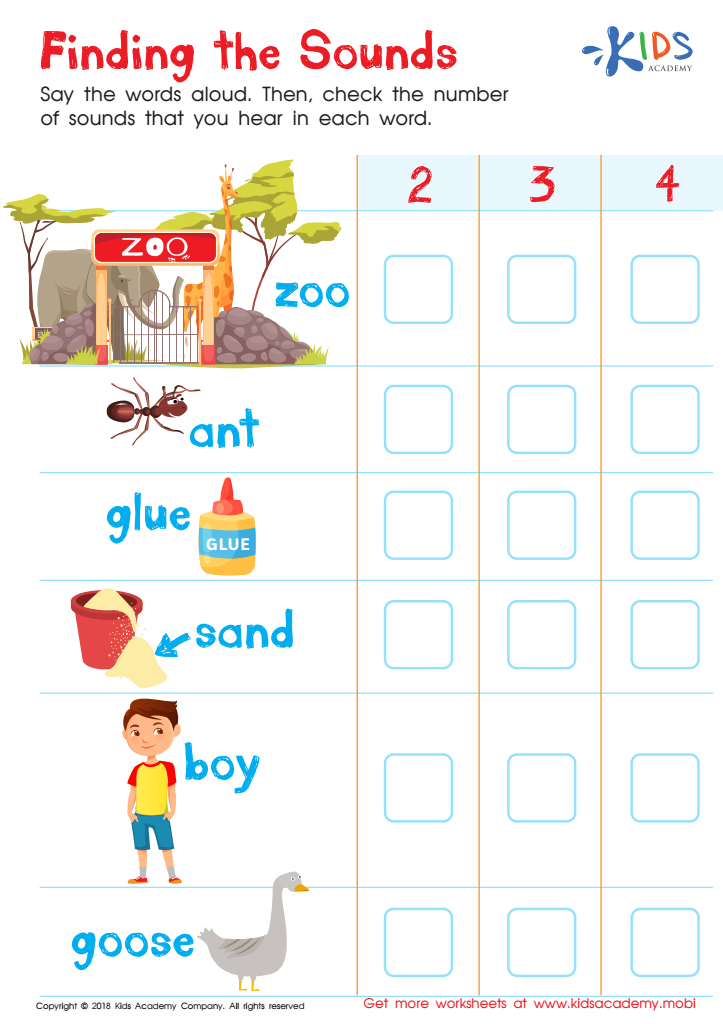
    This free colorful worksheet assists children in learning words and breaking them down into sounds. It boosts auditory discrimination, phonological awareness and fine motor skills. Picture clues help them read confidently, and they can check the appropriate boxes to practice their reading skills.
    Finding the Sounds Worksheet
    Worksheet
    Hungry Dragon Worksheet
    Hungry Dragon Worksheet

    Hungry Dragon Worksheet

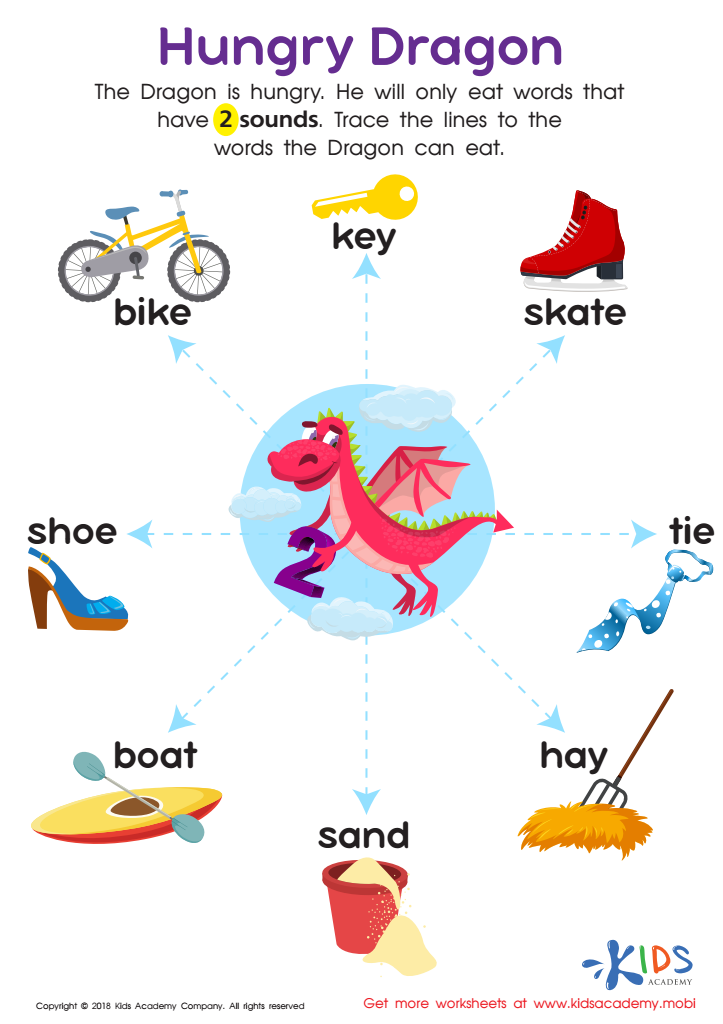
    Feed the dragon words and watch your child strengthen their phonological awareness and auditory discrimination skills! Download this free PDF for tracing exercises that build their fine motor skills too. Kids will love spending time with the cute dragon while they unwittingly learn reading skills!
    Hungry Dragon Worksheet
    Worksheet
    Let's Count the Sounds Worksheet
    Let's Count the Sounds Worksheet

    Let's Count the Sounds Worksheet

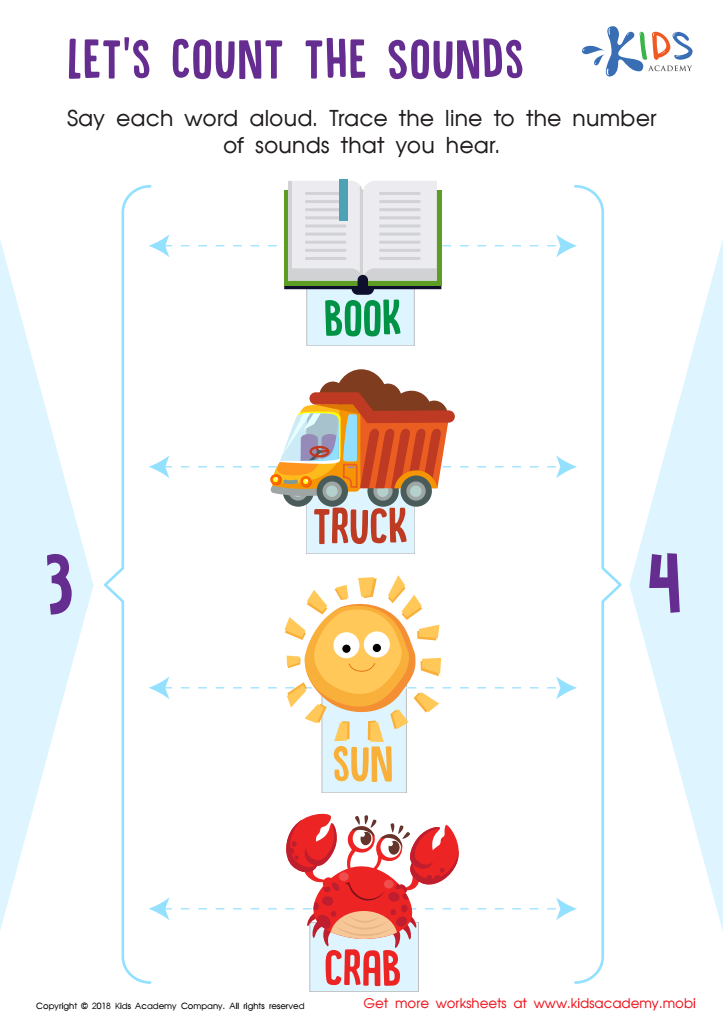
    This bright and cheery traceable worksheet encourages children to practice auditory discrimination and phonological awareness. Using picture clues, they read each word and trace the line that represents the number of sounds heard. This builds decoding skills and helps them become successful readers.
    Let's Count the Sounds Worksheet
    Worksheet
    What Do You Hear? Worksheet
    What Do You Hear? Worksheet

    What Do You Hear? Worksheet

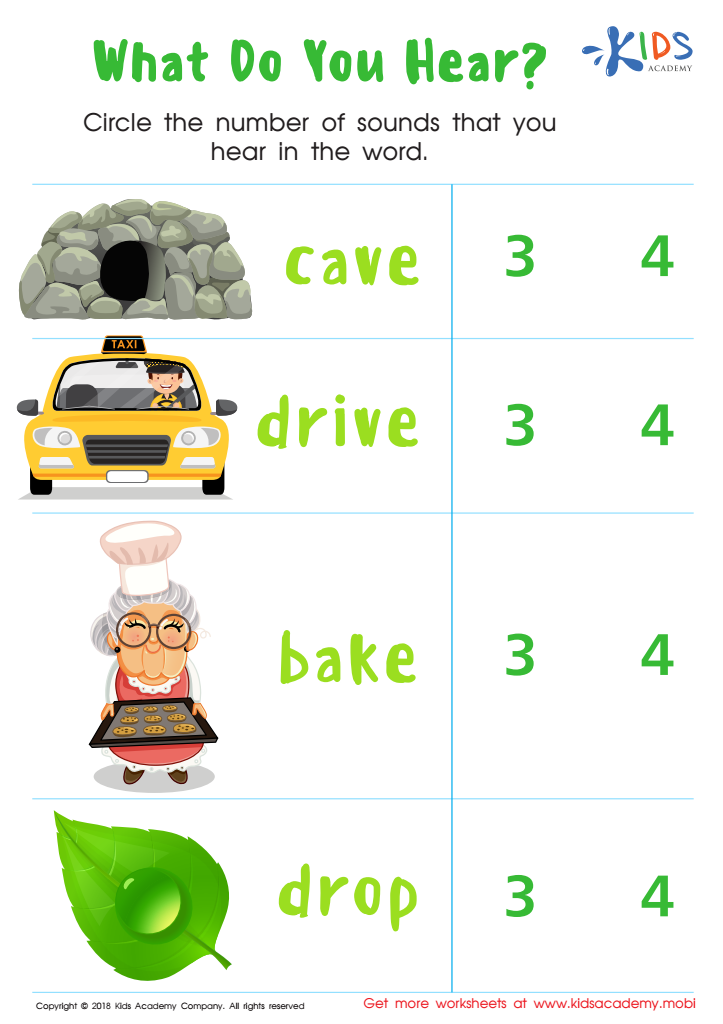
    New readers can develop phonological awareness with this fun worksheet. They'll isolate sounds in words and count them, then circle the number of sounds heard. It'll help build their auditory discrimination and decoding skills, leading to more fluent reading. Without even knowing it, their reading skills are improving!
    What Do You Hear? Worksheet
    Worksheet
    3 Sounds Worksheet
    3 Sounds Worksheet

    3 Sounds Worksheet

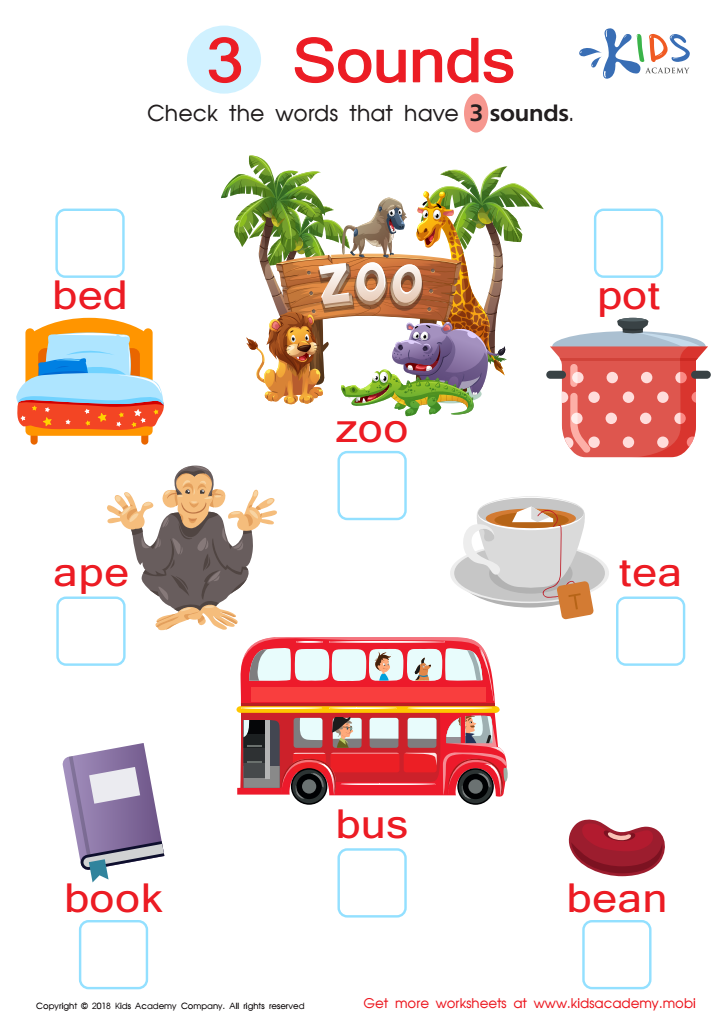
    Kids will love learning with this free, colorful worksheet. It's full of familiar words they can name and sound out with three distinct sounds. This helps build decoding skills, plus they get to check off words they read. It's a fun way to teach children to identify and use sounds.
    3 Sounds Worksheet
    Worksheet
    Listen to the Sounds Worksheet
    Listen to the Sounds Worksheet

    Listen to the Sounds Worksheet

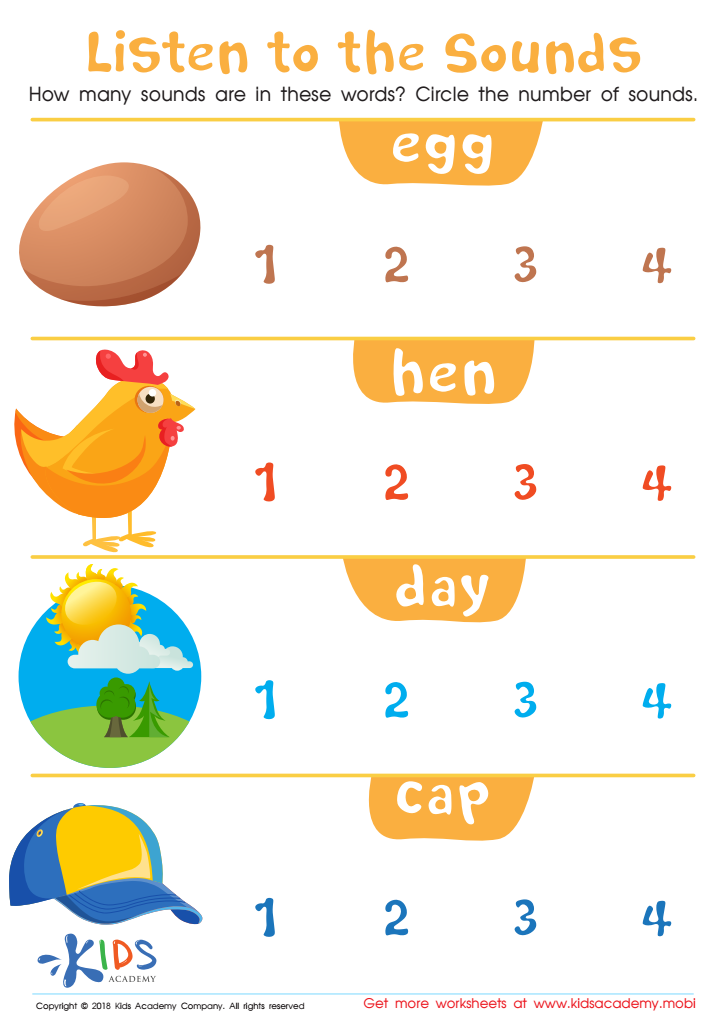
    This worksheet builds emerging readers' skills in using sounds for reading and spelling. It helps strengthen auditory processing by having them count the sounds in each word, then trace the corresponding number. Fun and cheerful!
    Listen to the Sounds Worksheet
    Worksheet
    Let's Check for «i» Sounds Worksheet
    Let's Check for «i» Sounds Worksheet

    Let's Check for «i» Sounds Worksheet

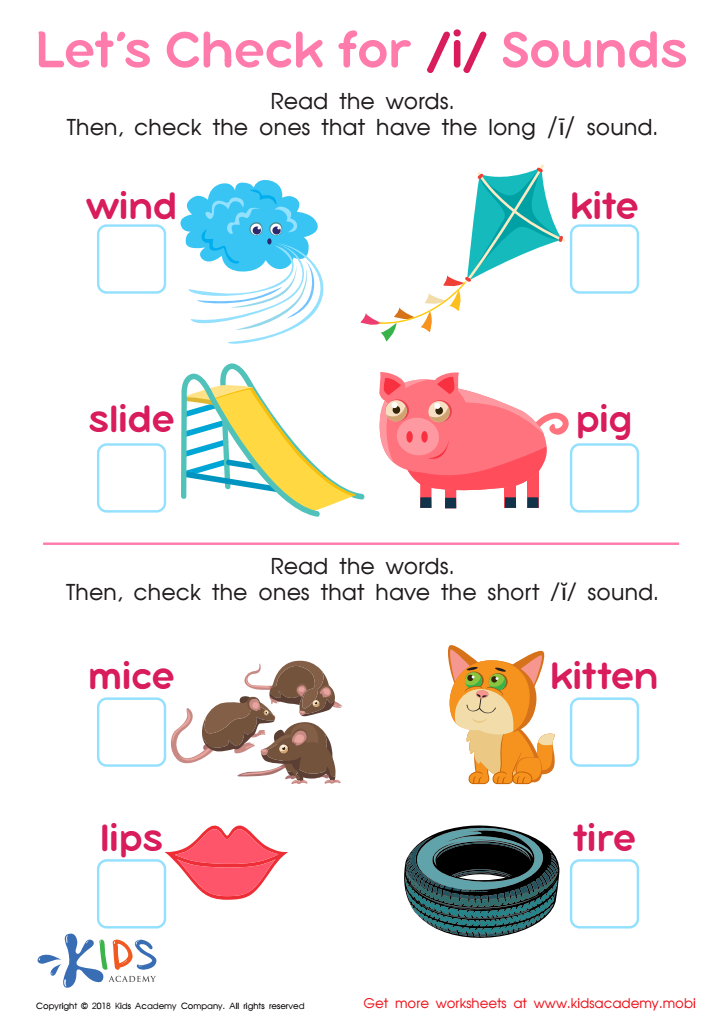
    This fun worksheet with pictures boosts phonics skills - differentiating between long «ī» and short «i» sounds in 1- and 2-syllable words. Kids use picture clues to read words, then check off the correct ones. It's a great way for new readers to practice early reading skills and find success on their own.
    Let's Check for «i» Sounds Worksheet
    Worksheet
    Is It m or n? Worksheet
    Is It m or n? Worksheet

    Is It m or n? Worksheet

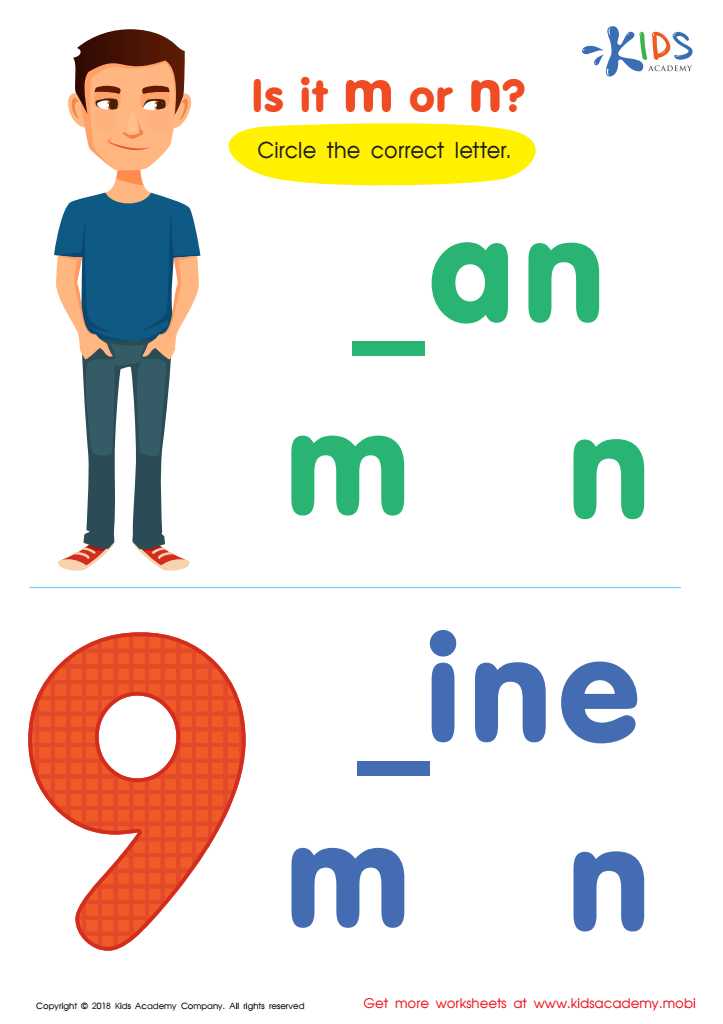
    Help your child circle the letter that begins the words "man" and "nine" in the picture. This is a great way for them to learn the alphabet.
    Is It m or n? Worksheet
    Worksheet
    Identify the Written Words Worksheet

    Identify the Written Words Worksheet

    Identify the Written Words Worksheet

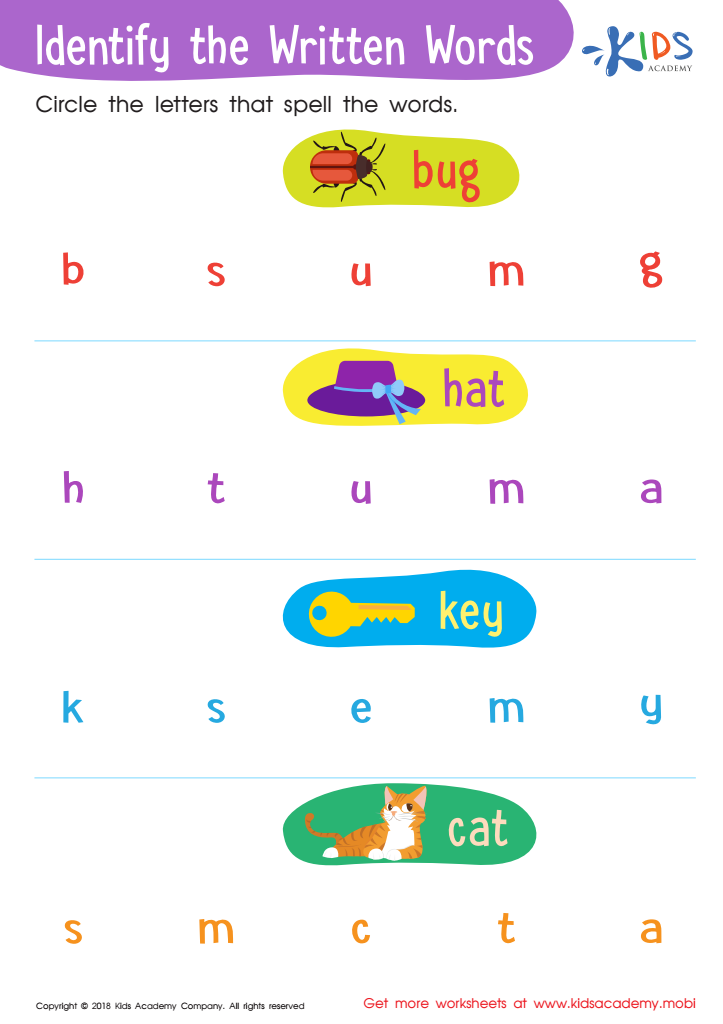
    Have your students identify the objects on the printout, then spell the words. If they already know how to spell, this exercise should be easy. Help them circle the correct letters from the set to spell out the words. This is a great way to reinforce reading and spelling skills. Max 80 words.
    Identify the Written Words Worksheet

    Worksheet


    Normal letter sounds are the foundational building blocks of reading and writing for children ages 6-8. At this stage of development, children are transitioning from learning to read to reading to learn. Understanding letter sounds enables them to decode words, improve their vocabulary, and enhance their comprehension skills.

    When parents and teachers prioritize normal letter sounds, they equip children with the tools necessary to face more advanced literacy challenges. Mastery of phonemic awareness helps young learners differentiate between sounds and blend them to form words. This skill is crucial not just for reading fluency, but also for spelling, as children begin writing more complex sentences and paragraphs.

    Moreover, a solid grasp of letter sounds boosts children's confidence in their literacy abilities. It fosters a love for reading, encouraging children to explore new books and foster curiosity in various subjects. Engaging with familiar content helps lay the groundwork for academic success across all disciplines.

    In summary, by supporting children in mastering normal letter sounds, parents and teachers play a vital role in their literacy journey, promoting skills that will benefit them in school and beyond. Emphasizing these sounds ensures children have a strong start in developing their reading and writing abilities.