Normal Silent Vowels Worksheets for Ages 6-8
5 filtered results
-
From - To
Unlock the world of reading for children with our "Normal Silent Vowels Worksheets for Ages 6-8." These engaging worksheets help young learners identify and understand silent vowels in various words, enhancing their spelling and reading skills. Designed for early grade students, each worksheet incorporates fun activities and colorful illustrations to maintain interest and encourage practice. Through tracing, matching, and fill-in-the-blank exercises, kids will master the concept of silent vowels effortlessly. Perfect for classroom use or homeschooling, these printable worksheets are a valuable resource in nurturing confident readers. Foster your child's literacy journey today!
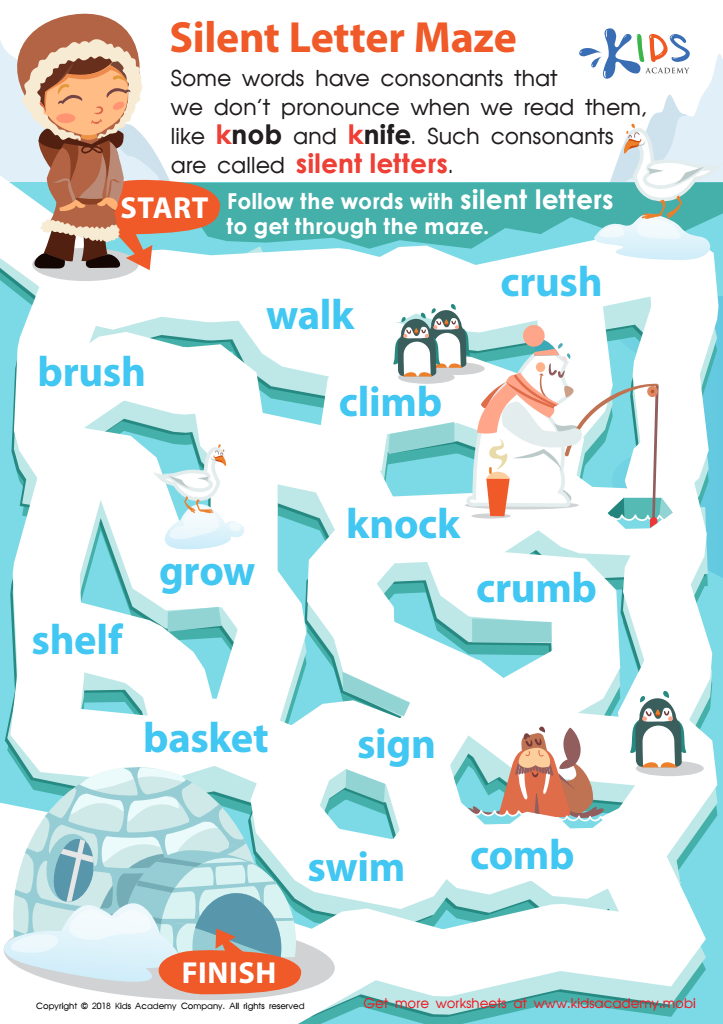
Silent Letter Maze Worksheet
 Assign to My Students
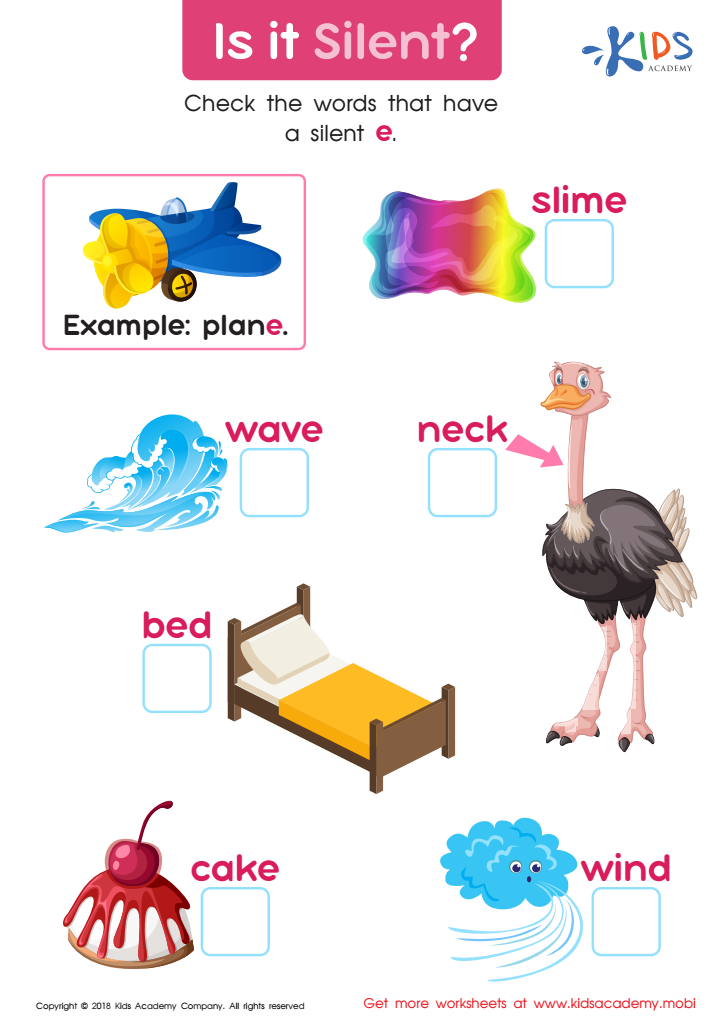
Is It Silent? Worksheet
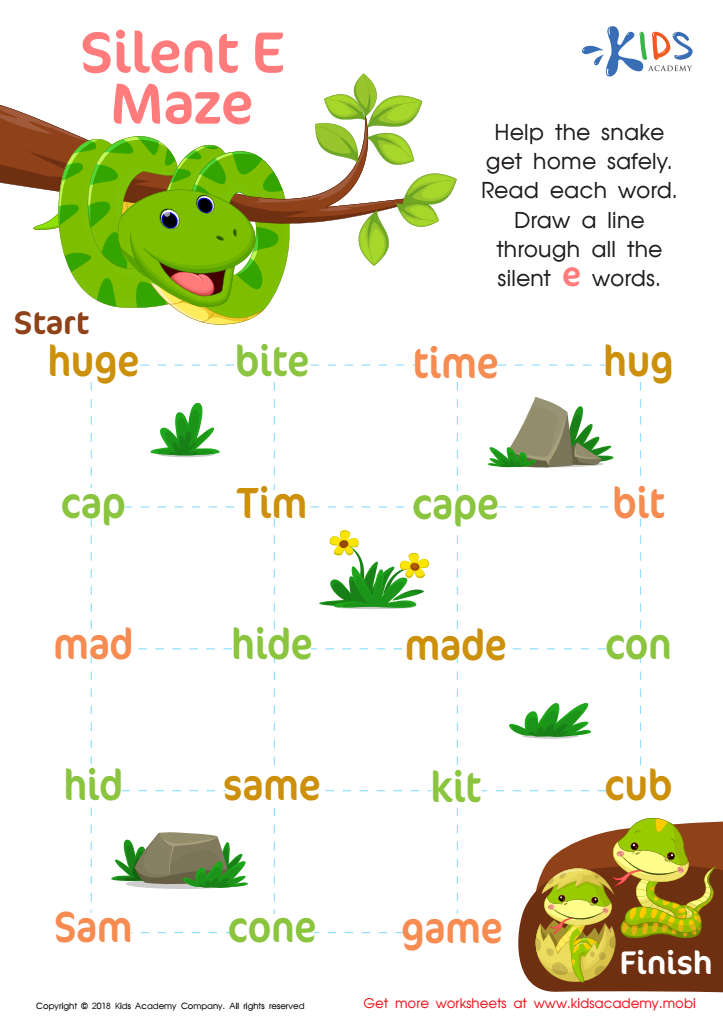
Silent E Maze Worksheet
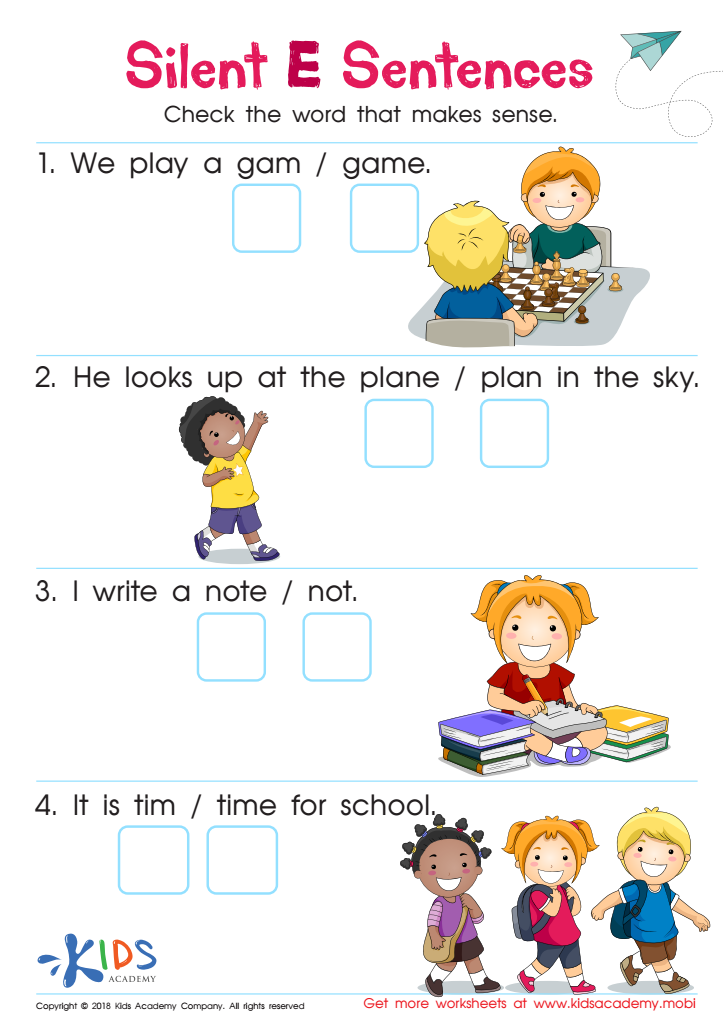
Silent E Sentences Worksheet
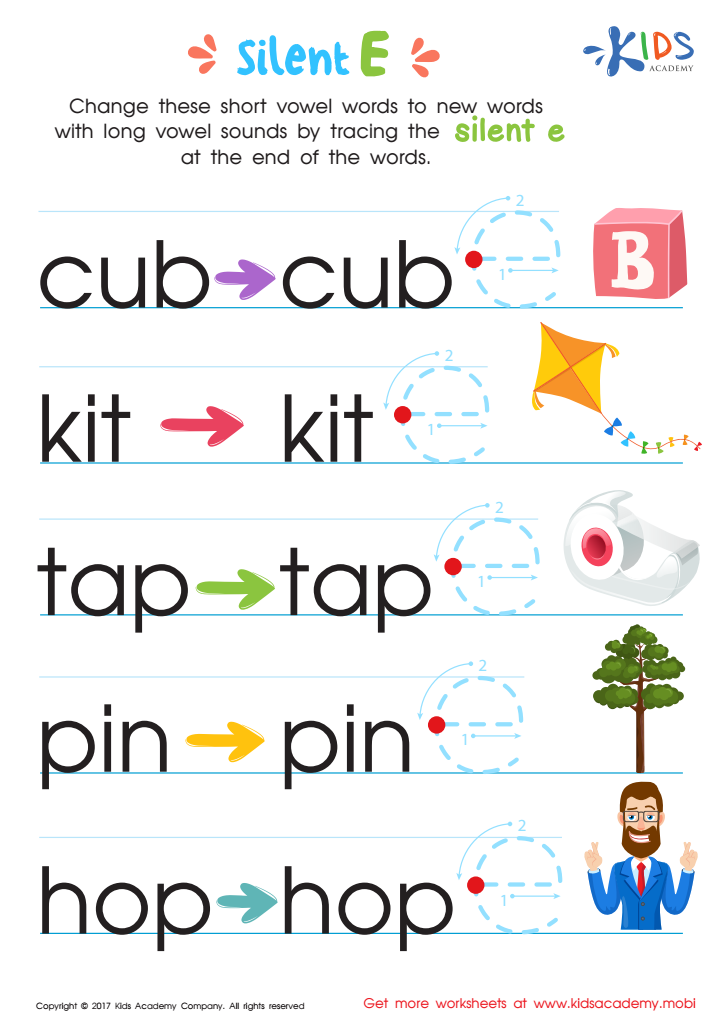
Silent E Words Worksheet


Parents and teachers of young children, aged 6-8, should pay close attention to Normal Silent Vowels because they play a crucial role in early literacy development. Silent vowels are integral to understanding English spelling and pronunciation complexities. Knowing these helps children decode and spell words more accurately, laying a strong foundation for reading fluency and writing skills.
During the pivotal early grades, children transition from learning letters and sounds to reading and spelling multisyllabic words. Silent vowels, which often appear in common words like “bake” or “ride,” can be confusing. Explicitly teaching these vowel patterns helps demystify why certain letters, although present, are not pronounced. This understanding reduces reading errors and boosts comprehension.
Moreover, mastering silent vowels can enhance children’s confidence and enthusiasm for learning. When children recognize patterns and make sense of seemingly tricky words, they feel more competent and motivated. This proactive step also aligns with phonics-based instruction, a research-supported method for teaching reading.
By fostering an understanding of Normal Silent Vowels early on, parents and teachers ensure children develop essential phonemic awareness and decoding skills. This sets the stage for a lifelong love of reading and a robust vocabulary, which are critical for academic success and personal growth.








