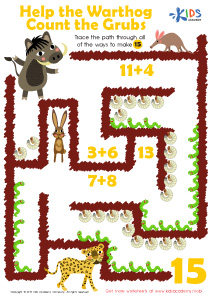
Normal Subtraction Worksheets for Ages 7-9 - Page 2
28 filtered results
-
From - To
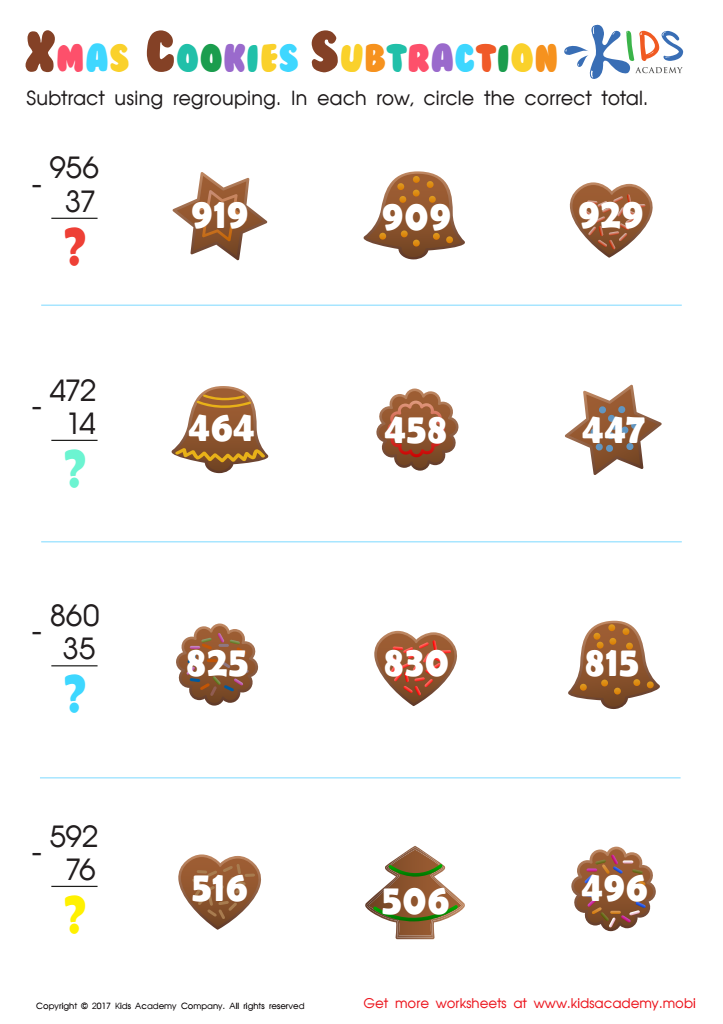
Three Digits Addition with Regrouping Worksheet
 Assign to My Students
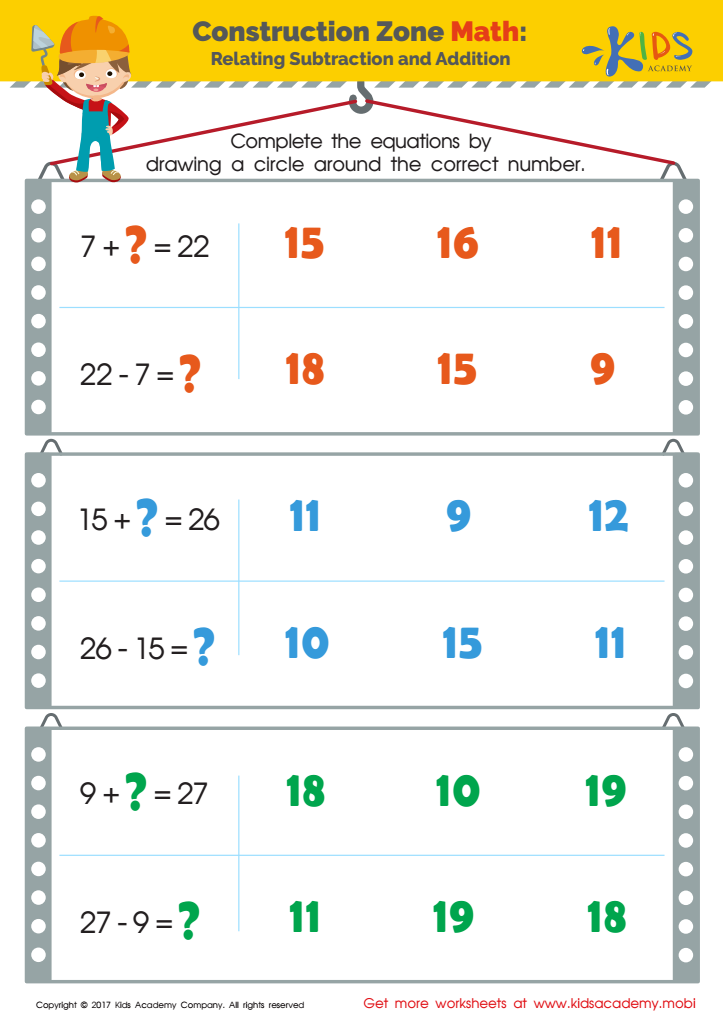
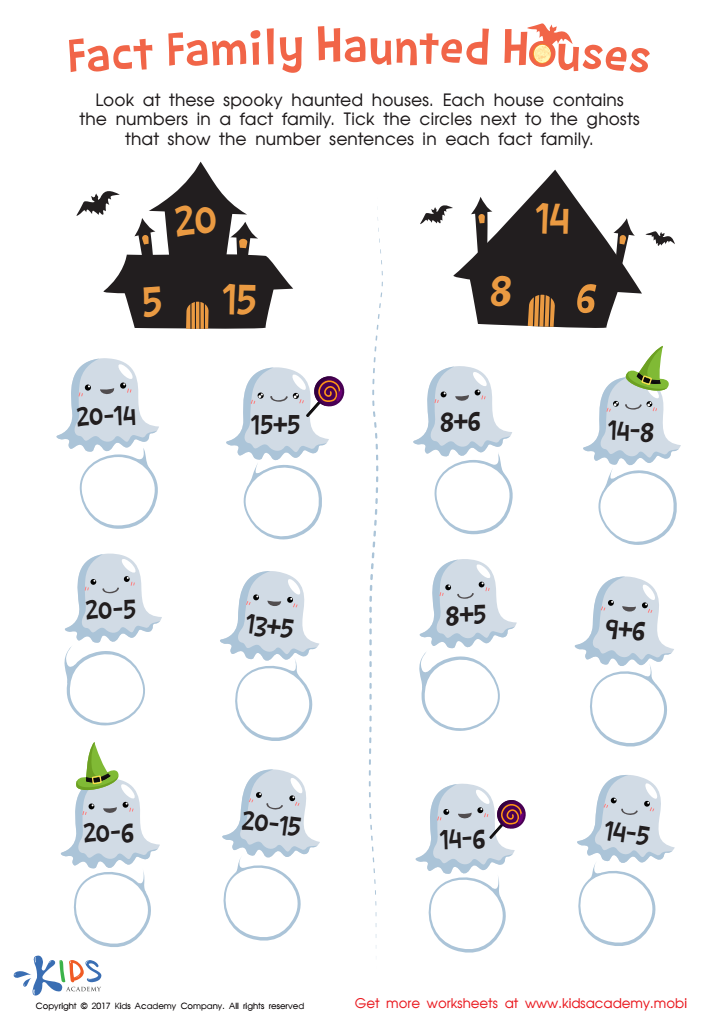
Related Addition and Subtraction Facts Worksheet
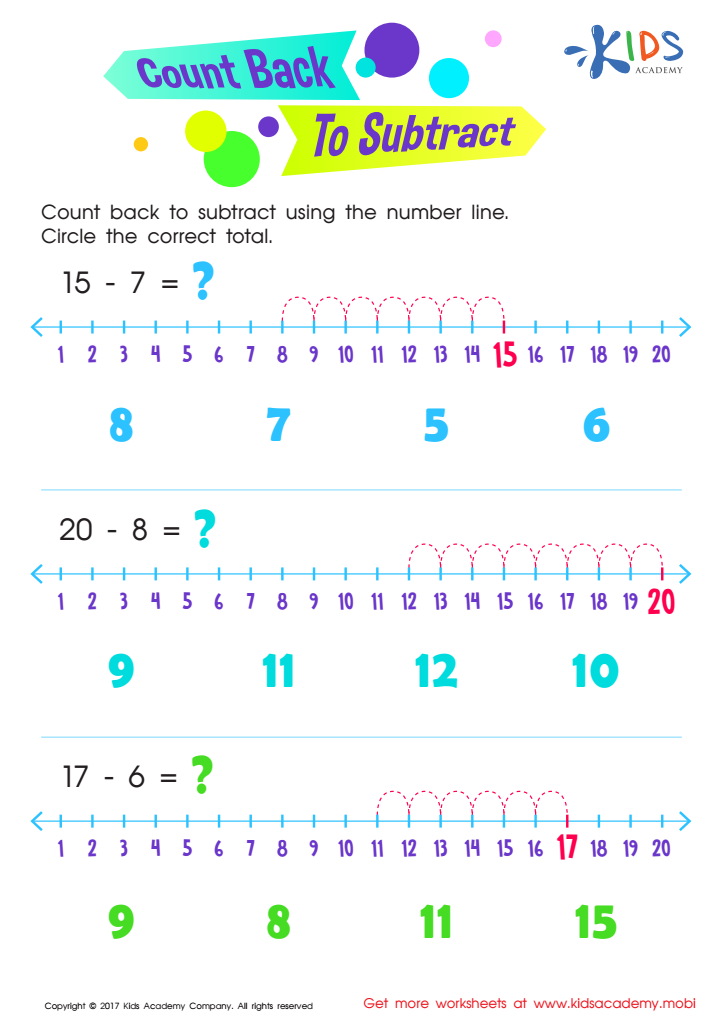
Count Back to Subtract Substraction Worksheet








Normal subtraction is a fundamental mathematical operation that plays a crucial role in a child's cognitive development during ages 7-9. At this stage, children are building on their basic arithmetic skills, and mastery of subtraction sets the foundation for more complex math concepts. Parents and teachers should care about normal subtraction for several reasons.
Firstly, practicing subtraction helps enhance a child’s problem-solving skills, critical thinking, and logical reasoning abilities. By grasping the concept of taking away, children learn to manipulate numbers, which will be essential as they progress to fractions, decimals, and algebra.
Secondly, subtraction is a vital life skill. From calculating change during shopping to understanding time and distance, being able to subtract effectively is necessary for everyday activities.
Furthermore, the ability to subtract builds confidence and fosters a positive attitude towards math, an area where many students often struggle. Early competency can lead to a love for mathematics and a sense of achievement.
In summary, investing time in teaching normal subtraction not only strengthens mathematical abilities but also enriches children's overall cognitive development and equips them with essential life skills. It’s an essential building block for lifelong learning and success.