Filters

59 filtered results

Clear all filters
Favorites
With answer key
Interactive

59 filtered results

Difficulty Level

Grade


Check out this FREE Trial Lesson on Physical Science for age 7-9!

People Use Light to Communicate

Favorites
With answer key
Interactive
  • 7-9
  • Interactive
  • Physical Science
  • Normal
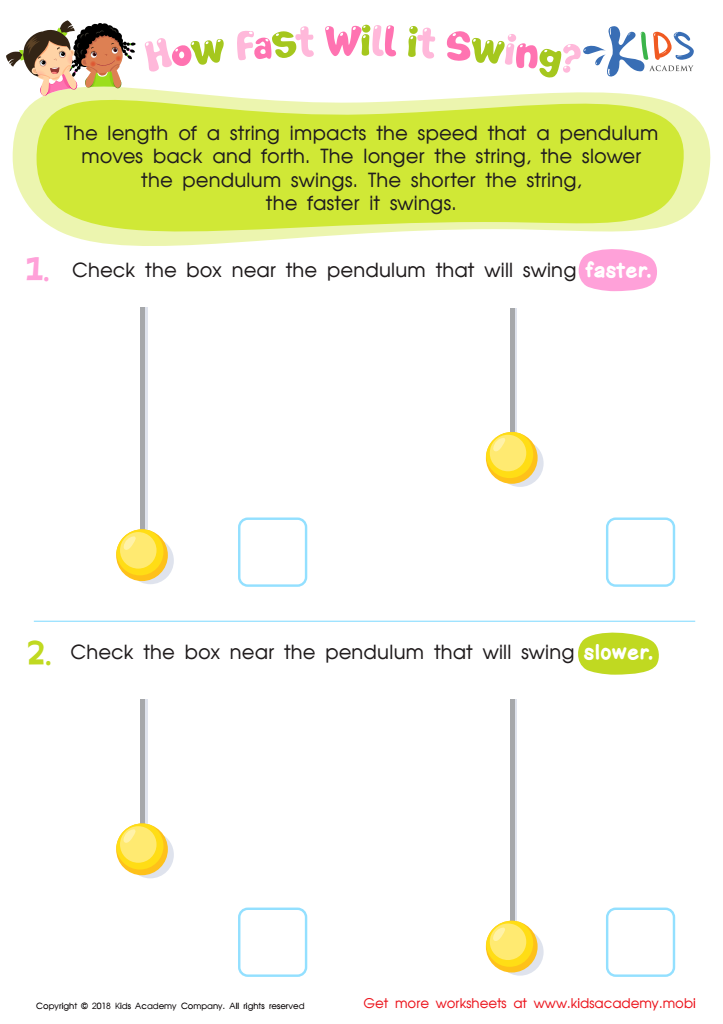
Pendulum experiment worksheet for 3rd grade

Pendulum Experiment Worksheet For 3rd Grade

Time to flex those science muscles! A pendulum's speed depends on its string length. Complete this 3rd grade pendulum experiment worksheet and experiment with a yo-yo at home! Read the description to answer the questions correctly.
Pendulum Experiment Worksheet For 3rd Grade
Worksheet
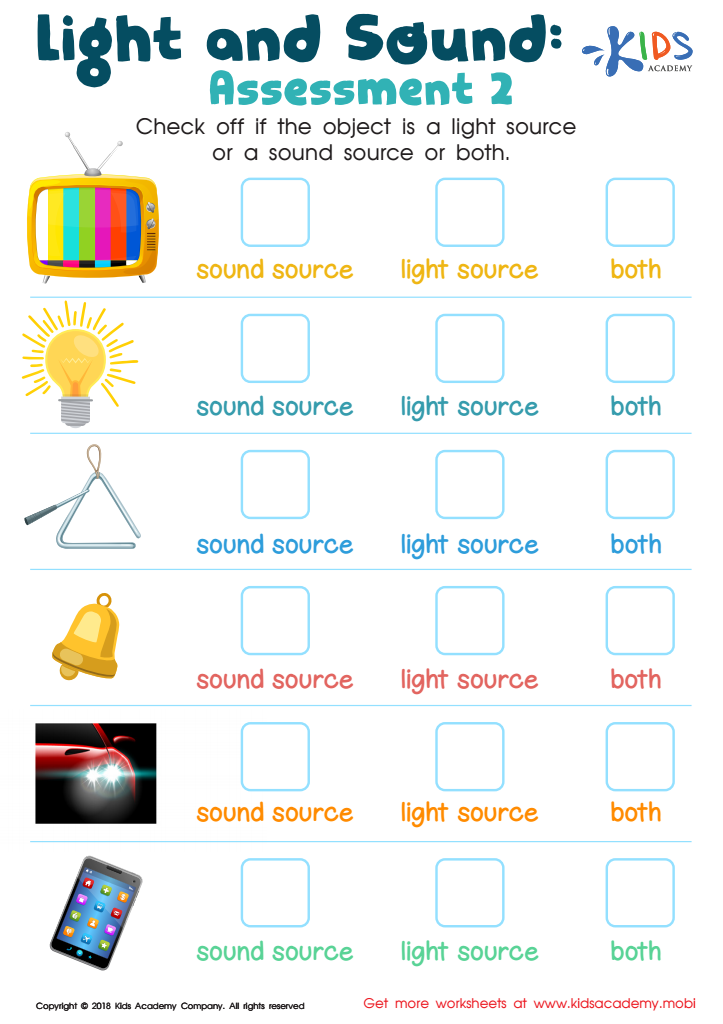
Light and Sound: Assessment 2 Worksheet

Light and Sound: Assessment 2 Worksheet

This worksheet introduces your kids to light and sound, with common sources of each. Identify the objects and help them check if it's a light source, a sound source, or both. Colourful and simple, it's a great way to teach your little ones! (80 words)
Light and Sound: Assessment 2 Worksheet
Worksheet
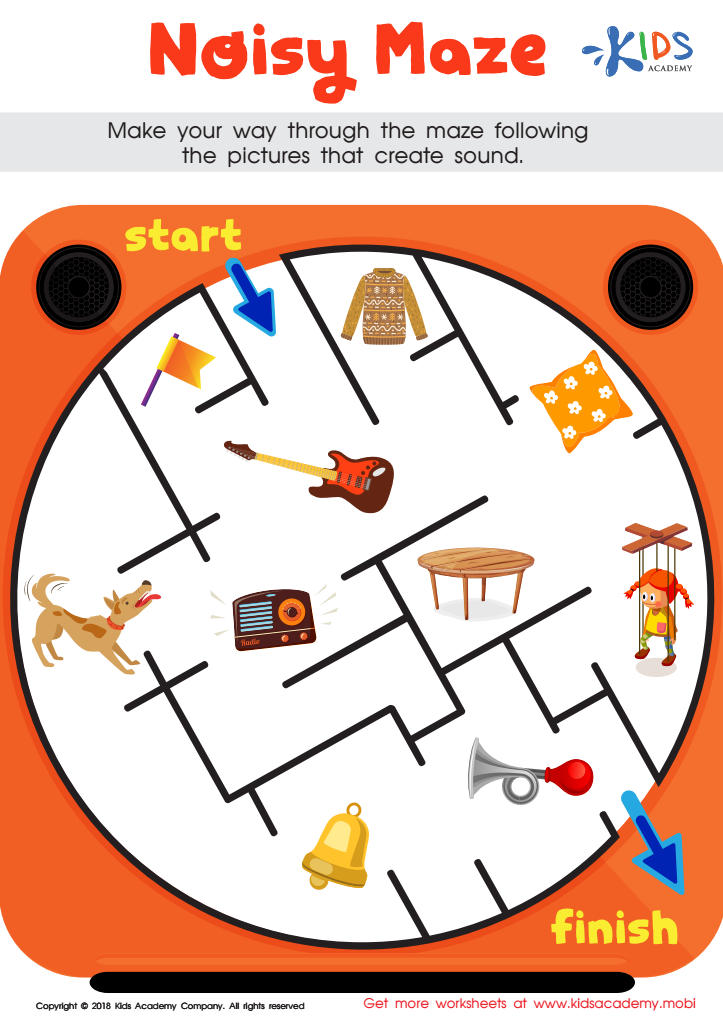
Noisy Maze Worksheet

Noisy Maze Worksheet

Have your kids name some objects that make noise? Then, look at the worksheet with them and help them identify each object. Guide them through the maze, following the sound-producing pictures.
Noisy Maze Worksheet
Worksheet
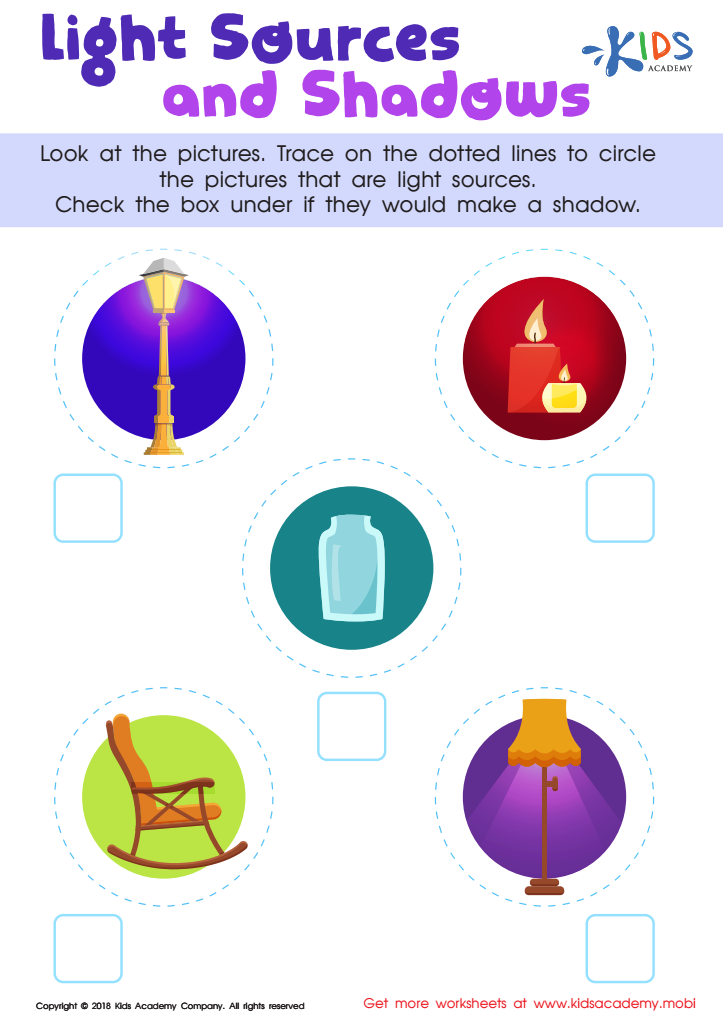
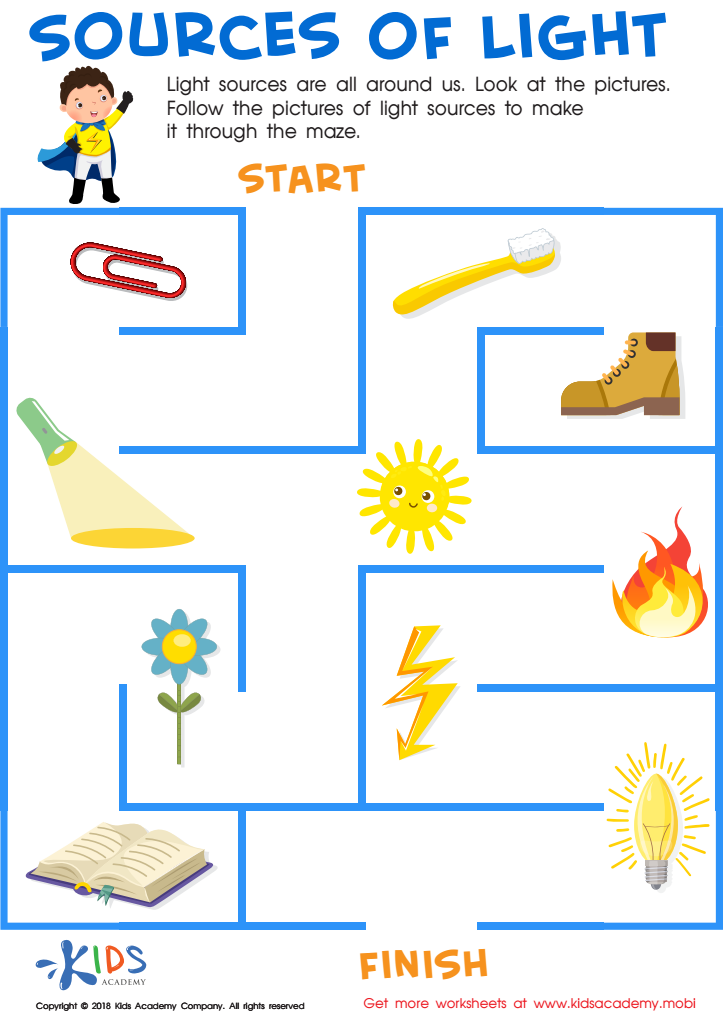
Light Sources and Shadows Worksheet

Light Sources and Shadows Worksheet

During the day, the sun radiates bright light. At night, when it's time for bed, the sun sets and darkness takes over. To light our way, we use other sources of light. With your students, trace the dotted lines around the pictures of light sources and check the boxes under the objects that will cast shadows.
Light Sources and Shadows Worksheet
Worksheet
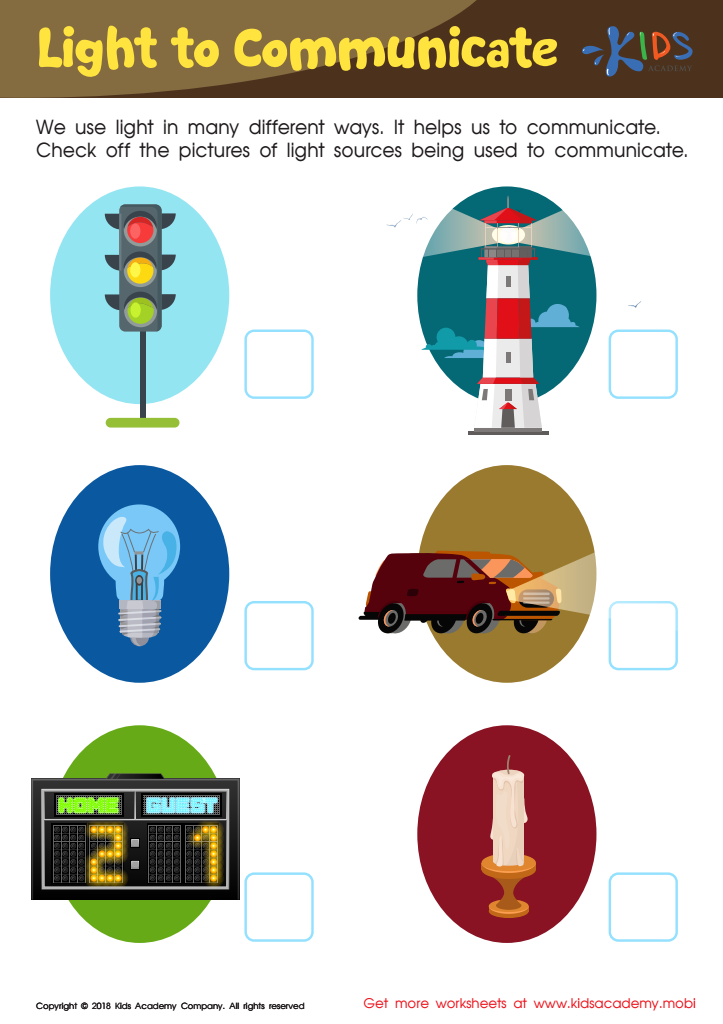
Light to Communicate Worksheet

Light to Communicate Worksheet

We can use lights to communicate effectively, like we use sounds. Ask your kids for examples and then help them tick off the pictures of light sources in the worksheet. This exercise will help them understand how light can be used to communicate.
Light to Communicate Worksheet
Worksheet
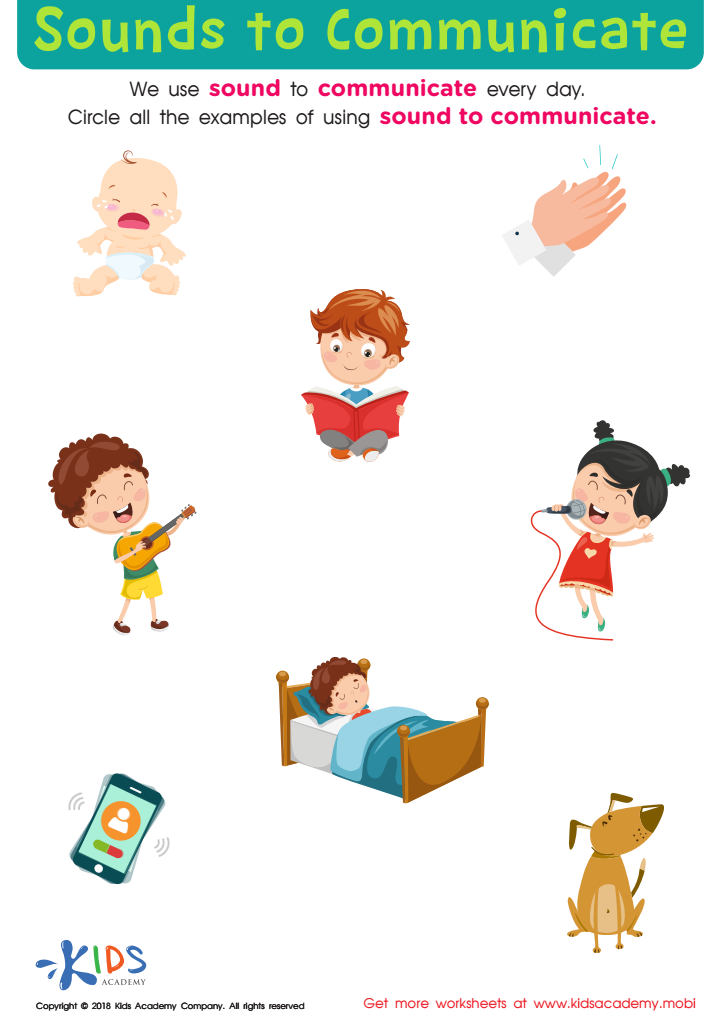
Sounds to Communicate Worksheet

Sounds to Communicate Worksheet

Sounds are important for communication. Ask your students to name sounds people, animals and things make. Then, review this worksheet with them and see if they can identify the activities. Ask them to circle examples of sounds used to communicate.
Sounds to Communicate Worksheet
Worksheet
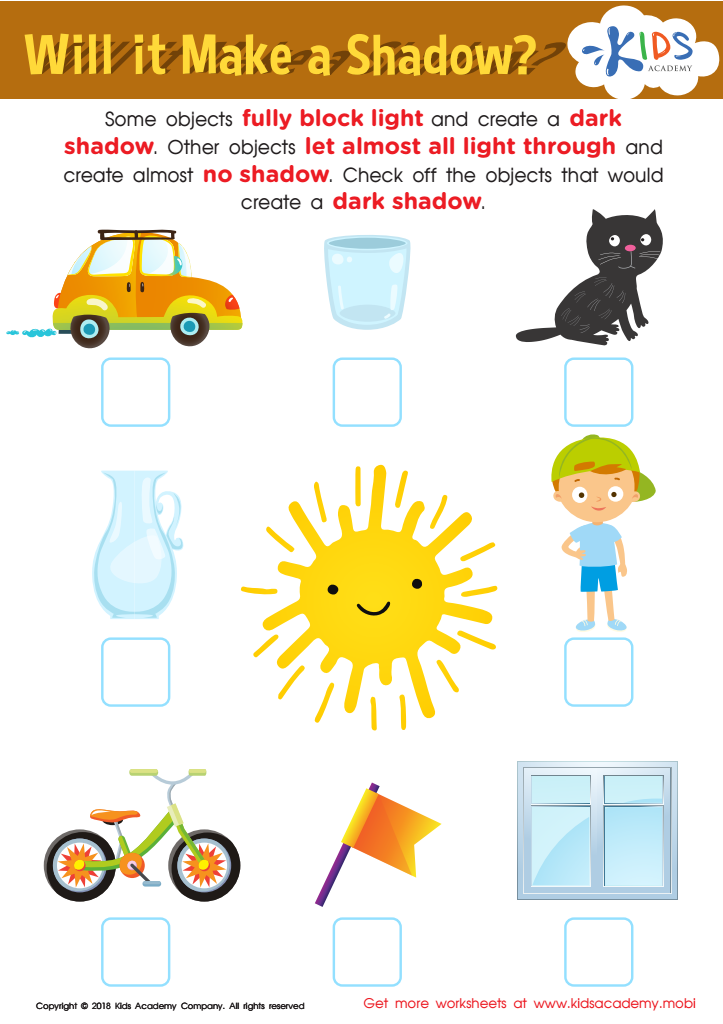
Will It Make a Shadow? Worksheet

Will It Make a Shadow? Worksheet

Teach your students about shadows with this printout. Ask them to check off the boxes next to the pictures that create a shadow. Explain that some objects block light, forming a shadow, while others don't and thus don't create a shadow. Your students are likely already familiar with their own shadow.
Will It Make a Shadow? Worksheet
Worksheet
Sources of Light Worksheet

Sources of Light Worksheet

Help your child explore sources of light with this printout exercise. Ask them if they know the sun is the reason for day and night. Then point out other common light sources, then work together to guide them through the maze from start to finish.
Sources of Light Worksheet
Worksheet
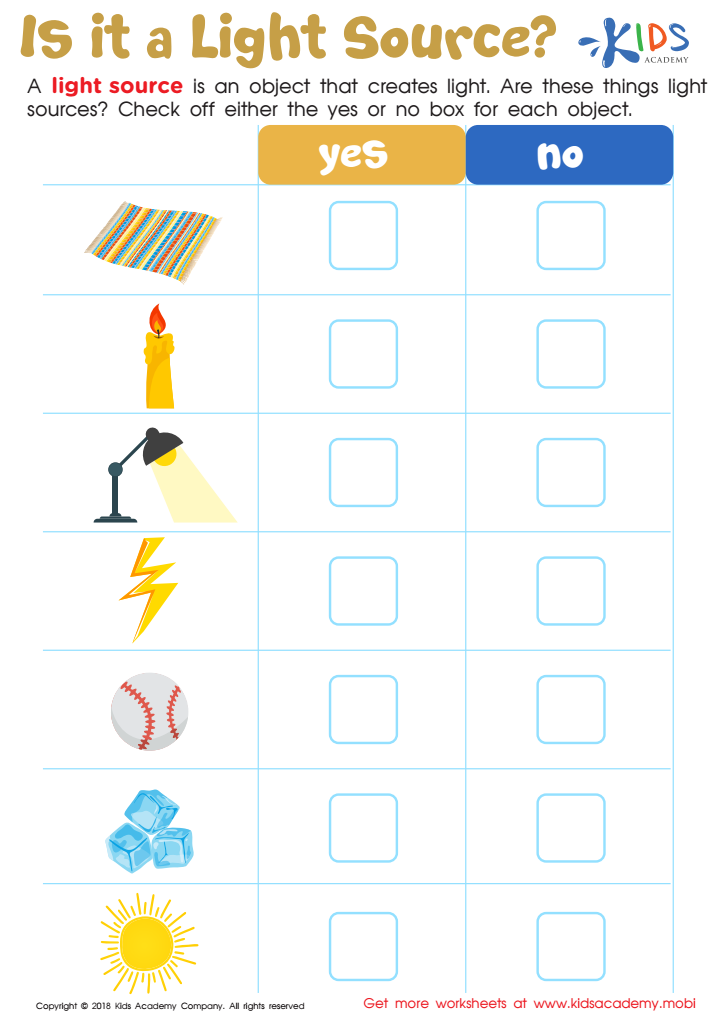
Is It a Light Source? Worksheet

Is It a Light Source? Worksheet

This worksheet is a fun way to teach kids about light sources. Children must identify natural sources like the sun and lightning, and man-made sources such as candles and lamps. Ask them to look at each object and check the box to indicate if it's a light source or not.
Is It a Light Source? Worksheet
Worksheet
Vibrations and Sounds Worksheet

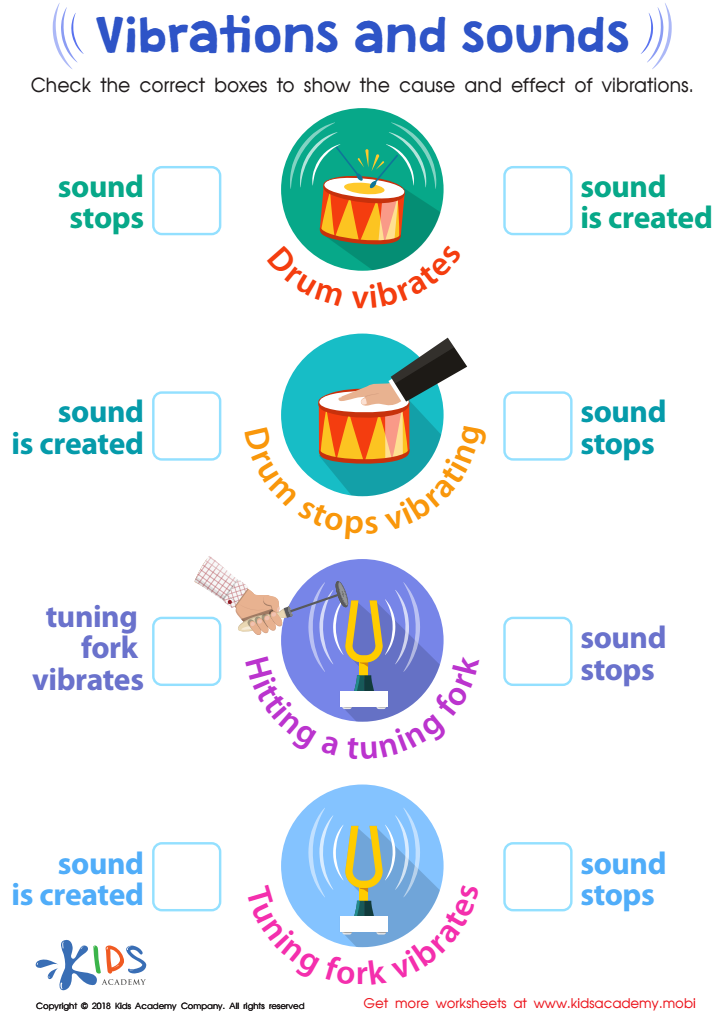
Vibrations and Sounds Worksheet

Many objects, creatures, and things make sounds. People talk, animals bark, hiss or meow, and things make sounds too. Ask your students to name others that produce sounds and why they do, such as when a drum is hit with a stick. Get them to learn about vibrations and cause/effect in this fun worksheet and check the answers.
Vibrations and Sounds Worksheet
Worksheet
Sounds Are Everywhere! Worksheet

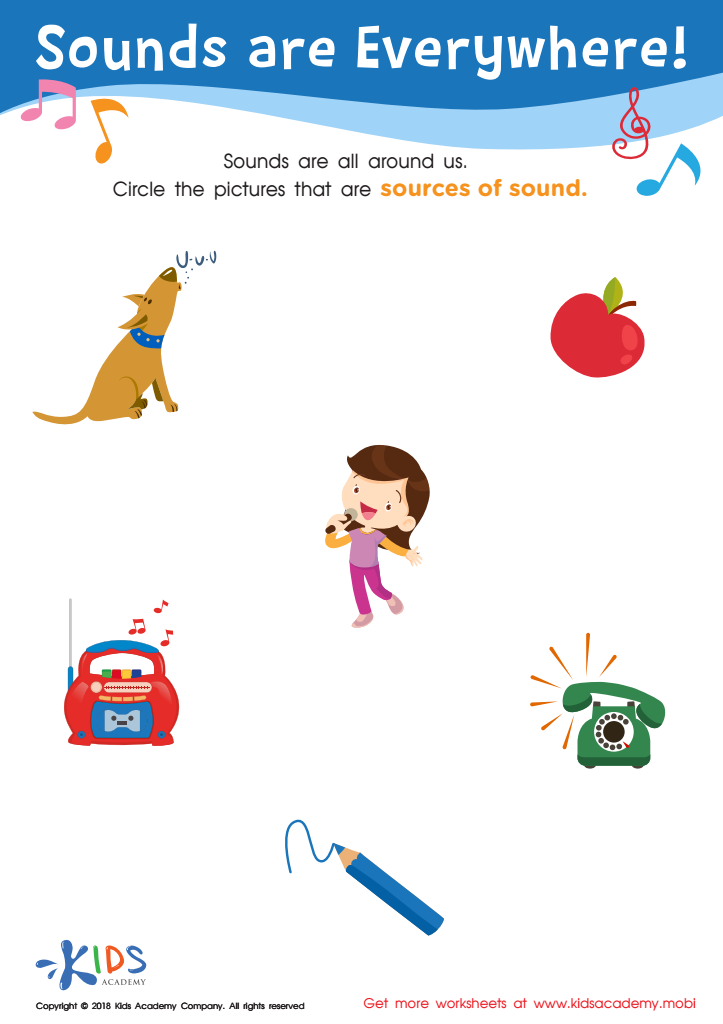
Sounds Are Everywhere! Worksheet

Ask your students to recall objects that make sound. Then, help them identify the sources of sound in the pictures of this worksheet.
Sounds Are Everywhere! Worksheet
Worksheet
Matter: Assessment 2 Worksheet

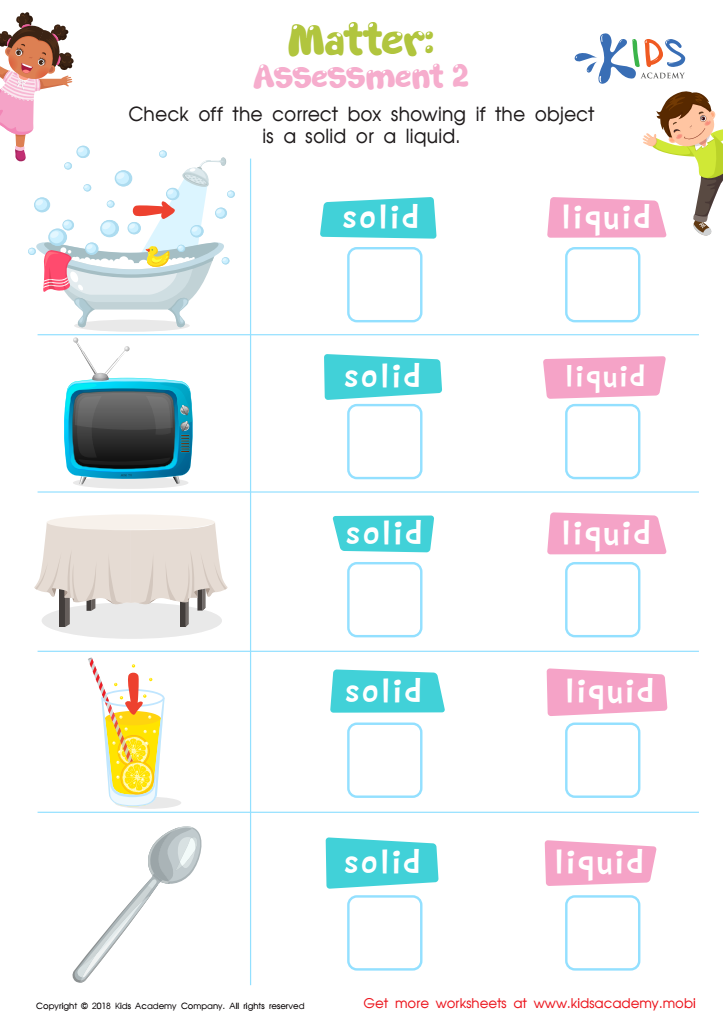
Matter: Assessment 2 Worksheet

Identify the five objects in this worksheet as either solid or liquid. Ask your kids to check the correct box. Melting changes solids to liquids while freezing transforms liquids to solids.
Matter: Assessment 2 Worksheet
Worksheet
Matter: Assessment 1 Worksheet

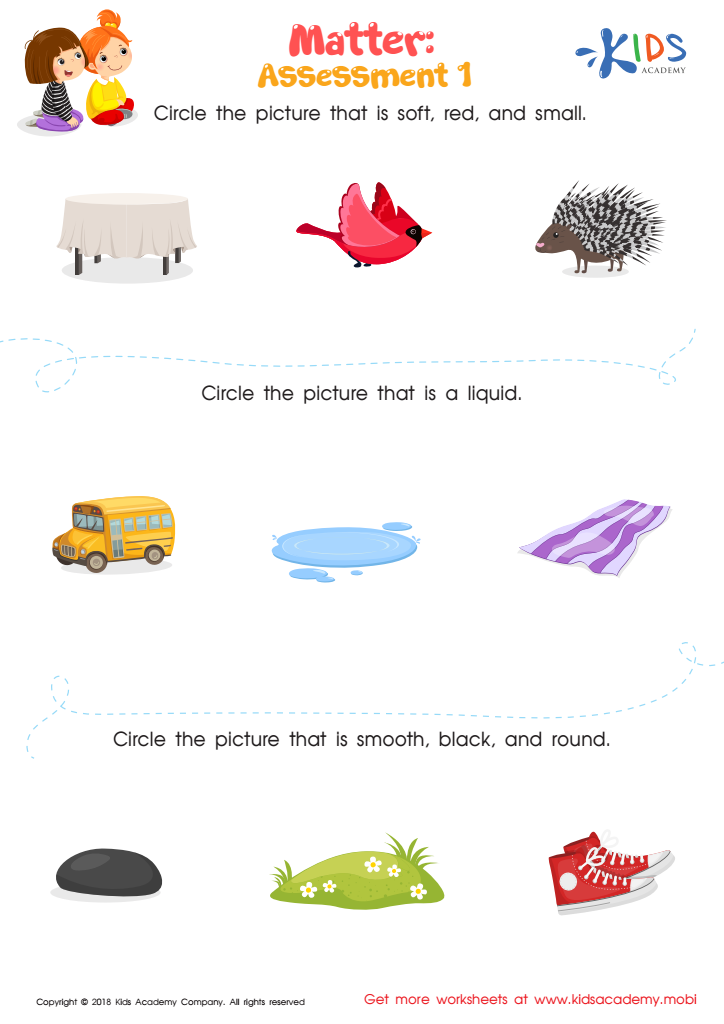
Matter: Assessment 1 Worksheet

Have your children learn that anything that has weight and takes up space is matter. Examples include buses, tables, people, animals, and more. Use this worksheet to help them identify the objects and circle the soft, red, and small one; the liquid; and the smooth, black, and round one.
Matter: Assessment 1 Worksheet
Worksheet
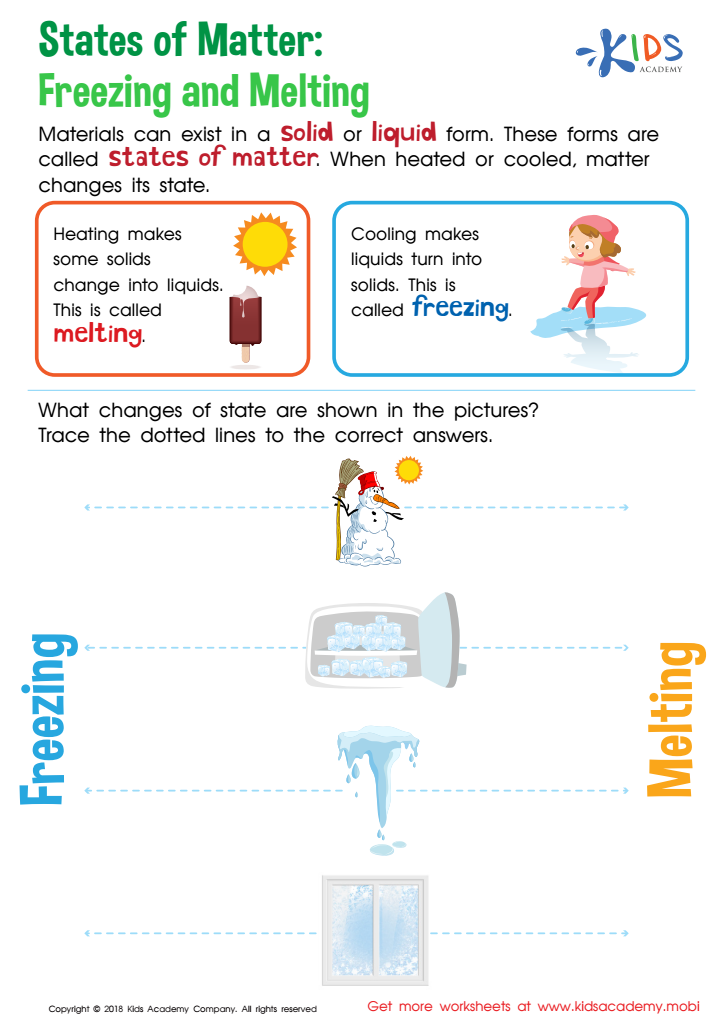
States of Matter: Freezing and Melting Worksheet

States of Matter: Freezing and Melting Worksheet

Have students look through the pics in the worksheet. Ask them what changes of state are shown, then trace the lines to the right answers. Matter can come in liquid or solid form, and changes between the two when heated or cooled (melting/freezing).
States of Matter: Freezing and Melting Worksheet
Worksheet
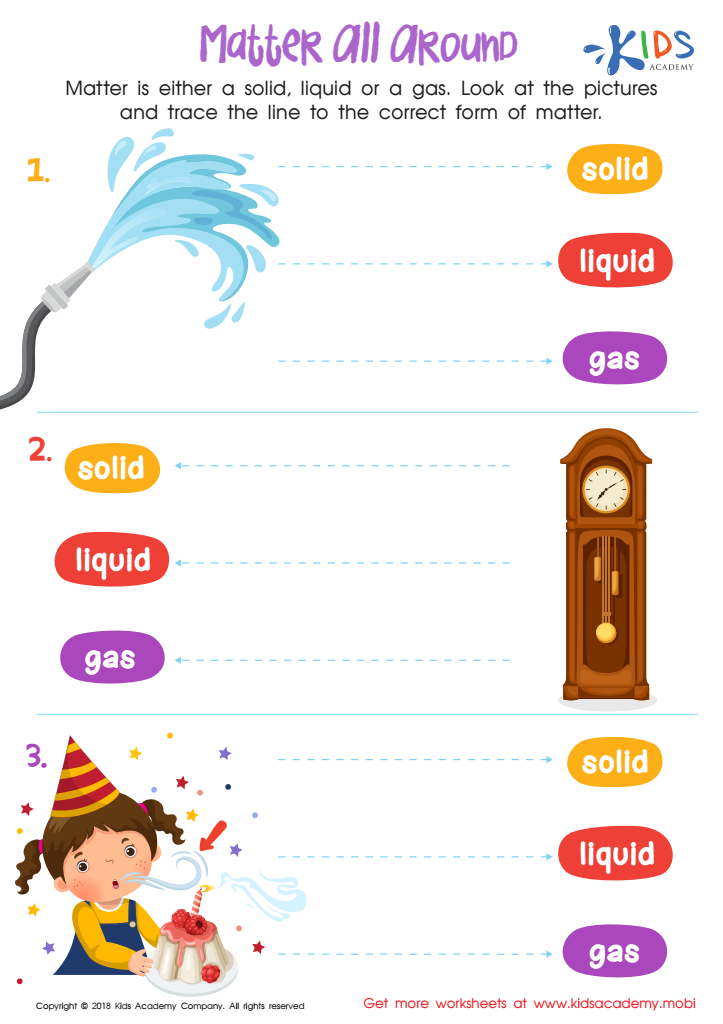
Matter all Around Worksheet

Matter all Around Worksheet

Have you taught your students about matter? Use this worksheet to help them understand that matter is anything that has weight and takes up space, either as a solid, liquid, or gas. Guide them to trace the line to the correct form of matter as they look at the pictures. This will be easy if they already know the topic, but it's also a great opportunity to teach them.
Matter all Around Worksheet
Worksheet
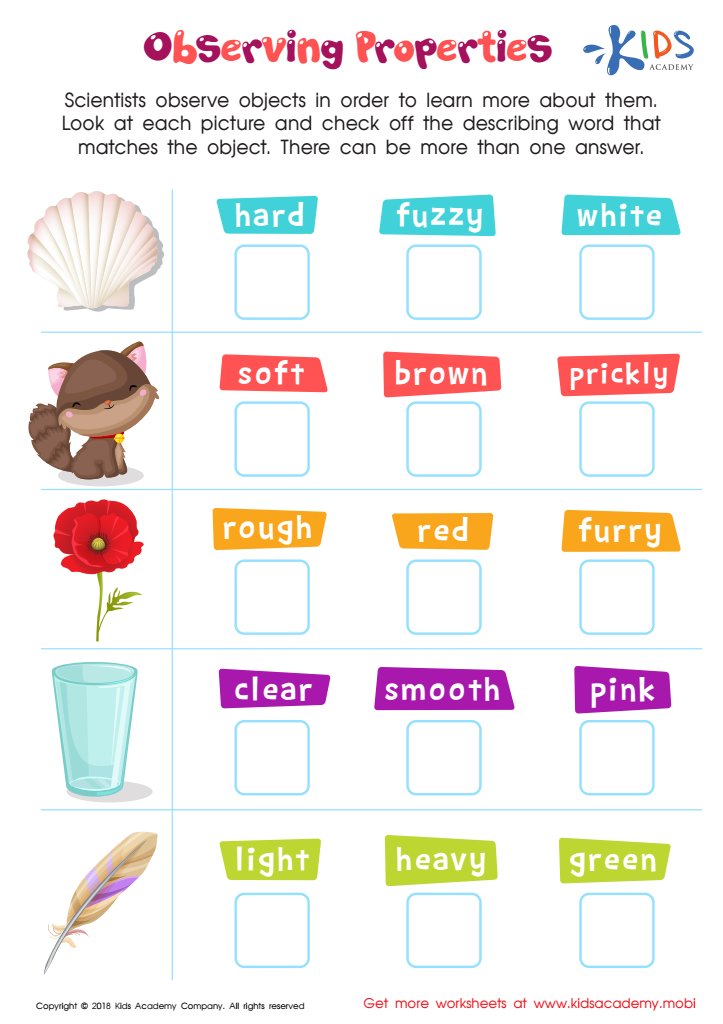
Observing Properties Worksheet

Observing Properties Worksheet

Encourage your kid's interest in science with this fun worksheet! Let them identify the five objects on the left, then choose the most accurate word from the options on the right. There might be more than one answer, so remind them to take their time observing the objects.
Observing Properties Worksheet
Worksheet
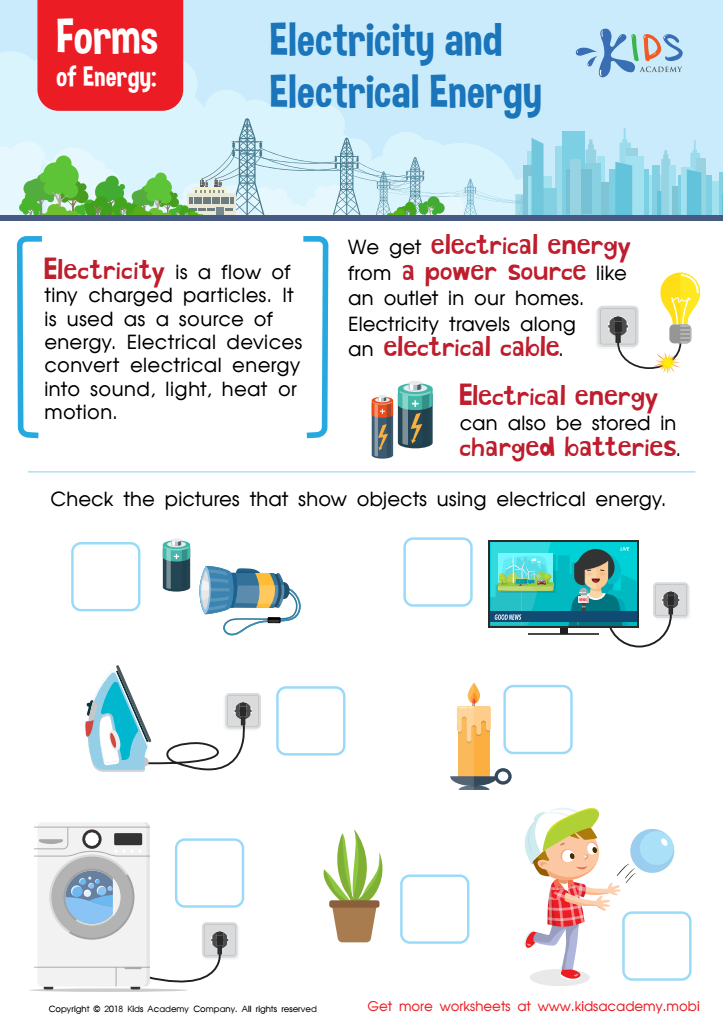
Forms of energy worksheet for 3rd grade

Forms of Energy Worksheet

This fun worksheet will help kids understand electricity. Kids identify objects powered by batteries or outlets. Perfect for 3rd Grade, this worksheet will fascinate them as they learn about this form of energy.
Forms of Energy Worksheet
Worksheet
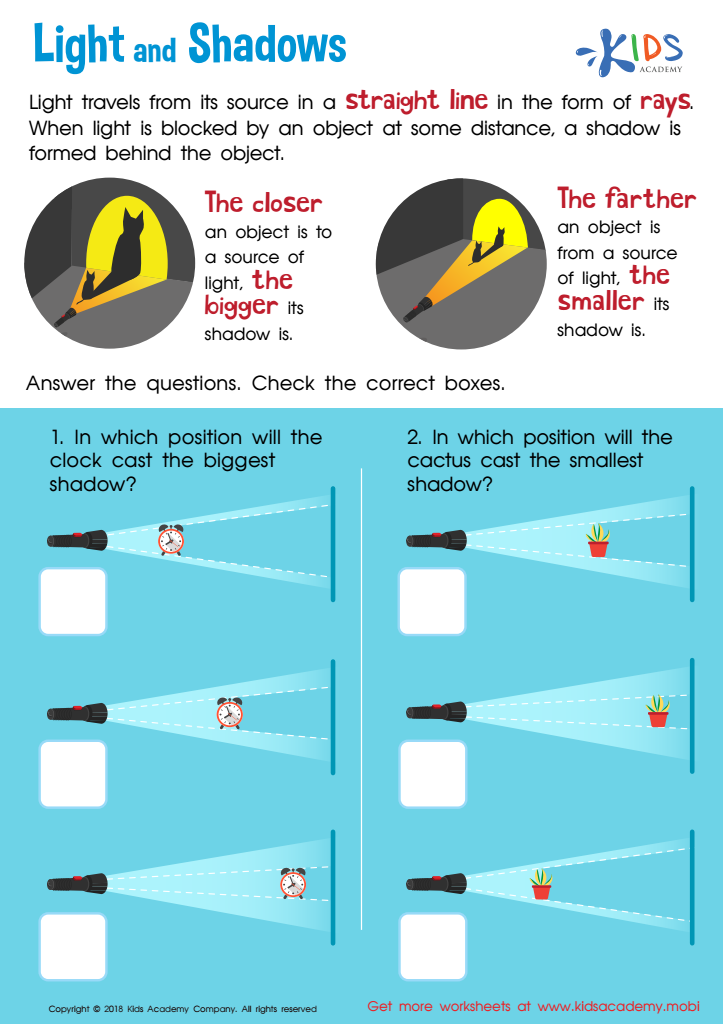
Light and Shadow Worksheet for Grade 3

Light and Shadow Worksheet for Grade 3

Kids are often scared of shadows, but they can learn that they're not so scary! This worksheet helps grade 3 kids understand how light rays and objects create shadows, and how they can be large or small. Teach your child with this interesting worksheet!
Light and Shadow Worksheet for Grade 3
Worksheet
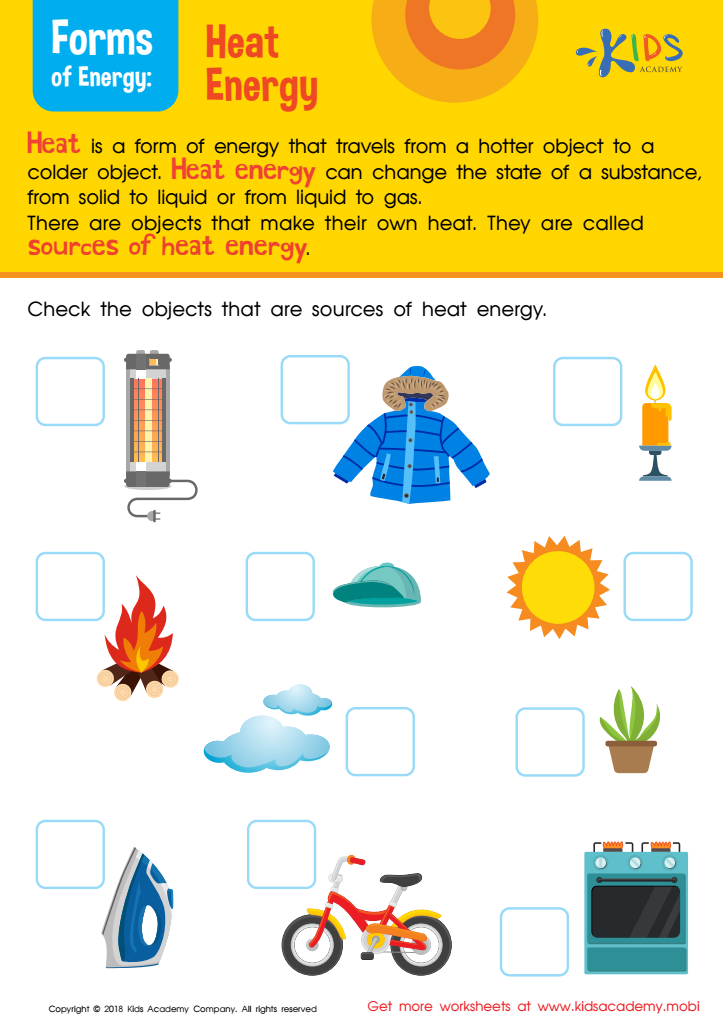
Sources of Heat Energy Worksheet

Sources of Heat Energy Worksheet

Heat energy is everywhere - from inside our homes to outside in the sun. Natural sources include the sun, geothermal energy, and volcanic activity. This worksheet helps kids identify and learn about these sources and more!
Sources of Heat Energy Worksheet
Worksheet
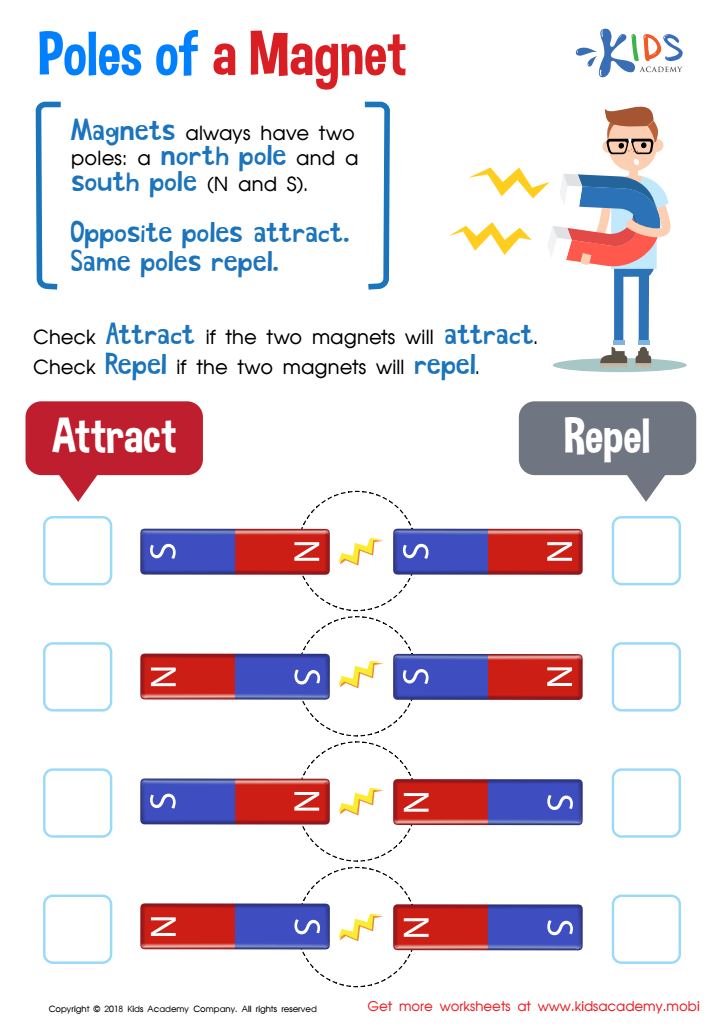
Magnet Poles Attract or Repel Worksheet

Magnet Poles Attract or Repel Worksheet

Kids can learn about magnets using this fun worksheet! They'll identify the polarities of magnets and see if they attract or repel. Pictures of magnets will help them understand the concept and get them excited about scientific exploration!
Magnet Poles Attract or Repel Worksheet
Worksheet
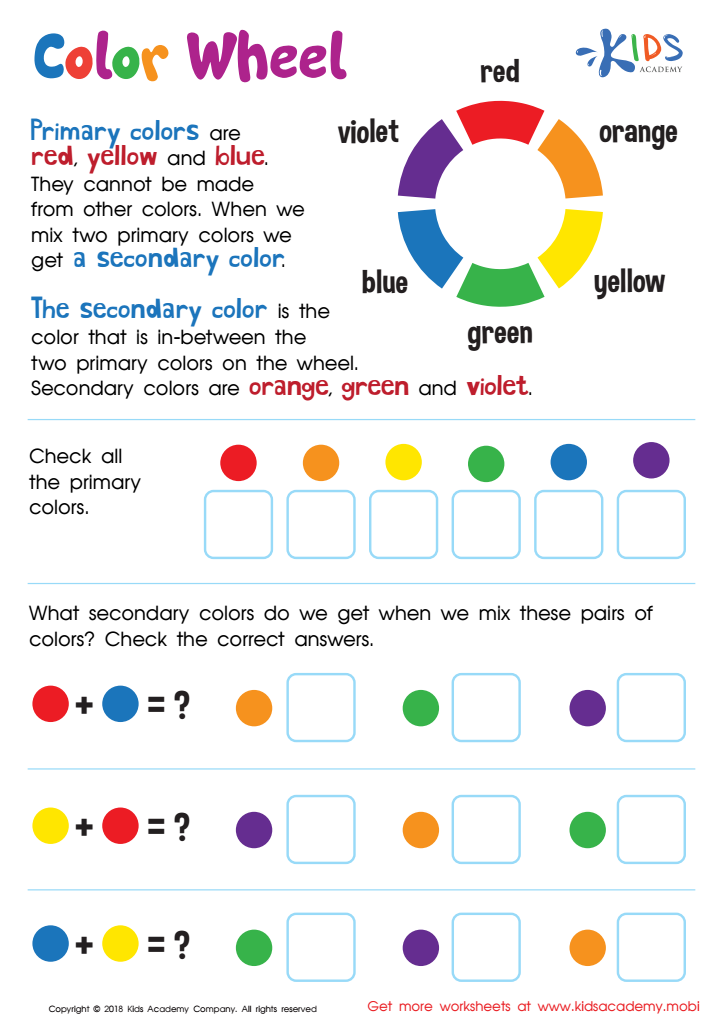
Primary and Secondary Colors Worksheet PDF

Primary and Secondary Colors Worksheet

Explore the color wheel with it. Print the worksheet and use it to discover all the colors the wheel has to offer! Learn the basics of color mixing while having fun.
Primary and Secondary Colors Worksheet
Worksheet
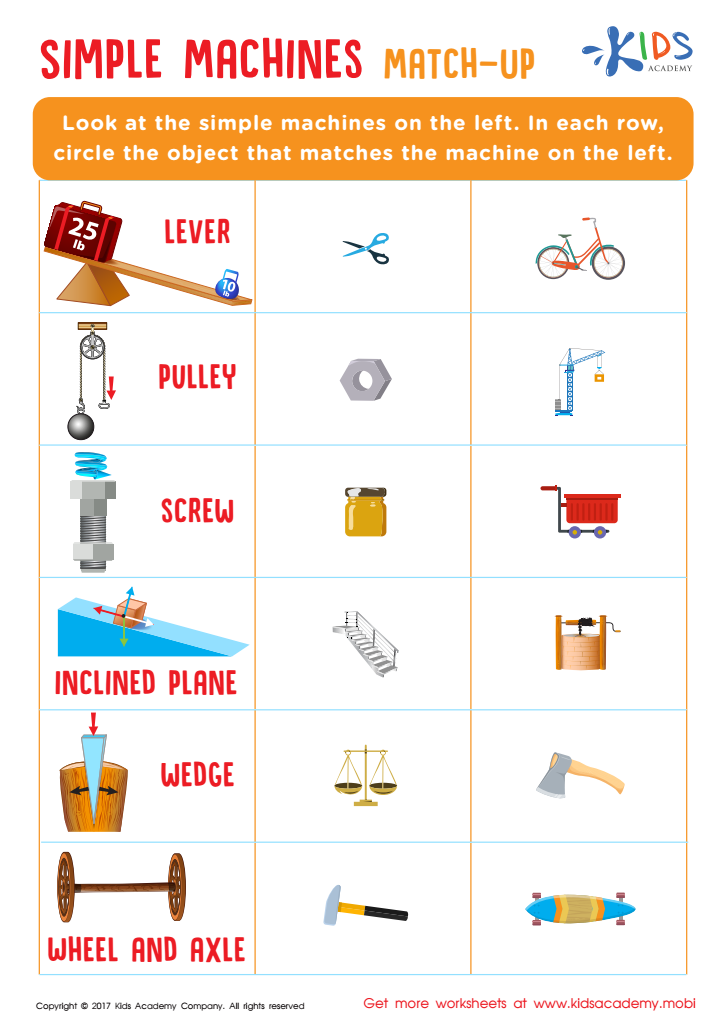
Simple machines worksheet PDF

Simple Machines Worksheet

Let this colorfully illustrated PDF introduce your child to the physical science behind everyday tools and objects. Learn about simple machines like levers, pulleys, and screws – helping make our daily lives easier!
Simple Machines Worksheet
Worksheet
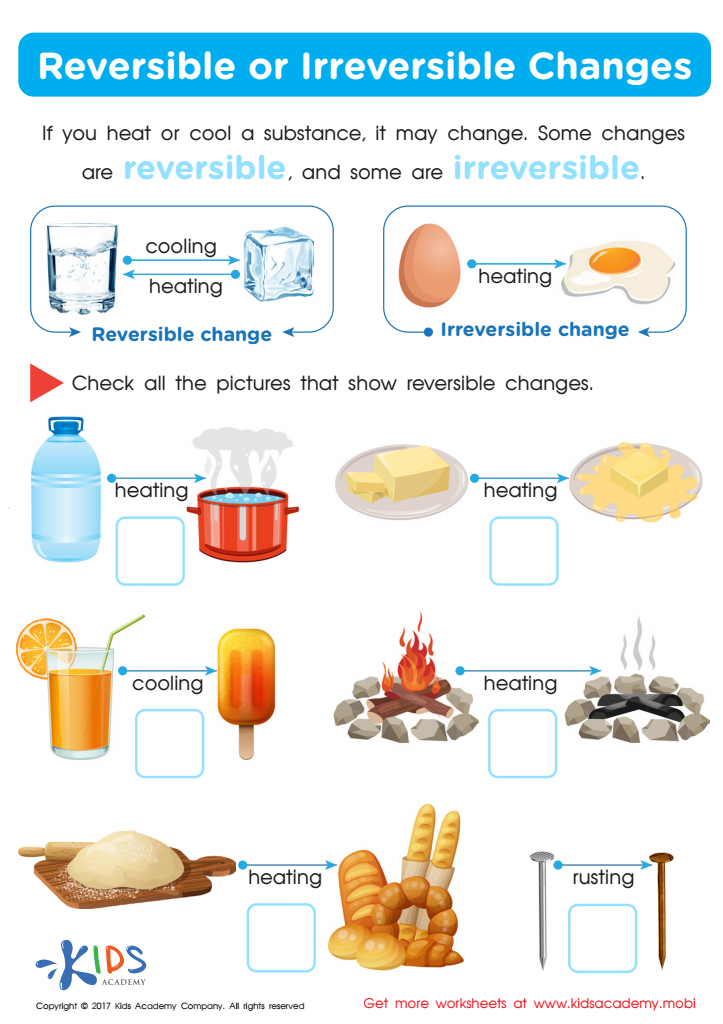
Interesting reversible irreversible changes worksheet

Reversible Irreversible Changes Worksheet
Crack an egg and cook it – once it's done, there's no return to its original state.
Reversible Irreversible Changes Worksheet
Worksheet
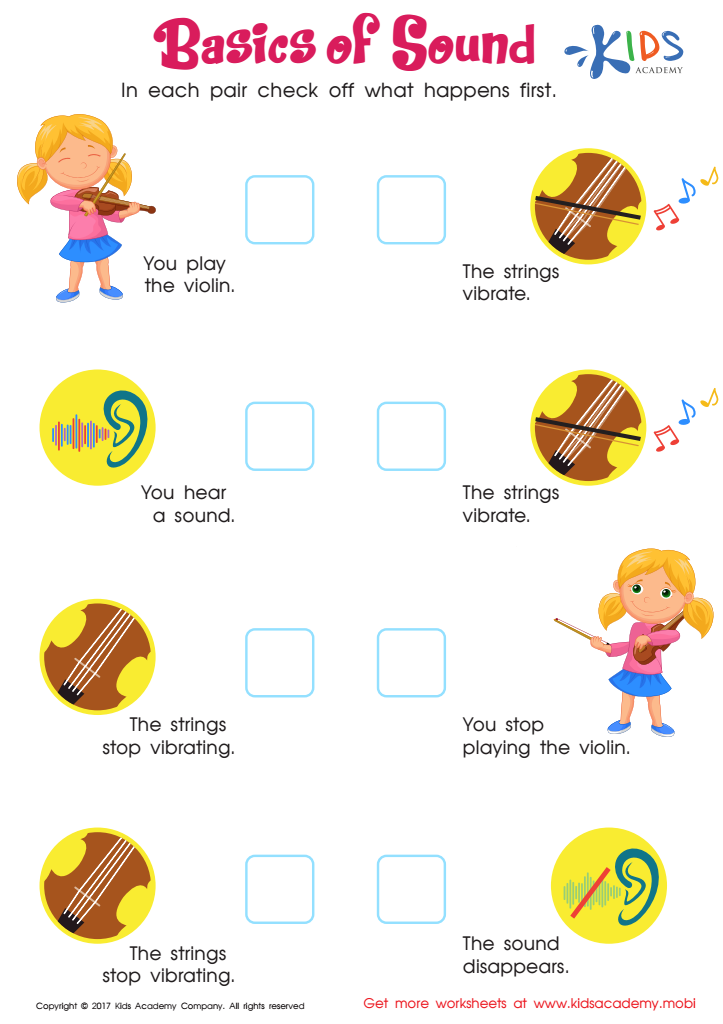
Basics Of Sound Worksheet


Basics Of Sound Worksheet
Sound is the result of vibrations. As a violinist creates music on her instrument, we can observe how the vibrations start and stop, producing a pleasing sound. This worksheet helps kids understand the basics of physical science behind sound.
Basics Of Sound Worksheet
Worksheet


Parents and teachers should care about Normal Physical Science for children aged 7-9 because during these formative years, kids are naturally curious and eager to explore the world around them. Introducing them to physical science helps nurture an early interest in how things work, laying a strong foundation for future learning in STEM (Science, Technology, Engineering, Mathematics) fields.

Children's brains are highly receptive at this age, making it an optimal time for them to absorb fundamental scientific concepts. Engaging in hands-on experiments and observations can foster critical thinking, problem-solving skills, and creativity. These activities not only make learning enjoyable but also help children understand and apply their knowledge to real-world situations, enhancing their comprehension and retention.

Moreover, early exposure to physical science encourages positive attitudes toward learning. By demonstrating that science is not just a school subject but a way of understanding the universe, parents and teachers can instill a lifelong love for discovery and learning. This enthusiasm can boost children's confidence, motivation, and academic performance across subjects.

In addition, understanding basic science promotes environmental awareness and responsible decision-making, crucial in today's world. Overall, supporting early science education sets the stage for well-rounded cognitive development and prepares children for a future in an increasingly science-centric world.