Filters

62 filtered results

Clear all filters
Favorites
With answer key
Interactive

62 filtered results

Difficulty Level

Grade


Unlock the World of Reading with Normal Phonics for Ages 8-9

Dive into the exciting realm of reading with our Normal Phonics worksheets, meticulously crafted for children aged 8-9. These engaging and interactive worksheets are designed to bolster your child's phonemic awareness, blending, and decoding skills, laying a strong foundation for reading fluency. Each page is a step towards mastering the intricate patterns of the English language, combining fun with education. With Normal Phonics for Ages 8-9, watch your child's confidence and love for reading soar. Perfect for homeschooling or supplemental learning, these worksheets will be a valuable addition to your educational toolkit.

Check out this FREE Trial Lesson on Phonics for age 8-9!

Identify Prefixes, Suffixes, and Base Words

Favorites
With answer key
Interactive
  • 8-9
  • Interactive
  • Phonics
  • Normal
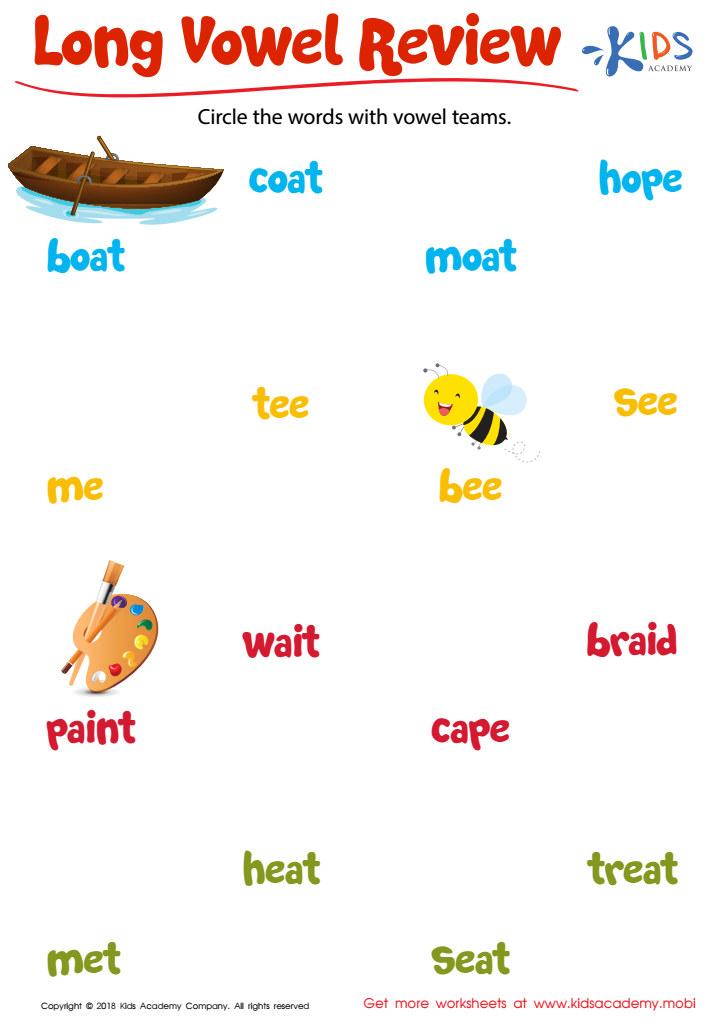
Long Vowel Review Worksheet

Long Vowel Review Worksheet

Vowel teams like "ea" and "ai" help us make words, and understanding these patterns aids emerging readers in becoming more fluent. This review worksheet has students finding words with vowel teams that make the long vowel sound, and helps them recognize high-frequency words.
Long Vowel Review Worksheet
Worksheet
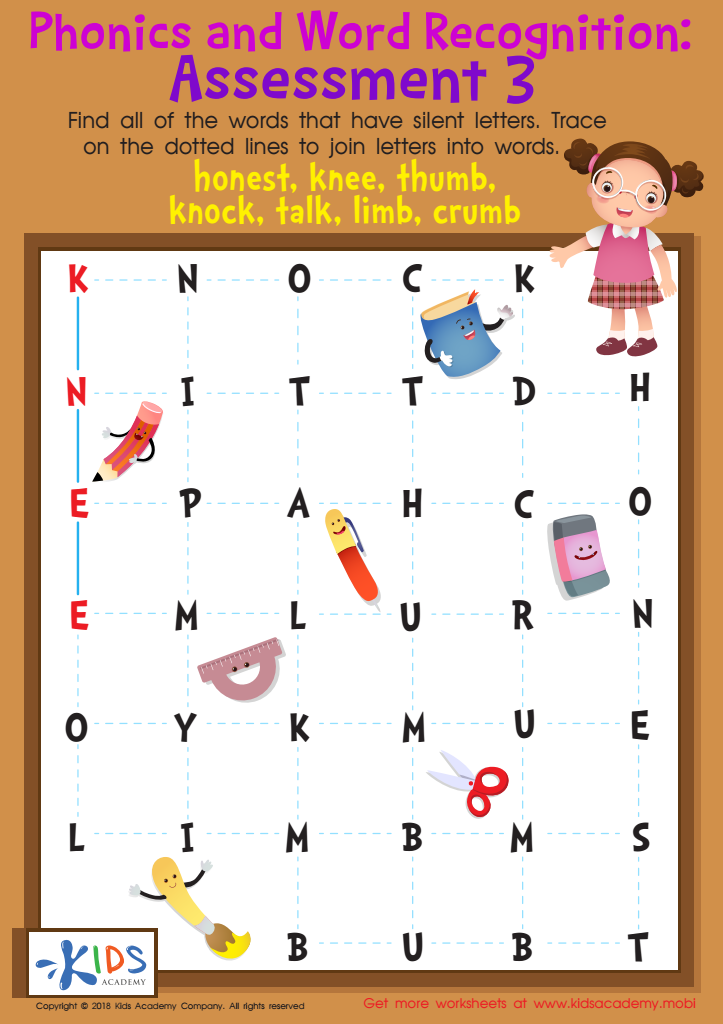
Phonics and Word Recognition: Assessment 3 Worksheet

Phonics and Word Recognition: Assessment 3 Worksheet

Silent letters can be tricky for kids learning to read and write. Show them how they work with words like 'knee' and 'dumb'. Then, challenge them to come up with their own. Give them a worksheet with silent letters and trace the lines to join the letters into words.
Phonics and Word Recognition: Assessment 3 Worksheet
Worksheet
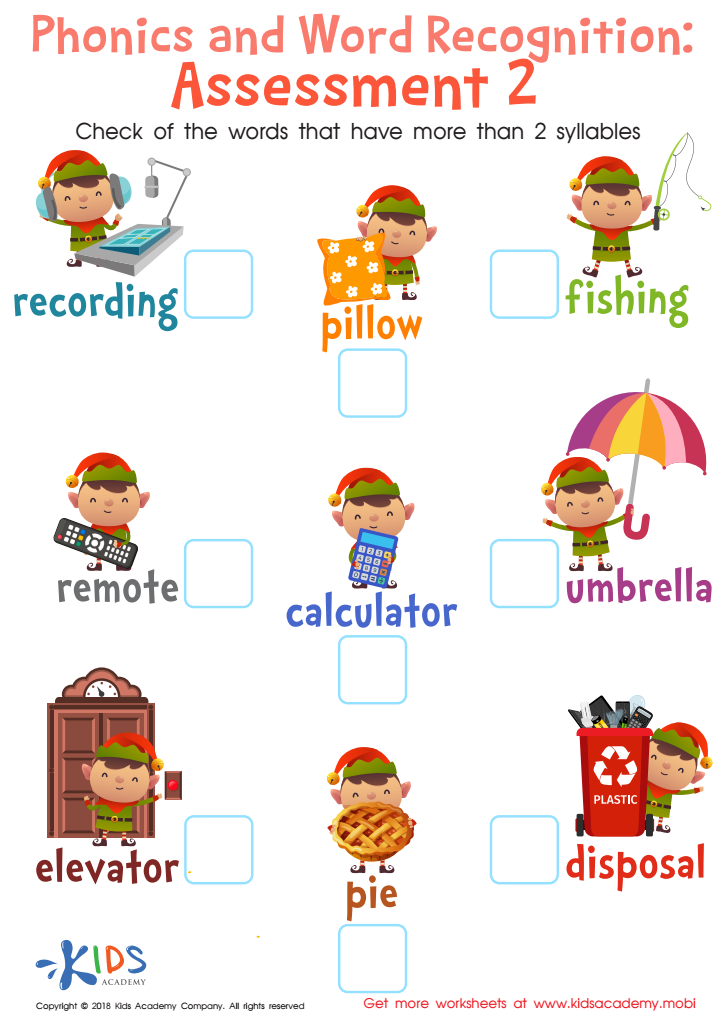
Phonics and Word Recognition: Assessment 2 Worksheet

Phonics and Word Recognition: Assessment 2 Worksheet

Help your kids learn proper pronunciation by counting syllables. Most words they'll encounter have 1-3 syllables, making them simple to say. Have them repeat the words in your worksheet after you. Focus on longer words with more than two syllables.
Phonics and Word Recognition: Assessment 2 Worksheet
Worksheet
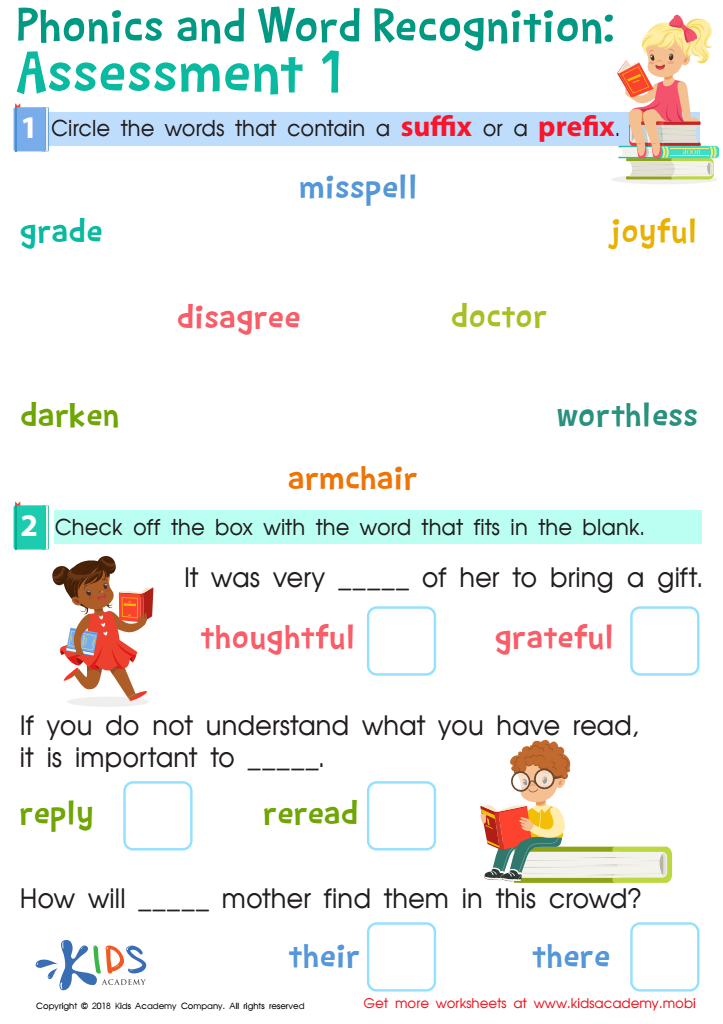
Phonics and Word Recognition: Assessment 1 Worksheet

Phonics and Word Recognition: Assessment 1 Worksheet

Explain prefixes (words added to start of another word to give it a new meaning) and suffixes (added to end of word to change its meaning) to your kids with examples like 'unhappy' (prefix) and 'forgetful' (suffix). Now, help your child complete this worksheet, including circling words and checking boxes.
Phonics and Word Recognition: Assessment 1 Worksheet
Worksheet
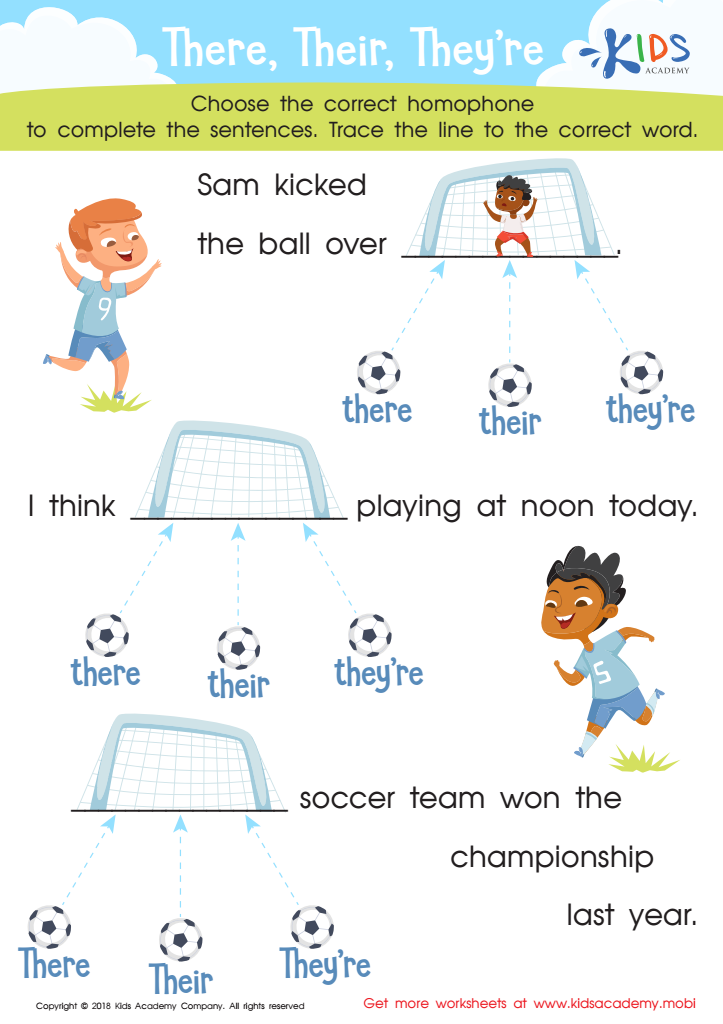
There, Their, They're Worksheet

There, Their, They're Worksheet

Explain to your kids the difference between 'there', 'their' and 'they're'. These three words are homophones - spelt similarly but with different meanings. Help them choose the correct homophones when completing sentences, and trace the line to the right word.
There, Their, They're Worksheet
Worksheet
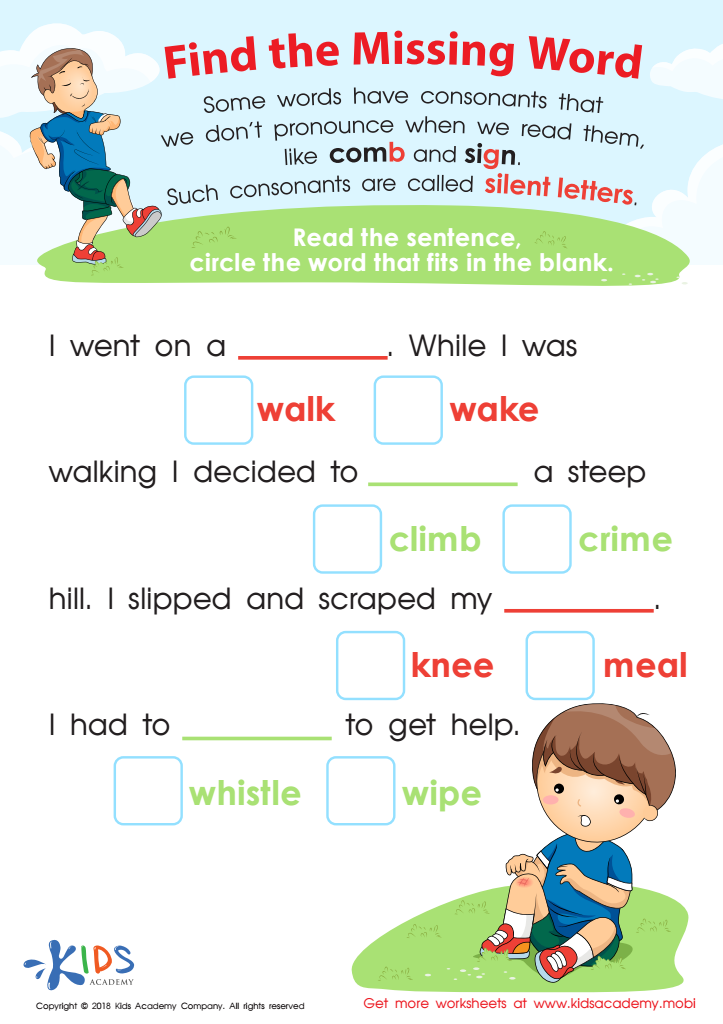
Find The Missing Word Worksheet

Find The Missing Word Worksheet

Master silent letters like "b" and "k" with this illustrated worksheet! Read the sentences and fill in the blanks with the correct word, checking the box. Read all the way to the bottom and review words containing silent letters. A great way to help your little learner tackle a tough topic!
Find The Missing Word Worksheet
Worksheet
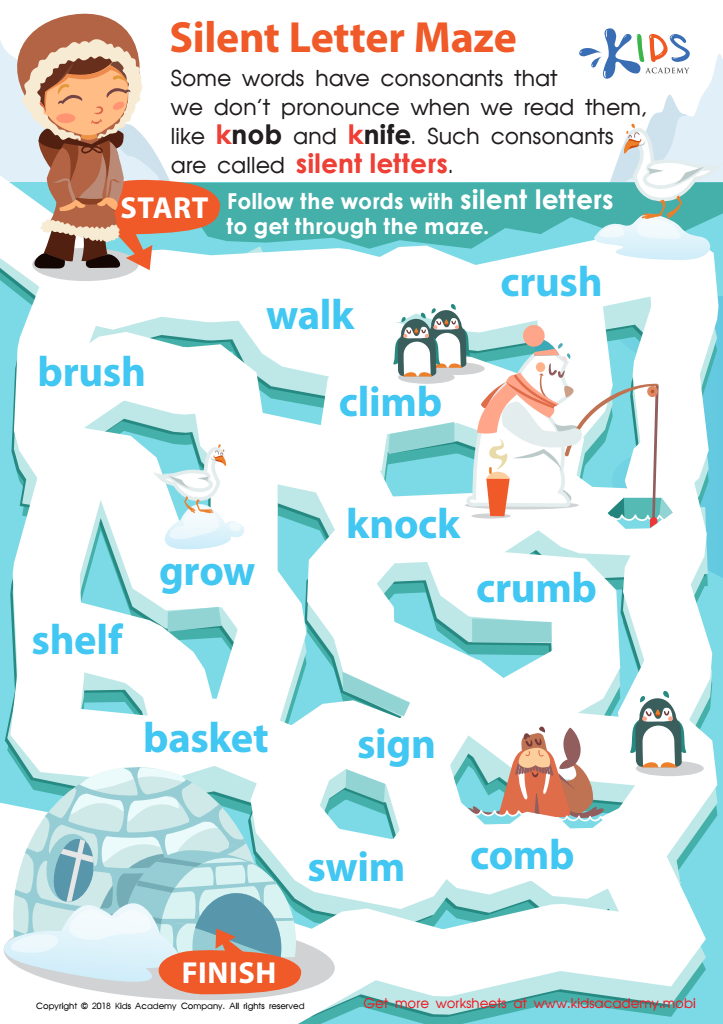
Silent Letter Maze Worksheet

Silent Letter Maze Worksheet

Learning to read can be tricky, especially with words with irregular pronunciations. Explain to your child that some words have consonants we do not pronounce when reading. Ask them for examples like 'knife' and 'knob'. These consonants are called silent letters. Download this pdf to practice words with silent letters and complete the maze.
Silent Letter Maze Worksheet
Worksheet
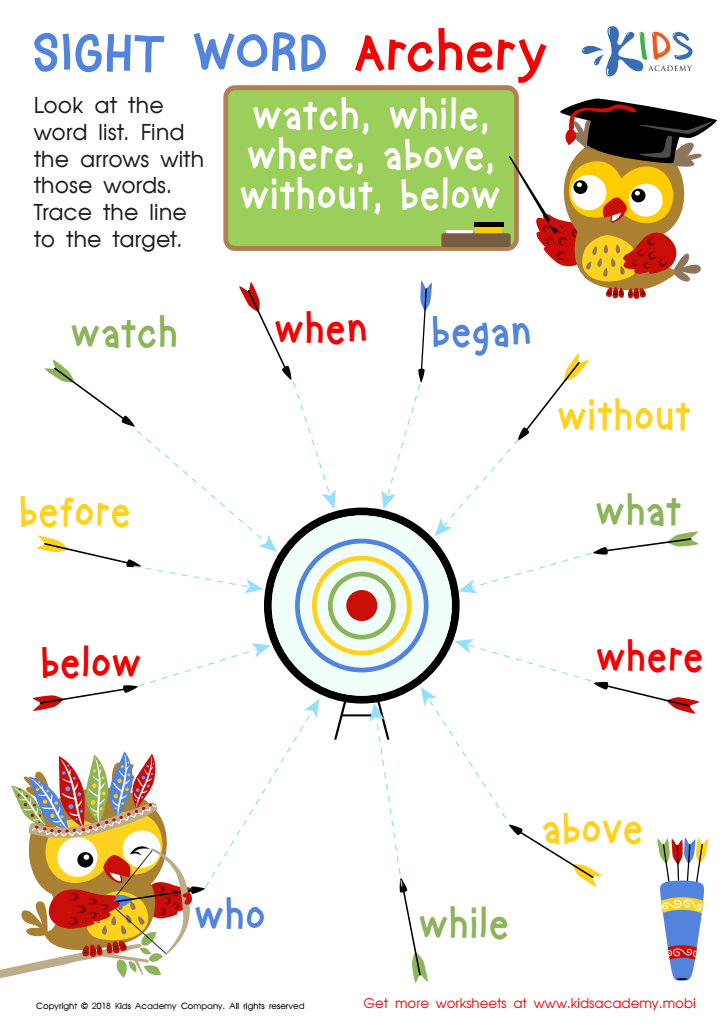
Sight Word Archery Worksheet

Sight Word Archery Worksheet

Read the words list with your kids, pointing at each one. Ask them to do the same. Help them find the arrows with those words and trace the line to the target in the centre.
Sight Word Archery Worksheet
Worksheet
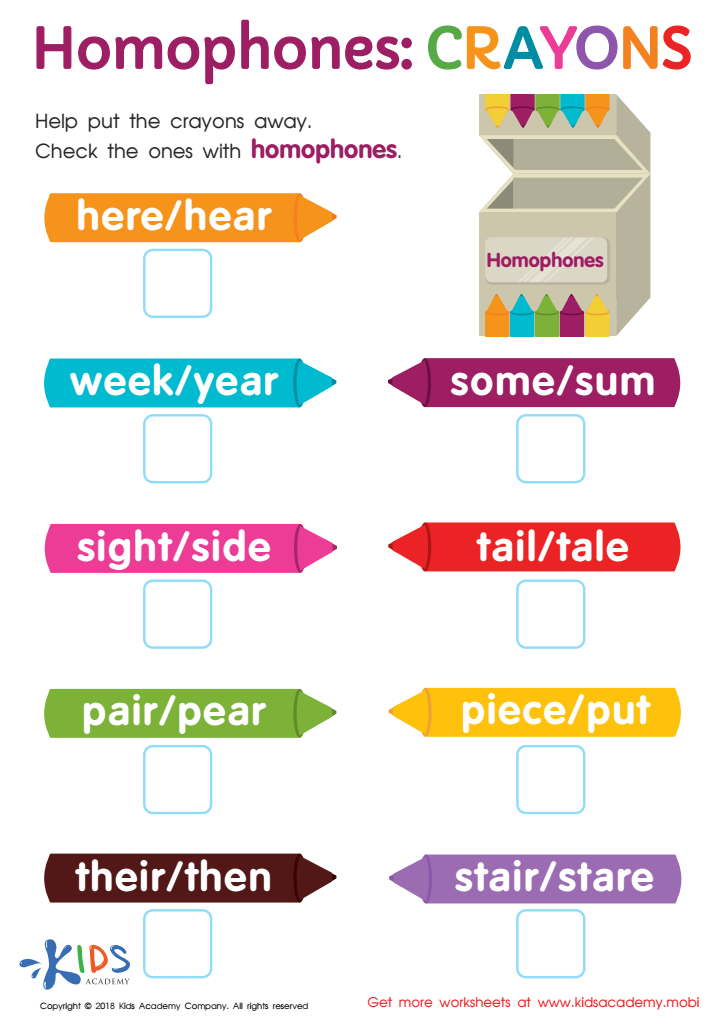
Homophones: Crayons Worksheet

Homophones: Crayons Worksheet

Ask your kids: "What are homophones?" Explain that homophones are words that sound alike but have different meanings, like 'dare' and 'deer'. Ask them to identify homophones by putting the crayons in this printout away according to the words.
Homophones: Crayons Worksheet
Worksheet
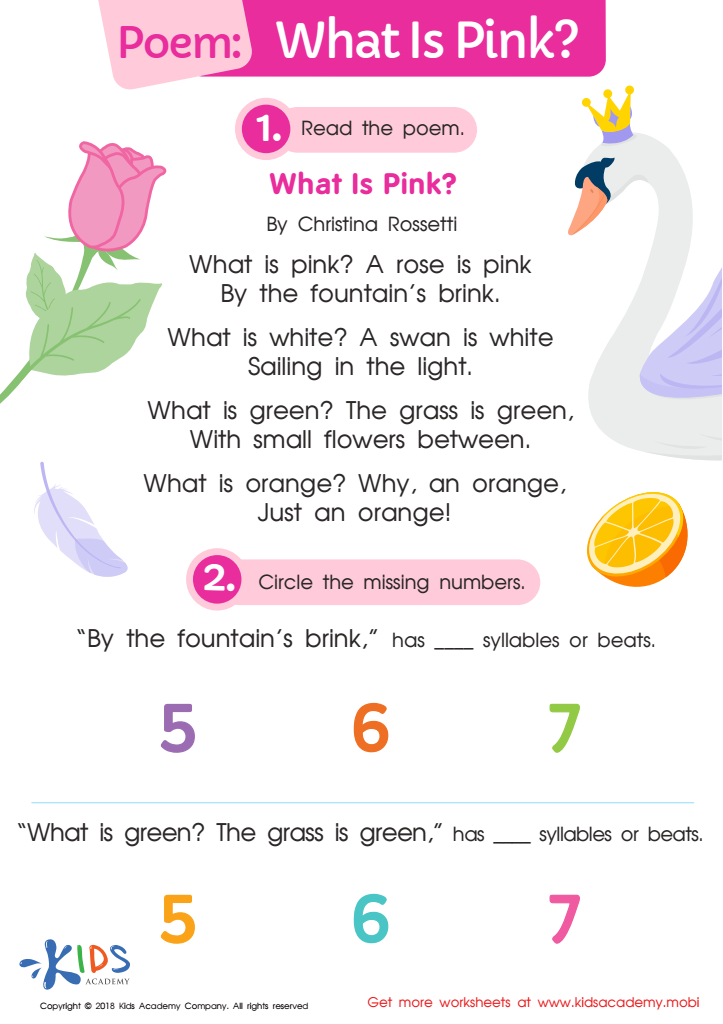
Poem: What Is Pink? Worksheet

Poem: What Is Pink? Worksheet

Help your kids learn with short, fun, interesting poems! Read it aloud to them and point out the rhyme patterns. Have them circle the missing numbers to answer two questions. Show examples of objects with the colors in the poem. This will help them learn to read, and also understand colors better.
Poem: What Is Pink? Worksheet
Worksheet
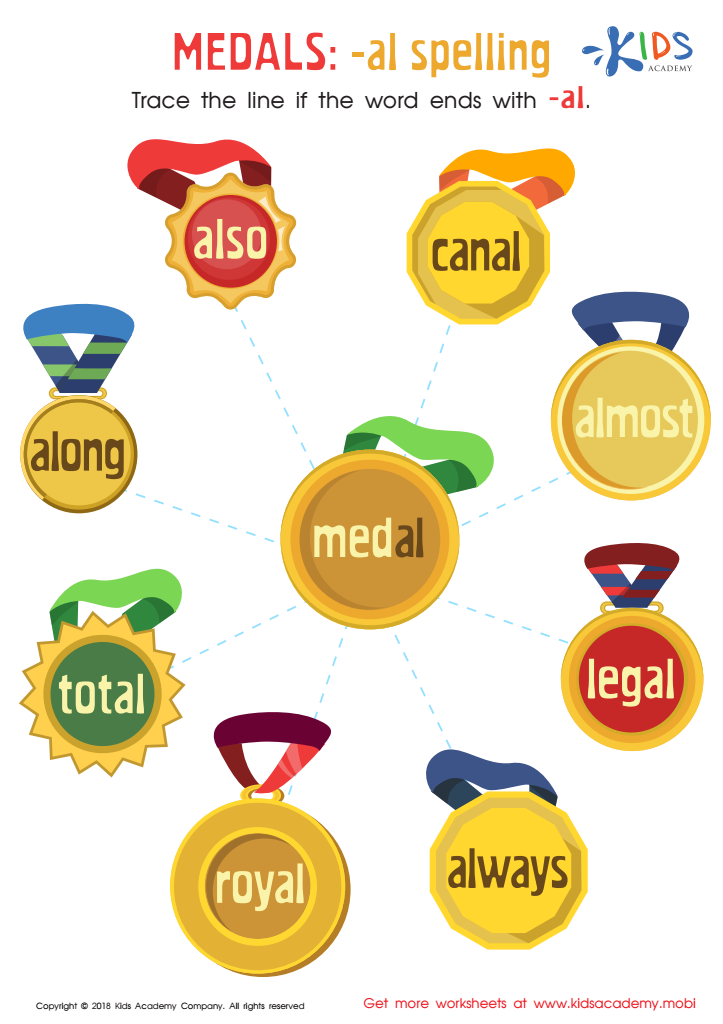
Medals: Al Spelling Worksheet

Medals: Al Spelling Worksheet

Have your students list common words ending with -al. See how many they can give and spell. Give examples of your own, assisting with spelling. Now review the words in the worksheet. Guide students to trace the line for each word ending with -al. 80 words
Medals: Al Spelling Worksheet
Worksheet
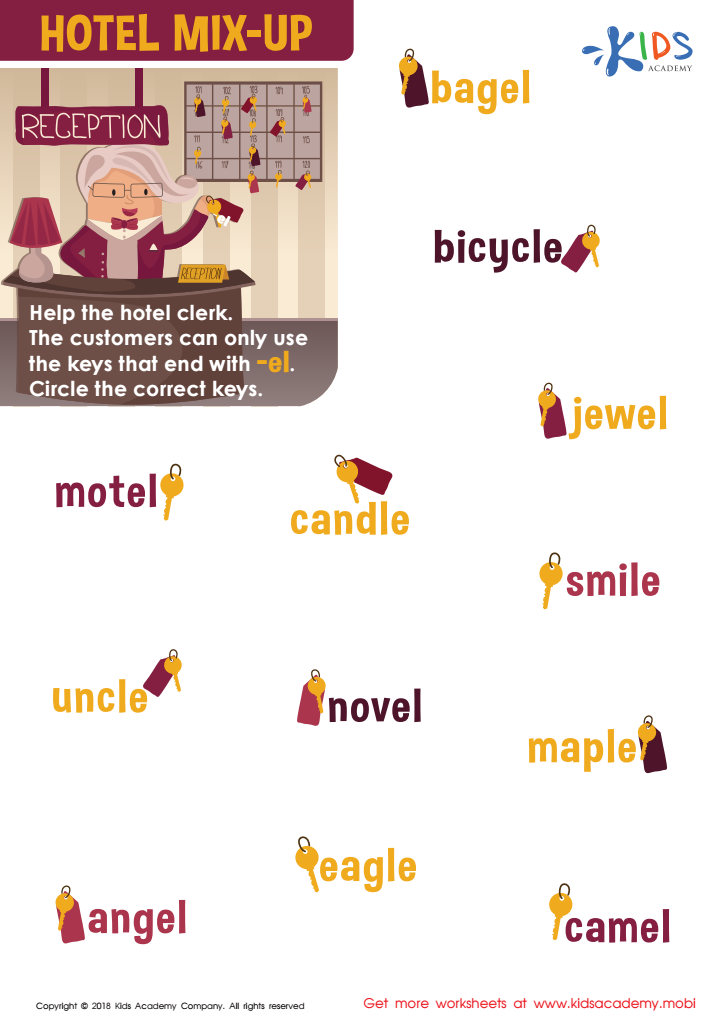
Hotel Mix-up Worksheet

Hotel Mix-up Worksheet

Before doing this worksheet, explain to your kids what a hotel is. It's a building where guests can stay for a few days and pay for their stay. In this exercise, the hotel clerk needs help finding the correct keys. Have your kids circle words ending with -el to find the right ones.
Hotel Mix-up Worksheet
Worksheet
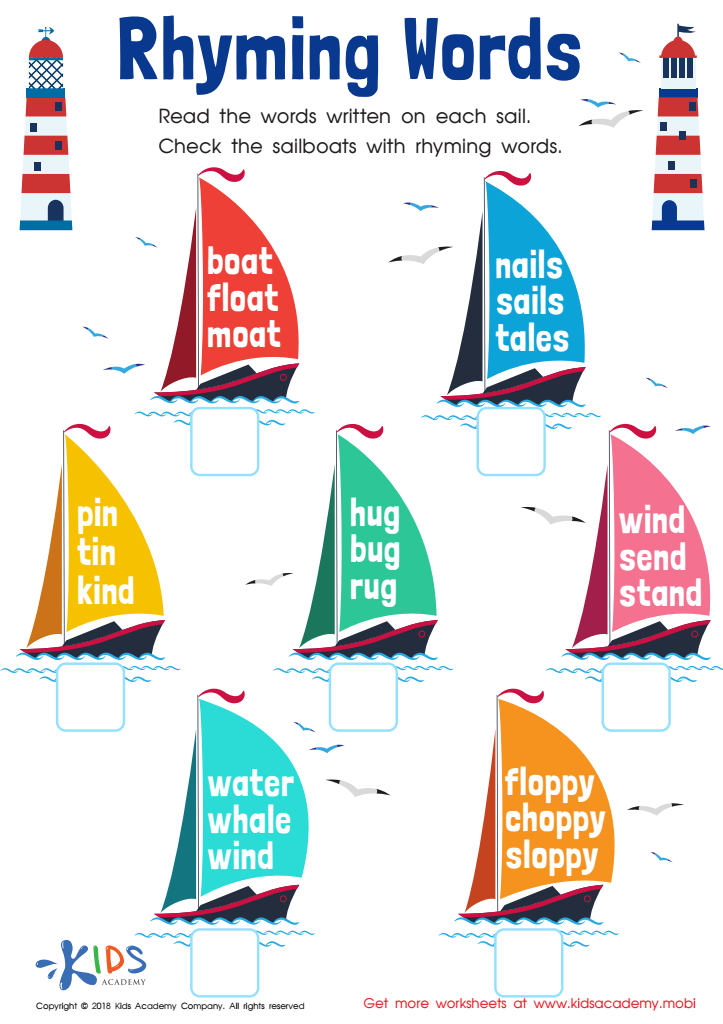
Rhyming Words Worksheet

Rhyming Words Worksheet

Does your child know about rhyming words? Get them interested in poetry and explain that these words have similar sounds when pronounced. Read the words on each sailboat to your child and ask them to identify the rhyming pairs. Guide them to check the sailboats.
Rhyming Words Worksheet
Worksheet
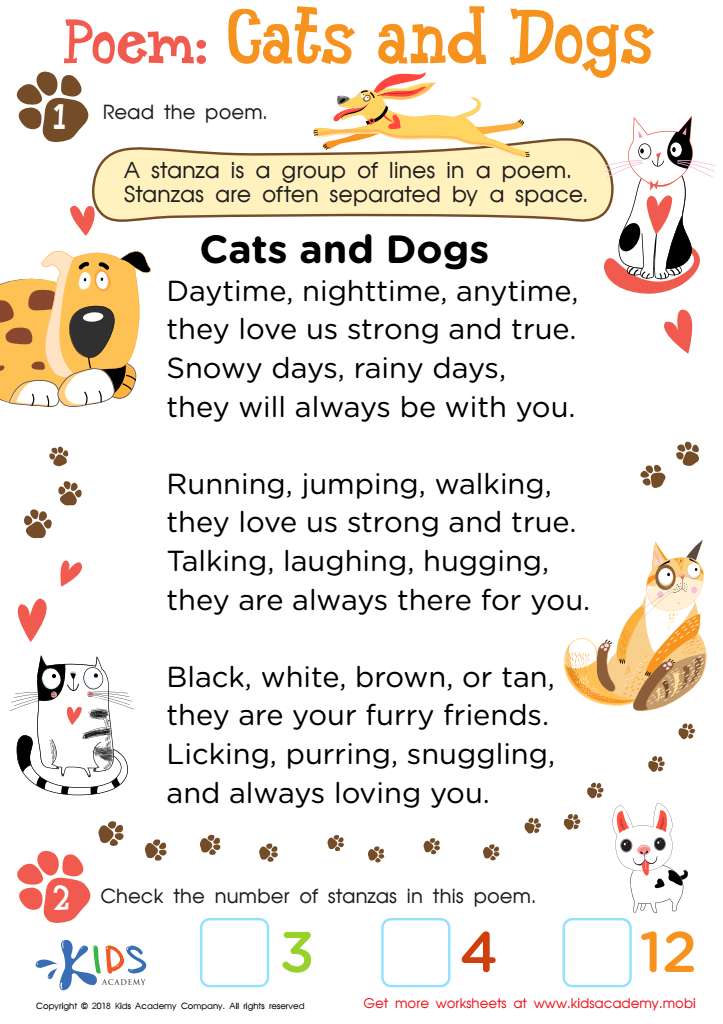
Poem: Cats and Dogs Worksheet

Poem: Cats and Dogs Worksheet

Read the poem to your child and point out where each stanza ends. Ask if they know what a stanza is (if not, explain it's a group of lines in a poem). Help them answer the question at the bottom of the printout. This simple, sweet poem about cats is easy for your child to relate to.
Poem: Cats and Dogs Worksheet
Worksheet
Open Syllables Worksheet

Open Syllables Worksheet

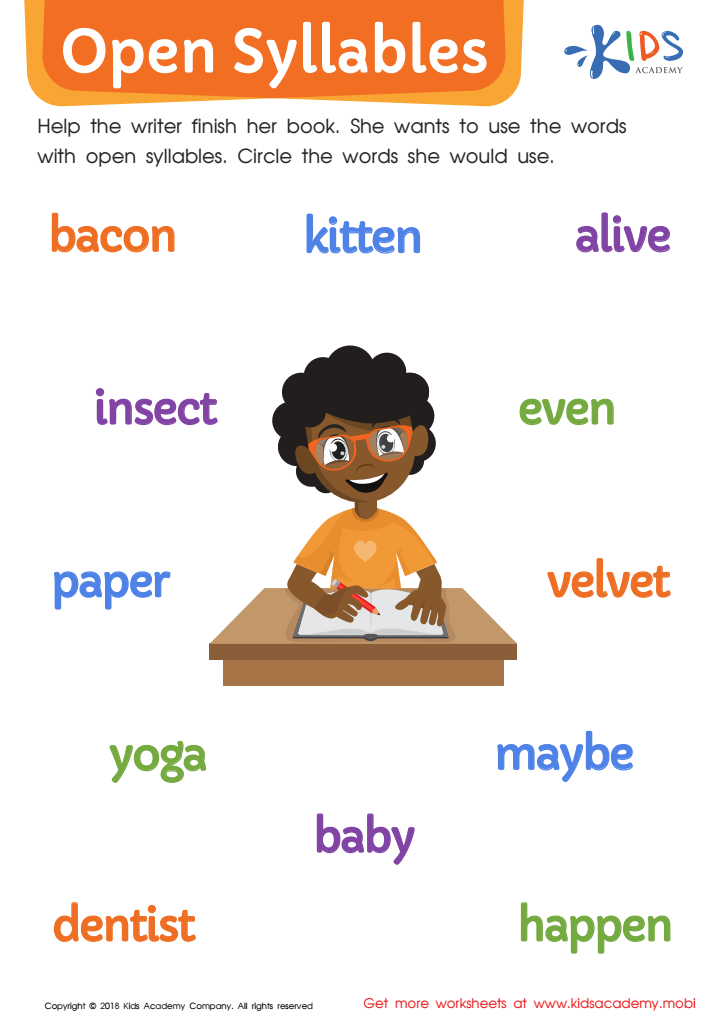
Before beginning this worksheet, make sure your child knows what open syllables are. If not, take time to teach them with examples. Then, help the writer finish her book by circling words with open syllables. She needs your child's help!
Open Syllables Worksheet
Worksheet
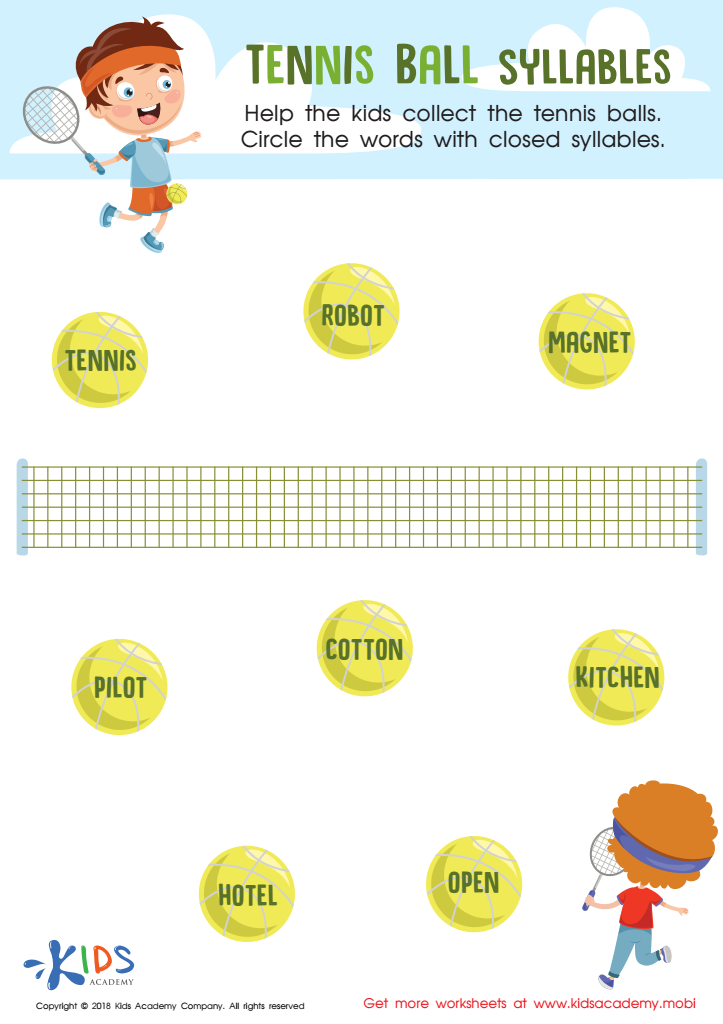
Tennis Ball Syllables Worksheet

Tennis Ball Syllables Worksheet

To help your kids become fluent speakers, they need to learn syllables. A word can have one to seven syllables, with longer words having more. For this level, they will be working with one or two syllables. Assist them as they circle the words with closed syllables in this worksheet.
Tennis Ball Syllables Worksheet
Worksheet
Puss in Boots: OO Sound Worksheet

Puss in Boots: OO Sound Worksheet

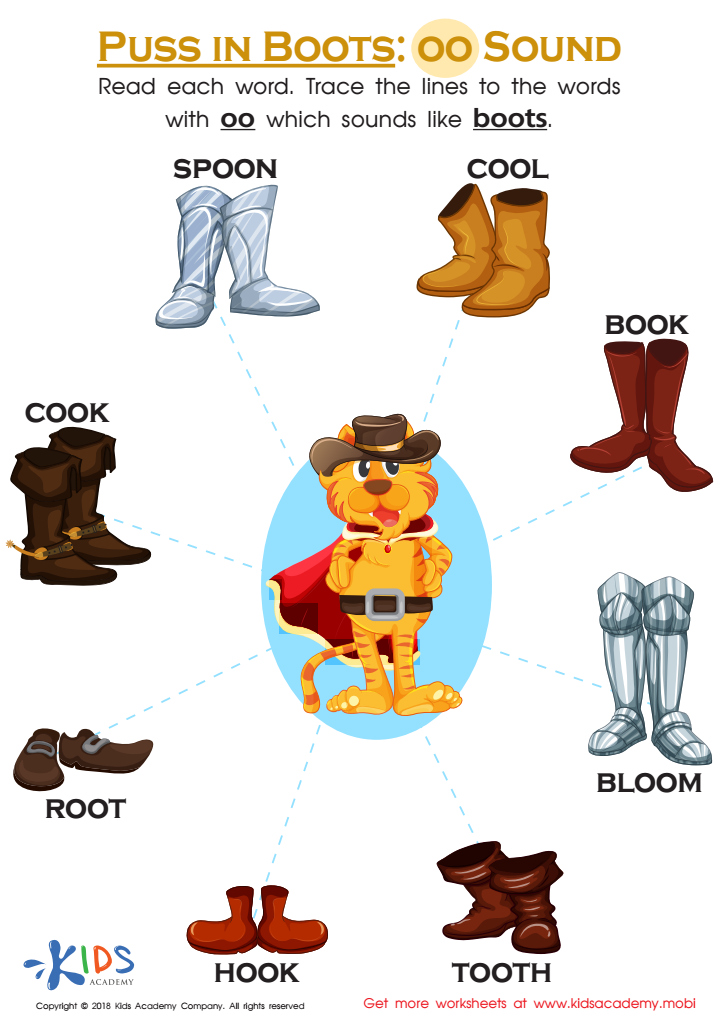
Read out the words in this printout with the correct pronunciation. Have your child repeat each word after you. Then have them read the words and identify the ones with the "oo" sound. Guide their hands as they trace the lines to the right words.
Puss in Boots: OO Sound Worksheet
Worksheet
Rhymes in Poems Worksheet

Rhymes in Poems Worksheet

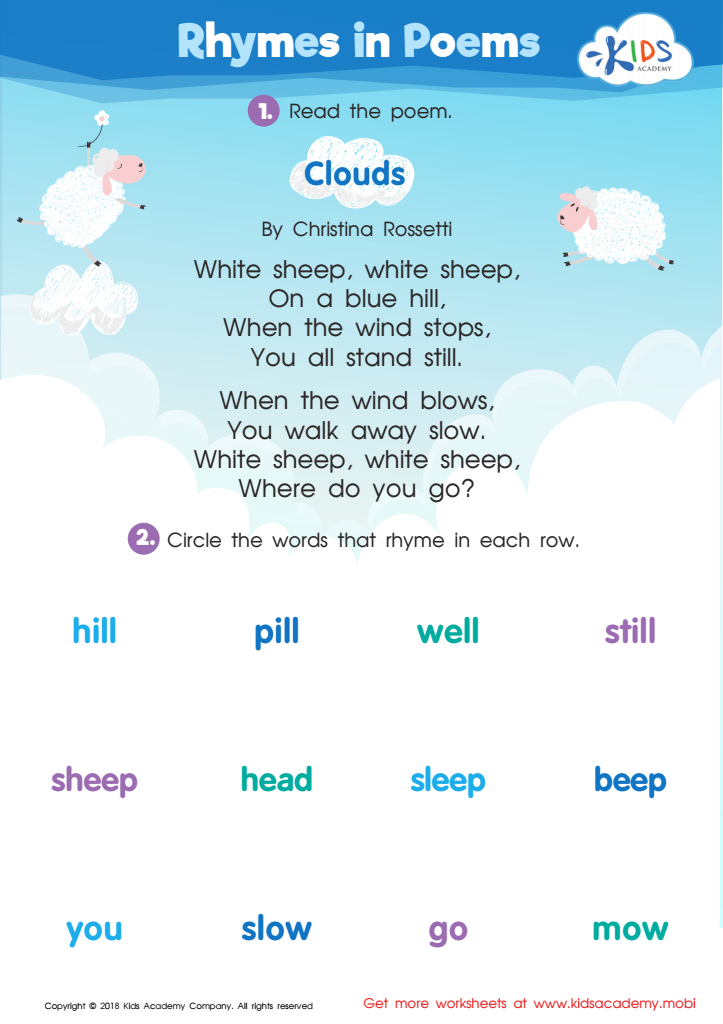
Poems are lovely works of literature; some with rhymes, and some without. This poem for kids is full of rhymes and tells the tale of a sheep. Read it aloud to your kids, then help them circle the rhyming words.
Rhymes in Poems Worksheet
Worksheet
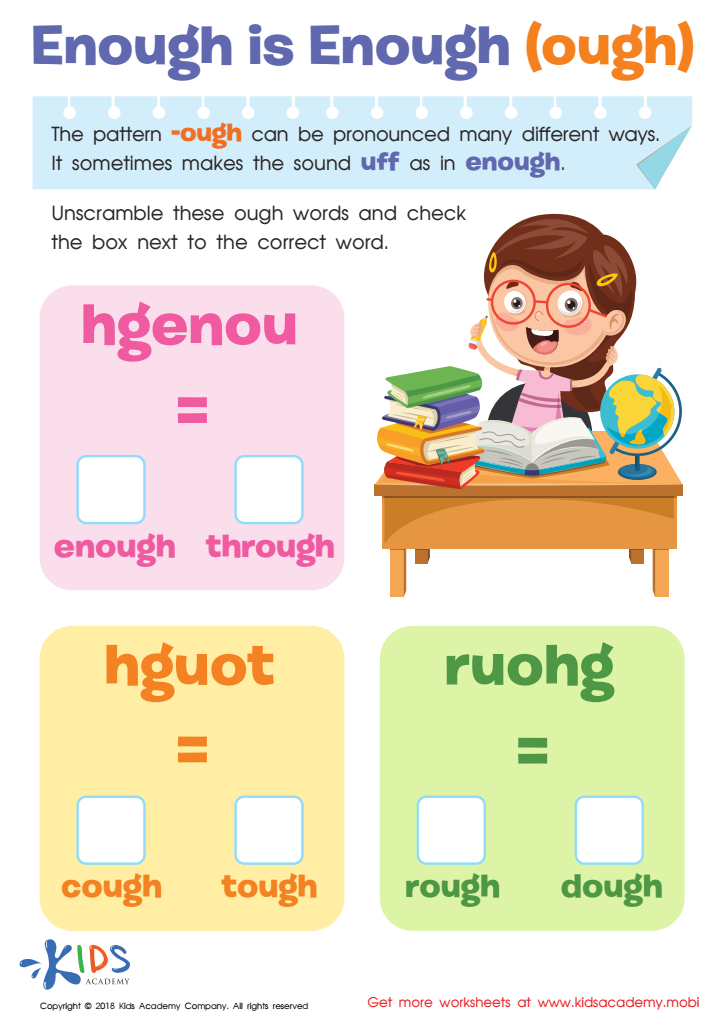
Enough Is Enough (ough) Worksheet

Enough Is Enough (ough) Worksheet

As your students learn more about reading and pronouncing words, they can explore how some word patterns can be said differently. The 'ough' pattern, for instance, can be pronounced several ways. 'Enough' has the 'uff' sound. Provide your students with examples of words pronounced similarly and help them unscramble 'ough' words on this worksheet, ticking the box for the correct word.
Enough Is Enough (ough) Worksheet
Worksheet
OUGH as in Bought Worksheet

OUGH as in Bought Worksheet

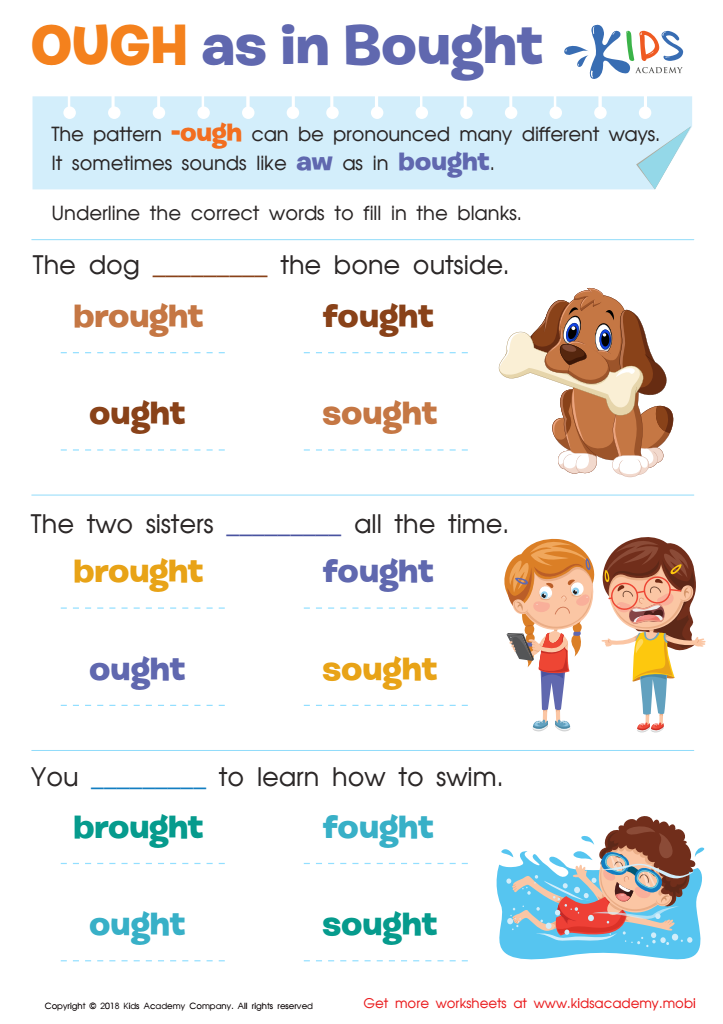
Use this worksheet to teach your child the different pronunciations of -ough. For example, -ough can sound like ‘aw’ in ‘bought’. Ask your child to give more examples and help them underline the correct answers to fill in the blanks.
OUGH as in Bought Worksheet
Worksheet
Reading: Long I and IE Worksheet

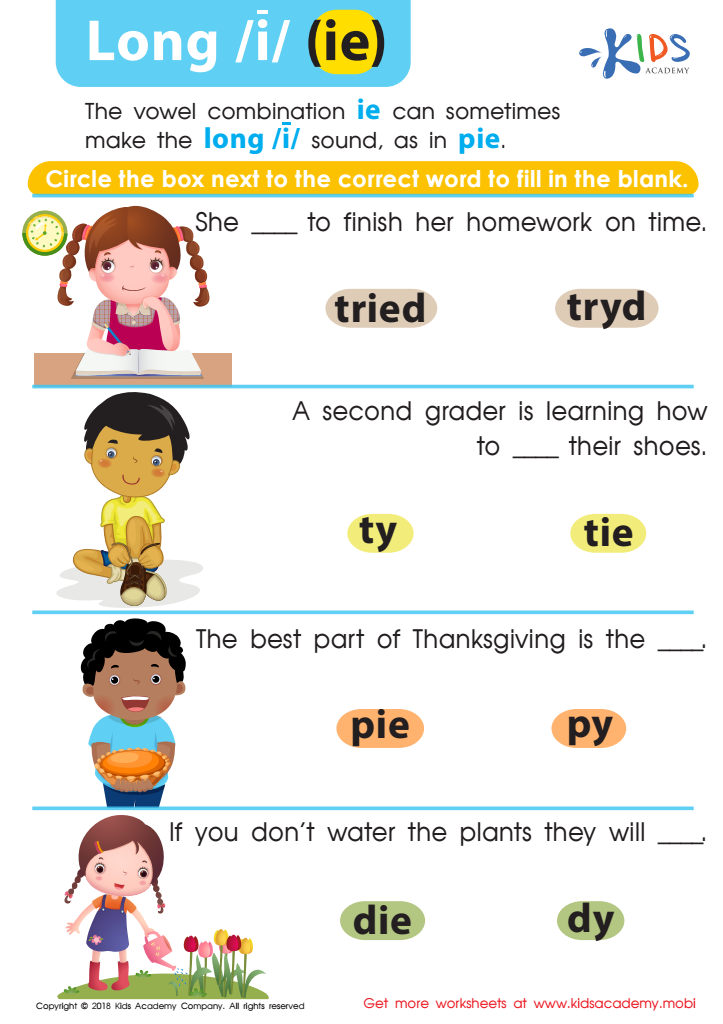
Reading: Long I and IE Worksheet

Have your child list words with the long /i/ sound (eg. 'pie'), and if needed, help them out with some examples. Read each word in the worksheet together and check their answer by having them circle the correct word.
Reading: Long I and IE Worksheet
Worksheet
Reading: Long E and IE Worksheet

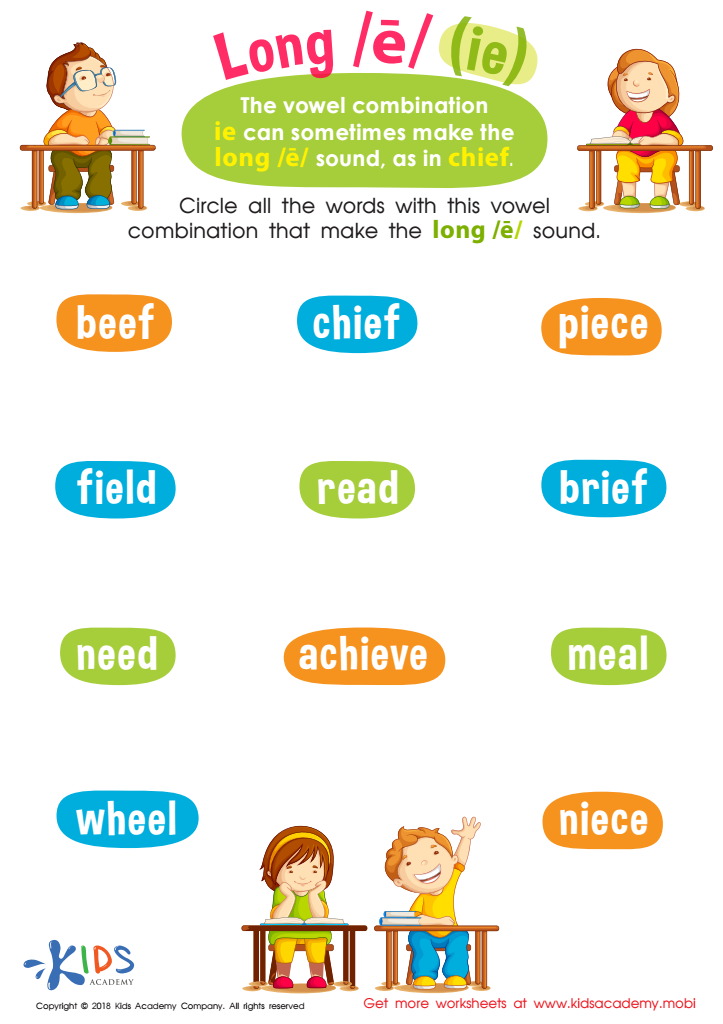
Reading: Long E and IE Worksheet

Ask your child to name some words with the long /e/ sound they hear every day. Then, read aloud all the words in the worksheet with them. Ask them to circle the words containing ie that make this sound.
Reading: Long E and IE Worksheet
Worksheet
Reading: EA as in Bread Worksheet

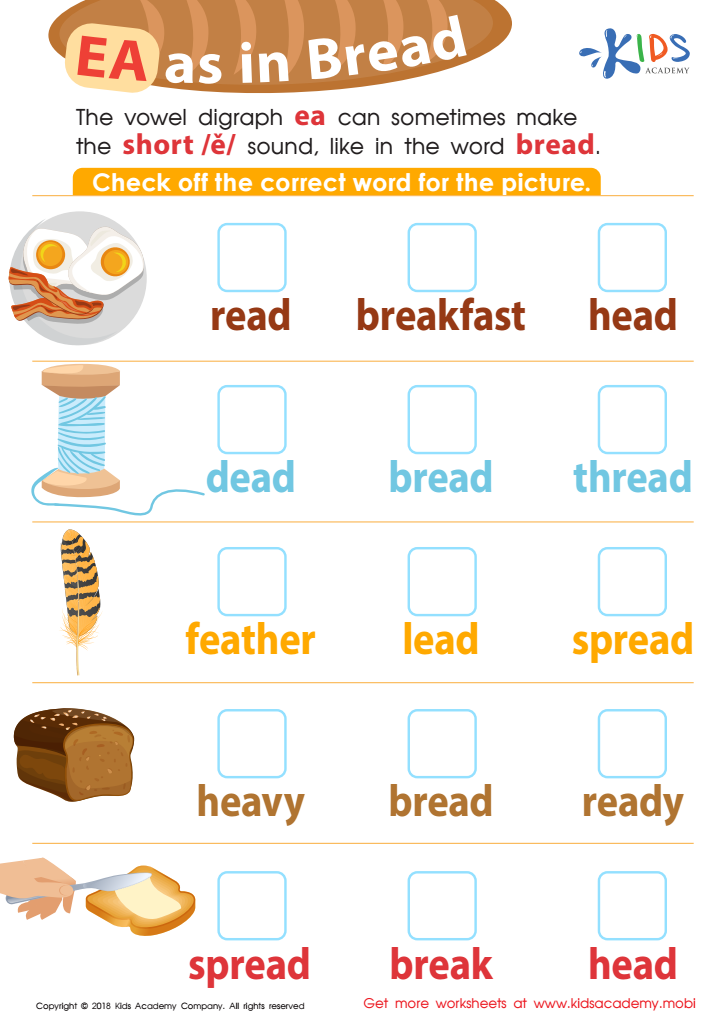
Reading: EA as in Bread Worksheet

The vowel digraph ea can be read in two ways. Examples of the long sound are "read" and "lead"; examples of the short sound are "bread" and "head". Ask your kids to give you more examples and then have them check off the correct word for the pictures on this worksheet. This will help them understand the ea sound.
Reading: EA as in Bread Worksheet
Worksheet
Reading: Shoot for the Moon Worksheet


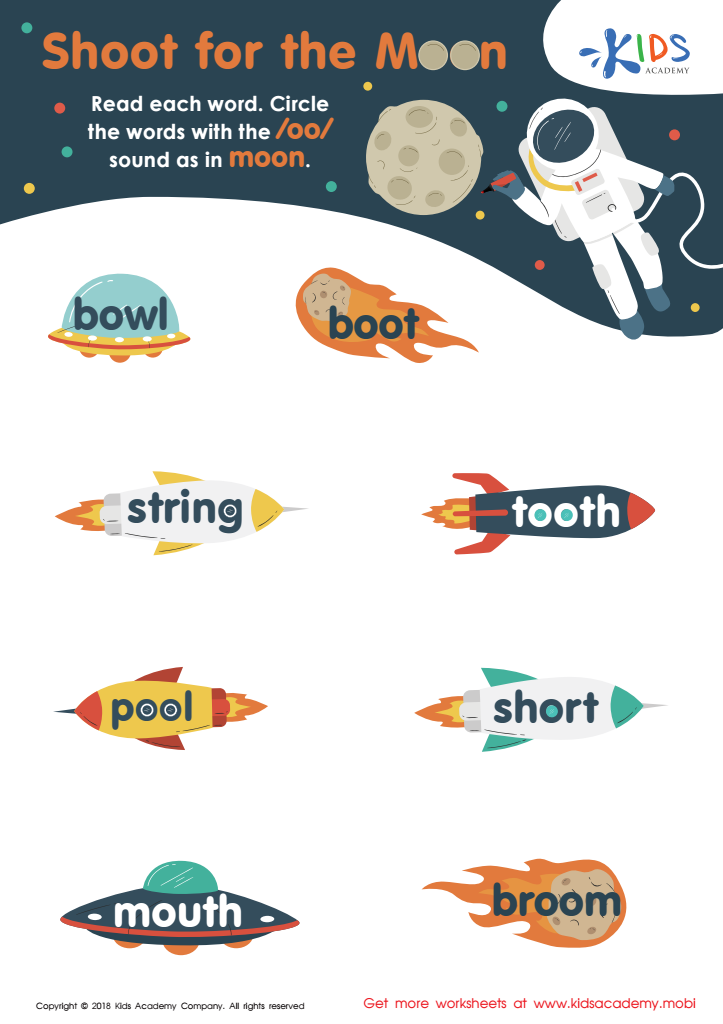
Reading: Shoot for the Moon Worksheet

Ask your kids if they can name any common words with the /oo/ sound. Read each word with them and help them pronounce it. Then, have them circle the words that have the /oo/ sound as in moon.
Reading: Shoot for the Moon Worksheet

Worksheet


Normal Phonics worksheets for Ages 8-9 are a critical tool in reinforcing the foundational skills necessary for effective reading and writing. At this age, children are transitioning from learning to read to reading to learn. Normal Phonics worksheets are meticulously designed to cater to the specific developmental needs of 8 to 9-year-olds, helping to bridge this crucial gap.

These worksheets offer a structured approach to phonics, a method that teaches reading and spelling by correlating sounds with letters or groups of letters. By integrating fun and engaging activities, Normal Phonics worksheets make learning enjoyable yet highly effective for children. They present opportunities for repeated practice, which is essential for mastering the complex rules of phonics, ultimately enhancing reading fluency and comprehension.

Moreover, Normal Phonics worksheets for Ages 8-9 are tailored to reinforce vocabulary and spelling, encouraging children to explore new words and understand their meanings in context. This not only expands their lexical repository but also boosts their confidence in using the language.

Employing Normal Phonics worksheets supports children in developing a robust foundation in reading and writing, which is critical at this stage of their educational journey. These worksheets serve as a valuable resource for parents and educators looking to provide targeted phonics instruction, ensuring that children possess the necessary skills to succeed in their academic pursuits and beyond.