Online Reading Worksheets for Kids - Page 6
509 filtered results
Difficulty Level
Grade
Age
-
From - To
Subject
Activity
Standards
Favorites
With answer key
Interactive
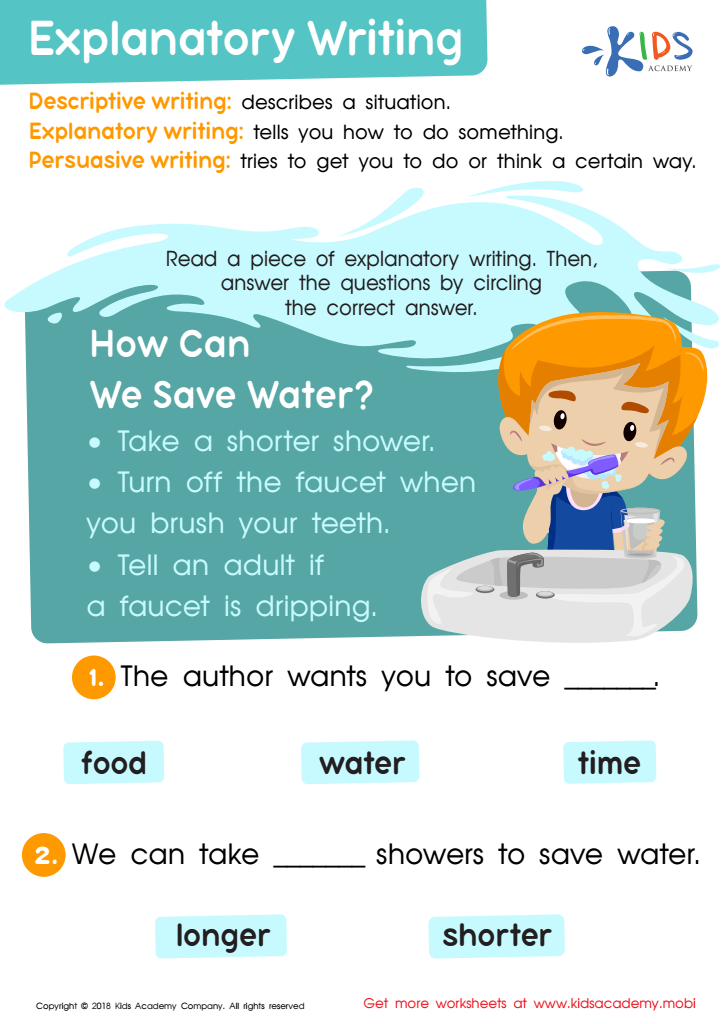
Explanatory Writing Worksheet
This worksheet teaches kids the three main types of writing. Descriptive writing describes a situation, explanatory writing explains how to do something, and persuasive writing is used to sway readers' opinions. Read the text and help your kids answer the questions by circling the right answer.
 Assign to My Students
Explanatory Writing Worksheet
Worksheet
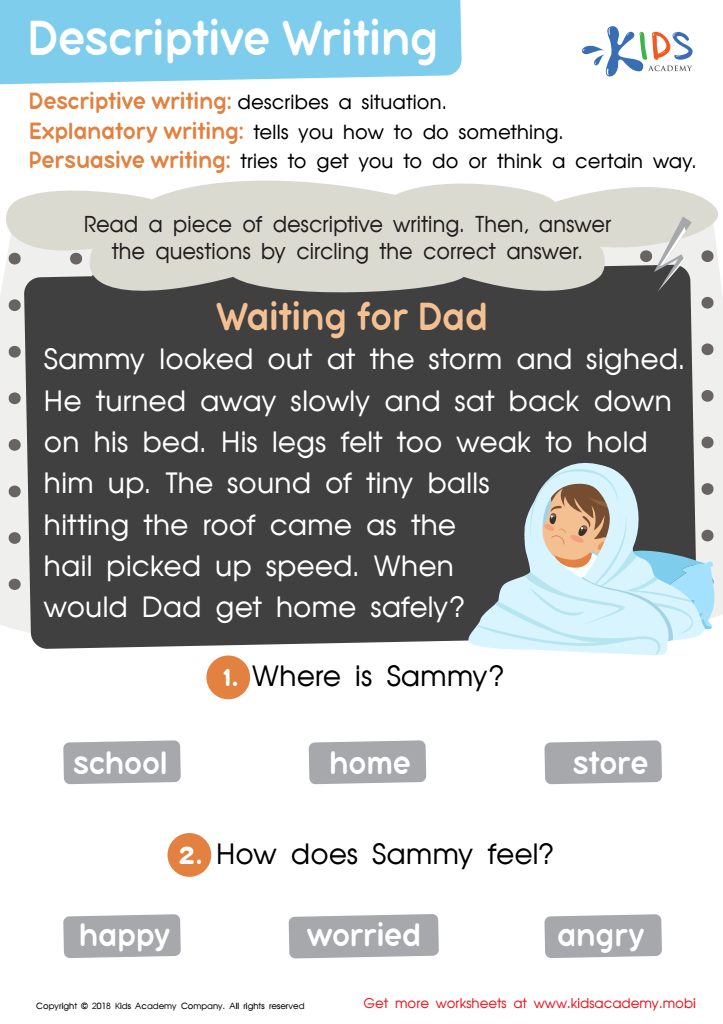
Descriptive Writing Worksheet: Part 2
In this worksheet, your kids will explore writing styles like descriptive, explanatory and persuasive. Read them the descriptive text, then have them answer the questions. Writing is an art – it's a way to express emotions, tell stories and share information.
Descriptive Writing Worksheet: Part 2
Worksheet
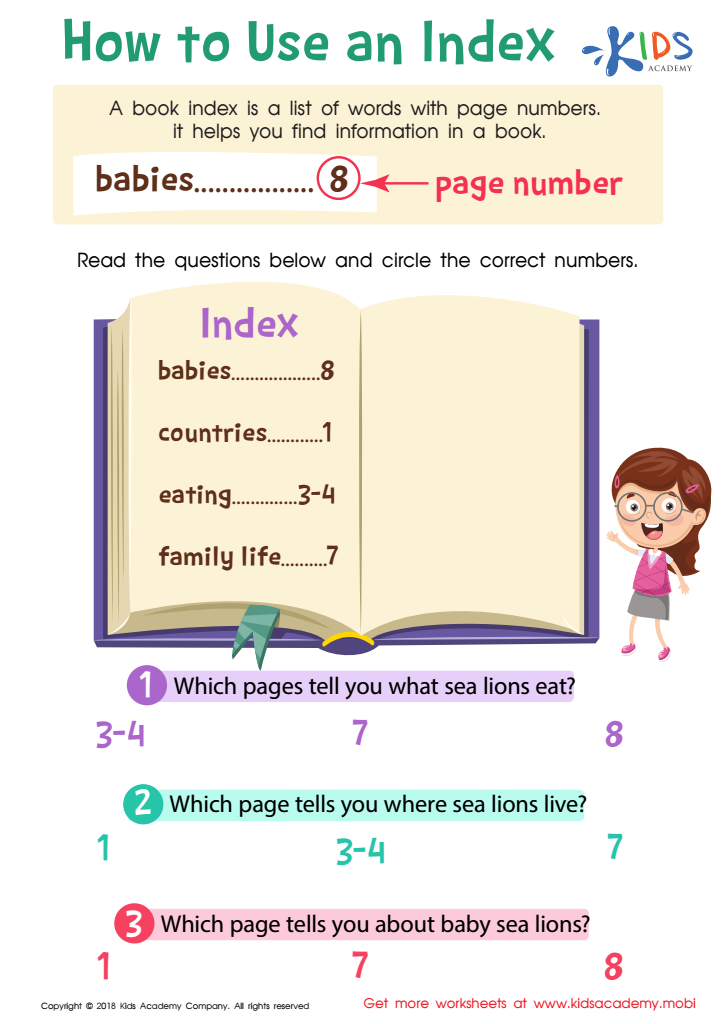
How Use Index Worksheet
Hand your kids a book, point out the index and explain that it's a list of words with page numbers. Ask them to look at the index in the worksheet and circle the correct number to the questions. Every book must have an index to help readers find chapters or information they need.
How Use Index Worksheet
Worksheet
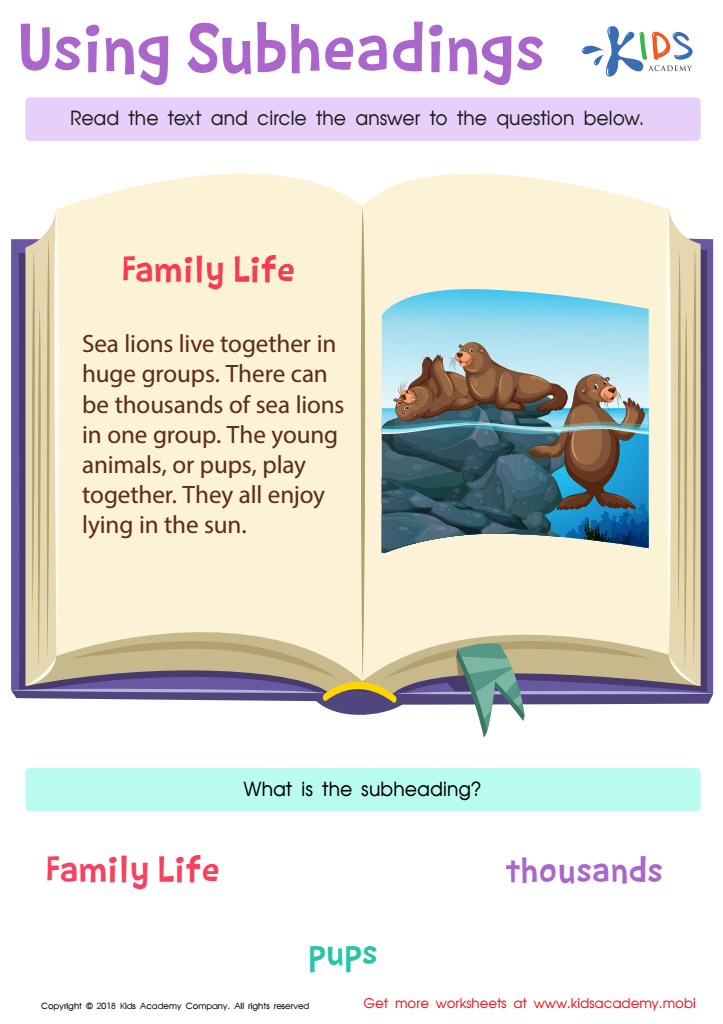
Using Subheadings Worksheet
Writers must follow many rules to make their work organized and easier to read. Subheadings are usually in bold font and centered at the top of the page. Read the text to your kids and have them circle the correct answer.
Using Subheadings Worksheet
Worksheet
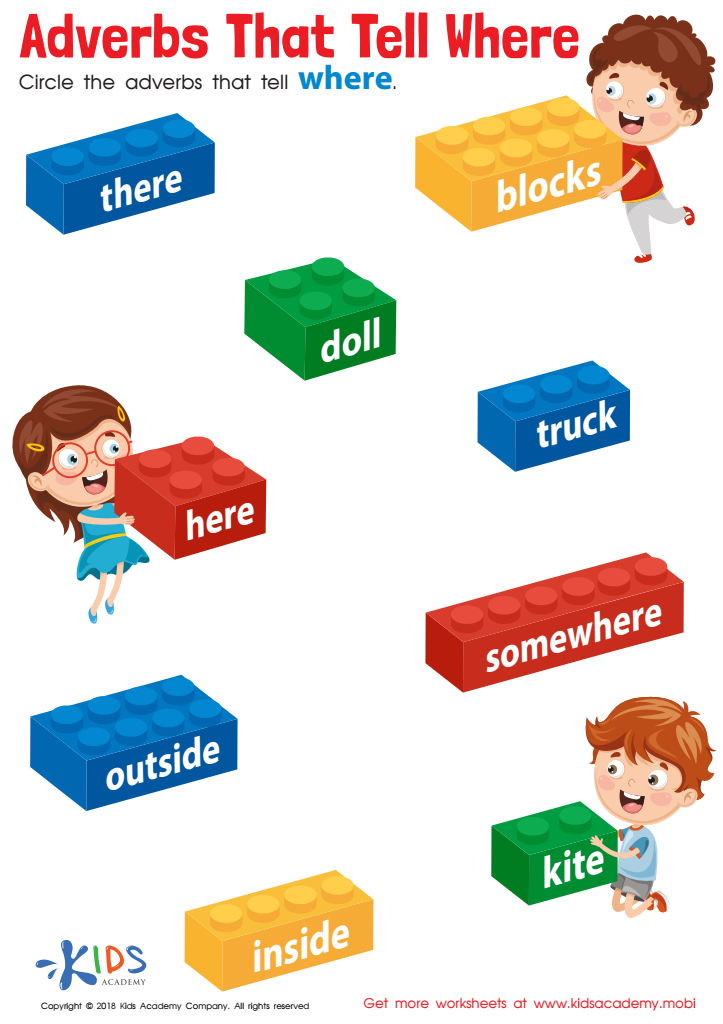
Adverbs That Tell Where Worksheet
Help your kids identify adverbs with a fun worksheet. Read the words aloud and ask them to circle the adverbs showing 'where.' Give them easy examples, like 'the girl stood over there.' See if they can create their own examples. This activity makes learning adverbs fun!
Adverbs That Tell Where Worksheet
Worksheet
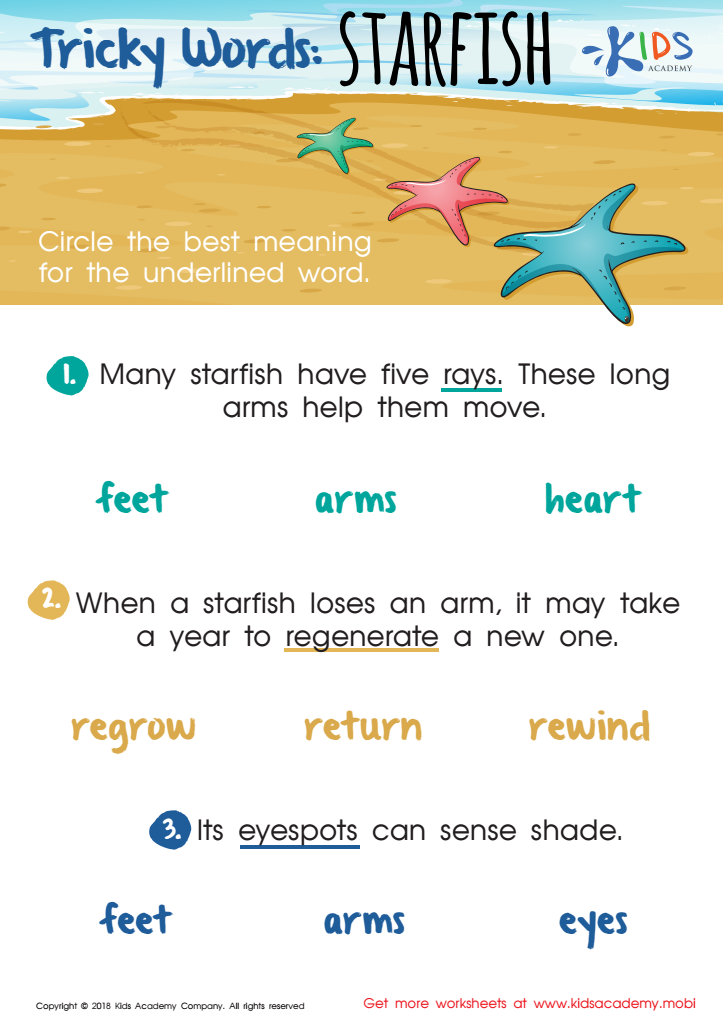
Tricky Words: Starfish Worksheet
Encourage your kids' learning with a fun worksheet! Help them circle the best meaning for the underlined words in the sentences. This activity is a great way to practice what they learn at school and have fun. Your little ones will enjoy learning new words and make the experience even more memorable.
Tricky Words: Starfish Worksheet
Worksheet
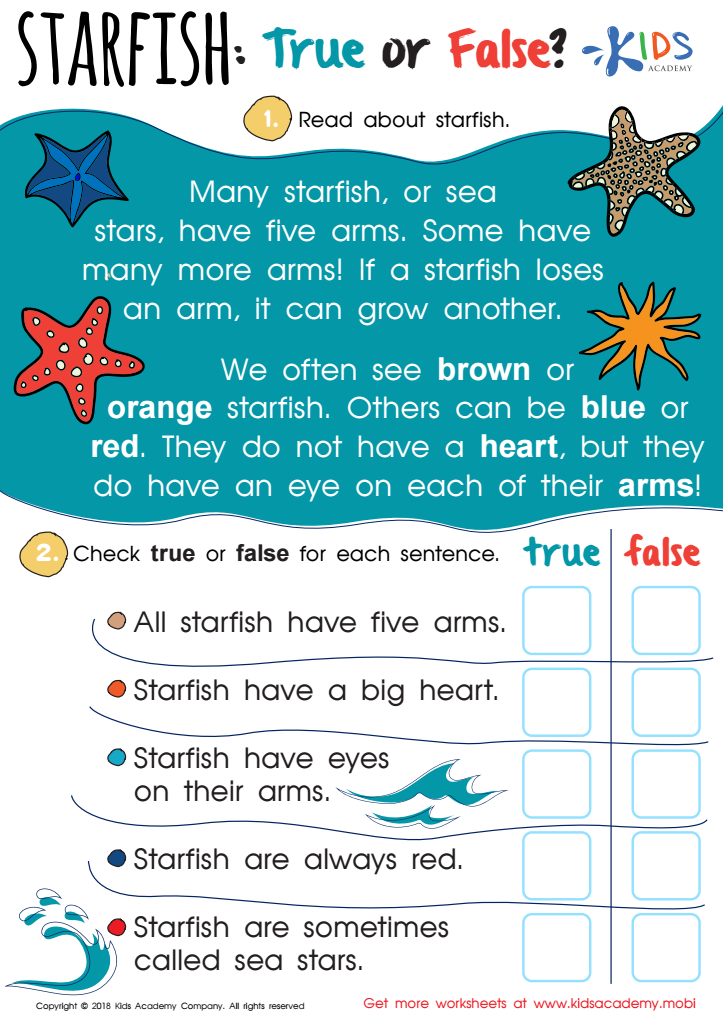
Starfish: True or False Worksheet
This worksheet helps kids learn more about starfish. Ask them what they know and read the text; it explains the creature's arms, color, and sight. At the end, read the questions and help them check true or false for each sentence.
Starfish: True or False Worksheet
Worksheet
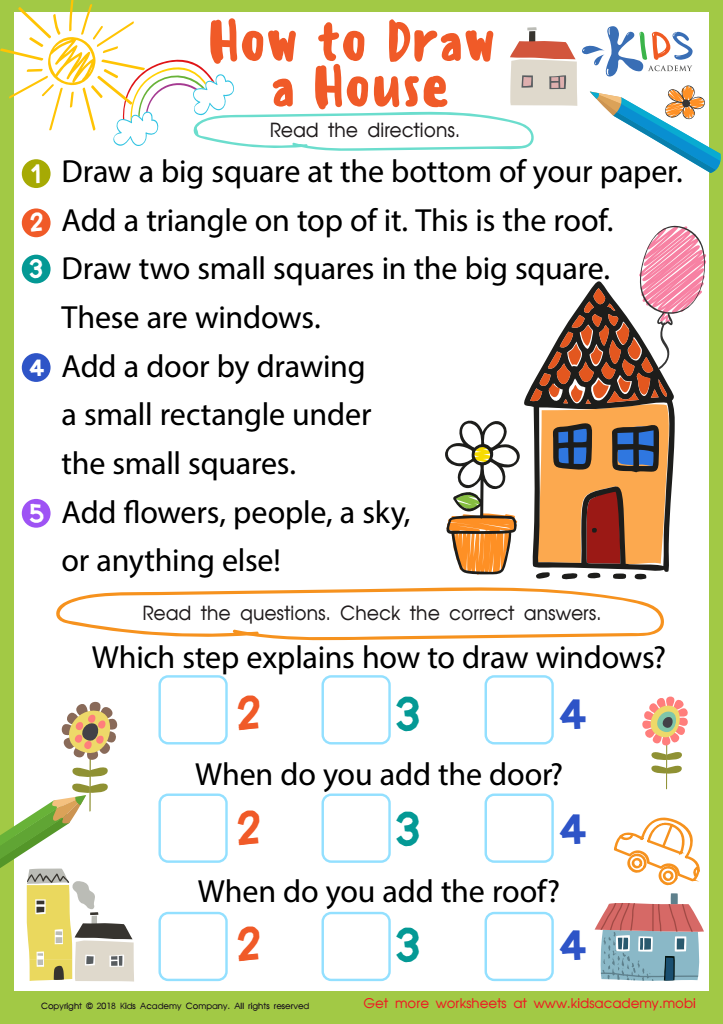
How to Draw House Worksheet
Does your child love to draw? Why not try teaching them some easy tricks? Get them to follow directions on this worksheet and learn how to draw a house. Read the questions at the end and ensure they get the answers right. Your kids will surely love it!
How to Draw House Worksheet
Worksheet
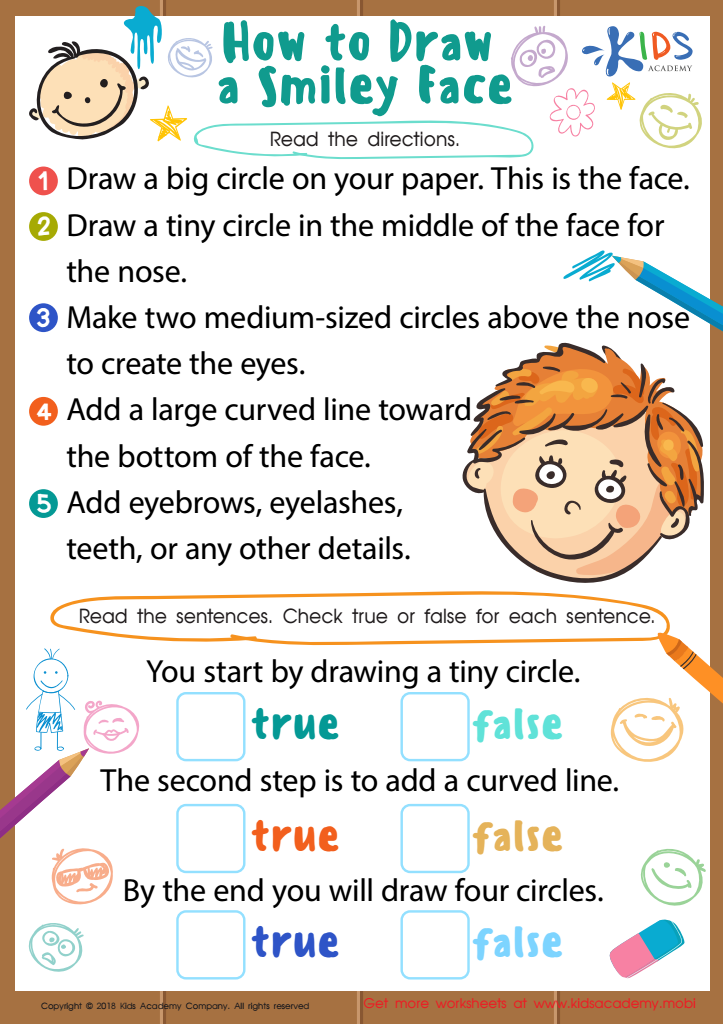
How to Draw a Smiley Face Worksheet
Can your students draw a smiley face? Simplify the process with this worksheet, which provides step-by-step instructions. Ask them to follow the directions, then check True or False for each sentence at the bottom of the page. A great way to teach kids how to easily draw a smiley face!
How to Draw a Smiley Face Worksheet
Worksheet
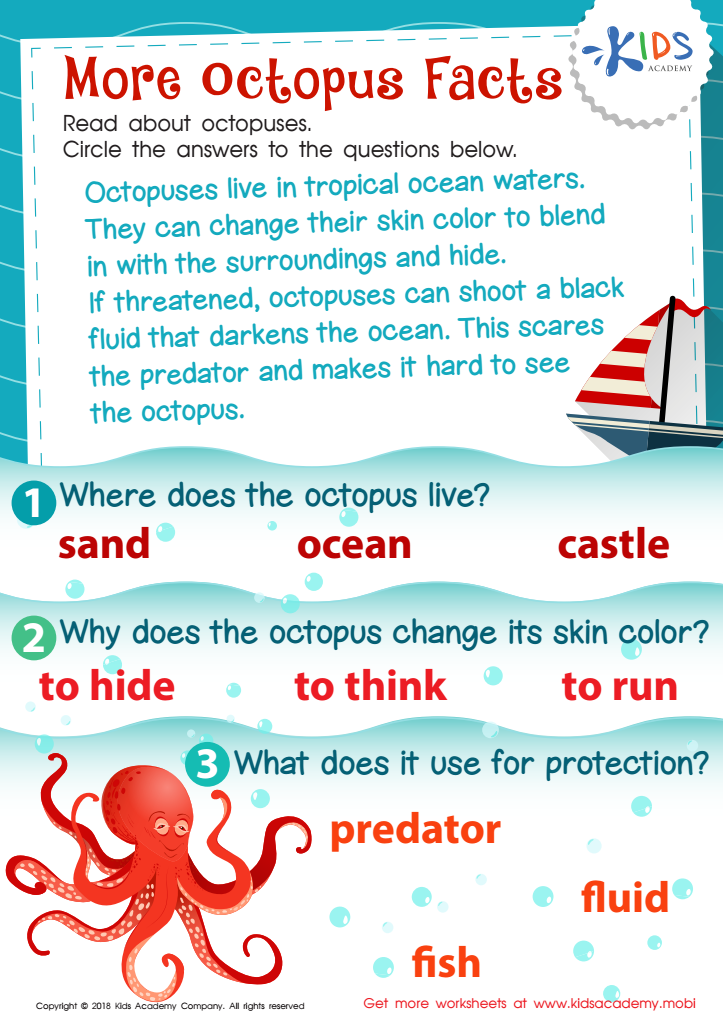
More Octopus Facts Worksheet
This worksheet will help your kids learn about the Octopus. Read the text carefully and have kids read with you. Now, ask them questions based on it and help them answer them by circling the right choices. Teaching your kids facts about animals will help them in the long run.
More Octopus Facts Worksheet
Worksheet
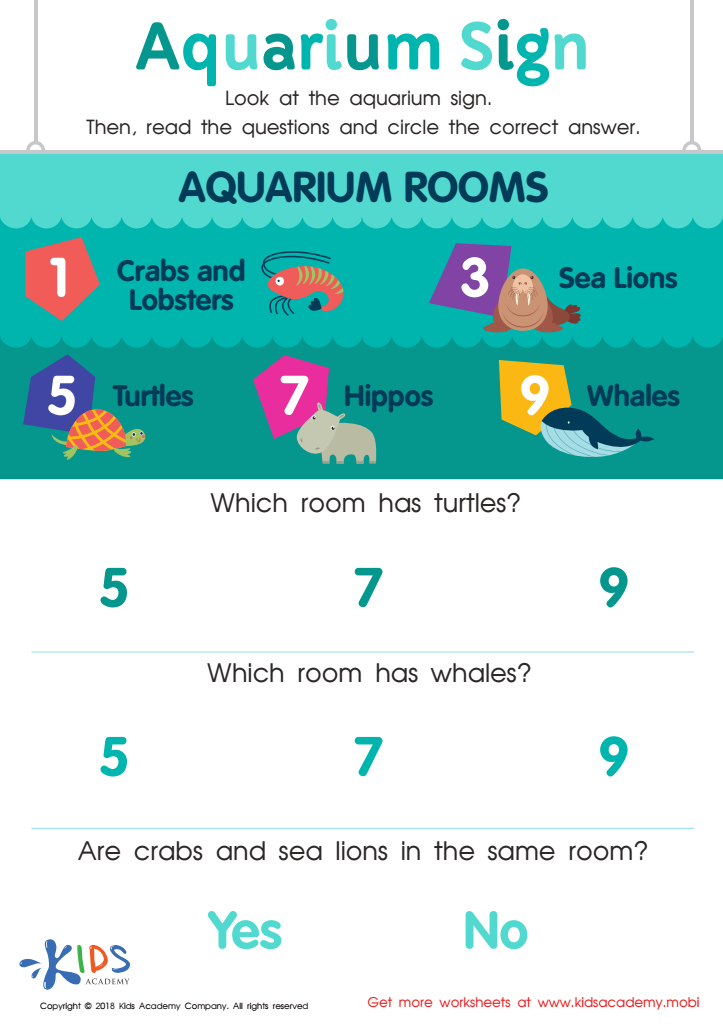
Assessment: Aquarium Sign Worksheet
Take your kids to an aquarium and marvel at the sea creatures! Help them identify the animals they see, and ask them which one is their favorite. Look at the aquarium sign and point to each creature. Ask your kids the questions and help them circle the right answer.
Assessment: Aquarium Sign Worksheet
Worksheet
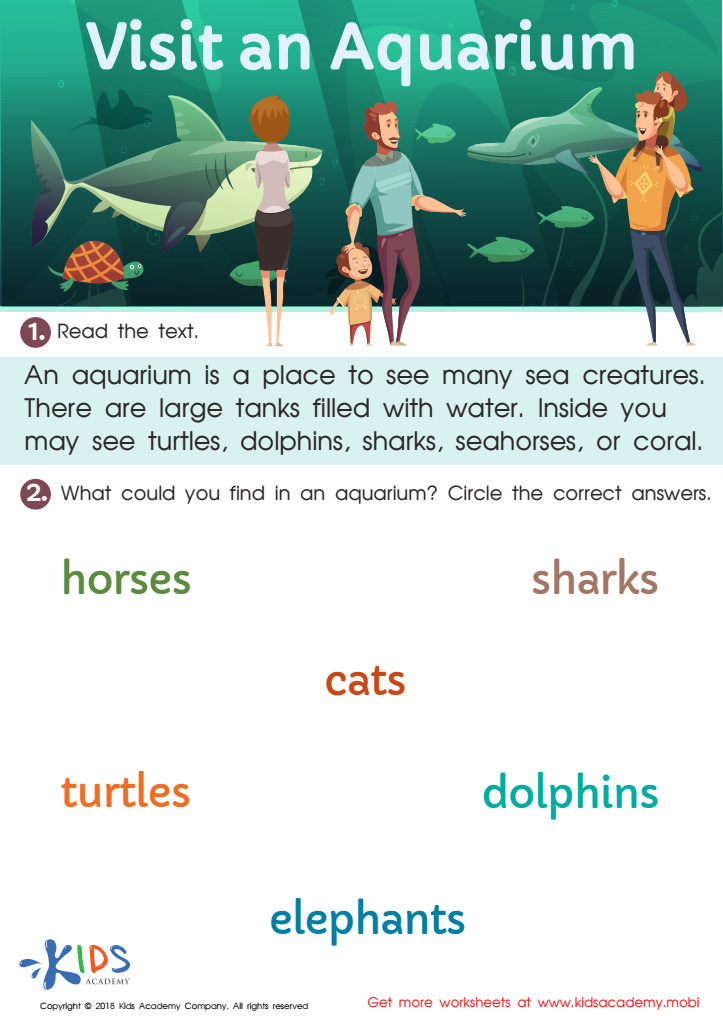
Visit an Aquarium Worksheet
Have your kids ever been to an aquarium? It's a great place to see a variety of sea creatures, like turtles, dolphins, sharks and fish. If they're fascinated by sea life, this worksheet is perfect! Help them circle the aquarium animals among the words in the picture.
Visit an Aquarium Worksheet
Worksheet
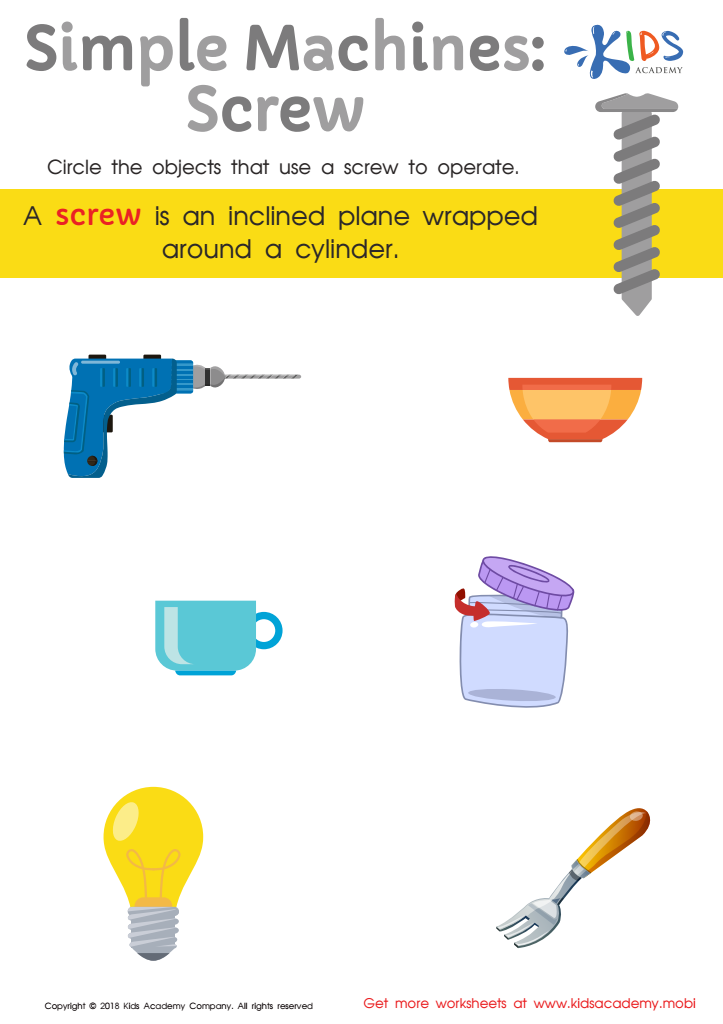
Simple Machines: Screw Worksheet
Explain to your kids that learning about simple machines can be fun - like the swings they love on the playground. Ask them to name some of their favorites. Point out that screws are used to connect simple machines. Then, look at pictures together and have your kids circle the objects that use a screw.
Simple Machines: Screw Worksheet
Worksheet
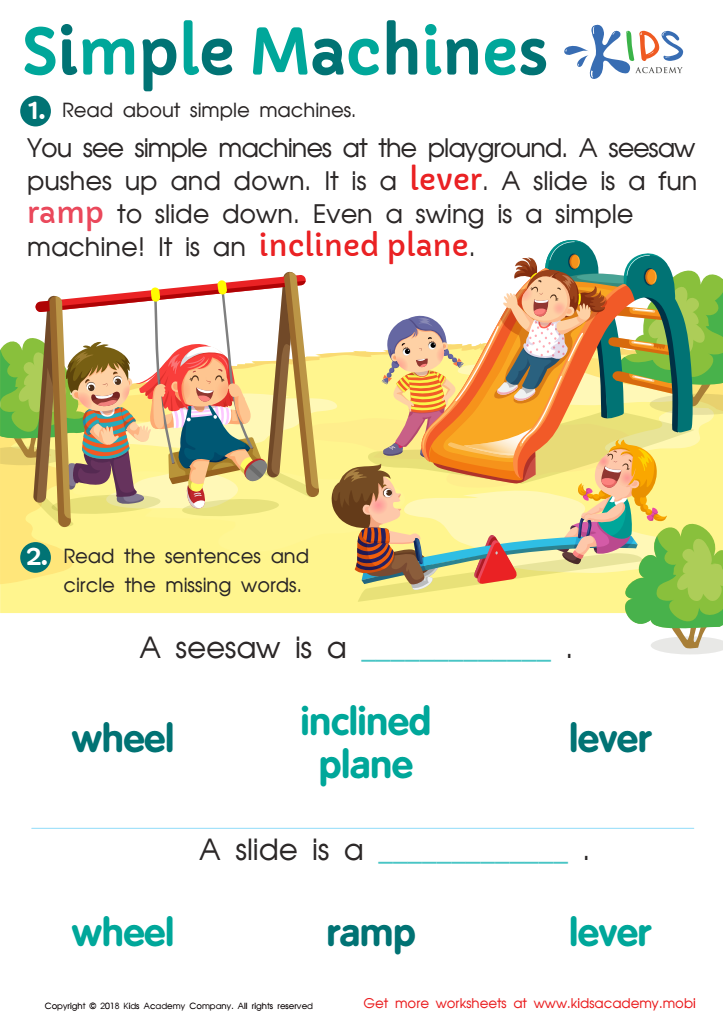
Simple Machines Worksheet
At the playground, your kids likely love to play and swing. Swings are simple machines – they work by using force to move something. Read the following sentences to them, with some words missing - help them fill in the blanks. Simple machines make work easier by __changing__ the size or __direction__ of a force. Swings use a _fulcrum_ and a _lever_ to move.
Simple Machines Worksheet
Worksheet
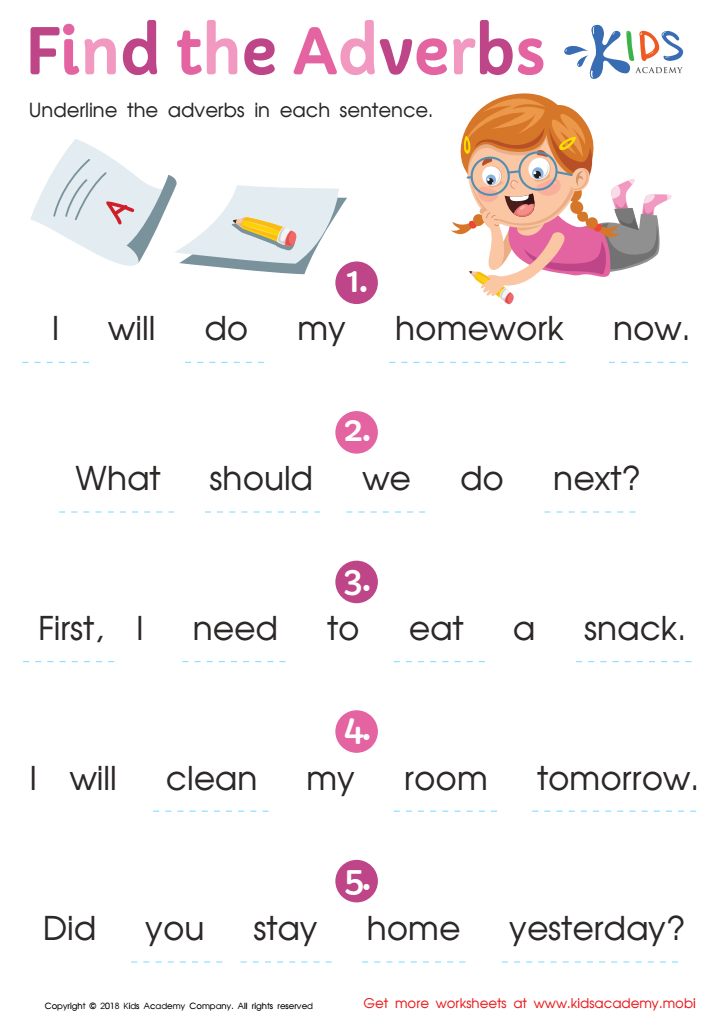
Finding the Adverbs Worksheet
Before starting, ensure your kids know nouns & verbs, then explain adverbs give more meaning to verbs. Give examples & read each sentence with them, helping to underline the adverbs. 80 words
Finding the Adverbs Worksheet
Worksheet
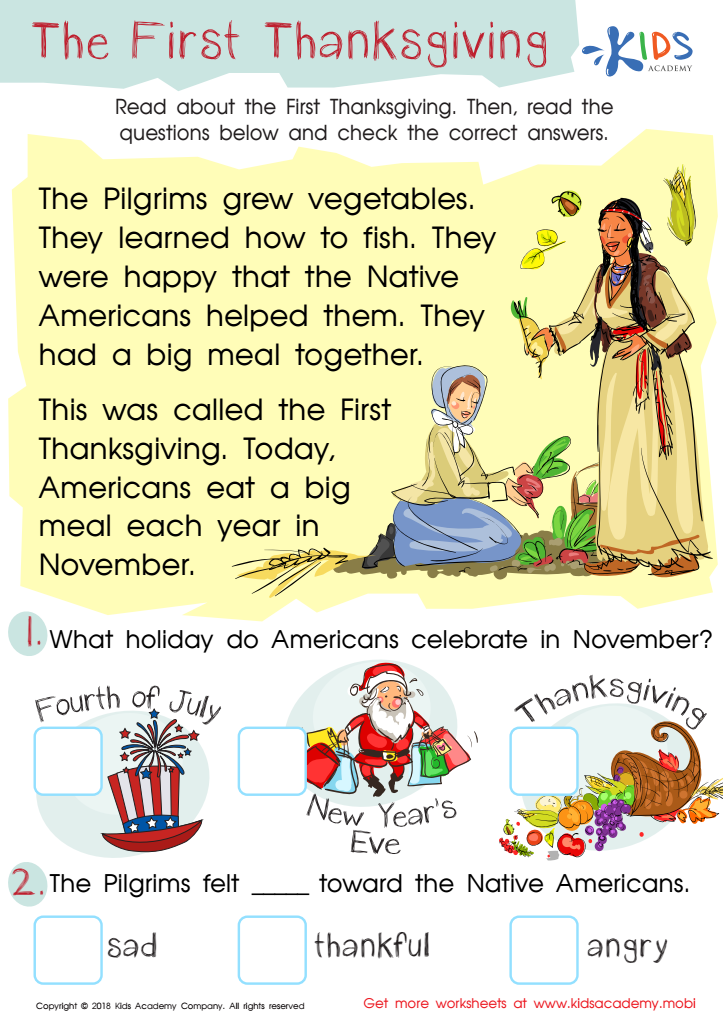
Assessment: First Thanksgiving Worksheet
When the Pilgrims arrived in America in 1620, they met the Native Americans and formed a pact to live in harmony. The Native Americans taught the Pilgrims how to survive in the new land, which helped them celebrate the First Thanksgiving. Read this text to your children and help them answer the questions below.
Assessment: First Thanksgiving Worksheet
Worksheet
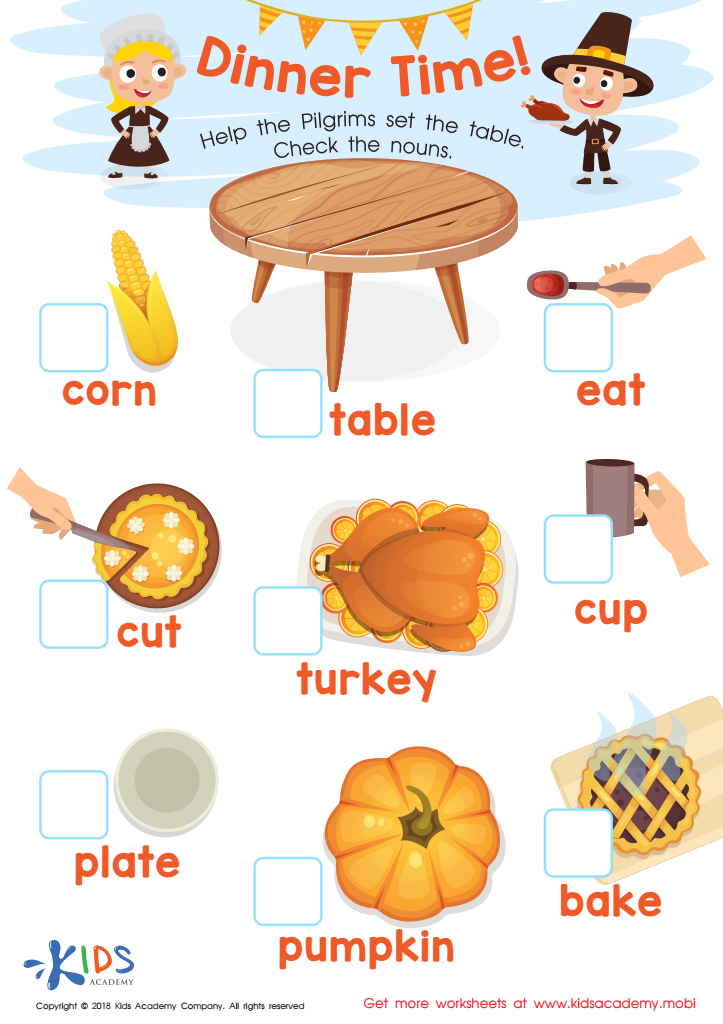
Dinner Time! Worksheet
Help your child learn about the Pilgrims by completing this worksheet! The Pilgrims set sail on the Mayflower in 1620 and colonized America, meeting the Native Americans already living there and picking up some of their traditions, like Thanksgiving dinner. Check the nouns in the picture and help your child set the table with the celebratory turkey!
Dinner Time! Worksheet
Worksheet
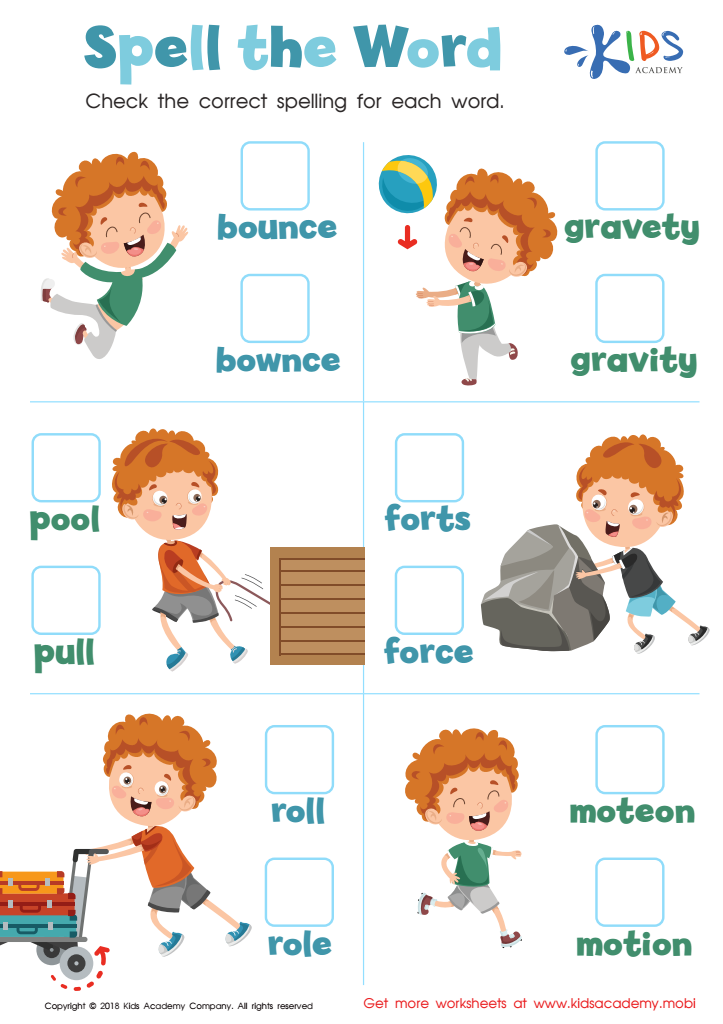
Spell the Word Worksheet
Spelling can be fun for your students with this colorful worksheet. Ask them to identify what the boy is doing in each picture, then check the correct spelling of the words. Let them practice and have fun while learning!
Spell the Word Worksheet
Worksheet
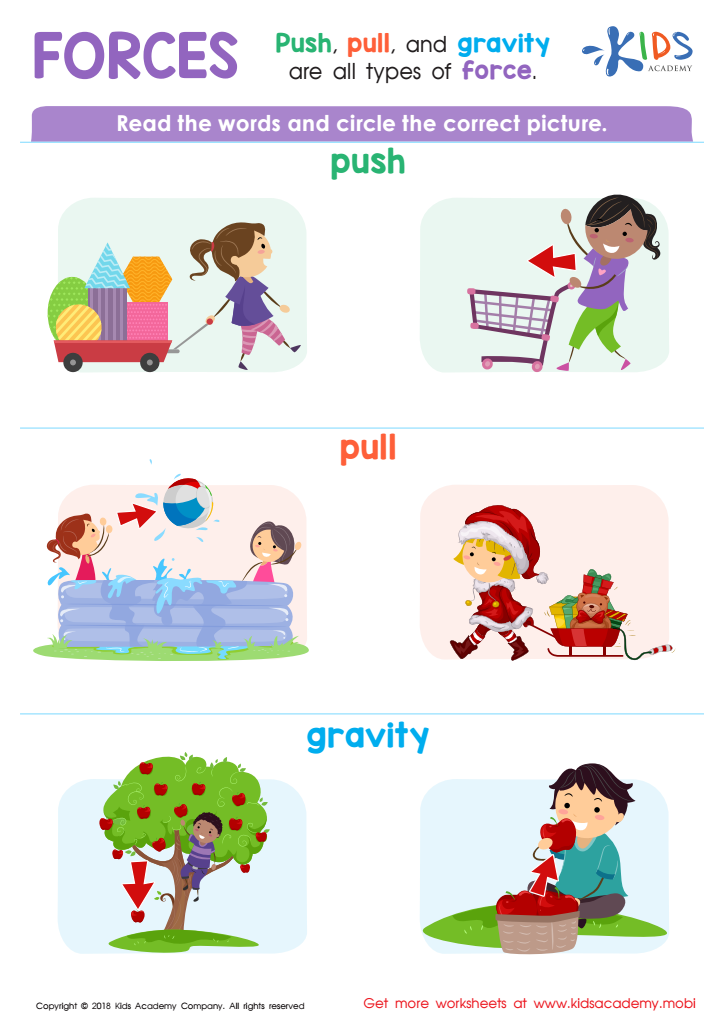
Forces Worksheet
Teach your child about forces! Ask them to identify which of six pictures shows push, pull or gravity. Read the words beside each picture and have them circle the correct one. It's a great way to learn about forces; push, pull and gravity!
Forces Worksheet
Worksheet
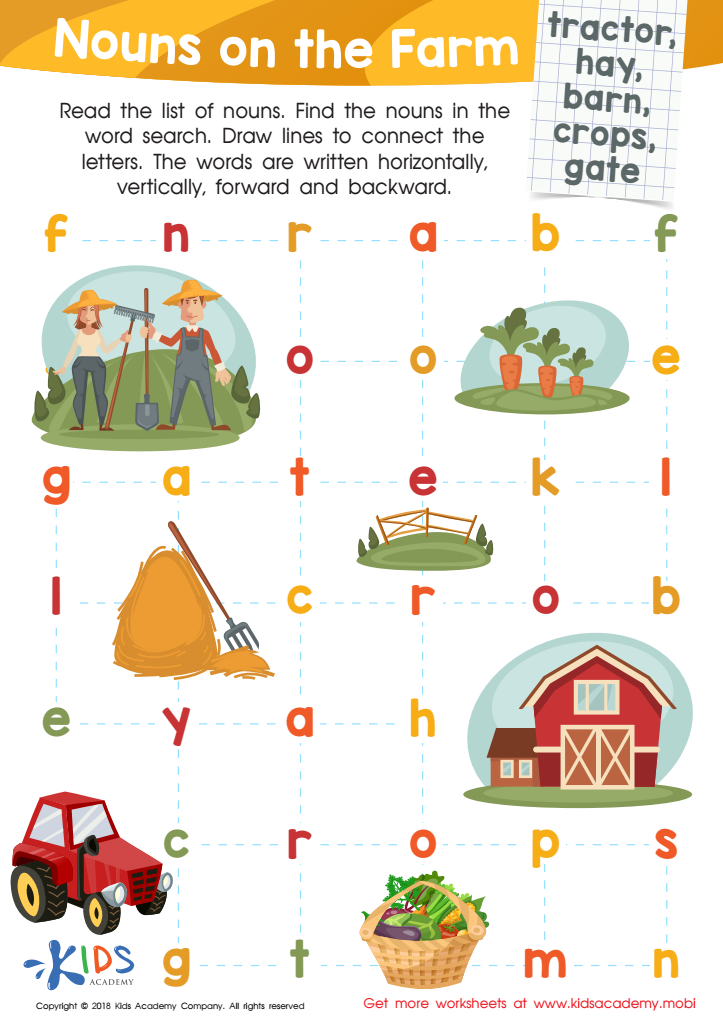
Nouns on the Farm Worksheet
Help your child learn nouns with this worksheet: Read the list to them and have them find the nouns in the word search. Draw lines to connect the letters, and explain the words can be found horizontally, vertically, forward, and backward.
Nouns on the Farm Worksheet
Worksheet
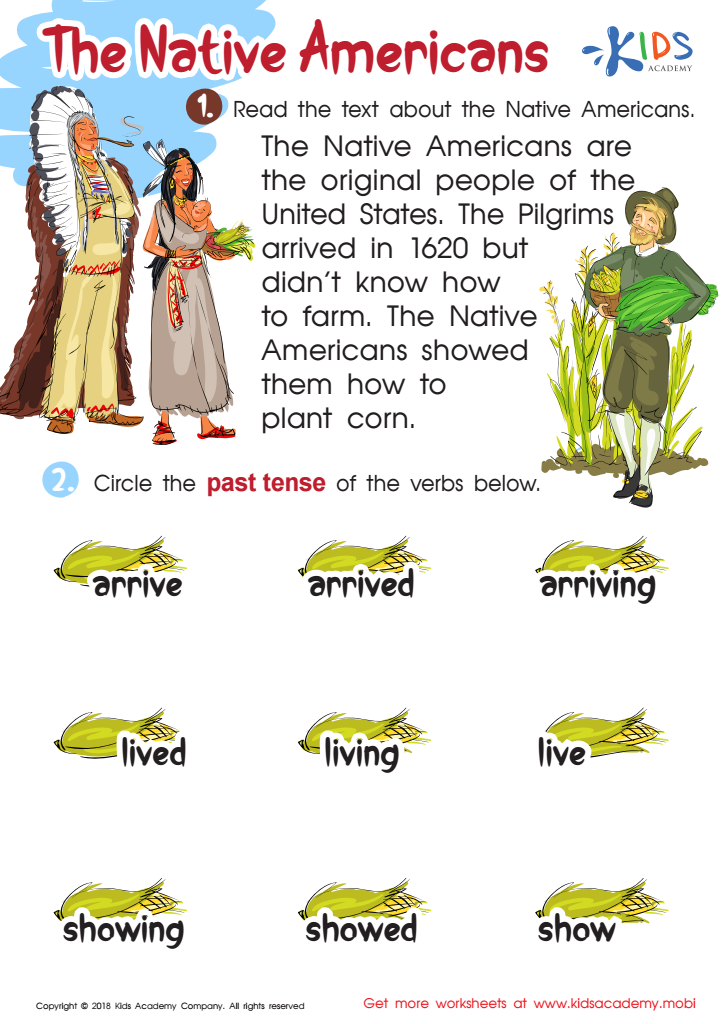
The Native Americans Worksheet
Ask your students who the Native Americans are and give them a history lesson if needed. Read the text about the Native Americans and circle the past tense verbs. The text describes events that occurred when the first Pilgrims arrived in America.
The Native Americans Worksheet
Worksheet
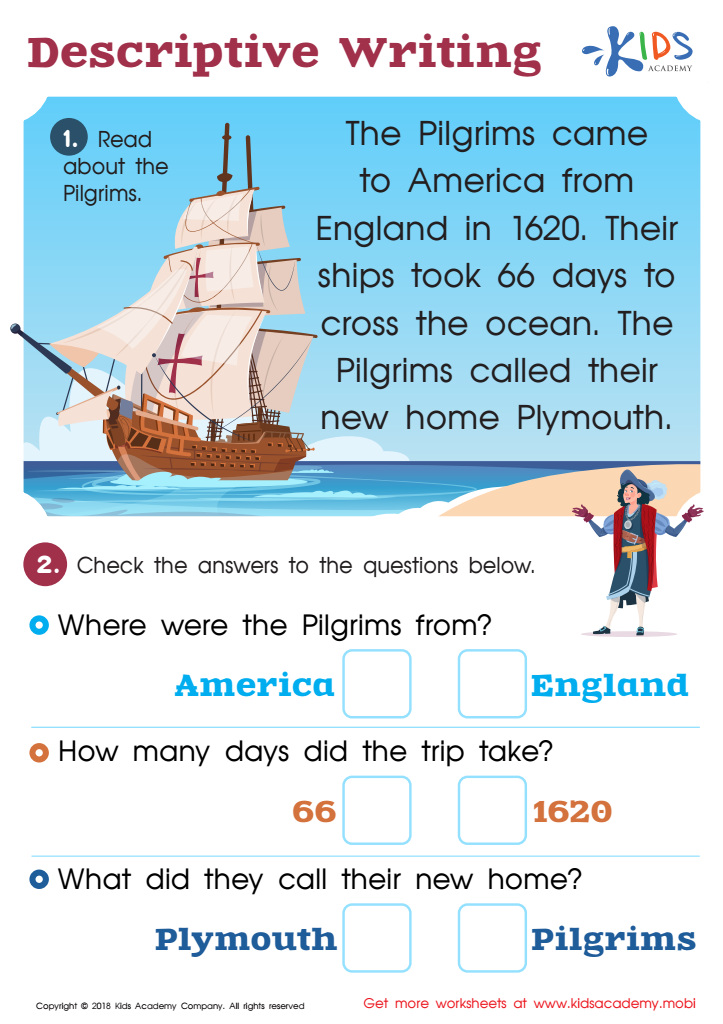
Descriptive Writing Worksheet: Part 1
Kids, let's learn about the Pilgrims! Read this short text about their voyage to America, then answer the questions at the bottom. Writing is an art: expressing emotions in artful words and sentences. Some writing informs, others describe. Here, discover the Pilgrims' journey!
Descriptive Writing Worksheet: Part 1
Worksheet
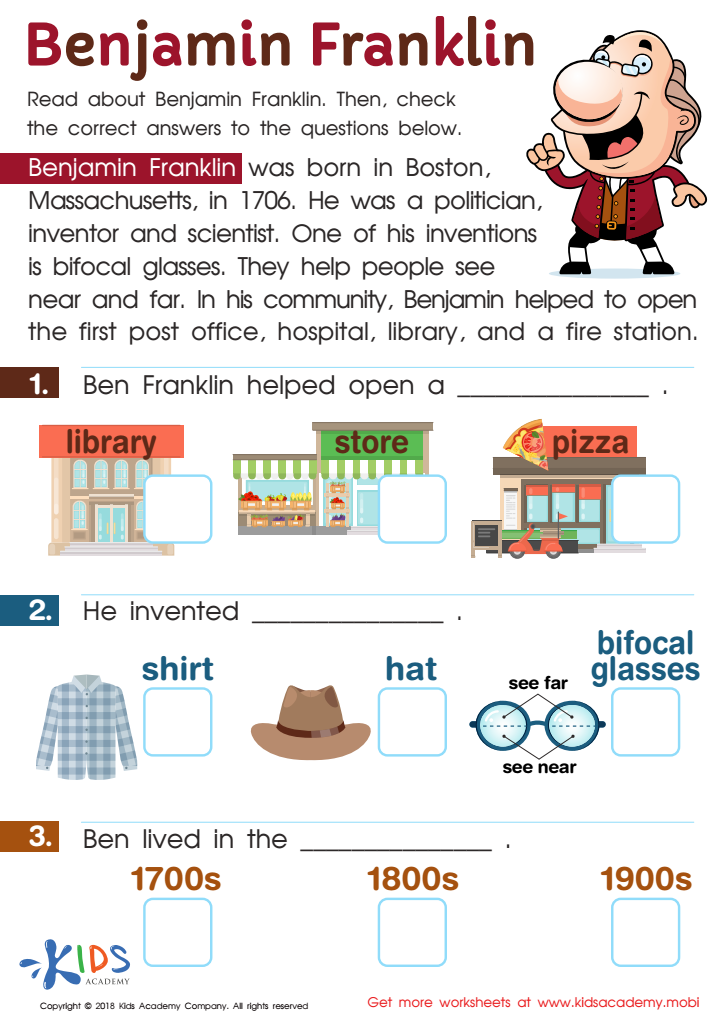
Benjamin Franklin Worksheet
Introduce your kids to one of history's most important figures - Benjamin Franklin! Tell them all about his remarkable contributions to the world and then use this worksheet to teach them even more. Read the text to them and check their answers against the questions afterwards.
Benjamin Franklin Worksheet
Worksheet
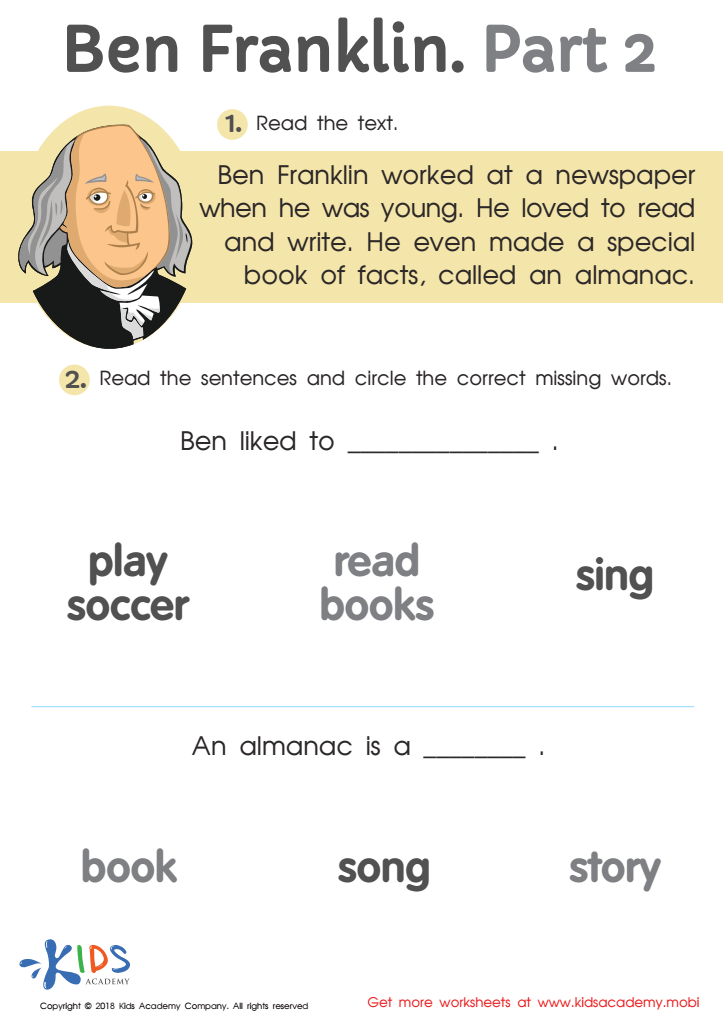
Ben Franklin Part 2 Worksheet
History is filled with great figures, like Benjamin Franklin. Let your kids in on the legacy by introducing them to the founder of the US fire department, diplomat, and inventor. Then, use a worksheet to have them fill in the blanks with the correct word to teach them more. Read the text, then read the sentences and have them circle the missing word.
Ben Franklin Part 2 Worksheet
Worksheet
Join Kids Academy for Free
Who is primarily going to use this learning content?