Unlock the world of reading for young learners with our Phonics Recognition Reading Worksheets at Kids Academy! These expertly designed printable worksheets focus on developing essential phonics skills, helping children recognize and understand letter sounds and blends. Through fun, engaging exercises, kids can practice decoding words, leading to improved reading fluency and confidence. Perfect for classroom or home use, our worksheets cater to various learning styles, ensuring every child succeeds on their reading journey. Visit Kids Academy to explore our extensive collection and ignite a love of reading in your students today!

Check out this FREE Trial Lesson on Reading!

Identify Irregular Past Tense Verbs Standard

Favorites
With answer key
Interactive
  • Phonics recognition
  • Reading
Sight Words with Blends Worksheet

Sight Words with Blends Worksheet

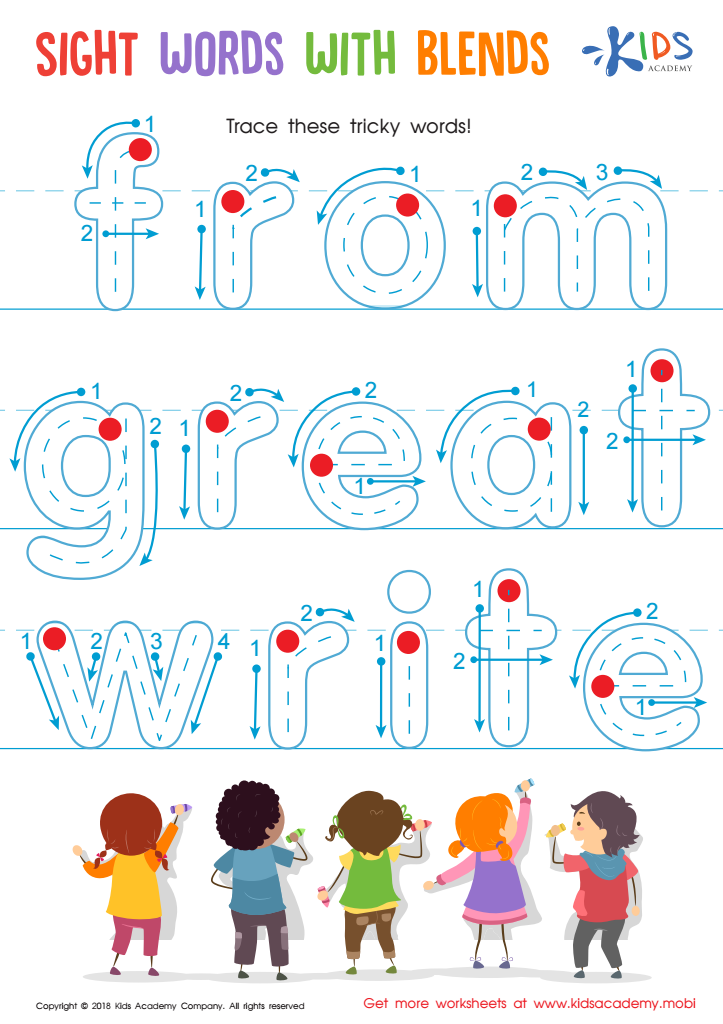
This free PDF lets your children trace and write sight words with tricky blends. The guide numbers help them start from the top, building fine motor skills and enhancing sight word vocab. It's a great way to give your kids a solid foundation for reading!
Sight Words with Blends Worksheet
Worksheet
The Rime "ing" Worksheet

The Rime "ing" Worksheet

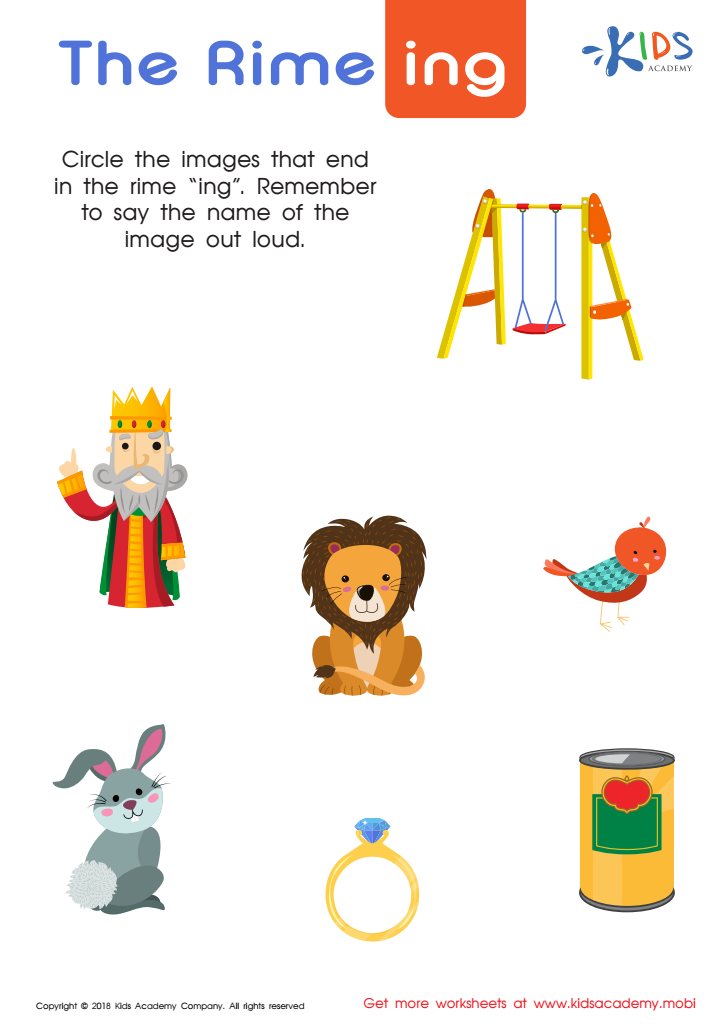
Teach children about word families and build their spelling and writing strategies with this colorful PDF worksheet. It features familiar pictures for children to name, encouraging them to circle those that end in "ing". This engaging activity will help develop reading skills in a fun way.
The Rime "ing" Worksheet
Worksheet
Phonics and Word Recognition: Assessment 1 Worksheet

Phonics and Word Recognition: Assessment 1 Worksheet
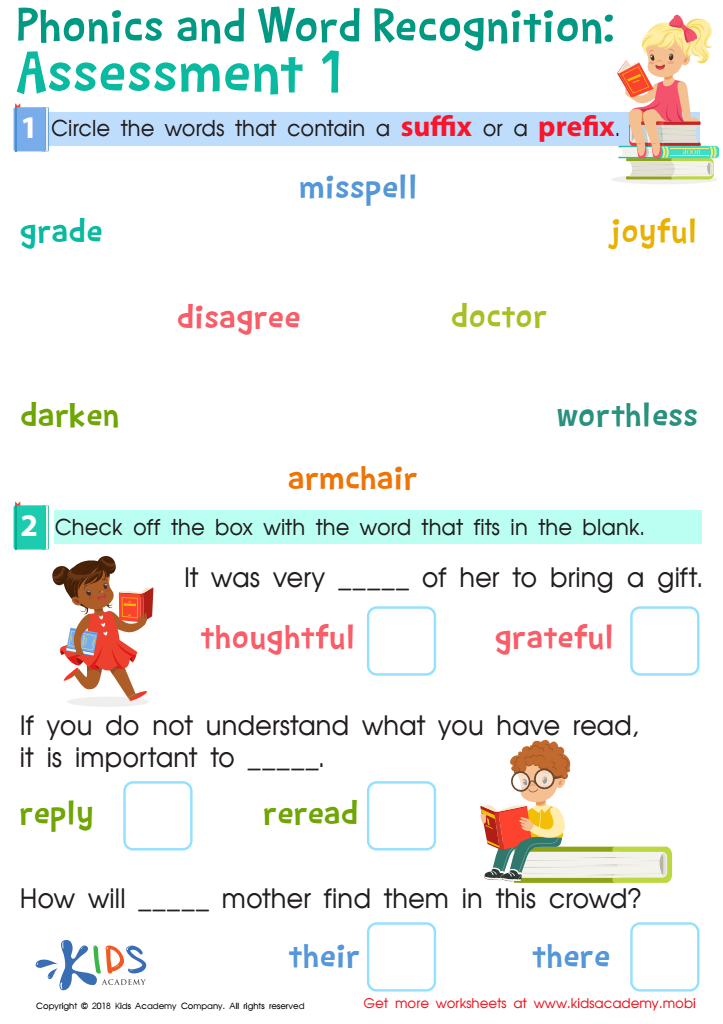
Explain prefixes (words added to start of another word to give it a new meaning) and suffixes (added to end of word to change its meaning) to your kids with examples like 'unhappy' (prefix) and 'forgetful' (suffix). Now, help your child complete this worksheet, including circling words and checking boxes.
Phonics and Word Recognition: Assessment 1 Worksheet
Worksheet
Phonics and Word Recognition: Assessment 1 Worksheet

Phonics and Word Recognition: Assessment 1 Worksheet

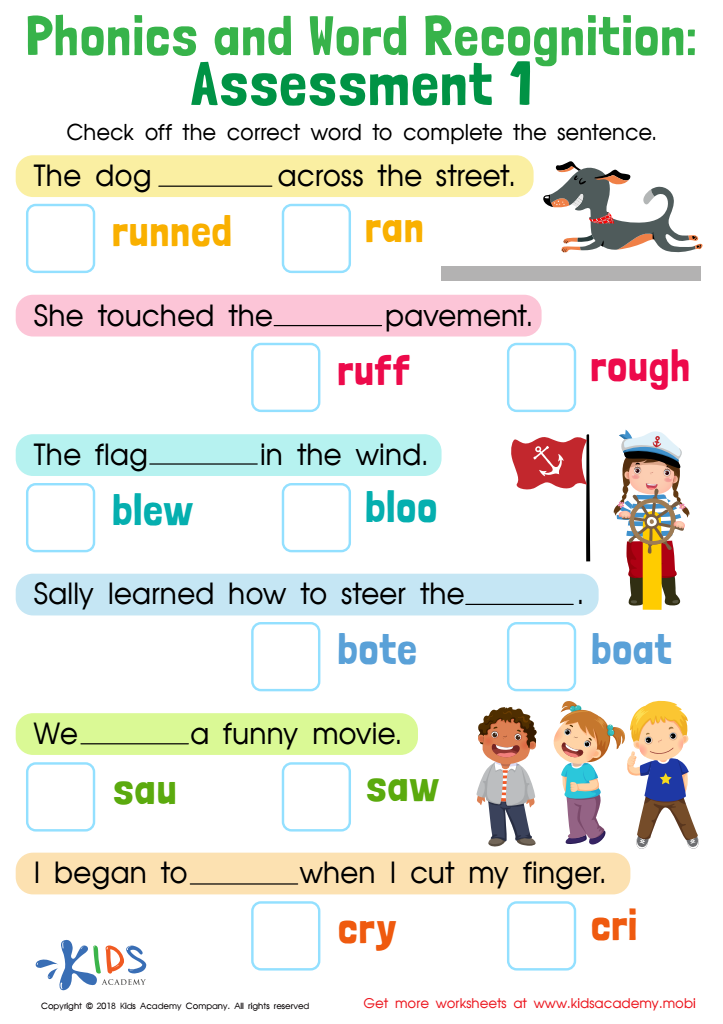
This worksheet tests phonetics and word recognition. Students should be familiar with past tense verbs. Read incomplete sentences, then read multiple options and help students select the correct one.
Phonics and Word Recognition: Assessment 1 Worksheet
Worksheet
Phonics and Word Recognition: Assessment 2 Worksheet
Phonics and Word Recognition: Assessment 2 Worksheet

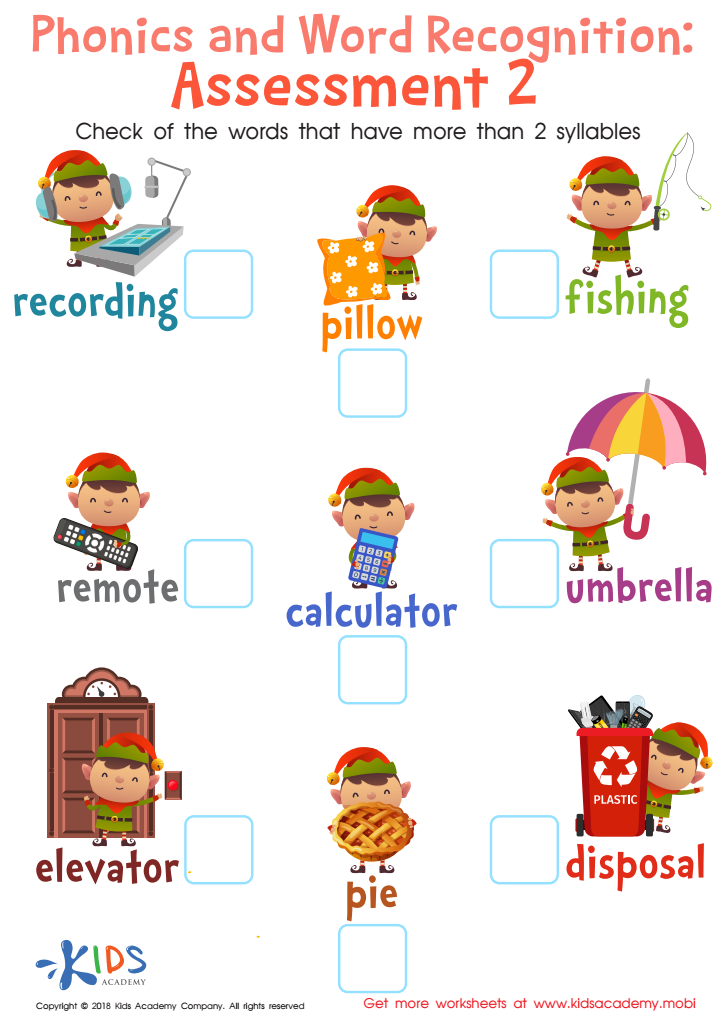
Help your kids learn proper pronunciation by counting syllables. Most words they'll encounter have 1-3 syllables, making them simple to say. Have them repeat the words in your worksheet after you. Focus on longer words with more than two syllables.
Phonics and Word Recognition: Assessment 2 Worksheet
Worksheet
Phonics and Word Recognition: Assessment 2

Phonics and Word Recognition: Assessment 2

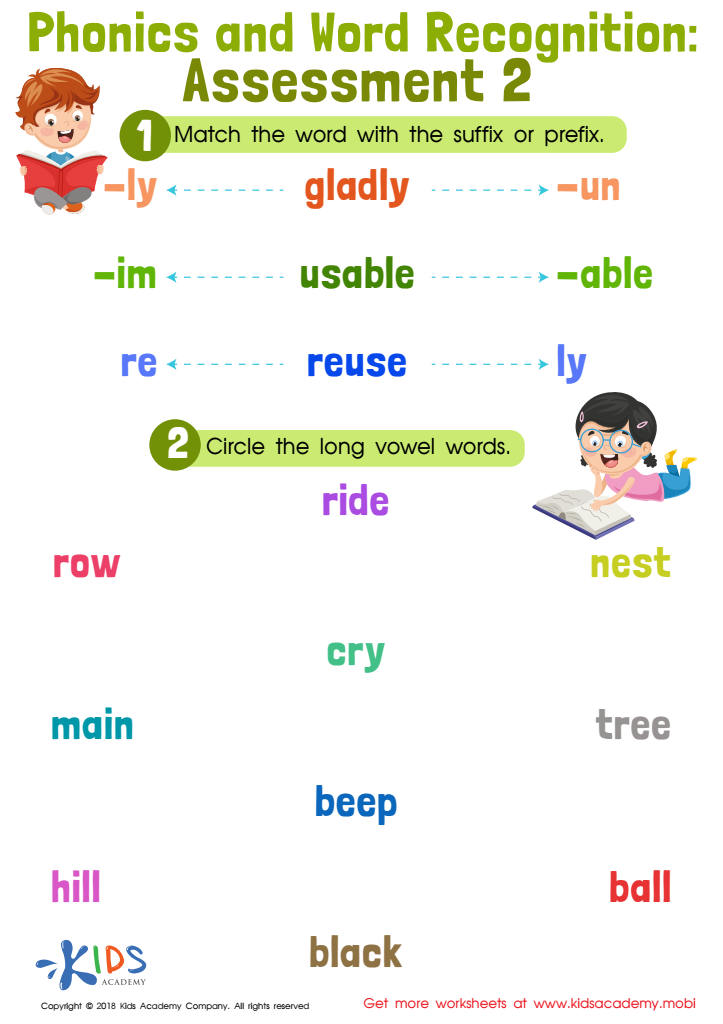
Give kids common examples of suffixes and prefixes, such as "un-," "unhappy," "ness," "happyness." Ask them to match each word in the word recognition exercise to the correct suffix or prefix. Test phonetic understanding by having them circle the long vowel sounds.
Phonics and Word Recognition: Assessment 2
Worksheet
Beginning Sounds Match-up Printable

Match–Up Game: Beginning Sounds Worksheet

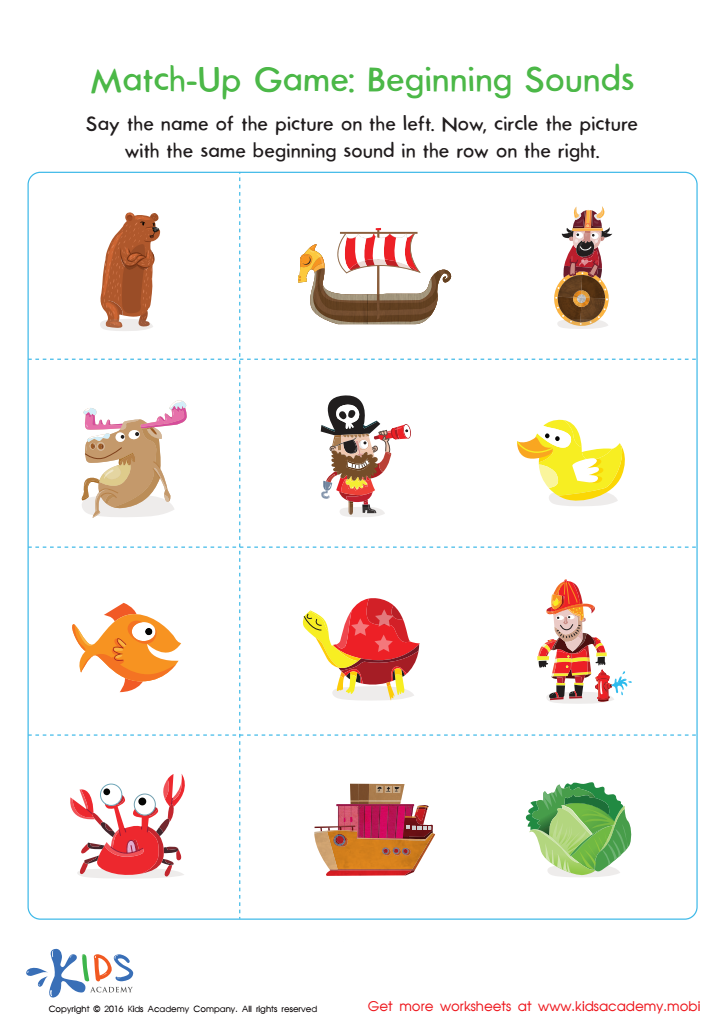
Start today with this beginning sounds match-up printable! Teach your child to solve problems mentally with this beginning sounds match-up printable. They'll learn to categorize pictures based on phonics rules, developing mental stamina and focus. It's an important step for recognizing sounds and letters in print, building a foundation for reading and spelling. Start today and take your child's skills to the next level!
Match–Up Game: Beginning Sounds Worksheet

Worksheet


Phonics recognition reading is crucial for young learners for several reasons that greatly impact academic and lifelong success. First and foremost, phonics provides the foundational skills necessary for decoding words. By understanding the relationship between letters and their sounds, children can read new words they've never encountered before, enhancing their vocabulary and comprehension.

Parents and teachers should care because effective phonics instruction can lead to more confident and independent readers. Early success in reading fosters a love for reading and learning, which is invaluable in all subject areas. Those who struggle with reading often face challenges academically across the board, as virtually all subjects require reading comprehension.

Additionally, early reading skills are indicators of later academic success. Children who master phonics are typically better prepared for more complex literacy tasks, such as writing, analyzing, and critical thinking.

Moreover, phonics recognition can help identify and support children with reading difficulties early on, providing them with the targeted interventions they need to catch up with their peers.

Having a phonics-based approach in early education meets common core standards and aligns with research-based best practices for reading instruction, making it a significant element in well-rounded, effective education strategies.