Shape identification Grade 2 Worksheets
20 filtered results
Difficulty Level
Grade
Age
-
From - To
Subject
Activity
Standards
Explore our engaging Shape Identification worksheets designed specifically for Grade 2 students! These interactive activities help children develop essential skills in recognizing and categorizing various geometric shapes, including circles, squares, triangles, and more. With vibrant illustrations and simple exercises, our worksheets make learning fun and effective. Students will enhance their understanding of shape properties while improving their visualization and critical thinking skills. Perfect for classroom use or at-home practice, these resources are aligned with educational standards and promote hands-on learning. Download your Shape Identification worksheets today and support your child's journey towards shape mastery!
Favorites
With answer key
Interactive
 Assign to My Students
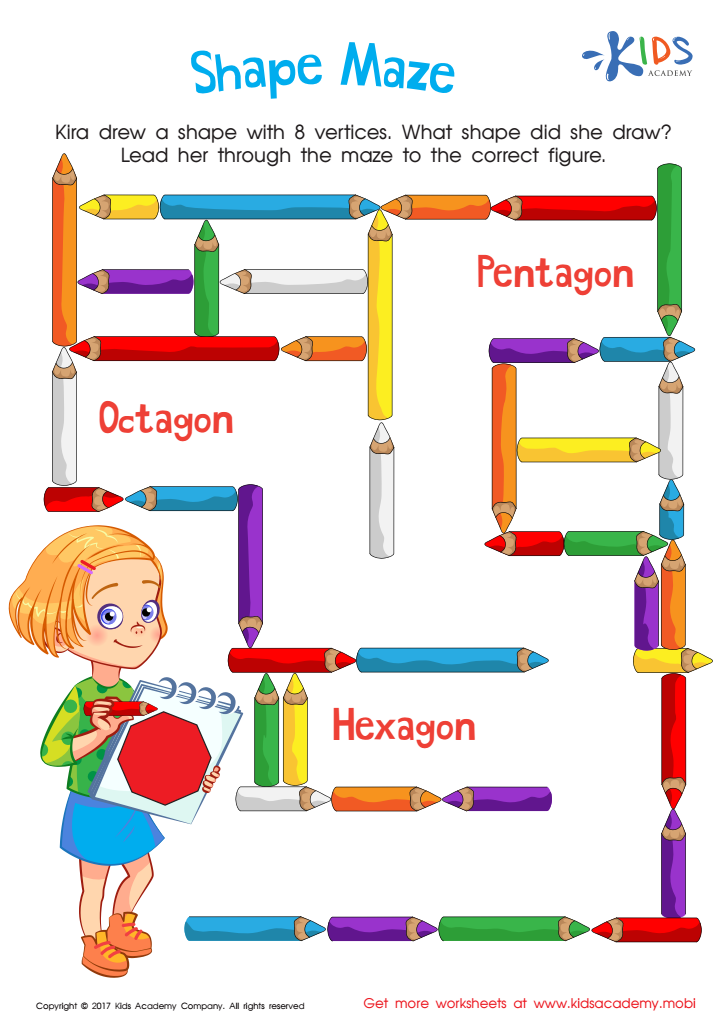
Shape Maze Worksheet
Test your child's geometry knowledge with this fun printable maze! They'll need to identify shapes with 8 vertices to find their way through the maze and get the correct answer.
Shape Maze Worksheet
Worksheet
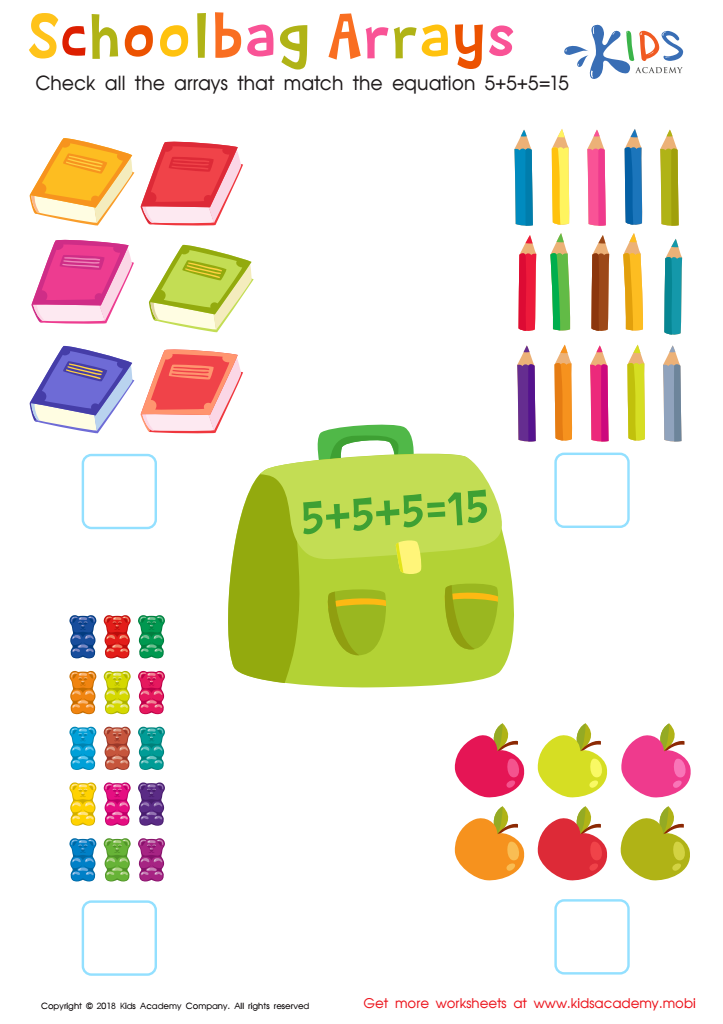
Schoolbag Arrays Worksheet
Help your child spot the correct arrays in this worksheet: having them count the items in each and check the boxes for the ones with 15 objects. Ask them to differentiate between rows and columns and explain which ones match the equation 5+5+5=15.
Schoolbag Arrays Worksheet
Worksheet
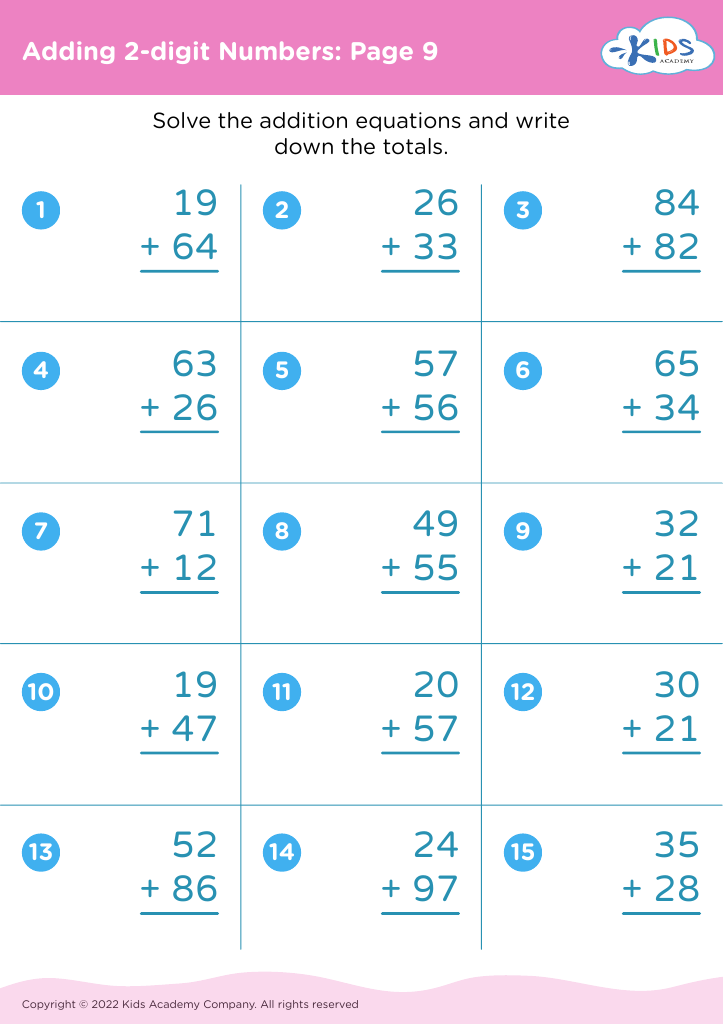
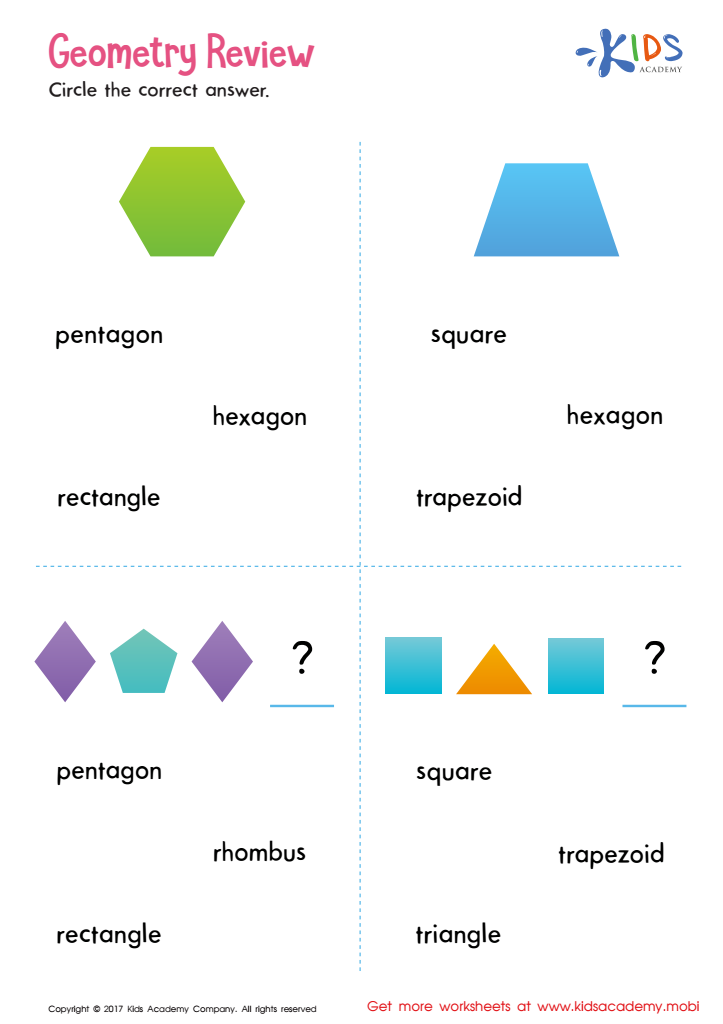
Geometry Review Printable
Repetition is key to success; give your child the practice they need with this geometry worksheet.
Geometry Review Printable
Worksheet
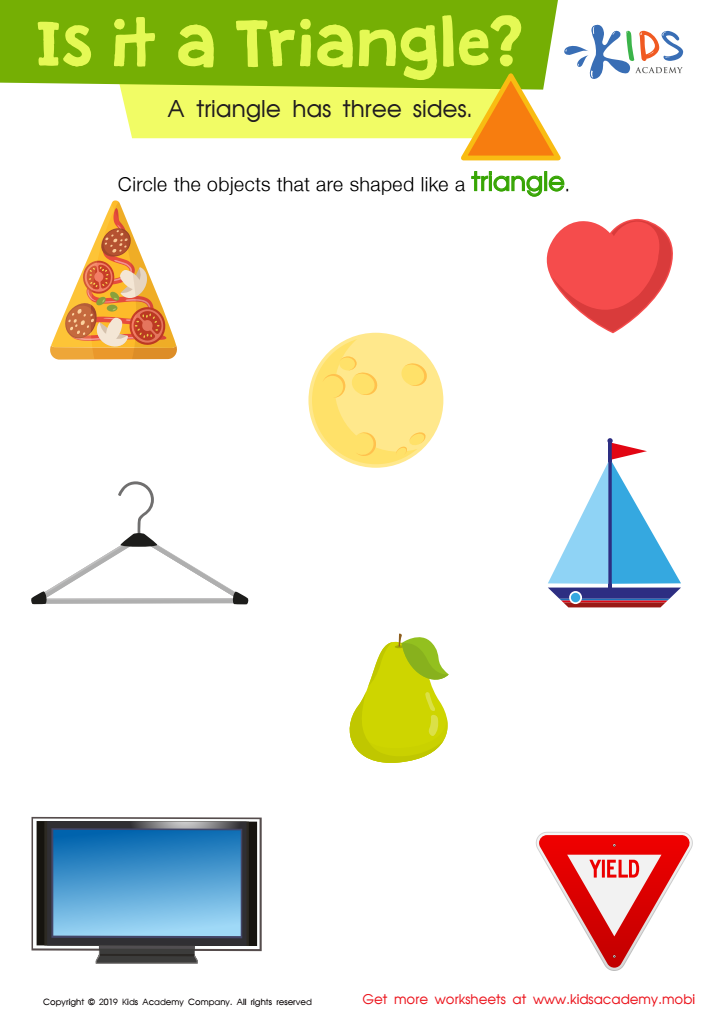
Is It a Triangle? Worksheet
Young kids need to learn to identify basic shapes for math. Show them what a triangle looks like with this fun worksheet. They can look around their environment for everyday objects shaped like a triangle and circle them on the sheet. Download now and start learning what a triangle is!
Is It a Triangle? Worksheet
Worksheet
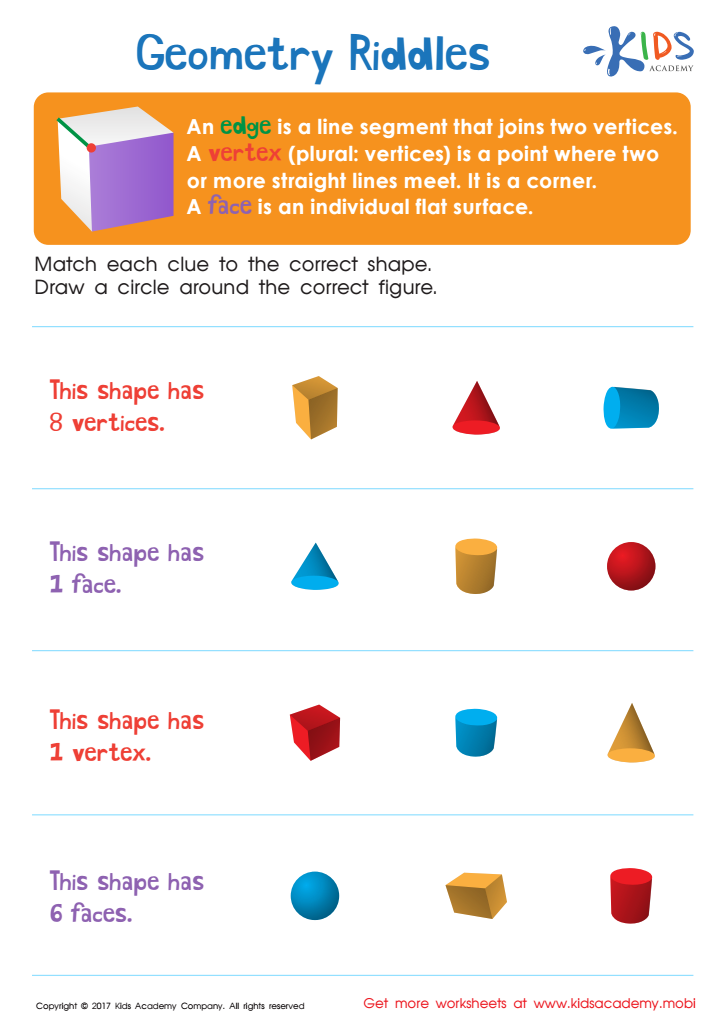
Geometry Riddles Printable
Review geometry terms with your child using this challenging worksheet of tricky riddles. Identifying and counting vertices, edges, and faces of shapes becomes fun as they solve the riddles!
Geometry Riddles Printable
Worksheet
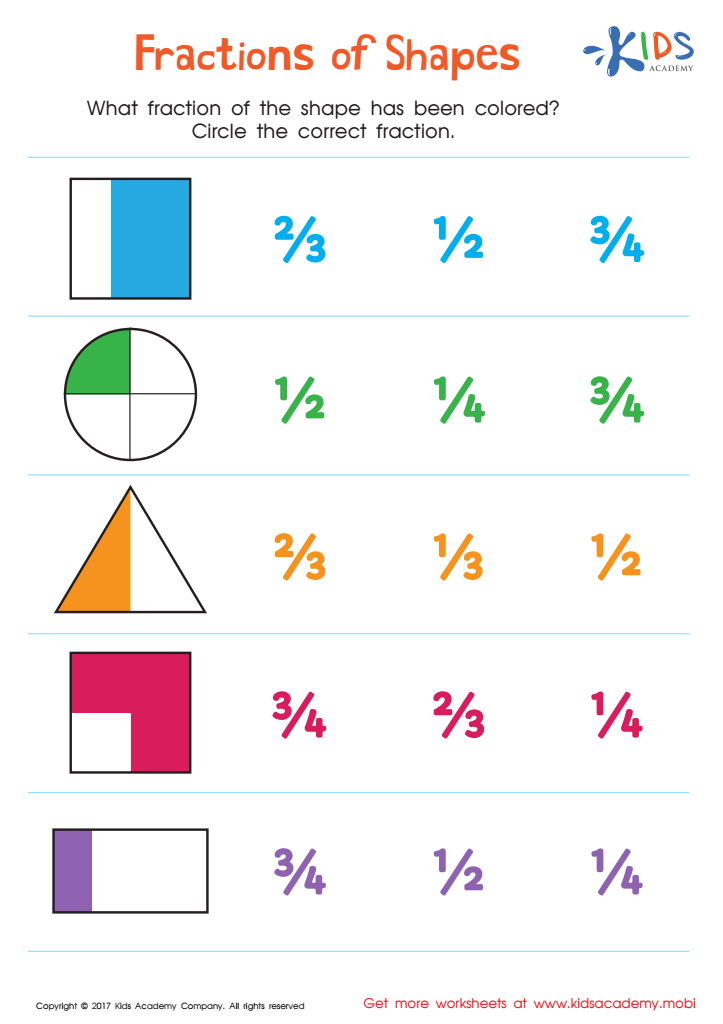
Fractions of Shapes: Math Concept Worksheet
Fractions can be tricky, but with pictures to illustrate them, they become much easier to understand. Our fractions of shapes worksheet is a great way to help children visualize fractions and gain a better understanding of them.
Fractions of Shapes: Math Concept Worksheet
Worksheet
Join Kids Academy for Free
Who is primarily going to use this learning content?






Shape identification in Grade 2 is fundamental for several reasons, making it crucial for parents and teachers to focus on this aspect of early mathematics education. First, recognizing and understanding shapes fosters spatial awareness, allowing children to navigate and make sense of the world around them. As they identify 2D shapes like circles, squares, and triangles, students develop critical observational skills that will aid in visual learning across subjects.
Moreover, shape identification serves as a foundation for more complex mathematical concepts such as area, perimeter, and even advanced geometry. Learning to categorize shapes builds a child's reasoning skills, helping them recognize patterns and relationships that are essential for problem-solving. This cognitive development enhances not only math skills but also logical thinking applicable in everyday life.
In addition to academic growth, engaging with shapes in fun and creative ways can promote collaboration and communication skills among peers. By integrating shape identification into various activities, teachers and parents can also create a positive learning environment that boosts confidence and enthusiasm for math.
Ultimately, prioritizing shape identification empowers children, promoting their overall cognitive development and laying a solid groundwork for future academic success.