Geographic Understanding Social Studies Worksheets
3 filtered results
Difficulty Level
Grade
Age
-
From - To
Subject
Activity
Standards
Enhance your child's knowledge through our Geographic Understanding Social Studies Worksheets, specially designed for young learners! These worksheets from Kids Academy provide engaging activities that teach essential geographic skills and concepts. Your child will explore maps, landforms, and other physical features while learning to interpret symbols, coordinates, and directions. With colorful graphics and interactive elements, these printables make learning geography fun and effective. Equip your student with the knowledge to understand the world around them, fostering curiosity and a love for learning. Perfect for classroom and homeschool settings, our worksheets support academic growth in a playful environment.
Favorites
With answer key
Interactive
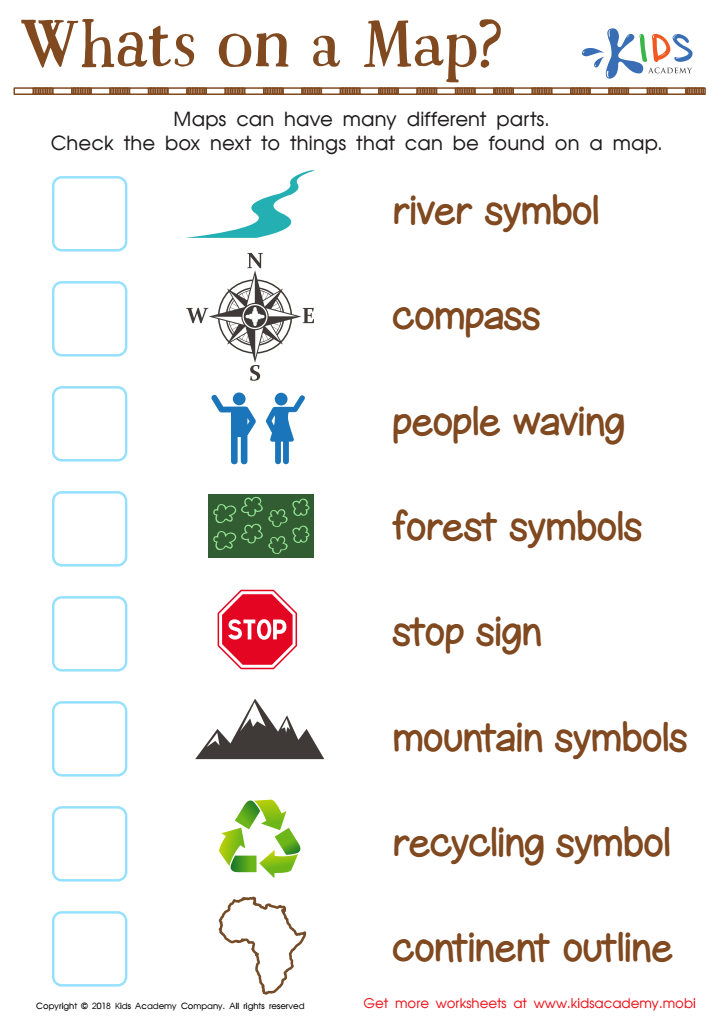
Whats on a Map? Worksheet
Kids often lack map-reading experience due to our digital age, but these skills are essential. This free worksheet reinforces what they'll find on a map and the symbols used to represent them, helping them build reasoning, thinking and problem-solving skills.
 Assign to My Students
Whats on a Map? Worksheet
Worksheet
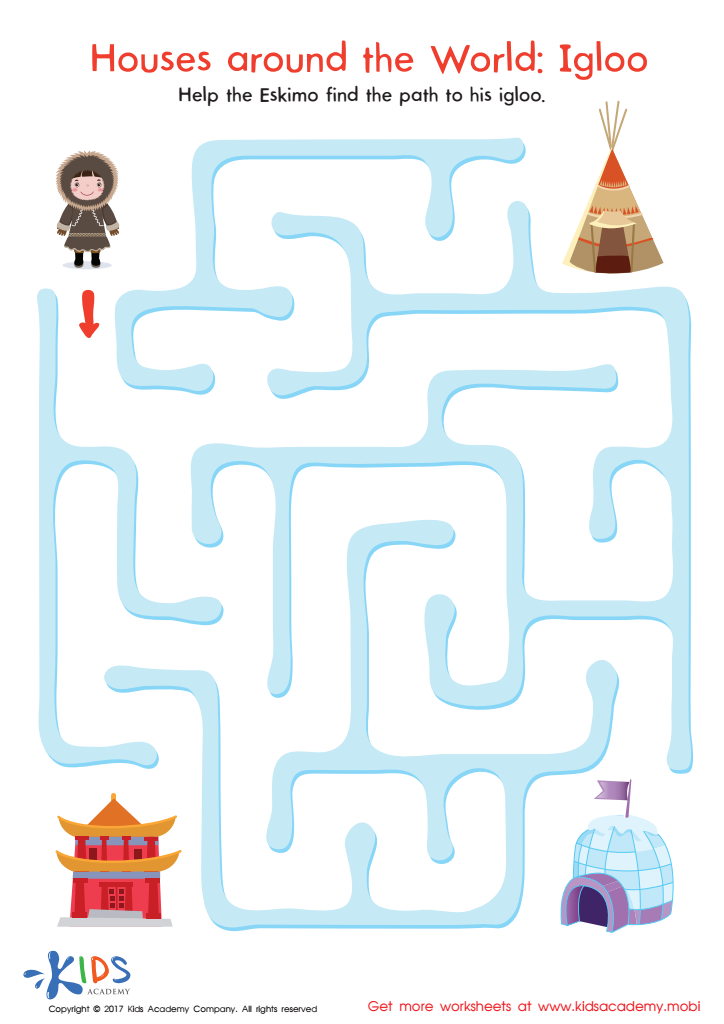
Houses Around the World: Igloo Printable
Print out the igloo maze worksheet and help the Eskimo find his way home. Along the way, you’ll discuss different types of houses. A perfect way to practice thinking skills!
Houses Around the World: Igloo Printable
Worksheet
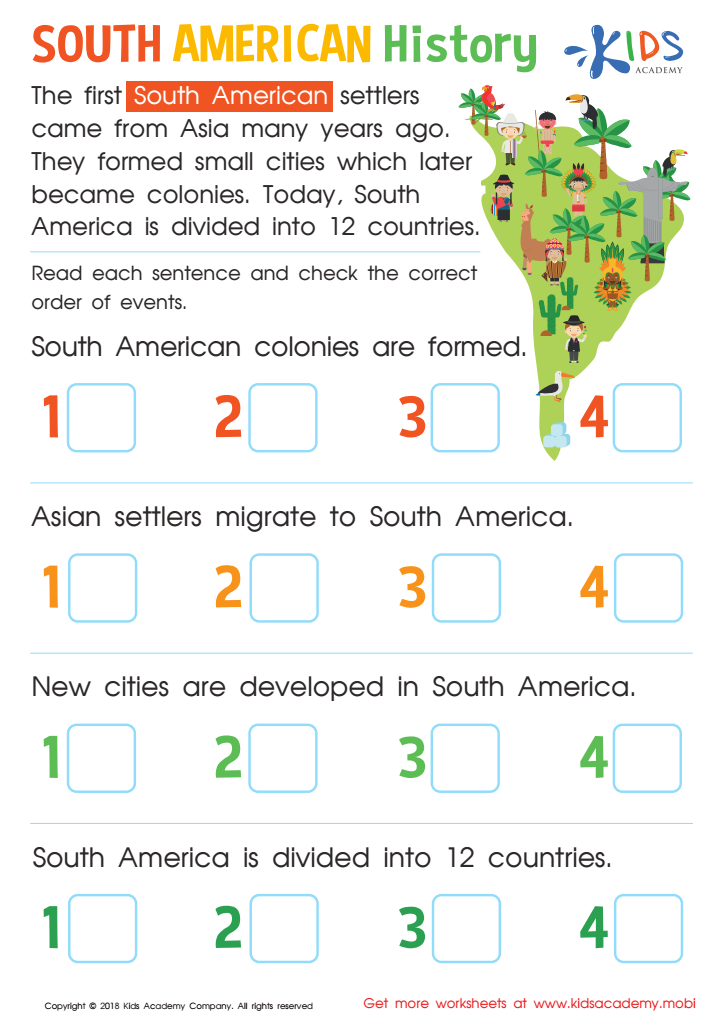
South American History Worksheet
Kids can brush up on South American history with this free worksheet! They'll discover how the first inhabitants arrived from Asia and how this led to the growth of cities and colonies. Comprehension questions will help them sequence and understand the events of South American history.
South American History Worksheet
Worksheet
Join Kids Academy for Free
Who is primarily going to use this learning content?






Geographic understanding in social studies is crucial for both parents and teachers to emphasize because it forms the foundation of children's awareness of the world around them. First, geography helps students develop spatial thinking, enabling them to comprehend maps, globes, and various datasets that represent the Earth's features and human activities. These skills are essential for environmental stewardship, as understanding the physical layout of our planet and its ecosystems encourages responsible and sustainable actions.
Moreover, a sound grasp of geography fosters cultural awareness and global citizenship. As students learn about diverse regions and the ways people interact with their environments, they develop empathy and respect for different cultures. This knowledge is critical in our interconnected world, promoting positive international relations and multicultural understanding.
Geography also plays a pivotal role in preparing students for future challenges and opportunities. In an era of globalization, many careers increasingly demand geographic literacy, from urban planning and environmental science to international business and tourism. Early exposure to geographic concepts sets the stage for informed decision-making regarding travel, resource use, and civic participation, benefiting both the individual and the larger community.
In summary, a well-rounded geographic education nurtures informed, empathetic, and proactive individuals, equipping them to navigate and positively contribute to an increasingly complex world.