Math & Science Articles



Teaching First Graders How to Use Function Machines to Determine an Unknown Number
May 20, 2026

By the end of first grade, students should be able to determine an unknown whole number in an addition or subtraction equation relating three whole numbers. As students begin understanding addition as part plus part equals total and subtraction as total minus part equals part, they can begin to see patterns emerge in the relationships between numbers in equations. While an explicit naming of inverse operations does not occur until later grades, students begin to see that using a subtraction fact to determine the missing number in an addition problem (and vice versa) is an effective problem-solving strategy.
Teaching Basic Addition Strategies to First Graders Using Operational Properties
April 29, 2026
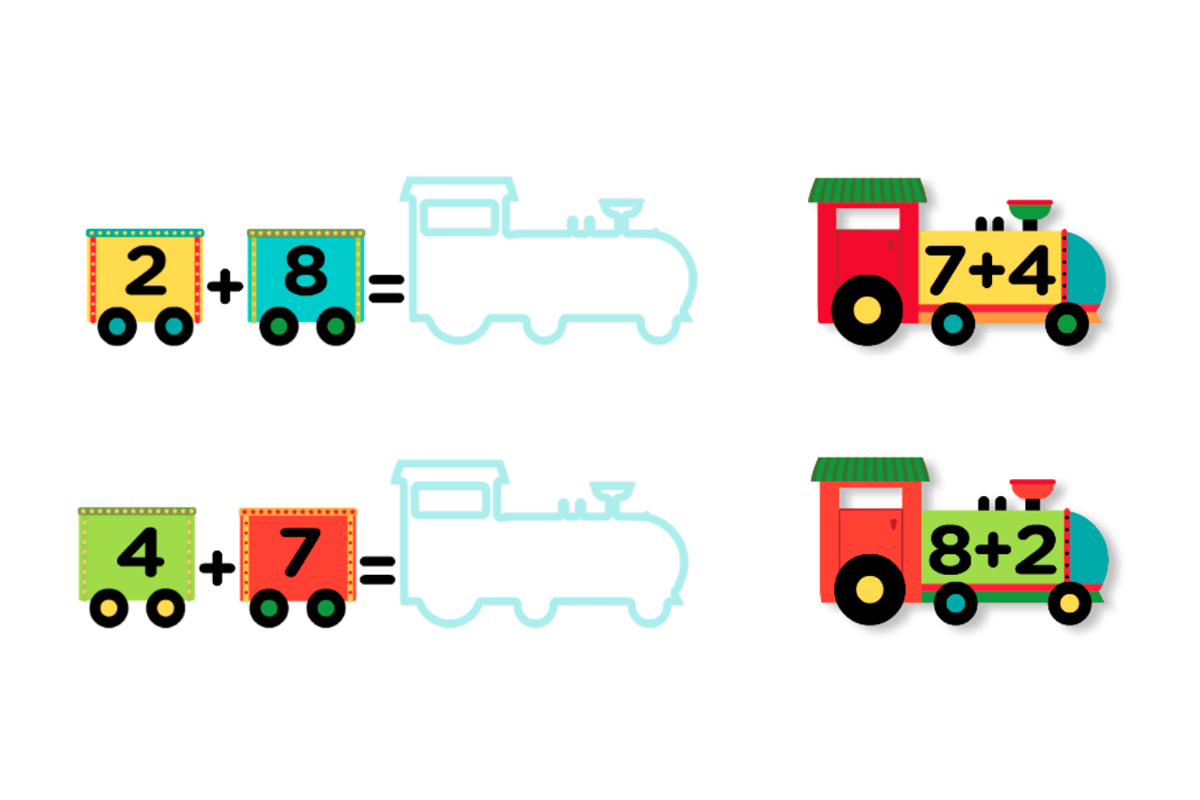
Operational Properties are used in mathematical fields to describe fundamental rules for operations such as addition, subtraction, and multiplication. Understanding that we can generalize the way that numbers and operations “behave” empowers students to see patterns and apply what they know to unfamiliar problems.
There are three major addition properties: the Commutative Property, the Identity Property, and the Associative Property.
Science Experiments for Kids to Explore the Power of the Sun
March 20, 2026

Learning about all the ways the sun supports life is an important part of the elementary science curriculum. It’s also an exciting topic of hands-on experiments for kids. Let’s perform some extraordinary science experiments that demonstrate the power of the sun!

Place Value with Base Ten Blocks and Ten Frames for 1st Grade
Feb. 9, 2026

Being an educator that has taught lower and upper grades math subjects, it was very noticeable that place value is one of the most important math concepts students need to understand. It supports future skills like addition, subtraction, and understanding larger numbers. First grade is when place value is learned as a foundational skill. At this age, many children can count well, but place value teaches them that numbers are made of groups, not just counted one by one.
Math Skills BrushUp with Kids Academy: Transitioning from Kindergarten to Grade 1
July 18, 2025

From my time in the classroom, I can tell you that math confidence isn’t something that can just happen overnight. It grows with small moments of success (seen throughout the year), and summer is the ideal time to add in those moments at home. The skills I highlight below are the ones I used to reteach in the first few weeks of 1st grade, so staying sharp on them makes a noticeable difference.
Data Analysis in Elementary School: Major Milestones
May 5, 2025

Data analysis is not something only researches do. Actually, students as young as first grade are already supposed to be able to collect and make sense of numeric data. Elementary school data analysis skills constitute a critical component of both math and science classes in the early grades. Let’s explore the major milestones that children must learn to master this critical skill.
Daily Knowledge Boost with Kids Academy: Environmental Awareness
April 22, 2025
Today’s Daily Knowledge Boost is a group of lessons that explore sustainability, the importance of natural resources and what we can do to help the planet.These topics will build science knowledge and help kids understand that even small actions can have an impact.
Standards-Aligned Math Worksheets for Elementary Students by Kids Academy
March 14, 2025

Today we’ll look at Kids Academy’s standards-based math worksheets to discover more about the general skills they teach and standards they align with.
6 Winter and Christmas Science Projects for Kids
Dec. 16, 2024

Winter time and the holiday season provide a great environment for exciting and educational science experiments for the whole family to do. Check out these fun experiments that are designed to be engaging, low lift, and made with easy to find supplies. Children can explore the wonders of science while embracing the cold festive season.
Daily Knowledge Boost with Kids Academy: Fractions for Grade 3
Dec. 9, 2024
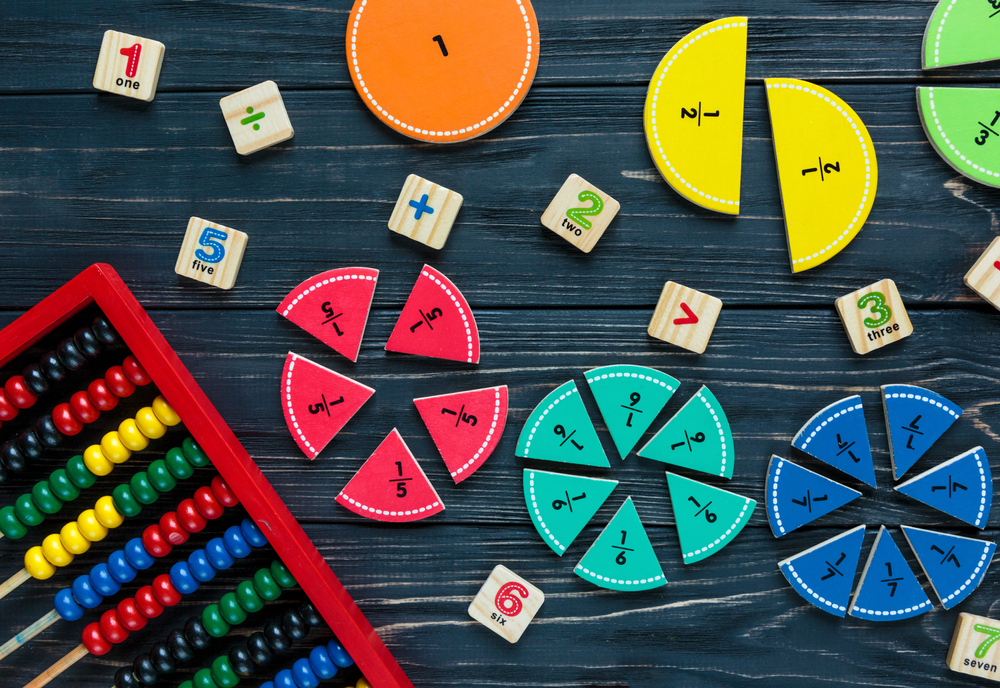
One math concept that students spend a lot of time on, especially in 3rd grade, is fractions. Manipulating fractions is an important skill for students to master because it can build a foundation for more complex topics, develop their critical thinking skills, and help kids better understand more abstract concepts and establish connections across multiple subjects.
Today’s daily knowledge boost provides students in 3rd grade with in-depth study of fractions: making and representing fractions, as well as comparing fractions through their denominator and numerator.